10 min read
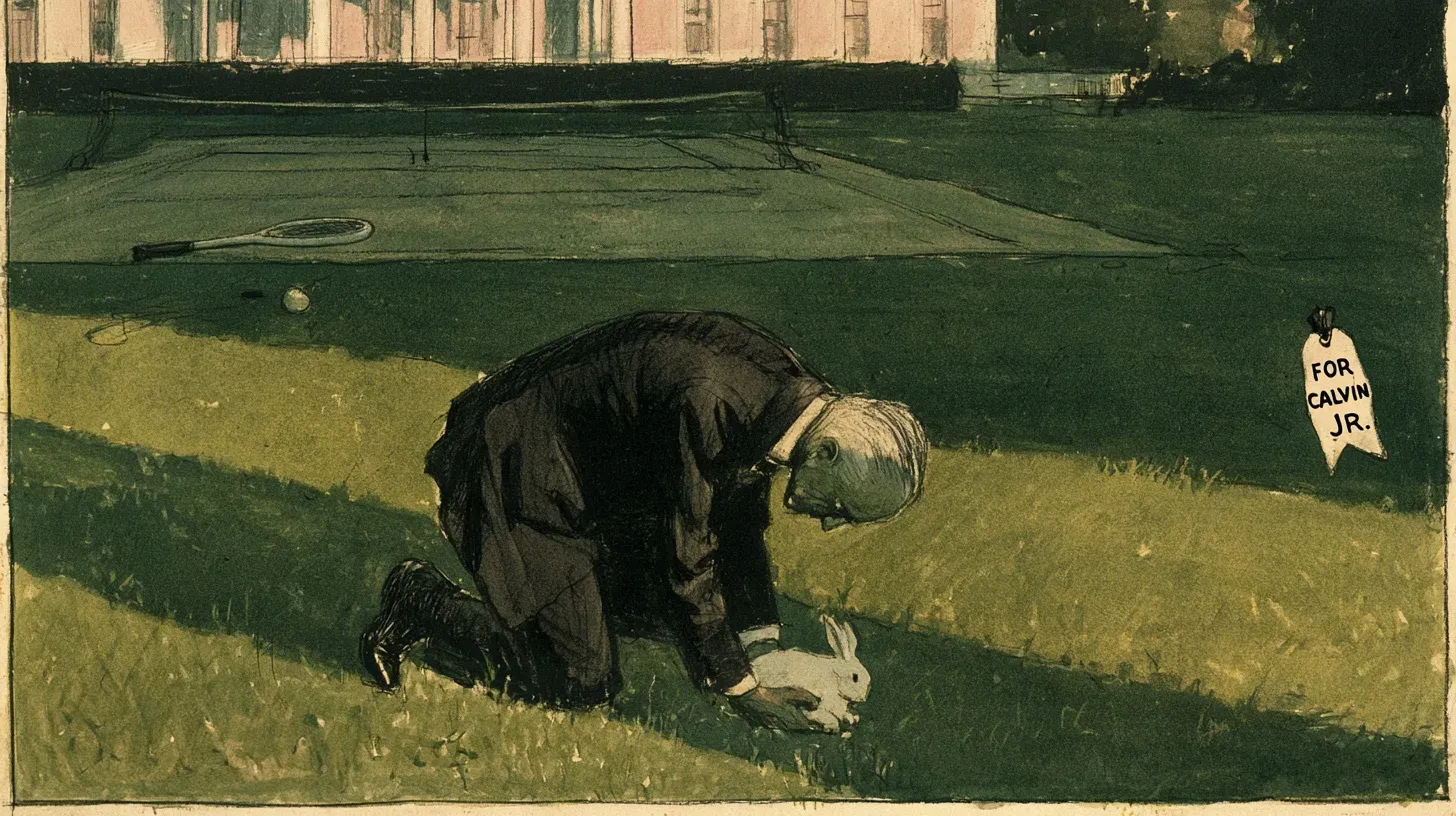
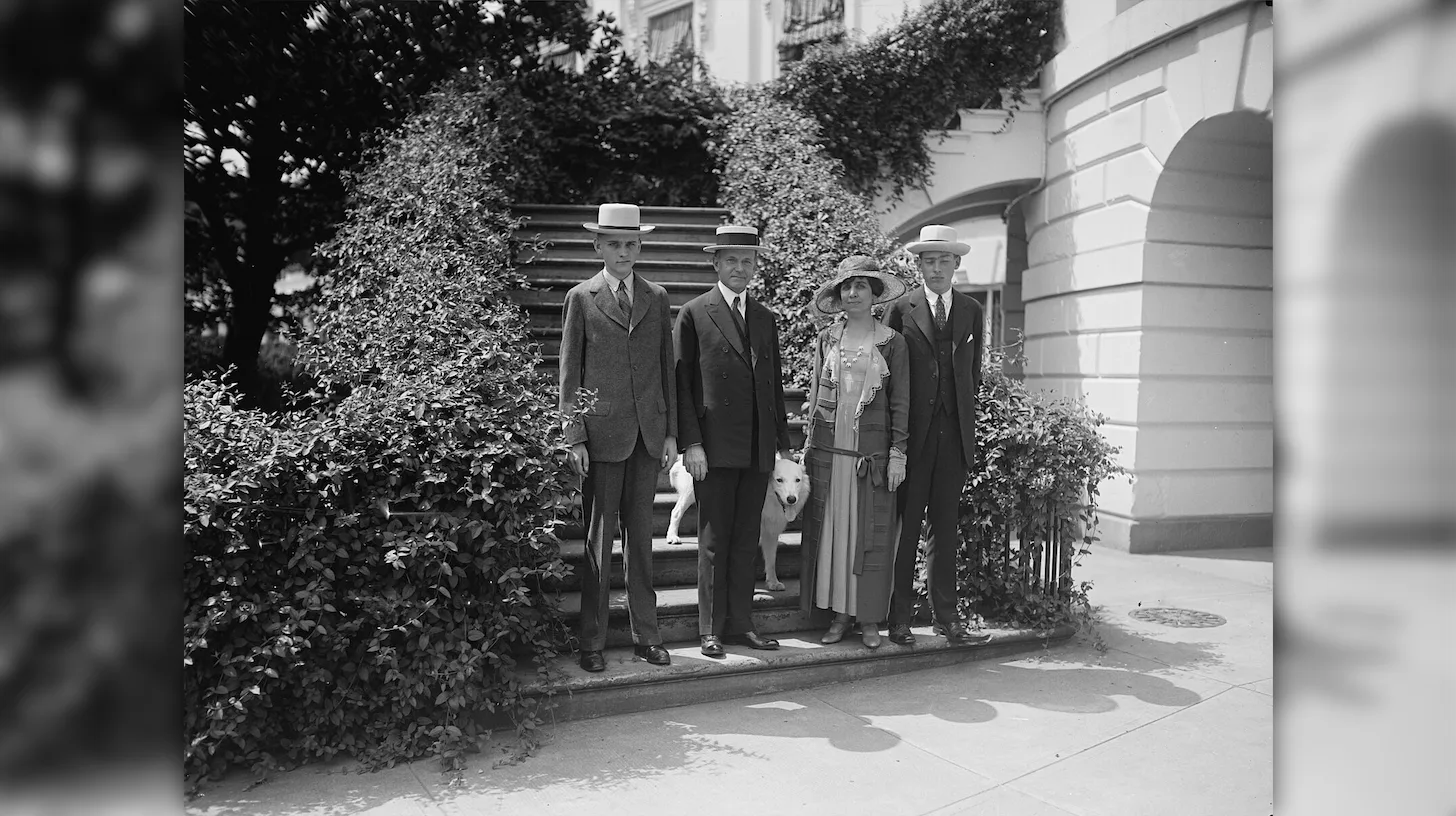
On Monday, June 30, 1924, the two sons of President Calvin Coolidge played tennis on the court in the South Grounds of the White House, and the younger, Calvin Jr., who was sixteen, came off it with a blister on one of his toes. Later accounts say he had played in sneakers without socks. He thought so little of it that he went with his father that night to a public meeting on the budget. That same day a photographer of the National Photo Company had posed the four Coolidges together for a family portrait.
A week later Calvin Coolidge Jr. was dead of blood poisoning at Walter Reed Army Hospital, and his father was running for a full term as president. The story is usually told in a sentence, as the White House tennis blister that killed the president’s son. The newspapers of that week, the doctor who was in the room at the end and Coolidge’s own autobiography tell it at greater length, and in a few places differently.
A boy of much promise
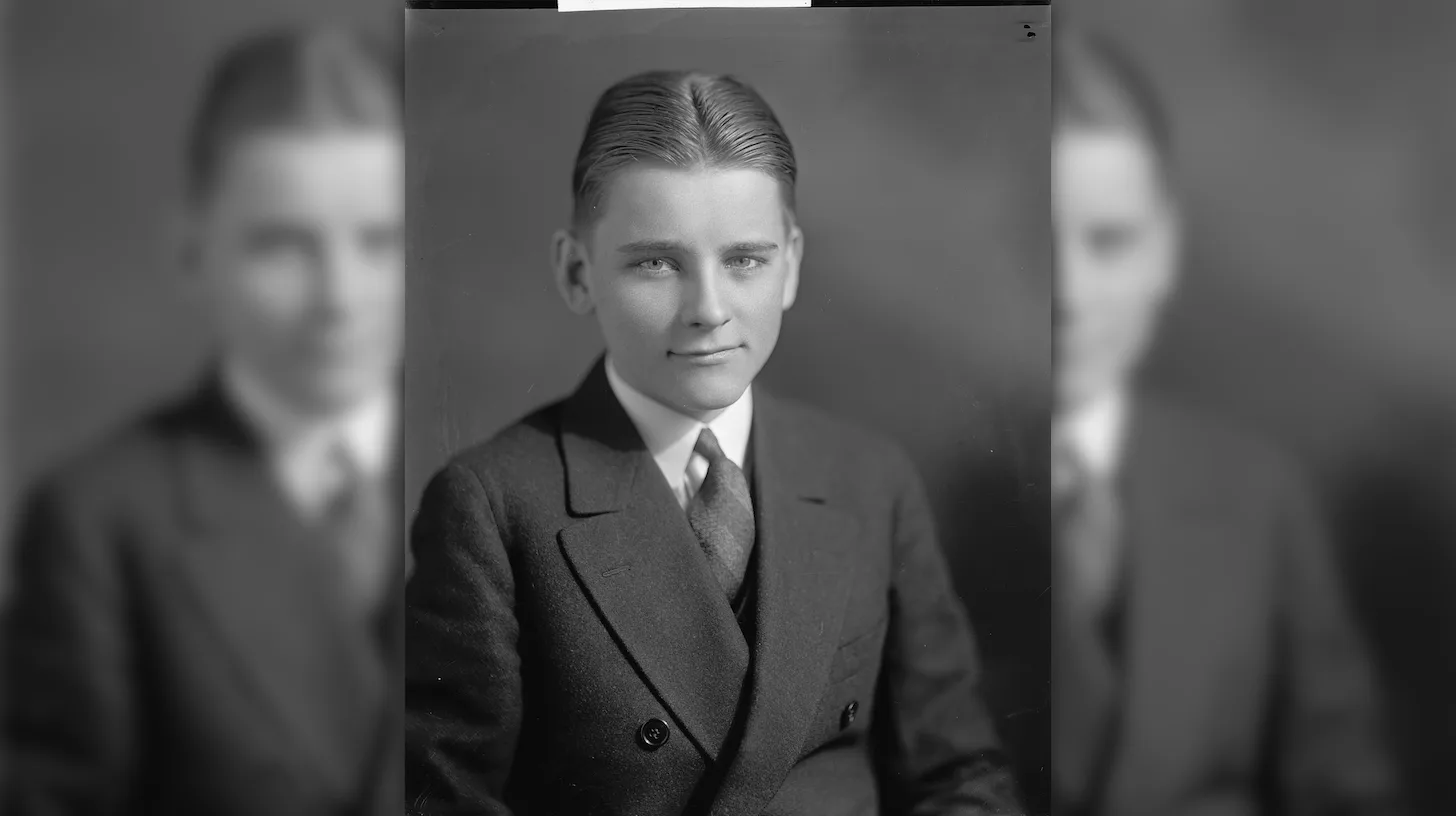
His father described him as “a boy of much promise, proficient in his studies, with a scholarly mind, who had just turned sixteen.” He was slight and, by the reports of that summer, frail in constitution, and his father thought he was the image of his own mother. His brother John, a year and a half older, remembered him as a bookworm, and he liked to trade jokes with his father. At five he had been through surgery for a serious illness of the chest.
He was not spoiled by the White House. On the day his father became president, in August 1923, Calvin Jr. had just started work in a tobacco field in the Connecticut Valley. When another worker said that if his father were president he would not be working there, the boy answered, as Coolidge told it, “If my father were your father, you would.” He had a way of stepping forward when his brother held back. When his father was sworn in as vice president in 1921, a newspaperman named John T. Lambert asked John to write a piece about the inauguration, and John said no. Calvin sent word that he would like to do it, and in it he wrote that he had seen Mr. Wilson leaving the White House, which he thought was “too bad,” because he had heard that Mr. Wilson was “a fine President.” Two years later a boy wrote to him as the first boy of the land, and he wrote back.
“I think you are mistaken in calling me the first boy of the land, since I have done nothing. It is my father who is President. Rather the first boy of the land would be some boy who had distinguished himself through his own actions.”
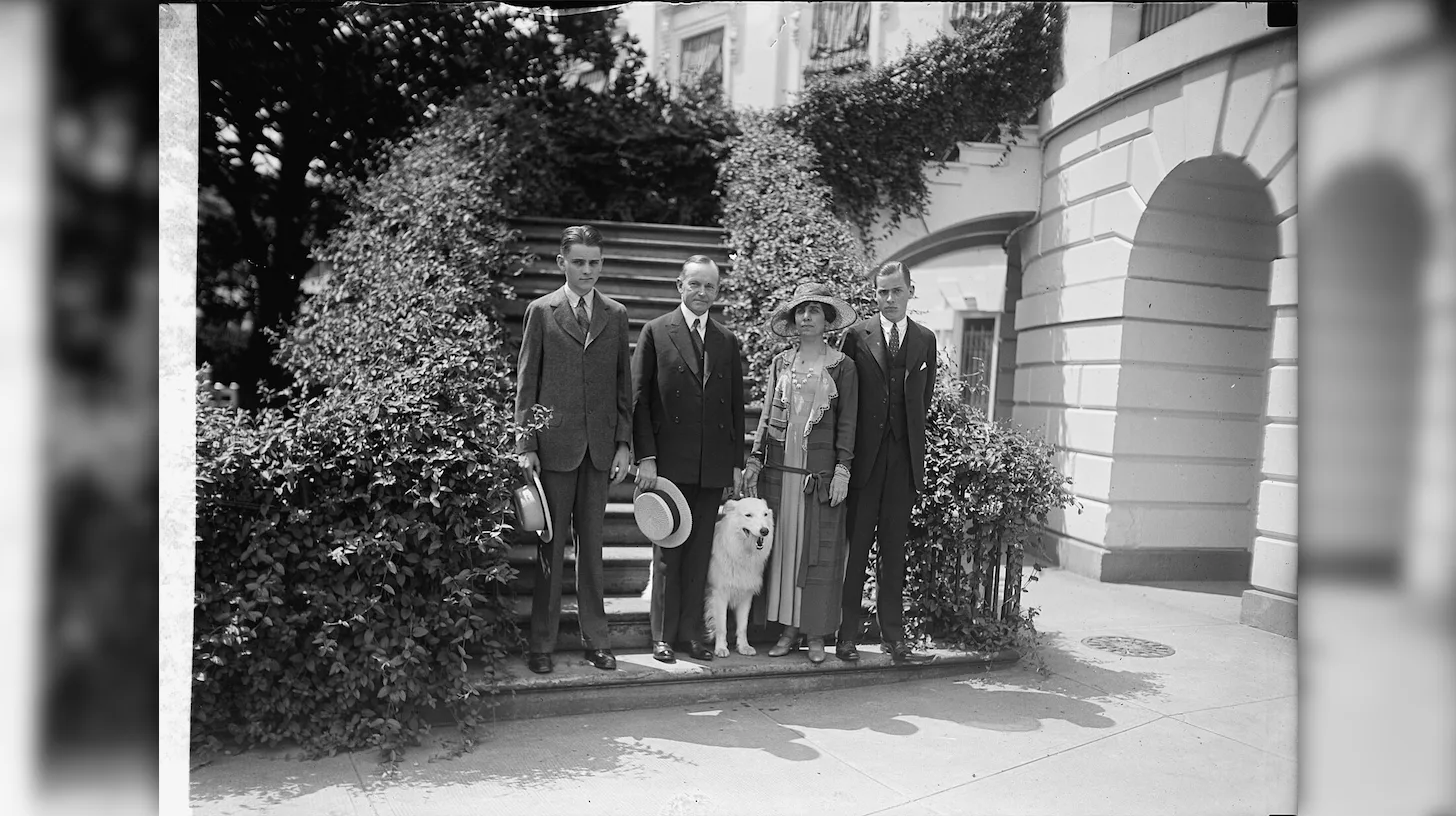
His parents did not know of the letter until after he died. In June 1924 both brothers were at Mercersburg Academy in Pennsylvania, and they came home together two weeks before the illness. John had just graduated and would go to Amherst, his father’s college, in the fall. Both boys were to leave soon for a citizens’ military training camp at Camp Devens.
A blister on his toe
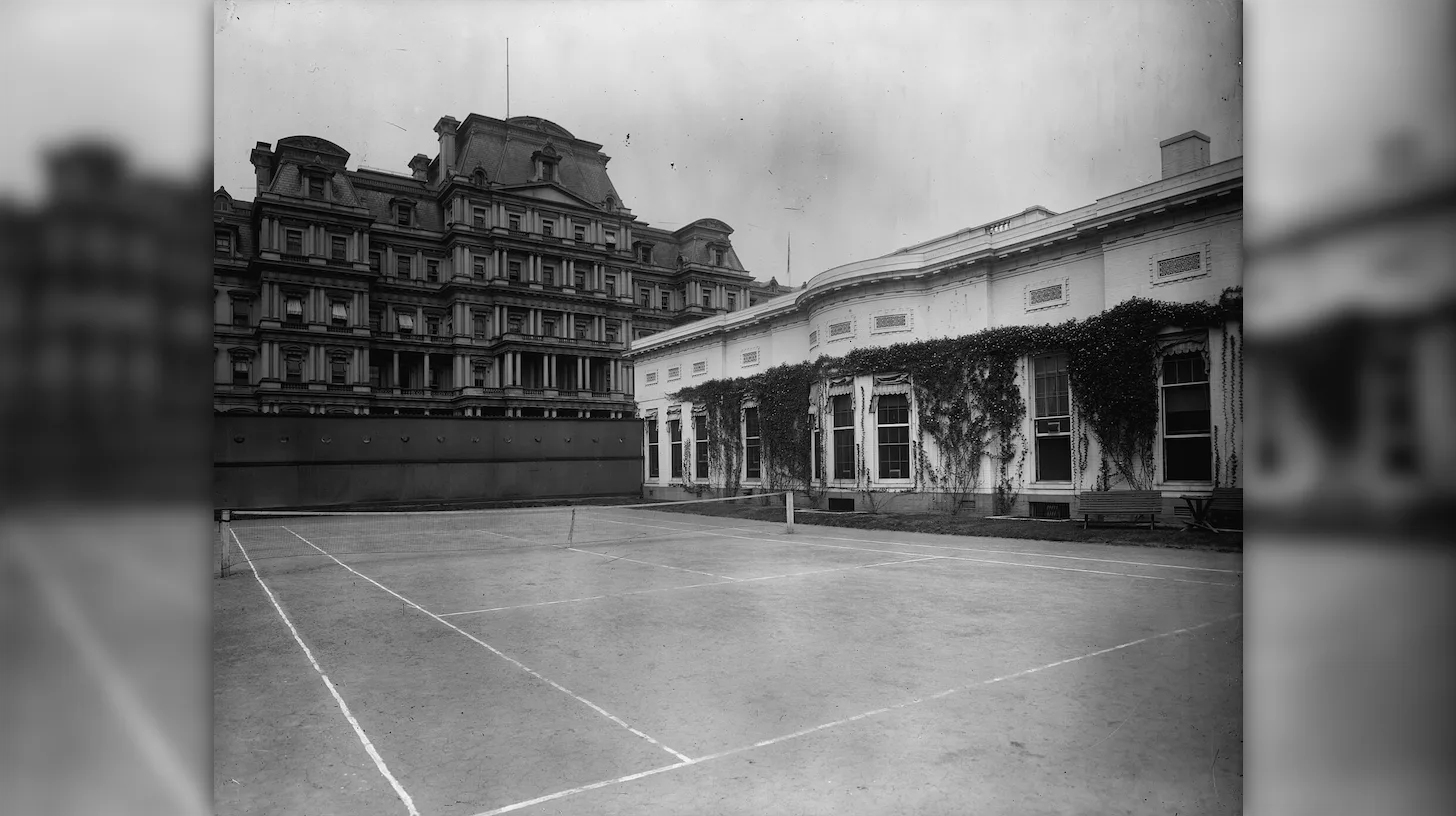
The president laid what followed at the door of his office, and he set it down in his autobiography five years later.
“We do not know what might have happened to him under other circumstances, but if I had not been President he would not have raised a blister on his toe, which resulted in blood poisoning, playing lawn tennis in the South Grounds.”
The reports of the next week said only that a blister had formed during a tennis match on Monday. Accounts disagree about which foot: the papers said the infection began on the right foot, and a later magazine account said the heel. The detail of the socks comes from later accounts, the Coolidge Foundation’s and the historian Robert E. Gilbert’s, and not from the papers of 1924.
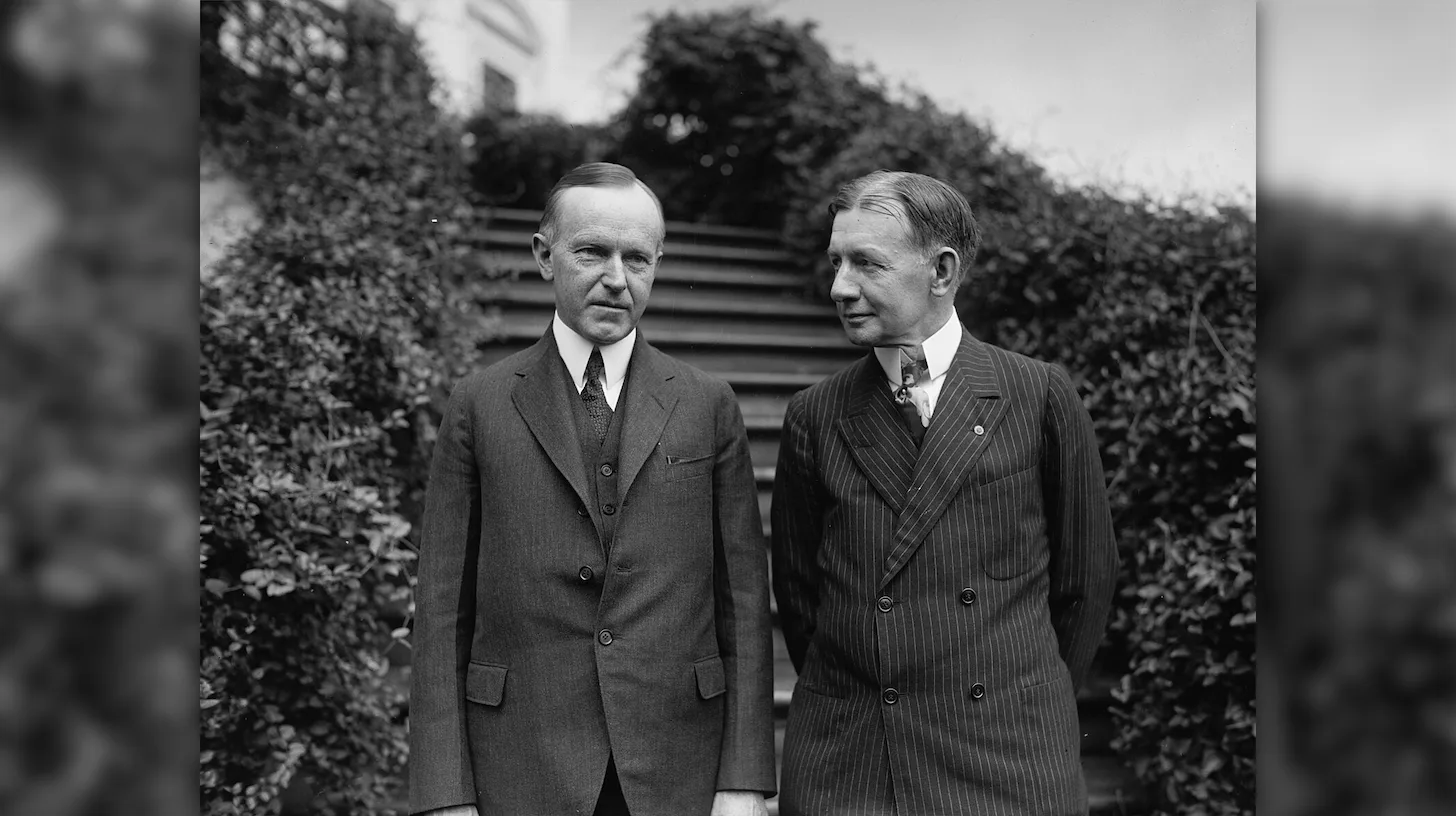
On Wednesday, July 2, the boy fell ill, and the White House physician, Lieutenant Commander Joel T. Boone, found red streaks running up his leg. By the Fourth of July he was seriously ill at the White House with septic poisoning, and a surgeon was called from Philadelphia. The president kept his engagement that morning to speak to the National Education Association. No official bulletins were issued, and the news reached the public through friends of the family.
Coolidge went back and forth from his desk to the sickroom many times a day. William Allen White, who wrote his life in 1938 and took the story from an earlier book by Mary Randolph, says that one day he coaxed and caught a small brown rabbit among the plants in the White House garden, picked it up and carried it through the house to his son. The boy smiled. Then they took the rabbit away, and the president went back to his work.
A plain army ambulance
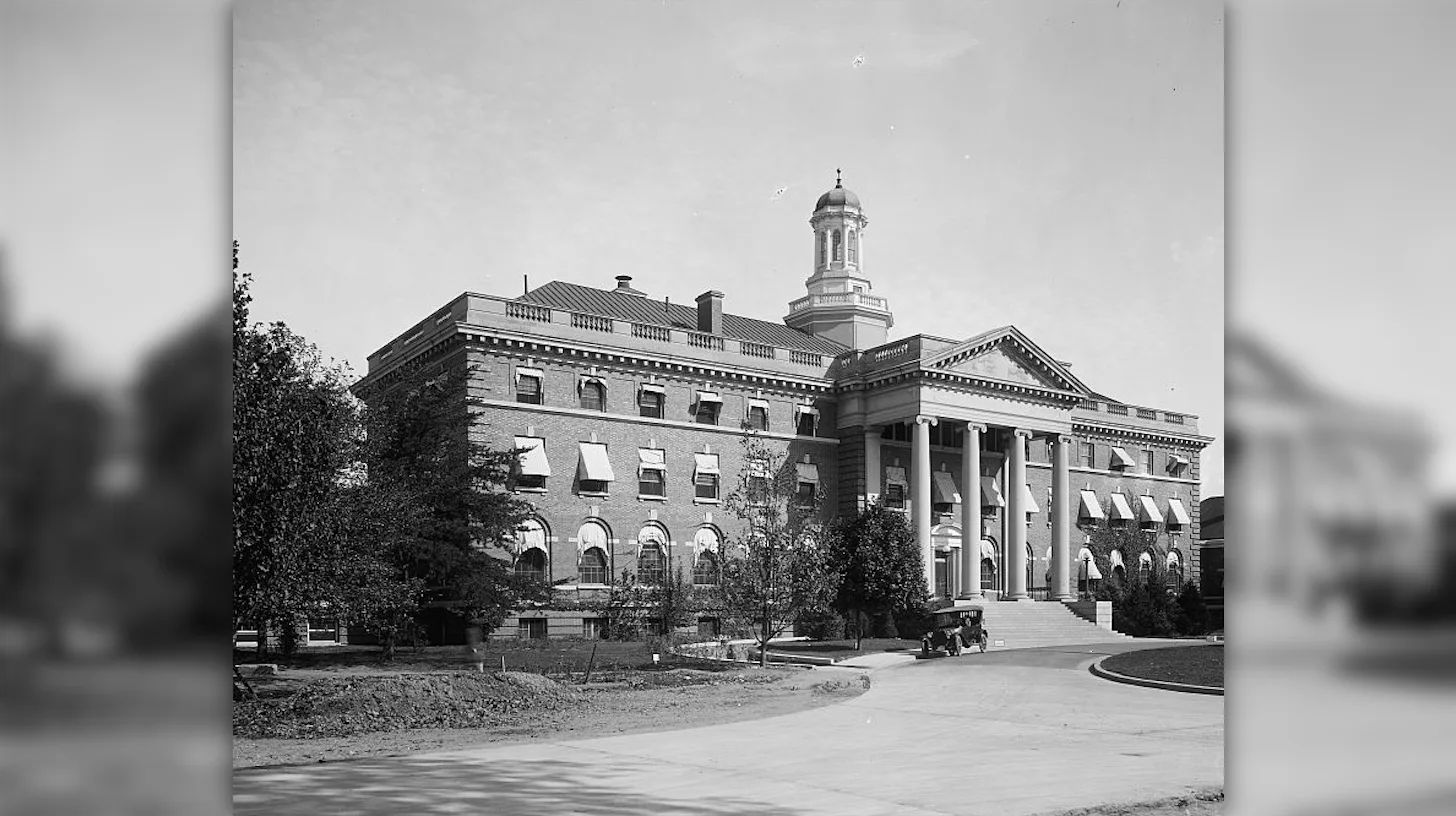
On Saturday, July 5, after three days of treatment at the White House, Calvin Jr. was taken to Walter Reed Army Hospital in a plain army ambulance, with his mother at his side. That night the surgeons operated, and one of the physicians told the reporters that they had done all they expected to do. The operation was on the left leg, below the knee, which the wire report called strange to the lay mind, since the trouble had begun in the right foot. It was a staph infection, and it came in the years before antibiotics.
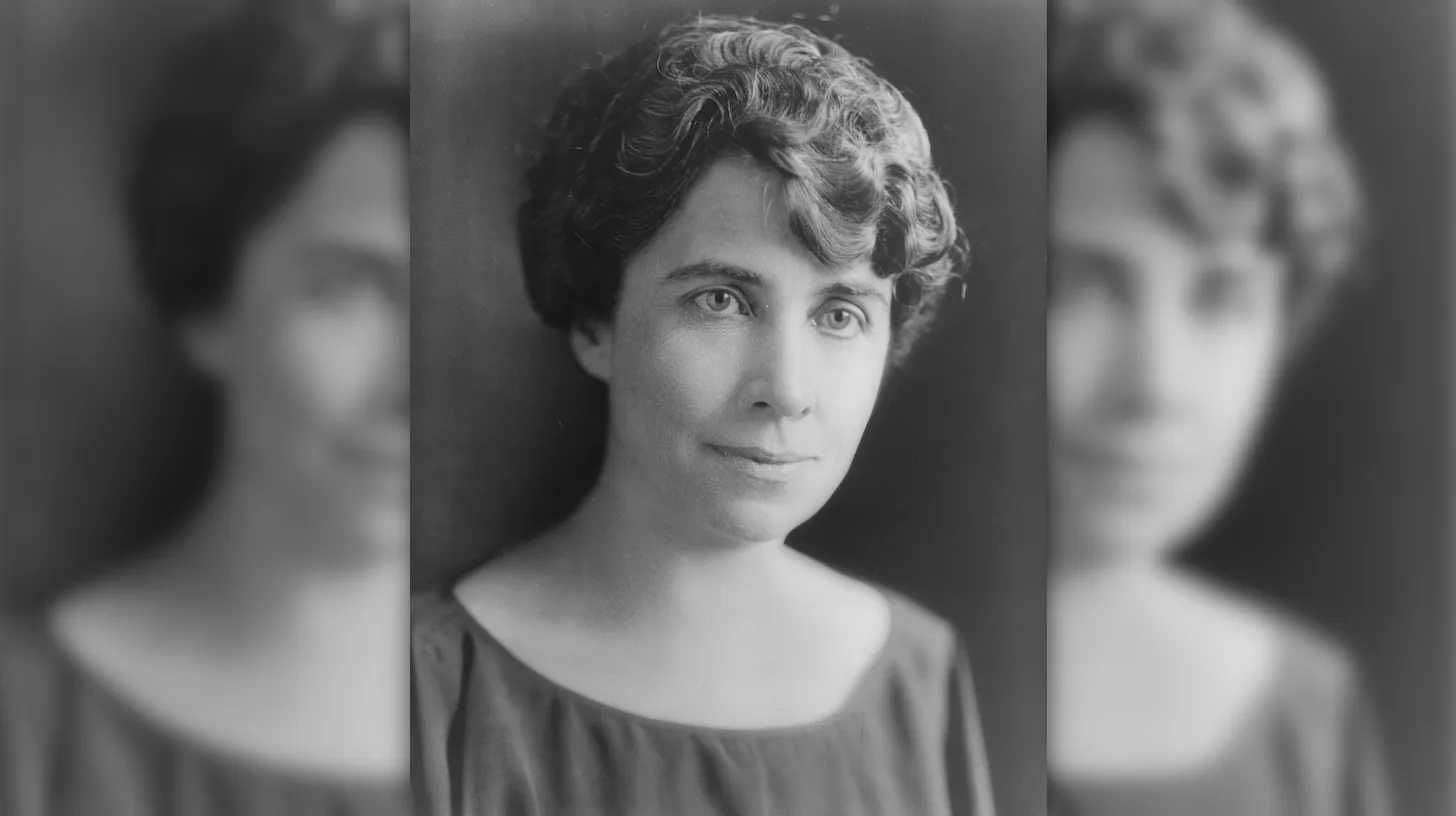
On Sunday close friends of the family were told that the boy could get no worse. His parents stayed by him. On Monday an eighth physician was called in, and the doctors tried a blood transfusion, injections of salt solution and artificial respiration. Coolidge wrote later of what the boy asked of him. “In his suffering he was asking me to make him well. I could not.”
The last two hours
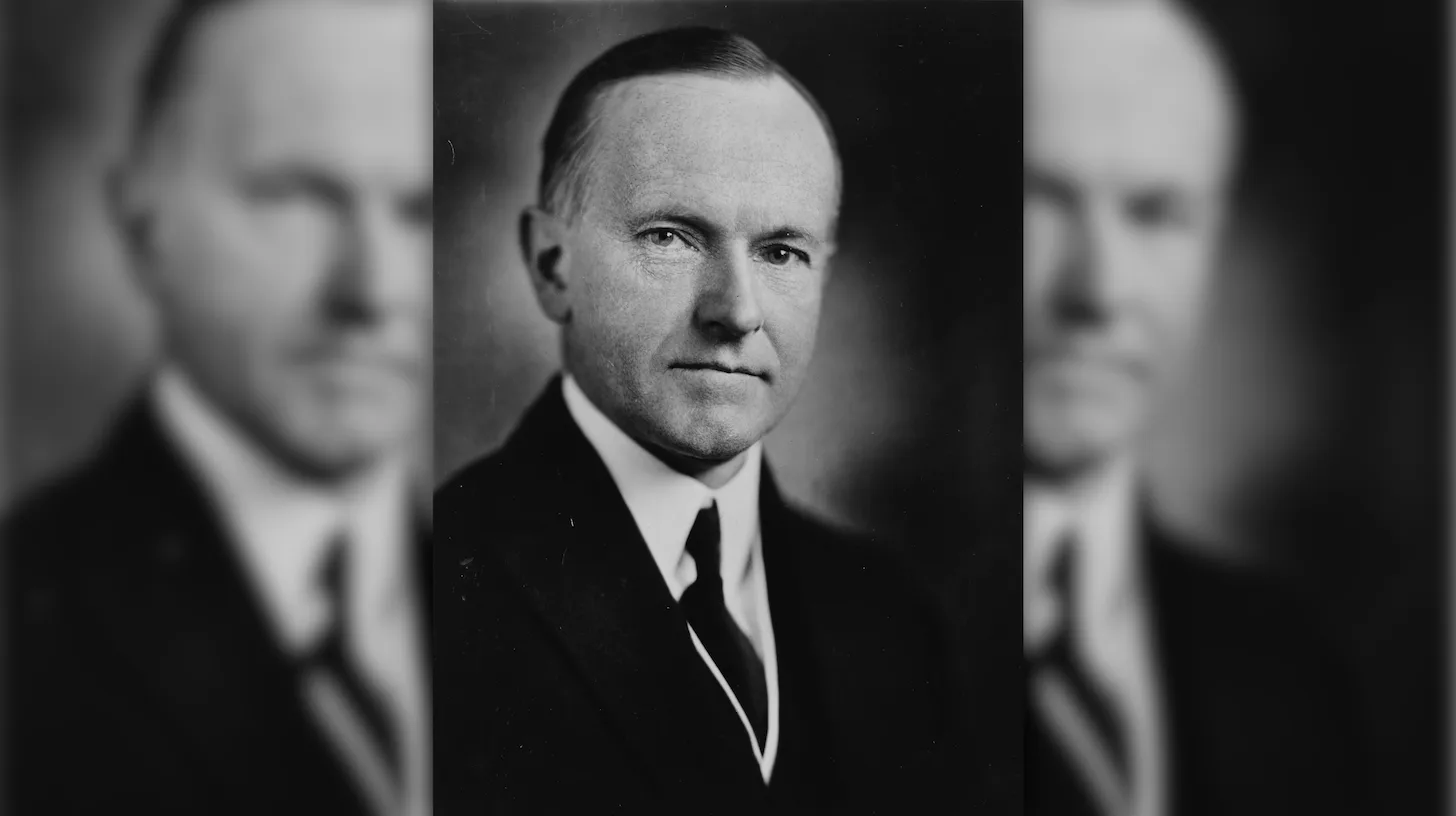
The final collapse began at five minutes before eight on the evening of Monday, July 7. The papers reported that he stayed conscious almost to the end, and that the president and Mrs. Coolidge were with him. Dr. John A. Kolmer, the consulting physician, attended him through the last two hours, with only the parents and a nurse in the room, and in 1955 he described what he saw. Someone opened the wrong valves on the oxygen tank, a glass container exploded, and a fragment struck the president on the forehead. Coolidge asked to be allowed to listen to his son’s heart.
“At about 10 p.m. I announced that the boy was rapidly dying. The President sprang from his chair and took his dying son in his arms, shouting hysterically into his ears that he would soon join him in the great beyond”
He asked the boy to give a message to his grandmother, Coolidge’s mother, whose image he was, and a medallion of her was put in his hands. Calvin Coolidge Jr. died at 10:20 that night by Kolmer’s account, at 10:30 by the newspapers’. White, in 1938, added last words he had from another writer: the boy said “I surrender!” and asked his nurse to say it too. No report of 1924 has them. John had been spared the last hours at the bedside. At midnight the White House was entirely dark, and the next morning a drizzling rain fell on Washington.
Four generations at Plymouth
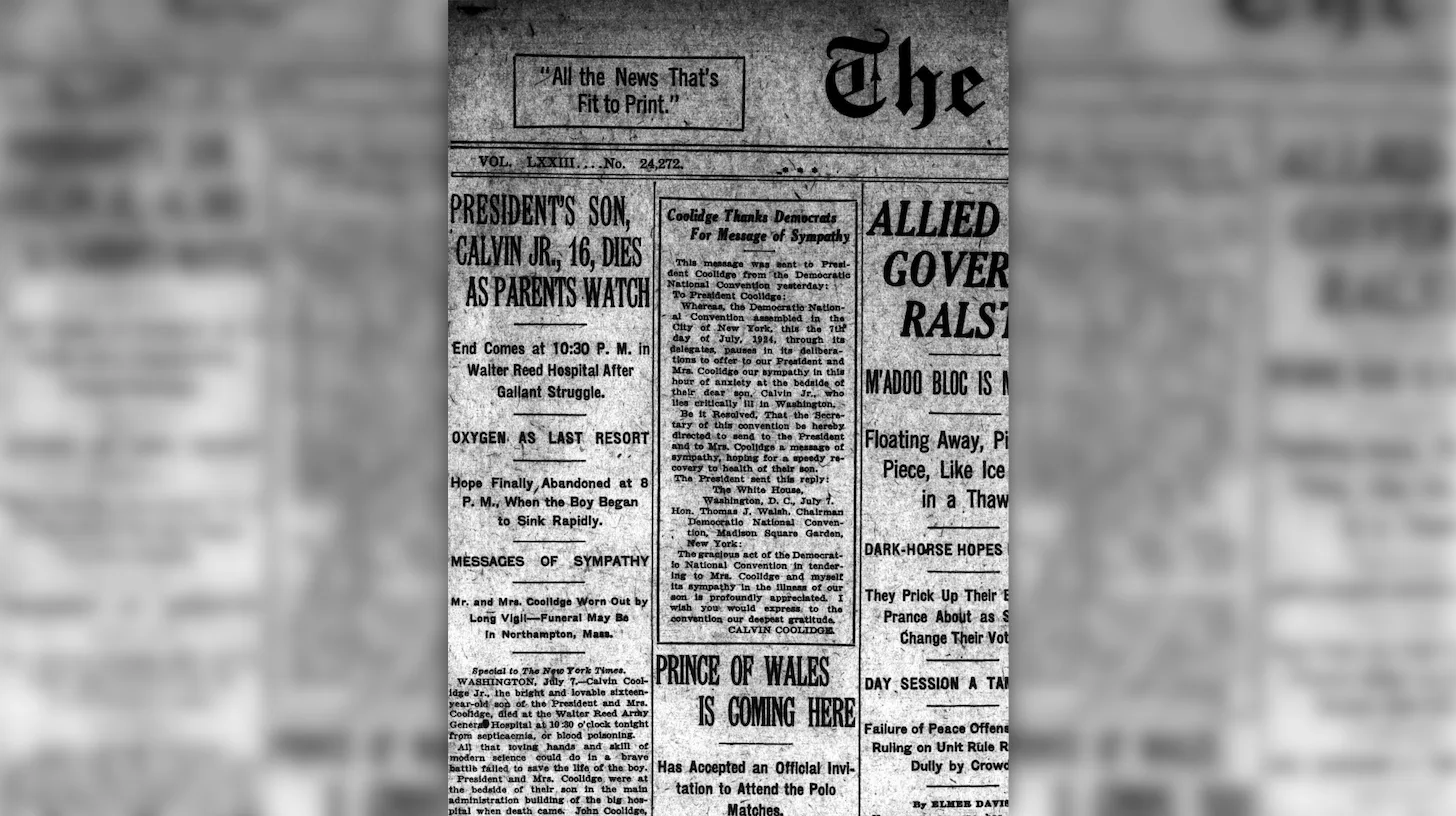
The Democrats were in convention at Madison Square Garden in New York that week, deadlocked over their candidate. When Senator Thomas J. Walsh announced the death, a reporter remembered the shudder that passed over the hall, and the delegates adopted a resolution of sympathy by a rising vote. King George V sent a message of condolence, and the games of the Pacific Coast baseball league stopped for a minute’s silence.
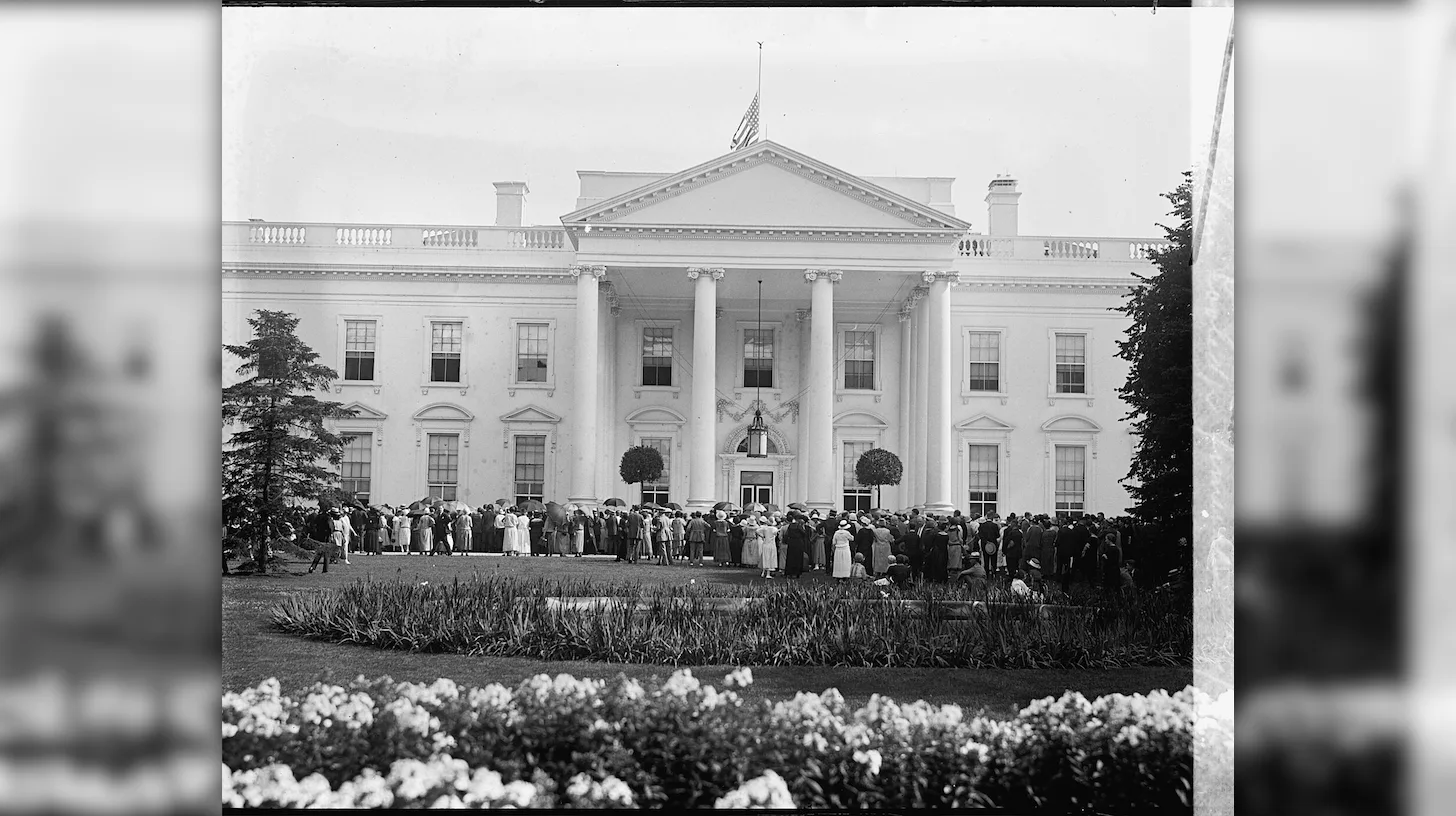
The funeral was held in the East Room of the White House at four o’clock on Wednesday, July 9. The ceremony at which the party would formally tell the president of his nomination was put off from July 24 to August 14. The coffin lay under pink and white roses with a small guard of Marines, and during the service, the papers said, the president looked straight ahead, his lips tight. The family took the body north in a private railroad car. After a service the next day at the Edwards Congregational Church in Northampton, Massachusetts, the funeral party went on by train to Ludlow, Vermont, and by car twelve miles over the narrow hill roads to Plymouth Notch.
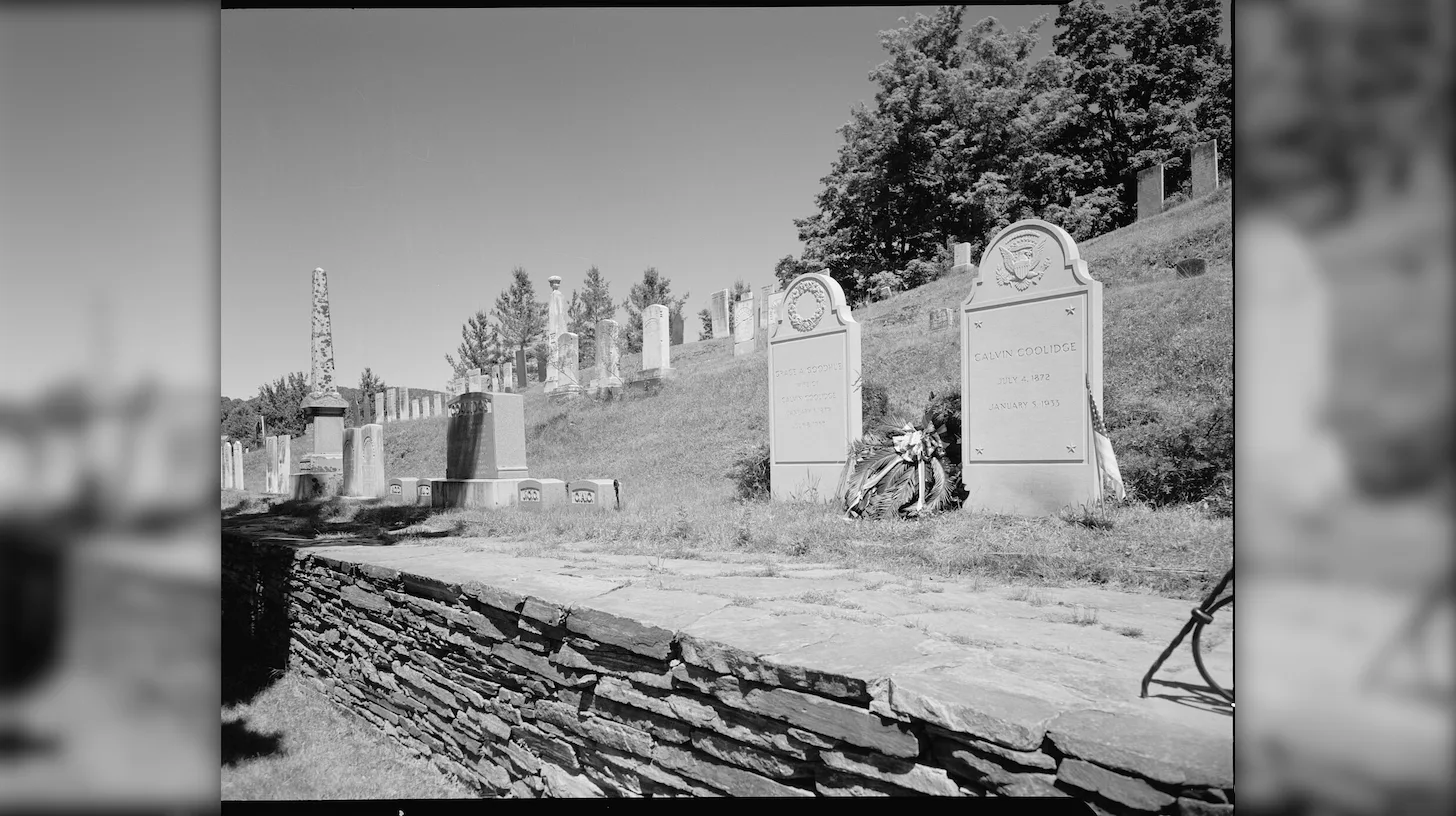
They buried him on the hillside in a plot where Coolidges of four generations lay. The service took less than fifteen minutes. A Marine sergeant who had sounded taps for the Unknown Soldier and for Presidents Harding and Wilson sounded them for Calvin Jr. on his cornet, and only at the grave did Grace Coolidge weep a little, softly. Afterward, at the family’s house in Plymouth, the president marked his son John’s height on a doorframe where the heights of the family were kept, and beside it he wrote another line: “C.C. 1924, if alive.”
The power and the glory
A few days later Lambert came into the president’s office and found him with his chair turned toward the south lawn and the Washington Monument. “You know,” Coolidge said, “I sit here thinking of it, and I just can’t believe it has happened.” Lambert watched him weep.
“He was not the President of the United States. He was the father, overcome by grief and by love for his boy. He wept unafraid, unashamed. The brief moments seemed to bear the age of years.”
Coolidge won the election that November with 382 electoral votes and 54 percent of the popular vote. He attended no partisan meetings and made no purely political speeches. In his autobiography he wrote that when his son “went the power and the glory of the Presidency went with him,” and he added, “I do not know why such a price was exacted for occupying the White House.” To Chief Justice William Howard Taft he had written that summer that his sorrow came from “the belief that he possessed great power for good that would have made itself felt, had he lived.” Gilbert has argued that from that summer Coolidge showed every symptom of a major depressive episode on the psychiatric checklist: he slept as many as fifteen hours a day, his workday shrank to about four hours, and John told Gilbert in 1997 that his father was never the same again. In November Grace Coolidge began to crochet a bedspread of 48 squares, one for each month the family had left in the White House. Coolidge’s own father died in less than two years. He did not run again in 1928, and he died on January 5, 1933.
John Coolidge graduated from Amherst in 1928, married the daughter of the governor of Connecticut, worked for the New Haven railroad and gave the family’s buildings at Plymouth to become a state historic site. He died in 2000. On the fifth anniversary of her son’s death, Grace Coolidge wrote a poem to him and called it The Open Door.
“You, my son Have shown me God. Your kiss upon my cheek Has made me feel the gentle touch Of Him who leads us on.”