12 min read
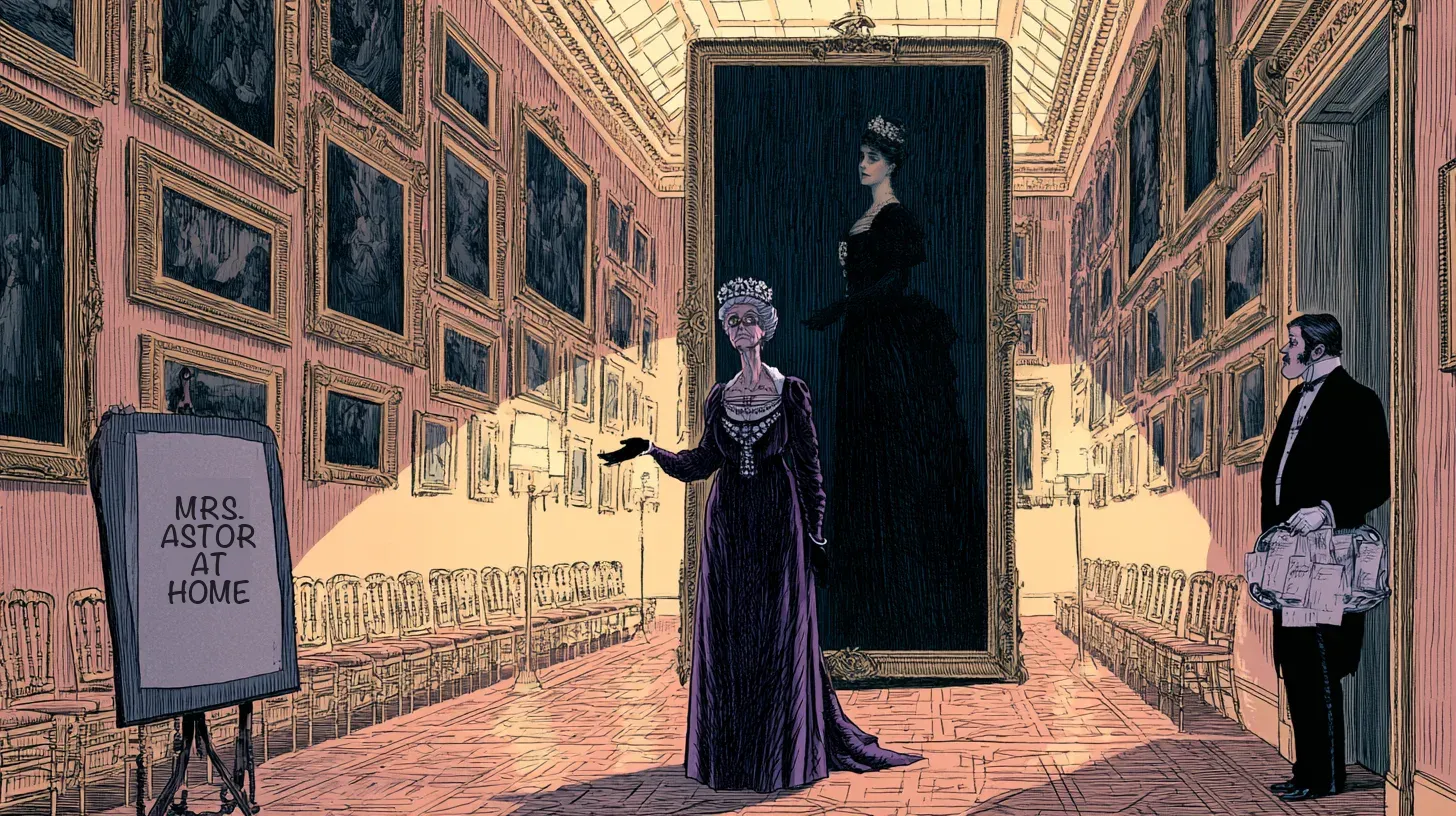
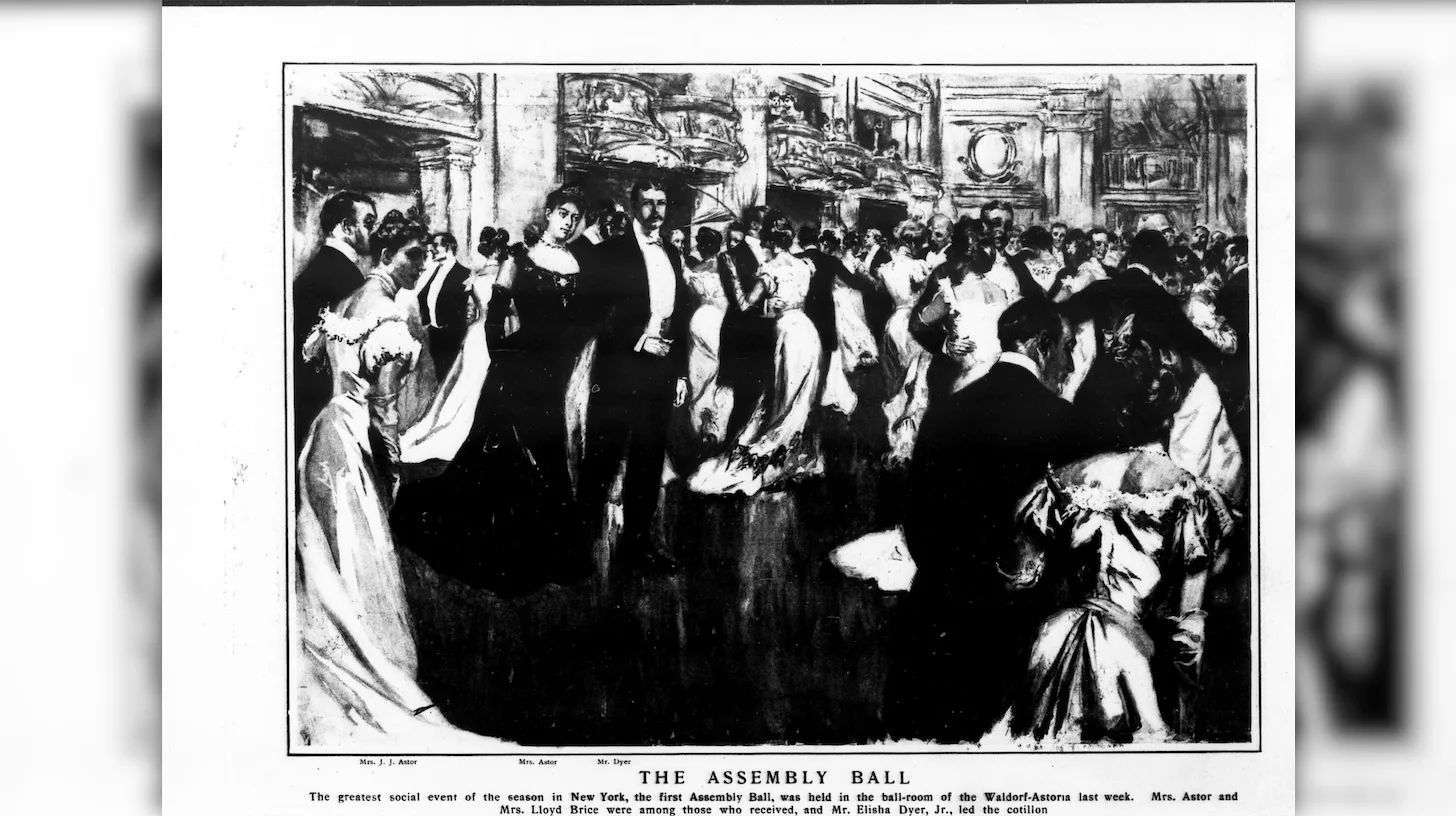
On Monday night, January 9, 1905, the first guests began to arrive at the double house on Fifth Avenue at Sixty-fifth Street at eleven o’clock, as they always did, and by the time the last of them had come it was after midnight. Inside, in the French drawing rooms, the woman who had sent out the cards stood to receive. She was seventy-four, and the cards said only, “Mrs. Astor at home January Ninth, at 10 o’clock.”
It was her ball, given on the second Monday of January as it had been for years, and it was the last. Three years and some months later Caroline Astor was dead. A story told about her ever since says that she spent her last years alone in that house, receiving guests who were not there. The papers of her own time tell of a long illness and say nothing of the kind, and the story first appeared in print as fiction.
At home January Ninth
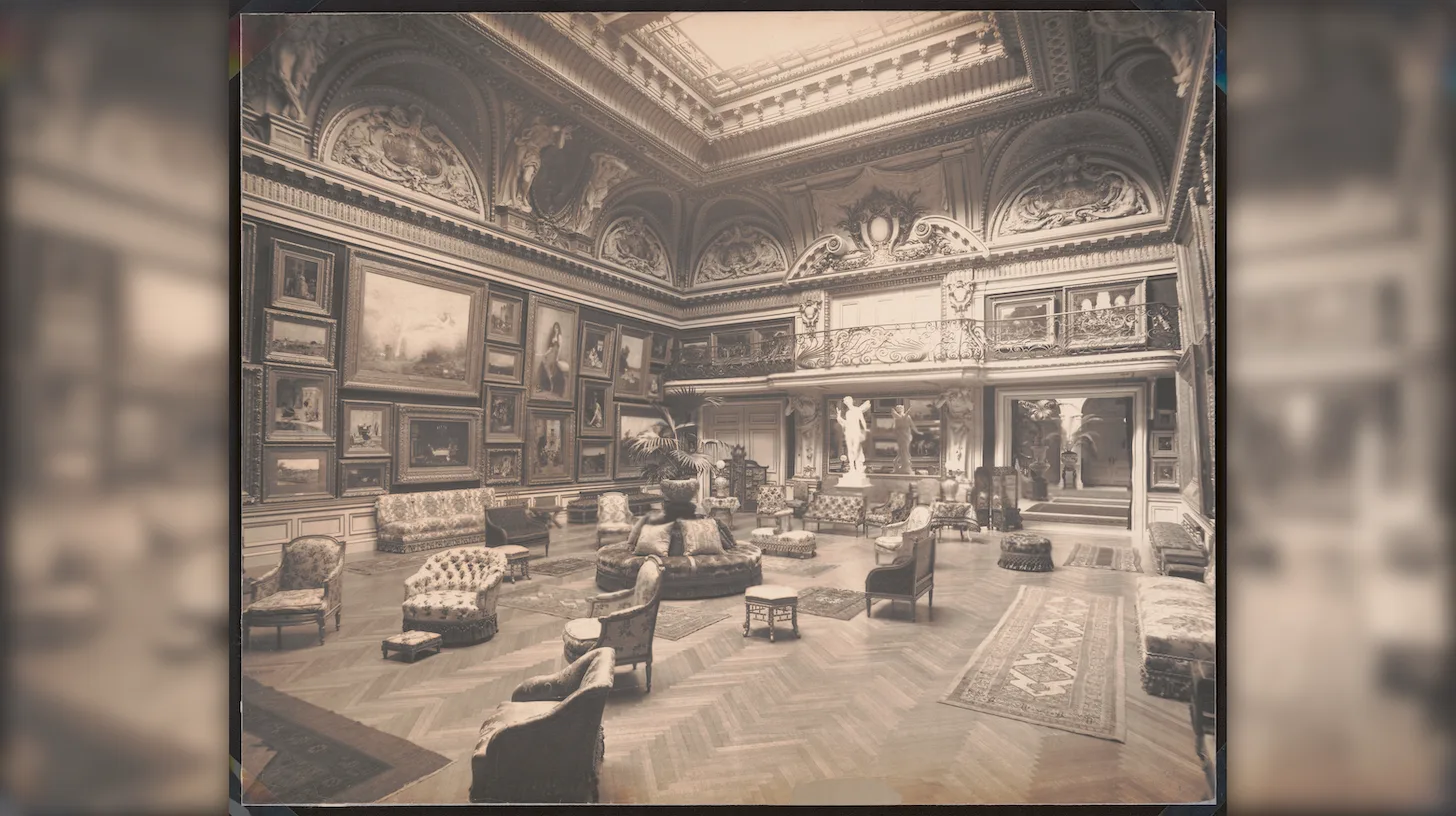
The guests came in through an enclosed entrance lined with boxwood and evergreens from the porte-cochère, which led left into her half of the house and right into her son’s. The foyer was banked with poinsettias and Easter lilies, and the drawing rooms where she received were filled with American Beauty roses. A reporter for the New York Times took down what she wore.
“Mrs. Astor’s gown was an exquisite French creation of deep purple velvet, paneled down the front with pale blue satin, embroidered in gold, and was trimmed with point lace.”
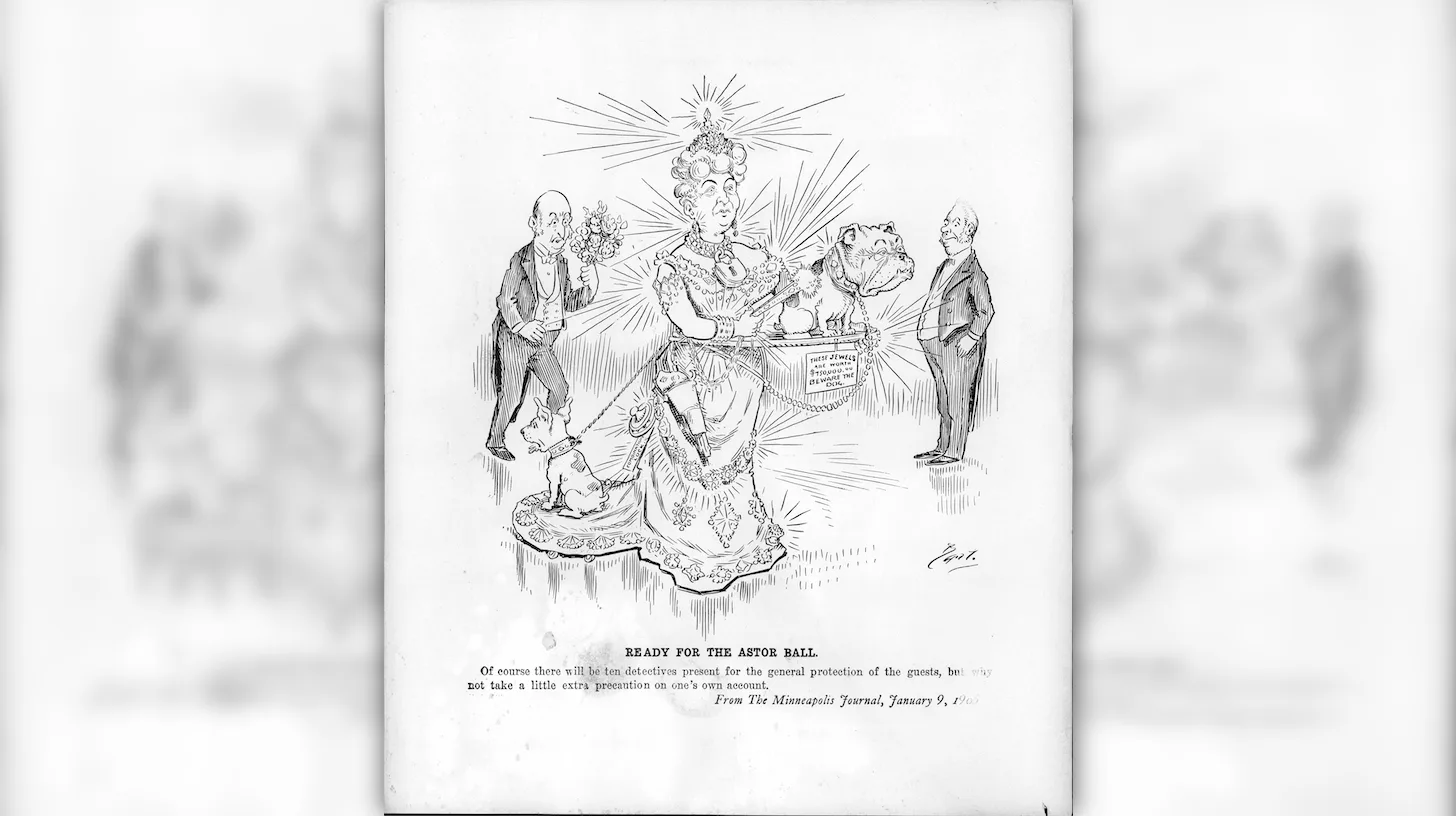
Her jewels were all diamonds: a tiara, a dog collar of purple velvet with diamond ornaments, a large ornament at the corsage and the diamond stomacher that the paper said had once belonged to Marie Antoinette. That same day a Minneapolis paper ran a cartoon of her ready for the ball, armored in diamonds, with a padlock at her throat and two bulldogs beside a sign giving her jewels’ value as $750,000. It was her custom to receive alone. That night, for the first time, she had a young woman beside her, Constance Knower, who was engaged to her grandson.
The dancing was in the picture gallery at the back of the two houses, which served as the ballroom, under paintings by Corot, Meissonier and Gérôme. Fewer than six hundred guests came. Supper was served at about one o’clock, and afterward the cotillion was led from both ends of the room at once, from one by Elisha Dyer Jr. and from the other by Harry Lehr. The favors were canes, inkwells, feather pens and small dolls in national costume. It was the ninth ball she had given in the house.
The grande dame
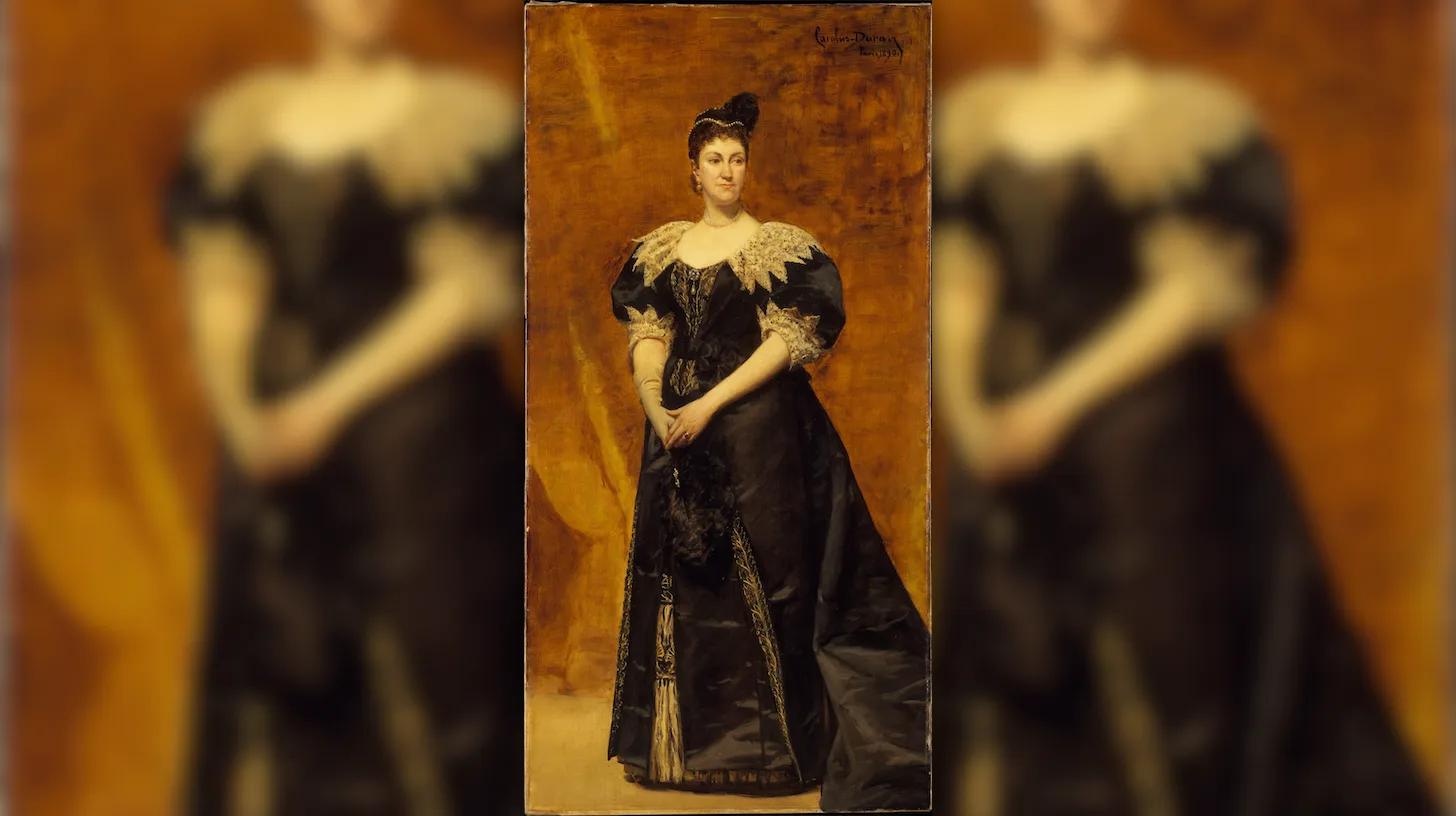
She had been born Caroline Webster Schermerhorn, in 1830, and as the wife of William Astor she had been for a generation the Mrs. Astor of New York. Her portrait, which she had painted in 1890 by the French artist Carolus-Duran, shows her standing at full length in a dark gown. The Times, when she died, said she had been tall as a girl, of striking figure and dignified bearing, and that the painting was the only picture of her in existence, because she had a horror of being photographed. She went out veiled. At the opera she had Parterre Box 7, and she arrived at nine o’clock almost to the minute.
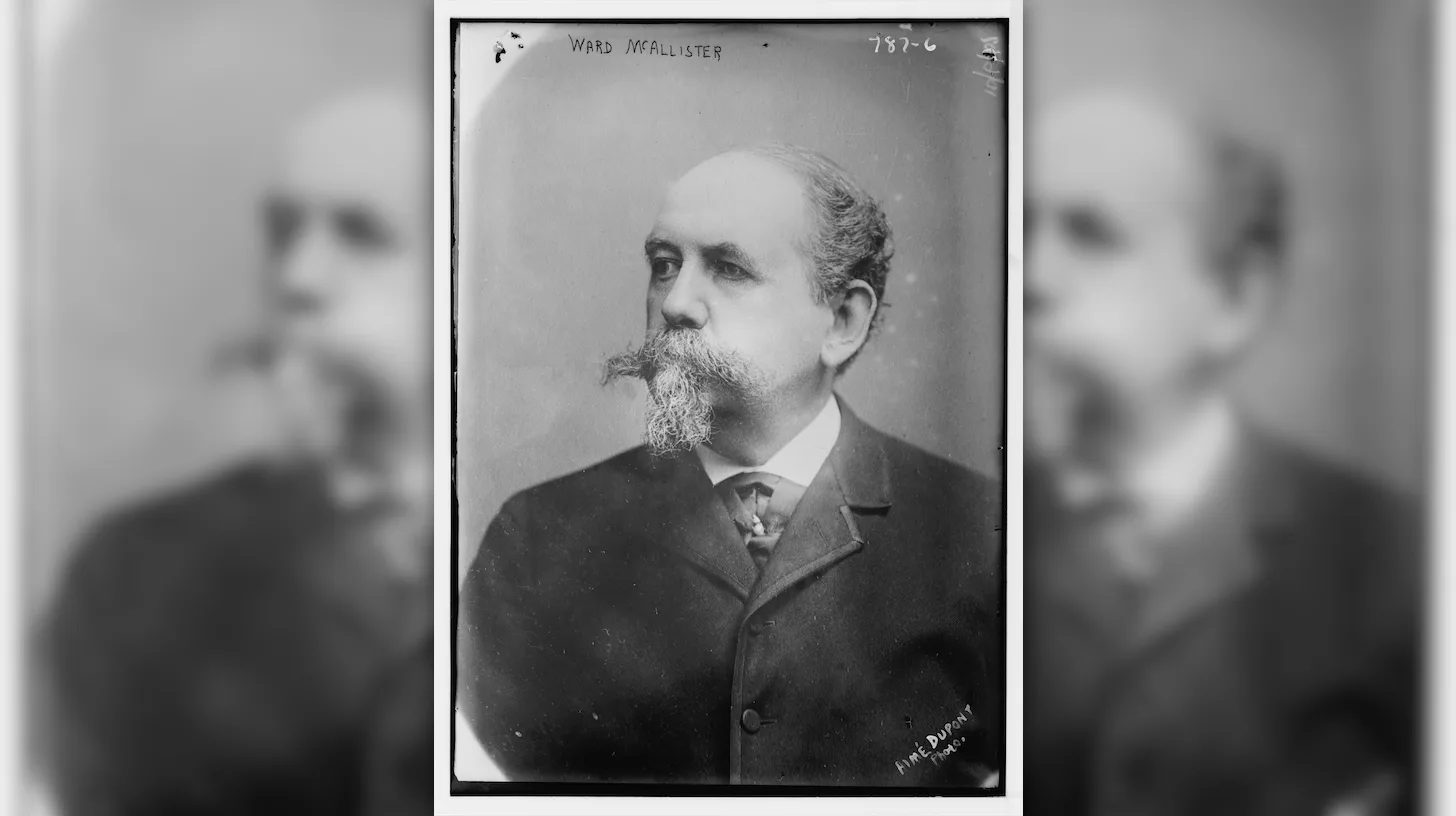
Her chief ally was Ward McAllister, who organized the subscription balls of the Patriarchs and wrote a book about New York society in 1890. He did not name her in it, but he gave a chapter to “A Lady who has led Society for many Years.” He had recognized her ability at once, he wrote, and felt that she would become society’s leader, and he described leading the way at a ball “with our leader of society.”
“I had the honor of leading the way with our leader of society, whom Worth had adorned with a robe of such magnificence that it attracted and held the attention of the whole assembly.”
The Times, looking back when she died, cast her as the queen of New York’s social domain and McAllister as her prime minister, and it was McAllister who gave the city its number. In 1892 he handed the Times a list of names that he said made up the beau monde of New York, and the list became known as the Four Hundred. A legend grew up that four hundred was all her ballroom would hold. McAllister’s own explanation, printed in the same article, came in his usual manner.
“Let me explain, don’t you know. There are three dinner dances, don’t you know, during the season, and the invitations, don’t you see, are issued to different ladies and”
With about one hundred and fifty guests at each of the three, he went on, 400 different invitations were issued in a season. Whatever the arithmetic, the list was hers as much as his. A woman who watched those years from inside, Constance Cary Harrison, remembered the two Mrs. Astors as the hostesses whose entertainments drew the most comment, “whose fiat none were found to dispute.” Frederick Townsend Martin, a society man of the same circle, wrote that “She loved to make people happy.”
The hotel next door
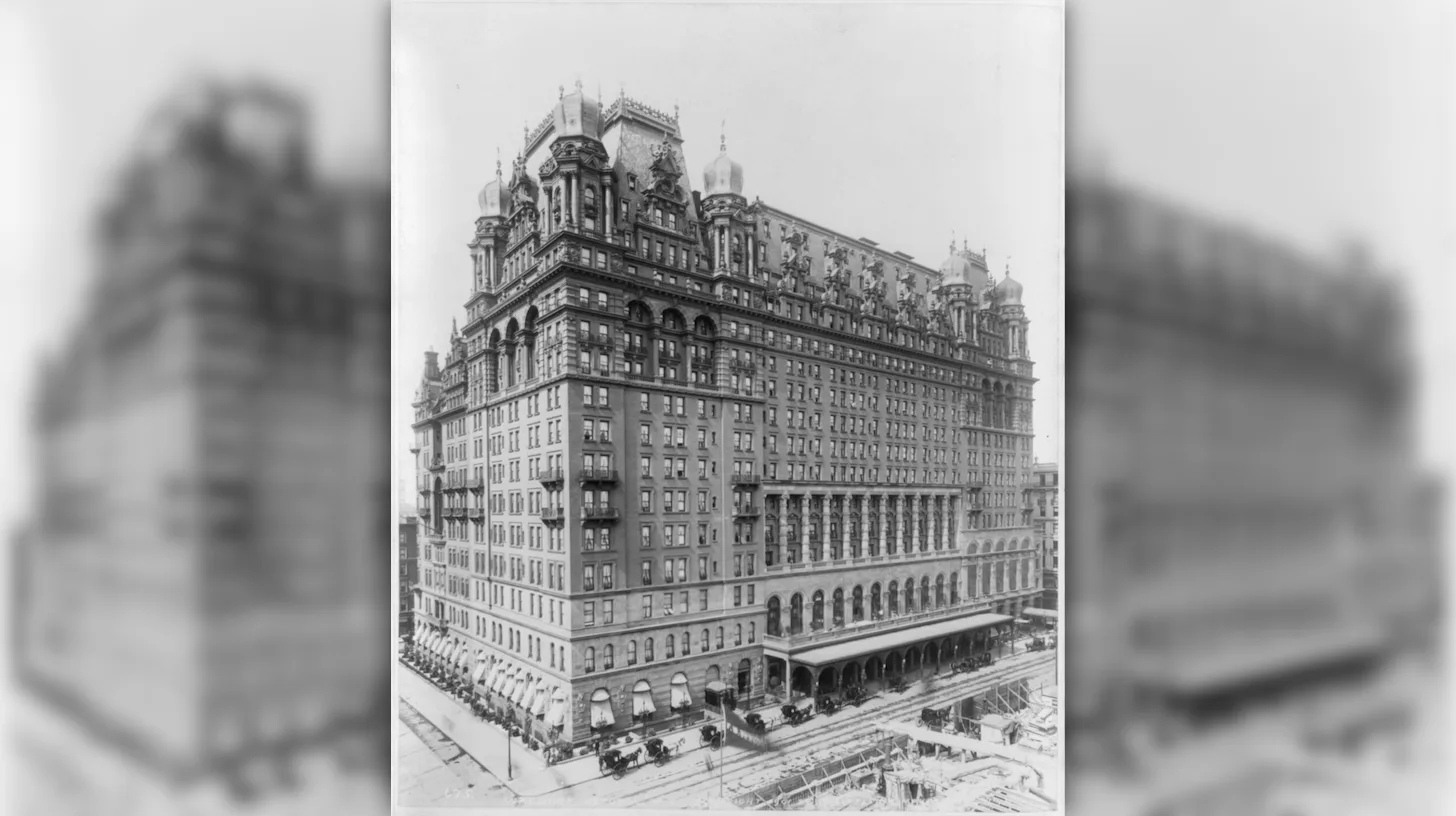
For most of those years she lived in a red brick mansion at Fifth Avenue and Thirty-fourth Street. Her husband’s nephew, William Waldorf Astor, was her neighbor on that block, and the two households did not get along. The quarrel, the Times said later, was over which woman was entitled to be called “Mrs. Astor,” the nephew’s wife claiming it as head of the senior branch of the family. On an exceedingly wet night in March 1893 the nephew’s Hotel Waldorf opened at the corner of Thirty-third Street, beside her house, with about fifteen hundred people at the opening.
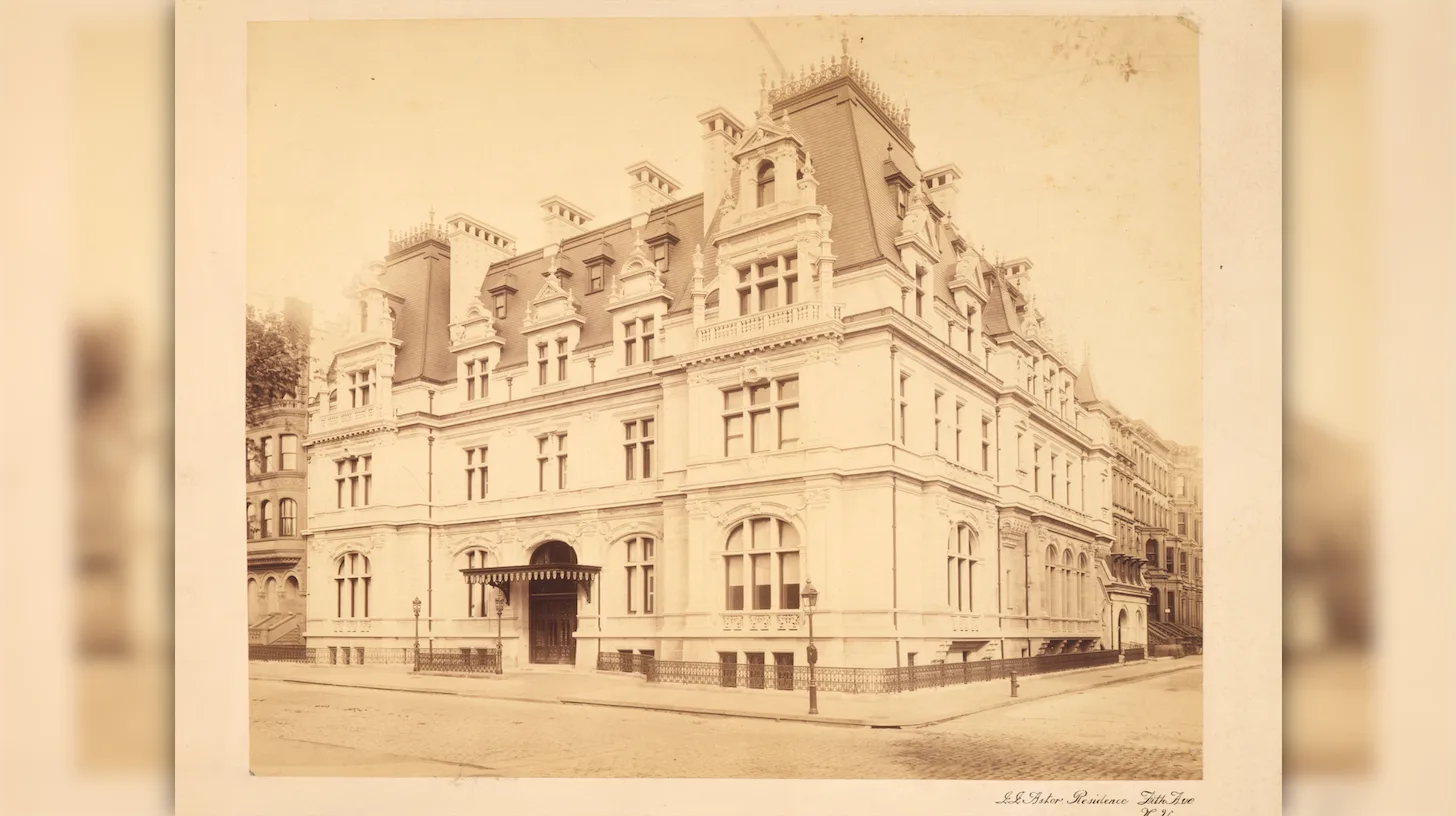
Writers ever since have said the hotel was built to annoy her. The report of the opening says nothing about it, and the motive is their reading of the quarrel, not a fact in the record. What is certain is that she left. After her husband’s death she moved uptown into a double house of white marble just above Sixty-fifth Street, built for her and her son, John Jacob Astor IV, and in February 1896 she gave her first ball there. Nearly six hundred people were invited. The Times called the house the largest in New York, and its gallery the most spacious private picture gallery in the country. She wore purple velvet that night too.
A delicate condition of health
The ball of 1905 was the last. There was none the next January. In the winter that followed, the Times reported afterward, it was omitted again because of her own delicate condition of health. Her obituary dated her troubles from a nervous breakdown in the fall of 1906 and said her health had been precarious since the summer of 1907. She did not open her Newport house, Beechwood, that summer.
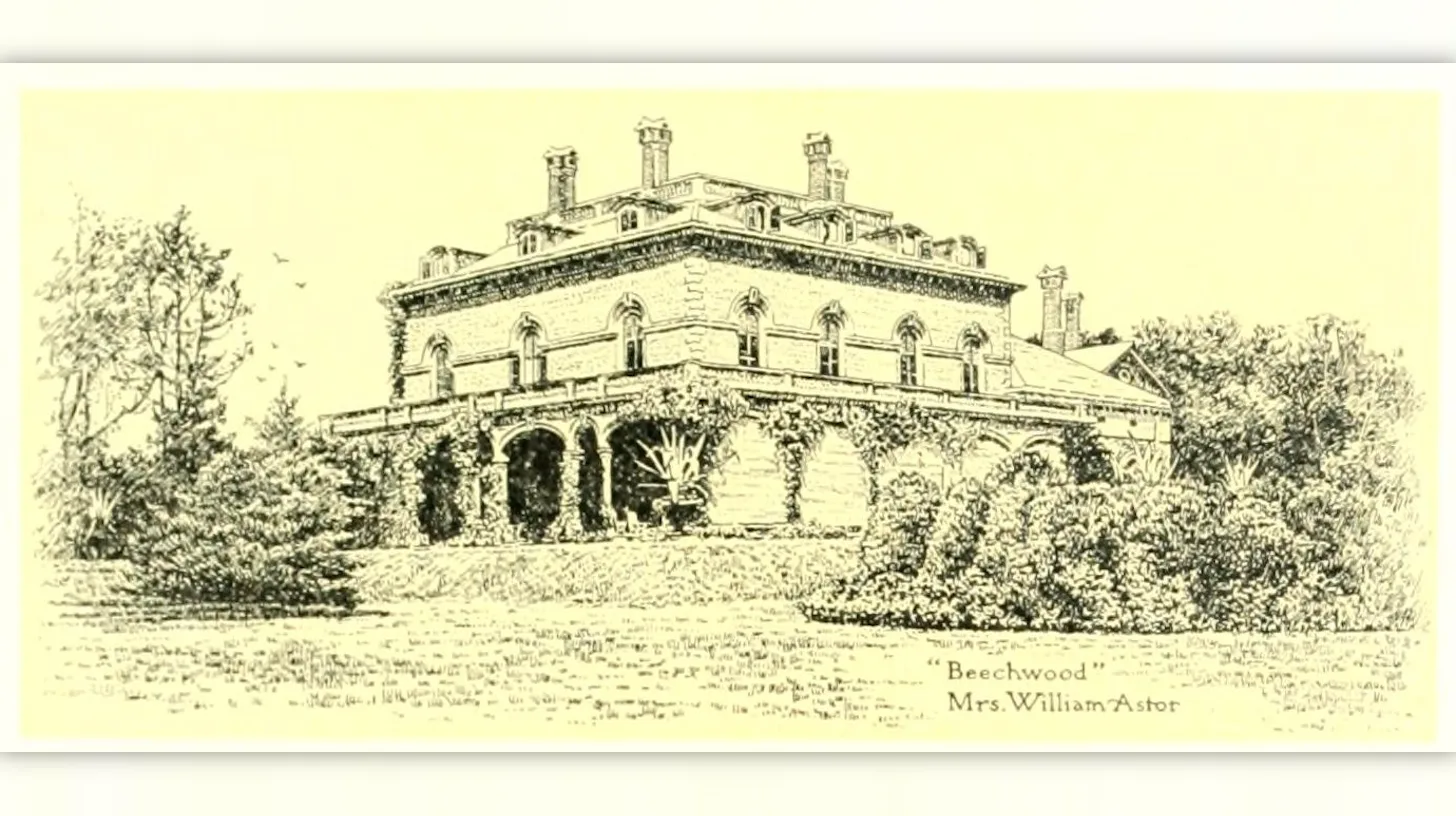
A story that she fell on the marble stairs of the Fifth Avenue house appears in later books, but they cannot agree on the year, and no newspaper of the time that the research for this article could read reports it. A book of 1941 quotes her, from a Chicago paper of September 1908, as saying that she was “not vain enough to believe that New York will not be able to get along without me,” though the original paper has not been seen.
In 1908 she went to Europe and stayed in Paris until the last week of August. Coming home, according to the Associated Press, she broke down in Boston. Martin, writing his memoirs five years later, said only that bad health had made her give up the place she had held.
Seven-thirty on a Friday
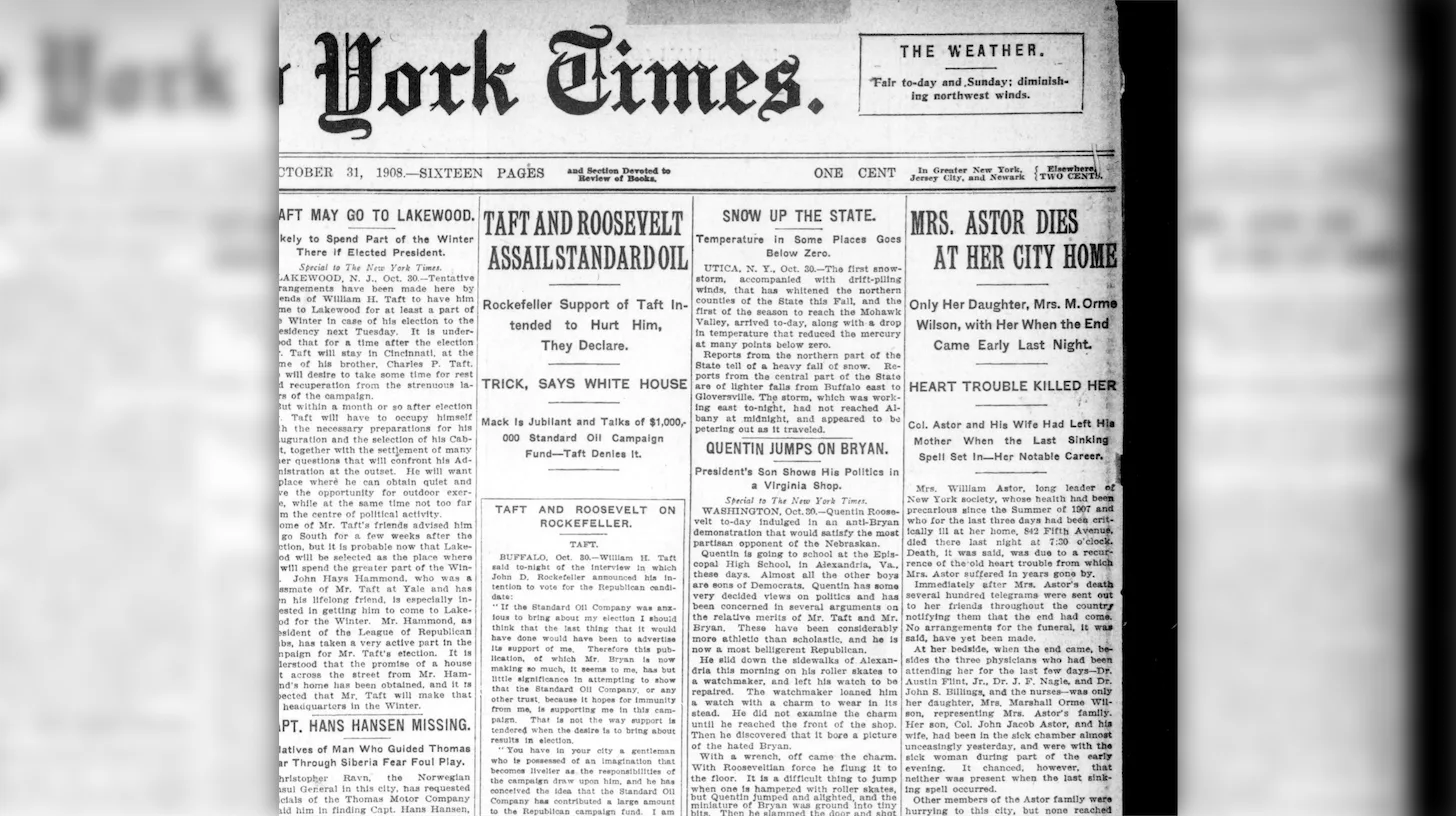
She died at her house on Friday evening, October 30, 1908, at half past seven. Three physicians had attended her, with nurses, and they had given her oxygen and stimulants, but she had been unconscious since early afternoon and her age was against them. Her son and his wife had been in the sickroom most of the day and had gone out before the last sinking spell. Only her daughter, Mrs. Orme Wilson, was with her at the end. Her other daughter, Mrs. Haig, was at sea. She was seventy-eight.
There was no great funeral. The services were held at the house at two o’clock on Monday afternoon, for relatives and intimate friends, and she was buried uptown in Trinity Cemetery, at Amsterdam Avenue and 153d Street, beside her husband. The Times, in an editorial, called her “a woman of good sense and good taste.” Her will left nearly everything to her daughters. Her son got the family jewelry, because, as the will explained, his father had already provided for him. She left five thousand dollars to her butler and the same to an asylum for the blind.
The Associated Press, in its own obituary, recalled that the famous Four Hundred had been her visiting list, that her ballroom on Fifth Avenue could hold a thousand people, and that she had once invited twelve hundred to a single entertainment. None of the obituaries the research for this article could find said anything about her mind. They spoke of a breakdown, of heart trouble and of oxygen. One said she had received her guests seated in a high-backed chair beneath the Carolus-Duran portrait, and the Times had noted three years before that she always stood near it in her drawing room.
Guests long dead
Twenty years after she died, the novelist Edith Wharton, who was a cousin of hers, published a short story in the Saturday Evening Post called “After Holbein.” In it an old New York hostess, “gently dying of softening of the brain,” comes down each evening into her shrouded drawing rooms, a tiara askew on her wig, “to receive a stream of imaginary guests,” and Wharton has one of her characters call the tale “a macabre pleasantry.” It was fiction, and Wharton presented it as gossip even inside the story.
Nine years later the historian Dixon Wecter told it of Mrs. Astor herself. In the drawing room where she had stood beneath her portrait, he wrote, she would plant herself in her old age, “greeting imaginary guests long dead, exchanging pleasantries with ghosts of the utmost social distinction.” He gave no source. One of the books he had read was the memoir of Harry Lehr’s widow, which he described as a work in which “malice and fantasy appear to struggle for mastery.” In 1941 the writer Harvey O’Connor told it at greater length.
“Mrs. Astor wandered as in a dream through those white and gilt halls, greeting old friends many years deceased, standing under the Duran portrait receiving guests in her old, cordial manner,”
He gave no source either. Every later version found for this article repeats Wecter’s words. No witness who saw it has been found, and it was printed first as a story in a magazine.
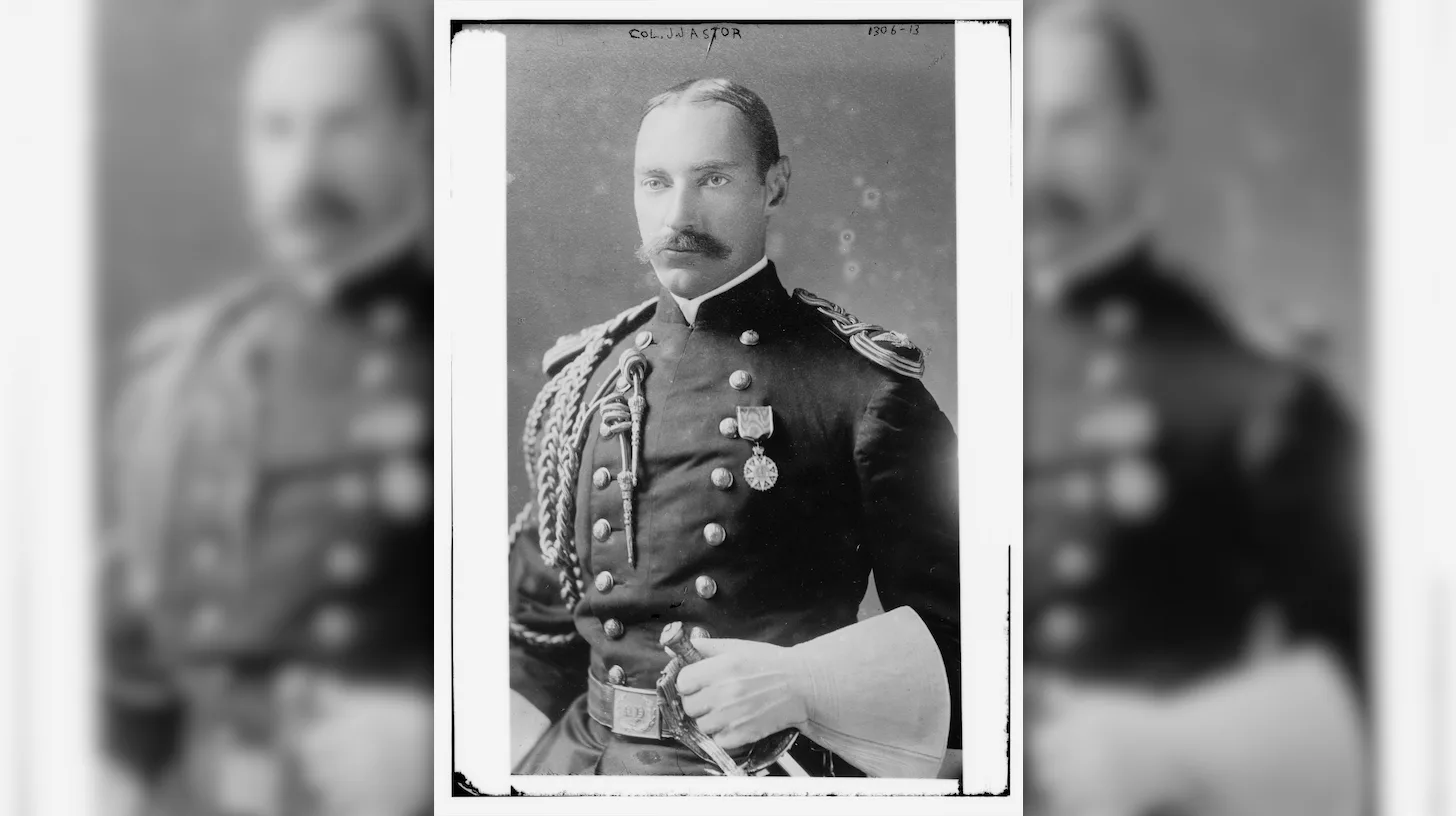
Four years after her death her son went down with the Titanic. The Carolus-Duran portrait passed to her grandsons, who gave it to the Metropolitan Museum of Art in 1949.