6 min read
Throughout history, famous coups have dramatically altered the political landscape of nations, often involving shocking twists, theatrical moments, and far-reaching consequences that continue to shape our world today.
RUSSIAN REVOLUTION (1917)
The Russian Revolution of 1917 was a series of political and social upheavals that overthrew the Tsarist autocracy and led to the creation of the Soviet Union, marked by two key events—the February Revolution that forced Tsar Nicholas II to abdicate, and the October Revolution when the Bolsheviks seized power.
Vladimir Lenin returned to Russia in a sealed train provided by Germany hoping to weaken Russia. The revolution’s success hinged on the support of mutinous soldiers and sailors, including those from the naval base at Kronstadt who played a crucial role in the Bolsheviks taking control of Petrograd.
TURKISH COUP D’ÉTAT (1960)
The 1960 Turkish coup d’état, led by a group of 38 young military officers, overthrew the democratically elected government and resulted in the execution of Prime Minister Adnan Menderes and two of his ministers.
The coup was initially led by Colonel Alparslan Türkeş, who had been among the first 16 officers trained by the United States to form a stay-behind counter-guerrilla force, but he and his supporters were later sent abroad when they advocated for authoritarian military rule rather than a return to democracy.
CHILEAN COUP D’ÉTAT (1973)
On September 11, 1973, the Chilean military led by General Augusto Pinochet overthrew the democratically elected socialist government of President Salvador Allende in a violent coup supported by the United States.
In one of the most surreal moments, Allende gave a final radio address to the nation as the presidential palace was being bombed, before allegedly committing suicide with an AK-47 rifle given to him by Fidel Castro.
COUP IN NIGERIA (1966)
In 1966, Nigeria experienced two military coups that reshaped its political landscape, with the first in January overthrowing the civilian government and the second in July resulting in the murder of the country’s first military head of state.
In the January coup, some of the coup plotters allegedly transported the deposed Prime Minister Tafawa Balewa in the trunk of a car while he was still alive, leading to his death under mysterious circumstances.
HAITIAN COUP D’ÉTAT (1991)
The 1991 Haitian coup d’état saw the military overthrow of Haiti’s first democratically elected president, Jean-Bertrand Aristide, just seven months into his term, plunging the country into a period of brutal military rule.
The coup was allegedly partially financed by cocaine trafficking, with military leaders collaborating with Colombian drug cartels to use Haiti as a transshipment point for drugs bound for the United States.
EGYPTIAN COUP D’ÉTAT (2013)
In July 2013, Egypt experienced a military coup that ousted democratically elected President Mohamed Morsi, leading to widespread protests and violence that left over 1,000 people dead.
A photographer may have captured his own death on film while documenting the protests, as his camera recorded a sniper turning and firing directly at him before the footage abruptly ended.
THAI COUP D’ÉTAT (2014)
The 2014 Thai coup d’état, led by General Prayut Chan-o-cha, saw the military overthrow the civilian government, suspend the constitution, and impose martial law across Thailand.
In the aftermath, protesters adopted creative forms of resistance, including using the three-finger salute from The Hunger Games as an anti-coup symbol and eating sandwiches in public as a form of protest, leading to arrests.
FRENCH COUP OF 18 BRUMAIRE (1799)
Napoleon Bonaparte seized power in France through the Coup of 18 Brumaire on November 9, 1799, effectively ending the French Revolution and paving the way for his eventual coronation as emperor.
In a theatrical moment during the coup, Napoleon’s brother Lucien dramatically brandished a sword and vowed to plunge it into Napoleon’s heart if he were a traitor, helping to sway soldiers to disperse opposing lawmakers and solidify Napoleon’s control.
PAKISTANI COUP D’ÉTAT (1999)
In 1999, General Pervez Musharraf led a bloodless military coup in Pakistan, overthrowing Prime Minister Nawaz Sharif’s government after Sharif attempted to dismiss Musharraf as army chief.
Musharraf’s plane was ordered to be diverted mid-air by Sharif, but army loyalists seized control of airports and allowed it to land with only seven minutes of fuel remaining, leading to Musharraf taking power and Sharif eventually being exiled to Saudi Arabia.
BRAZILIAN COUP D’ÉTAT (1964)
The 1964 Brazilian coup d’état overthrew President João Goulart and installed a military dictatorship that lasted until 1985, with the coup plotters claiming to be defending democracy against communism.
The United States had a secret military operation called “Operation Brother Sam” ready to support the coup if needed.
It included sending an aircraft carrier, destroyers, and supplies to Brazil, though it was ultimately not deployed.
GREEK COUP D’ÉTAT (1967)
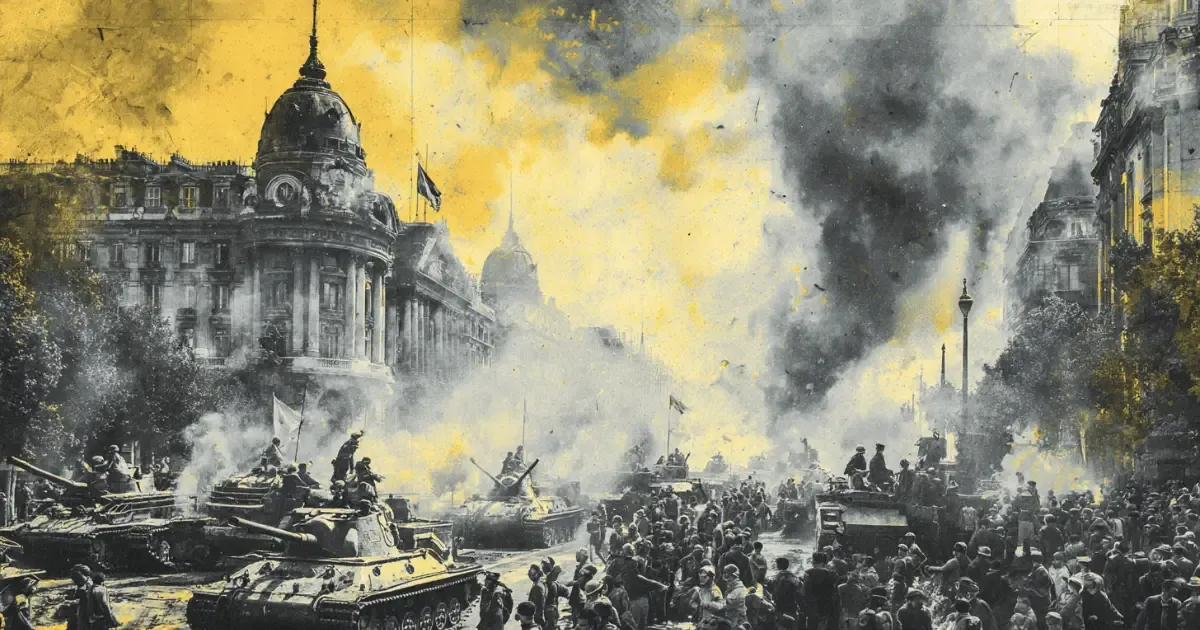
The Greek military junta came to power through a coup d’état on April 21, 1967, when a group of colonels led by Georgios Papadopoulos seized control of the government using tanks and surprise tactics.
Within hours, the coup leaders had arrested over 10,000 politicians, authority figures, and suspected leftists based on pre-prepared lists, effectively taking control of the entire country in a single night.
FIJIAN COUP D’ÉTAT (1987)
In 1987, Fiji experienced two military coups led by Lieutenant Colonel Sitiveni Rabuka, resulting in the overthrow of the elected government, the end of Queen Elizabeth II’s reign as Queen of Fiji, and the country’s transition to a republic.
The Governor-General initially gave only a mild rebuke to Rabuka after the first coup, asking “What have you done?” and “You mean I have no job?”, before wishing him “Good luck”.
SPANISH COUP ATTEMPT (1981)
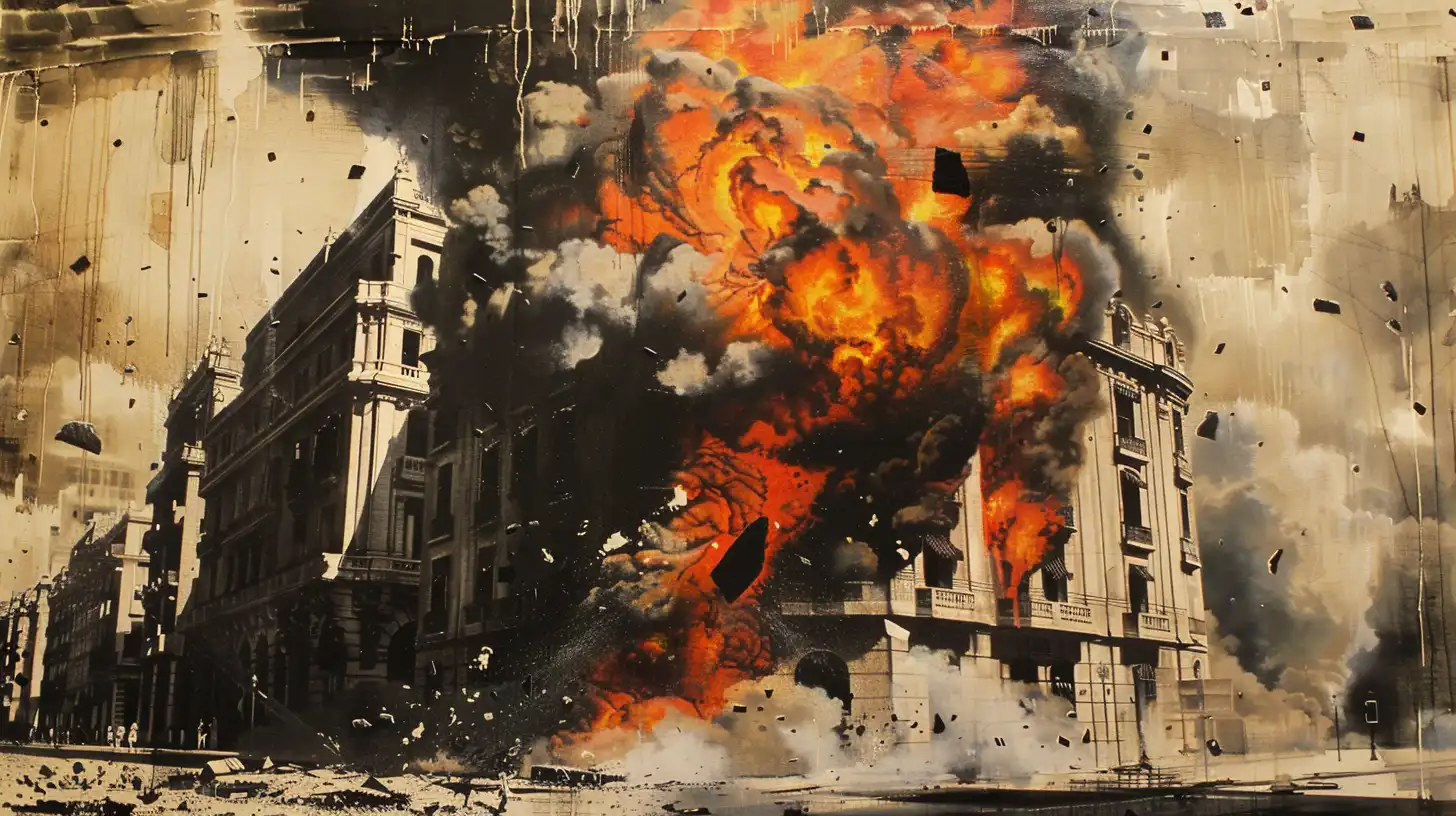
On February 23, 1981, a group of armed Civil Guards led by Lieutenant-Colonel Antonio Tejero stormed the Spanish Congress of Deputies during a vote to elect a new Prime Minister, attempting a coup d’état against Spain’s fledgling democracy.
The coup was thwarted when King Juan Carlos I, dressed in his military uniform, appeared on television to denounce the coup, leading to Tejero’s surrender after an 18-hour standoff that included a tense face-off between the 68-year-old Deputy Prime Minister General Gutiérrez Mellado and the armed guards, and involved tanks being deployed on the streets of Valencia.
GHANAIAN COUP D’ÉTAT (1966)
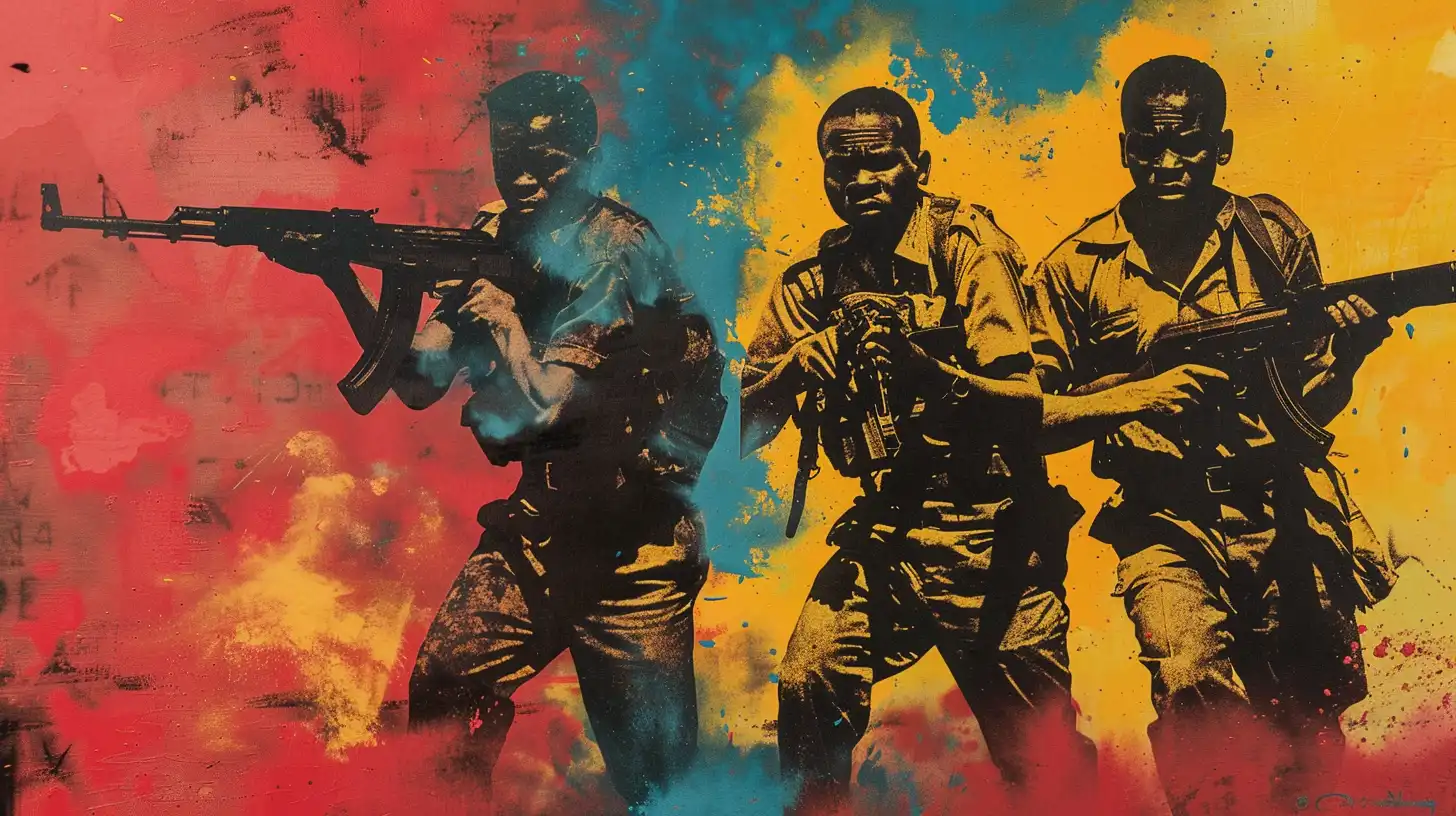
In 1966, Ghana’s government under Kwame Nkrumah was overthrown in a military coup, which the US government and CIA were reportedly aware of in advance.
Remarkably, one of the coup leaders, Alex Quaison Sackey, had previously served as Nkrumah’s minister of foreign affairs, highlighting the dramatic political shifts and internal conflicts within Ghana’s leadership at the time.