15 min read
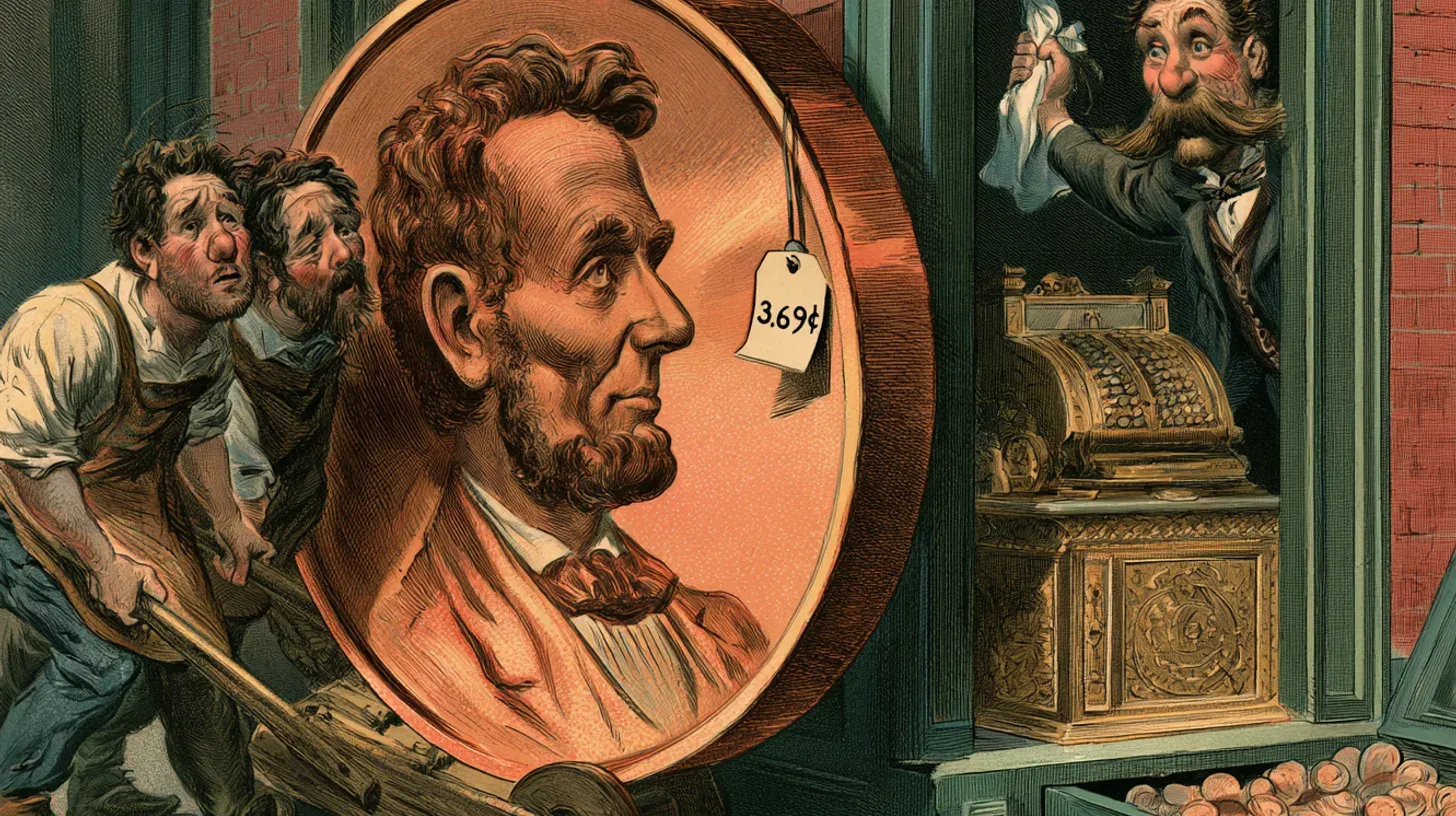
The U.S. penny lasted 232 years. The Mint struck the first cents in Philadelphia from March 1 to March 12, 1793, and U.S. Treasurer Brandon Beach struck the last one made for circulation in the same city on Nov. 12, 2025. By then each penny cost 3.69 cents to make.
Congress made the end official a year later. On Nov. 20, 2026, President Donald Trump signed the Common Cents Act, which orders the Treasury to stop making pennies for circulation and lets shops round cash totals to the nearest nickel. In between, the coin shrank, changed its metal again and again, and went to war.
HISTORY OF THE PENNY AT A GLANCE
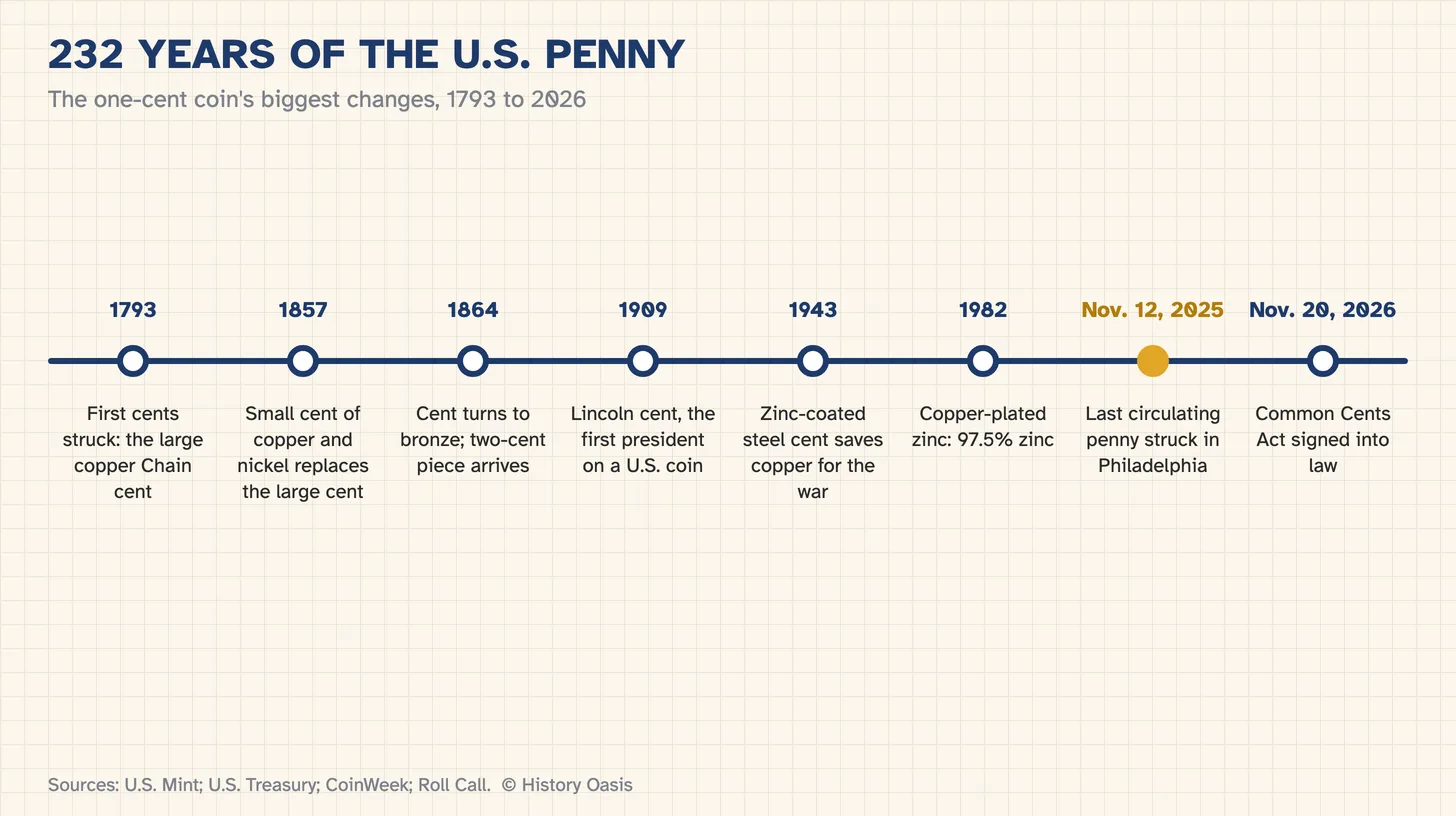
The U.S. penny changed size, metal and face many times between 1793 and 2025, but it was always worth one cent. The table below gives each design, its years and what it was made of, from the U.S. Mint’s own history of the coin.
| Design | Years | Metal |
|---|---|---|
| Large cents (Chain, Wreath, Liberty Cap and later) | 1793–1857 | Pure copper |
| Flying Eagle | 1857–1858 | 88% copper, 12% nickel |
| Indian Head | 1859–1909 | Copper-nickel, bronze from 1864 |
| Lincoln, wheat reverse | 1909–1958 | Bronze; steel in 1943 |
| Lincoln Memorial reverse | 1959–2008 | Bronze; copper-plated zinc from 1982 |
| Four bicentennial reverses | 2009 | Copper-plated zinc |
| Union Shield reverse | 2010–2025 | Copper-plated zinc |
The official name never changed either. The Treasury calls the coin the one-cent piece, and it once admitted that even the Treasury and the Mint say “penny” because everyone else does.
WHAT YEAR WAS THE FIRST PENNY MADE?
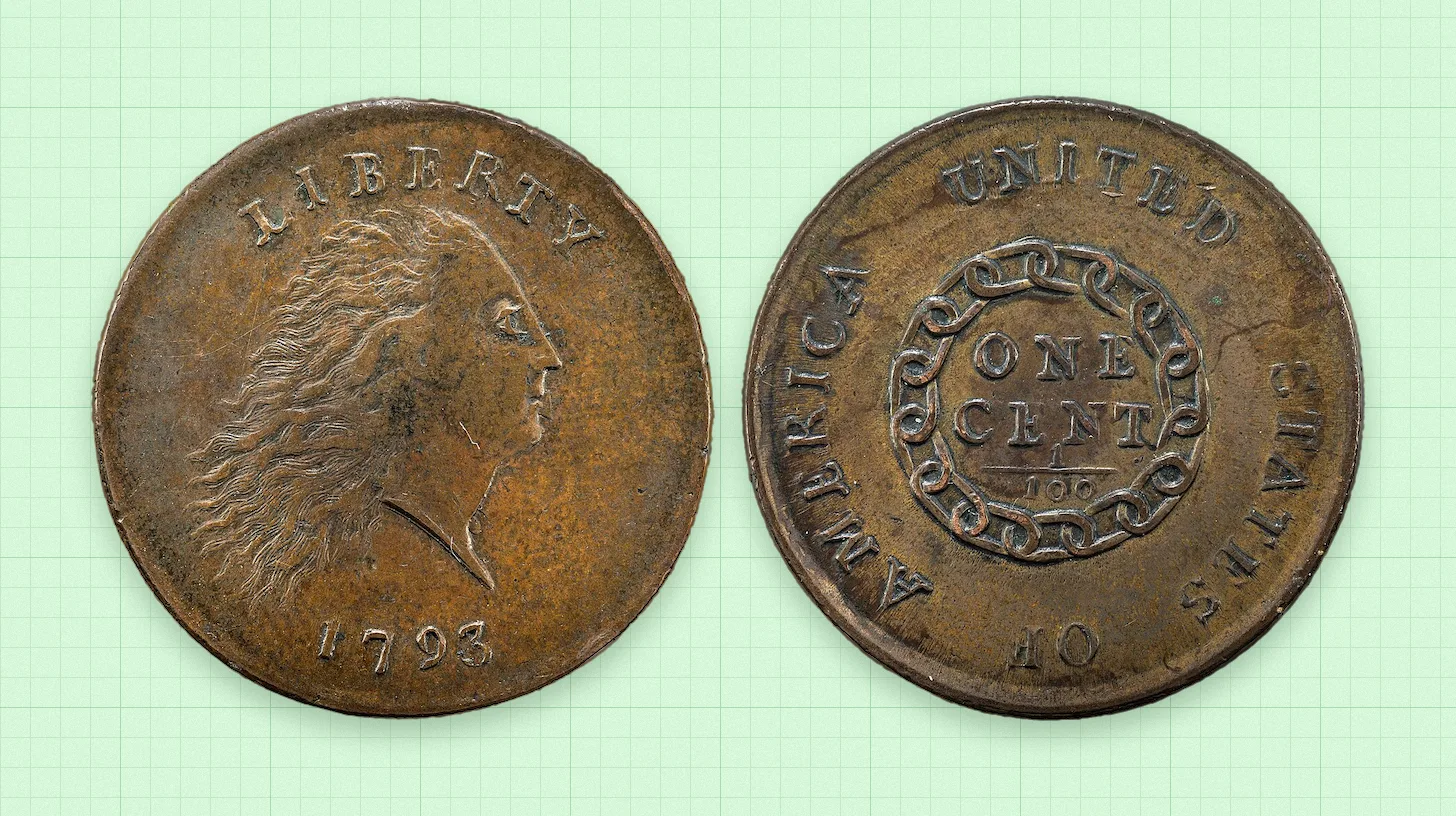
The first U.S. penny was made in 1793. The Coinage Act of April 2, 1792 created the Mint and set the cent at one hundredth of a dollar, holding eleven pennyweights of copper. The Mint struck its first cents from March 1 to March 12, 1793, and made 36,103 of them.
That first design showed Liberty with flowing hair and, on the back, 15 chain links meant to stand for the union of the states. The public read the chain another way. A newspaper jibe, credited to the Boston Argus of March 26, 1793, complained: “The chain on the reverse is but a bad omen for liberty, and Liberty herself appears to be in a fright.”
The complaint came late. The last Chain cents had been struck by March 12, and by April the Mint’s engravers were swapping the chain for a wreath. Copper was already a problem: by late 1795 the Mint was spending $1.22 to make 100 cents, and it made the coin lighter.
Congress had tried a national cent once before, the 1787 Fugio cent, stamped “MIND YOUR BUSINESS.”
FROM LARGE CENT TO SMALL CENT
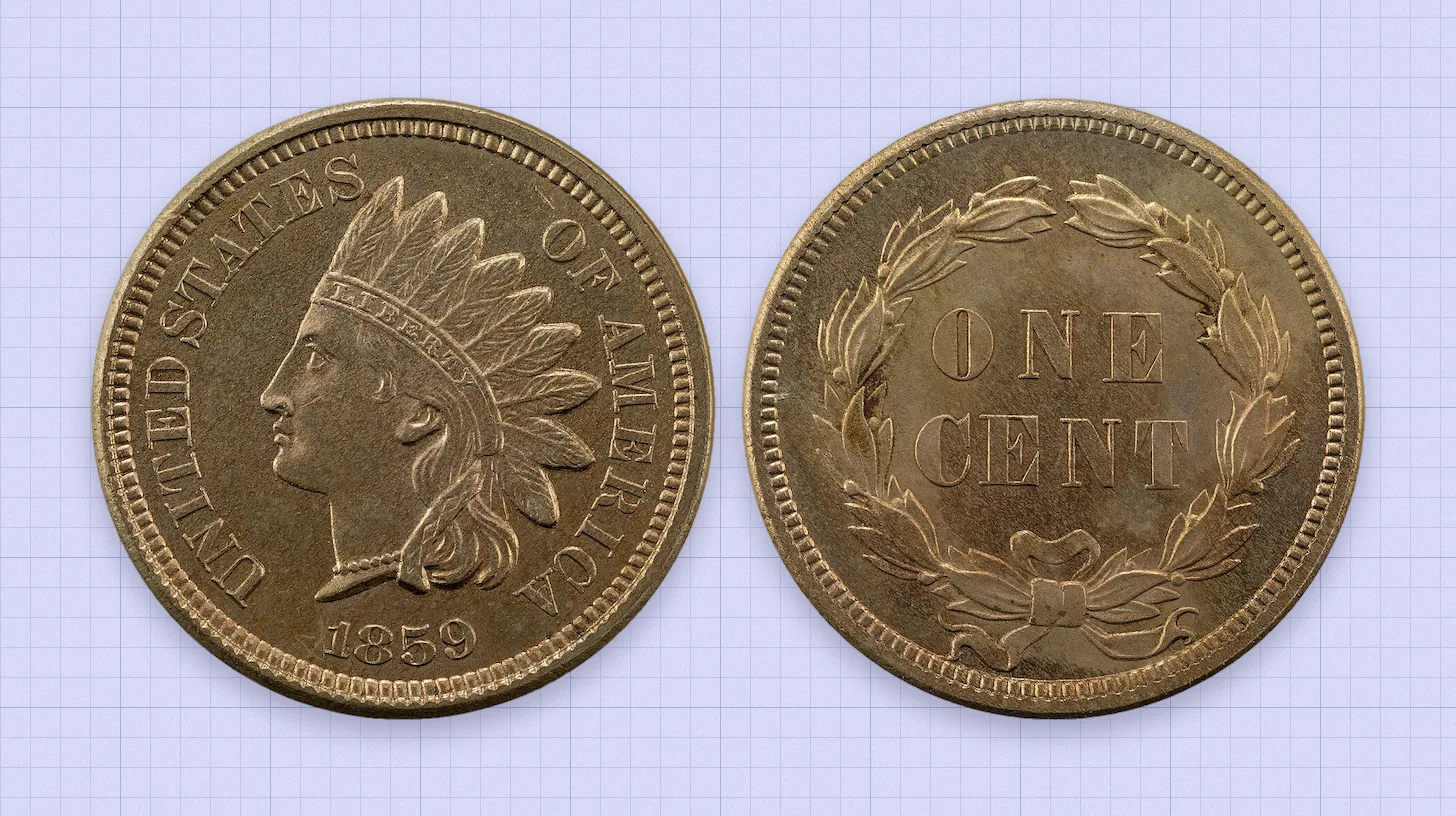
The penny shrank in 1857. That year Congress ended the old large cent, discontinued the half cent and replaced both with a smaller cent made of 88% copper and 12% nickel. It carried a flying eagle in 1857 and 1858, then the Indian Head design from 1859 to 1909.
The Civil War changed the metal again. An Act of April 22, 1864 turned the cent to bronze, 95% copper with tin and zinc, which the Mint hoped would be cheaper to make and would circulate in the Northeastern states.
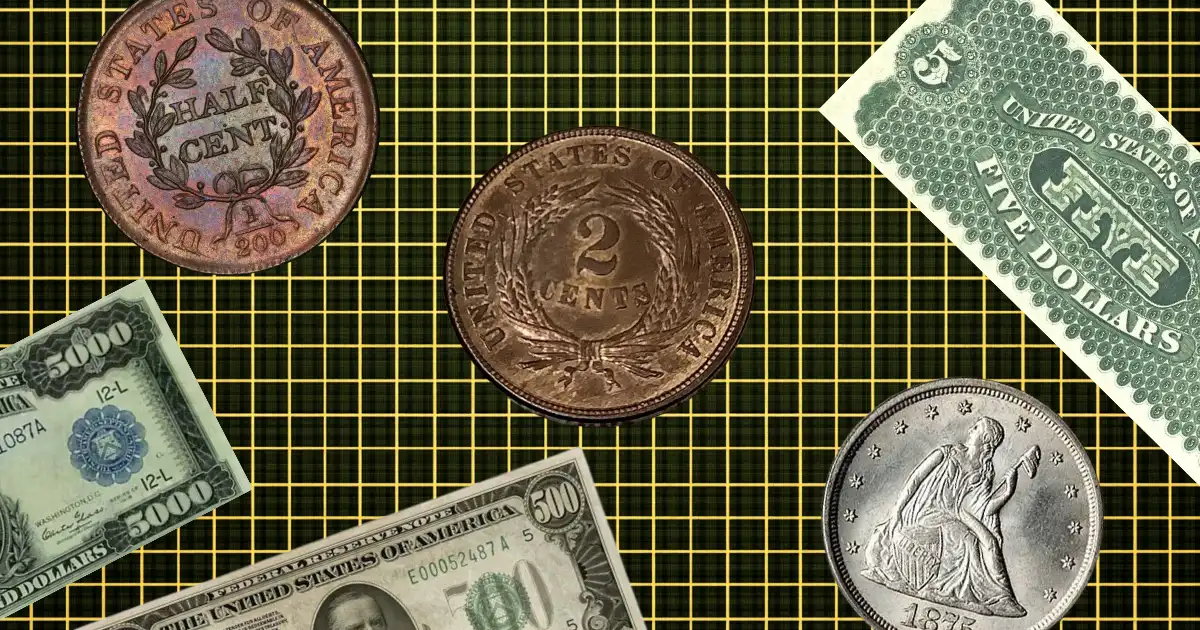
The same law created a two-cent piece. It was the first U.S. coin to carry IN GOD WE TRUST, and the Mint struck it for only 10 years, 1864 to 1873. It joined the half cent on the list of discontinued U.S. coins and notes long before the penny did.
THE LINCOLN PENNY (1909)
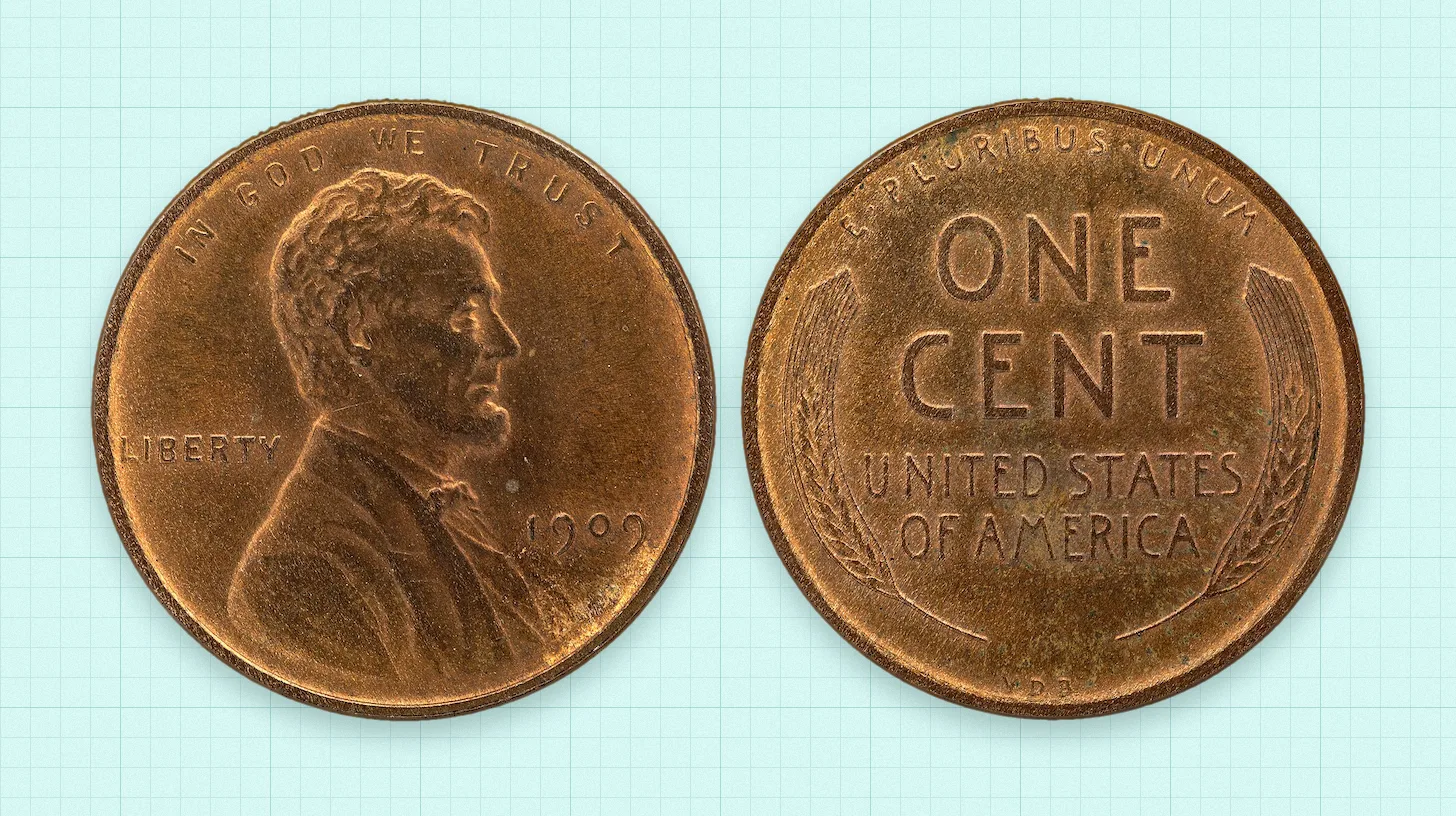
The Lincoln penny first went into circulation on Aug. 2, 1909, the centennial year of Abraham Lincoln’s birth. President Theodore Roosevelt chose the sculptor Victor David Brenner, and the Mint says Lincoln became the first president featured on U.S. coins. The Numismatist called it “our first portrait coin.”
Lincoln faces right because Brenner worked from a photograph taken Feb. 9, 1864. The 1909 cent was also the first cent to carry IN GOD WE TRUST.
The trouble was three letters. Brenner put his initials, V.D.B., on the back, critics called them free advertising, and the Mint removed them within days. Brenner threatened to sue, then dropped it. Of almost 28 million V.D.B. cents, the San Francisco Mint struck only 484,000, which is why the 1909-S V.D.B. is the Lincoln cent collectors chase. The initials came back, smaller, in 1918.
THE 1943 STEEL PENNY
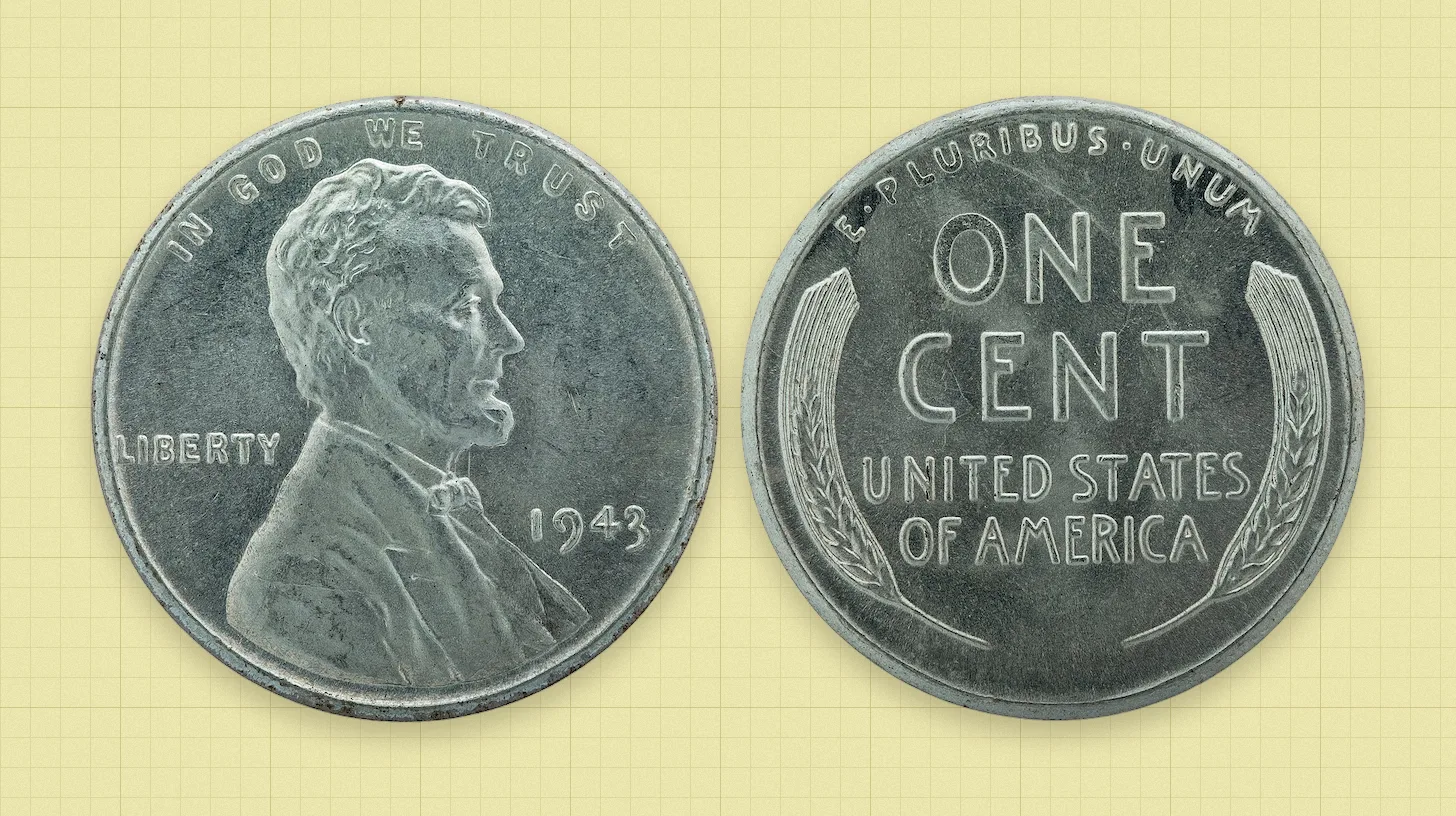
The 1943 penny was made of zinc-coated steel because the war needed the copper. The steel cents, struck only that year, saved enough copper for 1.25 million artillery shells. Copper was not the only thing rationed at home: Coca-Cola fought sugar rationing the same years.
The silver color caused trouble: people mistook steel cents for dimes. From 1944 to 1946 the Mint went back to a brass made partly from recycled shell casings, 95% copper and 5% zinc.
A few copper blanks slipped through in 1943 anyway. The Mint said in 1999 that about 40 copper 1943 cents were known, which is why that date tops every list of valuable pennies.
The other famous mistake came in 1955, when a doubled die at the Mint stamped a doubled image on thousands of cents. About 24,000 got out, many in Massachusetts, where cigarette sellers tucked two cents into the cellophane of 23-cent packs sold from quarter machines.
WHEN DID PENNIES STOP BEING COPPER?
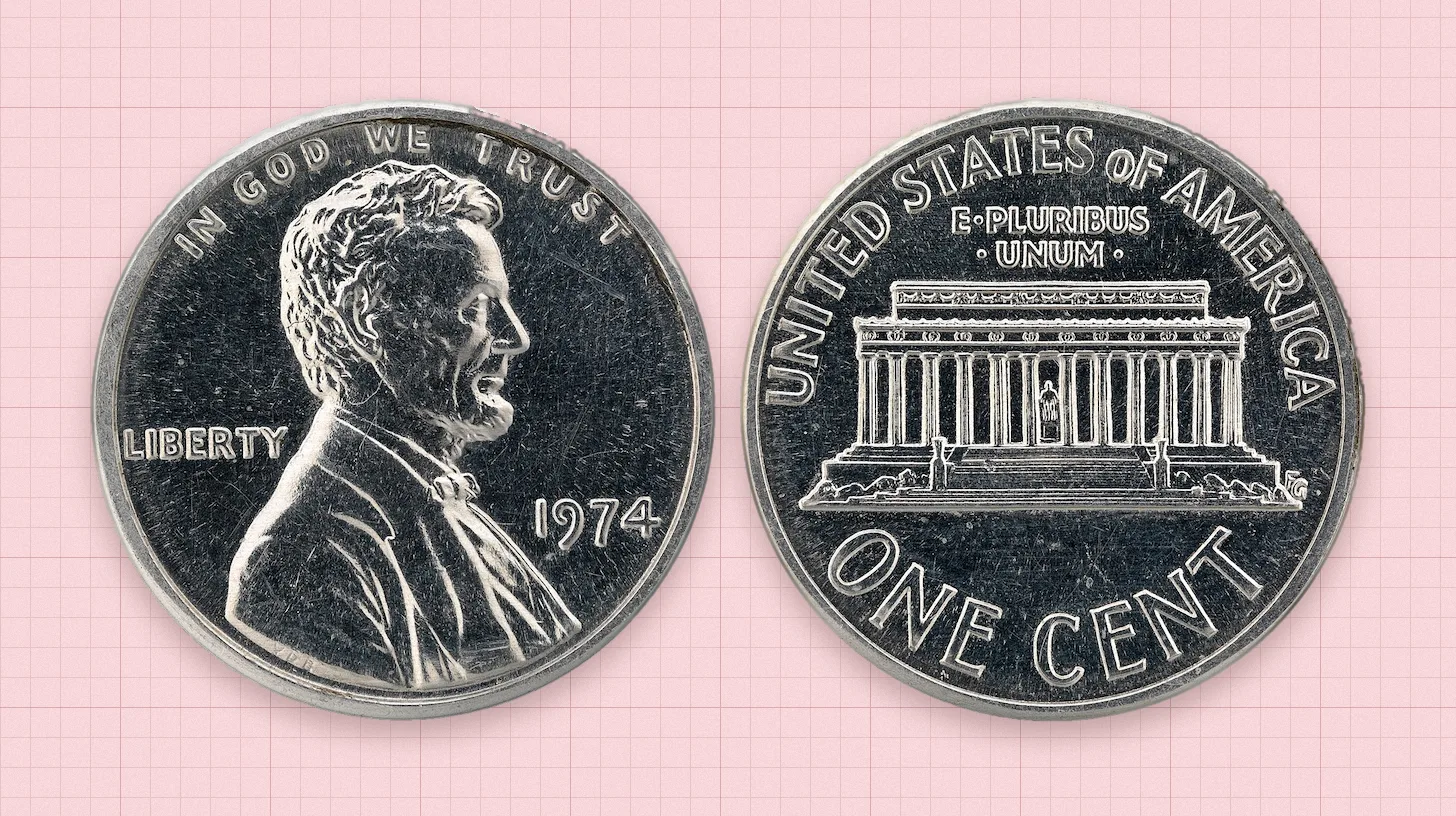
Pennies stopped being mostly copper in 1982. That year the Mint switched to a coin of 97.5% zinc with a thin copper plating, which is still only 2.5% copper by weight. CoinWeek dates the first zinc cents to October 1982, so 1982 pennies come in both metals.
The Mint had tried to leave copper once before. When copper prices jumped in 1973 and 1974, it struck more than 1.4 million aluminum test cents dated 1974. The vending industry warned the light coins would jam machines, and the plan died. The Smithsonian holds one.
Lincoln stayed on the front through it all. The Lincoln Memorial by Frank Gasparro took over the back from 1959 to 2008, four new backs, starting with a log cabin, marked his 200th birthday in 2009, and the Union shield ran from 2010 to the end.
WHAT DID A PENNY COST TO MAKE?
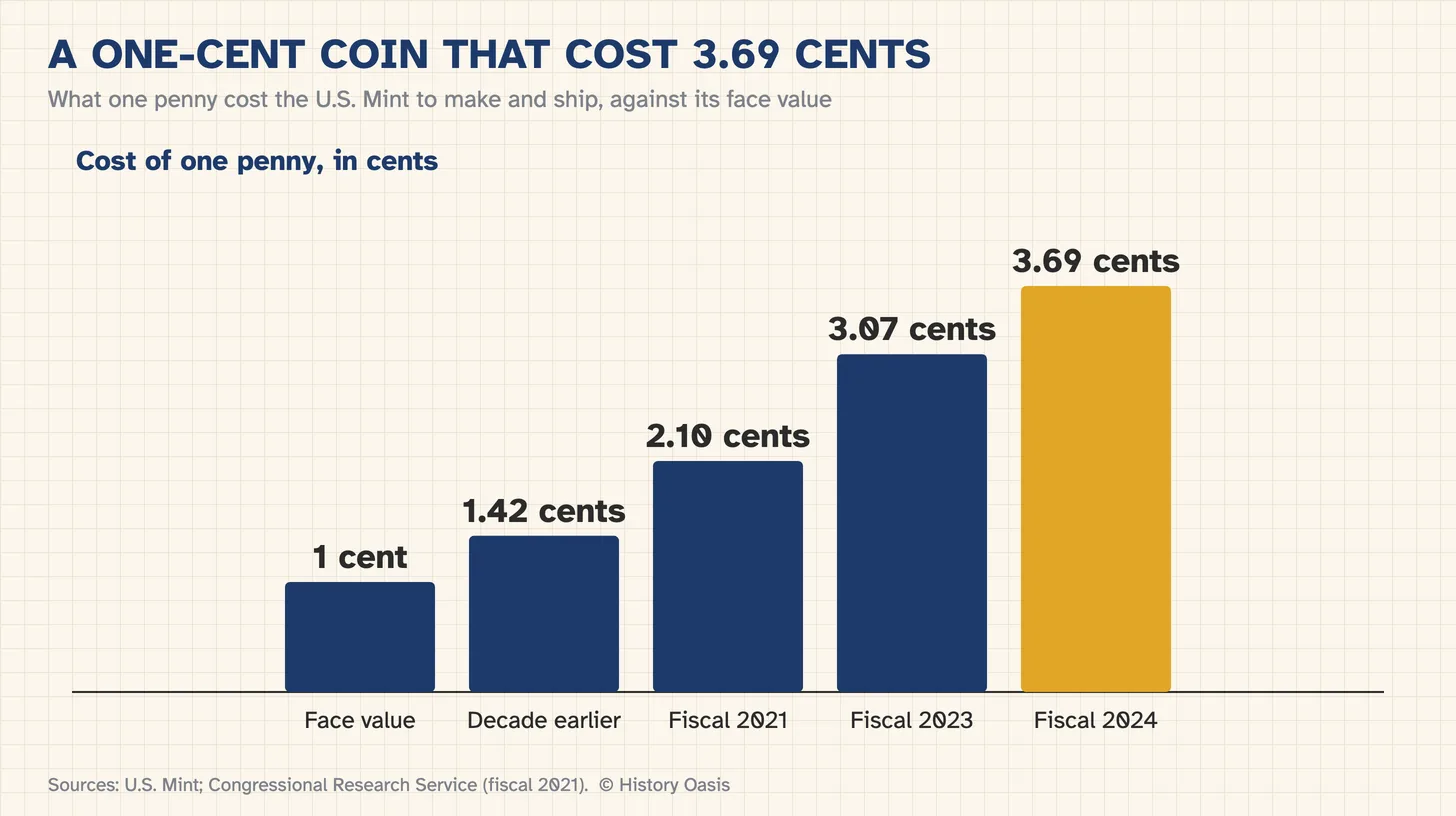
A penny cost the Mint 3.69 cents to make and ship in fiscal 2024, up from 3.07 cents the year before, according to the Mint’s annual figures. That year the Mint lost $85.3 million on pennies, and pennies were still 57% of the 5.61 billion coins it made for circulation.
| Year | Cost of one penny | Source |
|---|---|---|
| Undated Treasury FAQ | 0.81 cents | U.S. Treasury |
| About a decade before 2024 | 1.42 cents | U.S. Mint |
| Fiscal 2021 | 2.10 cents | Congressional Research Service |
| Fiscal 2023 | 3.07 cents | U.S. Mint |
| Fiscal 2024 | 3.69 cents | U.S. Mint |
It was not always a loser. An old Treasury FAQ said each penny cost .81 of a cent to make while the Mint collected a full cent for it. Since 2006, pennies and nickels have cost more than face value every year.
In December 2006 the Treasury banned melting or exporting pennies and nickels, to keep the coins from being sold for their metal. The Mint’s 1795 problem, $1.22 for 100 cents, had come back three times worse.
EARLIER ATTEMPTS TO GET RID OF THE PENNY

An early bill to end the penny came in 1989. Rep. Jimmy Hayes of Louisiana, joined by Rep. Jim Kolbe, introduced the Price Rounding Act of 1989 on Nov. 20, 1989. Hayes told The Christian Science Monitor the penny “is no longer necessary for day-to-day transactions.” The bill went nowhere.
The public was not ready. In 1996 the Government Accountability Office told Congress that almost two-thirds of the pennies made in fiscal 1995 had dropped out of circulation, in jars and drawers, yet most Americans still wanted to keep the coin.
Kolbe tried again on his own with the Legal Tender Modernization Act of July 17, 2001. It failed too, and the penny kept its place in the cash drawer for another 24 years.
WHY WAS THE PENNY DISCONTINUED?
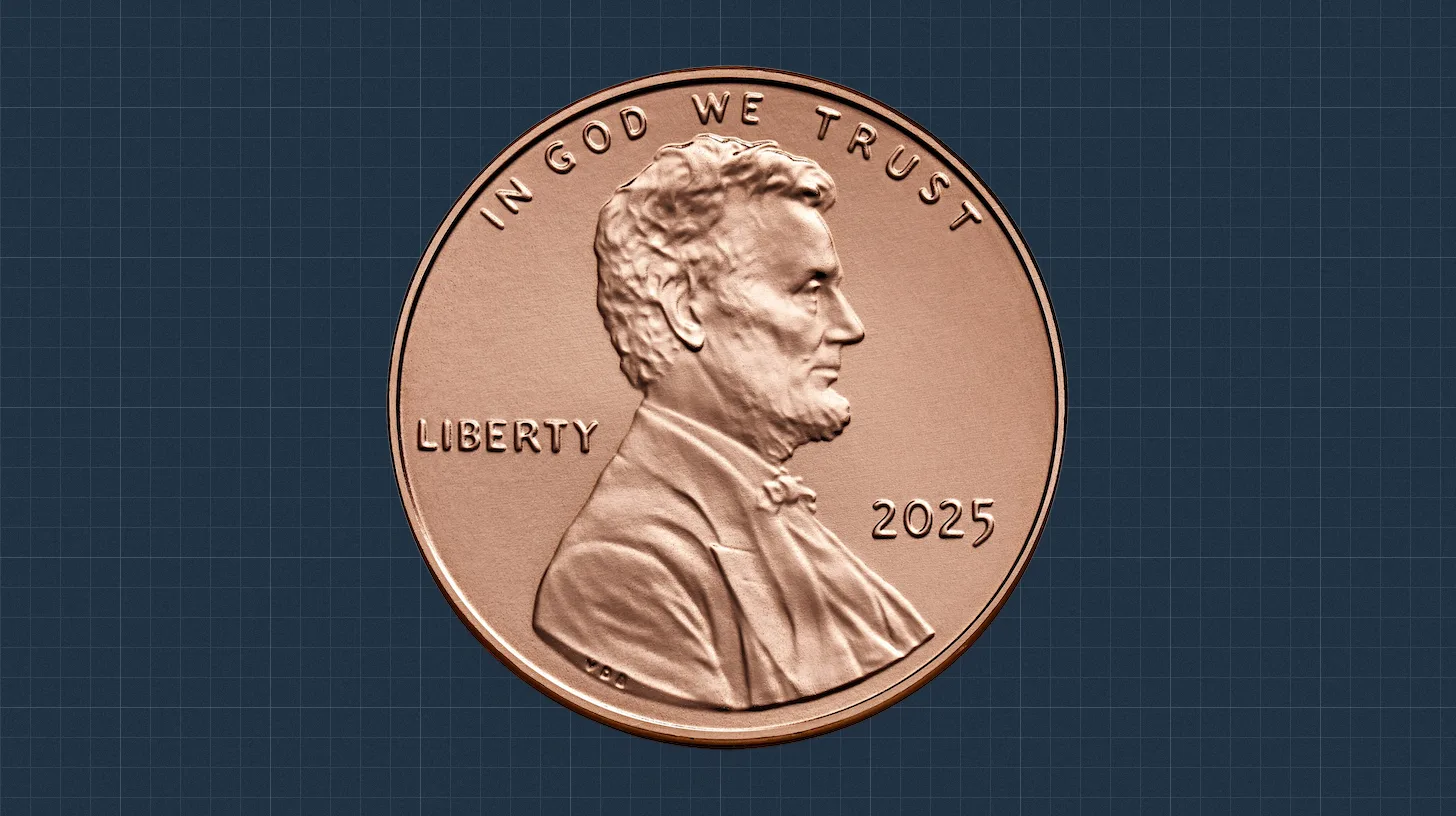
The penny was discontinued because it cost far more to make than it was worth, and the Mint said far more were in existence than commerce needed. President Trump posted on Truth Social on Feb. 9, 2025, as he left the Super Bowl in New Orleans: “For far too long the United States has minted pennies which literally cost us more than 2 cents. This is so wasteful!” He said he had told the Treasury to stop producing new pennies.
Congress, not the president, sets the size and metal of U.S. coins, the AP noted. The Treasury acted on its own finding that new pennies were no longer needed. In May 2025 the Mint placed its final order of penny blanks.
On Nov. 12, 2025, Treasurer Brandon Beach stood at a press in Philadelphia and said, “God bless America, and we’re going to save the taxpayers $56 million,” then struck the last circulating penny. A month later, the Mint’s 232 sets of the final pennies sold at auction for $16.76 million. The last set brought $800,000.
THE COMMON CENTS ACT OF 2026
The Common Cents Act made the end of the penny federal law. Trump signed it on Friday, Nov. 20, 2026, after the House passed it on Sept. 14 and the Senate by unanimous consent on Sept. 28. The bill, H.R. 10167, came from Rep. Lisa McClain with Rep. Robert Garcia of California.
The law’s text says the Treasury “shall cease production of one-cent coins for general circulation,” though it may still make pennies for collectors. Pennies already out there “shall remain legal tender for all debts, public charges, taxes, and dues.”
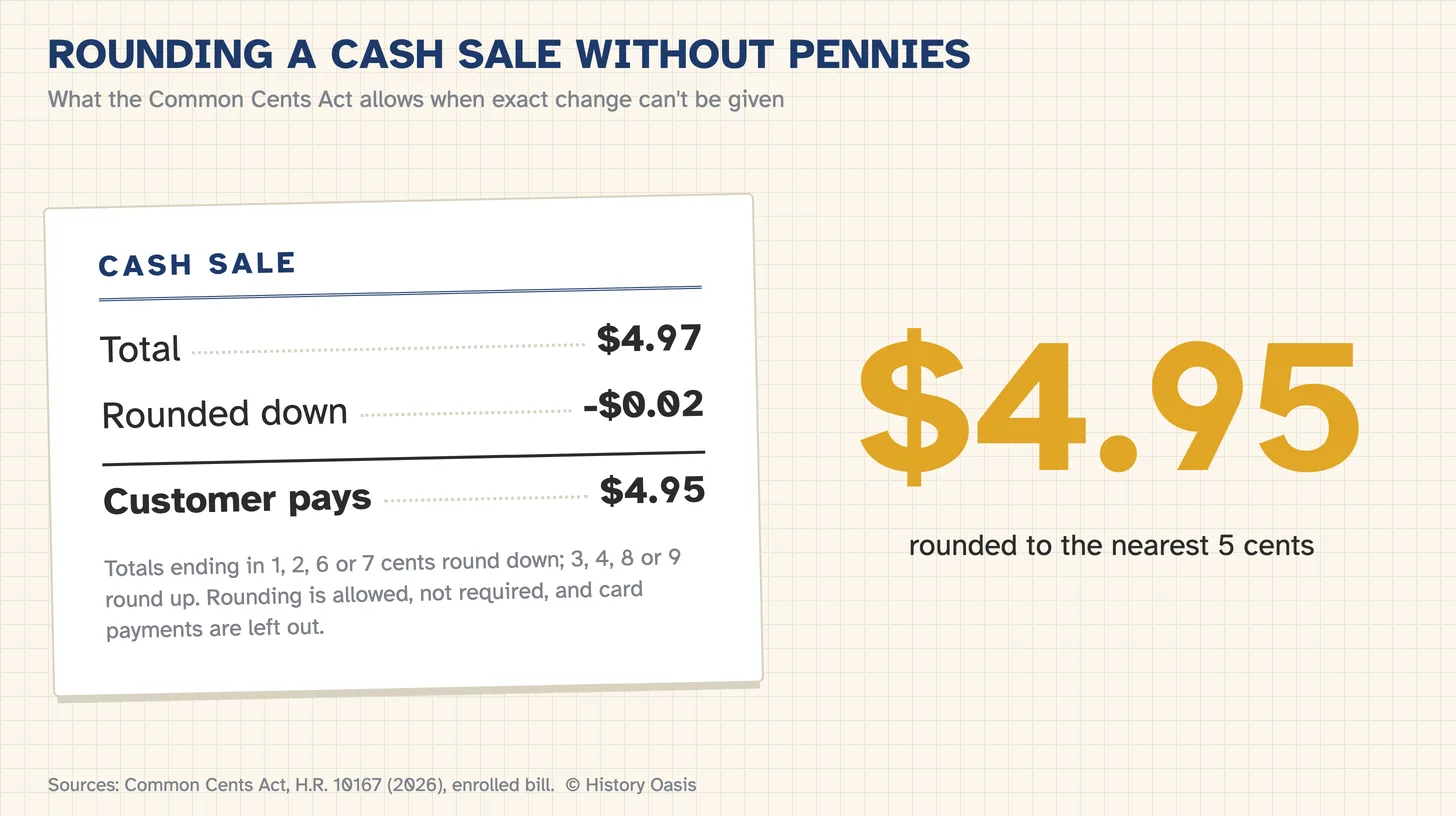
When exact change cannot be given in a cash sale, a seller may round the total, tax included, to the nearest 5 cents:
| Total ends in | Rounds | Example |
|---|---|---|
| 1, 2, 6 or 7 cents | Down | $4.97 becomes $4.95 |
| 3, 4, 8 or 9 cents | Up | $4.98 becomes $5.00 |
| A total of 1 or 2 cents | Up | $0.02 becomes $0.05 |
The rounding is allowed, not required. The bill’s long title speaks of requiring it, but its text says nothing in it “may be construed to require any person to round.” Card, check and other electronic payments are left out. The law also lets the Treasury change the nickel’s metal, and it makes the Treasury warn Congress 60 days before it drops any other coin.
WHAT HAPPENS TO PENNIES NOW?
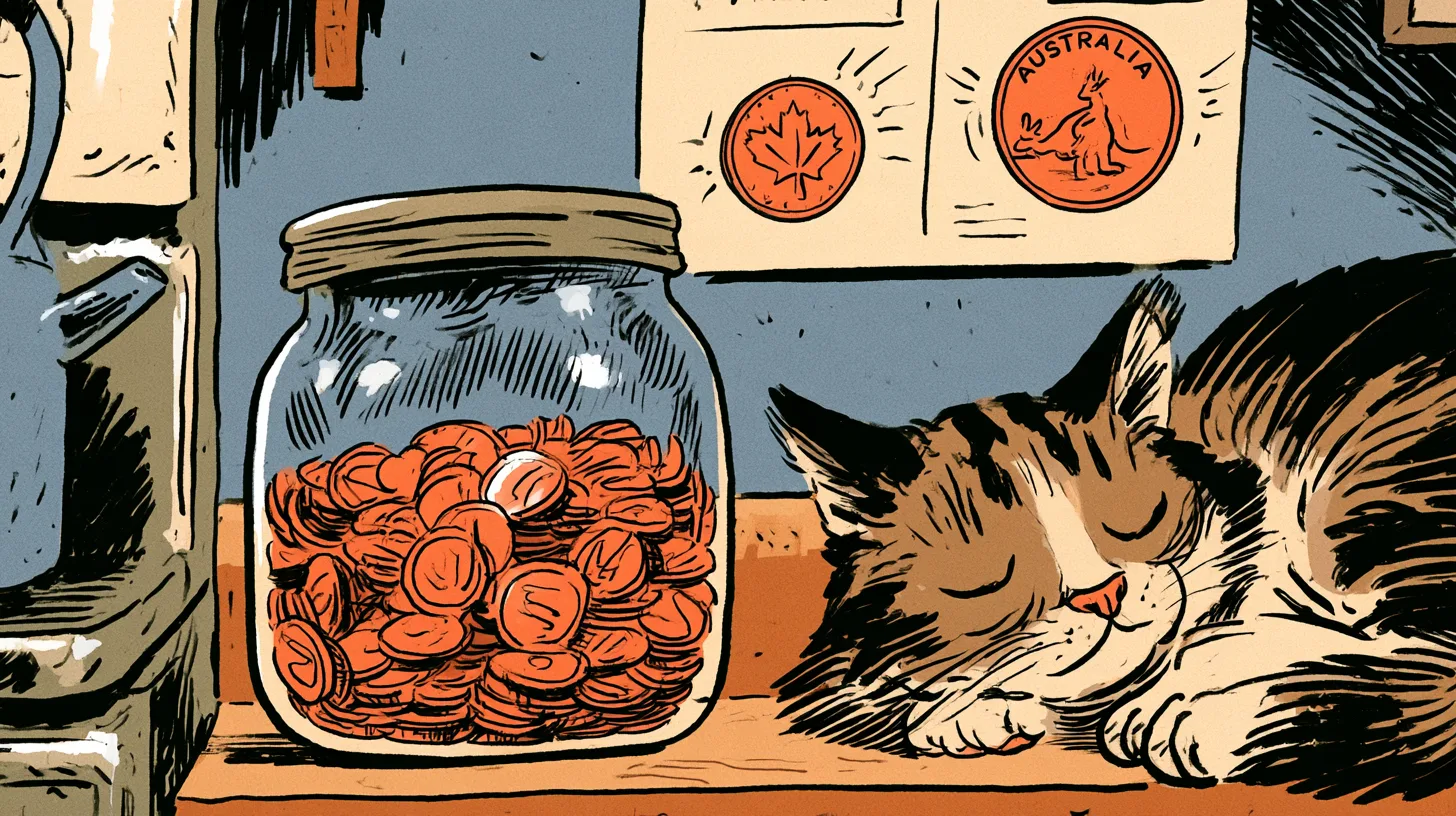
Pennies are still money. Under the Common Cents Act they remain legal tender, and the Treasury says the Federal Reserve will keep recirculating the roughly 114 billion pennies in existence. The Mint’s own release on the last strike gave a far larger estimate, 300 billion.
Getting them is another matter. As of Jan. 20, 2026, none of the Fed’s coin terminals in the St. Louis district were filling penny orders because their stock had run out. In 1793 a penny could buy a biscuit, a candle or a piece of candy; later it bought penny candy and one-cent peanut butter cups.
Other countries got there first:
| Country | End began | Out of circulation |
|---|---|---|
| New Zealand | Issue stopped March 31, 1989 | 1990 |
| Australia | Announced Aug. 21, 1990 | From February 1992 |
| Canada | Last struck May 4, 2012 | Distribution ended Feb. 4, 2013 |
Canada’s finance minister, Jim Flaherty, struck its last penny in Winnipeg and put the savings at about $11 million a year. The U.S. Mint still makes pennies, just not for your change: a 2026 penny dated 1776 ~ 2026 was struck for collectors only.
FAQ
What year was the first penny made?
The first U.S. penny was made in 1793. The Coinage Act of April 2, 1792 authorized the cent, and the Philadelphia Mint struck the first ones, the Chain cents, from March 1 to March 12, 1793. They were large coins of pure copper, and 36,103 were made before the design changed.
Why did the U.S. stop making pennies?
The U.S. stopped making pennies because each one cost 3.69 cents to make and ship in fiscal 2024, and the Mint lost $85.3 million on them that year. Most pennies also sat unused in jars. The Treasury suspended production, and the Common Cents Act of Nov. 20, 2026 made it law.
What will happen to pennies?
Pennies remain legal tender, so they can still be spent and banks can still take them. The Federal Reserve keeps recirculating the existing supply, about 114 billion by the Treasury’s count. When a store cannot give exact change in cash, it may round the total to the nearest 5 cents.
How much copper is in a penny?
A penny made since late 1982 is 97.5% zinc and 2.5% copper: a zinc coin with a thin copper plating. The bronze cents before it were about 95% copper, and the first cents of 1793 were pure copper. The Mint switched partway through 1982, so a 1982 penny can be either metal.