
14 min read
At nine o’clock one evening early in April 1830, off the coast of Chile near the island of Mocha, a ship carrying the American lecturer Jeremiah N. Reynolds fell in with a whaler, which had been trying out oil all day and moved on the water like a floating volcano, its sails lit from below by the fires of the try-works. Her captain sent a boat across with an invitation, and Reynolds went over to sit in the whaler’s cabin.
There, over a glass, the first mate told the story of a white whale. Nine years later Reynolds printed it in The Knickerbocker, a New York monthly, under the title “Mocha Dick: or the White Whale of the Pacific.” Almost every fact anyone has given about Mocha Dick since then, the color, the spout, the hundred fights, the twenty harpoons, comes from that one evening’s telling, which Reynolds admitted he had rewritten, and from what other writers added to it afterward.
The expedition man
Reynolds was about thirty that spring and a long way from home. He had been born in Pennsylvania in 1799 and taken to Clinton County, Ohio, as a boy of eight, where a judge who had known him as a boy remembered him arriving at school “clad in leather breeches and a linsey warmus.” He grew into a firmly built man of middle height, with a short nose and a broad face, as the Ohio historian Henry Howe, who heard him lecture, described him. His delivery was monotonous, Howe wrote, but what he said was solid, and he had an air about him “very sad, as though some great sorrow lay upon his heart.”
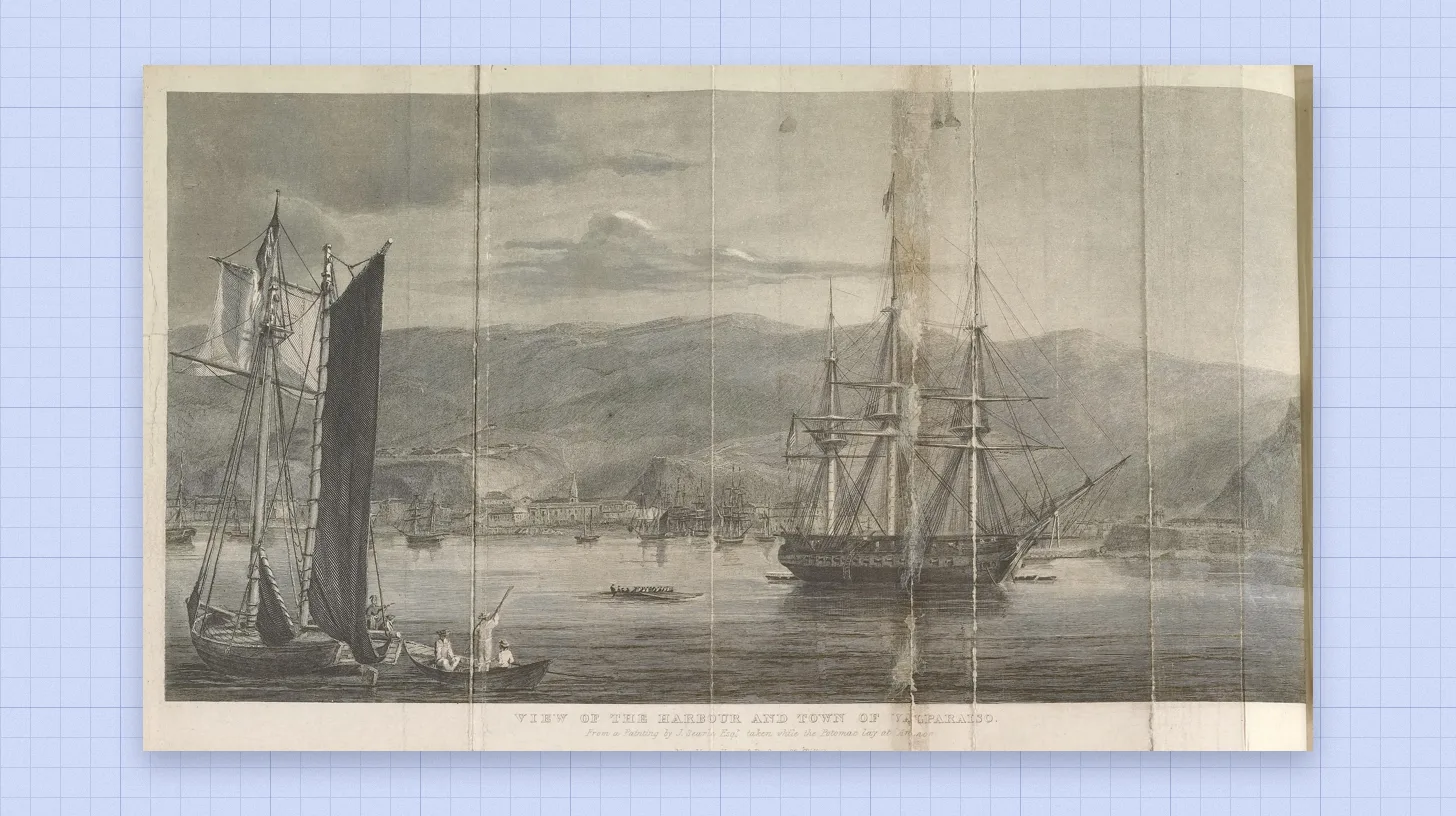
He had edited a country paper, lectured to full houses at fifty cents a seat on an Ohio theorist’s claim that the earth was hollow, and then taken up a larger cause, a national voyage of discovery to the South Seas. In 1829 he sailed with a private expedition instead, and in Chile the crew mutinied and left him behind. He spent about two years on that coast, until a United States frigate took him aboard at Valparaiso in October 1832.
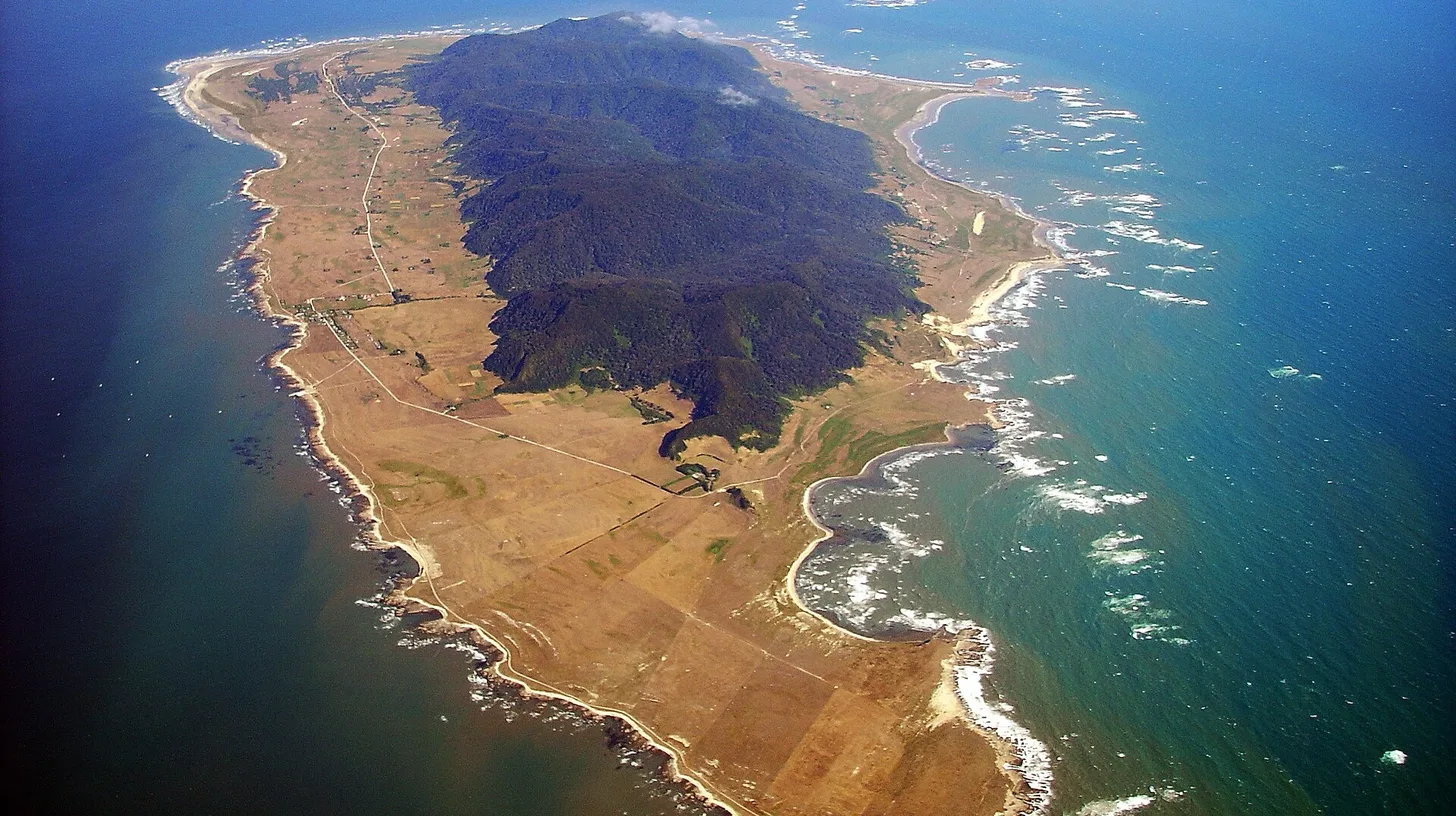
Mocha lay off that coast in latitude 38 degrees south, an island the Spaniards had once settled and since abandoned, with a climate so mild, Reynolds wrote, that frost was unknown on its lowlands. It is still there, about 48 square kilometers off the province of Arauco. In 2023 a scholar, Michele Martini, worked through the logbook of the schooner Penguin, which was sailing in company with Reynolds, and dated the evening in the whaler’s cabin to April 3 or 4, 1830, aboard the New York whaler Cincinnatus.
Any news from Mocha Dick?
The whaler’s captain was a plain, intelligent man. His first mate was something else. He was about thirty-five, Reynolds wrote, a little under the common height but with shoulders so broad that he looked almost dwarfish, long loose arms, a face as swarthy, he wrote, as an Indian’s, and a flashing eye. He had been whaling for more than twenty years and had never wanted a ship of his own. By his own account, and “if his own assertions were to be received as evidence,” no man in the American sperm-whale fleet had made so many captures. The best of them was the white whale.
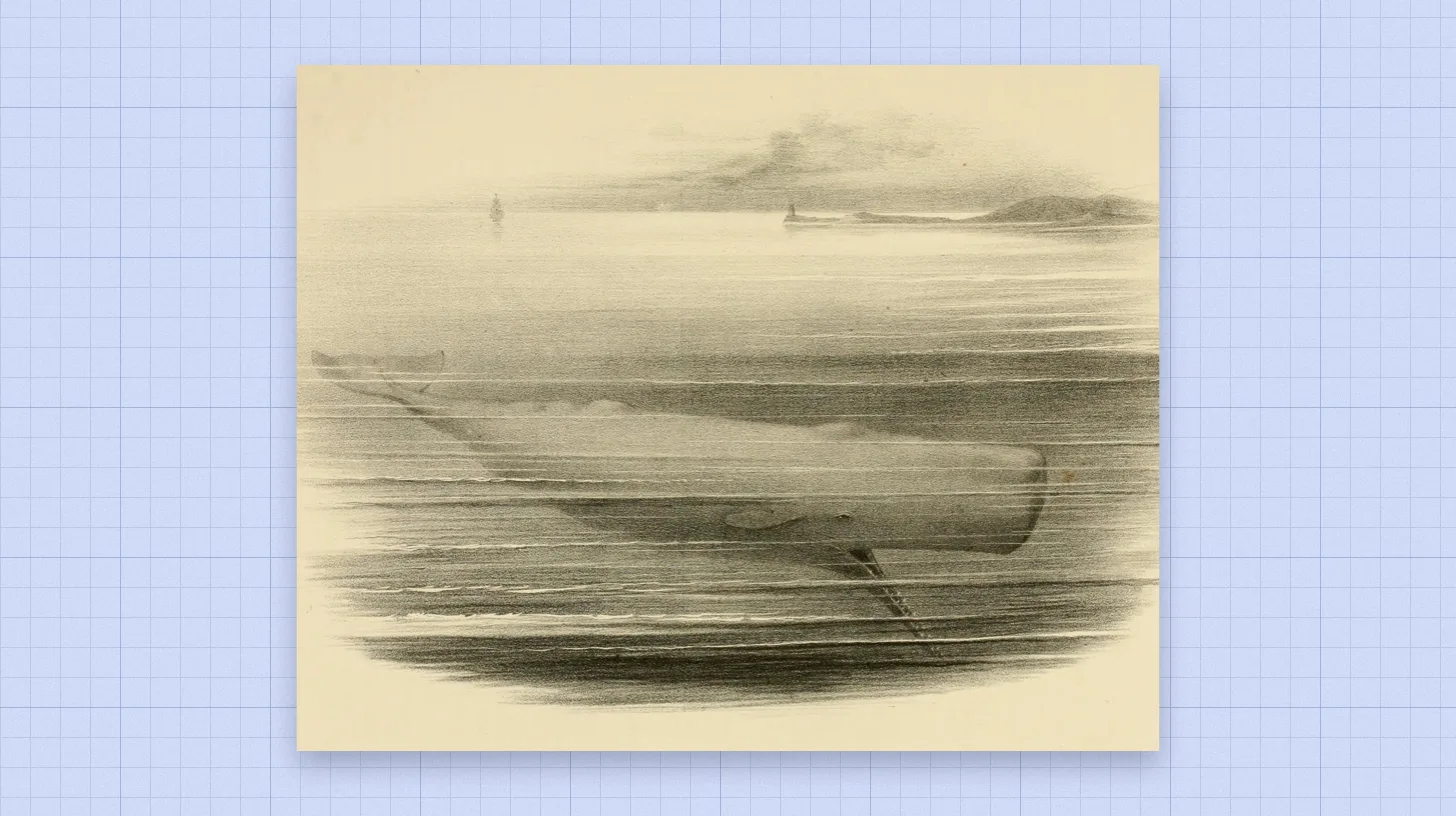
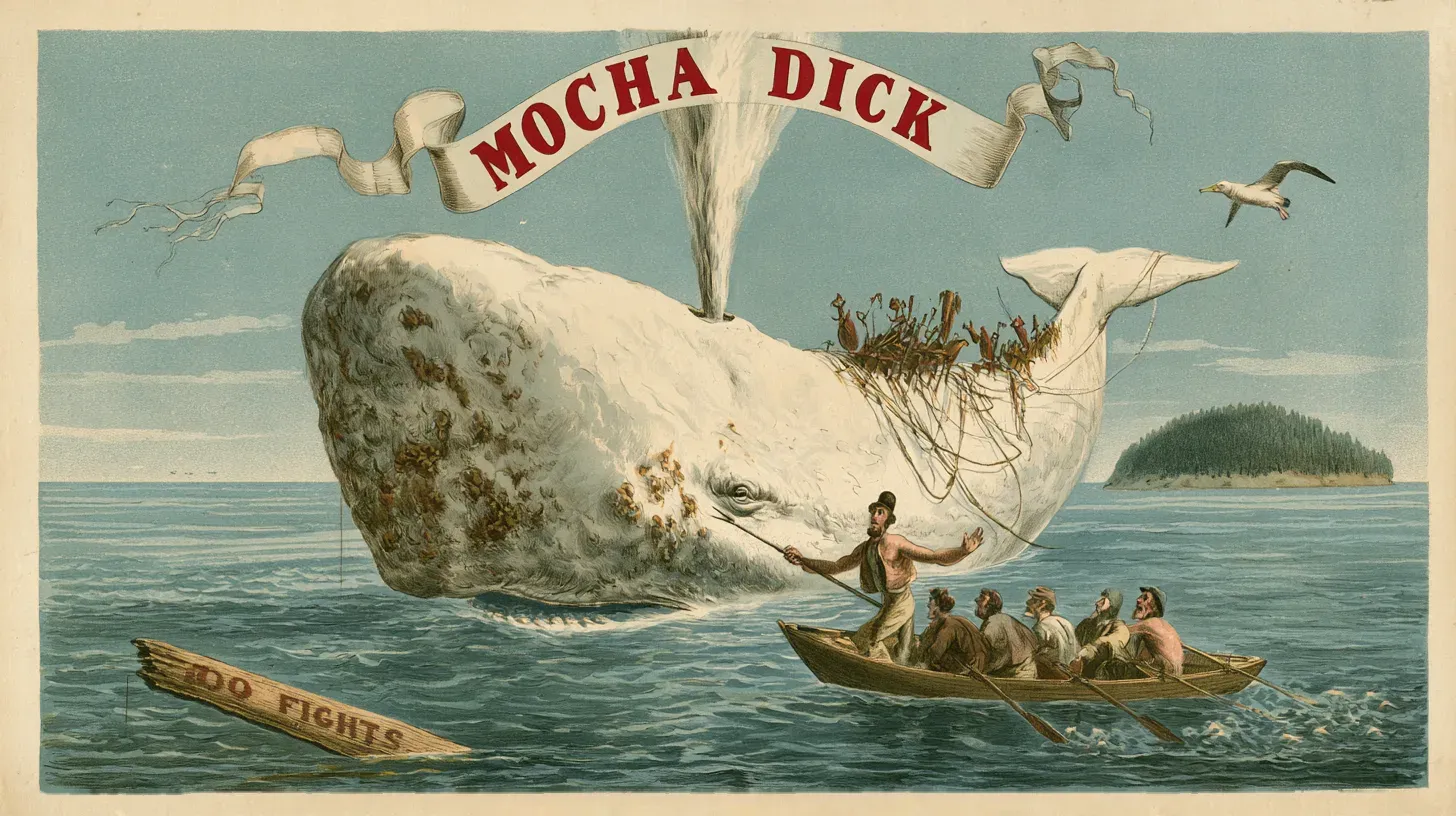
The whale, as the mate described him, was an old bull of great size and strength that had come off victorious “in a hundred fights with his pursuers.” His spout rose straight up instead of slanting forward, as a sperm whale’s does, with a continuous roar “like that of vapor struggling from the safety-valve of a powerful steam engine.” His head was rough with barnacles. And whether from age or, as Reynolds thought more likely, from a freak of nature like an albino’s, the mate said that “he was white as wool!”
He had been seen and attacked near Mocha, the mate said, before 1810. Boats had been shattered by his flukes, and he was said once to have beaten the crews of three English whalers. Whalemen meeting at sea, by this account, ended their exchange of news with the question “Any news from Mocha Dick?” Reynolds set all of it down. He also set down, before he began, a warning about how he would do it.
“We shall assume the liberty of altering the expression; of adapting the phraseology to the occasion; and of presenting the whole matter in a shape more succinct and connected.”
Dead calm off the coast of Chile
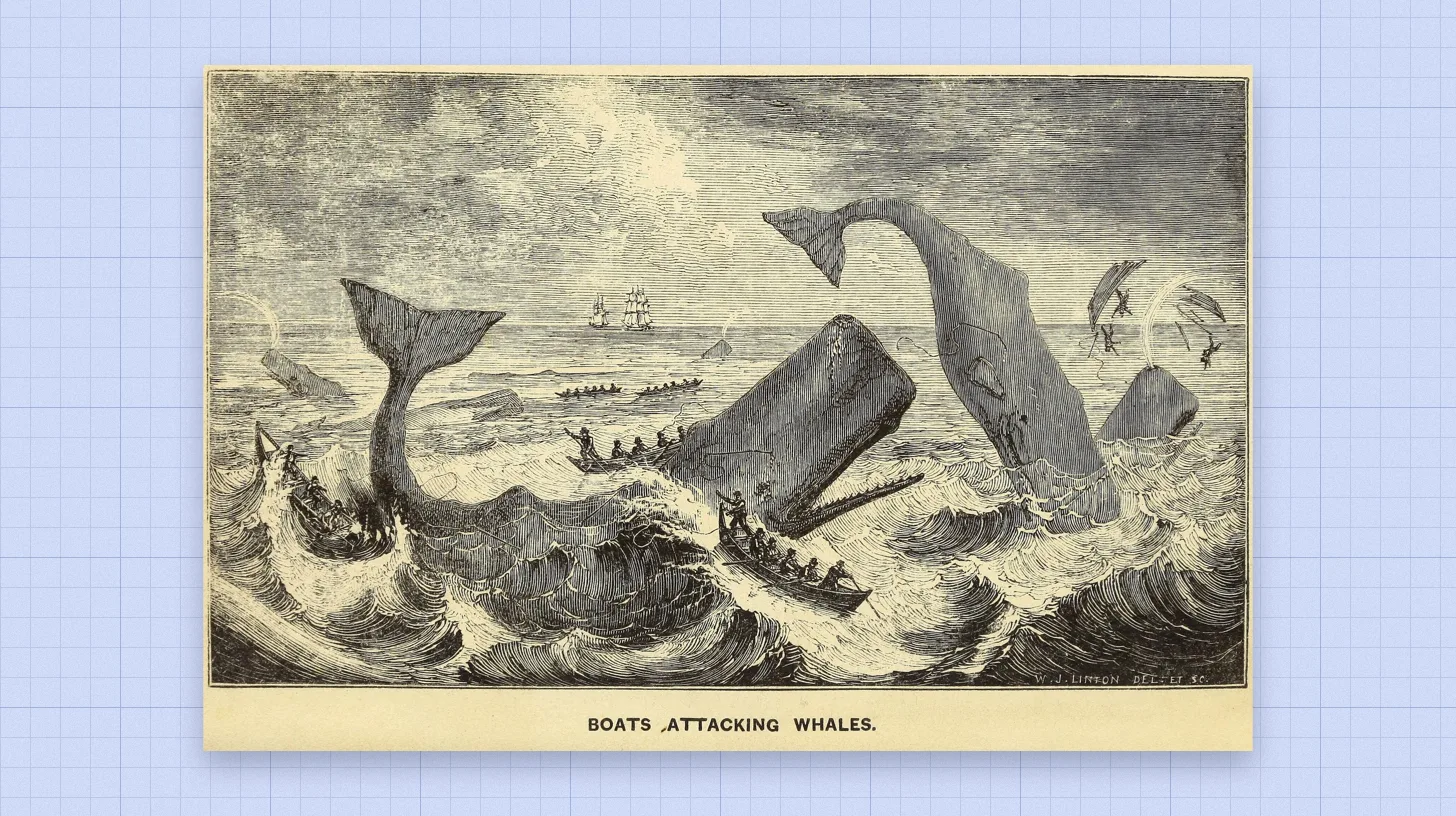
The kill, as the mate told it, came on a voyage some years before, in a Nantucket ship, on a morning when the crew was at breakfast and the lookout called that whales were in sight. The boats went down, and the men rowed about a mile and lay on their oars to wait for the school to come up. It was a dead calm. “Not a single cloud was passing over the deep blue of the heavens,” the mate said, and the only sounds were the men’s breathing, the water against the boat and an albatross flying sleepily overhead. Then a small calf came up, playing in the sunshine, and the mate told the third mate, “Pull up and strike it,” because “it may bring up the old one.” The calf was struck. Its mother rose beside it.
“Her first endeavor was to take it under her fin, in order to bear it away; and nothing could be more striking than the maternal tenderness she manifested in her exertions to accomplish this object.”
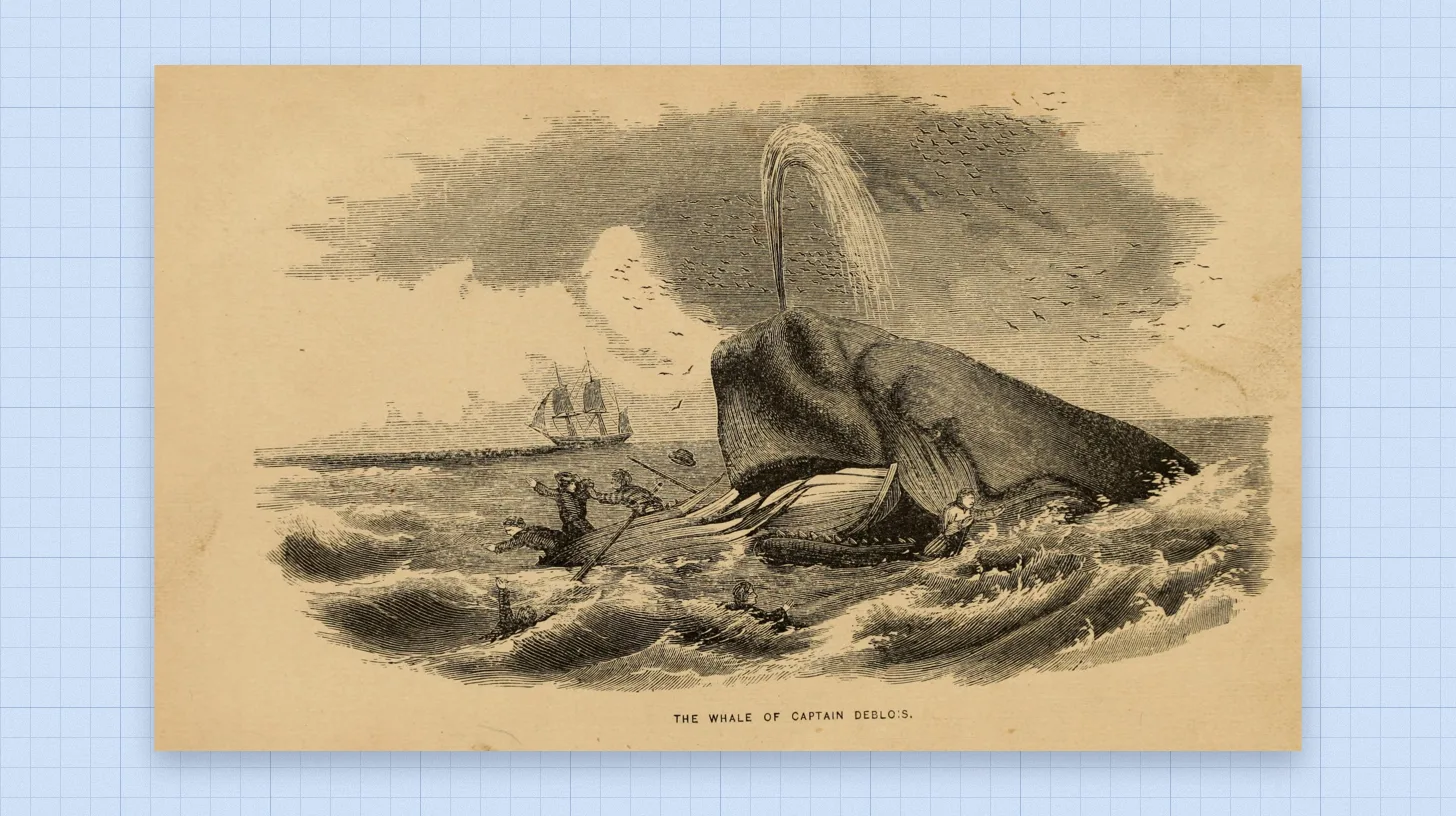
The calf rolled over and floated dead at her side, and the cow turned on the boat, and the third mate drove another iron into her. At that moment a whale breached about a mile off, and the mate saw that the falling mass was “white as a snow-drift.” The white whale came straight at the boats. “He’s making for the bloody water!” the men cried, and he cut through the sea toward the place where the calf had been killed. Later retellings say he came to the mother’s aid. The story says only that he made for the blood and then, as suddenly, stopped and lay still on the water, his back arched up “like the ridge of a mountain.”
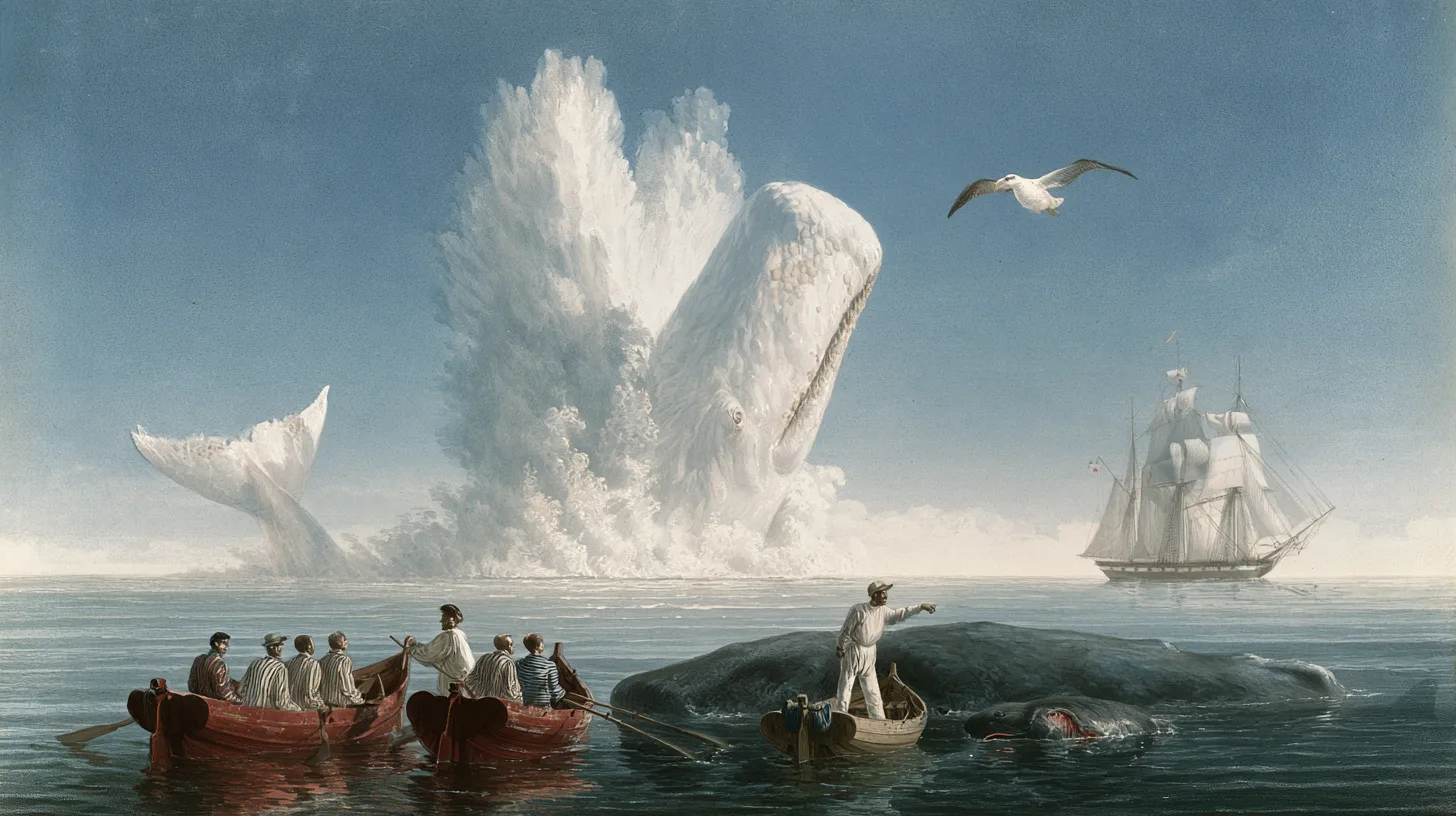
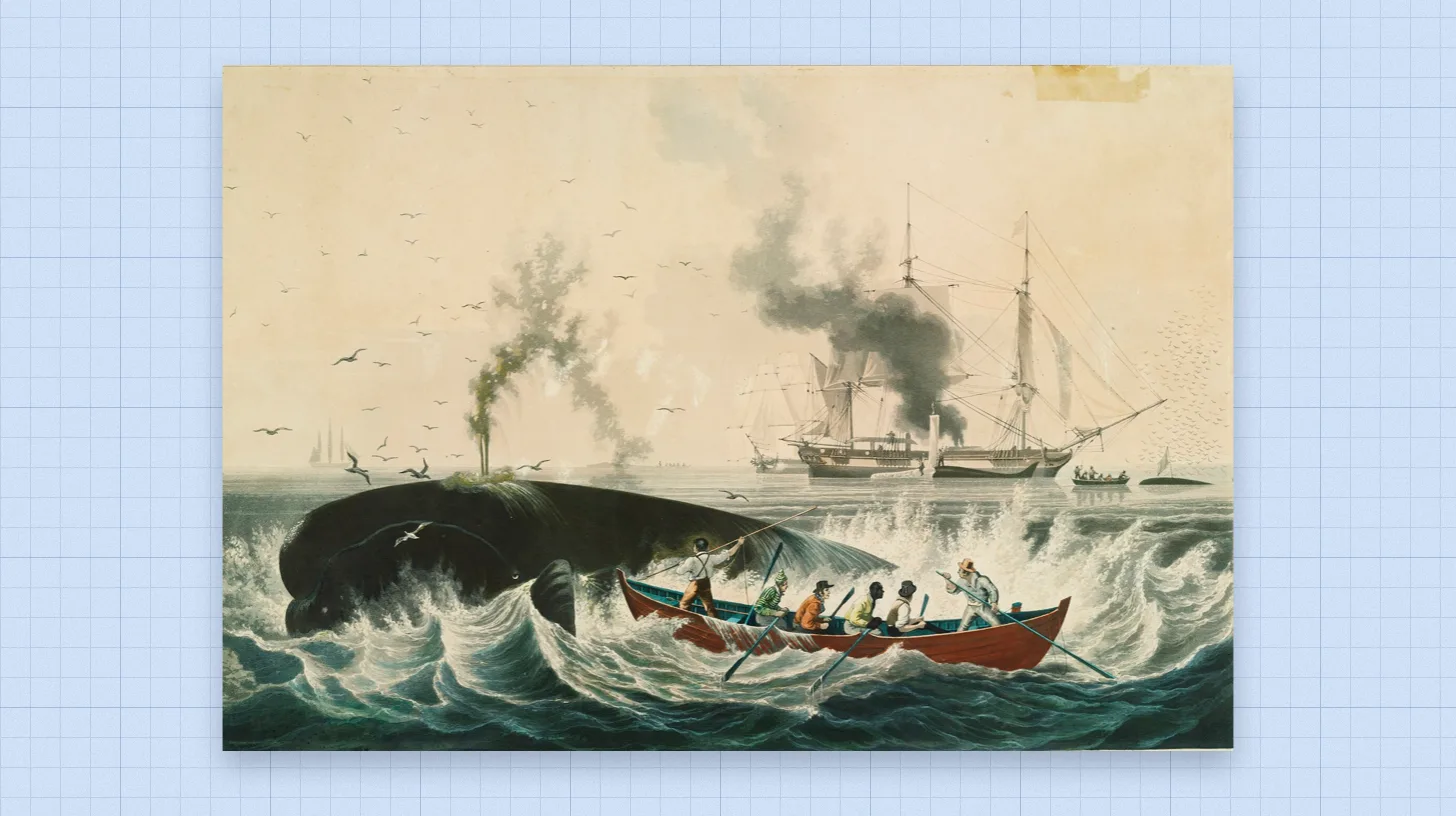
The mate stood in the bow and drove his harpoon into the whale’s thick white side. The whale whirled and smashed the sea and ran, towing the boat after him, and the mate hauled up and lanced him under the shoulder blade. Nearby a whale of the school struck the third mate’s boat and threw it in pieces into the air, and the mate’s first thought, he admitted, was for his prize. He ordered the line cut, saw the captain coming to the rescue, and cried, “for the glory of old Nantuck, hold on!”
Then the white whale sounded, so fast that two hundred fathoms of line went out through the chocks hot enough to give back the water thrown on it in steam. Two men of the third mate’s boat sank, and a third was dragged down by the tow line. When the white whale came up at last he spouted blood, and he died beating the water with blows that sounded like artillery.
Seventy feet from his noddle
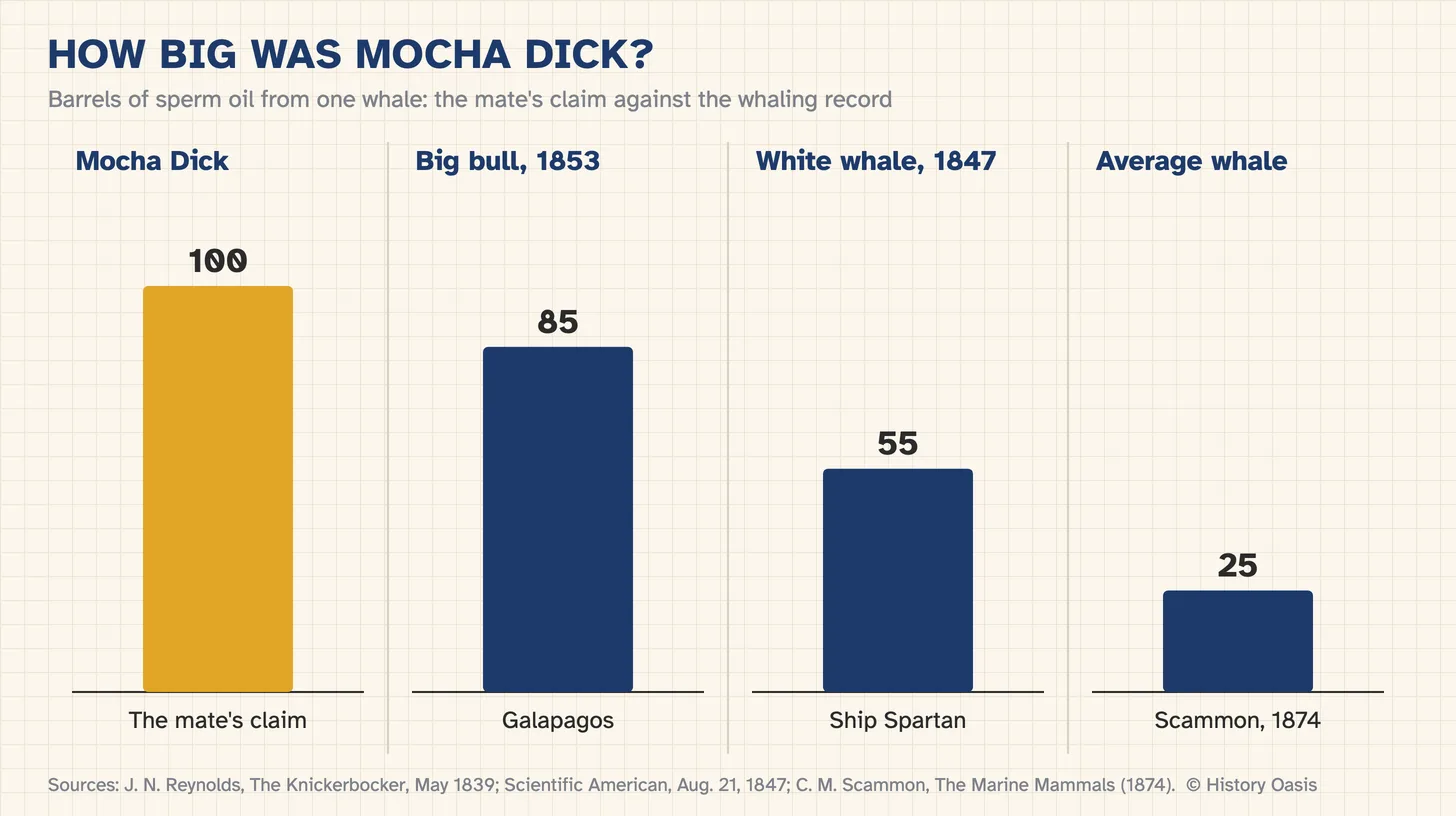
They towed him to the ship and cut him in. The mate gave his size and his yield in one breath.
“He measured more than seventy feet from his noddle to the tips of his flukes; and yielded one hundred barrels of clear oil, with a proportionate quantity of ‘head-matter.’”
And “not less than twenty harpoons did we draw from his back; the rusted mementos of many a desperate rencounter.” The head matter was spermaceti, the waxy oil of the head, not the ambergris that later versions put in the carcass. The figures were large but not impossible. Charles Scammon, a whaling captain who wrote a book on the whales of the Pacific coast in 1874, reckoned sperm whales at an average of twenty-five barrels and the biggest bulls at eighty to eighty-four feet. Old irons did turn up in whales. In 1846 a harpoon marked “Lyra,” belonging to a New Bedford ship lost in 1828, was found in a whale.
But there is no second witness. The mate’s name is not in the article, and Martini, who found the ship, could not find the man, which, he wrote, prevents further investigation. No logbook, newspaper or consul’s letter has been found recording a white whale killed off Mocha. The story gives no year for the kill, and the date of 1838 that appears in many retellings is not in it. When the mate was silent, Reynolds wrote, a glass of “o-be-joyful” went merrily round the cabin, and the man who had killed Mocha Dick sang a whaling song to an old hand-organ.
Long live Mocha Dick
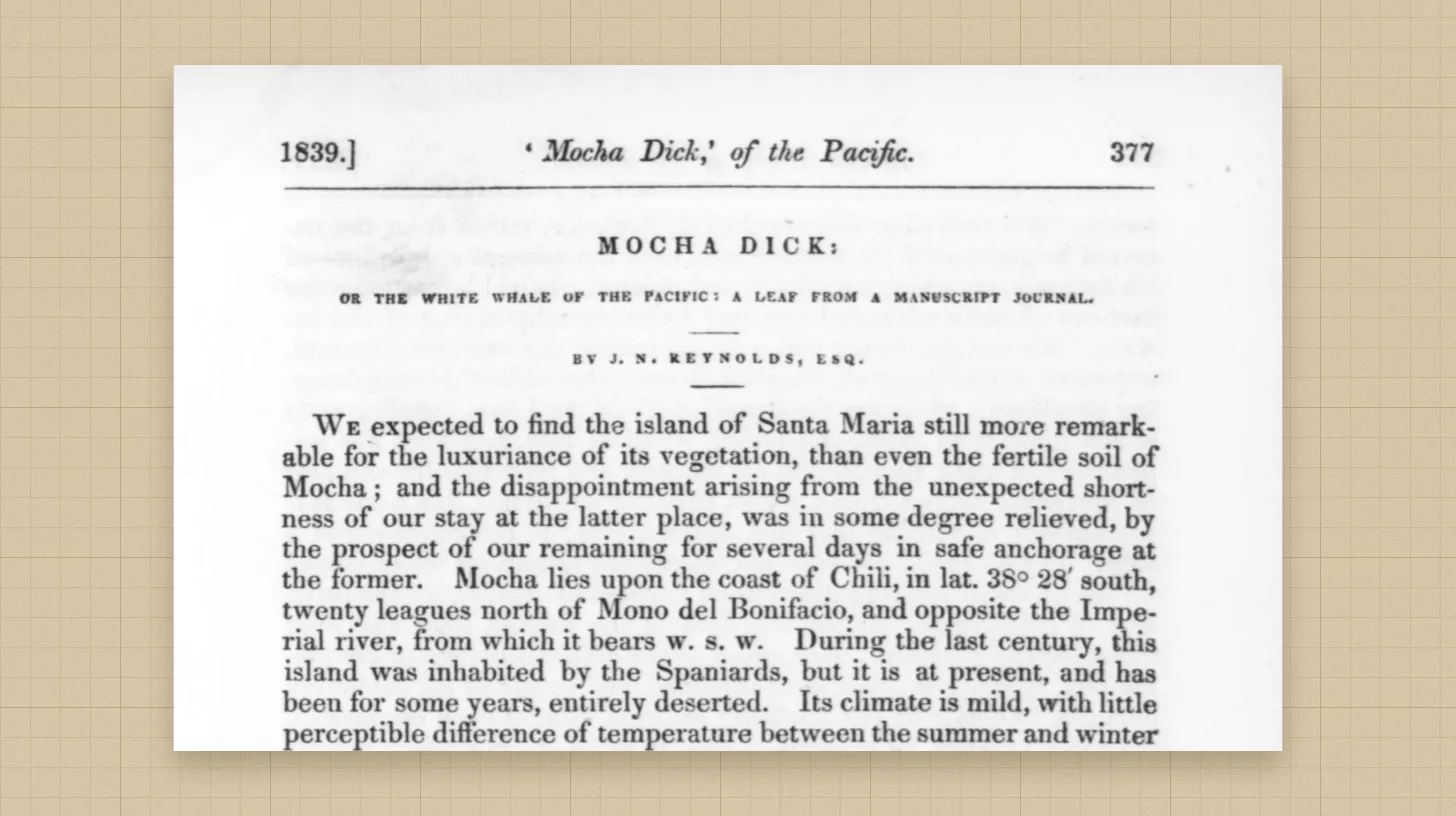
The sketch came out in May 1839, and a New York weekly called it capital. An Edinburgh magazine reprinted it that autumn. Within a few years the name had passed into magazine fiction, and The Knickerbocker’s own editor, although his magazine had killed the whale, wrote in July 1846 of a living “mountain-whale” that rose like an island “trailing from his sides hundreds of green slimy ropes.” In March 1849 he gave him two or three hundred harpoons, placed him in the Arctic and closed by wishing him long life, in French.
A real white sperm whale was taken in 1847. The Nantucket ship Spartan, home that August, had caught one on the Off Shore Ground that was “perfectly milk white in every part”, very old and toothless, the size of a ninety-barrel whale but yielding only fifty-five. A report printed that September said that the oldest whaleman from Nantucket had never before seen a white whale. Nobody called this one Mocha Dick.
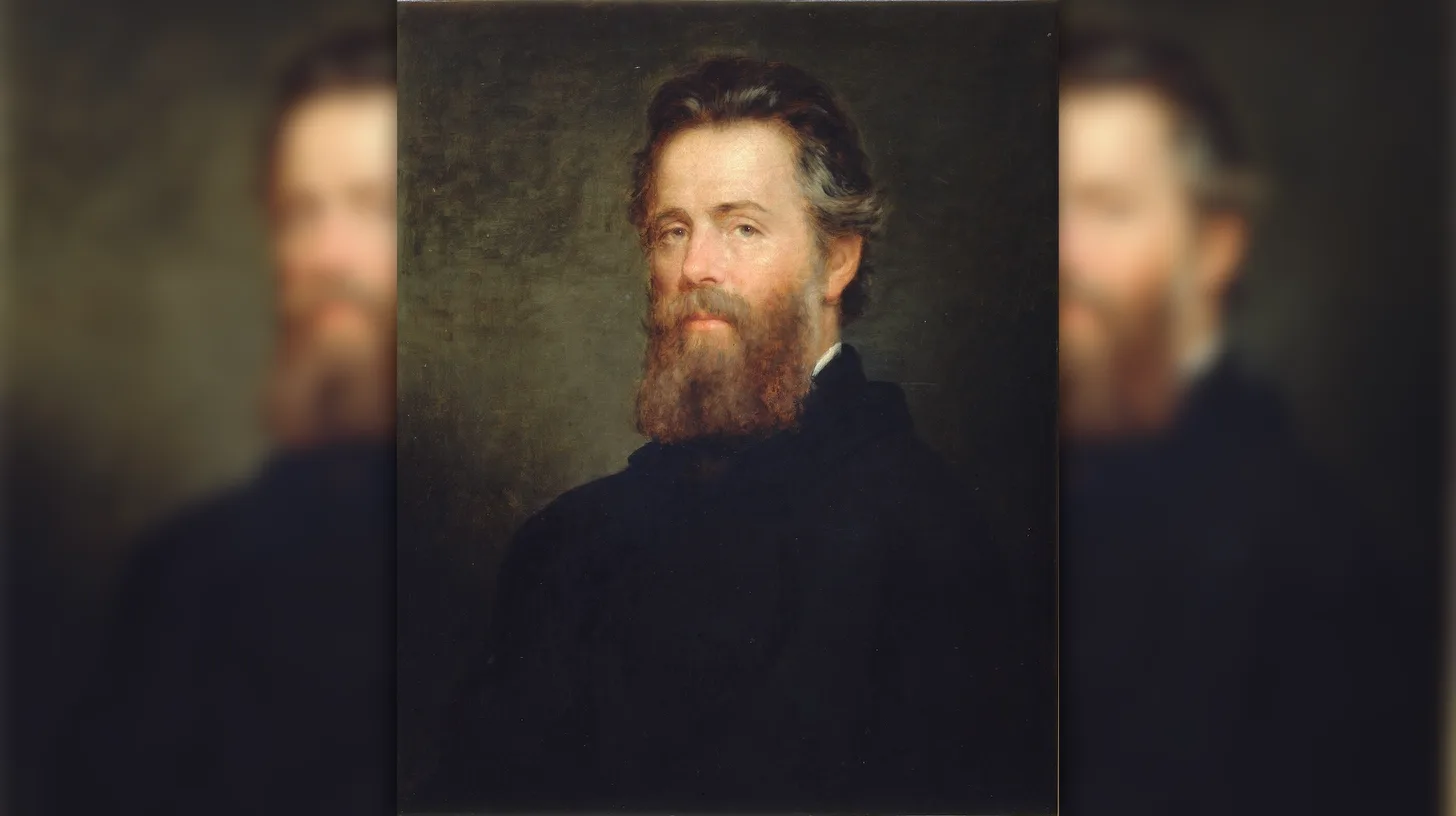
In the fall of 1851 Herman Melville published Moby-Dick. The word Mocha does not appear in it. His chapter on famous whales names Timor Tom, New Zealand Jack and a Chilean whale it calls Don Miguel, but not Reynolds’s. Reviewers made the connection at once, and one that December traced the white whale to “a monster first introduced to the world of print by Mr. J.N. Reynolds.” That same autumn news came that a sperm whale had sunk the New Bedford ship Ann Alexander in the Pacific, and Melville wrote to a friend in New York about it.
“I make no doubt it IS Moby Dick himself, for there is no account of his capture after the sad fate of the Pequod about fourteen years ago.”
A gray-black whale with a white scar
Reynolds had worked for the national exploring expedition until the House of Representatives voted for it in 1836, and he told John Quincy Adams that he could now die content. Then he was left off it. He died in 1858, in New York by Howe’s account and while travelling in Canada by the Massachusetts Historical Society’s.
The fullest life of Mocha Dick came thirty-four years after that, from a humorist. In April 1892 the Detroit Free Press writer who signed himself M. Quad published “The Career of Mocha Dick,” which the Chicago Tribune ran the same day. It gave the whale a career from 1840 to 1859, a list of ships by name and date, fourteen boats stove and more than thirty men killed. It had him killed off Brazil in August 1859 by a Swedish whaler and measured at 110 feet, some thirty feet longer than the largest bulls Scammon knew. In it he was not white at all, but gray-black, with a white scar. None of its ships has been found in any earlier record.
Reynolds’s whale had died long before that, in a dead calm off the coast of Chile. He died in a story told over grog.