14 min read
On Wednesday, November 5, 1913, a crowd the city put at thirty thousand stood along a dry concrete stairway in the hills above the San Fernando Valley and waited for water. A flag was unfurled, cannon fired, the gates at the mouth of a tunnel were opened, and after two or three minutes the water of the Owens River, brought more than two hundred miles from the eastern side of the Sierra Nevada, came down the steps. “The great crowd went wild with delight,” the Los Angeles Times reported the next morning, and the man who had built the aqueduct, the city’s chief engineer, William Mulholland, made a speech of five words. “There it is, take it!”
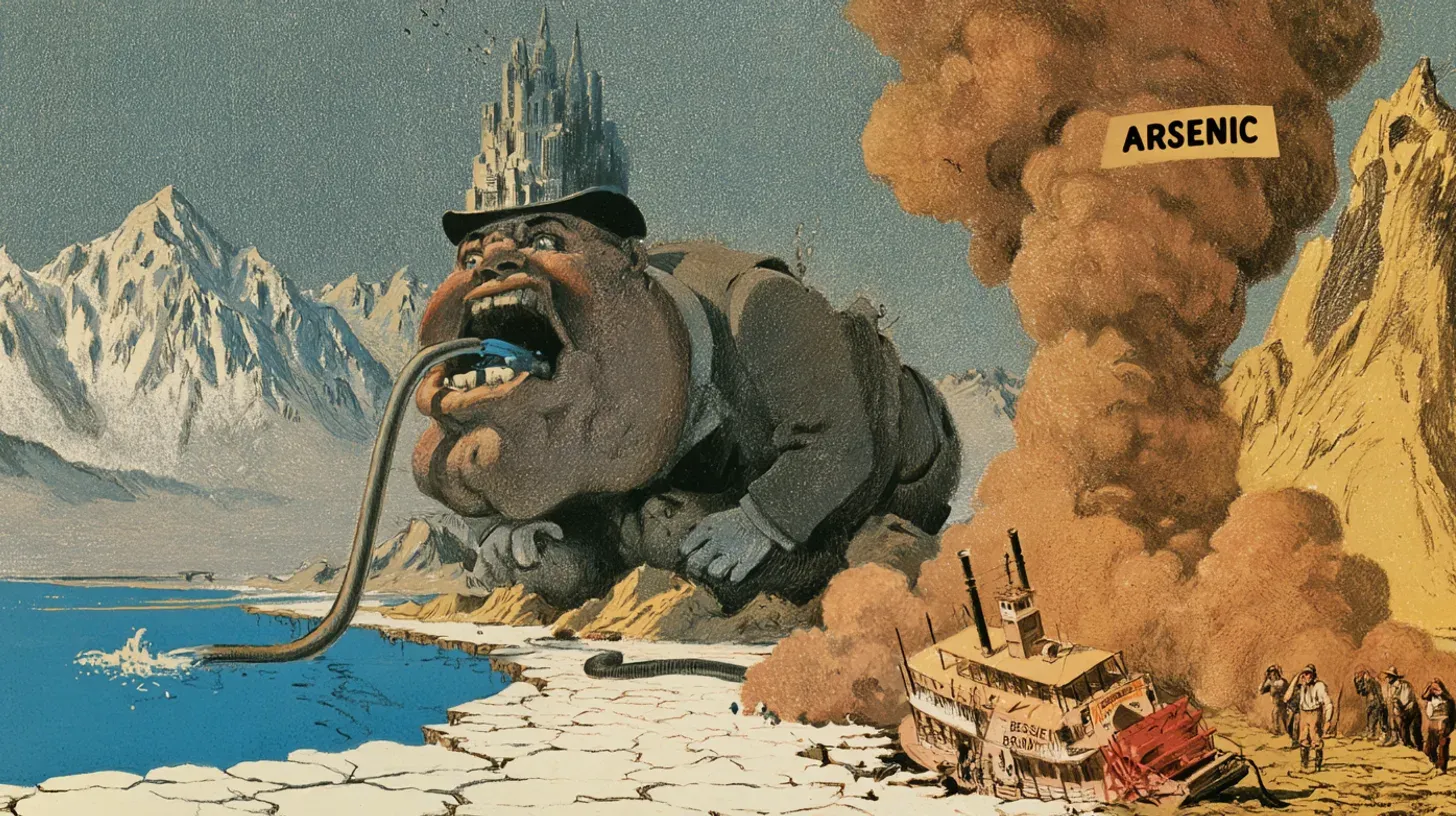
The river he had taken was the one that filled Owens Lake. That February the lake had covered 97 square miles, and in its time it had carried a steamboat. Within about a dozen years it was dry, the ranchers of the Owens Valley had seized the aqueduct and dynamited it in what became known as the California water wars, and the bed of the lake was on its way to becoming what the federal government would call the largest single source of dust pollution in the United States. This is how a city drank a lake, and what was left behind.
A steamboat on a desert lake
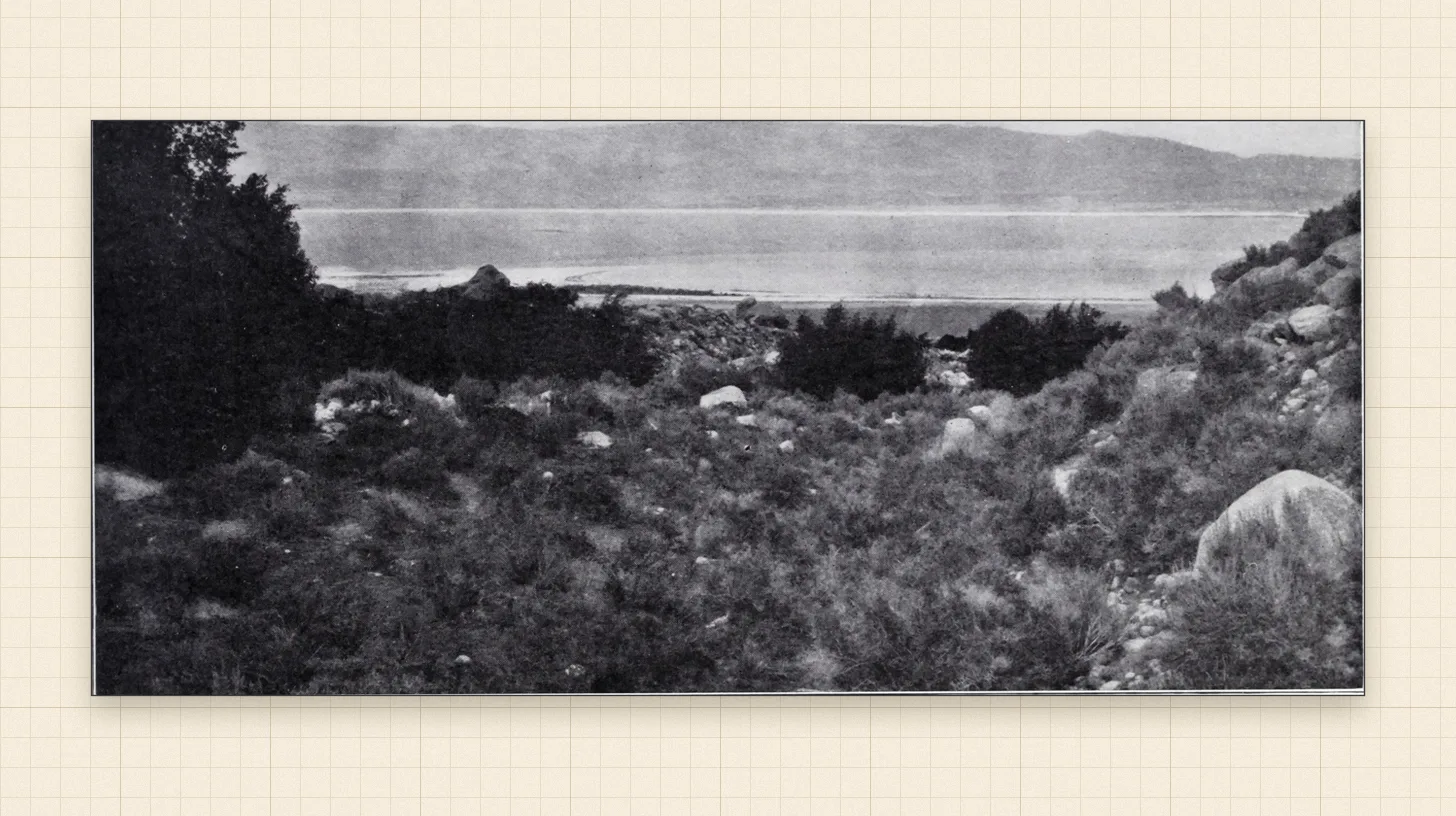
Owens Lake lay at the foot of the Sierra, at the bottom of a long, dry valley, and its water was salt. A pioneer named Beveridge Spear remembered its birds. “Ducks were by the square mile, millions of them,” he recalled. The lake’s recorded high water came in 1872, which was also the year it got its steamboat.
Silver was coming down from the mines at Cerro Gordo, in the mountains east of the lake, and it went out by wagon. To carry it across the lake instead, the superintendent of the smelting company, James Brady, and a partner built a steamer eighty-five feet long, at a cost of about $10,000, and named her for Brady’s small daughter, who broke the bottle over her bow. The Bessie Brady was launched on June 17, 1872. On her first trip, ten days later, she landed 700 bars of silver bullion at the lower end of the lake, and the paper at Independence looked forward to the Fourth of July, when a steamboat excursion on the lake would be “an event worth remembering.”
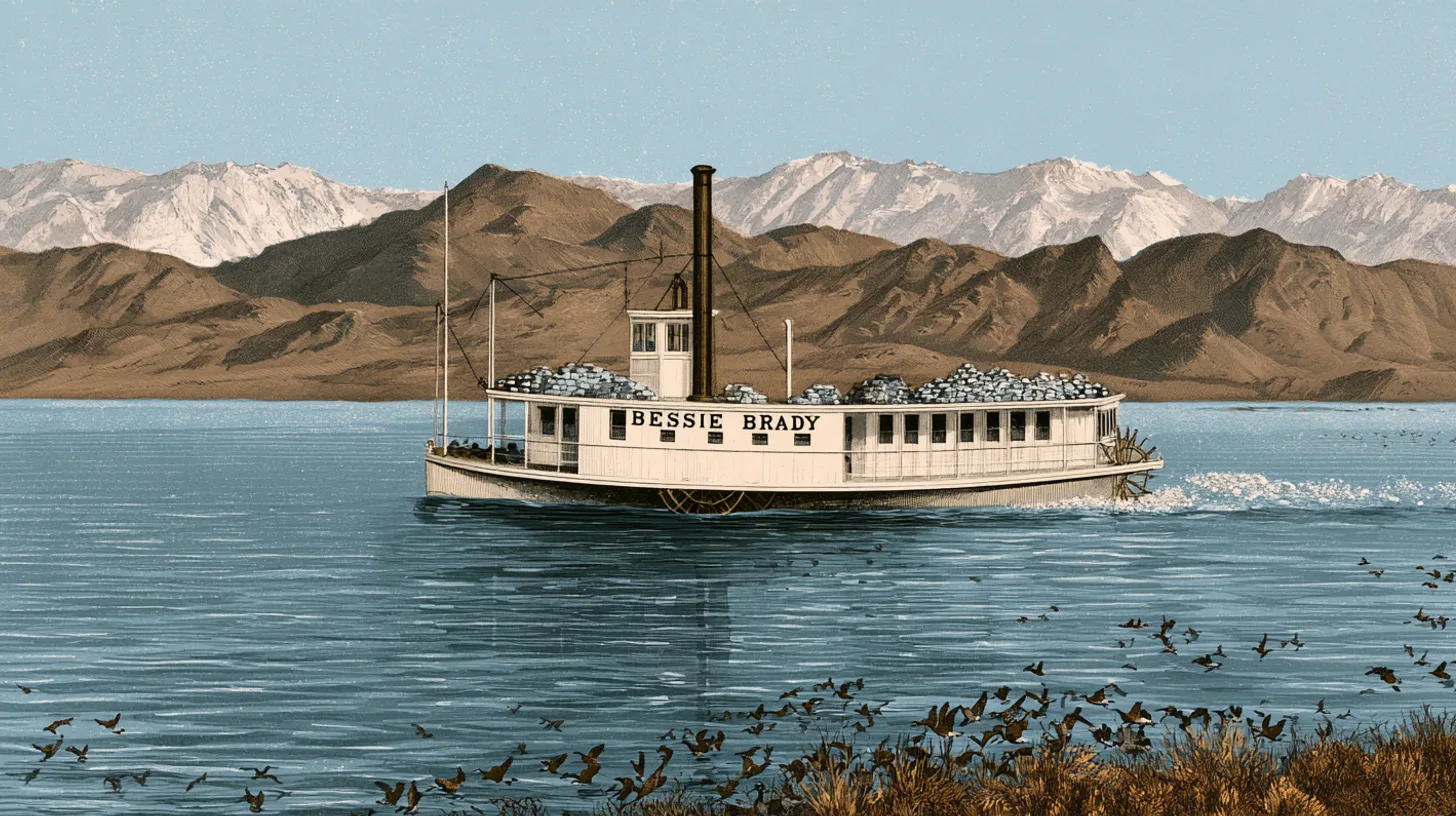
She burned on a May evening in 1882, while she was being refitted with a new engine to go back to work. Her captain, J. M. Keeler, blamed the oakum, oil, paint and tar in her hold, which he thought had caught fire by themselves, and he told the Inyo Independent what she had meant to him.
“The boat was sound, and I had spared no pains to put her in nice trim; really, I was proud of her, as being just what we needed. But she has been launched in fire and not in water.”
The lake outlived her by forty years. A geologist of the U.S. Geological Survey measured it in February 1913, nine months before the water came down the Cascades, and found 97.2 square miles of water, 29.6 feet deep at the deepest point. The 110 square miles usually given is the round figure for the lake at its fullest.
The dreamer and the doer
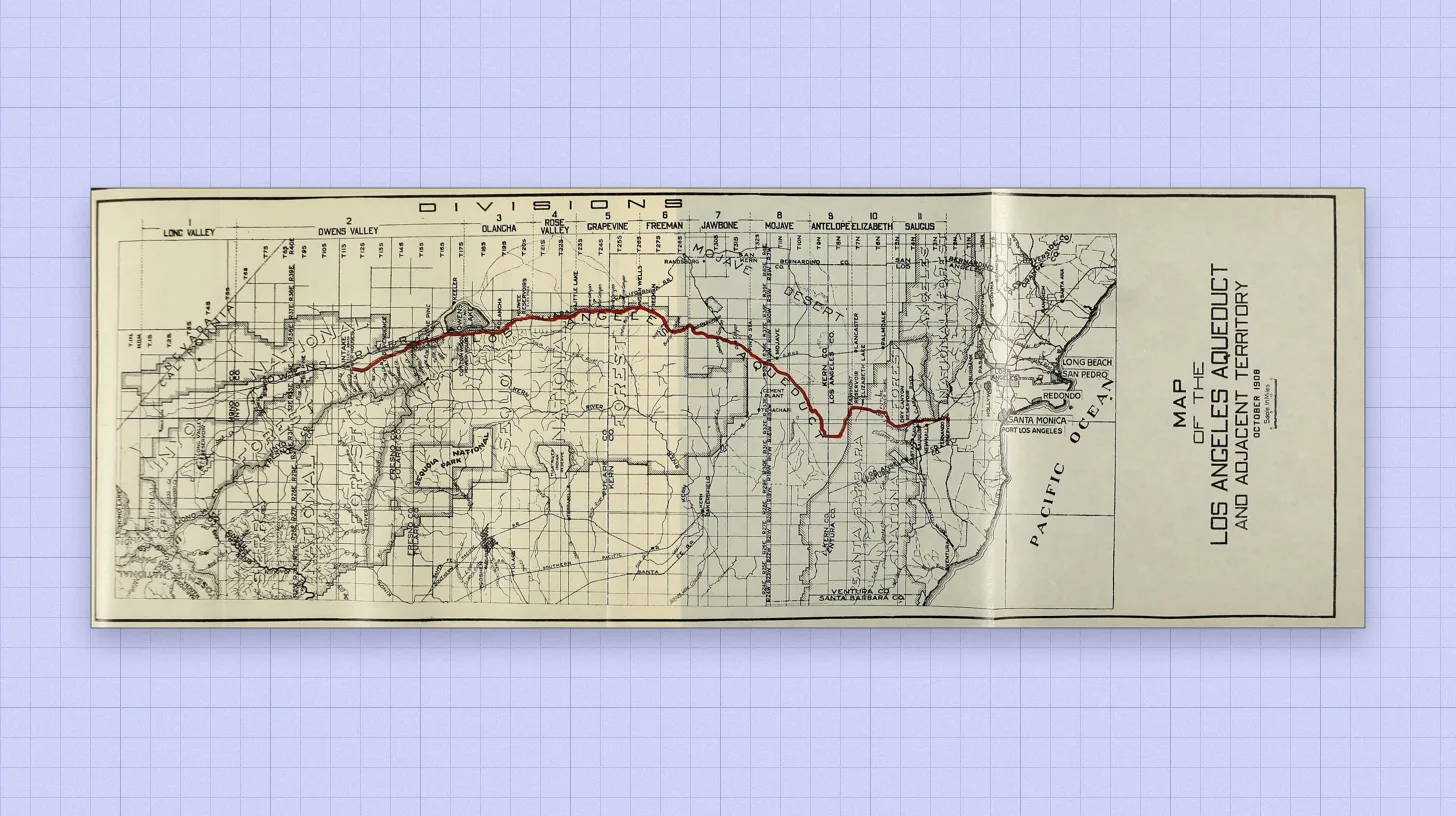
The idea of bringing the Owens River to Los Angeles came, by the city’s own account, from Fred Eaton, who had been both city engineer and mayor and who had interests in Inyo County. Early in 1905, the city’s official report says, Eaton suggested it to the superintendent of the city’s water department, William Mulholland. A Los Angeles historian of the 1920s called the two men “the dreamer and the doer.”
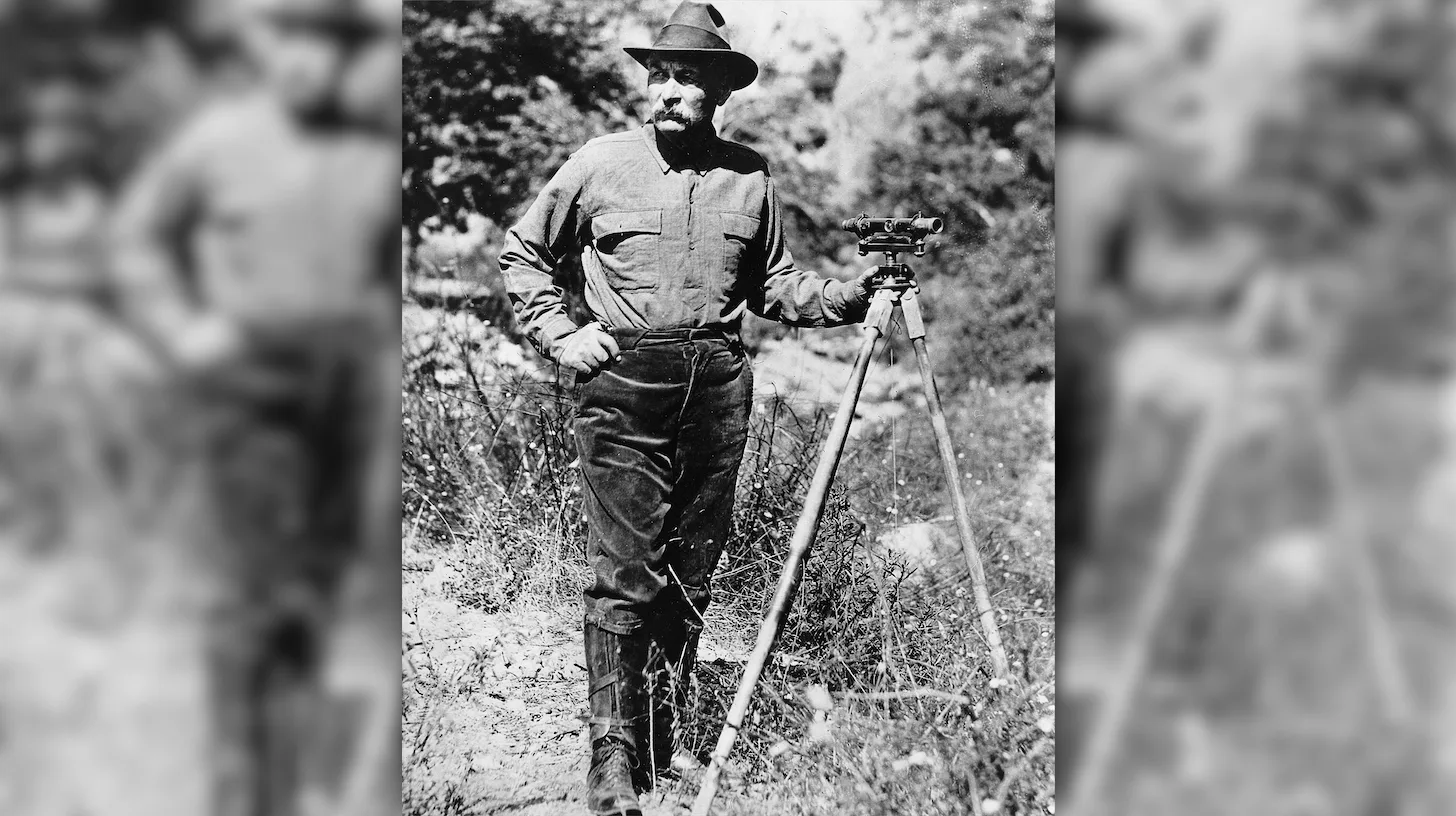
Mulholland was forty-nine that year. He had been born in Belfast in 1855, had come to California in 1877, and had started as a ditch tender on the city’s water system, living alone, a county history says, “in a cabin beside one of the ditches which were under his care.” At night in the cabin he studied books on mathematics, surveying and engineering. In a photograph from the years he was building the aqueduct he stands in a wide-brimmed hat and shirtsleeves beside a surveyor’s level, a heavy mustache across his face and one hand on his hip. By 1886 he ran the private company that supplied the city’s water, and when the city took the system over he stayed as its chief engineer. A history of California published in 1915 said he wore his laurels “with becoming modesty.” No writer of his day who was found for this article described his face.
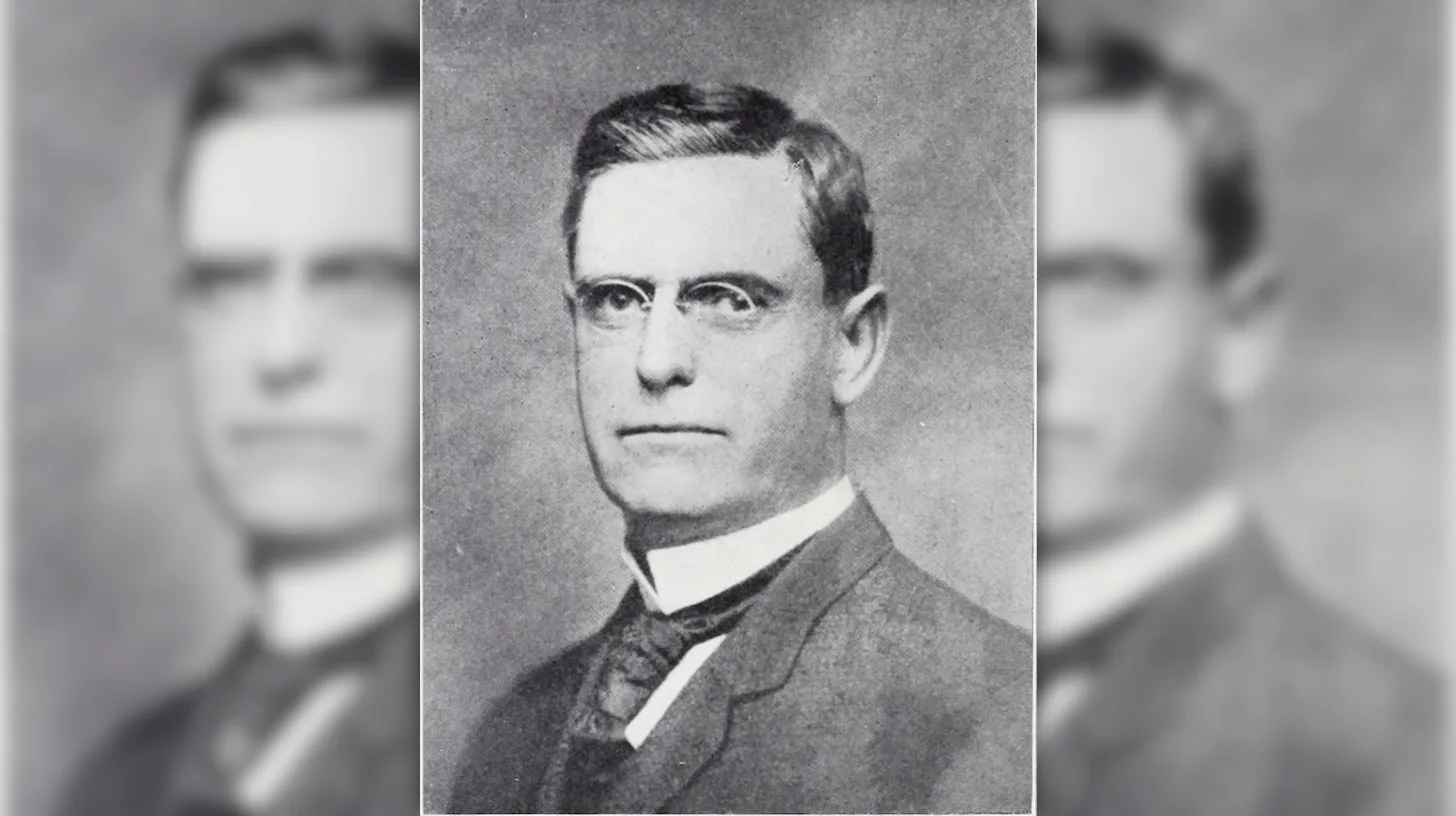
The plan had a second man at its center. Joseph B. Lippincott was the supervising engineer of the U.S. Reclamation Service in California, which was then studying an irrigation project for the Owens Valley farmers, and the city hired him at the same time to report on its own possible sources of water. He later became Mulholland’s assistant chief engineer. The valley’s historian, W. A. Chalfant, printed what the Los Angeles Times had said of him in 1905.
“Without Mr. Lippincott’s co-operation the plan would never have gone through. Any other government engineer, a non-resident of Los Angeles, undoubtedly would have gone ahead with nothing more than the mere reclamation of arid lands in view.”
The city bought land and water rights in the valley, and in June 1907 the voters of Los Angeles approved the bonds to build the aqueduct by ten to one. The 1974 movie Chinatown, a Paramount release, is often taken for this history. The historian William Deverell of the University of Southern California has said that it “is entirely fictional,” and that many valley farmers “wanted to sell, they did sell, and Los Angeles was there writing the checks.”
Water down the Cascades
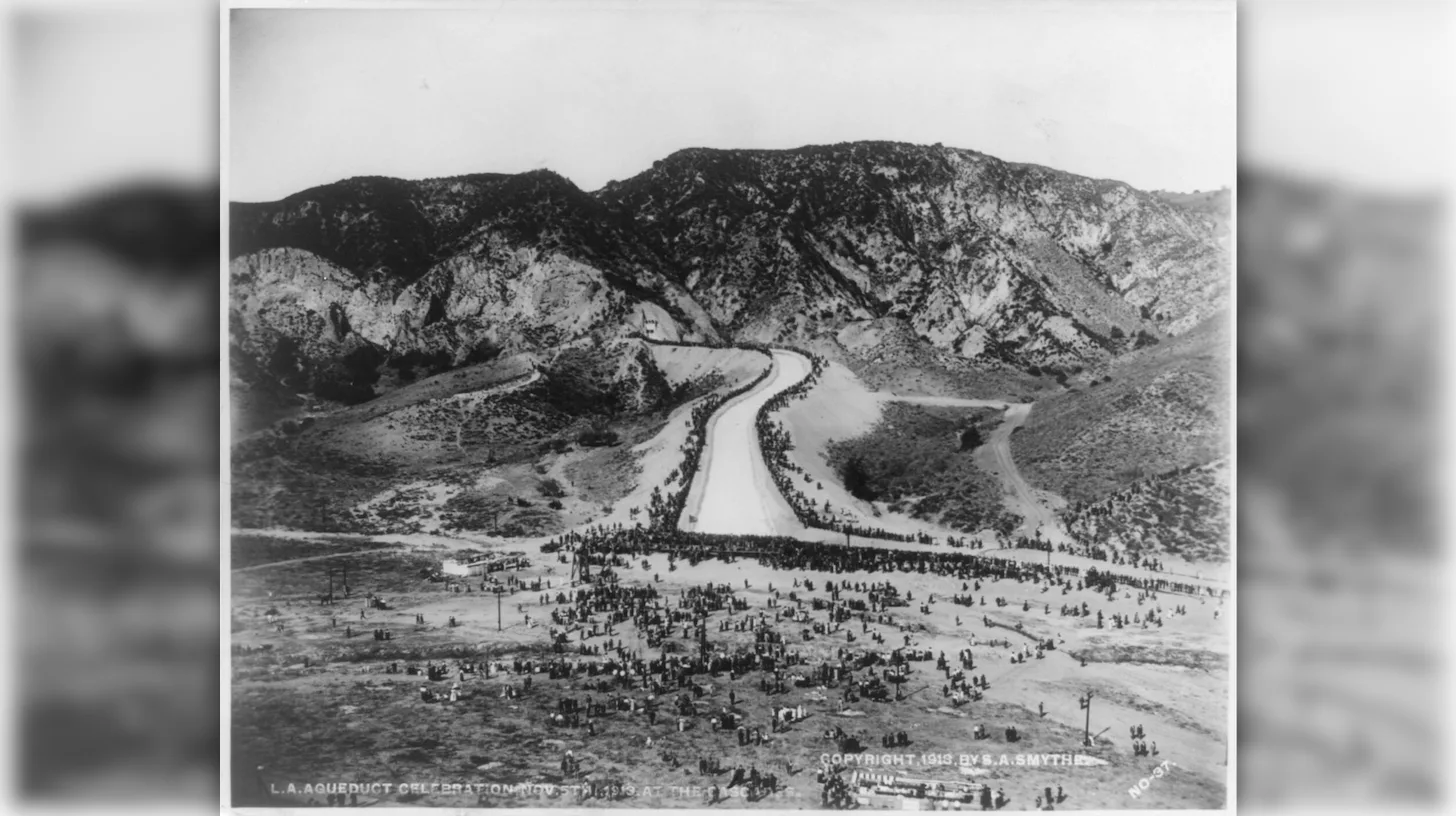
When the aqueduct was done it carried the river 233 miles by gravity, through tunnels, open canals and steel siphons, to the edge of the San Fernando Valley. Its end was a stepped concrete chute below the south portal of the last tunnel, which the city called the Cascades, and it was there that the crowd gathered on November 5, 1913.
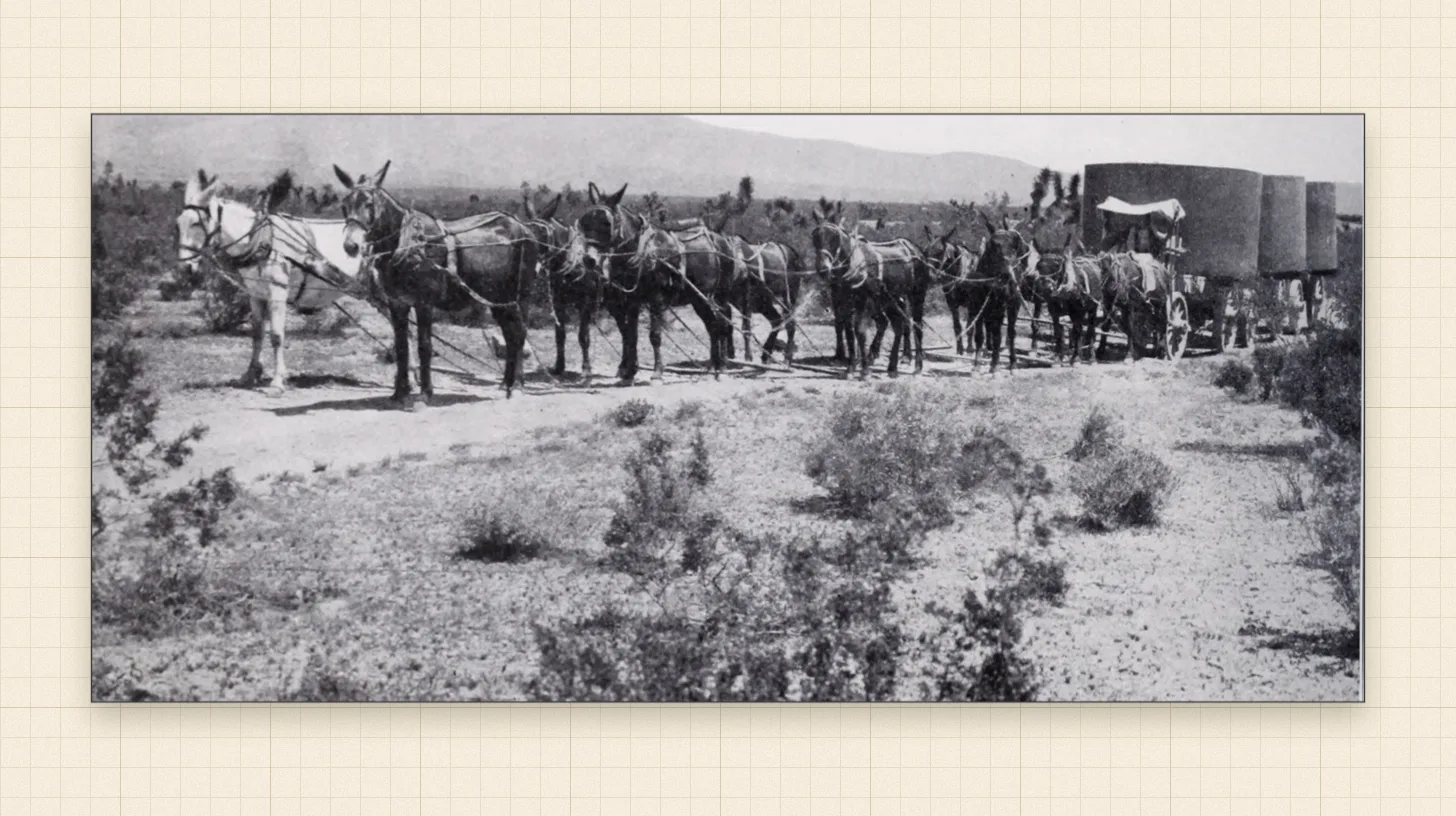
The Times reported that ten thousand or more lined the Cascades themselves and that others covered the hillsides. Women from the churches ran sandwich booths along the San Fernando road, pennants were sold, and the crowd drank great tubs of lemonade. When the flag was unfurled the cannon boomed, and for two or three minutes nothing could be seen but the dry, rocky bed of the chute. Then the water came. The crowd cheered for a quarter of an hour, and a boy who had offered to jump into the flood for money looked at it and changed his mind.
Mulholland, facing the mayor, pointed at the water. “There it is, take it!” was the whole of his speech, and the city’s own report said he had made “a record for concise public speech-making.” His two daughters came up on the stand to greet him.
A lake goes dry
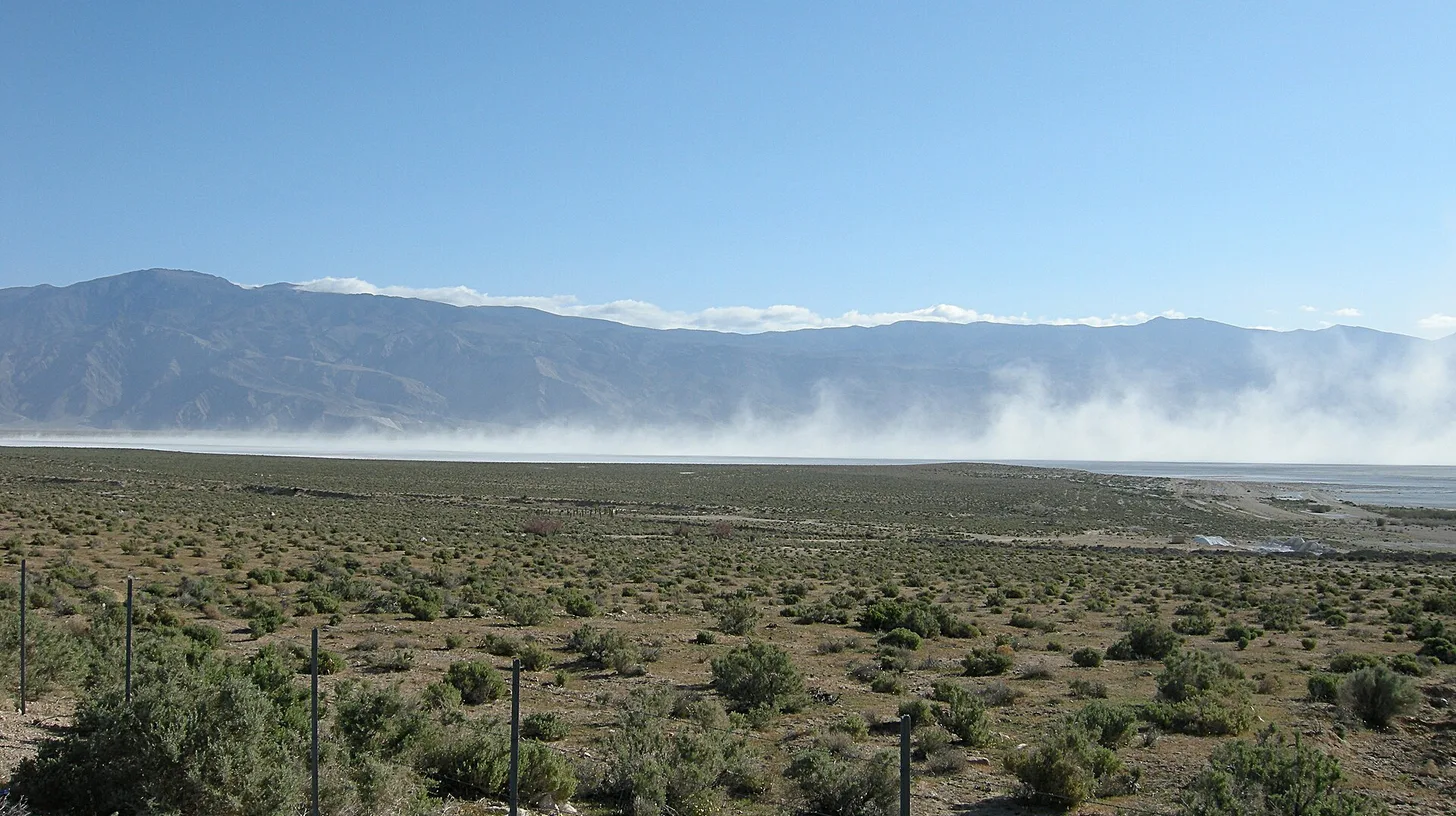
The water that came down the Cascades no longer went into Owens Lake. The river had fed the lake for as long as there had been a lake, and with the river taken, the lake began to shrink. A brochure of the Big Pine Paiute Tribe says that by 1924 it was a relatively dry alkaline sink, and the Geological Survey dates its “artificial desiccation” to 1926. A pool of brine stayed at its center, and still does, but the rest became a white flat of salt and fine clay, most of a hundred square miles of it, at the bottom of a windy valley. The federal Environmental Protection Agency later put the cause in a single sentence: the dry lake bed was caused “by the complete diversion of water from the Owens River, the source of the lake.”
Up the valley, among the ranchers who had stayed, the fight over the river’s water was not finished.
Ranchers at the Alabama Gates
At about ten o’clock on the morning of Sunday, November 16, 1924, some sixty men in automobiles drove up to the Alabama Gates, a set of spillway gates on the open aqueduct canal five miles north of Lone Pine. The gate tender, a man named Frank Lasky who lived nearby, tried to stop them and could not. They opened the gates, and practically the entire flow of the aqueduct, 291 second-feet, went out of the canal and back into the dry bed of the Owens River. The city’s officials put its value at $10,000 a day. By evening the men numbered more than a hundred, unmasked and apparently unarmed, and they pitched tents and turned two powerful searchlights on the road. Sheriff Charles Collins of Inyo County telegraphed the governor of California for troops. “I urge that troops be sent immediately,” he wired. None came.
It turned into a picnic. On the Wednesday the town of Bishop declared a holiday and its shopkeepers locked their doors, the butchers gave the meat and the bakers the bread, and “fifty Bishop women each made a pie,” the Times reporter at the gates wrote. The paper said the atmosphere was “like that of a picnic.” An orchestra of girls in khaki came up the hill with their drums, and the crowd sang Onward, Christian Soldiers. One rancher, a bearded father of five, told the reporter that the city could put him in jail and break him, but that if it did, he would take to the sagebrush along the aqueduct. On Thursday night the gates were deserted, and the water was back in its channel. A story that the movie cowboy Tom Mix sent his band to play for the ranchers is often told, but the Times coverage of those five days does not mention it.
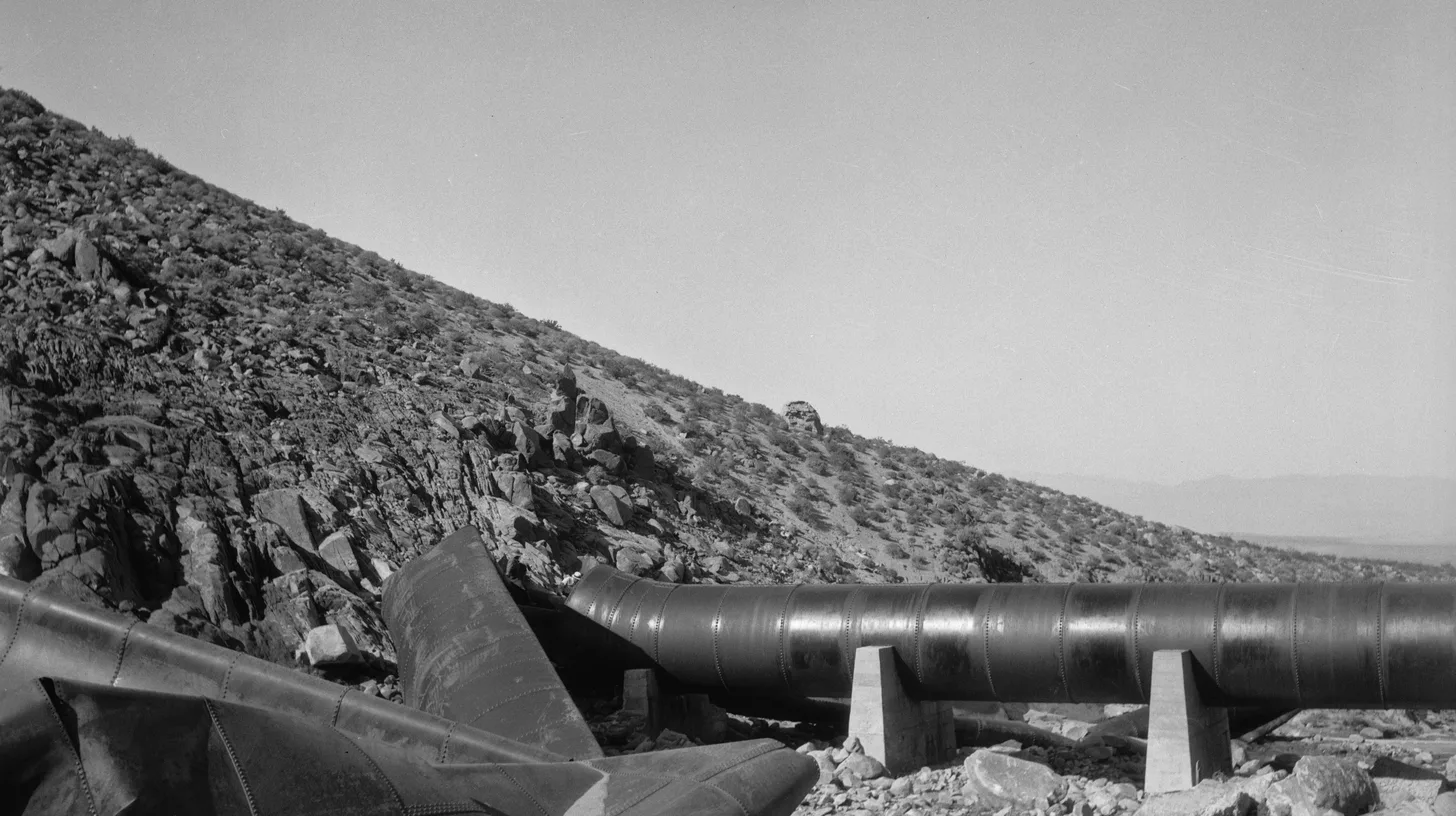
The dynamite had already begun. At 1:17 on a May morning that year a blast tore out a spillway gate near Lone Pine, and it was felt for miles and mistaken for an earthquake. In May 1927 a section of the aqueduct’s steel siphon in No Name Canyon was blown to pieces, 300 feet of it by the first report, and Los Angeles held more than 600 armed police ready to go north. That August five banks in the valley, run by the brothers W. W. and Mark Q. Watterson, closed their doors with a notice blaming Los Angeles. In November 1927 the brothers were convicted on 25 counts in connection with the collapse of the banks.
Thirty tons of arsenic a year
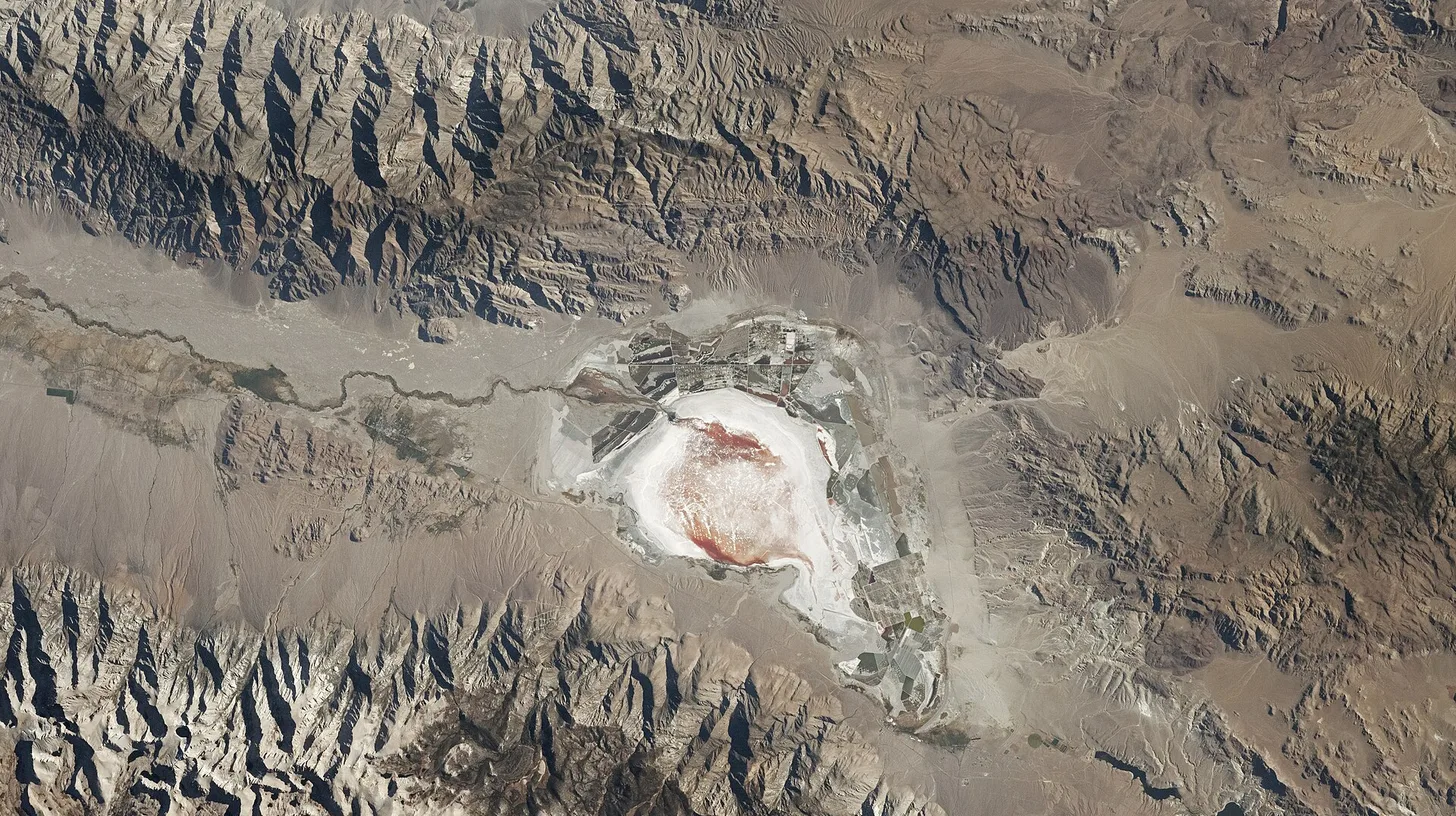
The lake bed lay quiet in the record for half a century. In 1975 scientists at the Navy’s China Lake weapons station, to the south, identified it as the source of the great dust storms that rolled down the valley, and in 1987 the EPA declared the area out of compliance with the federal standard for fine dust. A wind of only 20 to 40 miles an hour was enough to lift it. One storm fouled the air as far south as the town of Ridgecrest.
The EPA’s figures were stark. Owens Lake, the agency said, “emits about 300,000 tons of PM-10 per year: 30 tons of this is arsenic and 9 tons is cadmium. Owens Lake is the largest single source of PM-10 pollution in the United States.” A woman sitting in her car near the town of Keeler wrote down what one of those storms was like on May 29, 1985, when the wind came from the south in gusts of 62 miles an hour.
“Within an hour the air was heavy with fine white particles of dust. I could no longer see the mountains a short distance away. Breathing became difficult, and my throat and eyes burned. My nose started to bleed.”
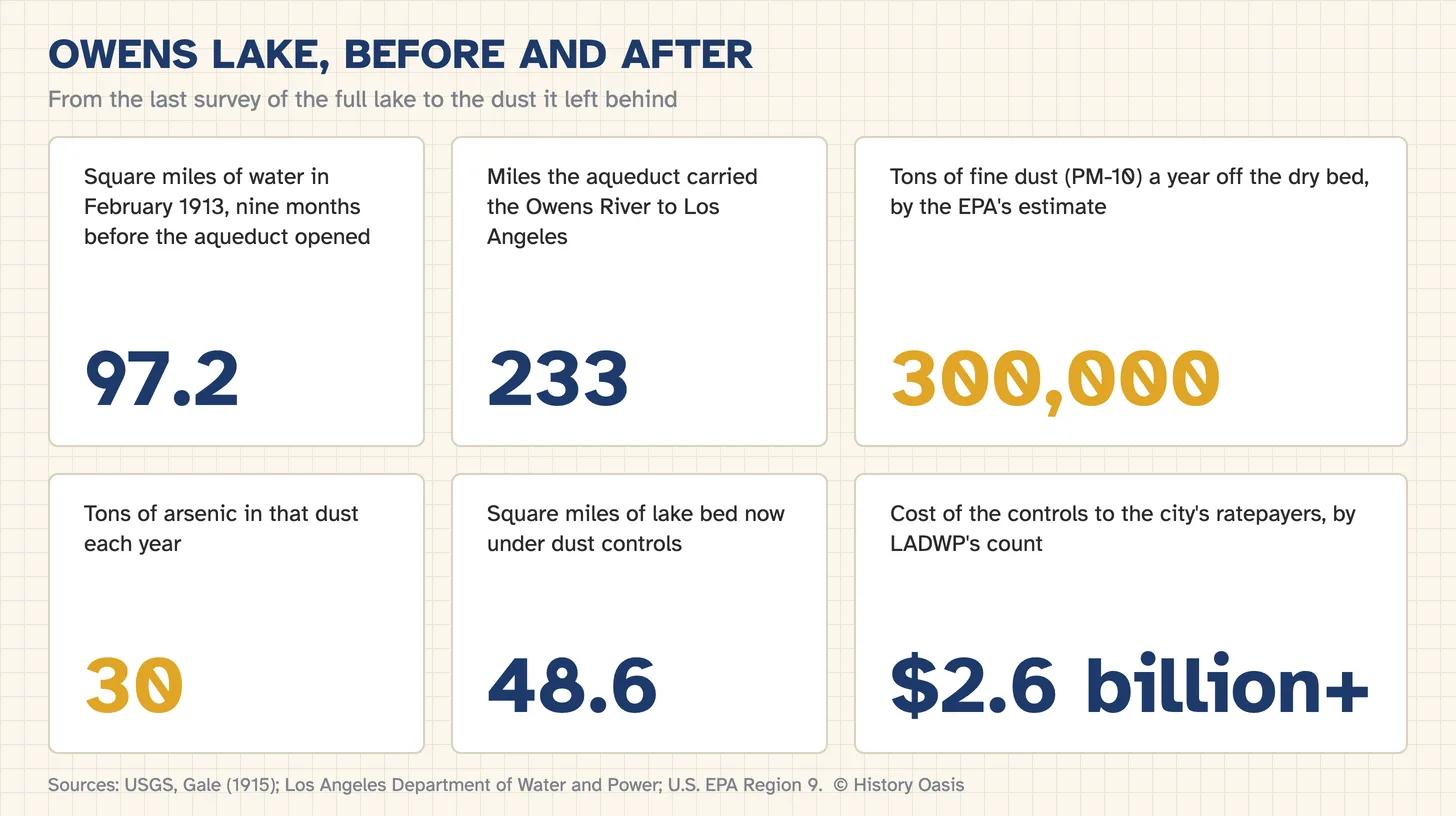
In 1998 Los Angeles signed an agreement with the local air district to control the dust, and a series of agreements and court orders followed. By the Department of Water and Power’s own account, the city now keeps 48.6 square miles of the old lake bed under dust controls, which are shallow water, gravel, plants, tilled ground and brine, and about 30 square miles of that is under a thin sheet of water. The department puts the cost to its ratepayers at more than $2.6 billion and the drop in dust at 99.4 percent.
The water on the lake bed now is pumped there to hold the dust down.