
14 min read
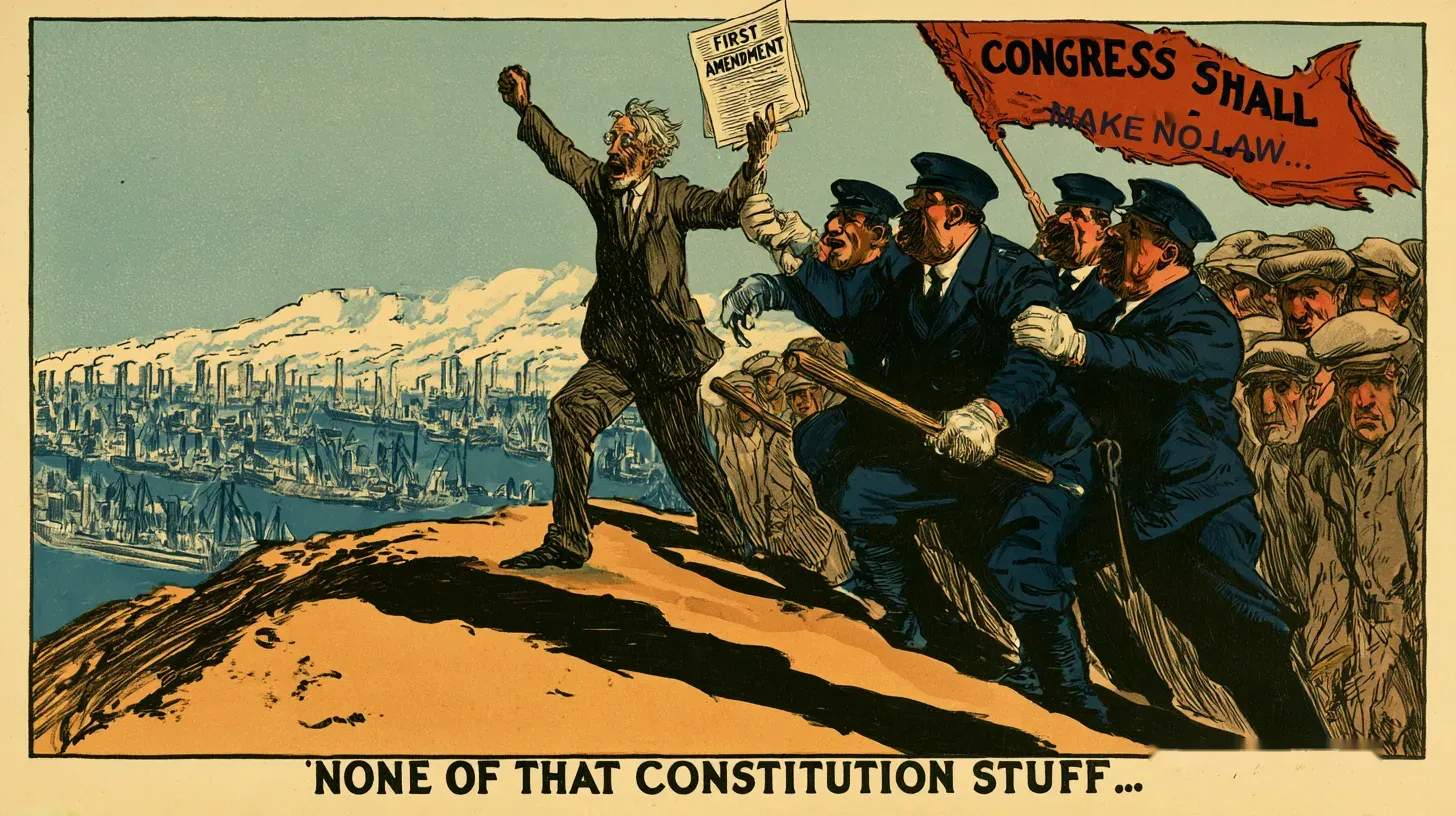
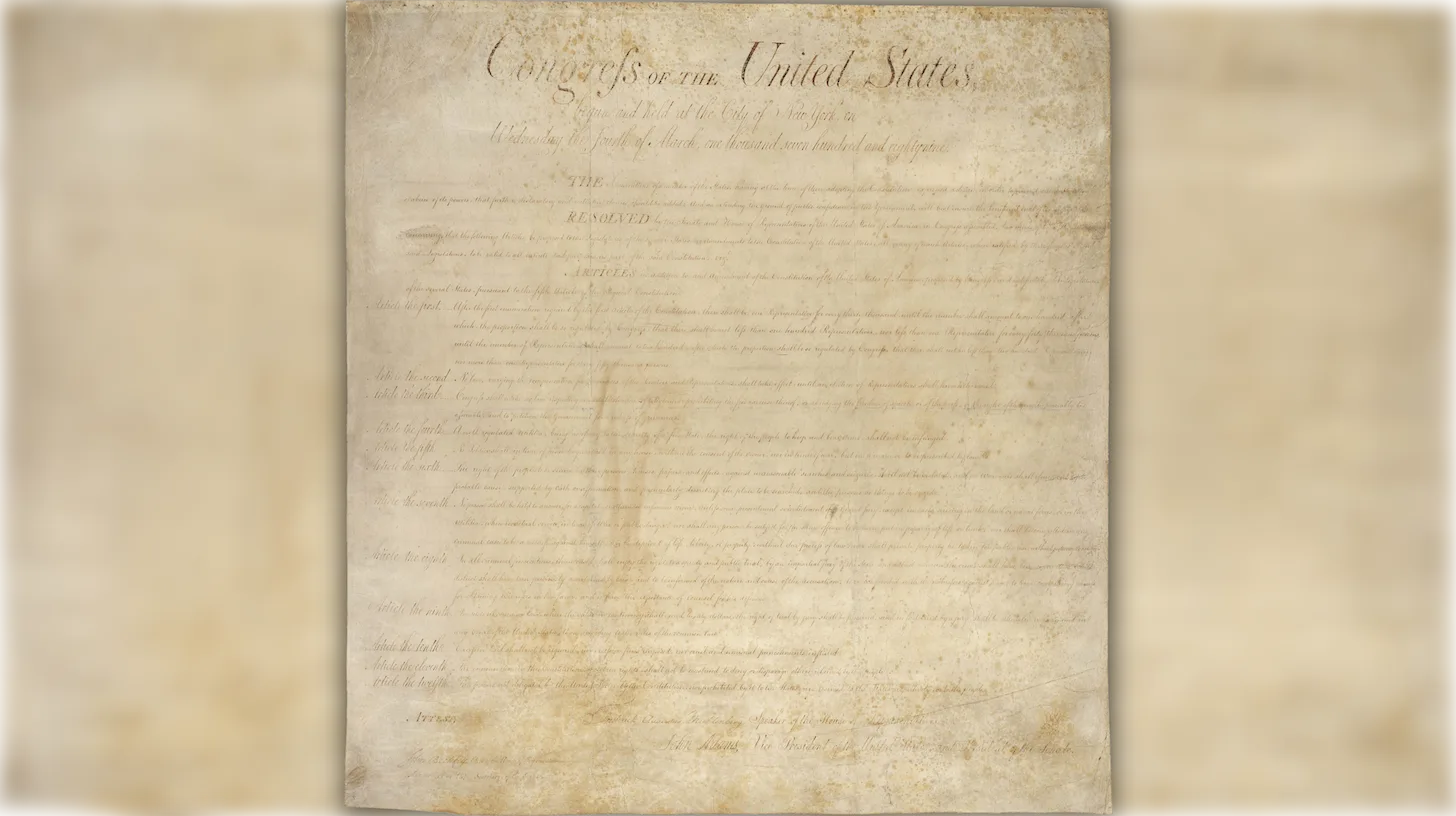
On the evening of Tuesday, May 15, 1923, the novelist Upton Sinclair stood on a patch of private ground called Liberty Hill, above the harbor of San Pedro, California, with the owner’s written permission in hand, and began to read aloud from the Constitution of the United States. He got as far as the words that guarantee “freedom of speech and of the press, and the right of the people peaceably to assemble, and to petition the government for the redress of grievances.” Then the Los Angeles police arrested him.
The harbor below him was full of idle ships. A strike had shut the docks for three weeks, the police had arrested strikers by the hundred, and the chief of police had told Sinclair that afternoon, as Sinclair remembered it, that “this Constitution stuff” did not go at the harbor. By Sinclair’s own account, nobody was listening on the hill that evening except policemen. What followed, a night and a day hidden in the jails and a charge of conspiracy, he described in a letter to the chief that was handed around the whole city, and out of it came the first permanent branch of the American Civil Liberties Union.
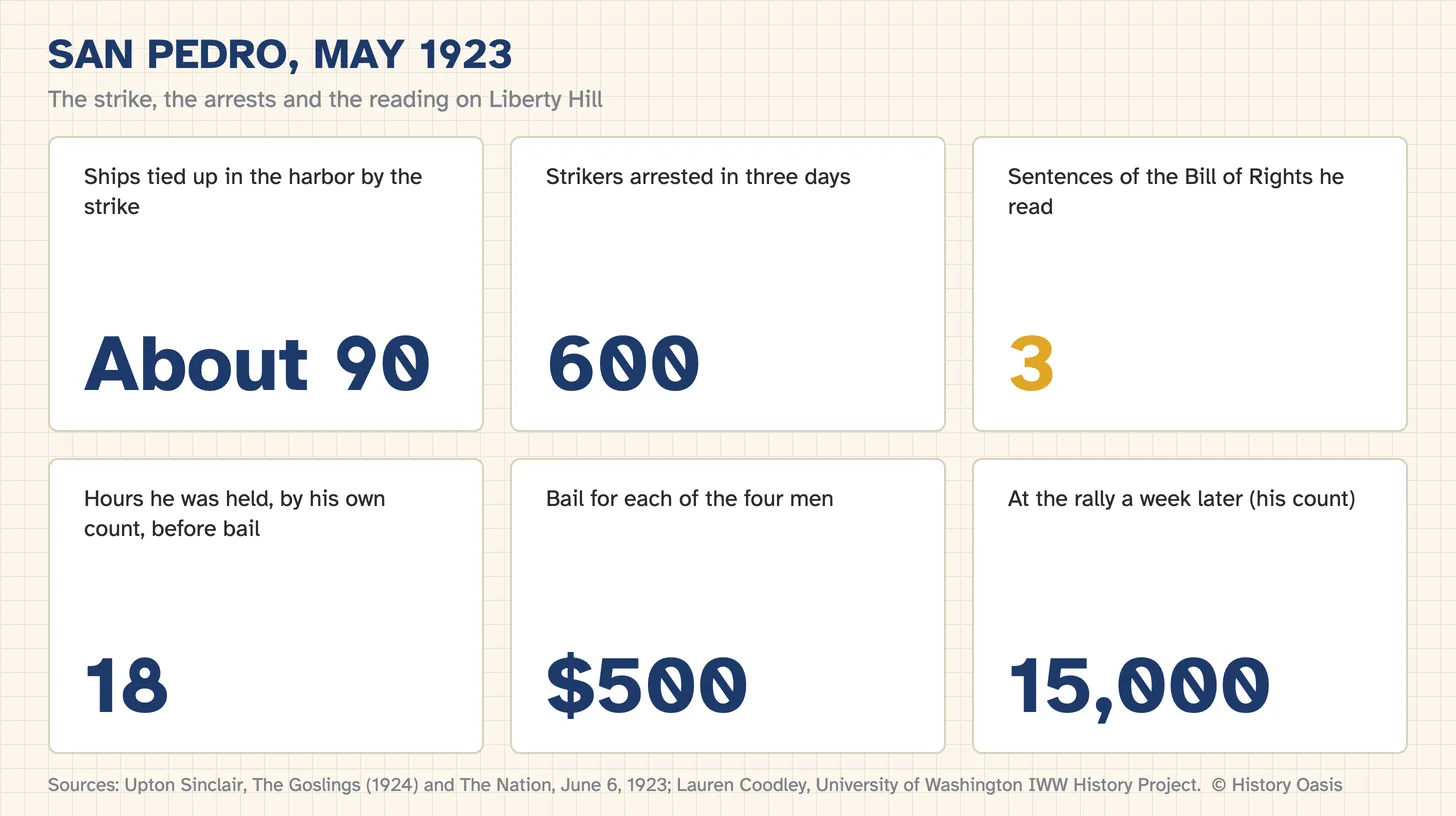
Ninety ships in the harbor
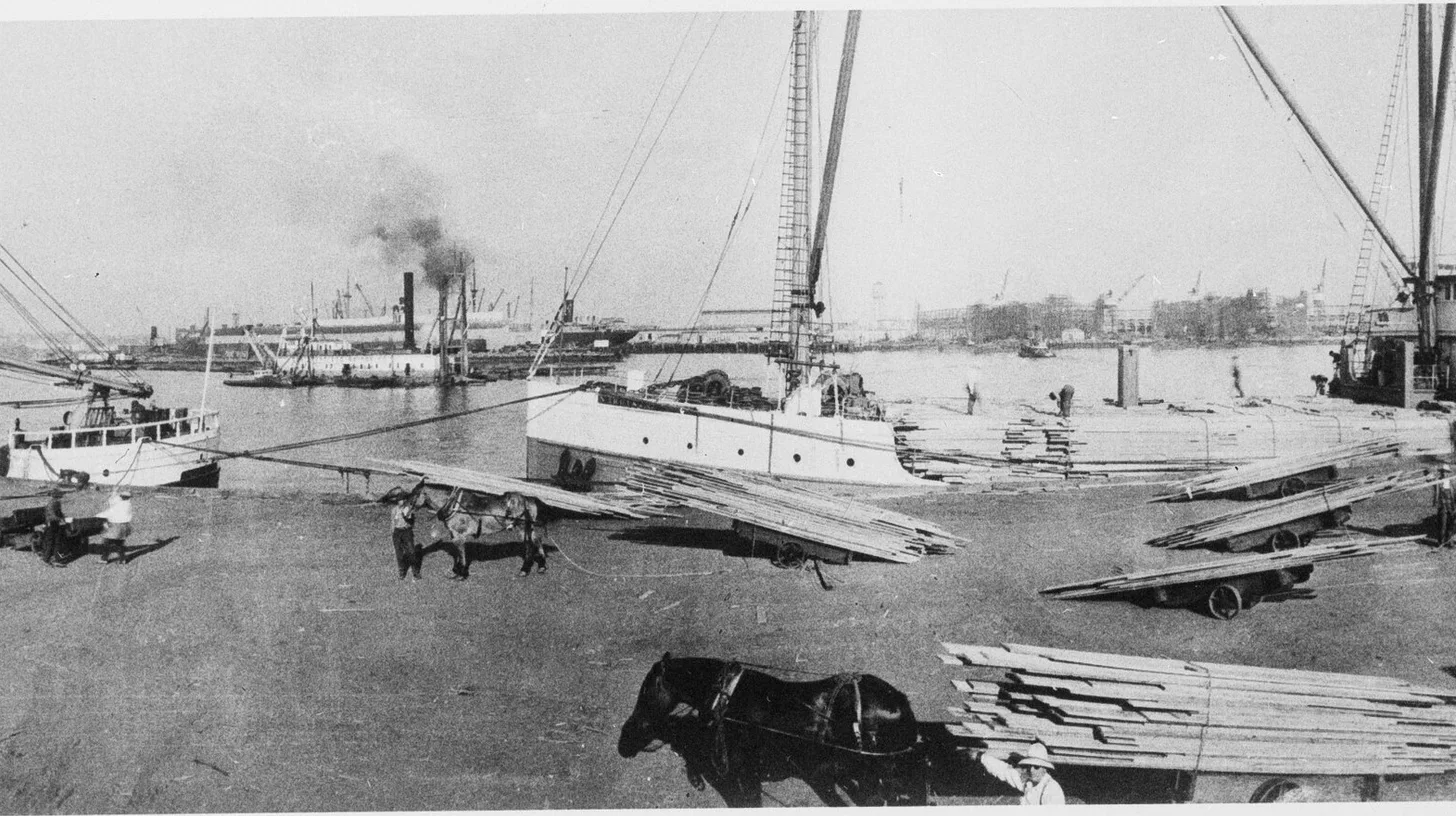
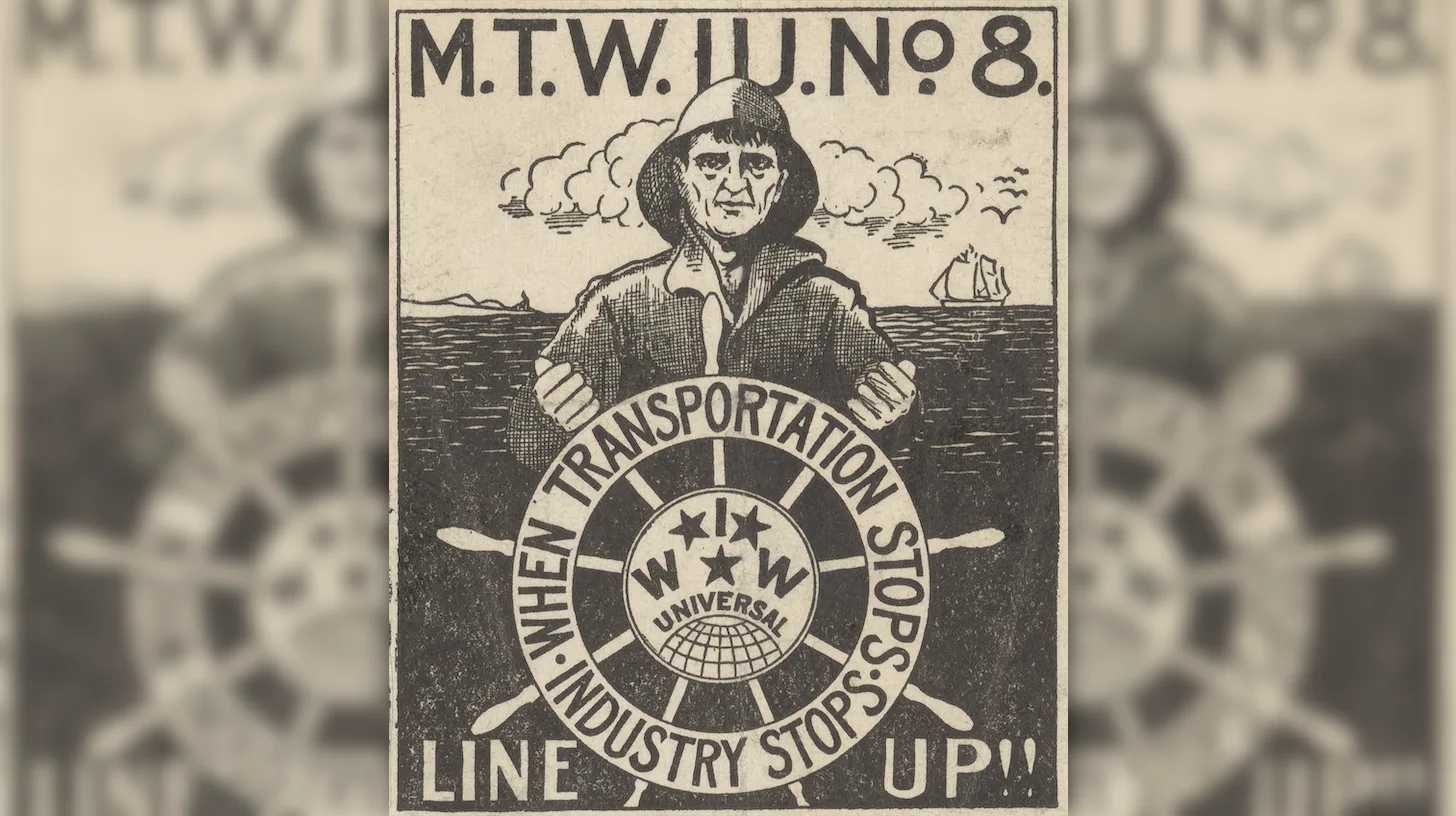
The San Pedro strike began on April 25, 1923, when the Marine Transport Workers Industrial Union, San Pedro Local 510, of the Industrial Workers of the World, called its members out. Some 3,000 longshoremen answered the call the next day. The port had lately become, as one correspondent wrote in The Nation, the greatest receiving port for lumber in the country, and within days about ninety ships were tied up in it. The union wanted better wages and conditions and an end to the imprisonment of union activists under California’s Criminal Syndicalism Law.
The strikers met on a rise above Third Street, on land a sympathizer named Minnie Davis had offered them, which they called Liberty Hill. A visitor that summer counted several flights of crude stone steps up from the street, homemade wooden benches for about 800 people and a platform six feet by nine. Every night thousands of strikers sang there, and one of their songs told the men in jail, “Remember you’re outside for us And we’re in here for you.”
On May 14 about eighty police officers with clubs and guns climbed the hill, and the 2,000 strikers on it went on singing while hundreds of them were arrested. In the three days that followed, Sinclair wrote, the police arrested “a total of six hundred men.” A stockade was built at San Pedro to hold them. In one of the city’s jail tanks, Sinclair wrote, when the men persisted in singing, “the jailers sealed up all the ventilation and turned on the steam heat for two hours.”
A novelist from Pasadena
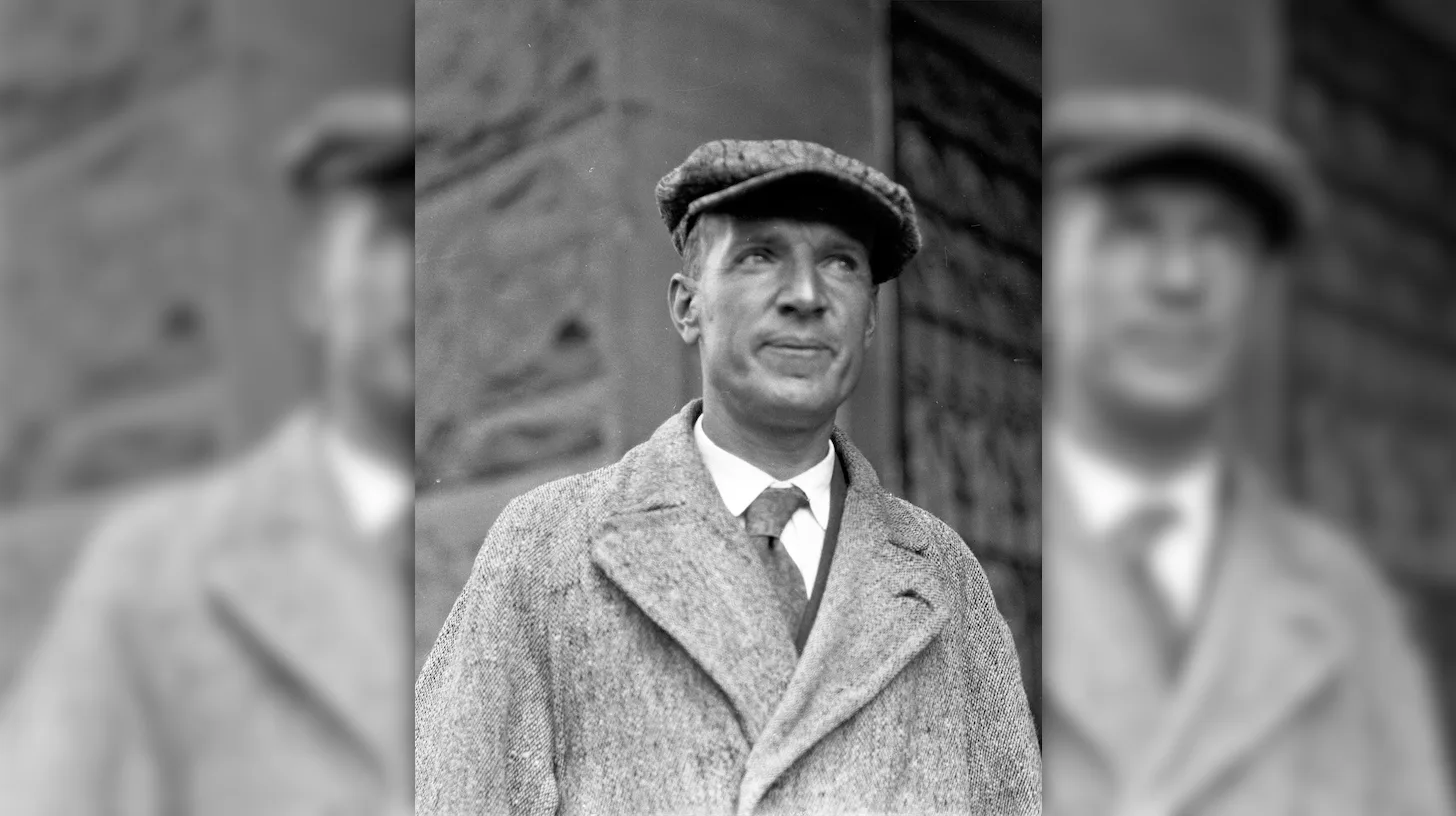
Upton Sinclair was forty-four and a socialist. He had been born in Baltimore in 1878, had written The Jungle, and had lived in Pasadena since 1915. A friend who wrote his life four years later described a slight, wiry, graying figure, “an excellent tennis player, an eager talker,” who wore the cast-off clothes of a rich young friend and kept a stenographer or two busy all day. He had been arrested once before, in New York, for picketing the offices of John D. Rockefeller Jr. over the treatment of miners in Colorado. He was not, by his own description, a brave man.
“I am not a giant physically; I shrink from pain and filth and vermin and foul air, like any other man of refinement”
He had come into the strike by way of the shipowners. At ten o’clock on the morning of Monday, May 7, he and his brother-in-law, Hunter Kimbrough, sat waiting in the outer office of the Merchants’ and Manufacturers’ Association. The door of the inner office had been left ajar, and through it, Sinclair wrote, came talk in tones that made the clerks “drop their work and look at one another and grin.” A shipowner was shouting for the strike to be smashed. “That’s Mr. Hammond,” the chief clerk told a stenographer, “he’s got about twenty ships tied up at the harbor.”
The idea that took him to the hill came from a magistrate. When a clergyman was brought before him for speaking in the street, the magistrate asked, as Sinclair told it, “Why don’t you hire a hall, or speak upon private property? Then you will not be molested.” Liberty Hill was private property.
An hour with the mayor
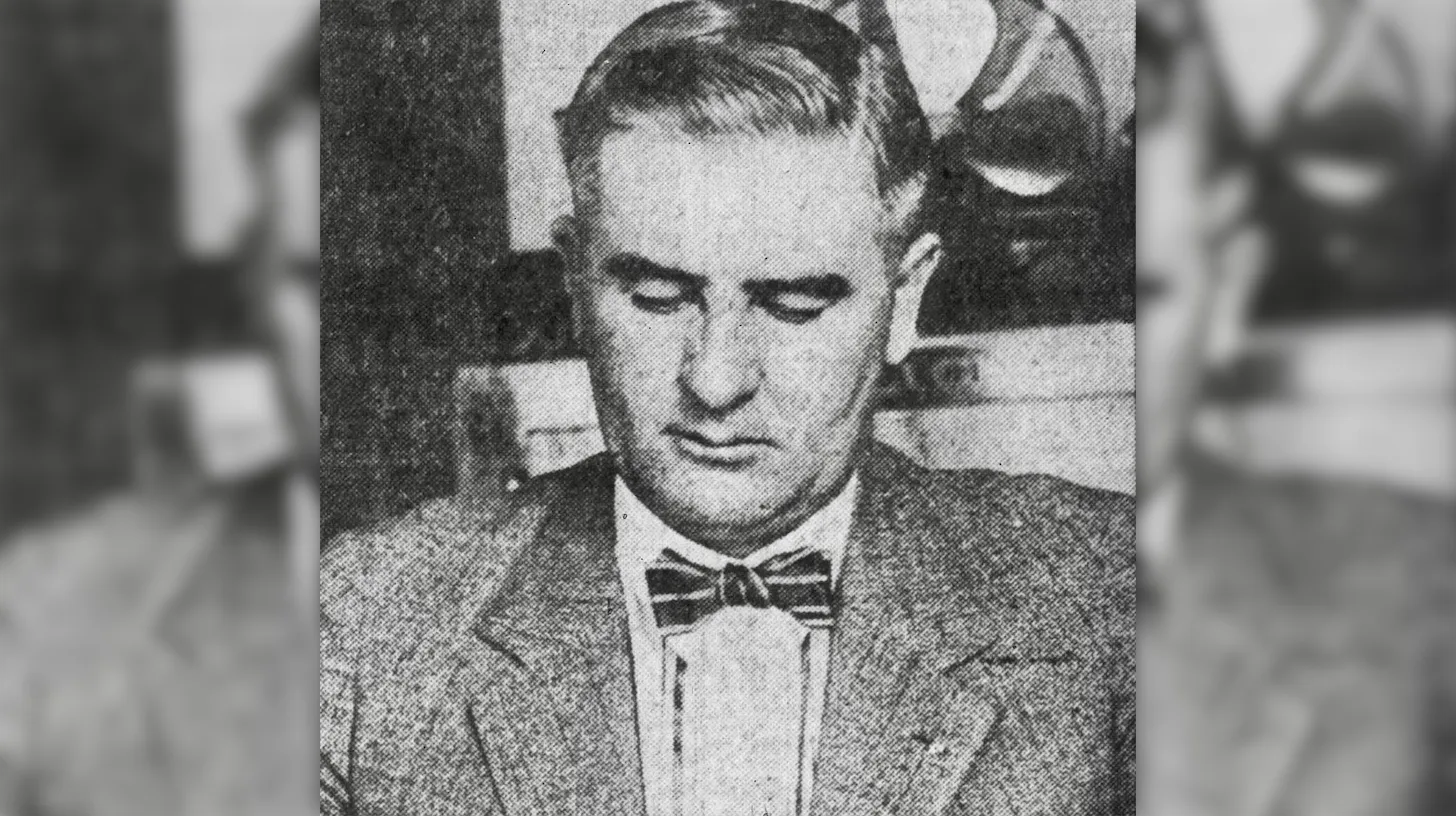
On the afternoon of May 15 Sinclair and seven friends went to see the mayor of Los Angeles, George E. Cryer. The interview lasted an hour. Sinclair said that Cryer promised in front of seven witnesses that the police would respect his constitutional rights at San Pedro, and the mayor denied it afterward. Cryer said, as a correspondent reported, that too many people came to Los Angeles “to talk about their constitutional rights. They forget their constitutional duties.” Sinclair had an answer about the police, who had been arresting men all over the harbor for what a few had done.
“Mr. Mayor, according to your way of reasoning, if some one were to upset a peanut stand on Broadway and steal the peanuts, you would feel justified in arresting everybody in sight and closing the thoroughfare to traffic for a month.”
From the mayor’s office the party went down to the harbor, about a dozen men and women with two lawyers among them, to see the chief of police, Louis D. Oaks, who had taken charge there himself. Sinclair told Oaks that he meant only to stand on private land with the owner’s permission and read the Constitution. Oaks told them that if they did, they would go to jail and stay there without bail.
In the letter Sinclair wrote him two days later, he reminded the chief that he had said “this Constitution stuff” did not go at the harbor. In another account Sinclair gave the chief’s order as “cut out that Constitution stuff.” A Los Angeles paper the next day quoted Oaks this way: “Constitution or no Constitution, you’re not going to speak in San Pedro.”
Three sentences on Liberty Hill
Sinclair and his party went that evening. By his account the street below the hill had been closed to traffic and to the public for several hours, and a line of a hundred policemen with drawn revolvers had been “flung across a street to keep anyone from coming onto private property to hear my feeble voice.” The spot where they meant to speak, he wrote, was “at least a hundred feet from any sidewalk or street, and another hundred feet up in the air.” Some of the women in the party had come ready to go to jail. One of them, Kate Crane Gartz, brought her overnight bag.
Four of the men tried to read. Sinclair went first and read the First Amendment, the one that begins “Congress shall make no law,” through to the right of the people to petition the government. Three sentences from the Bill of Rights, he wrote afterward, “was every word that I was permitted to utter.” Kimbrough began to read the Declaration of Independence and was arrested. Pryns Hopkins said, “We have not come here to incite to violence,” and was arrested. Hugh Hardyman said, “This is a most delightful climate,” and was arrested too. The police were under orders not to arrest women, and they left Mrs. Gartz with her bag.
Sinclair named the man who arrested him as Officer Wyckoff. A union writer who was there remembered it differently, that a police captain named Clyde Plummer grabbed Sinclair by the collar and shouted, “I’m taking you in if you utter a word.” All four were booked, Sinclair wrote, on “suspicion of criminal syndicalism.” Sinclair stated it afterward in a single sentence.
“I was arrested for reading the Constitution of the United States on private property, with the written permission of the owner, which had been previously shown to the police.”
Hidden until five o’clock
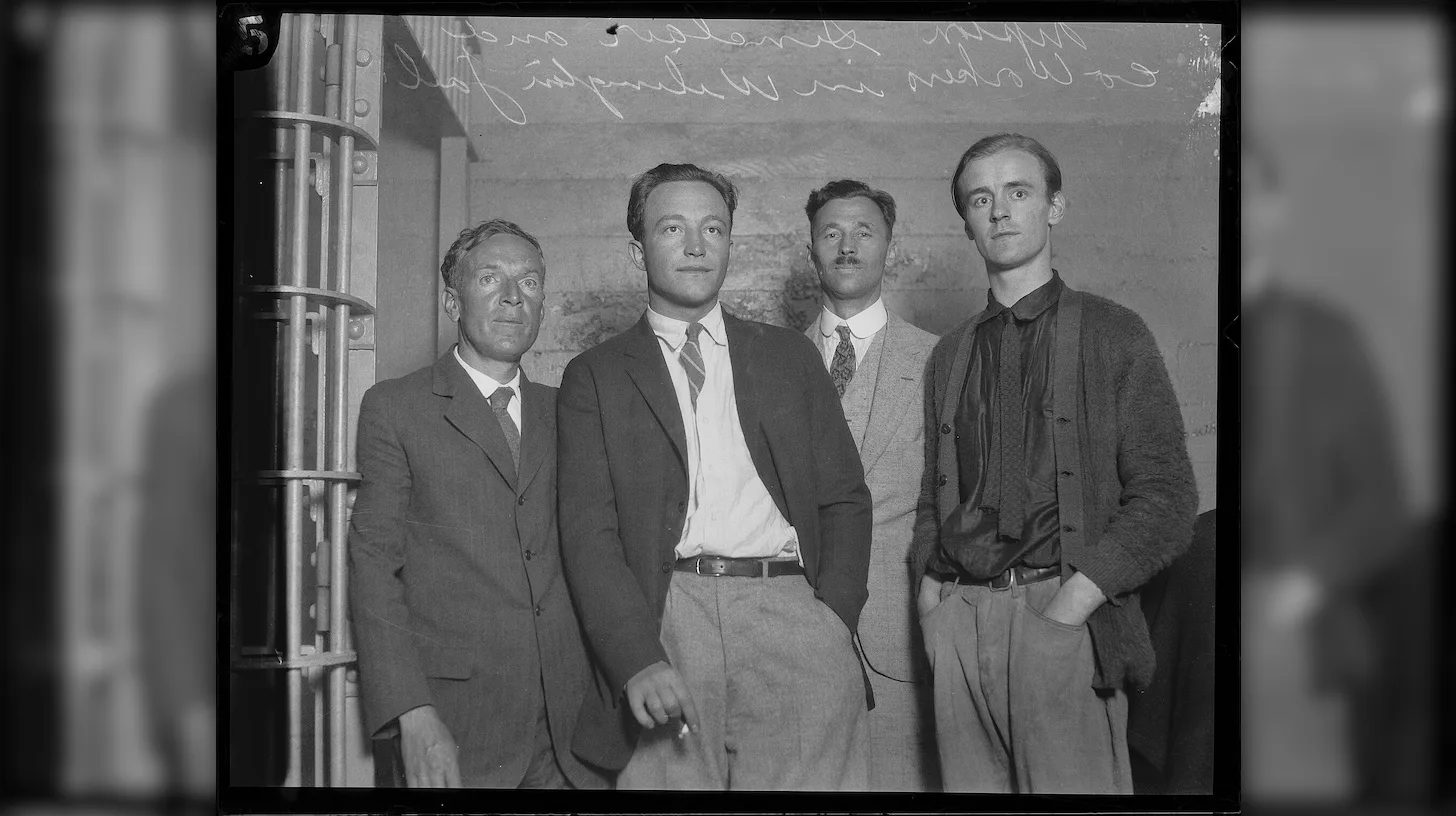
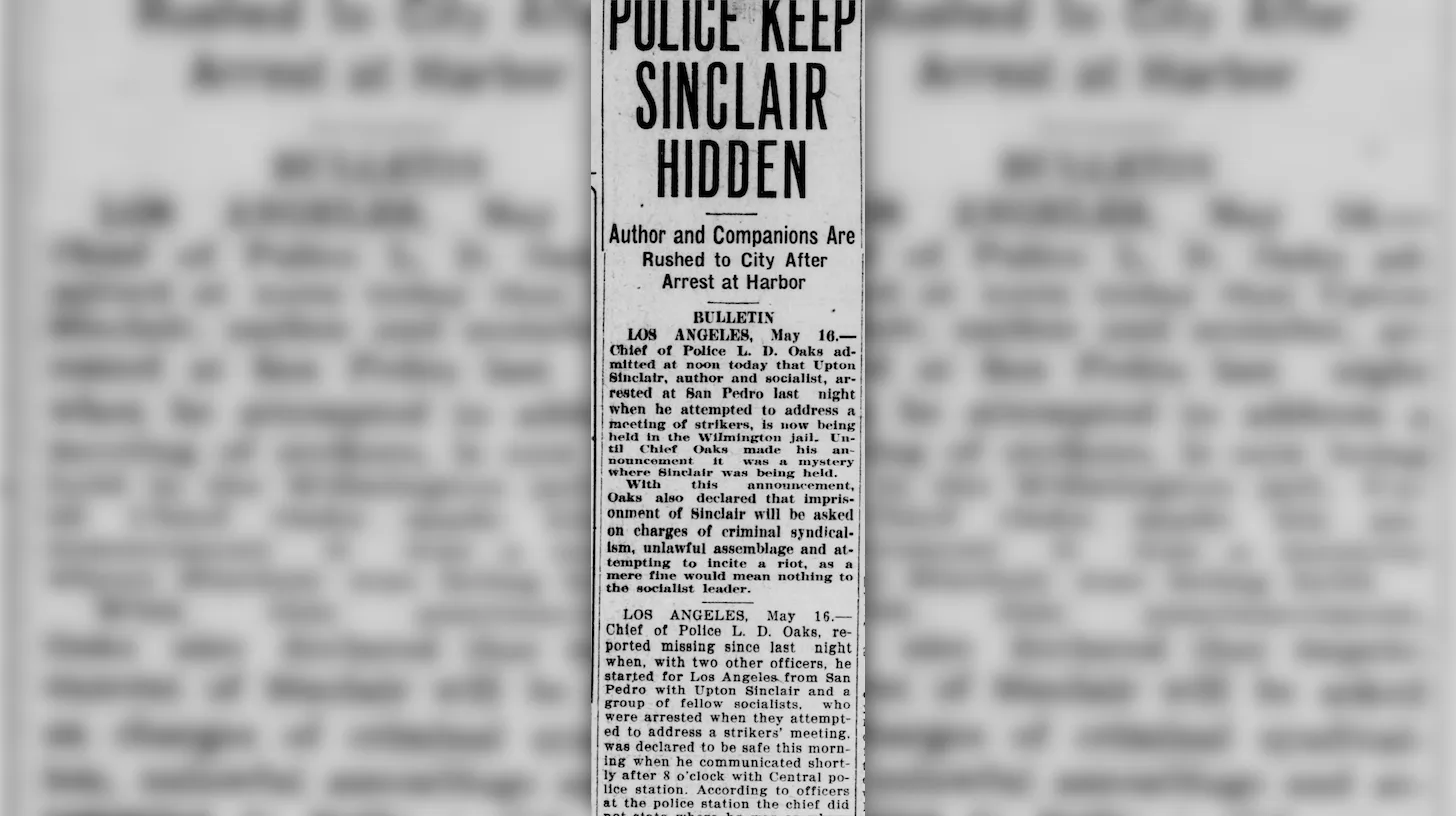
The four men spent the night in police custody, and for most of the next day nobody outside the department could find out where. Sinclair’s wife, Mary Craig Sinclair, feared that the police meant to harm him and blame it on the union or on the Ku Klux Klan. At noon on Wednesday the chief admitted to reporters that Sinclair was being held in the Wilmington jail, and said he would ask for charges of criminal syndicalism, unlawful assembly and attempting to incite a riot.
That afternoon a police sergeant drove the four up to Los Angeles under orders, Sinclair wrote, “not to get there before four o’clock,” so that they could be rushed into court a few minutes before it closed. One of the chief’s own men warned Mrs. Sinclair. “My lawyers rushed to the jail,” Sinclair wrote, “and forced the granting of bail, just on the stroke of five o’clock, the last moment.”
Sinclair counted eighteen hours held “incommunicado.” Kimbrough remembered that Sinclair had lain on the floor of his cell rather than use the cots, which were full of lice. Bail was $500 for each man. The sworn complaint, which Sinclair later printed word for word, did not charge them with reading anything. It charged a conspiracy to obstruct the public streets “for the purpose of exciting discontent and disturbing the peace and quiet of the said neighborhood, by discussing, arguing, orating and debating certain thoughts and theories.” The chief issued a statement of his own: “I will prosecute Sinclair with all the vigor at my command, and upon his conviction I will demand a jail sentence with hard labor.” It was not the Constitution he objected to, he told the press, but Sinclair’s “open defiance of the law.”
A letter to the chief of police
The next day, Thursday, May 17, Sinclair sat down in Pasadena and wrote to Oaks. He began by saying he had escaped from the chief’s clutches “owing to the fact that one of your men betrayed your plot to my wife,” and he went on for several pages, through the hidden night, the jail and the men he had found inside it, fifty of them shut into one small space without air because they had been singing. Oaks had told the papers that Sinclair was “more dangerous than 4,000 I.W.W.” Sinclair accepted it.
“I thank you for this compliment, for to be dangerous to law- breakers in office such as yourself is the highest duty that a citizen of this community can perform.”
Near the end he wrote of himself. “But I have a conscience and a religious faith,” he wrote, “and I know that our liberties were not won without suffering, and may be lost again through our cowardice.” The letter was printed as a leaflet and handed around Los Angeles, and in June it ran in The Nation.
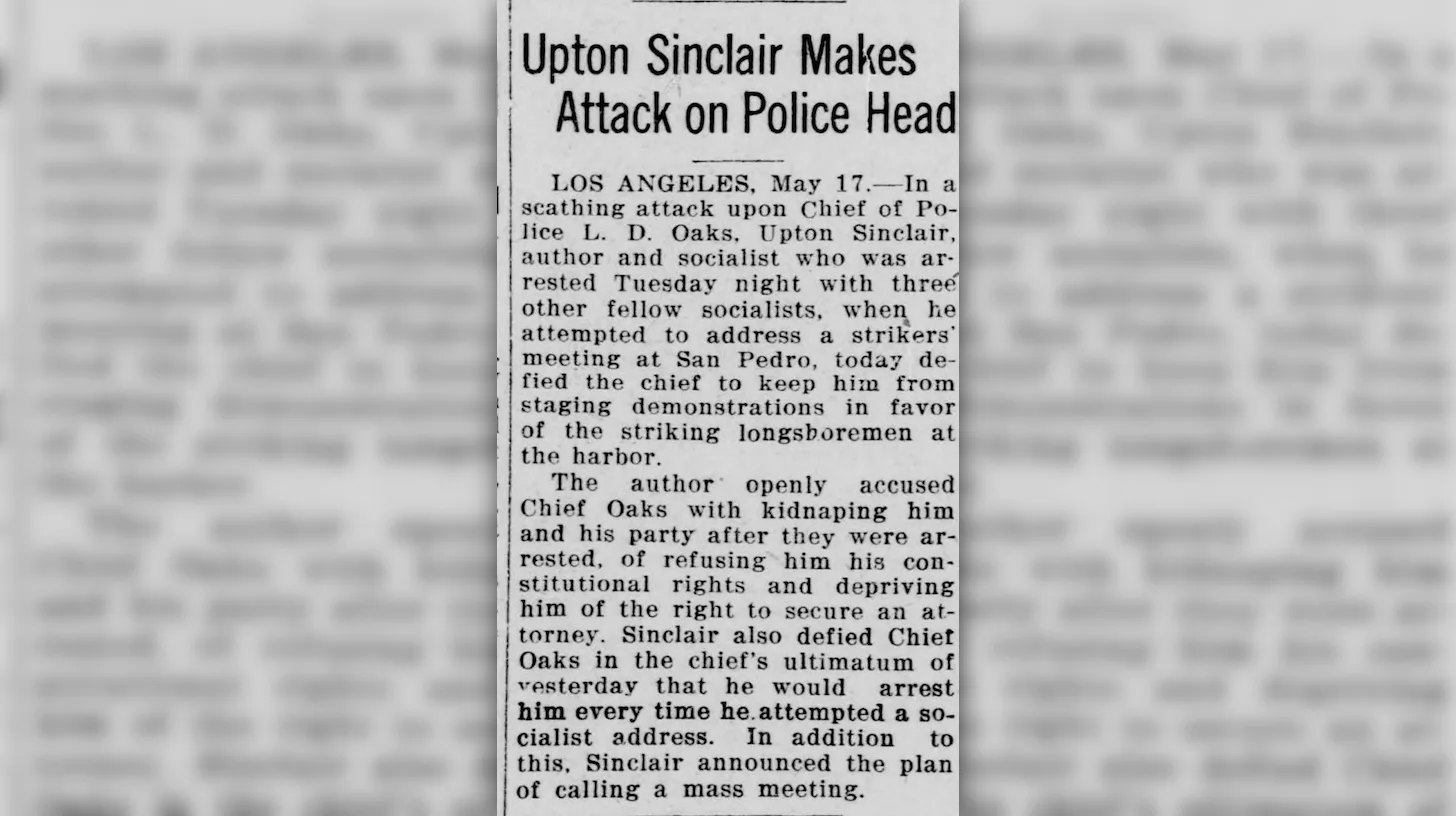
A week later he went back to the harbor. The American Civil Liberties Union in New York had wired him asking whether he would speak at a protest meeting, and this time no one stopped him. He put the crowd at “ten or fifteen thousand people,” and the next day the police let go all but twenty-eight of the six hundred men they had arrested. From the day of that meeting, Sinclair wrote in July, “not a single striker has been arrested.”
What became of the hill
About three weeks after the arrest a police judge threw out the case against the four men. By then Sinclair had begun to organize the Southern California branch of the American Civil Liberties Union, and some 500 people had pledged to join it. It became the national body’s first permanent affiliate, three years after the national union was founded by a group that included Helen Keller.
The strike did not survive the summer. On July 12, according to the Survey, forty-four of its leaders were put on a special car for San Quentin. The Merchants’ and Manufacturers’ Association presented gold watches to Chief Oaks and to Captain Plummer. Oaks did not keep his post for long. He was arrested, Sinclair noted in a book the next year, while parked on a lonely road with a young woman and a half-gallon jug of whiskey. Out of his night in the cells came a play, Singing Jailbirds, which a friend called the outcome of the author’s experience in the free speech fight.
The State of California made the site of Liberty Hill a historical landmark, near Fifth Street and Harbor Boulevard in San Pedro. Its text says Sinclair read from the Bill of Rights “to a large gathering.” By his own account, the only people near enough to hear him were police.