
11 min read
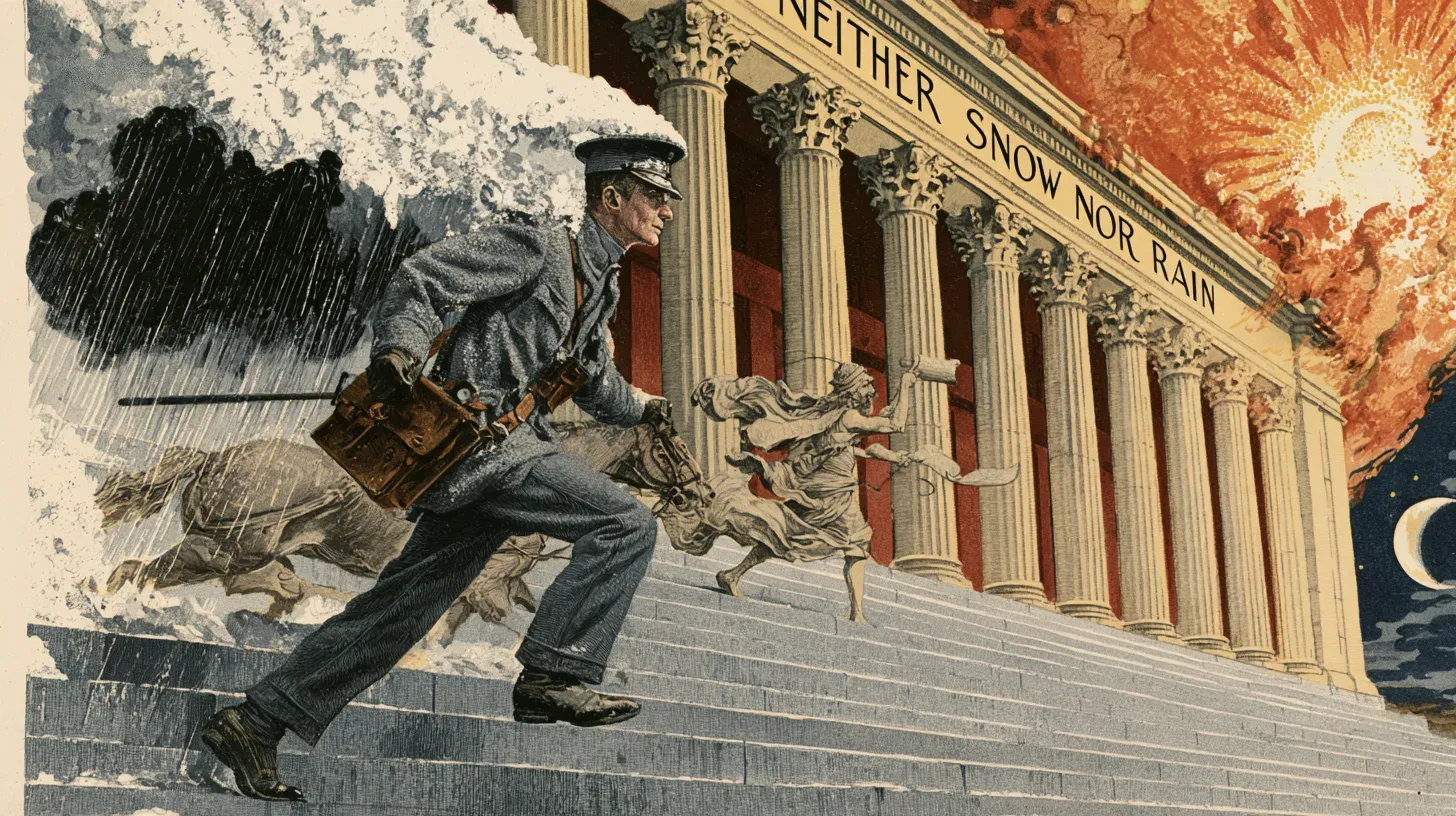
The U.S. Postal Service has no official motto. The line most Americans take for one, “Neither snow nor rain nor heat nor gloom of night stays these couriers from the swift completion of their appointed rounds,” is an inscription on a New York post office that opened in 1914, adapted from the Greek historian Herodotus. The Postal Service says so itself.
The slogans the Postal Service did adopt came later, and most came from ad agencies: Mr. ZIP’s “Use ZIP Code” in 1963, “We Deliver” by 1989, “Fly Like an Eagle” in 1998 and “If It Fits, It Ships” in 2009.
USPS SLOGANS AT A GLANCE
USPS slogans have come and gone with its ad campaigns, while the most famous line in American mail has stayed in stone. The table runs from the 1914 inscription to the 2015 Priority Mail campaign. For “We Deliver” and “We Deliver For You,” the year is the first use the Postal Service claimed in its trademark filings.
| Year | Slogan | Source |
|---|---|---|
| 1914 | ”Neither snow nor rain…” (inscription) | USPS |
| 1963 | ”Use ZIP Code” | Post Office sign |
| 1989 | ”We Deliver” | USPTO |
| 1989 | ”We Deliver For You” | USPTO |
| 1998 | ”Fly Like an Eagle” | Gale |
| 2007 | ”Today’s Mail” | MediaPost |
| 2009 | ”If It Fits, It Ships” | USPS |
| 2013 | ”Priority: You” | USPS |
| 2015 | ”Watch Us Deliver” | USPS |
WHAT IS THE USPS MOTTO?
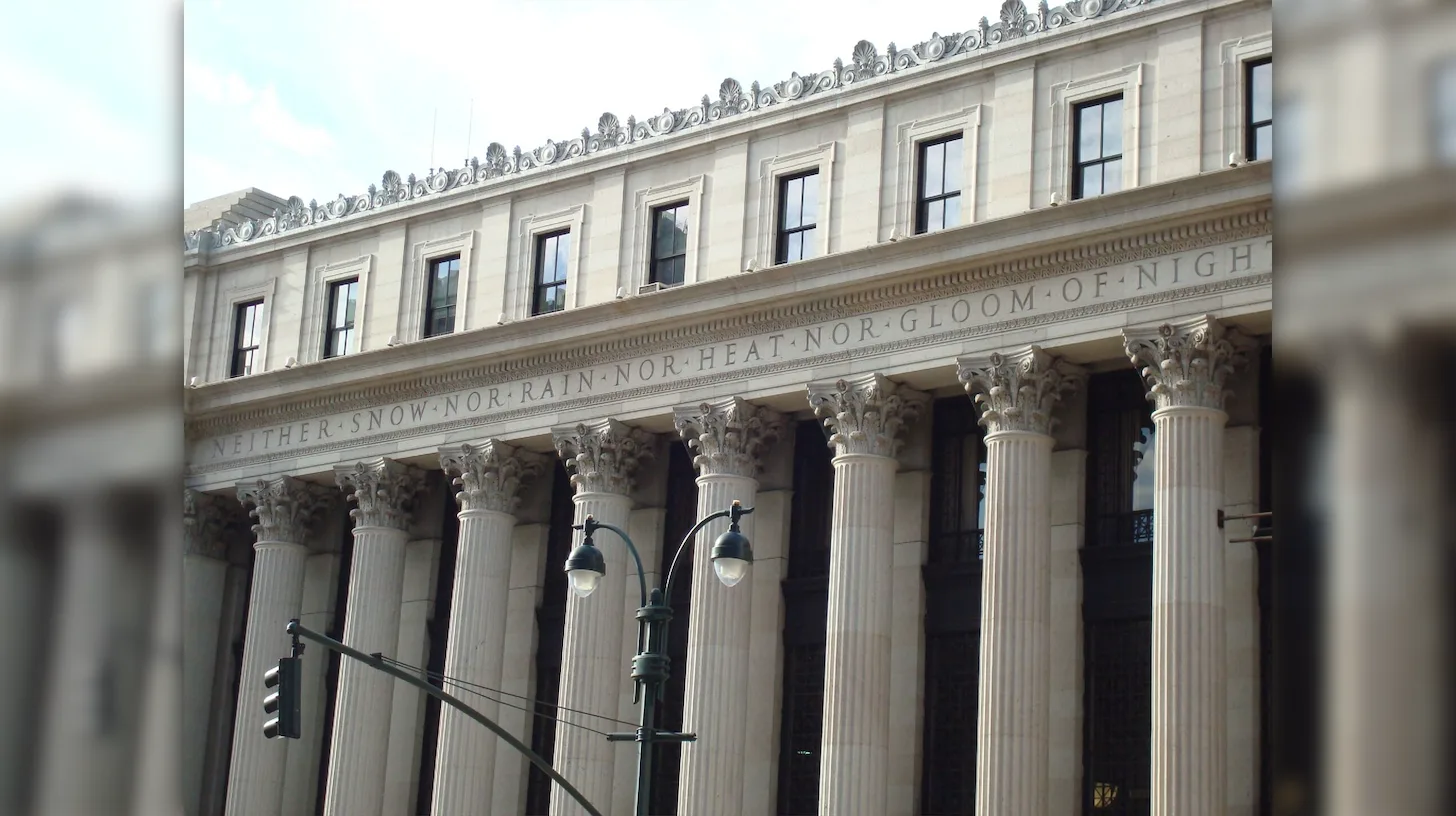
The USPS has no motto, and its own fact sheet puts it in seven words: “The U.S. Postal Service has no official motto.” The famous sentence sits in granite over the colonnade of New York’s James A. Farley Post Office, put there by the architects who designed it.
The Post Office Department said the same thing 72 years ago. “Actually, the department does not have an official slogan,” National Geographic reported in 1954, after noting that many people at home and abroad believed it did.
USPS does not fight the mix-up. It calls the belief a tribute to the carriers “who have delivered the mail reliably and dependably, through all conditions, for centuries.” Advertisers borrowed the line too. A 1963 Bulova watch ad promised that, just like mail carriers, “neither snow, nor rain, nor dust, nor perspiration” stops the Bulova.
WHERE DOES “NEITHER SNOW NOR RAIN” COME FROM?
“Neither snow nor rain” comes from Book 8, paragraph 98 of the Histories of Herodotus. The Greek historian was describing the mounted couriers of the Persian Empire, who carried King Xerxes’ news of “his present misfortune” home to Persia during his war with Greece, as Herodotus tells it. The carvers’ words are not quite his.
Herodotus says the Persians posted each horse and man at “the interval of a day’s journey,” each rider passing the message to the next, like the Greek torch race for the god Hephaestus. The Persians called the relay the angareion. “There is nothing mortal that accomplishes a course more swiftly,” he wrote. The Pony Express ran the same relay idea across the American West in 1860; the Pony Express history tells how long it lasted.
Herodotus never wrote “gloom.” His Greek lists four things, and the fourth is simply night:
| Version | The four things that cannot stop them | Source |
|---|---|---|
| Herodotus, Greek | snow, rain, heat, night | Perseus |
| G.C. Macaulay translation | snow, rain, heat, “darkness of night” | Gutenberg |
| A.D. Godley translation | snow, rain, heat, “darkness” | Perseus |
| New York post office, 1914 | snow, rain, heat, “gloom of night” | USPS |
WHO PUT “NEITHER SNOW NOR RAIN” ON THE POST OFFICE?
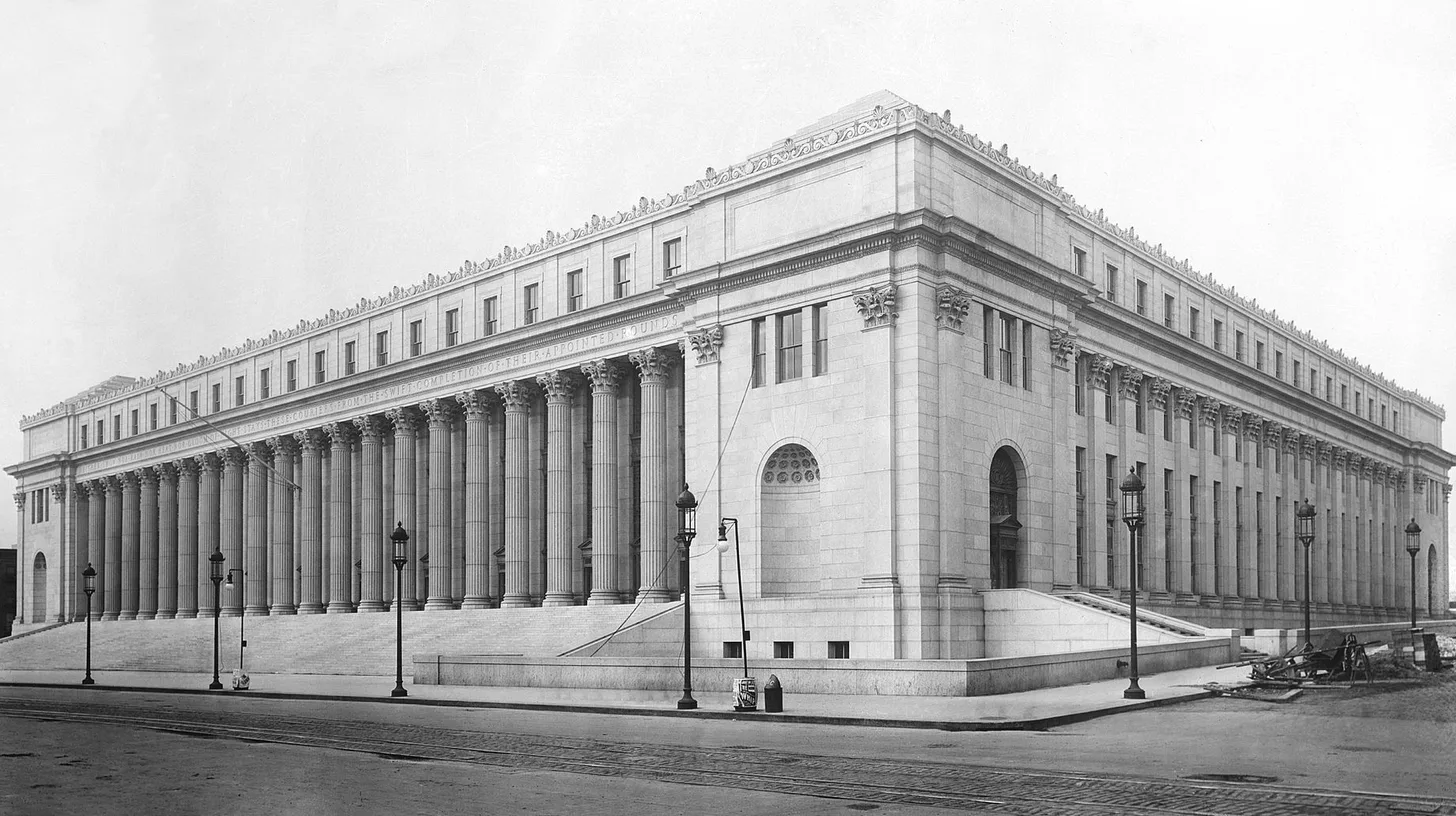
William Mitchell Kendall, an architect at McKim, Mead & White, chose the words and put them on the building. His firm designed New York’s General Post Office, which opened to the public on Labor Day in 1914. Kendall was the son of a classics scholar and read Greek for pleasure.
Kendall first asked Charles W. Eliot, the former president of Harvard, to write the inscriptions. In a letter quoted by Harvard Magazine, Kendall explained what he wanted: “the long inscription for the frieze over the colonnade we thought might be some general statement about the importance of the postal service in the progress of civilization.”
Eliot declined. He had just written the inscriptions for the new post office in Washington. Kendall was dissatisfied with every translation of Herodotus he could find, including one from his old classics professor: “nor snow, nor rain, day’s heat, nor gloom hinders their speedily going on their appointed rounds.” In the end, Harvard Magazine says, Kendall wrote his own.
The Postal Service tells it a little differently. Its historian says Kendall modified a translation by Professor George Herbert Palmer of Harvard, and the Post Office Department approved it.
The building outlived its post office. Before its conversion it had become 95 percent vacant, and a $1.6 billion project turned it into Moynihan Train Hall, which opened on January 1, 2021. The inscription stayed on the facade.
MESSENGER OF SYMPATHY AND LOVE: THE OTHER POSTAL INSCRIPTION
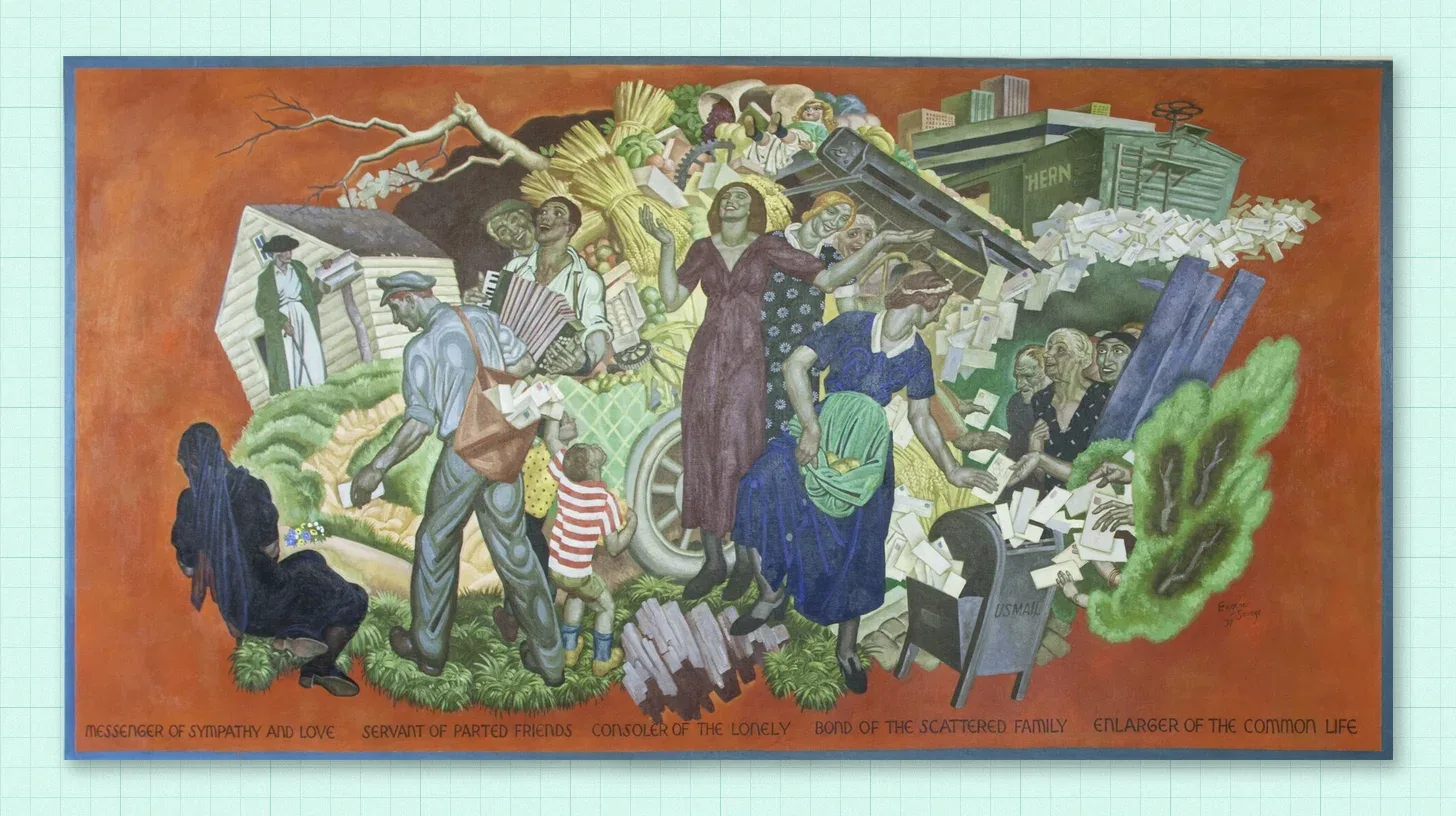
“Messenger of Sympathy and Love” is the second famous postal inscription, carved on the old Washington City Post Office. Charles W. Eliot wrote it as a short piece called “The Letter,” and President Woodrow Wilson edited it before it went into the granite.
Its five lines read: Messenger of Sympathy and Love, Servant of Parted Friends, Consoler of the Lonely, Bond of the Scattered Family, Enlarger of the Common Life. D.H. Burnham and Company designed the building, built from 1911 to 1914. Since 1993 it has housed the Smithsonian’s National Postal Museum.
Not everyone admired Eliot’s prose. American Heritage, reviewing a book on the nation’s inscriptions, called some of the inscriptions at the old post office “surprisingly awful.” The painter Eugene Savage liked them well enough. His 1937 murals take their titles from “The Letter,” lettered along the bottom edge.
MR. ZIP, THE USPS MASCOT
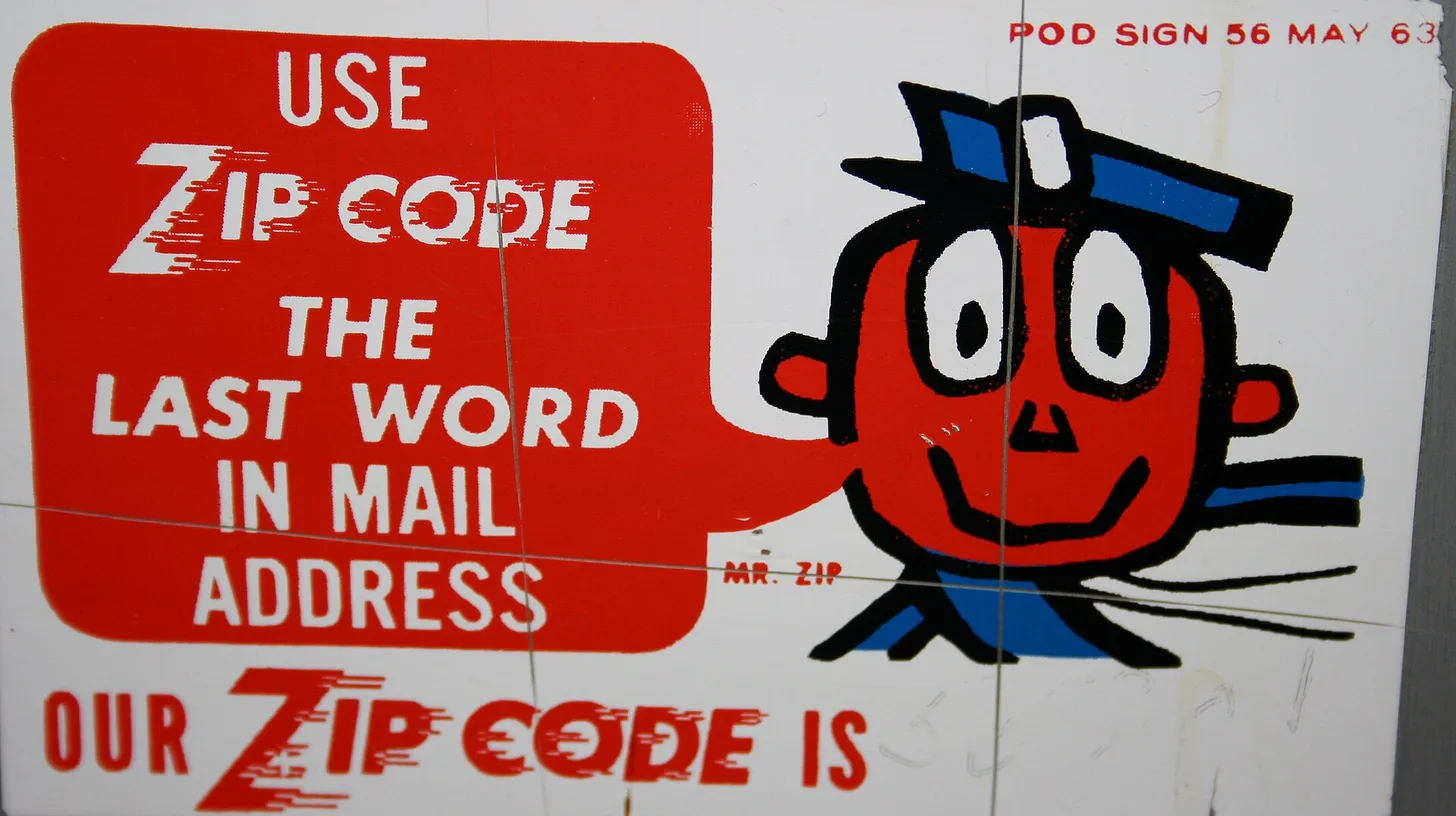
Mr. ZIP is the cartoon mail carrier who sold the ZIP Code, which the Post Office Department introduced on July 1, 1963. His slogan was printed on signs like the one above, issued in May 1963: Use ZIP Code, the last word in mail address.
Harold Wilcox, an ad man at Cunningham & Walsh and the son of a letter carrier, first drew the character for a Chase Manhattan bank-by-mail ad. AT&T later acquired the design and offered it to the Post Office Department. The Postmaster General’s 1963 report gave the credit to AT&T and its agency instead. The JPMorgan Chase CEO history and the AT&T CEO history cover the two companies behind him.
The department needed him. Under the old system a letter passed through about 17 sorting stops. Ethel Merman recorded a ZIP Code song to the tune of “Zip-a-Dee-Doo-Dah,” and within four years eight in 10 Americans could say who Mr. ZIP was and what he stood for. The National Postal Museum says he retired in 1983. USPS says he went into partial retirement that year, when the nine-digit ZIP+4 arrived.
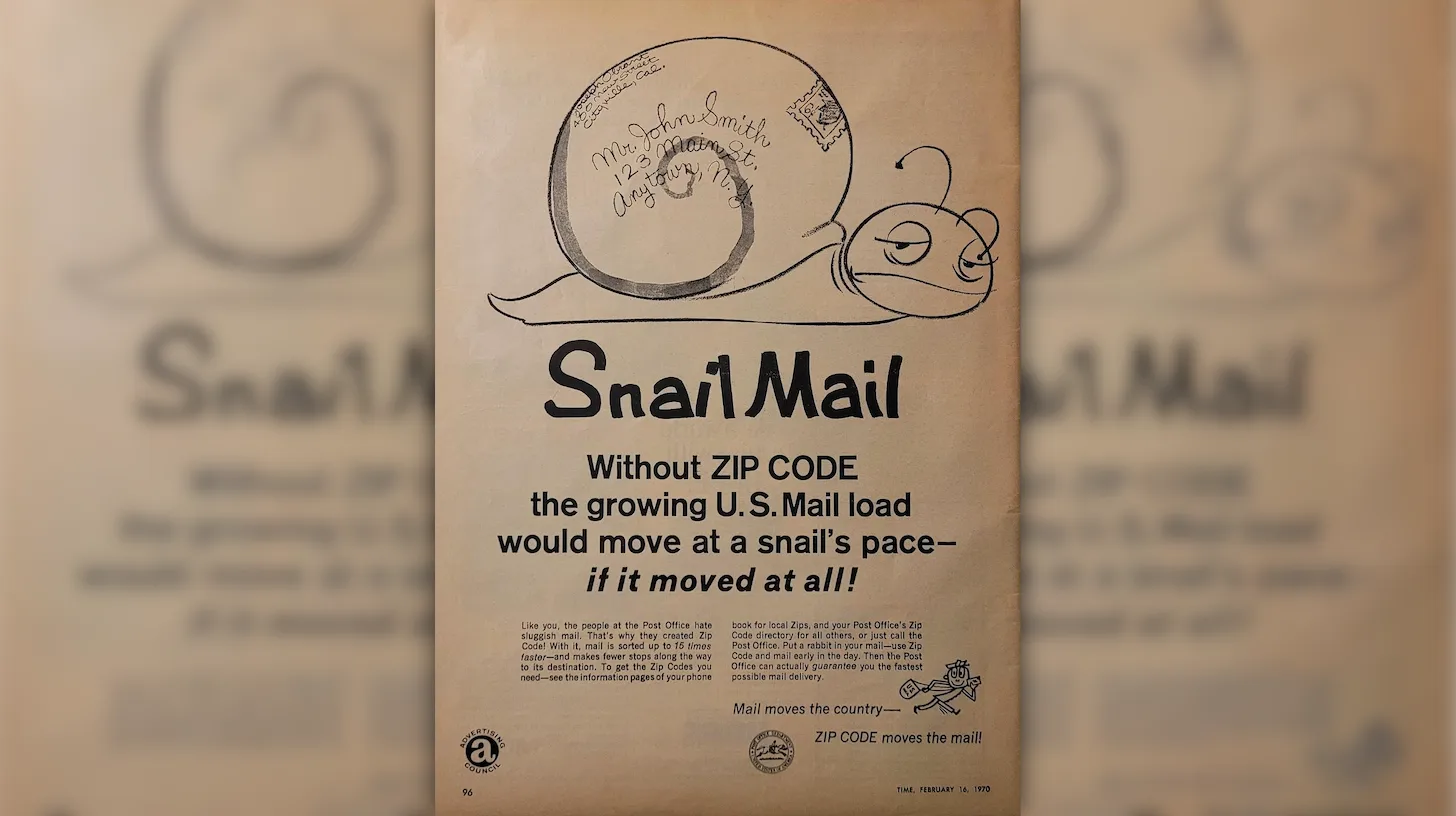
“WE DELIVER” AND “WE DELIVER FOR YOU”
“We Deliver” was the Postal Service’s slogan of the late 1980s, and it later became “We Deliver For You.” USPS has claimed use of both since 1989 in its trademark filings. The Postal Service itself was young then: Congress created it in the Postal Reorganization Act of August 12, 1970, and it opened for business on July 1, 1971.
Young & Rubicam ran a tracking study of the campaign, written up in a 1989 Darden business-school case. Its finding: “We Deliver” improved how people saw the Postal Service, but the effect faded after the ads stopped.
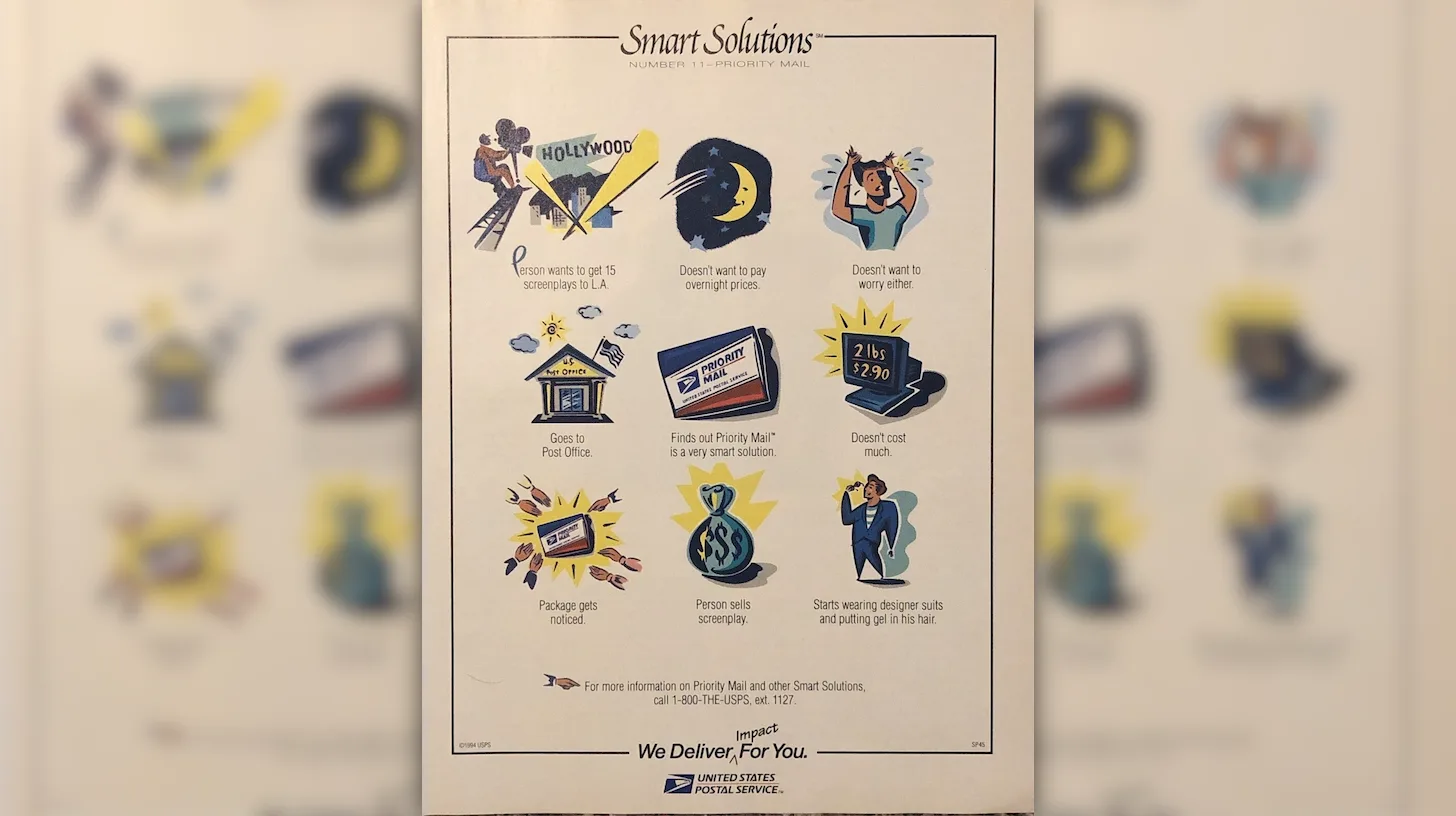
The longer line lasted. “We Deliver For You” was registered in 2000 and has been renewed since. USPS also played with the line in print. A 1994 Priority Mail ad, shown above, squeezes the word Impact in with a caret, so the line reads We Deliver Impact For You. In 2005 it was one of 26 slogans nominated for the Madison Avenue Advertising Walk of Fame. It is also painted on the trucks: USPS registered “We Deliver for You. www.usps.com” as the band around its delivery vehicles in 2019.
THE “FLY LIKE AN EAGLE” ADS
“Fly Like an Eagle” was the Postal Service’s slogan from October 19, 1998, set to the Steve Miller Band’s 1970s hit of the same name. The $15 million television and print campaign came from the New York office of Foote Cone & Belding.
The campaign grew out of a fight for packages. Loren Smith, who became chief of postal marketing in 1994, pushed the Postal Service to compete hard with private carriers, the rivals whose own lines fill the FedEx slogans and UPS slogans lists.
The song came back in February 2000 for a spot called “Robot,” selling holiday returns. The campaign was dropped soon after the attacks of September 11, 2001. In 2002 the Postal Service’s ad manager, Larry Speakes, told Advertising Age it “didn’t test well,” as Gale’s encyclopedia records.
The next theme, “Today’s Mail,” arrived in October 2007 from Campbell-Ewald. Its ads used real New York customers in place of actors.
THE “IF IT FITS, IT SHIPS” BOXES
“If It Fits, It Ships” is the slogan of the Priority Mail Flat Rate box. The box arrived in 2004. The TV campaign launched in May 2009, selling the boxes as “a simpler way to ship.”
The ads worked well enough to keep running. Markets that got extra ads outperformed the test’s control markets. In fiscal 2010 two holiday commercials starred a carrier named “Al”, one later spot borrowed the characters of Toy Story 3, and more than 850,000 shipping kits went out to customers who asked for them.
The trademark record tells an odder story. Both of USPS’s filings for the slogan claim use since April 2006, three years before the campaign. The first registration, spelled without a comma, was cancelled on February 21, 2014 because USPS never filed the required declaration of use. By then it had already filed again, with the comma. That registration was renewed on April 5, 2024.
THE “PRIORITY: YOU” AND “WATCH US DELIVER” YEARS
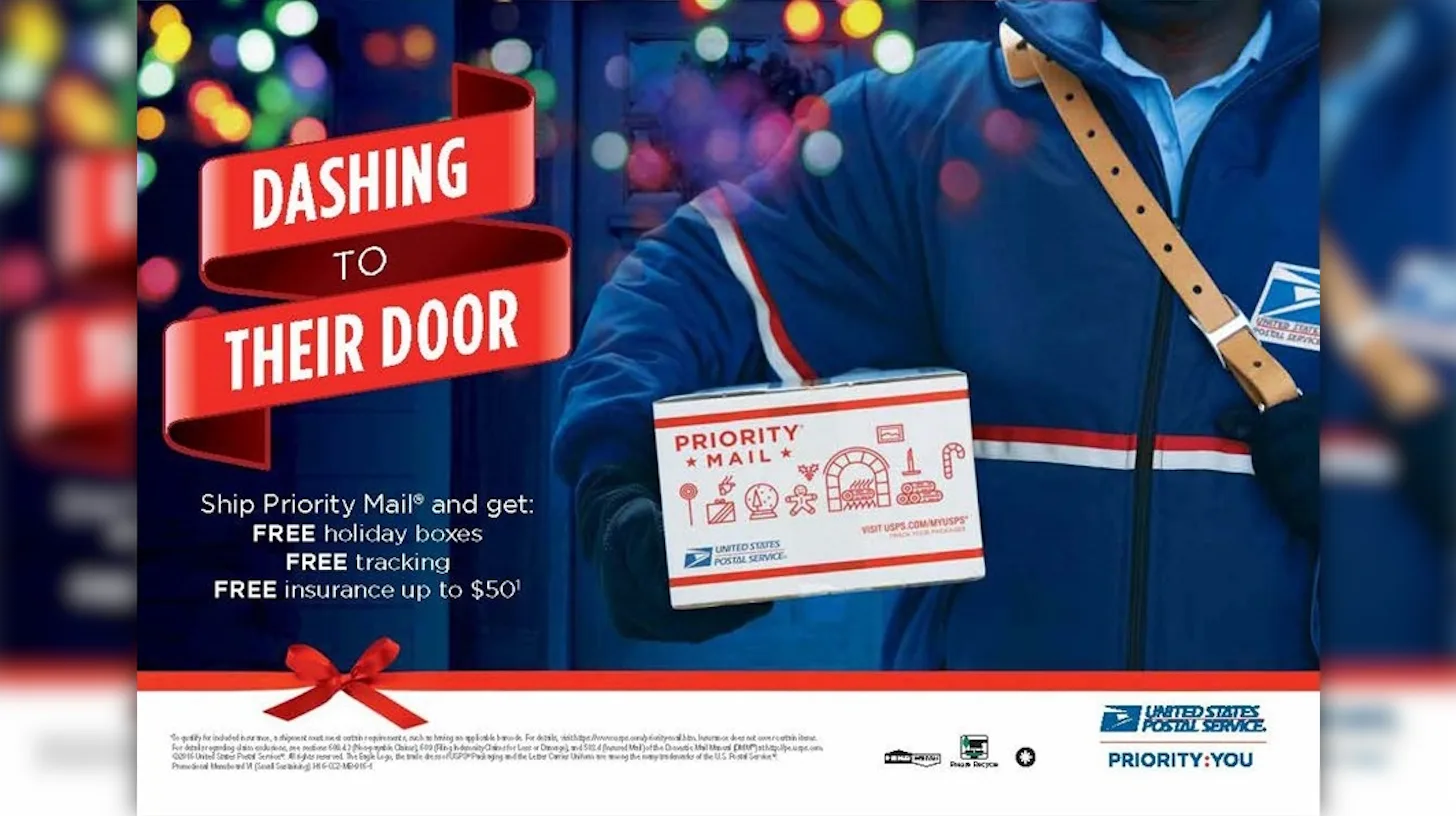
“Priority: You” is the slogan the Postal Service launched in 2013 to celebrate its own employees. The Postal Service’s annual report put it plainly: Priority: You “isn’t simply a tagline; it is a statement of purpose.”
The campaign leaned on Hollywood in March 2014, when Priority Mail teamed up with Sony Pictures on The Amazing Spider-Man 2. On May 19, 2015, USPS followed with “Watch Us Deliver,” a campaign built around improvements to Priority Mail. Its online dashboard included a live camera on two rescued bald eagles named Independence and Franklin.
USPS still lists “Priority: You” among its trademarks, along with “Deliver the Win” and “We Are People Delivering to People.”
IS THE USPS LOGO AN EAGLE?
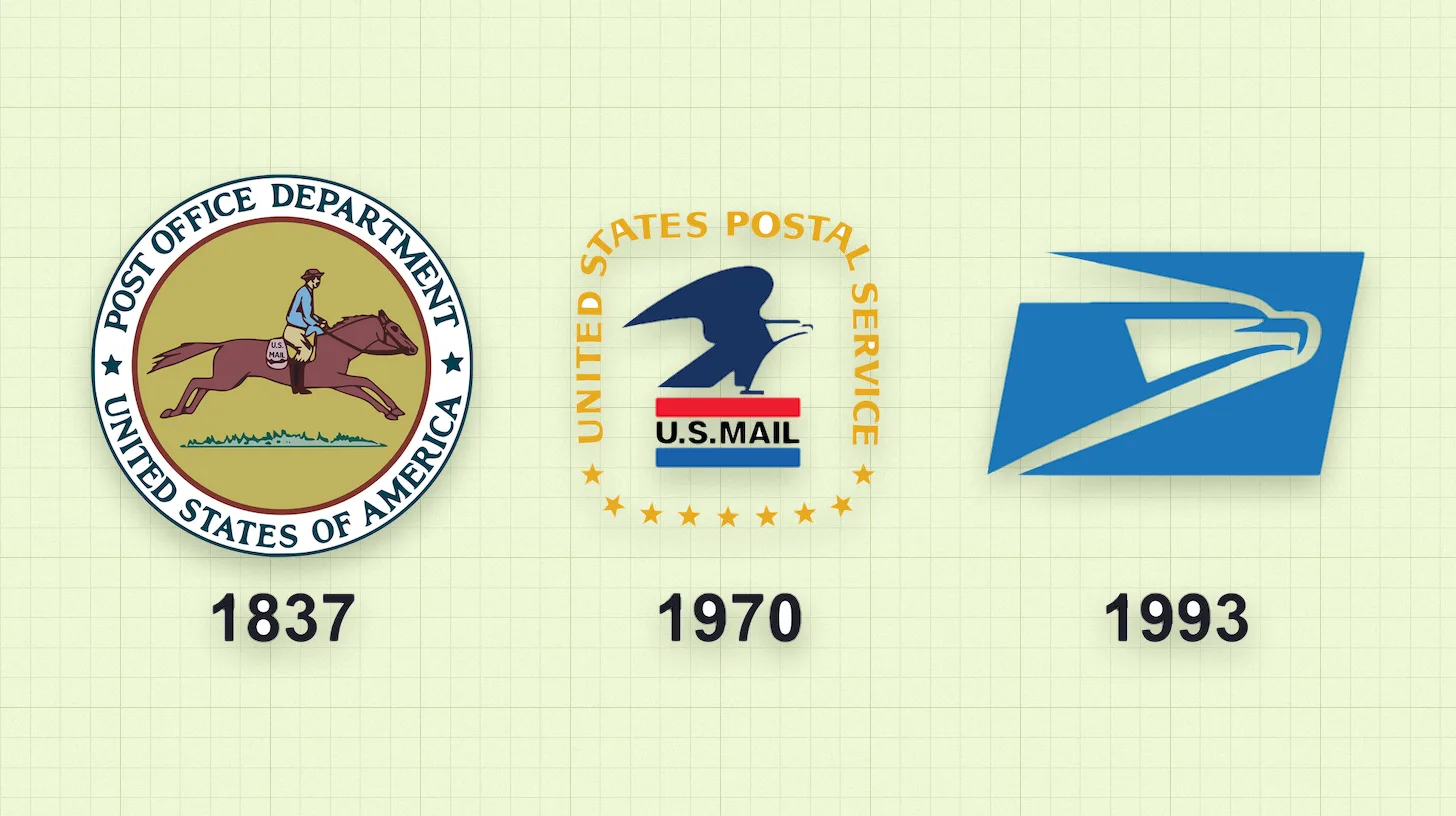
The USPS logo is an eagle, and has been since 1970, when officials unveiled a seal by the firm of the industrial designer Raymond Loewy, an eagle poised for flight. Before that, the Post Office Department’s emblem from 1837 was a post rider on horseback.
The current logo, the “sonic eagle,” was unveiled on October 12, 1993: a blue eagle’s head looking forward, meant to stand for the organization’s future. The standing eagle did not disappear. It remains the Postal Service’s official seal, while the sonic eagle is the corporate logo.
DOES THE MAIL REALLY COME IN SNOW, RAIN AND HEAT?
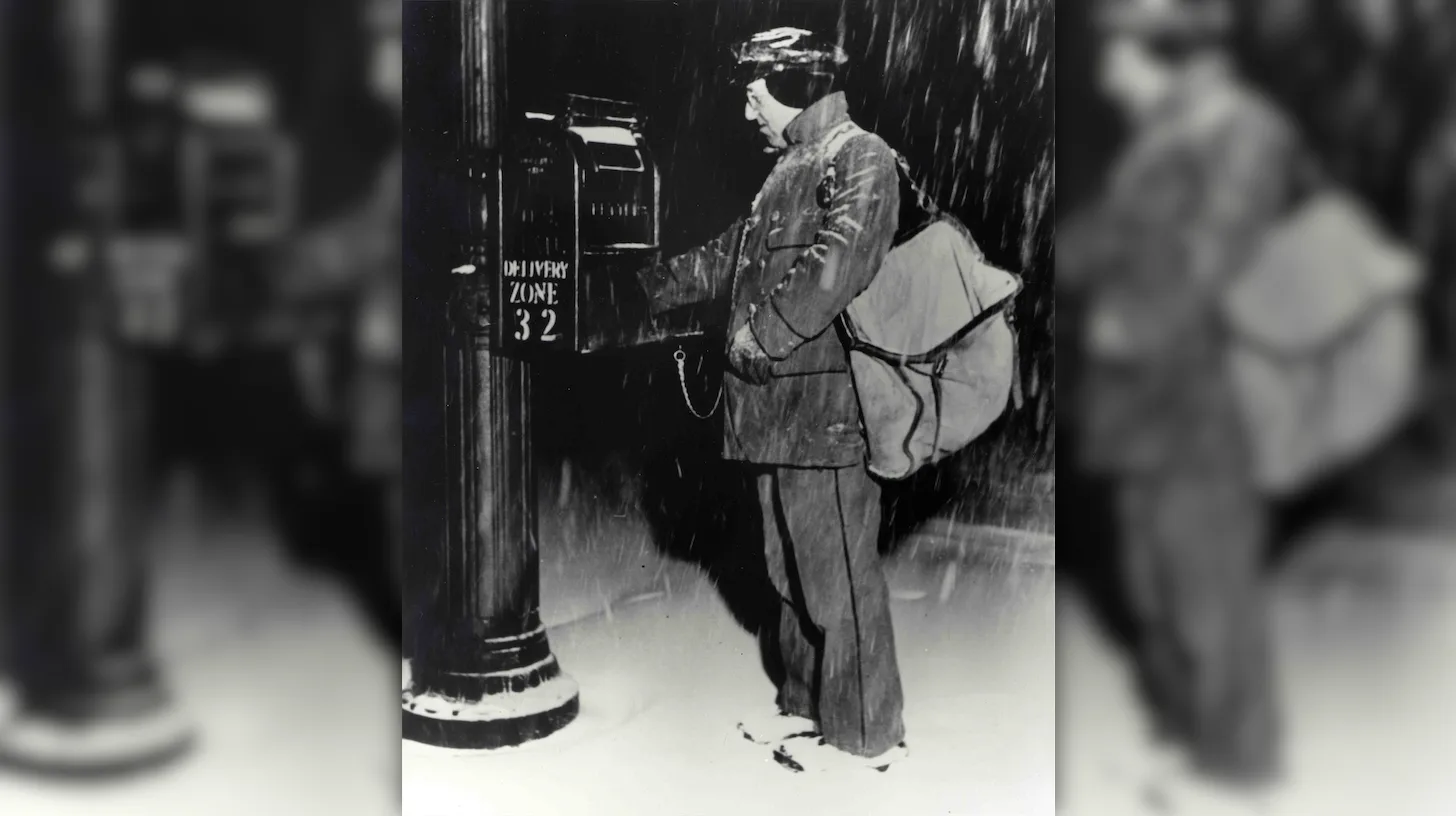
The mail does not always come in bad weather: the Postal Service stops delivery when the weather puts carriers in danger. On January 30, 2019, during an arctic cold snap, USPS suspended delivery in some areas “to ensure the safety and well-being of our employees.”
Heat gets the same care. Each year from April 1 through October 31, a heat illness prevention program kicks in when the heat index is expected to pass 80 degrees.
Television had the last word on the gap between the inscription and the job. Newman, the mail carrier on Seinfeld, once called in sick on account of rain.
FAQ
What is the Postman’s Creed?
The Postman’s Creed is a popular name, not an official one. People who use it mean the “neither snow nor rain” line on the Farley Post Office in New York, which the Postal Service says is not its motto. The nearest official statement is federal law, which charges the Postal Service to “bind the Nation together” through the people’s correspondence.
How many employees work for USPS?
The Postal Service had 531,261 career employees on September 30, 2025, by its historian’s count, down from 533,724 a year earlier. The regulator says it was the first drop since 2020. Non-career workers come on top, and about 64,000 employees are military veterans.
Why is the USPS important?
The USPS is, in the words of the law, “a basic and fundamental service provided to the people” by the federal government. It delivered to 170.4 million delivery points in fiscal 2025, through 30,972 retail offices. It generally receives no tax dollars for its operating expenses.