

7 min read
Let’s go on a chilling journey through history as we explore some of the deadliest and worst pandemics that have shaped human civilization.
From the devastating Black Death to the mysterious Plague of Athens.
BLACK DEATH (BUBONIC PLAGUE)
The Black Death, a devastating plague pandemic that swept across Eurasia and North Africa from 1346 to 1353—killed an estimated 25-50 million people, possibly up to 60% of Europe’s population.
In a disturbing attempt to spread the disease, Mongol armies besieging the Crimean city of Kaffa in 1346 catapulted infected corpses over the city walls.
This may have contributed to the plague’s introduction to Europe via fleeing Genoese traders.
SPANISH FLU
The 1918 Spanish flu pandemic infected an estimated 500 million people worldwide and killed 50-100 million, making it one of the deadliest pandemics in human history.
It disproportionately killed young adults rather than the very young and old. It caused some victims to turn blue and suffocate from fluid-filled lungs within hours of showing symptoms.
It may have originated from birds or pigs before mutating to spread between humans.
HIV/AIDS

The worst outbreak of HIV/AIDS occurred in the 1980s and 1990s, particularly devastating sub-Saharan Africa where in some countries over 15% of adults became infected.
At the peak of the epidemic in the late 1990s—AIDS was killing over 2 million people per year globally and had become the leading cause of death in Africa, reversing decades of progress in life expectancy.
SMALLPOX

The worst outbreak of smallpox in history was likely the introduction of the disease to the Americas by European explorers and colonists in the 15th and 16th centuries.
It decimated Native American populations who had no immunity. It’s estimated that smallpox and other European diseases killed up to 90-95% of the indigenous population of the Americas—or potentially 50-100 million people.
PLAGUE OF JUSTINIAN
The Plague of Justinian, which struck the Byzantine Empire and surrounding regions from 541-549 CE.
It potentially killed up to 100 million people over two centuries of recurrence.
At its peak, the plague was reportedly killing 10,000 people per day in Constantinople alone, leaving bodies stacked in the open due to lack of burial space and causing the entire city to smell of death.
THIRD PLAGUE PANDEMIC

The third plague pandemic, beginning in Yunnan, China in 1855, was a devastating global outbreak of bubonic plague that ultimately claimed over 15 million lives worldwide, including 10 million in India alone.
Swiss-born French bacteriologist Alexandre Yersin isolated the plague bacterium in Hong Kong in 1894.
While just four years later in 1898, French researcher Paul-Louis Simond discovered the crucial role of fleas as disease vectors, leading to the development of modern treatment methods.
ANTONINE PLAGUE

The Antonine Plague, which ravaged the Roman Empire from 165-180 AD, was a devastating pandemic that killed an estimated 5-10 million people, potentially including Emperor Lucius Verus.
It forced Marcus Aurelius to recruit gladiators and slaves into the depleted Roman army.
The plague may have coincided with a Roman embassy visiting the Han Chinese court in 166 AD, potentially ushering in a new era of Roman Far East trade while simultaneously bringing a deadly disease that would wreak havoc across both empires.
COCOLIZTLI EPIDEMIC

The Cocoliztli epidemic, which struck Mexico in the 16th century, killed an estimated 5-15 million people and may have been caused by a rare strain of Salmonella bacteria.
The epidemic seemed to preferentially target indigenous people and occurred shortly after one of the worst droughts to hit the region in 500 years.
This has led some researchers to speculate it may have been an indigenous viral hemorrhagic fever exacerbated by drought conditions and colonial oppression.
RUSSIAN FLU

The 1889-1890 pandemic, initially thought to be influenza but now possibly attributed to a coronavirus, rapidly spread worldwide in just four months thanks to new rail and sea transportation networks, infecting up to 60% of some populations.
Remarkably, the pandemic may have originated from cattle in Siberia, with an epizootic of pneumonia in cows preceding the human outbreak, and it disproportionately affected the elderly, creating a J-shaped mortality curve similar to that seen in recent pandemics.
ASIAN FLU

The 1957-1958 Asian flu pandemic, caused by the H2N2 influenza A virus, infected up to 2 billion people worldwide and killed an estimated 1-4 million.
In a remarkable feat, American microbiologist Maurice Hilleman developed a cure within just 4 months of identifying the virus, potentially saving hundreds of thousands of lives, though distribution issues led to some unusual prioritization—with entire football teams receiving shots while many essential workers went without.
HONG KONG FLU

The Hong Kong flu pandemic of 1968-1969 killed between 1-4 million people globally.
In some areas, the pandemic’s impact was so severe that corpses had to be stored in subway tunnels in Berlin, and in West Germany, garbage collectors were enlisted to bury the dead due to a shortage of undertakers.
SWINE FLU (H1N1)

The 2009 swine flu pandemic, caused by the H1N1 influenza virus, infected an estimated 11-21% of the global population and resulted in approximately 151,700-575,400 deaths worldwide.
Remarkably, unlike most influenza strains, this pandemic did not disproportionately affect adults over 60 years old, and it led to a significant increase in new cases of narcolepsy, particularly in some European countries.
THE SECOND CHOLERA PANDEMIC

The second cholera pandemic (1826-1837) was a devastating global outbreak that spread from India to Europe, the Americas, and beyond. It caused hundreds of thousands of deaths and prompted significant medical and public health advancements.
One of the most shocking aspects was the rapid progression of symptoms, with some victims going from seemingly healthy to dead within hours.
In Shushtar, Iran, about half the city’s population perished, including all of the Mandaean community’s priests.
THE 1878 YELLOW FEVER EPIDEMIC

The worst yellow fever pandemic occurred in the late 19th century, with the 1878 epidemic in the Mississippi Valley being particularly devastating—it killed around 20,000 people and caused 100,000-150,000 cases overall.
In Memphis, Tennessee, which was hit especially hard, the population dropped from 47,000 to 19,000 as residents fled the city, and the epidemic was so severe that Memphis temporarily lost its city charter and went bankrupt.
THE 1847 NORTH AMERICAN TYPHUS EPIDEMIC
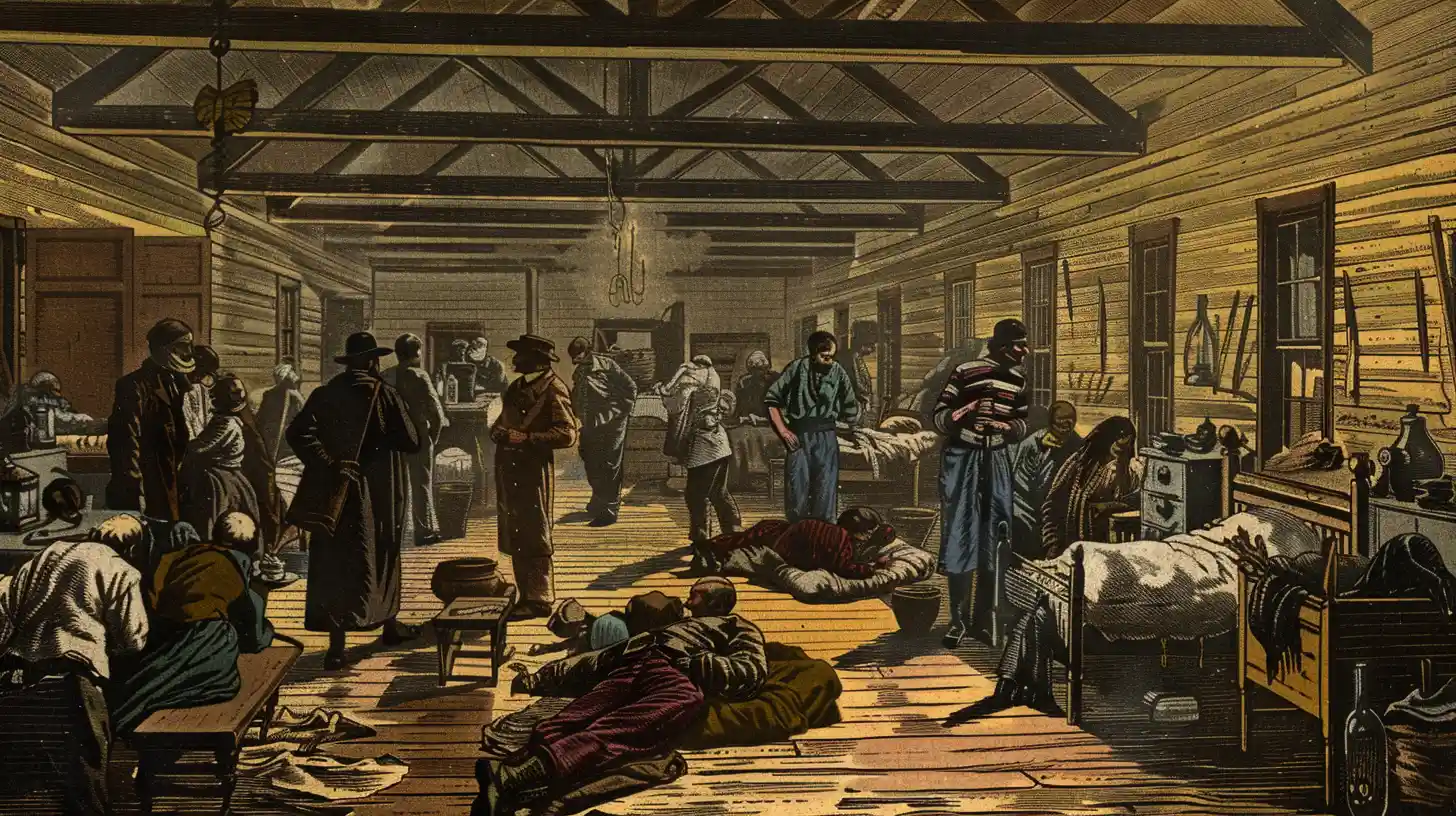
The 1847 North American typhus epidemic, triggered by massive Irish emigration during the Great Famine, claimed over 20,000 lives in Canada alone and overwhelmed quarantine stations like Grosse Isle, where ships formed a two-mile long line waiting to be processed.
In Montreal, the situation became so dire that 22 fever sheds were erected. Grey Nuns carried sick women and children from ships to ambulances, and construction workers building the Victoria Bridge later discovered a mass grave containing 6,000 victims, prompting them to erect a memorial known as The Black Rock.
THE ATHENIAN PLAGUE

The Plague of Athens was a devastating epidemic that struck the city-state during the second year of the Peloponnesian War in 430 BC, killing an estimated 75,000 to 100,000 people and severely weakening Athens’ military and political power.
Among the most striking aspects of the plague were its gruesome symptoms, including pustules and ulcers on the body, and the societal breakdown it caused.
Thucydides reported that people abandoned religious practices, violated funerary customs by dumping bodies onto others’ funeral pyres, and engaged in hedonistic behavior as they believed they were already living under a death sentence.