

4 min read
Tracing the 175-year evolution of pharmaceutical giant Pfizer reveals the timeline of one of America’s pioneering drug makers.
From its origins as a fledgling chemicals startup in 1849, Pfizer grew over nearly two centuries into a global healthcare conglomerate producing some of the best-selling medicines ever discovered.
1849-1950: EARLY HISTORY
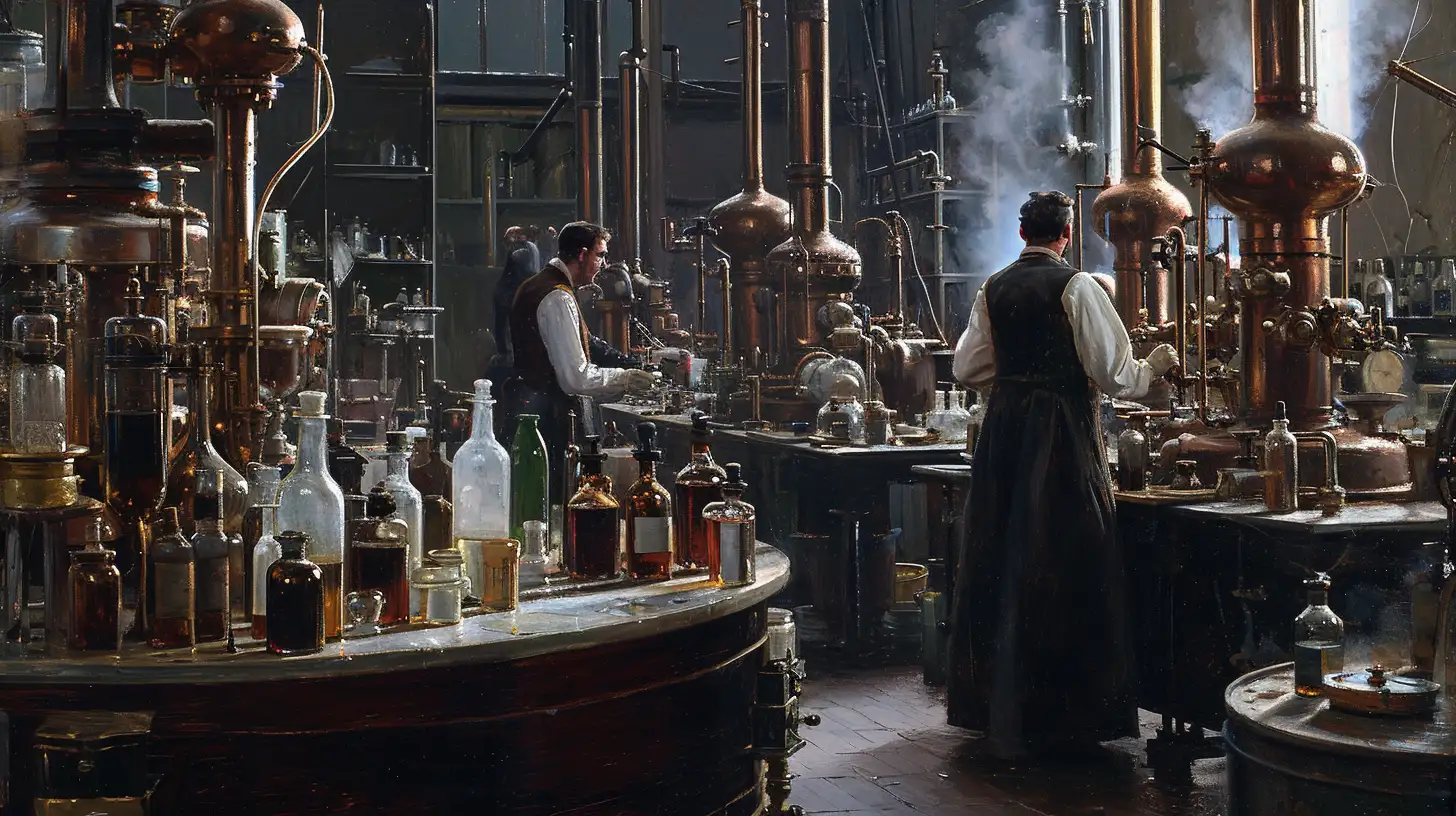
1849 — Pfizer Founding
Charles Pfizer and his cousin Charles F. Erhart founded a chemicals business called Charles Pfizer & Company in Brooklyn, New York.
They produced an antiparasitic called santonin that was an early success.
1860s — Fermentation Technology
Pfizer built expertise in fermentation technology while boosting citric acid production, which drove major growth in the 1880s.
This know-how later helped enable mass production of penicillin.
1881 — Manhattan HQ
The company moved its administrative headquarters to Manhattan to be closer to the center of New York’s business district.
1906 — $3 Million
Bolstered by citric acid sales, Pfizer’s revenues exceeded $3 million this year for the first time.
1919 — Citric Acid Mass Production
Leveraging its background in fermentation, Pfizer commercialized the mass production of citric acid from sugar-metabolizing fungi, further advancing revenues.
1942 — Delaware Incorporation
As the company grew substantially, Pfizer incorporated in Delaware.
This helped pave the way for future expansion.
World War II — Penicillin Mass Production
To meet wartime demand, Pfizer utilized deep fermentation methods to mass produce penicillin for injured Allied soldiers.
They researched over 135,000 soil samples to improve yields.
1950 — Big Pharma Pivot
The innovative mass production of penicillin led Pfizer to pivot from a chemicals company into a research-based pharmaceutical enterprise developing new drugs.
1950-2000: GLOBAL EXPANSION & BLOCKBUSTER DRUGS
1950s — Animal Testing
Pfizer established an animal health division with a 700-acre farm and research facility in Indiana.
They also began opening international offices to expand overseas.
1960 — R&D Heads to Connecticut
The company moved its medical research laboratories from New York to a new facility in Groton, Connecticut, enabling large-scale drug discovery.
1965 — John Powers
John Powers, Jr. became CEO, succeeding John McKeen and steering major growth.
1972 — Edmund Pratt
Pfizer appointed Edmund T. Pratt Jr. as new CEO.
He led expansion into new drug categories like cardiovascular and anti-inflammatories.
1980 — Feldene
Pfizer achieved its first blockbuster drug with Feldene anti-inflammatory, which exceeded $1 billion in sales.
This marked a new era.
1991 — Zoloft
Zoloft was approved, becoming one of Pfizer’s most successful drugs ever with over $3 billion in 2005 sales.
1996 — Alzheimer’s & Hypertension Drugs
Pfizer secured approvals for Aricept Alzheimer’s treatment and Norvasc hypertension drug.
1997 — Lipitor
A deal was struck to co-market Lipitor cholesterol medication, which became the world’s top-selling drug.
1999 — Agouron
Expansion continued via acquisitions like cancer drug specialist Agouron.
2000 — World’s Second Largest Pharma Company
Pfizer acquired Warner-Lambert and Pharmacia.
These massive mergers made it the world’s 2nd biggest pharmaceutical company.
2000-PRESENT: RECENT INNOVATIONS
2001 — Henry McKinnell
Henry McKinnell was appointed CEO, succeeding William C. Steere, Jr.
He oversaw acquisitions strengthening Pfizer’s drug portfolio.
2003 — Pharmacia
Pfizer merged with Pharmacia and acquired cancer drug specialist SUGEN, expanding into oncology medications.
2006 — Jeff Kindler
Attorney Jeff Kindler was named new CEO, embarking on cost-cutting initiatives.
2009 — Wyeth
In Pfizer’s largest deal ever, they acquired rival Wyeth for $68 billion along with its pneumonia vaccine.
2010 — Prevnar 13
The improved Prevnar 13 pneumonia vaccine was launched, making $6 billion in 2022 revenues.
2018 — Albert Bourla
Albert Bourla was promoted to CEO on January 1st, succeeding his mentor Ian Read.
2020 — COVID-19 mRNA Vaccine
The Pfizer-BioNTech COVID-19 mRNA vaccine received emergency approvals, making $37 billion in 2022.
2021 — Paxlovid
Pfizer launched Paxlovid oral antiviral pill for COVID-19 treatment.
2022 — Arena & Biohaven
Key deals were struck for cancer drug maker Arena and migraine specialist Biohaven.
2023 — Seattle Genetics
Pfizer announced a $43 billion merger agreement with Seattle Genetics to bolster oncology offerings.