13 min read
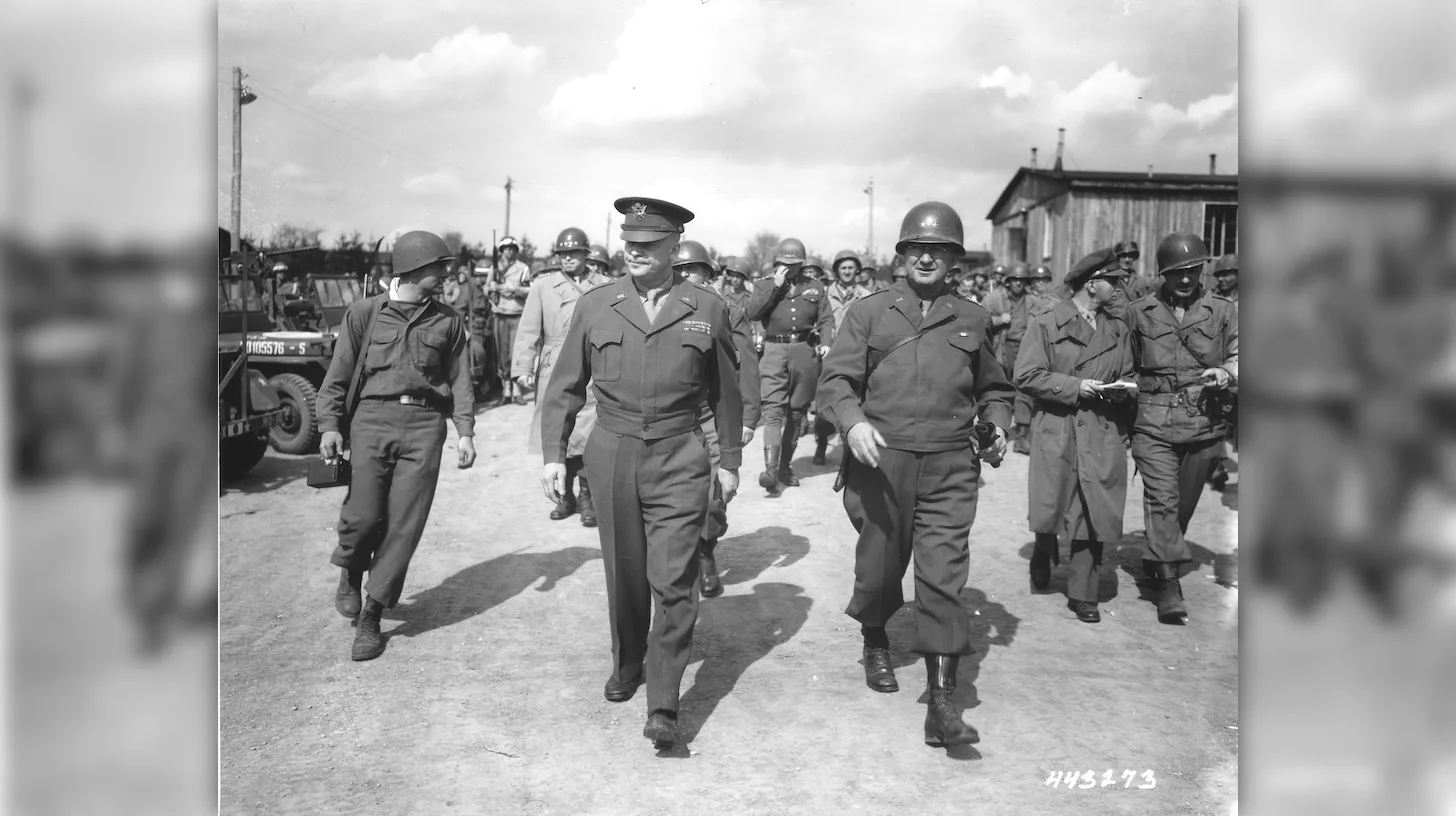
On the afternoon of Thursday, April 12, 1945, three American generals drove out from the town of Gotha, in Thuringia, to a camp that soldiers of the Third Army had overrun eight days before, and even before they reached the gate, Patton’s aide, Charles Codman, wrote the next day, “the smell of death and corruption was almost overpowering.”
The senior of the three was Gen. Dwight D. Eisenhower, the Supreme Allied Commander in Europe. He called it afterward his first horror camp, and he went through it, by his own account, so that he could testify to it if it was ever called propaganda. What he saw, and what he wrote about it in the week that followed, is better recorded than the words later put in his mouth.
Gold at the bottom of a salt mine
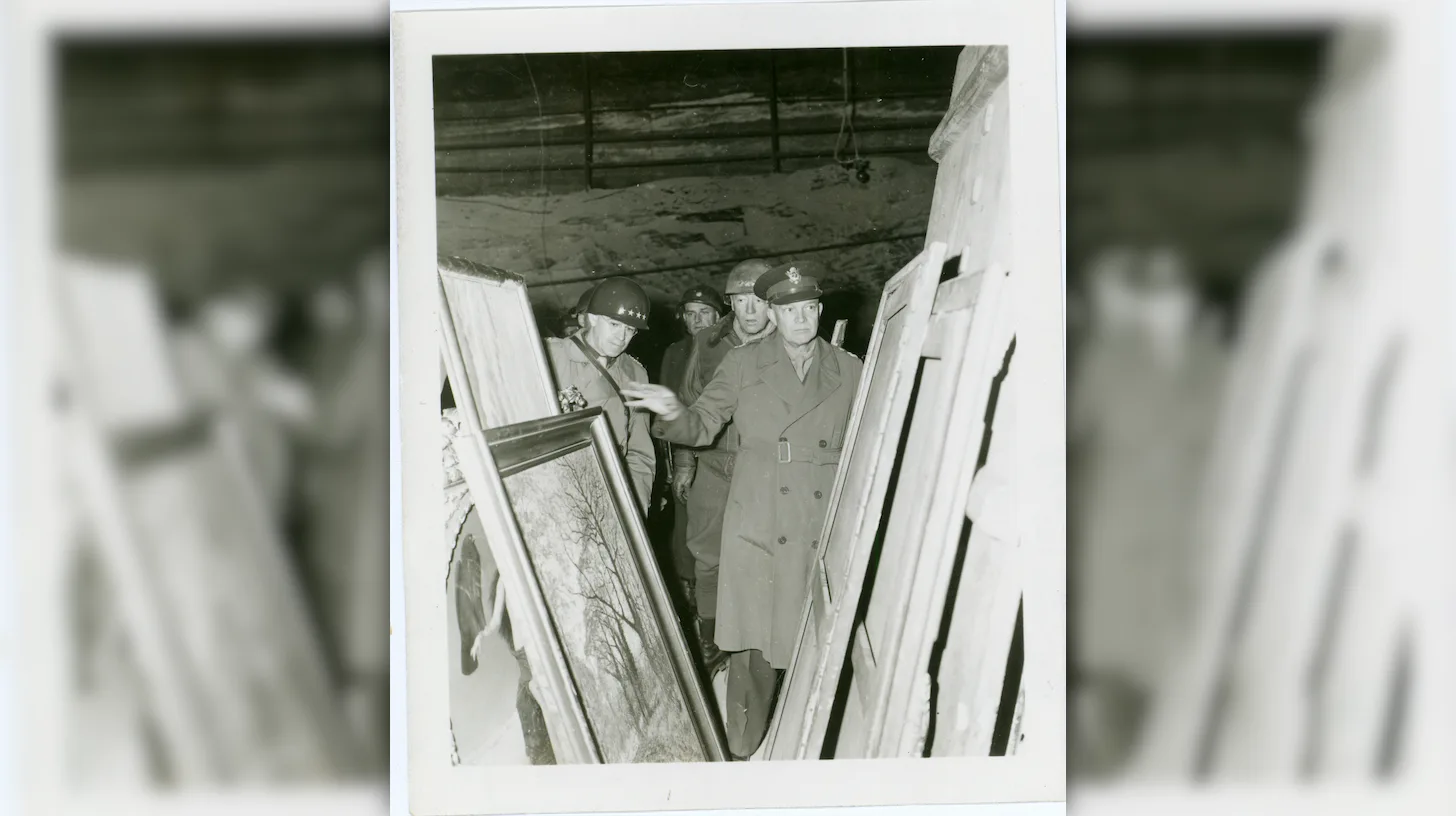
The day had begun underground. In the morning Eisenhower and Gen. Omar N. Bradley came to Merkers, where Patton’s men had found the gold of the German Reichsbank stored in a salt mine, and a group of them went down a shaft almost half a mile deep to see it. Eisenhower said, as a joke, that he was chagrined not to find a box of diamonds. They lunched at the headquarters of XII Corps and then flew to Gotha, to the headquarters of XX Corps, where they met two corps commanders, Walton H. Walker and Troy Middleton. “At Walker’s suggestion,” Patton wrote, “we drove to Ohrdruf and visited the first horror camp any of us had ever seen.”
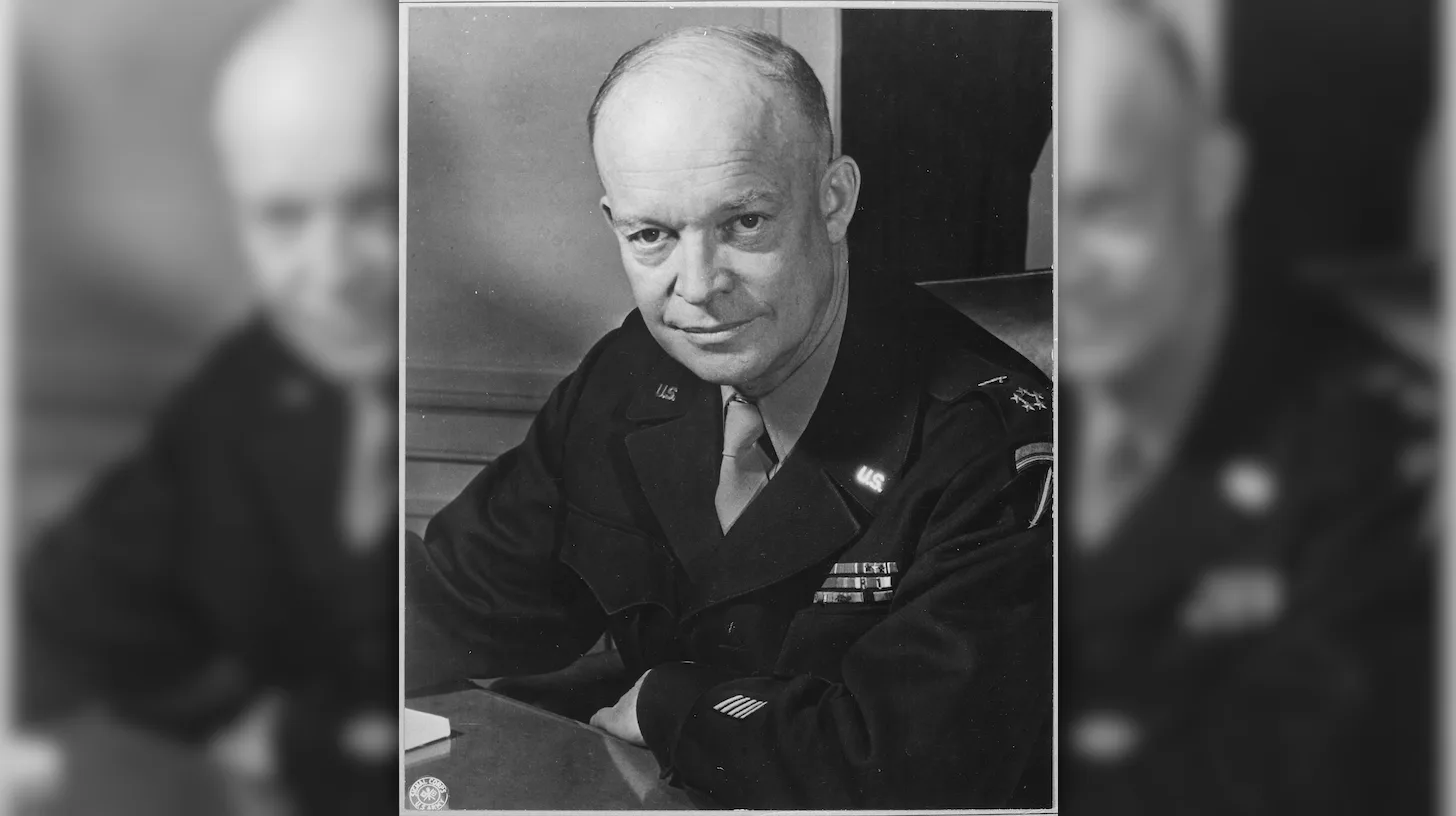
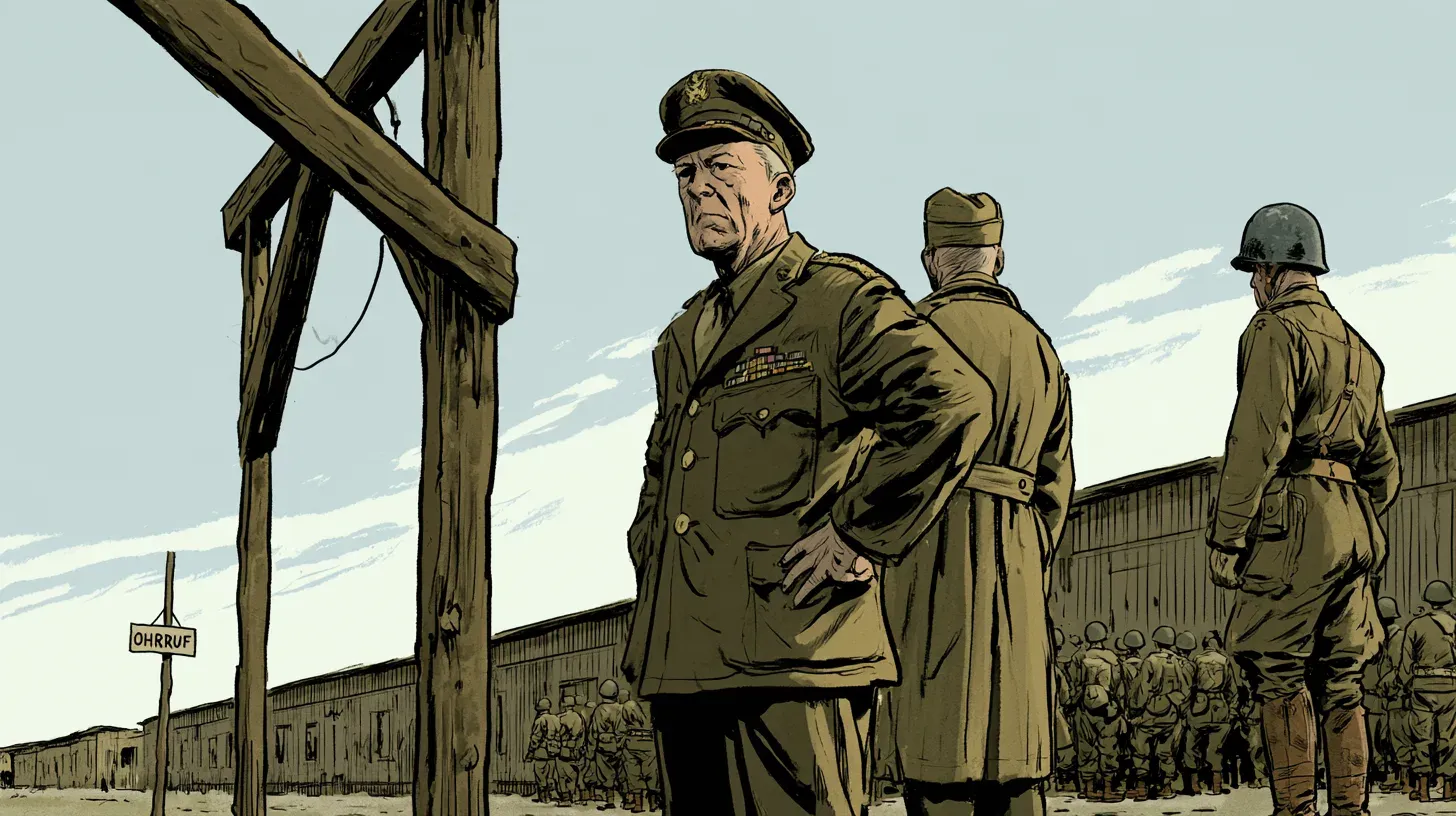
Eisenhower was fifty-four that spring, born in Denison, Texas, in the fall of 1890. In the photographs taken at Ohrdruf he wears the peaked service cap of an officer, not a helmet, though nearly everyone around him has a steel one, and the short wool field jacket that carried his name, with a row of ribbons over the left breast and a watch on his left wrist. In one picture his arms are folded tight across his chest while a guide talks. In another his hands are on his hips. Bradley was beside him in a belted trench coat, and Patton in a helmet, jodhpurs and riding boots.
The camp the Fourth Armored found
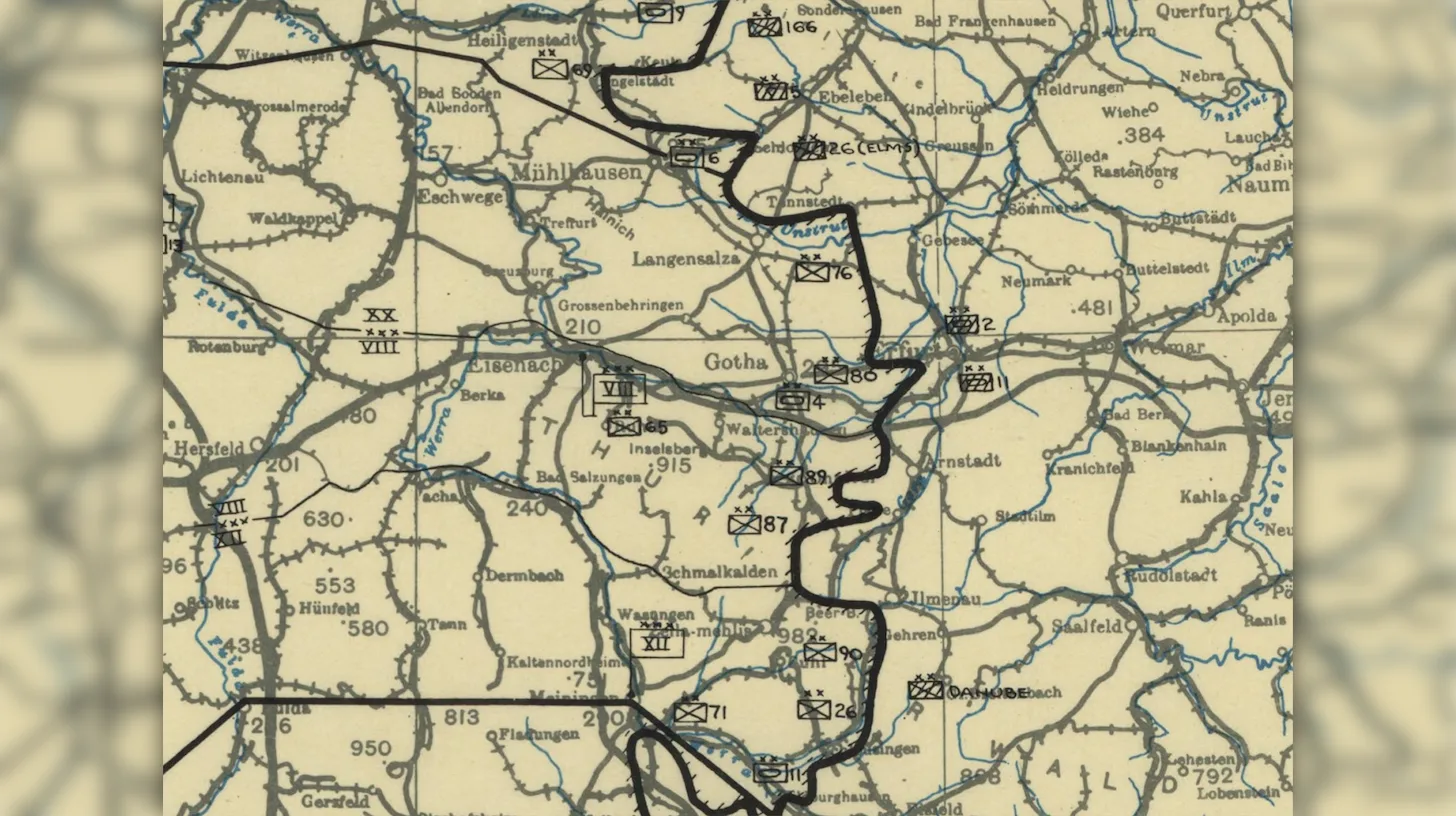
Ohrdruf had been set up the previous November, a subcamp of Buchenwald, and its prisoners were worked on railway lines for a planned communications center. In late March it held more than ten thousand prisoners. In the first days of April, as the Americans came on, the SS marched almost all of them away toward Buchenwald and shot many who were too sick to walk.
Men of the 4th Armored Division and the 89th Infantry Division reached the camp on April 4. A correspondent for the Chicago Tribune who went in with other newsmen two days later wrote that the dead were Russians, Czechs, Poles and others. The Associated Press reported 77 killed, and a Russian survivor told its reporter that 4,700 people had been killed or had died of their treatment there, most of them in recent weeks. American officers thought that figure high, the reporter wrote, “but estimated that 1,400 to 1,700 was conservative.”
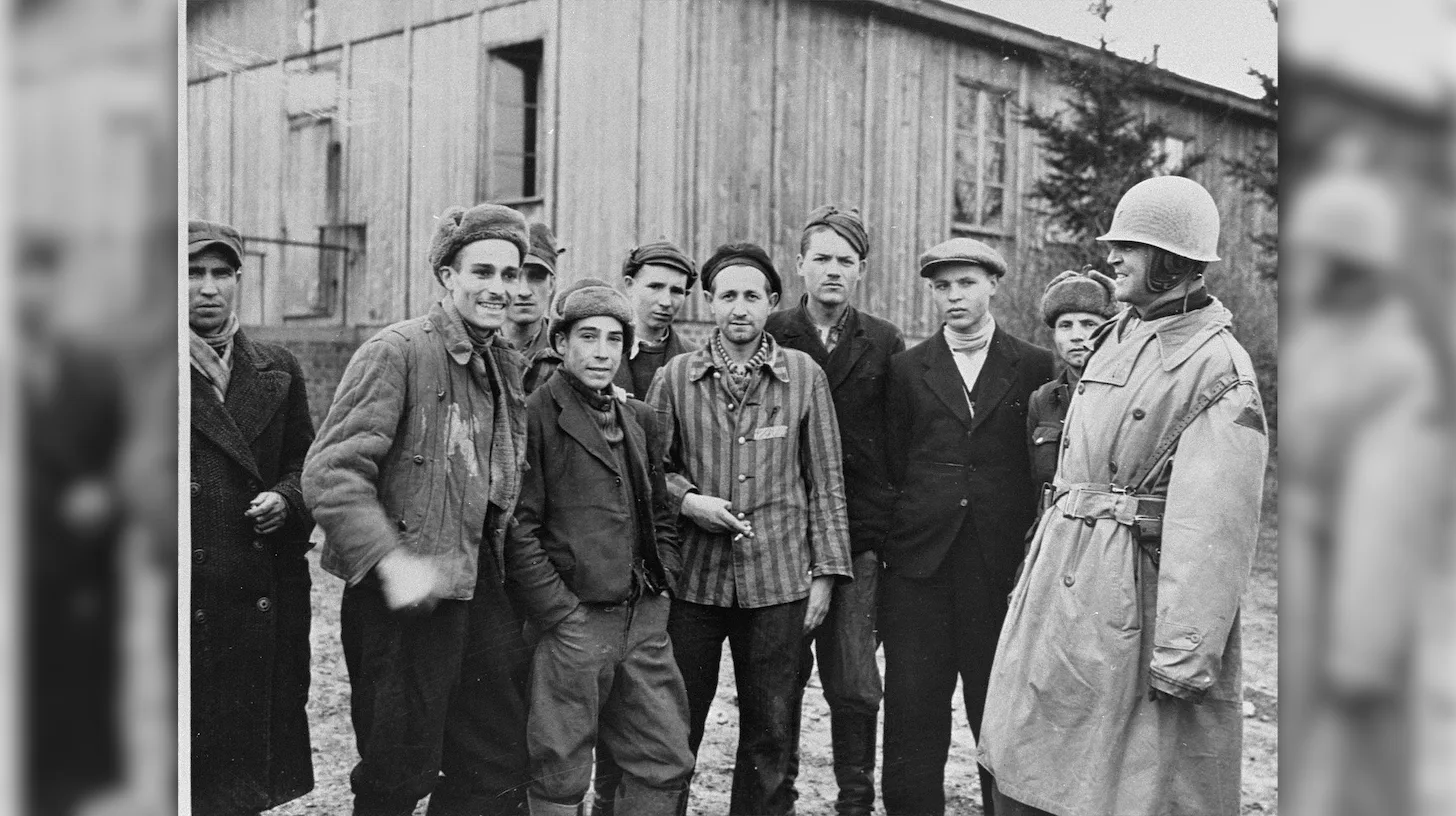
An officer of the 4th Armored Division, Col. Hayden A. Sears, rounded up leading citizens of the town of Ohrdruf, which lay close by, and took them through the camp. At first, the AP reported, they insisted “the SS isn’t like that.” They saw it, and one of them called it, in a phrase the St. Louis Post-Dispatch printed that week, “the work of beasts.” Sears told them they were being made witnesses. “Your names are being taken as witnesses so you can testify at a trial if the persons responsible for this are apprehended,” he said.
The mayor, Albert Schneider, and his wife were among those made to go through the camp on April 7. The next morning the two of them were found dead. The wire services disagreed about how, and one reporter wondered whether it had been murder, but the Army called it suicide. That was four days before Eisenhower came. In the town afterward, the same paper reported, “Meek co-operation replaced surly defiance.”
The gallows and the whipping table
Inside the wire an officer of XX Corps, still pale and shaken, Codman wrote, met them with the words, “They tried to eliminate the evidence before we arrived.” A man who said he had been an inmate took charge of the tour.
“A man who said he was one of the former inmates acted as impresario and showed us first the gallows, where men were hanged for attempting to escape.”
The drop, Patton wrote, was so short that the neck did not break, and the cord used was piano wire, so that the men strangled slowly.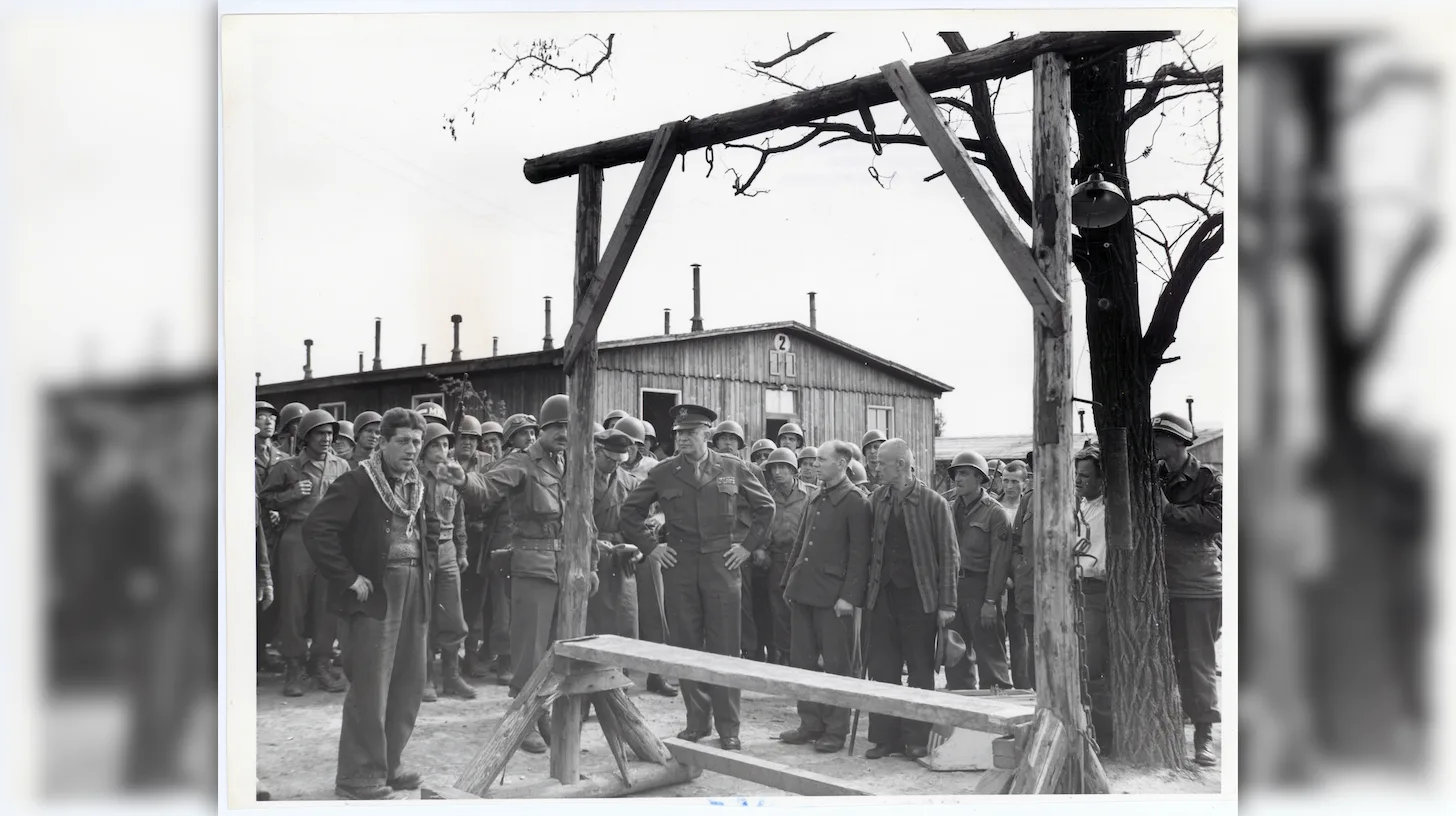
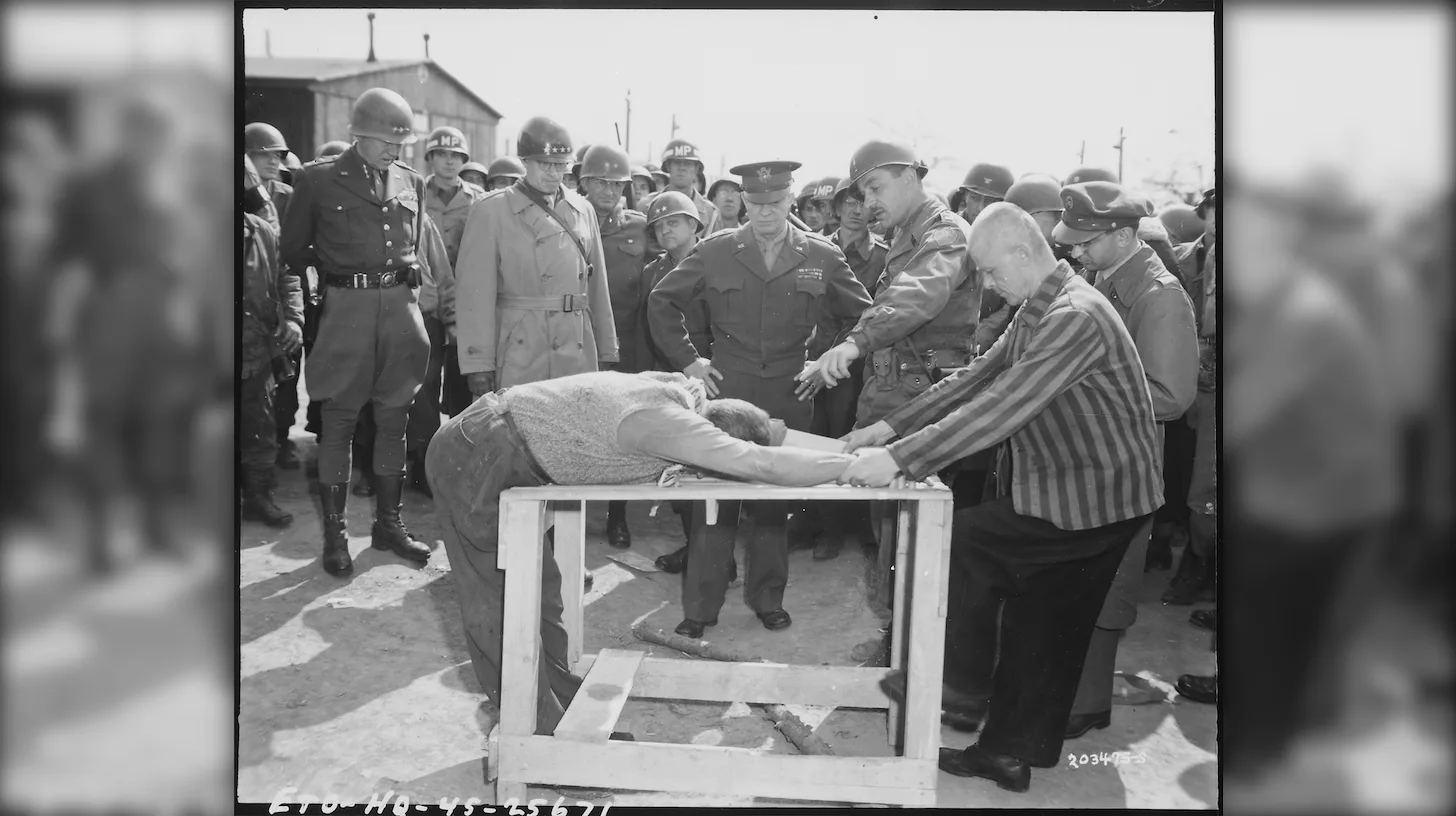
Then the guide took them to the whipping table, a low wooden frame with stocks on the ground, and said that he had himself received twenty-five blows there. The Army photographers made a picture of it: one man bent over the table, another in striped prison clothes holding his arms, Eisenhower with his hands on his hips, Patton and Bradley beside him. Eisenhower, according to Patton, must have suspected something about the guide, because he asked him “very pointedly how he could be so fat.”
Beyond the table there was a pile of bodies, and in a shed nearby another, about forty in each by Patton’s count, naked and starved to the last stage. “These bodies were lightly sprinkled with lime,” Patton wrote in his diary, “not for the purposes of destroying them, but for the purpose of removing the stench.” The inmates told him some three thousand people had been buried out of that shed since the first of the year. Codman saw a cart loaded with “thirty or forty bodies, naked, crisscrossed like matches, and about as substantial.” Farther on was the place where the SS had tried to burn the rest, on a great grill of narrow-gauge railway track laid over brick.
Eisenhower wrote that in one room, where twenty or thirty naked men lay piled up, killed by starvation, Patton would not even go in, and said he would get sick if he did. Codman says that he was, behind the corner of a building. Bradley remembered being too revolted to speak. Eisenhower himself kept going. “I visited every nook and cranny of the camp,” he wrote three years later, because he felt it his duty to be able to testify at first hand. He found three men who had escaped from the camp and questioned them through his interpreter, Lt. Liethen of Appleton, Wisconsin. Years later, writing his memoirs, he put the afternoon beside everything else he had seen in the war. “I am certain, however, that I have never at any other time experienced an equal sense of shock.”
Still having trouble hating them
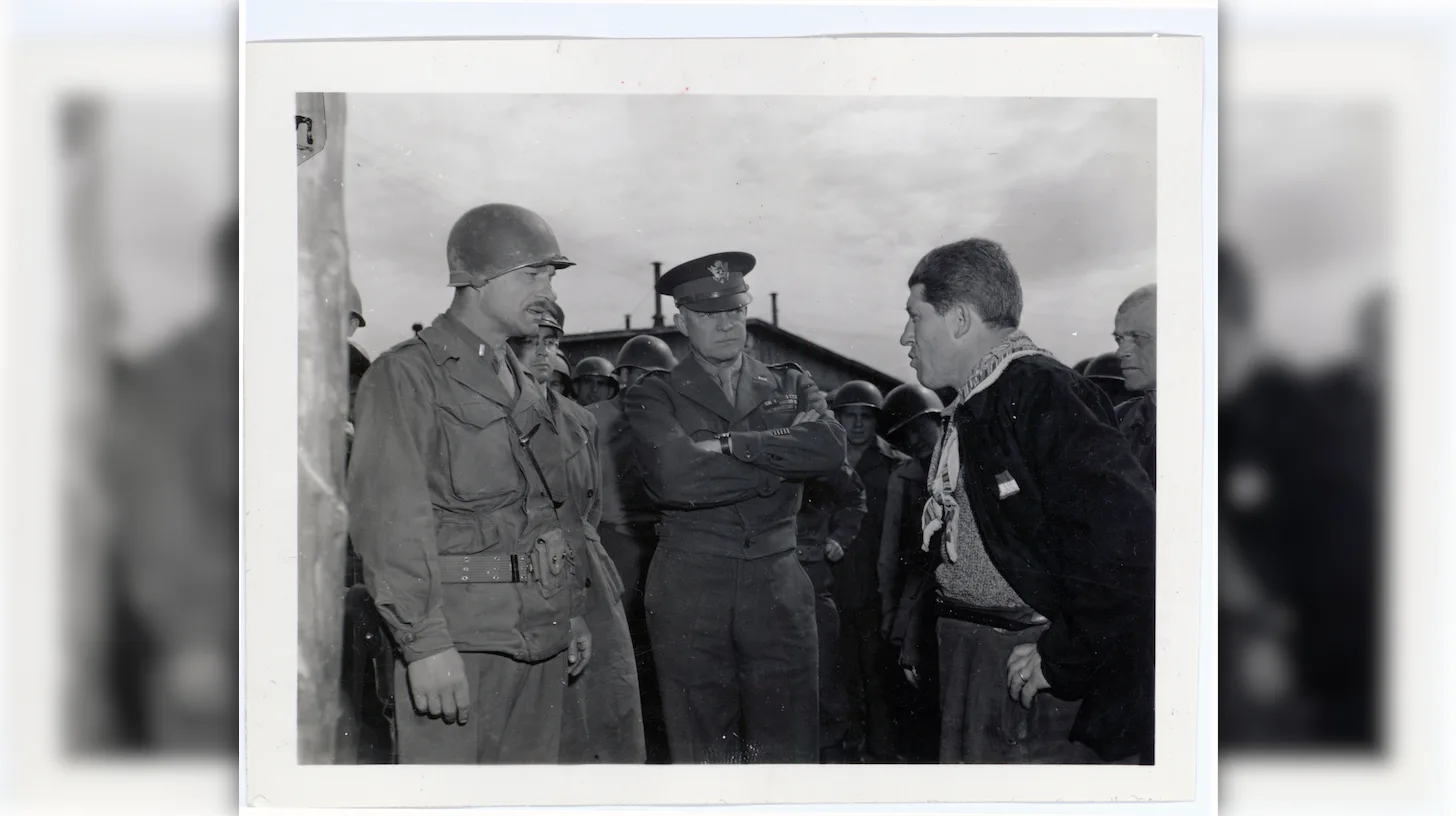
When the tour was over they waited at the entrance for their cars. An enlisted man bumped into the guide, whom Codman took to be a former guard, and from sheer nerves began to giggle. Codman told the rest in a letter to his wife the next day. Eisenhower “fixed him with a cold eye and when he spoke, each word was like the drop off an icicle,” and asked him whether he was “still having trouble hating them.” Then he turned and spoke to the officers around him. He wanted every American unit not actually in the front lines to see the place.
“We are told that the American soldier does not know what he is fighting for. Now, at least, he will know what he is fighting against”
The visits had already begun. Walker and Middleton had been sending soldiers through, and on the day before the generals came, the AP reported, many hundreds of them had been there and had left “in a grim mood.” Within the week a Washington Post reporter watched them arriving by jeep and truck, by the thousands. Three days later Patton wrote to Eisenhower that a Russian prisoner had recognized the talkative man as a former guard and had beaten his brains out with a rock.
Bradley, telling the story in 1951, wrote that Eisenhower’s “face whitened into a mask” that afternoon. Codman wrote that he had never seen such horror and disgust on any human faces.
A radio at midnight
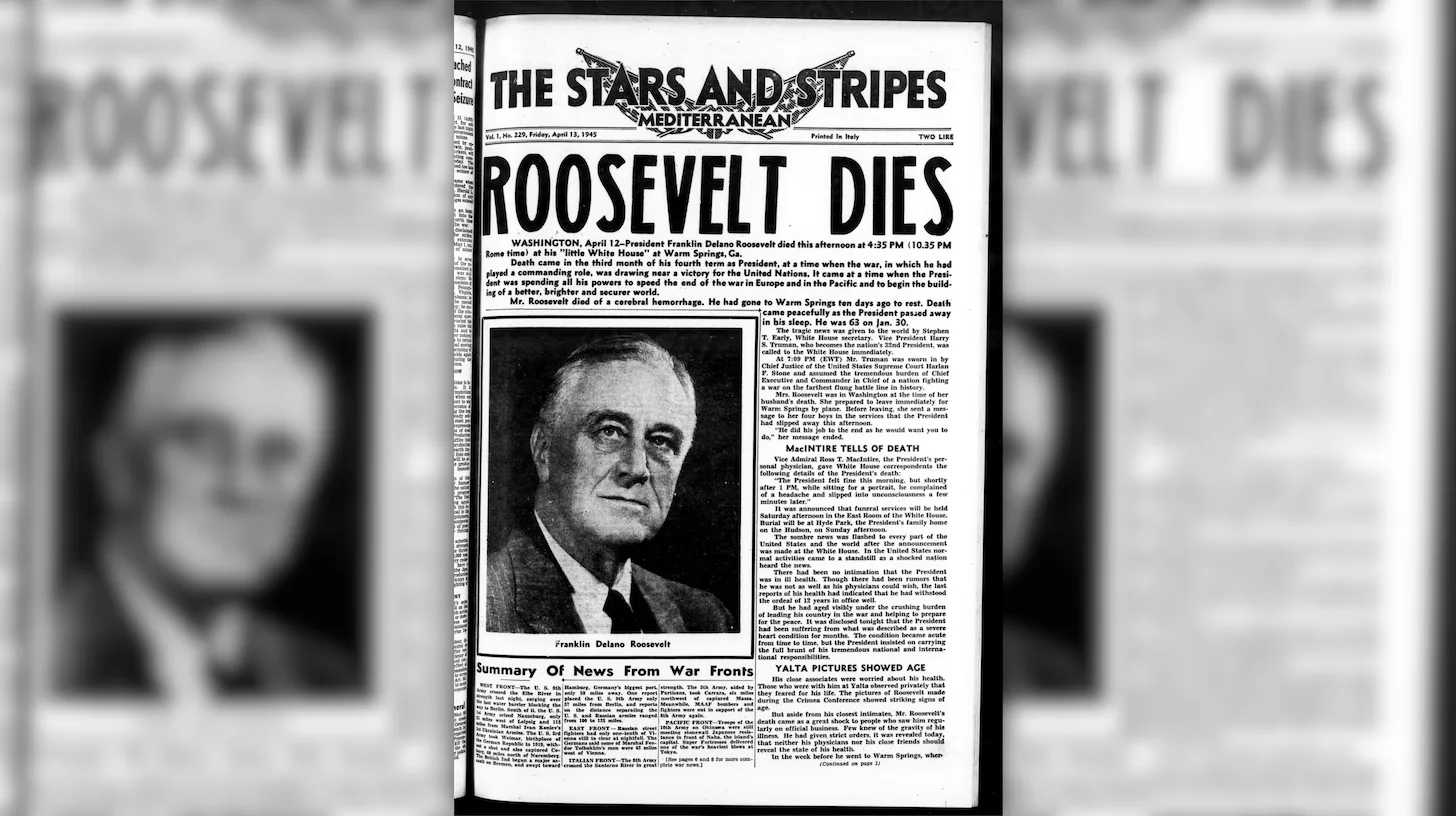
They drove back to Patton’s headquarters and sat up late, the three of them, talking about the war still to come in the Pacific. It was nearly midnight when they went to bed, Eisenhower and Bradley in a small house and Patton in his trailer. Patton’s watch had stopped, and he turned on the radio to get the time signal from the British Broadcasting Corporation, and he heard the news that President Franklin D. Roosevelt had died that afternoon at Warm Springs, in Georgia.
He woke Bradley, and the two of them went to Eisenhower’s room. “We went to bed depressed and sad,” Eisenhower wrote.
Beggar description
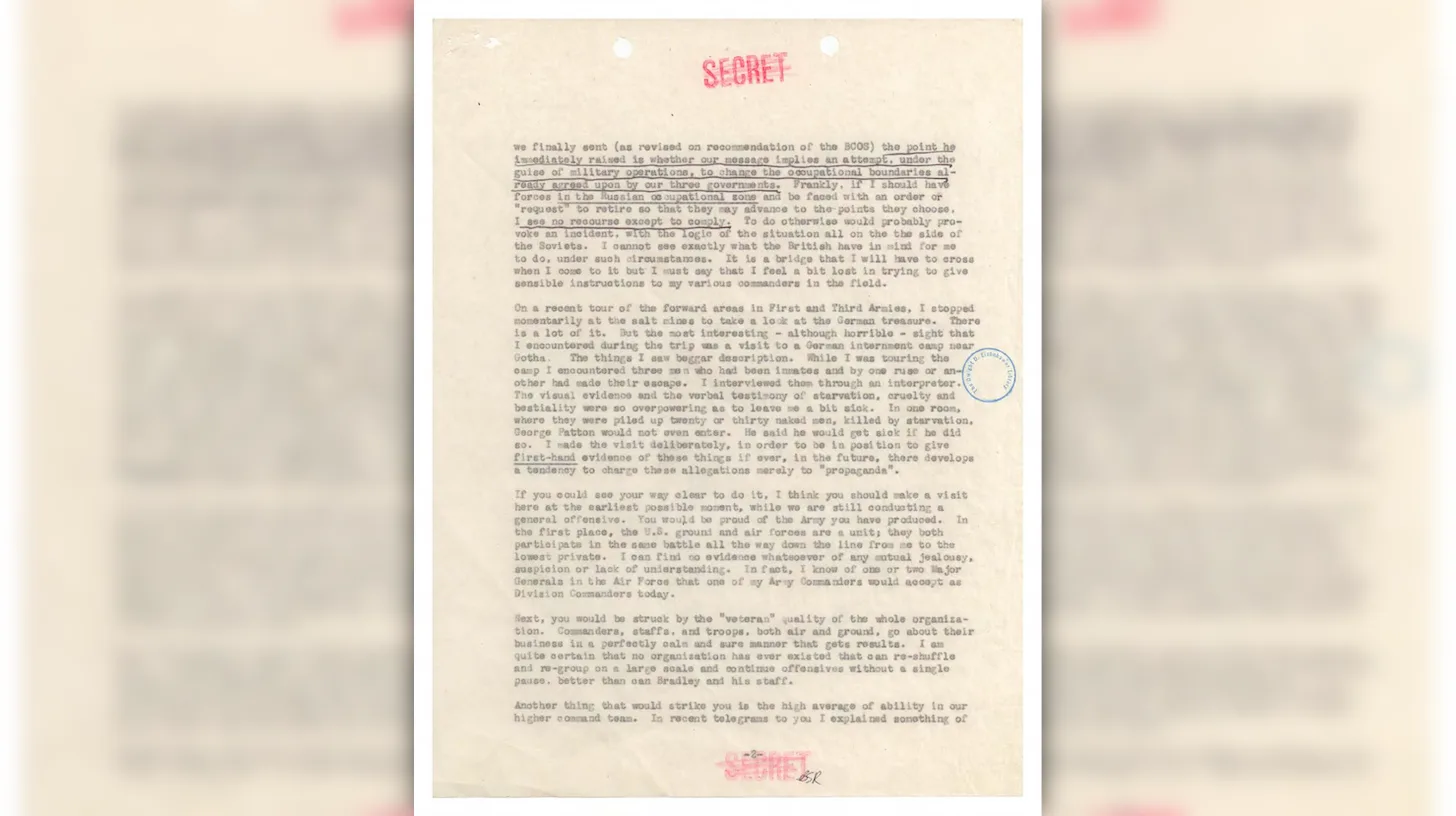
Three days later he wrote to the Army’s chief of staff, George C. Marshall, a long letter about the campaign and about Berlin, and in the middle of it he described what he had seen. He did not name the camp. He called it a German internment camp near Gotha.
“The things I saw beggar description. While I was touring the camp I encountered three men who had been inmates and by one ruse or another had made their escape. I interviewed them through an interpreter.”
The visual evidence and the testimony, he wrote, had been “so overpowering as to leave me a bit sick.” Then he explained why he had gone.
“I made the visit deliberately, in order to be in position to give first-hand evidence of these things if ever, in the future, there develops a tendency to charge these allegations merely to “propaganda.""
That same day he wrote to his wife, Mamie. “I never dreamed that such cruelty, bestiality, & savagery could really exist in this world!” he told her. By then Patton’s army had reached Buchenwald itself, and Patton called to say it was a similar camp, only much worse, and to suggest that the press be sent. On April 19 Eisenhower cabled Marshall asking whether about a dozen leaders of Congress and a dozen prominent editors might be flown over in a couple of transport planes to see the camps, and the same day Marshall answered that the Secretary of War and the President had approved. Winston Churchill announced that a delegation from Parliament would go too.
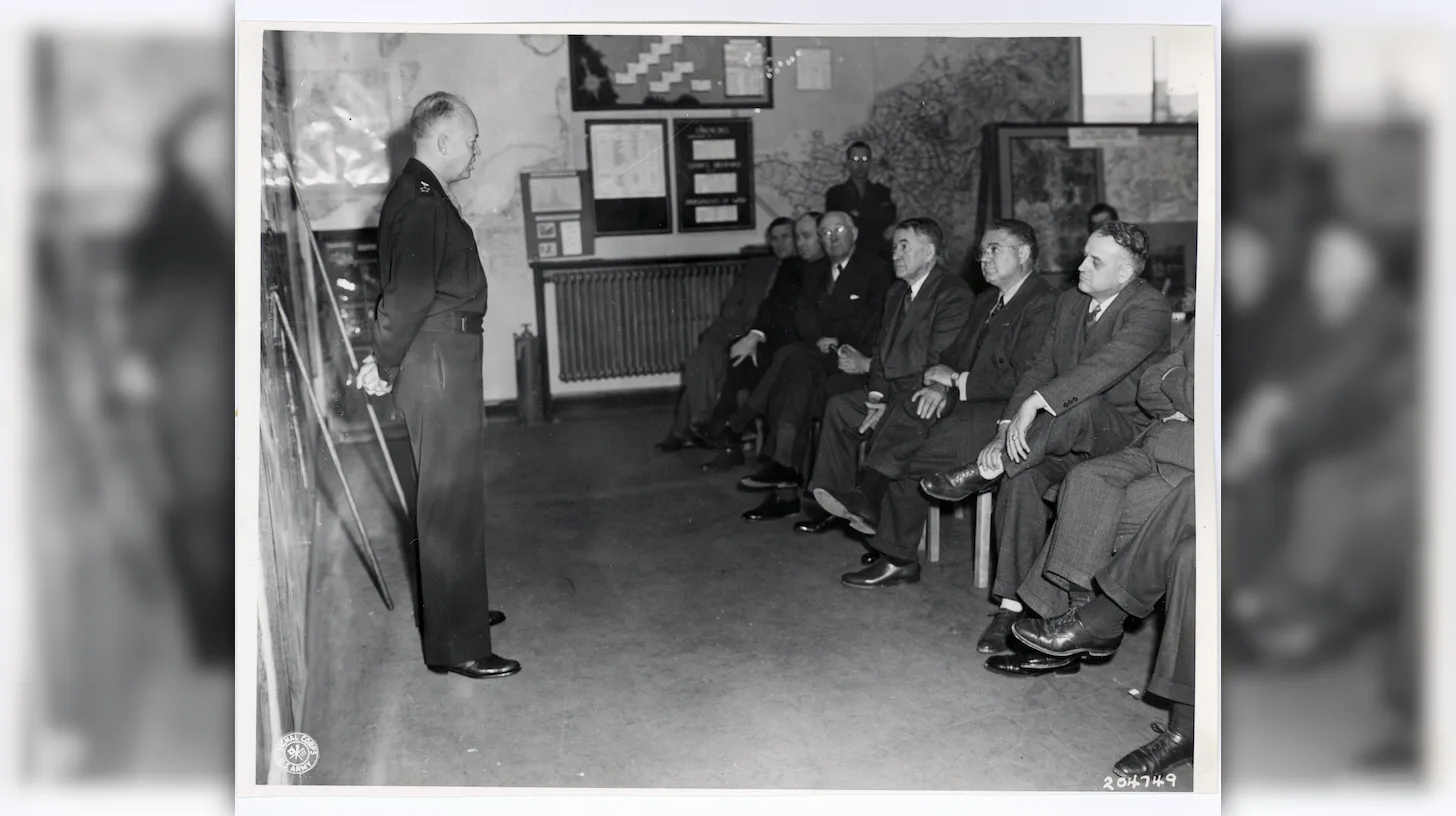
A line about getting it all on record, because someday someone would say it never happened, now travels under Eisenhower’s name. No source from 1945 holds it, and the earliest trace found is a letter to a newspaper in 2008. His own words on the subject are in the letter to Marshall, typed on three pages and marked secret.
It called the place an internment camp near Gotha.