23 min read
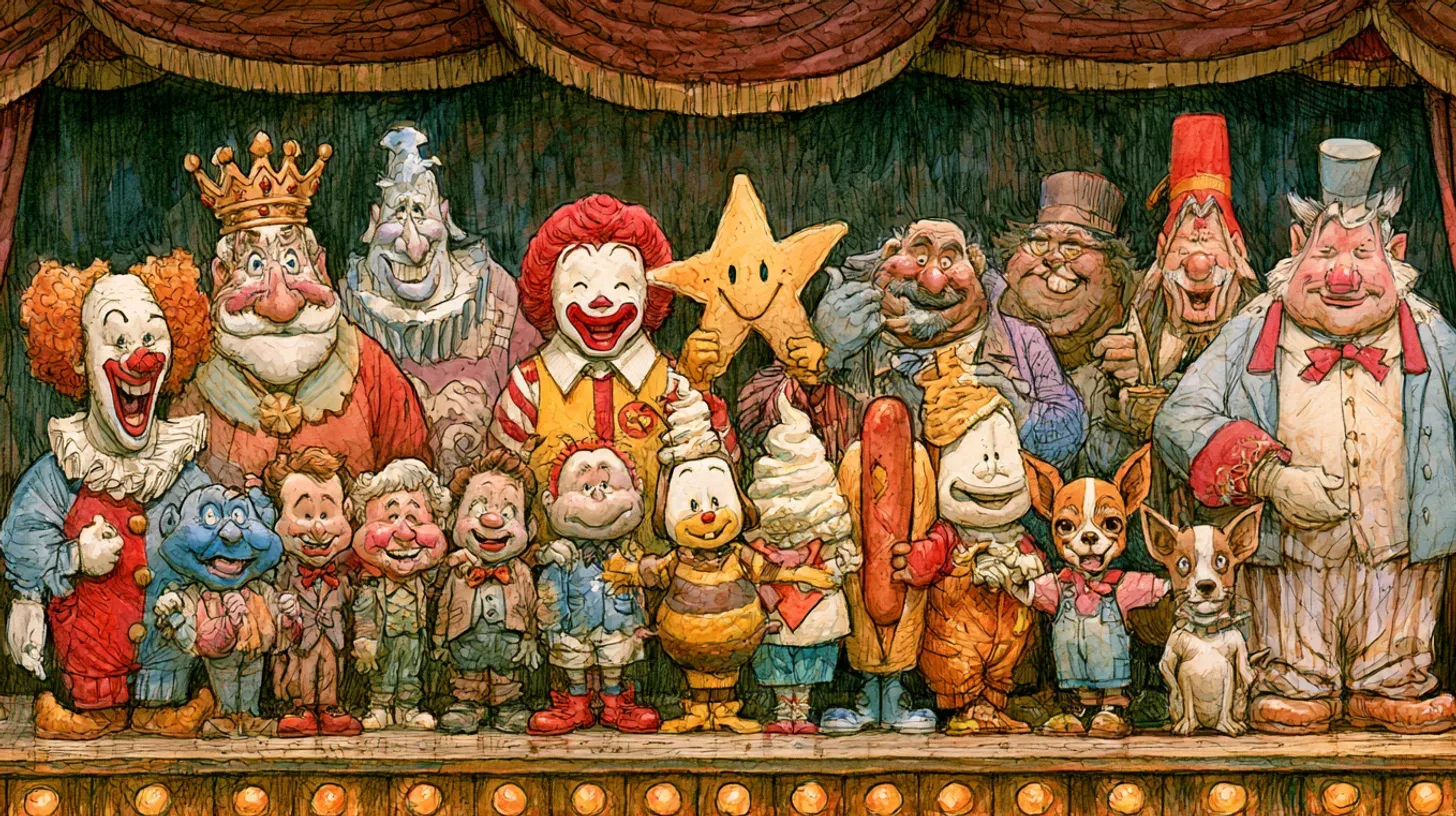
A fast food mascot is a character a restaurant chain invents, licenses, or borrows to sell food that cannot advertise itself, and this page catalogs more than 30 of them — from Ronald McDonald in 1963 to a Chipotle tortilla that lasted a single campaign. The fast food characters below include costumed clowns, claymation gremlins, a talking oven mitt, and one pair of disembodied lips.
Few of them retired gracefully. The Noid was pulled after a hostage crisis, Jared Fogle after criminal charges, the Taco Bell Chihuahua after its sales slid — and in 2026, Burger King fired the King himself on live television.
LIST OF ICONIC FAST FOOD MASCOTS
| Mascot | Brand | Debut | Status |
|---|---|---|---|
| Ronald McDonald | McDonald’s | 1963 | Active |
| Speedee | McDonald’s | 1948 | Retired 1962 |
| Colonel Sanders | KFC | 1950s | Active |
| Wendy | Wendy’s | 1969 | Active |
| The Burger King | Burger King | 1955 | Retired March 2026 |
| Jack Box | Jack in the Box | 1994 | Active |
| Taco Bell Chihuahua | Taco Bell | 1997 | Retired 2000 |
| Grimace | McDonald’s | 1971 | Active |
| The Hamburglar | McDonald’s | 1971 | Active |
| Mac Tonight | McDonald’s | 1986 | Retired 1997 |
| Little Caesar | Little Caesars | 1959 | Active |
| Chuck E. Cheese | Chuck E. Cheese | 1977 | Active |
| Big Boy | Big Boy Restaurants | 1937 | Active |
| Chick-fil-A Cows | Chick-fil-A | 1995 | Active |
| The Noid | Domino’s | 1986 | Retired 1995, revived 2021 |
| Rooty the Great Root Bear | A&W | 1974 | Active |
| Jared Fogle | Subway | 2000 | Dropped 2015 |
| Fred the Baker | Dunkin’ Donuts | 1982 | Retired 1997 |
| Arby’s Oven Mitt | Arby’s | 2003 | Retired 2005 |
| Fudgie the Whale | Carvel | 1977 | Active |
| Curly Top | Dairy Queen | 1996 | Active |
| The DQ Lips | Dairy Queen | 1978 | Retired 2011 |
| Happy Star | Carl’s Jr. (Hardee’s from 1998) | 1956 | Active |
| Blimpie Bear | Blimpie | 1980s | Retired 2000s |
| Chef Marco | Marco’s Pizza | 1983 | Active |
| Frankster | Nathan’s Famous | 1973 | Active (renamed Frankie, 2025) |
| Spongmonkeys | Quiznos | 2004 | Retired 2005, revived 2023 |
| Whataguy | Whataburger | 1999 | Active |
| The Siren | Starbucks | 1971 | Active |
| Pizza Pete | Pizza Hut | 1963 | Retired 1970s |
| Popeye the Sailor | Popeyes | 1976 | Retired 2012 |
| Chu | Panda Express | 2010s | Active |
| The Rapping Tortilla | Chipotle | 2017 | Retired 2017 |
RONALD MCDONALD
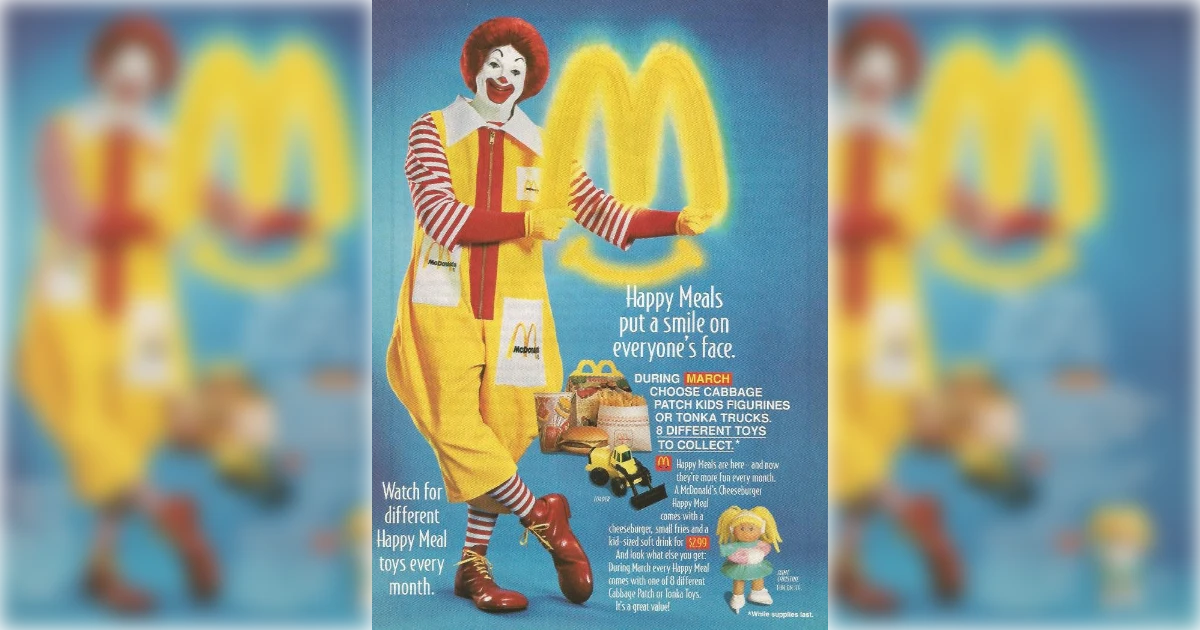
McDonald’s (1963-present)
Ronald McDonald debuted in 1963 when weatherman Willard Scott portrayed him after Bozo the Clown ended. The character originally wore a paper cup nose and a food tray hat. The claim that Ronald McDonald ranks second only to Santa Claus in recognition among American children gets repeated everywhere, but it traces back to Eric Schlosser’s Fast Food Nation (2001), which cited an undated, unnamed survey. No primary study has ever surfaced. Chinese children call him “Uncle McDonald.”
SPEEDEE
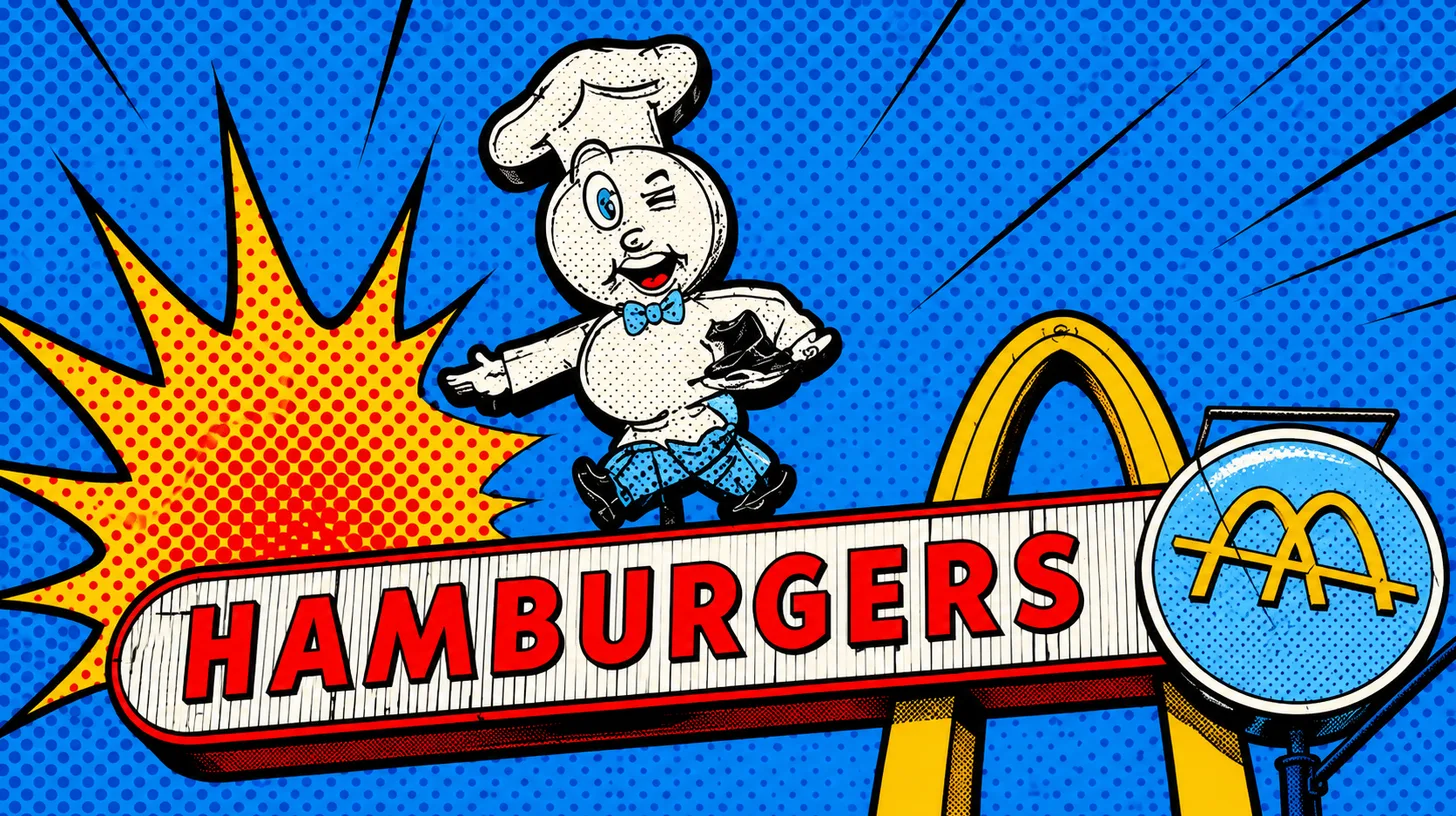
McDonald’s (1948-1962)
Speedee was McDonald’s first mascot, a winking chef with a hamburger for a head introduced in 1948 with the brothers’ “Speedee Service System.” The Golden Arches replaced him in 1962 — not Ronald, who arrived a year later and replaced nobody.
He is usually said to have been retired under pressure from Alka-Seltzer’s Speedy, but no court record exists, and Speedee predates Speedy by three years. One sign survives, at the Downey, California McDonald’s, saved by a 1994 National Trust listing.
COLONEL SANDERS
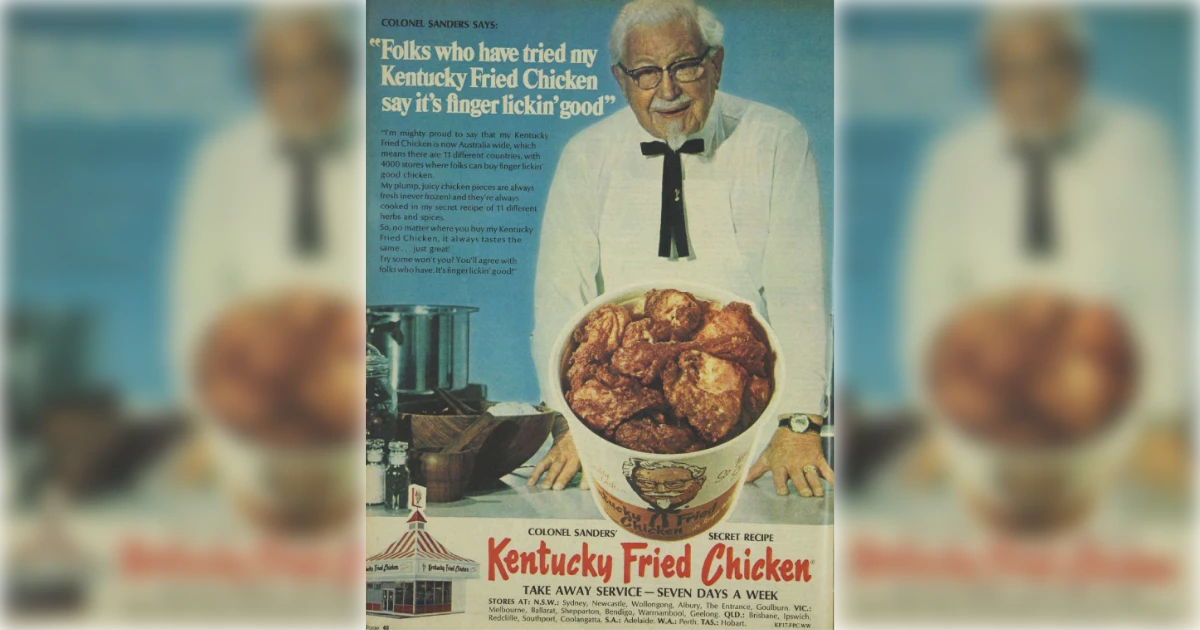
KFC (1950s-present)
Colonel Sanders was KFC’s founder, Harland Sanders, in mascot form. The Colonel wore his signature white suit and goatee as a living mascot. Sanders called KFC’s gravy “wallpaper paste” after selling the company — a line that cost him: a franchisee sued him for libel over it in 1975, and the Kentucky Supreme Court finally threw the case out in 1978. Sanders died in 1980, but KFC did not hand the white suit to celebrity impersonators until May 2015, when Darrell Hammond revived the Colonel in a Wieden+Kennedy campaign. Norm Macdonald and a long rotation of others followed — a 35-year gap, not a handoff.
WENDY
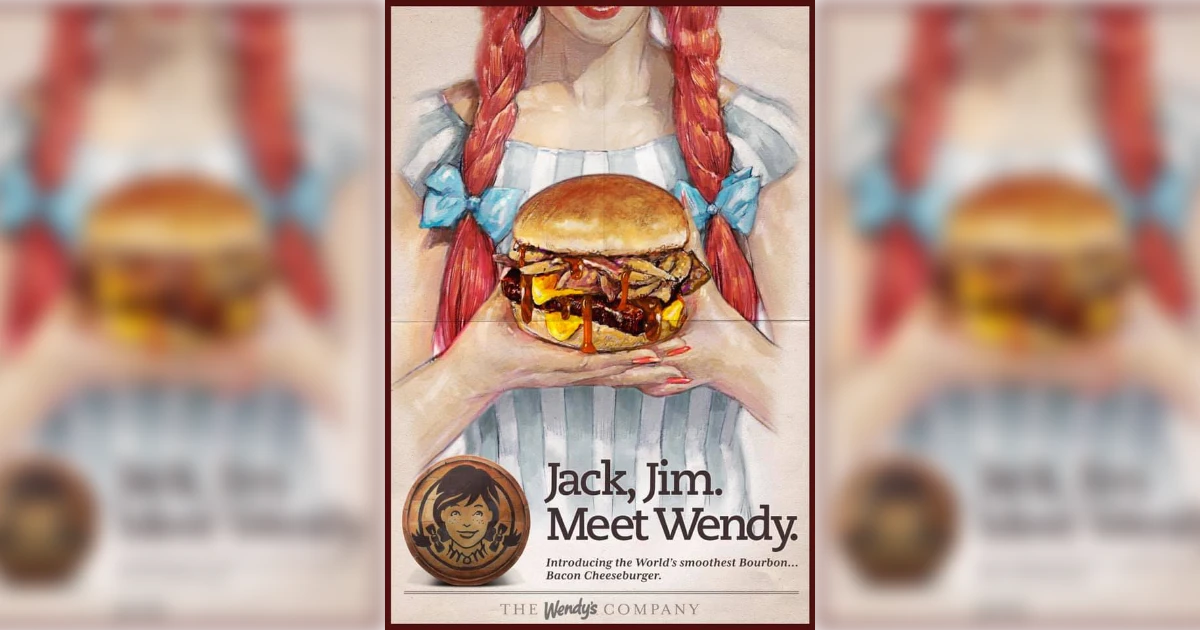
Wendy’s (1969-present)
Wendy’s mascot, Wendy, was named after founder Dave Thomas’s 8-year-old daughter, Melinda “Wendy” Thomas. The girl posed in pigtails for the original logo photograph. Thomas later regretted the decision, saying it pressured his daughter. Wendy Thomas has spent her adult life as the face on 7,000 storefronts, appearing in the chain’s ads herself decades later.
THE BURGER KING
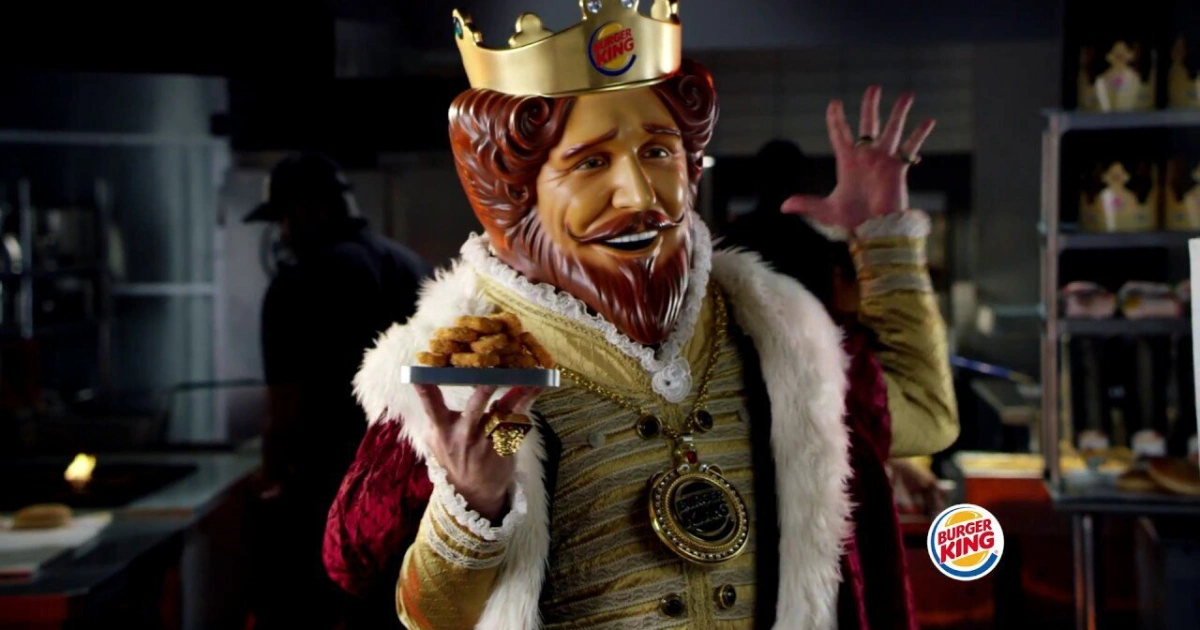
Burger King (1955-2026)
The Burger King mascot started as astatic figure perched on restaurant signage in 1955; the cartoon King arrived in the late 1960s. The mascot was transformed in2003 using a vintage plastic head found on eBay, with the ads debuting in 2004. The silent, plastic-faced King became notorious for “stalking” customers in advertisements. Critics consider the King the creepiest fast food mascot ever.
Burger King finally agreed. On March 15, 2026, the chain used a 90-second Academy Awards spot to fire its own mascot and hand the crown to customers under the banner “There’s A New King And It’s You,” conceding on air that “fast food just fell off, us included.” After 71 years, the King is the rare mascot retired on national television rather than quietly shelved.
JACK BOX
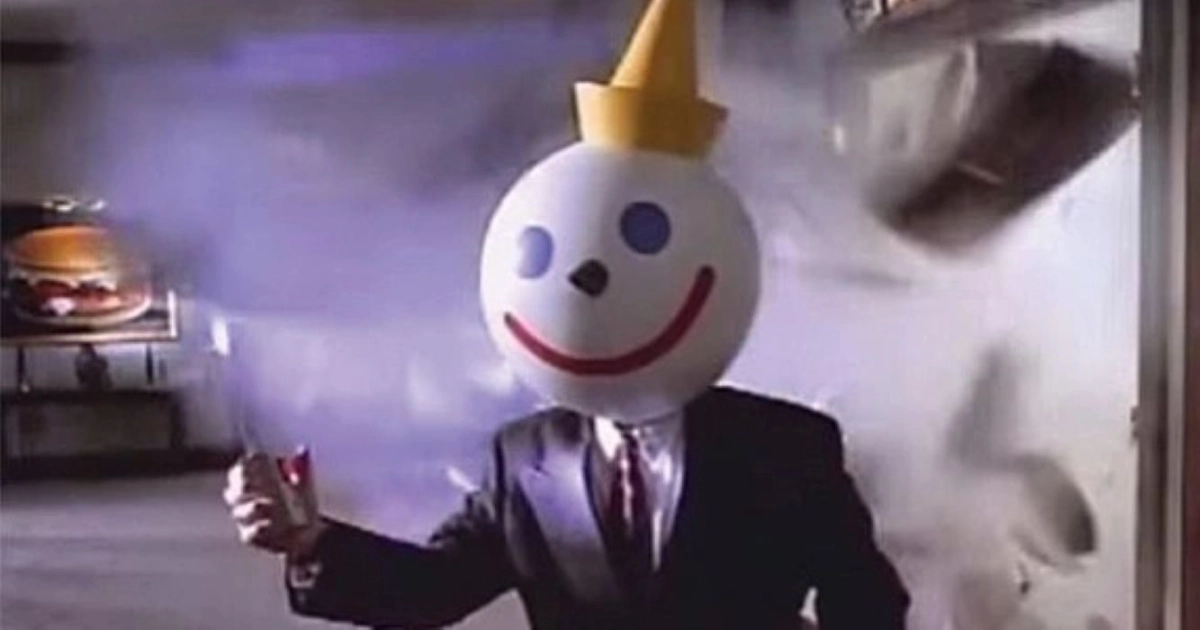
Jack in the Box (1994-present)
Jack Box replaced the original clown mascot that was blown up in a 1980 commercial. The character returned inDecember 1994, courtesy of TBWA\Chiat\Day, as a suited CEO with an oversized vinyl clown head — the chain’s answer to the E. coli outbreak that had hit it in January 1993. Jack Box’s backstory supposedly includes a wife named Cricket, a Ball State University education, and family genetics explaining his head shape.
TACO BELL CHIHUAHUA
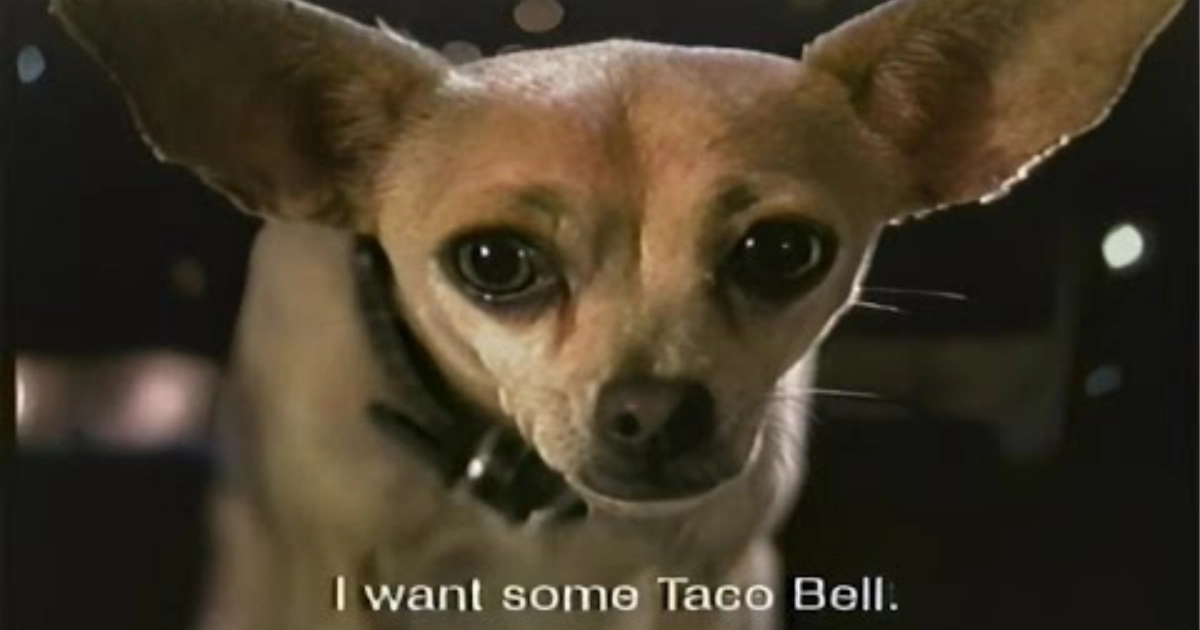
Taco Bell (1997-2000)
The Taco Bell Chihuahua mascot was a female dog named Gidget, voiced by male actor Carlos Alazraqui. The dog became famous for the “¡Yo quiero Taco Bell!” slogan. Gidget even appeared in a Godzilla movie tie-in commercial.
The campaign ended in July 2000 after sales slid despite the dog’s popularity. The famous lawsuit came later and did not end the ads: in 2003 a jury found Taco Bell had used the Psycho Chihuahua concept without paying its creators, a judgment that reached roughly $42 million with interest.
GRIMACE
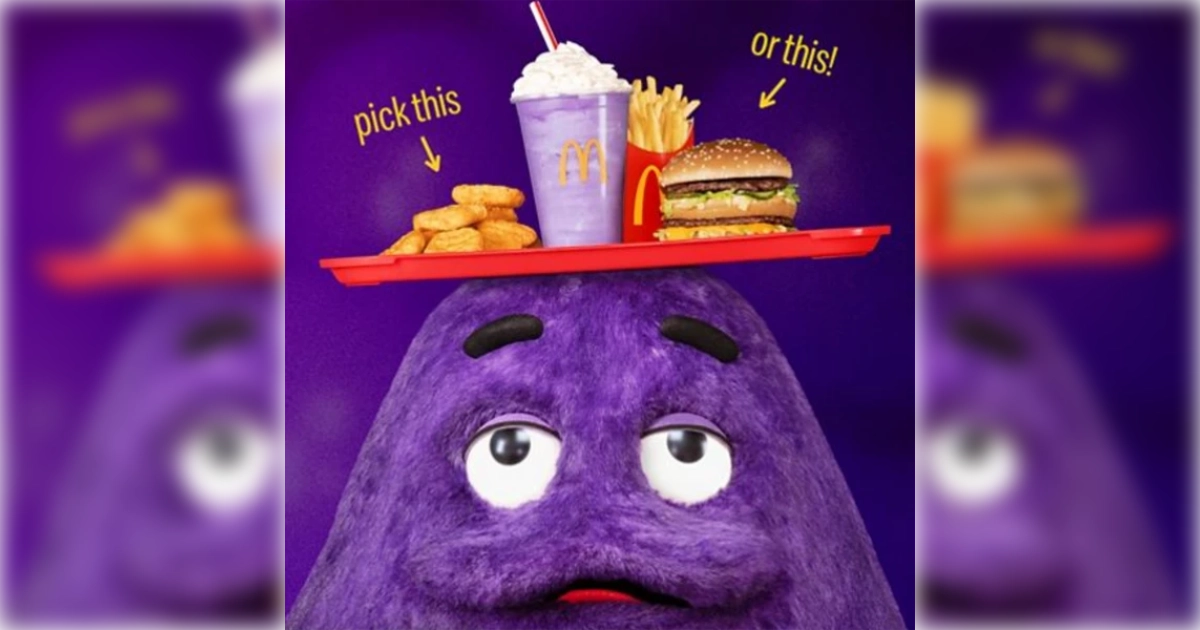
McDonald’s (1971-present)
Grimace originally appeared in November 1971 as “Evil Grimace,” with four arms, who stole milkshakes. McDonald’s redesigned the mascot as friendly the following year after he scared children. Grimace was part of the McDonaldland universe that was successfully sued for copying H.R. Pufnstuf: Sid and Marty Krofft sued in September 1971, a jury awarded $50,000 in November 1973, the Ninth Circuit affirmed in October 1977, and the final award on remand came to $1,044,000. But the character made a comeback for his 50th birthday in 2023.
THE HAMBURGLAR
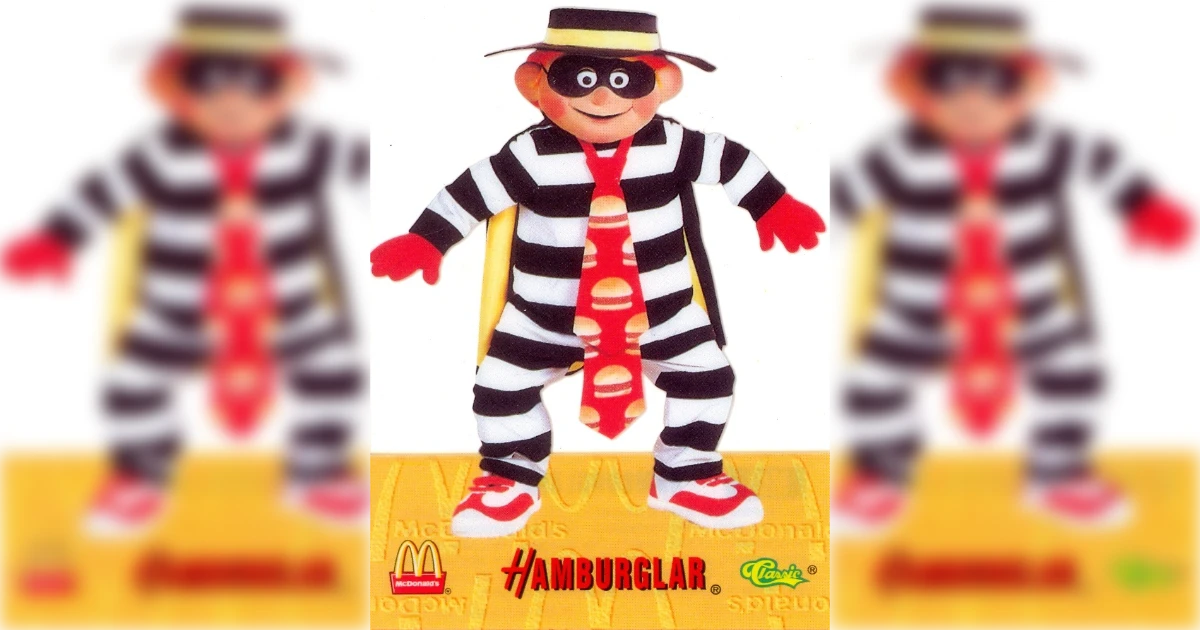
McDonald’s (1971-present)
The Hamburglar is a striped prison suit villain who steals hamburgers while shouting “Robble robble!” The character was part of the original McDonaldland cast of characters. McDonald’s later softened the Hamburglar from a true villain to a mischievous character. The Hamburglar has emerged in recent years as a popular Halloween costume choice.
MAC TONIGHT
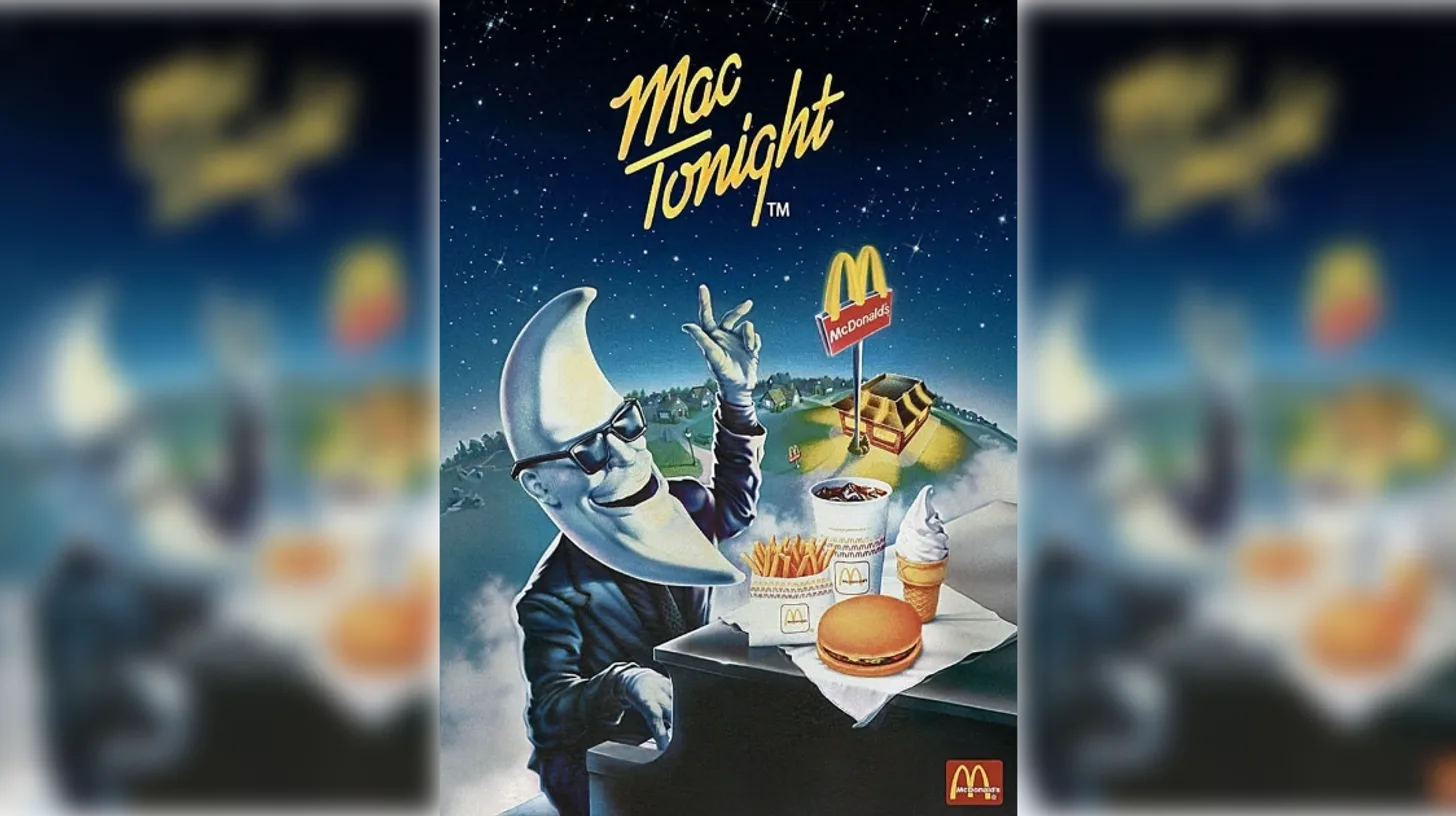
McDonald’s (1986-1997)
Mac Tonight was McDonald’s dinner-shift mascot — a crescent-moon head in sunglasses at a piano, crooning to the tune of “Mack the Knife.” Built in 1986 for roughly $500,000 to make Americans think of McDonald’s after dark, he lifted dinner business more than 10%. Doug Jones performed 27 of the 29 spots in a ten-pound mask worked by three puppeteers.
Bobby Darin’s estate sued in 1989 — not over the music but over the voice, a right-of-publicity claim. It settled for an undisclosed sum, and the moon was gone from American screens by 1997.
LITTLE CAESAR
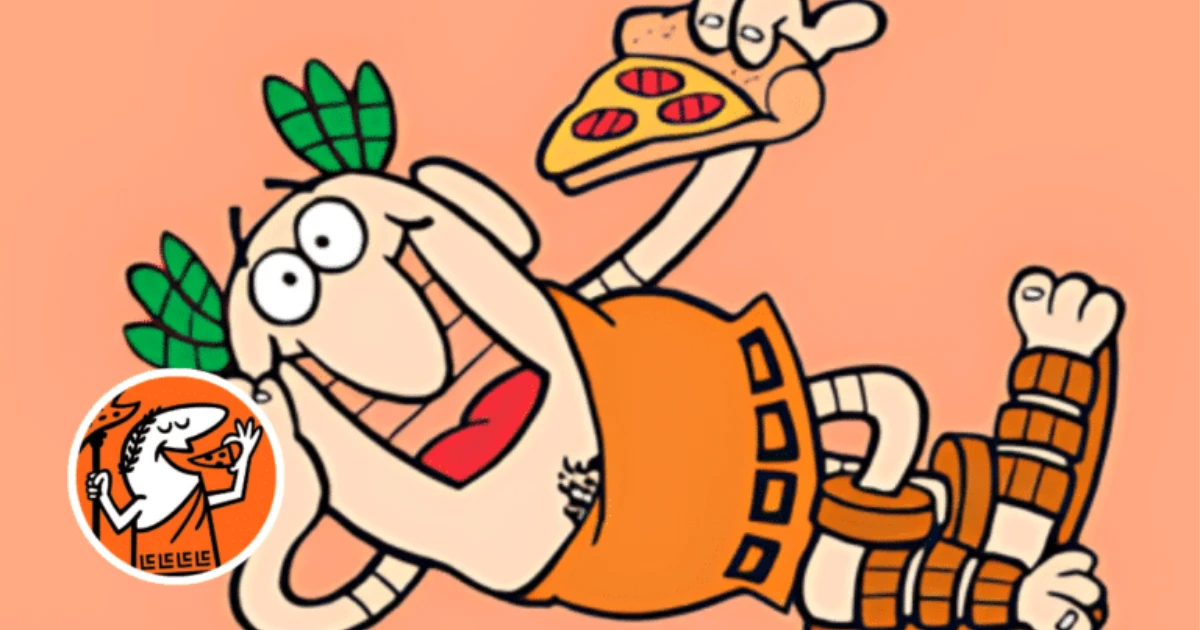
Little Caesars (1959-present)
The Little Caesars mascot was drawn on a napkin in 1959 by friend Don Silverstein, who was paid $200 for the sketch ahead of the chain’s first opening in Garden City, Michigan, on May 8, 1959. The mascot is routinely misdated to 1971 — that year brought a logo revision, not the character. The Roman toga-wearing character has used the “Pizza! Pizza!” slogan since 1979. The mascot’s striped throat lines remain an internet mystery. Most recently, the 2017 logo update hid “LC” letters in the toga design.
CHUCK E. CHEESE
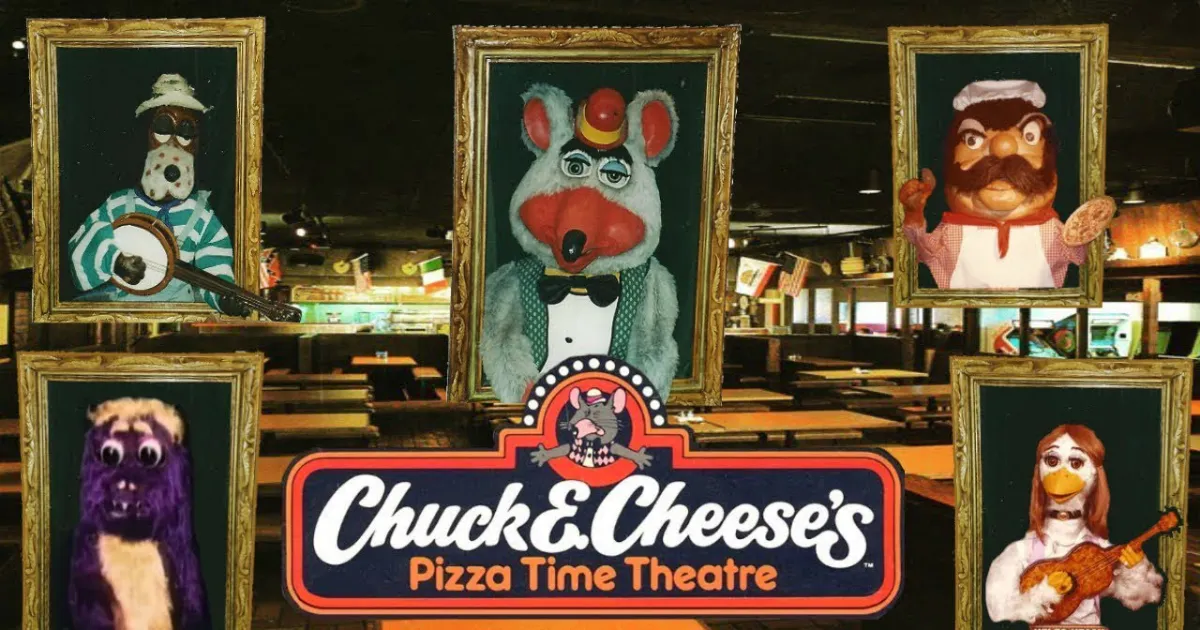
Chuck E. Cheese (1977-present)
Chuck E. Cheese was born when Atari founder Nolan Bushnell bought the wrong costume, thinking it was a coyote when it was actually a rat — an origin story that comes from Bushnell himself. The character’s official backstory makes him an orphan from St. Marinara’s who doesn’t know his birthday, though that detail was added around 2012, not part of the 1977 concept. Chuck E. changed from rat to mouse in 1993 and received a rockstar makeover in 2012.
BIG BOY
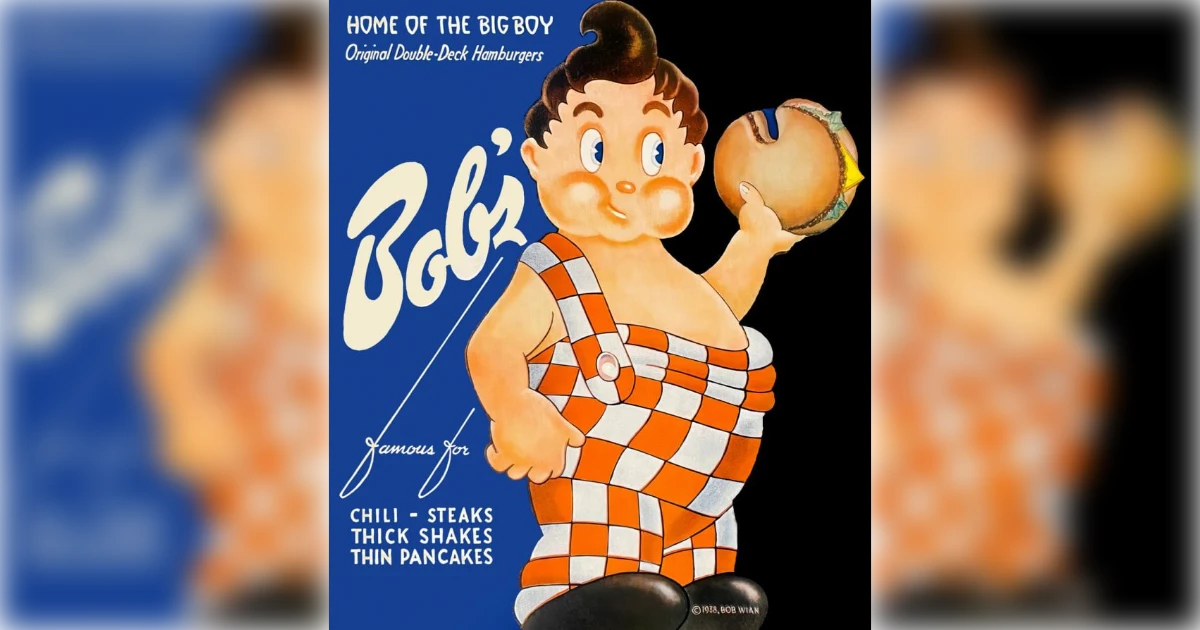
Big Boy Restaurants (1937-present)
Big Boy was named after 6-year-old Richard Woodruff, who walked into Bob’s Pantry — the restaurant opened on August 6, 1936, but the name and the character followed about six months later. A Warner Bros. animator, Ben Washam, sketched the boy’s caricature for the mascot. The character also carried one of the longest-running promotional comic books in American advertising, published from 1956 into the 1990s across more than 500 issues.
CHICK-FIL-A COWS
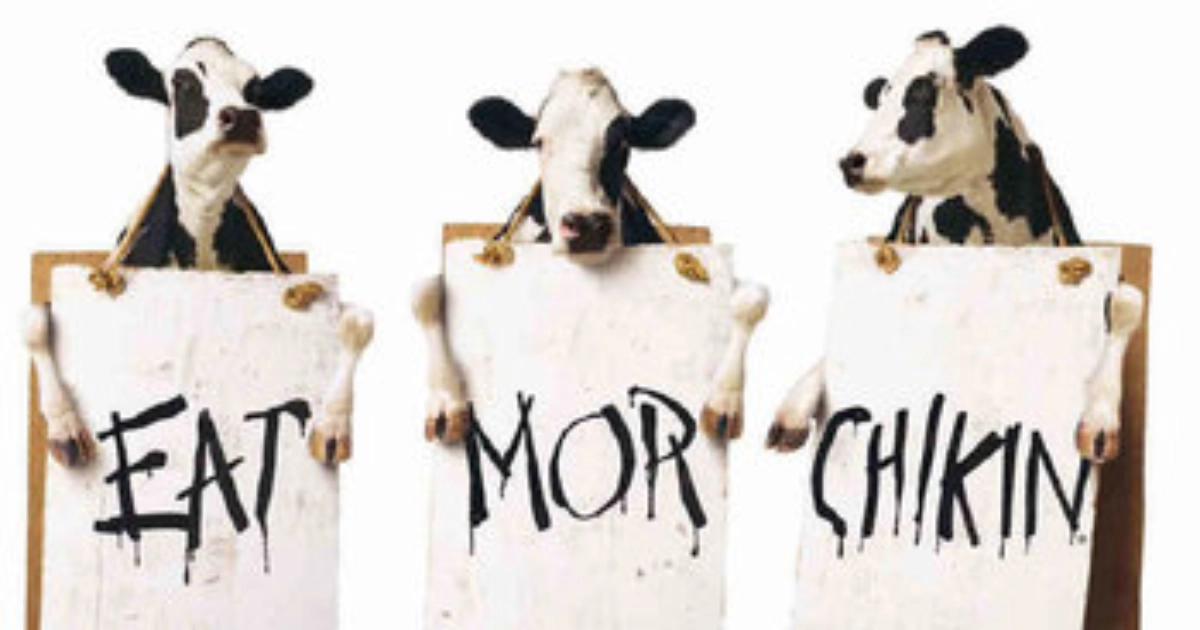
Chick-fil-A (1995-present)
The Chick-fil-A Cows replaced the original chicken mascot “Doodles” with billboards reading “Eat Mor Chikin.” The premise is darker than its friendly execution suggests: the cows are livestock lobbying for the slaughter of a different species to save themselves. Doodles, named in a 1972 employee contest, still hides in the current logo — the stylized “C” of Chick-fil-A is his head.
THE NOID
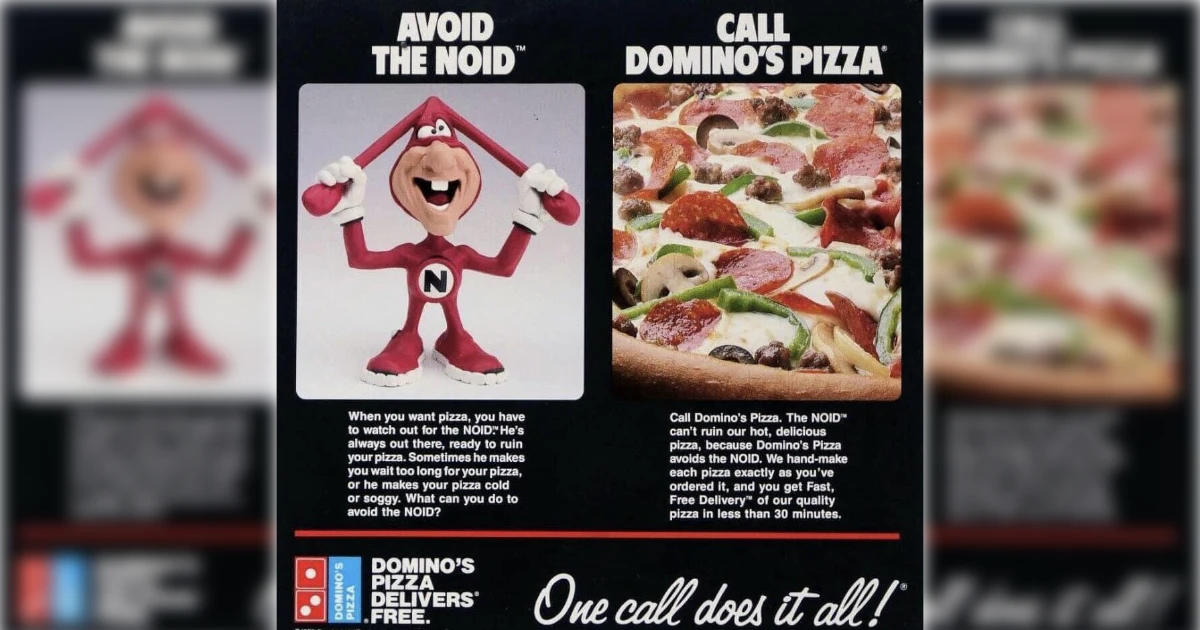
Domino’s (1986-1995)
The Noid was a claymation character designed to ruin pizza deliveries while promoting Domino’s 30-minute guarantee.
In January 1989, a man named Kenneth Noid held two employees at a Georgia Domino’s for five hours, convinced the ads were about him. Nobody was hurt; he was found not guilty by reason of insanity, having paranoid schizophrenia, and died in 1995. The story that the incident killed the mascot is wrong, and Domino’s has denied it — the Noid ran until 1995 and returned in 2021.
ROOTY THE GREAT ROOT BEAR
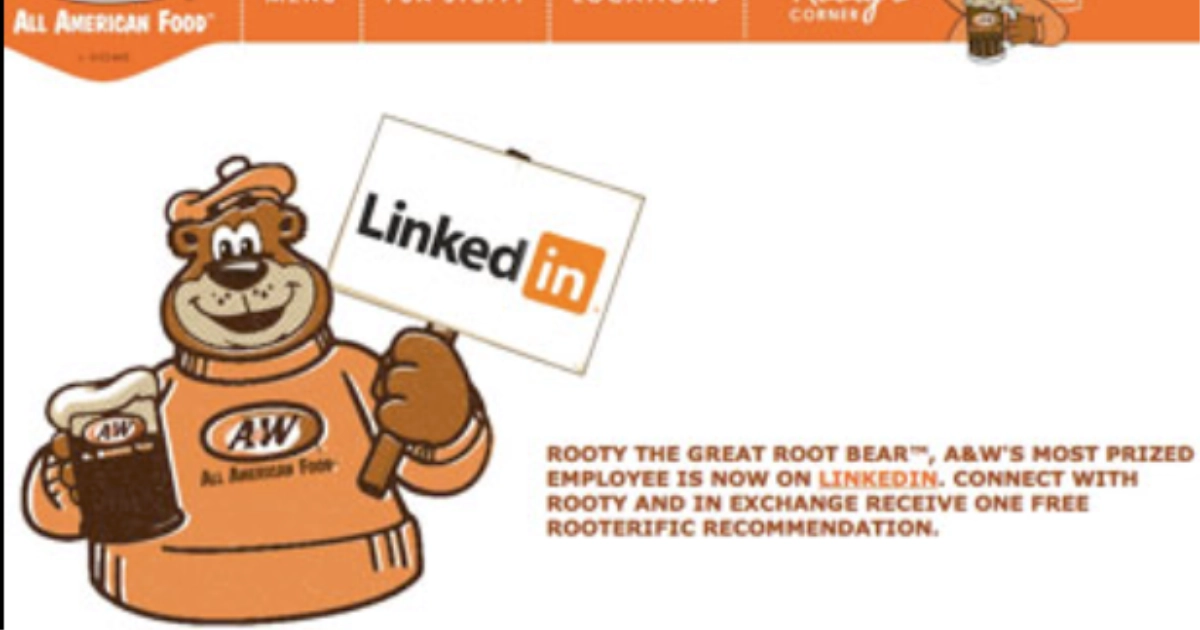
A&W (1974-present)
Whereas its biggest drive-in competior, Sonic Drive-In, likes you use real spokespeople, A&W has used a playful bear mascot to promote the its brand.
Rooty is a brown bear in an orange sweater designed by the same company that made Disneyland costumes. LinkedIn deleted Rooty’s profile in 2013 for being fictional. In January 2023, A&W announced that Rooty would start wearing jeans — a gag written to parody M&M’s, which had just paused its own spokescandies over a culture-war flap. The bear’s trousers were the joke, not the response to one; there was no controversy until A&W invented it.
JARED FOGLE
Subway (2000-2015)
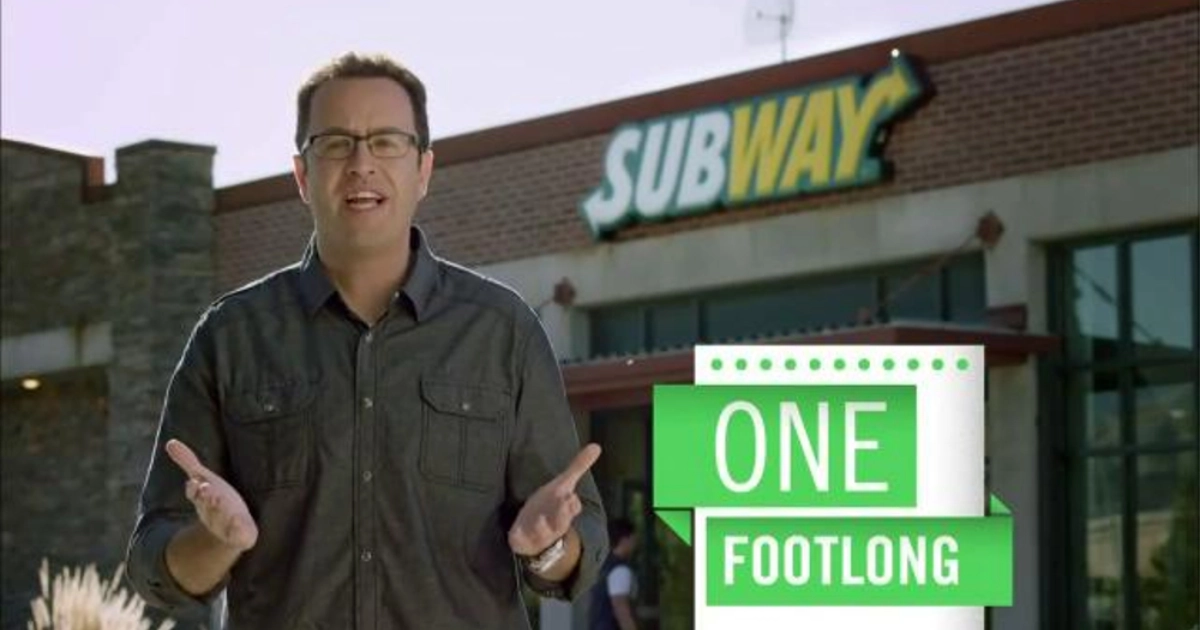
Jared Fogle lost 245 pounds eating Subway sandwiches. His story first ran in the Indiana Daily Student in April 1999; Men’s Health picked it up that November. The spokesman appeared in over 300 commercials for Subway in 15 years. Subway CMO Tony Pace credited the campaigns with one-third to one-half of the chain’s growth. His career ended abruptly in 2015, when he wascharged with child exploitation offenses and sentenced that November to 188 months in federal prison.
FRED THE BAKER
Dunkin’ Donuts (1982-1997)
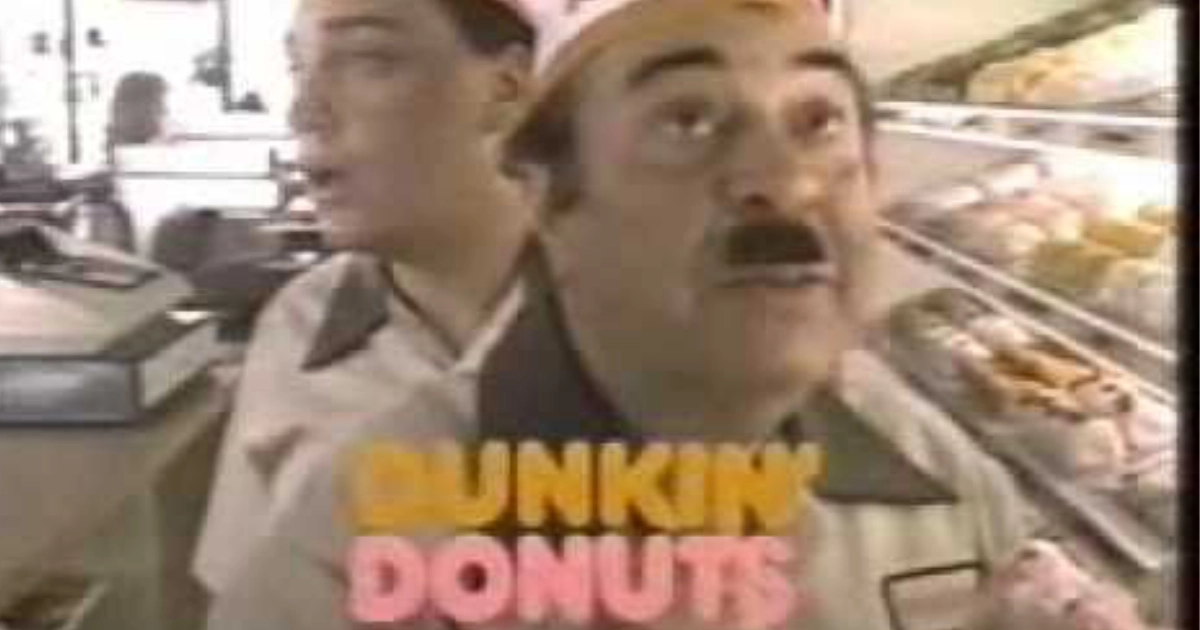
Fred the Baker was portrayed by actor Michael Vale with the famous “Time to make the donuts” catchphrase. The character emphasized freshness by showing early morning dedication. Fred’s phrase entered the American vernacular. The baker mascot represented Dunkin’ Donut’s reliability and quality commitment.
ARBY’S OVEN MITT
Arby’s (2003-2005)
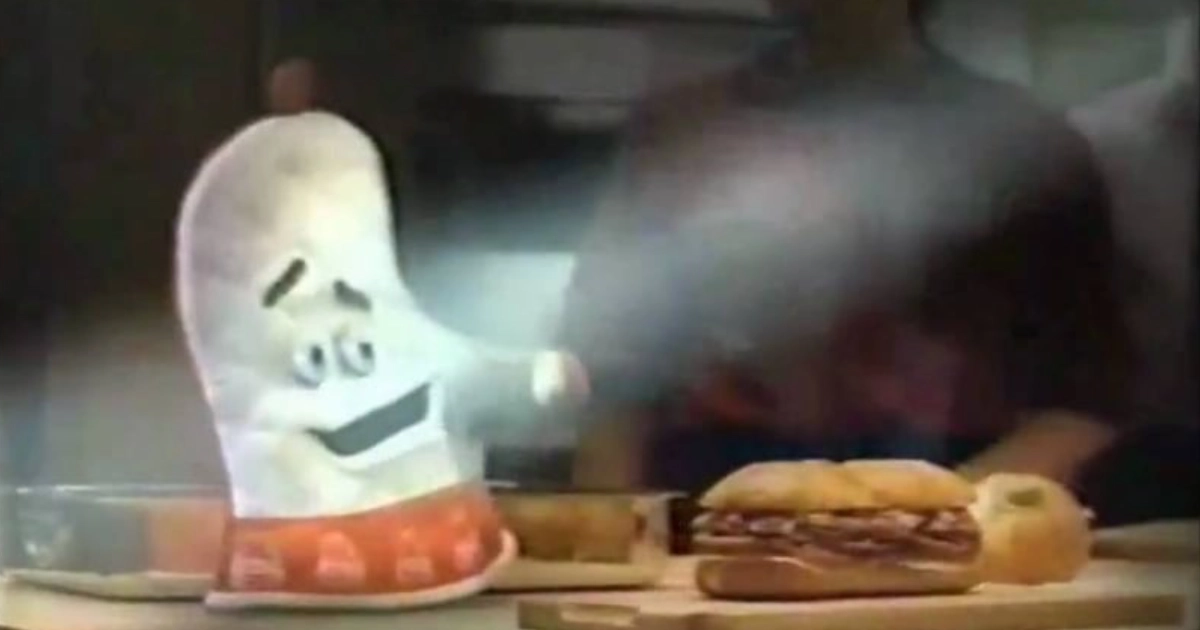
The Arby’s Oven Mitt mascot was a red and white kitchen mitt with a mouth, voiced by Tom Arnold. The mitt fronted an $85 million push for fresh roast beef and lasted barely two years. It is frequently paired with the “It’s Good Mood Food” fast food slogan, but that was a separate BBDO campaign launched in 2011, six years after the mitt was retired. The mitt had a love-hate relationship with viewers but achieved effective brand recognition. The simple design proved to be a memorable marketing approach.
FUDGIE THE WHALE
Carvel (1977-present)
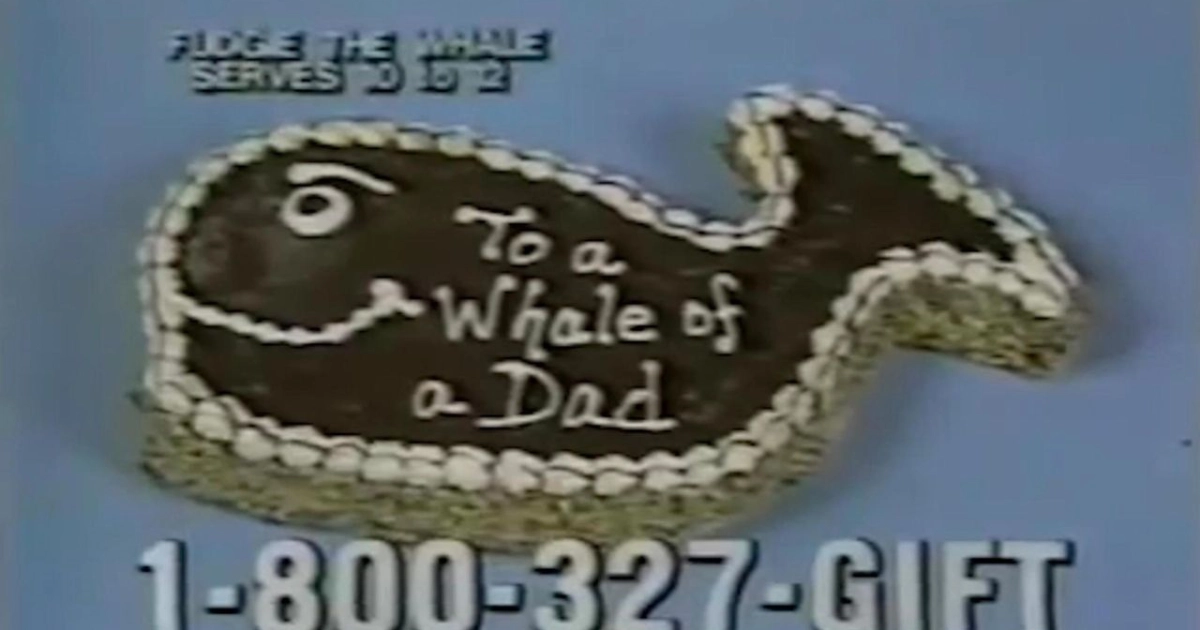
Fudgie the Whale started as a Father’s Day whale-shaped cake. The character inspired merchandise and nostalgic childhood memories. Fudgie was part of Carvel’s character lineup, including Cookie Puss. The whale represents celebration and special occasion ice cream treats.
CURLY TOP
Dairy Queen (1996-present)
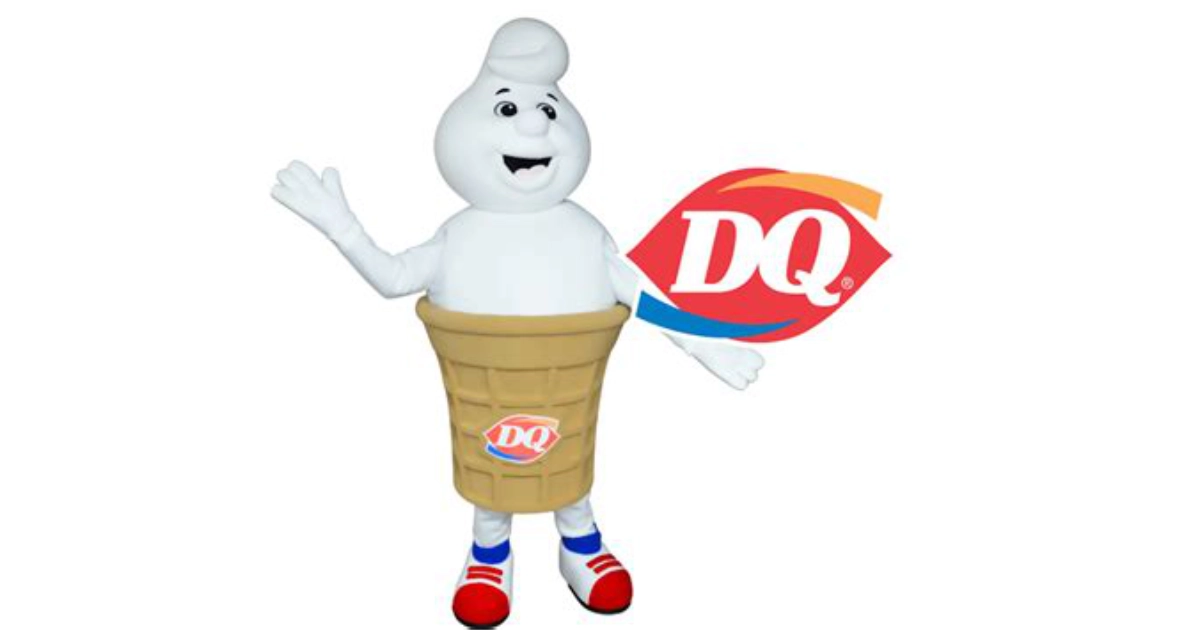
Curly Top is an anthropomorphic soft-serve cone Dairy Queen mascot. The character literally embodied Dairy Queen’s signature product. Curly Top was popular at grand openings and special events. Trademark filings put his first use in commerce at August 17, 1996, with registration following in 1999 — and he is still in service, which makes the common claim that he was a 1970s character retired decades ago wrong twice over.
THE DQ LIPS
Dairy Queen (1978; c. 2006-2011)
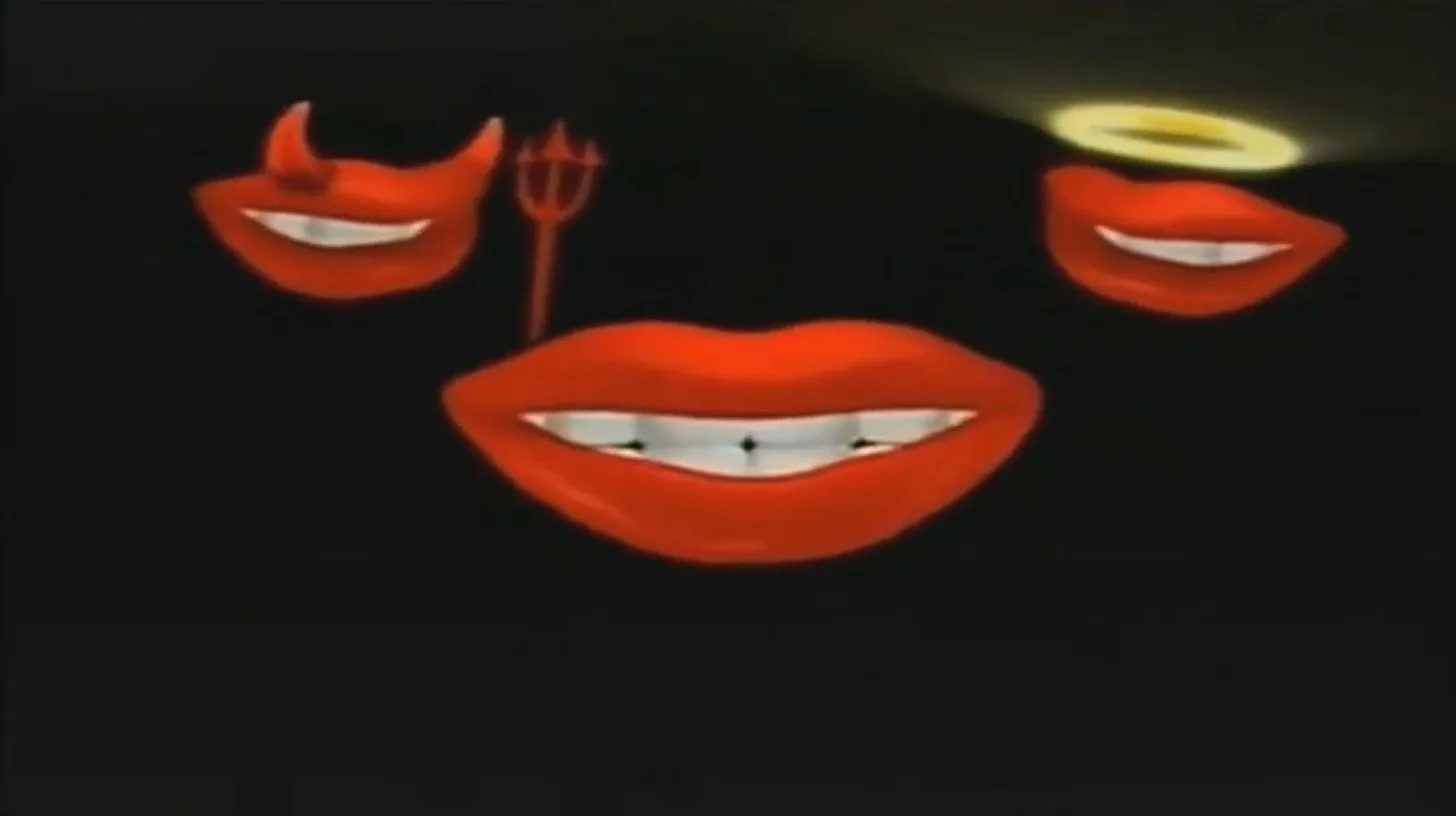
The DQ Lips were Dairy Queen’s logo brought to life: the mark has been a lips shape since 1960, and the ads simply detached it and let it float. After a one-off 1978 appearance, a national CGI campaign ran from roughly 2006 to July 2011 — disembodied red lips, voiced by a man.
Viewers had opinions. TIME named the Lips to its “Top 10 Creepiest Product Mascots” list in August 2011, and they were retired within the year.
HAPPY STAR
Carl’s Jr. (1956-present)
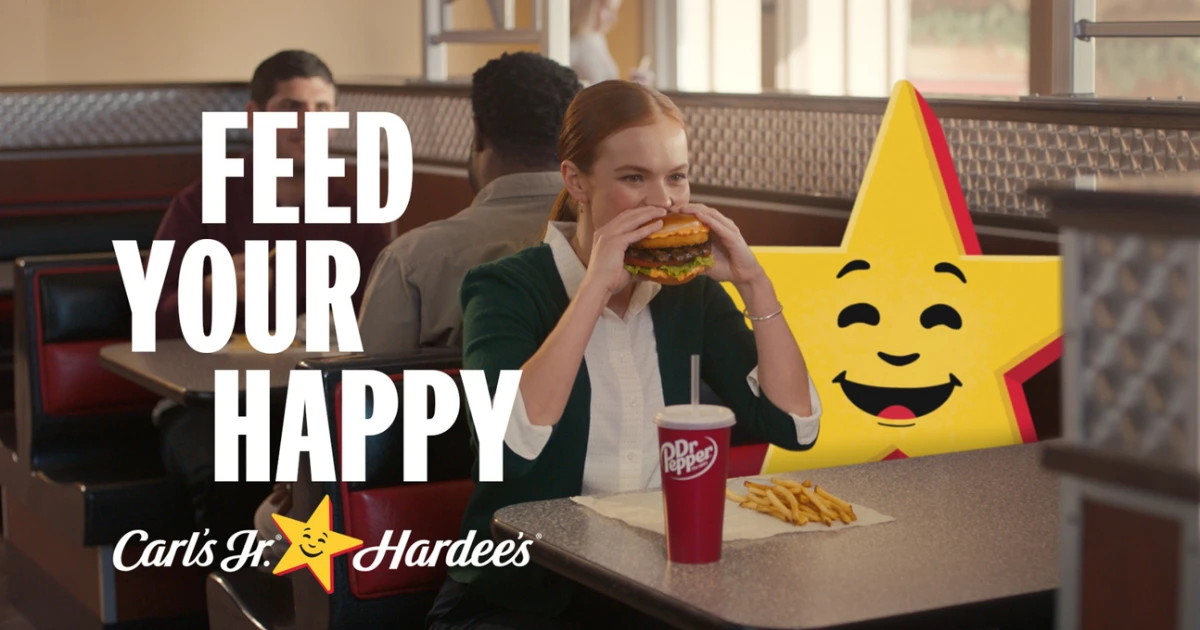
Happy Star was one of the earlier fast food mascots, predating many famous characters: the smiling five-pointed star has been on Carl’s Jr. signage since the first restaurant opened in 1956. He is usually miscredited to Hardee’s, and the confusion has a date: CKE Restaurants bought Hardee’s in April 1997 and moved the Happy Star onto Hardee’s signage in July 1998, tilted slightly left. Unlike most of this list, the Star was never retired — he still fronts both chains, which have run joint national campaigns built around him.
BLIMPIE BEAR
Blimpie (1980s-2000s)
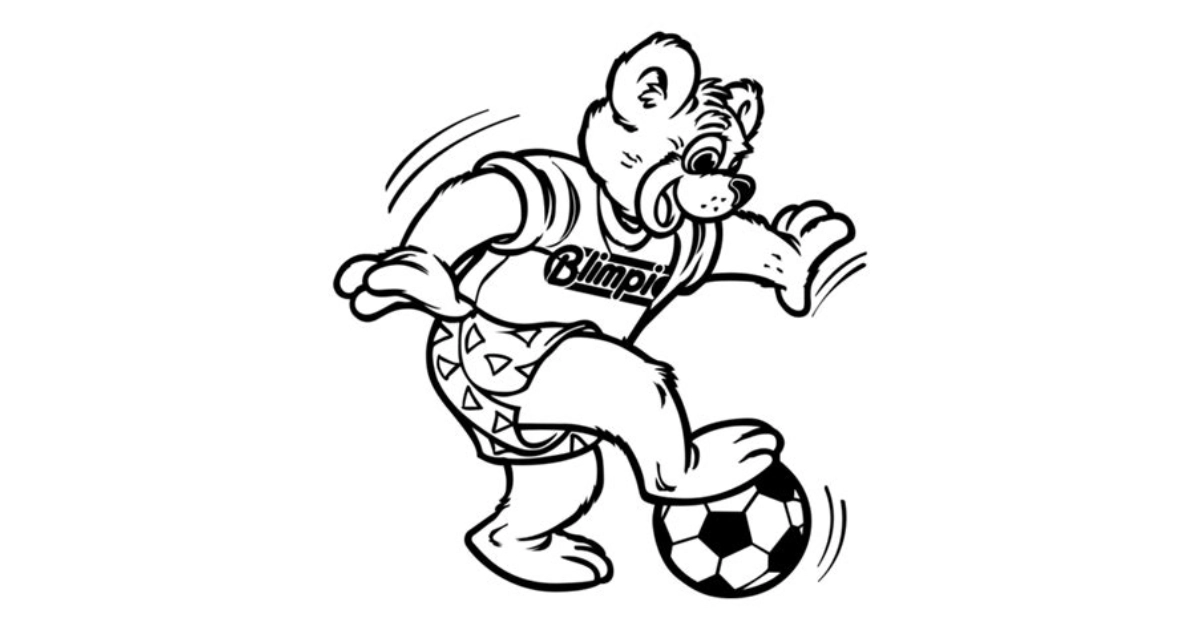
Blimpie Bear was a friendly bear in a white shirt and striped shorts who started as a cartoon before becoming a live mascot. The bear appeared in print ads and restaurant events. Blimpie Bear represented a family-friendly submarine sandwich experience. The simple animal mascot approach proved effective.
CHEF MARCO
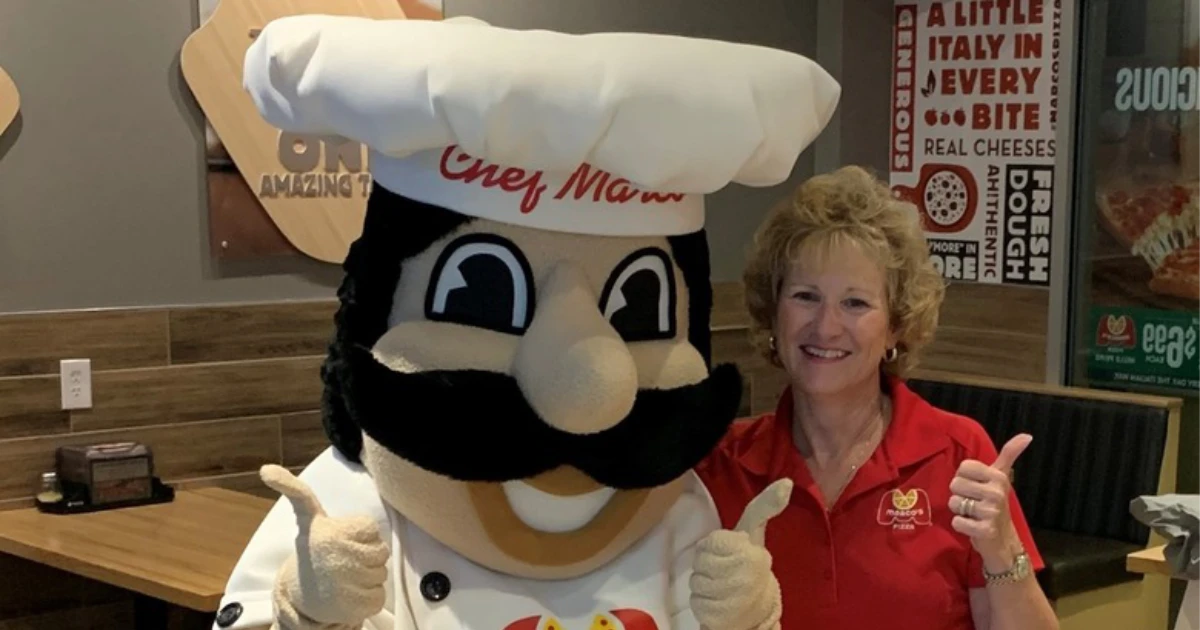
Marco’s Pizza (1983-present)
Chef Marco is a caricature of founder Pasquale “Pat” Giammarco. Giammarco founded the chain in Oregon, Ohio in 1978; the CHEF MARCO’S trademark was filed on March 14, 1983, which is where the character’s date comes from. The always-smiling character represents authentic Italian heritage. Chef Marco communicates traditional recipes and quality ingredients.
FRANKSTER
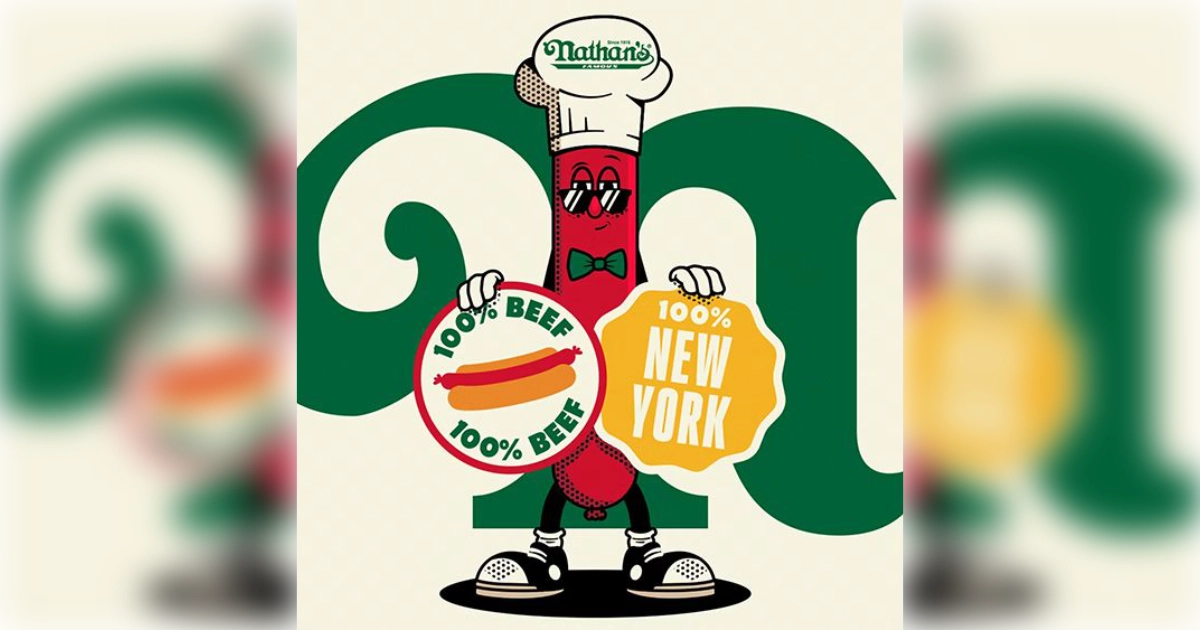
Nathan’s Famous (1973-present)
Frankster is a hot dog character first mentioned in the1973 Daily News, where he appeared under the name “Frankie Man”. The mascot is famous for appearances at the annual Coney Island hot dog-eating contest. A 2025 rebrand by adam&eveDDB brought him back officially as Frankie. Similar to how Papa John’s uses a pizza slice as their mascot.
SPONGMONKEYS
Quiznos (2004-2005)
The Spongmonkeys were bizarre rodent-like creatures created by British animator Joel Veitch for his site rathergood.com, lifted wholesale from the viral “We Like the Moon” video. The characters sang about Quiznos subs in polarizing commercials. The creatures’ love-or-hate reception generated massive discussion. Quiznos pulled them after roughly a year — then brought them back in 2023, nearly two decades later, to promote a chain a fraction of its former size.
WHATAGUY
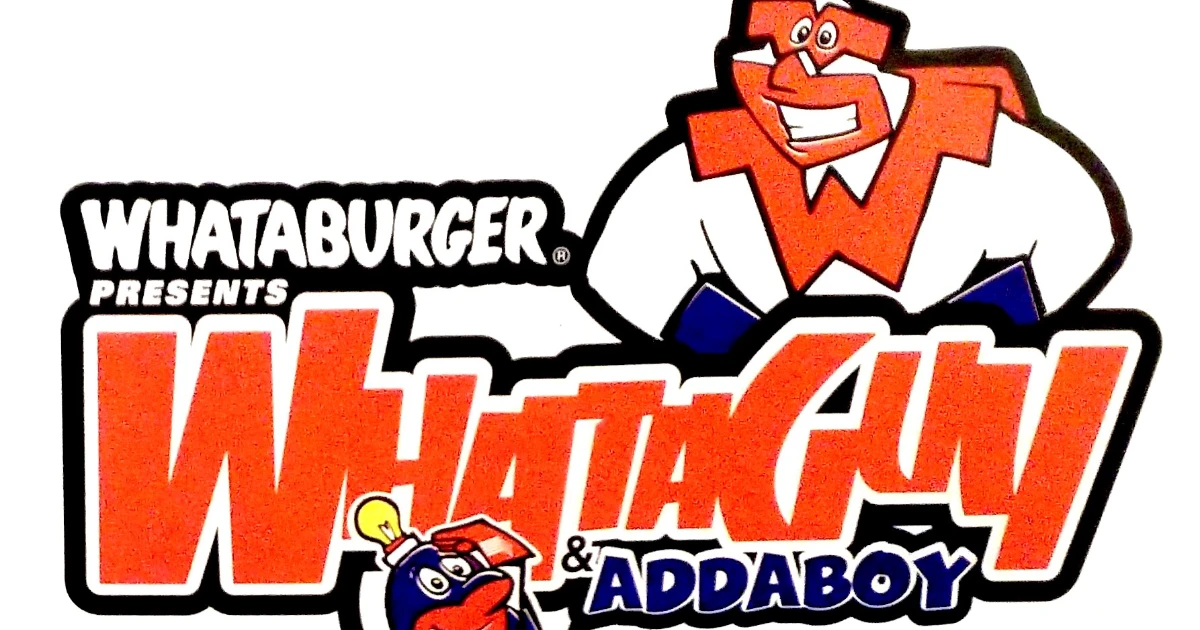
Whataburger (1999-present)
Whataguy is a Texas-based mascot appearing on kids’ meals and game sites. The character serves as an ambassador for the Whataburger Feeding Student Success program. Whataguy represents community involvement and student achievement. The mascot embodies Texas spirit: friendly, approachable, and community-minded.
THE SIREN
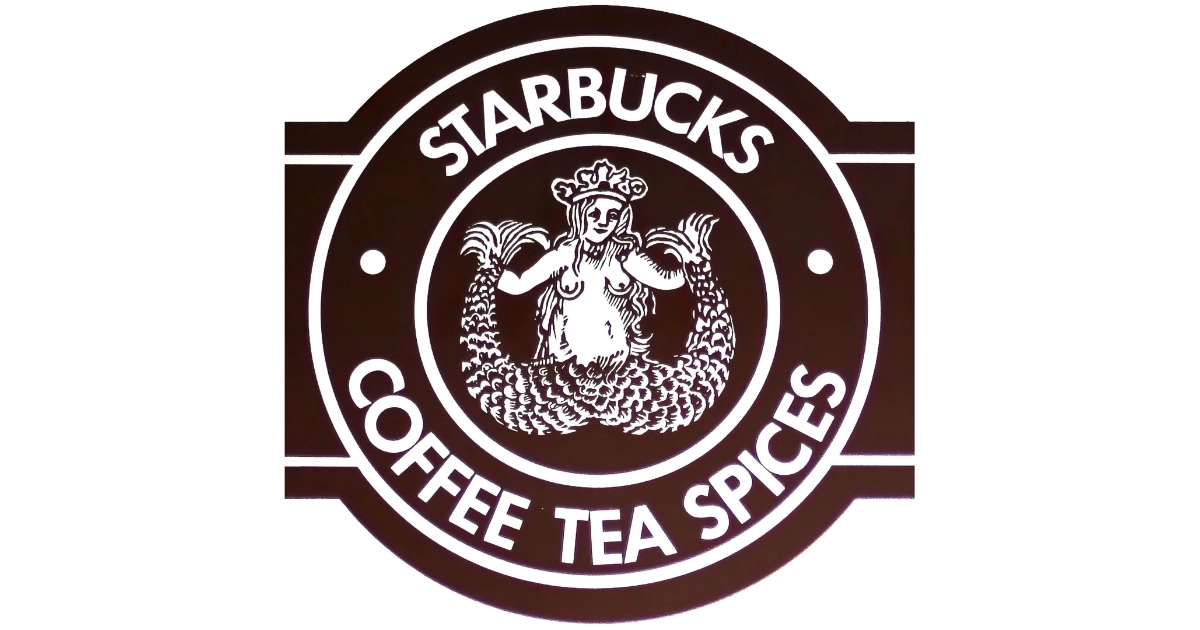
Starbucks (1971-Present)
The Starbucks siren evolved from a bare-breasted twin-tailed mermaid in 1971 to today’s simplified green icon, shedding text and detail while gaining global recognition as coffee culture spread from Seattle to the world. Starbucks has long described her as a 16th-century Norse woodcut, but that origin does not survive checking: the woodcuts postdate the Norse entirely, and the figure is a Melusine — a two-tailed water spirit from French and German folklore — most likely found in a 1971 edition of J.E. Cirlot’s A Dictionary of Symbols.
PIZZA PETE
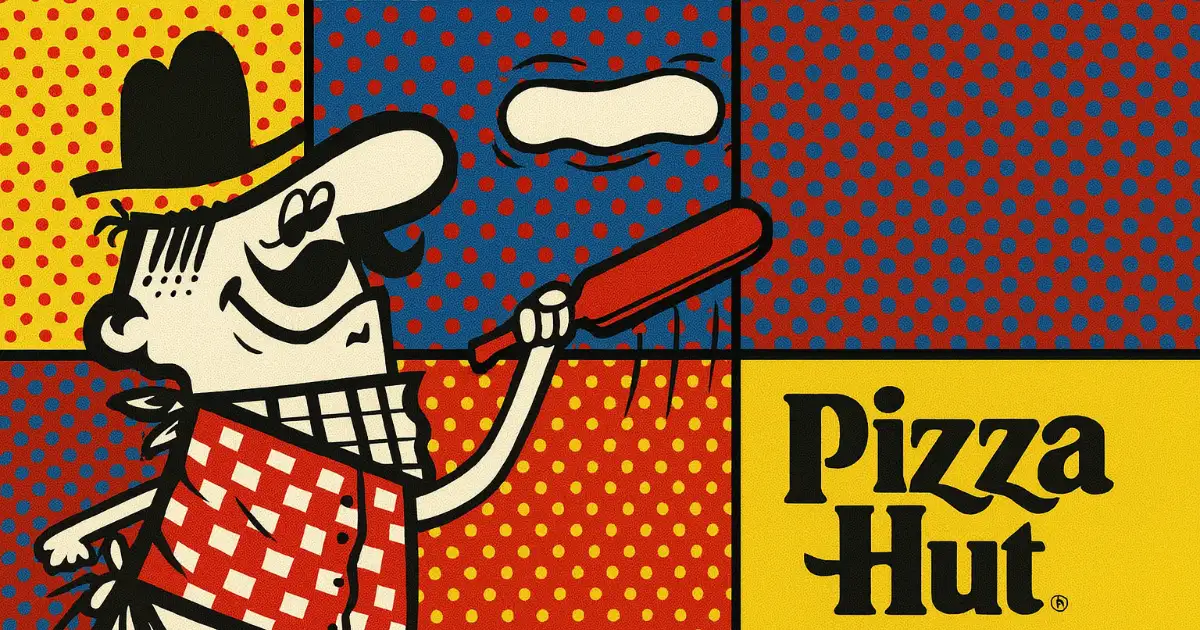
Pizza Hut (1963-1970s)
Pizza Pete was Pizza Hut’s first mascot who launched in 1963 when artist Edwin T. Pointer drew him as an Italian chef. The character wore a red checkered shirt, white apron, and mustache while smiling from cups, bags, and restaurant signs. Children received Pete hand puppets made from printed plastic bags. Pete was redrawn in the 1970s and phased out gradually rather than abolished; 1969 is the year Richard D. Burke designed the red roof that would replace him as the chain’s visual signature.
POPEYE THE SAILOR
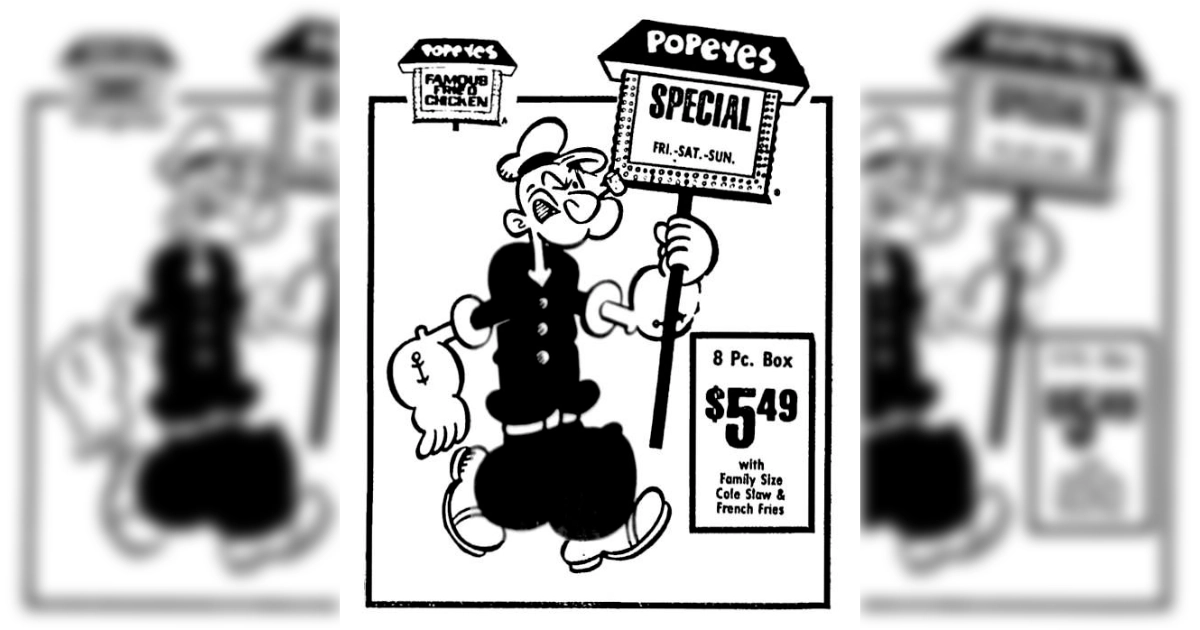
Popeyes (1976-2012)
The Popeye the Sailor mascot was licensed by AFC from Hearst Corporation in 1976 for 36 years. The cartoon sailor appeared in commercials, store decorations, and promotional materials while Popeyes introduced the “Love That Chicken” slogan. By the time the deal ended in 2012, the chain was paying $1.1 million a year for a sailor it had largely stopped using — it had rebranded as Popeyes Louisiana Kitchen in 2008 and let the licence lapse rather than renew it.
CHU
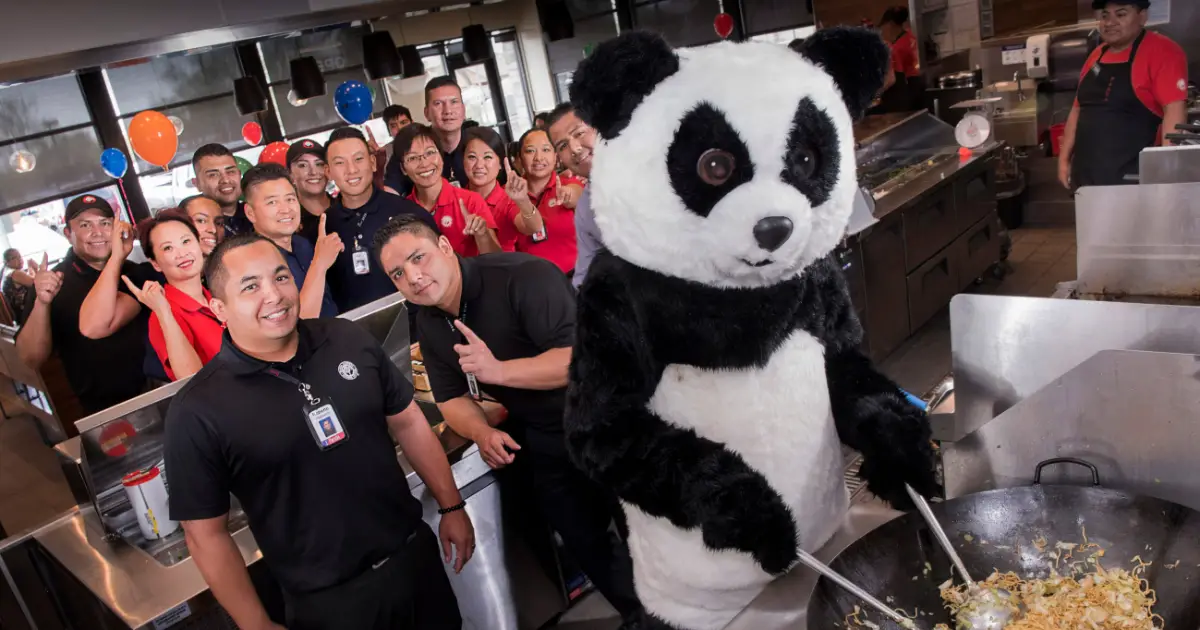
Panda Express (2010-present)
Chu was created by Panda Express in the 2010s as a mascot representing a different marketing approach. Panda Express does run national television advertising, but it centers the food and the family story rather than the panda; Chu’s job is physical, and he does it at grand openings. By its own account, Boulder Blimp manufactured over 100 giant 12-foot-tall inflatable pandas for locations worldwide. Chu offered customers a physical, present, and huggable brand experience rather than traditional advertising campaigns.
THE RAPPING TORTILLA
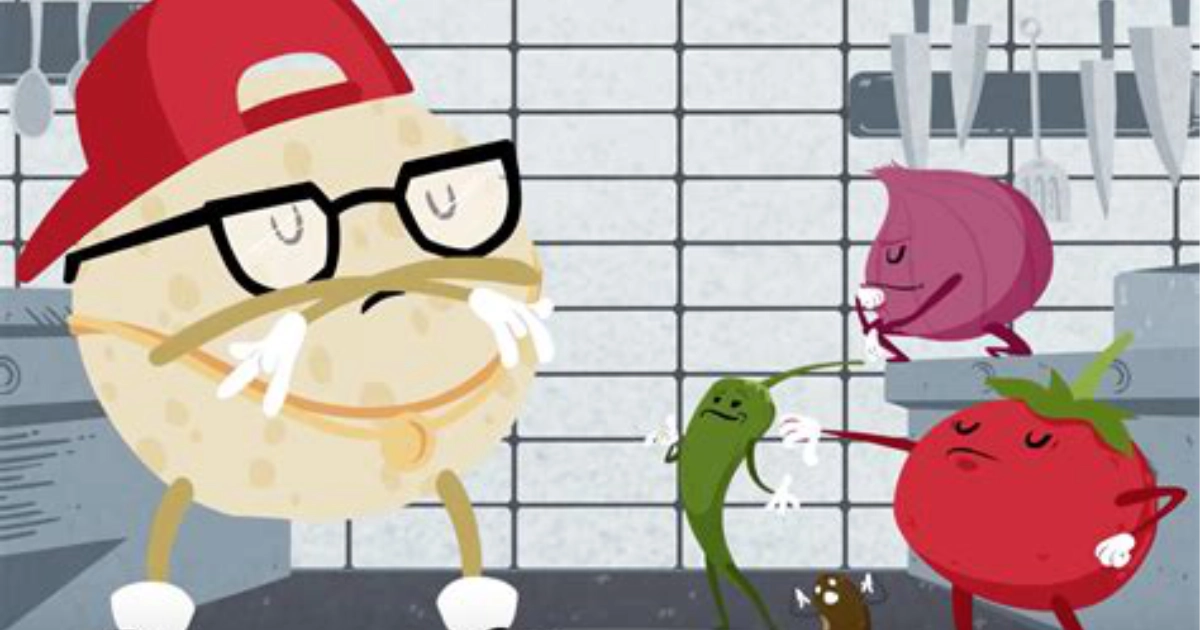
Chipotle (2017)
The Rapping Tortilla was a cheerful tortilla caricature who promoted Chipotle’s preservative-free tortillas in 2017. Chipotle used the tortilla briefly for a music video before dropping the mascot. The character never became a marketing fixture and disappeared after its single campaign appearance, which makes it the shortest-lived mascot on this list.
JOLLIBEE
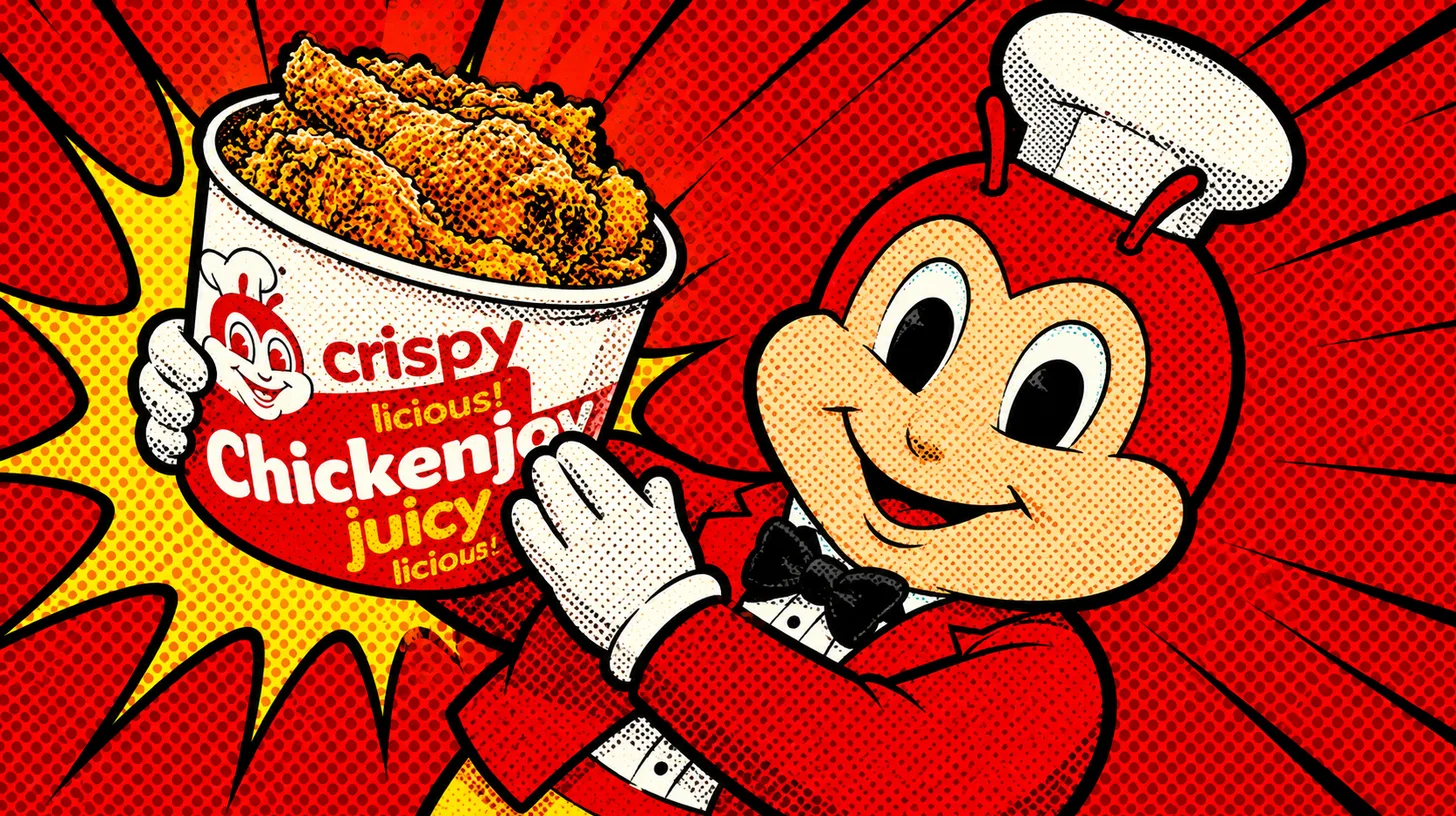
Jollibee (1980-present)
Jollibee’s grinning red bee is the most recognized fast food mascot most Americans have never heard of. The Philippine chain converted from an ice cream parlor in 1978 and adopted the bee in 1980. Founder Tony Tan Caktiong explained the choice plainly: the bee “hops around and produces sweet things for life, and is happy even though it is busy.”
At home the bee simply wins — Statista puts Jollibee’s share of the Philippine fast food market near 31%, against roughly 10% for McDonald’s.
SONIC DRIVE-IN
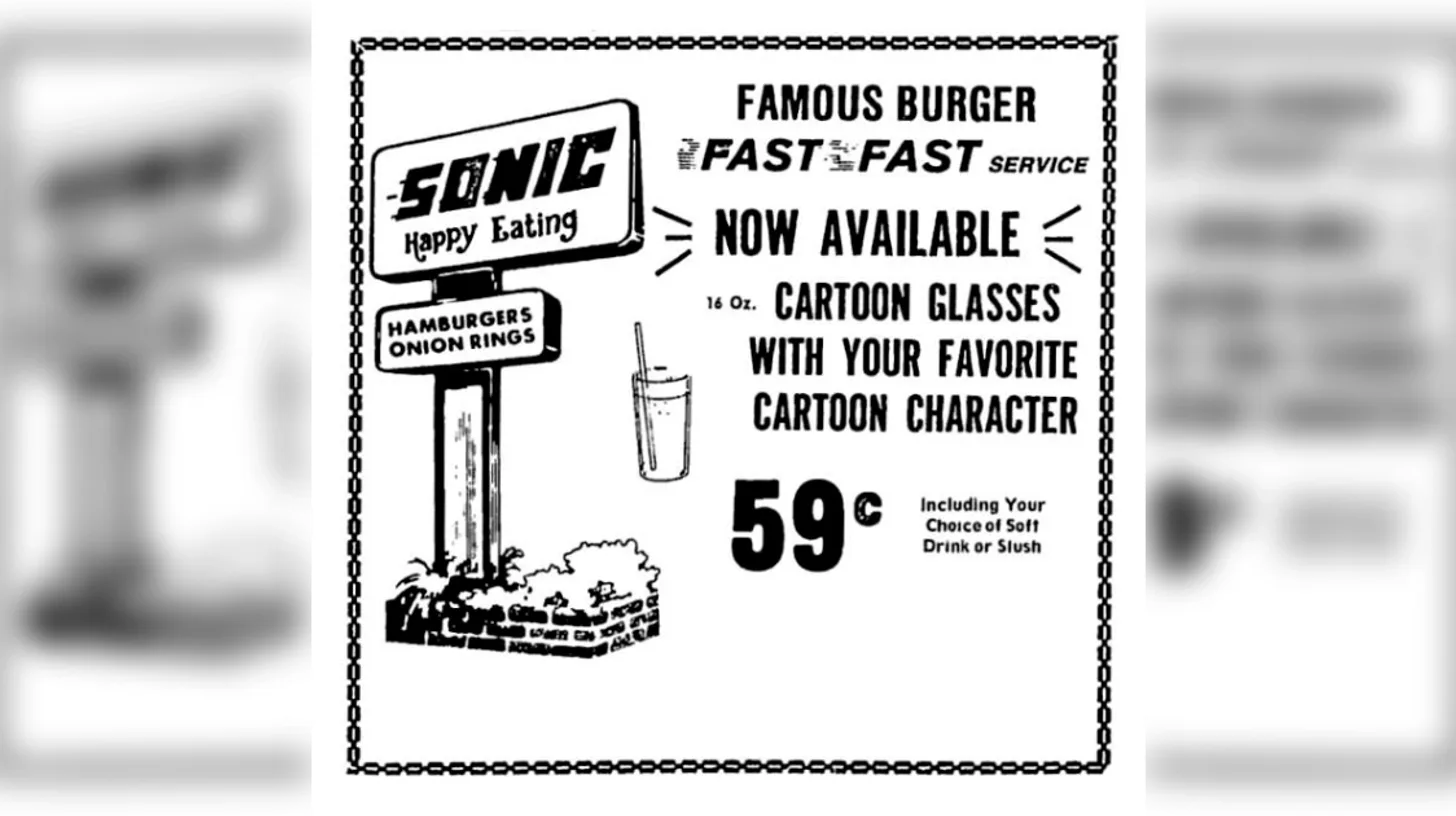
Sonic Drive-In (1953-present)
Sonic Drive-In has no mascot and never has — the rare national chain with nothing to put in a costume. It used two men in a parked car instead.
The “Two Guys” were T.J. Jagodowski and Peter Grosz, Second City improvisers who went on air in 2003. The bits were genuinely improvised from index cards and shot from a white van, which is why the pauses sound like conversation rather than copy. Sonic retired the pair in March 2020 after more than 100 awards.
FAST FOOD MASCOTS FAQ
What is Wendy’s mascot called?
Wendy’s mascot is called, simply, Wendy. She is based on a real person: Melinda Lou “Wendy” Thomas, founder Dave Thomas’s daughter, who was eight years old when she posed in pigtails for the original logo in 1969. There is no costume and no character name — the chain is named after the girl in the drawing.
Who was McDonald’s mascot before Ronald McDonald?
Speedee, the winking chef with a hamburger for a head, was McDonald’s mascot from 1948 to 1962. One correction is worth making: Ronald McDonald did not replace him. The Golden Arches logo did, in 1962, and Ronald arrived separately the following year as a character rather than a corporate mark.
Which fast food mascots were introduced in 1971?
The McDonaldland cast launched in January 1971, with the Hamburglar debuting that March and Grimace — then billed as “Evil Grimace” — following in November 1971. Little Caesar is frequently misdated to 1971 as well, but the toga-wearing Roman dates to 1959. Ronald McDonald was not a 1971 arrival; he debuted in 1963.
Who is the most famous fast food mascot?
Ronald McDonald, by any measure. The familiar claim that he ranks second only to Santa Claus in recognition among American children deserves attribution rather than assertion: it traces to Eric Schlosser’s Fast Food Nation (2001), which cites an undated, unnamed survey. Widely repeated since, never sourced further.