
15 min read
On the morning of Tuesday, December 25, 1855, in a mist that would not lift, the former president John Tyler sat down at Sherwood Forest, his plantation in Charles City County, Virginia, to write the family’s Christmas letter, because his wife was too tired to write it herself. By eleven o’clock the house was in an uproar of new toys, and the youngest child in it, a boy of two, was calling for his drummer.
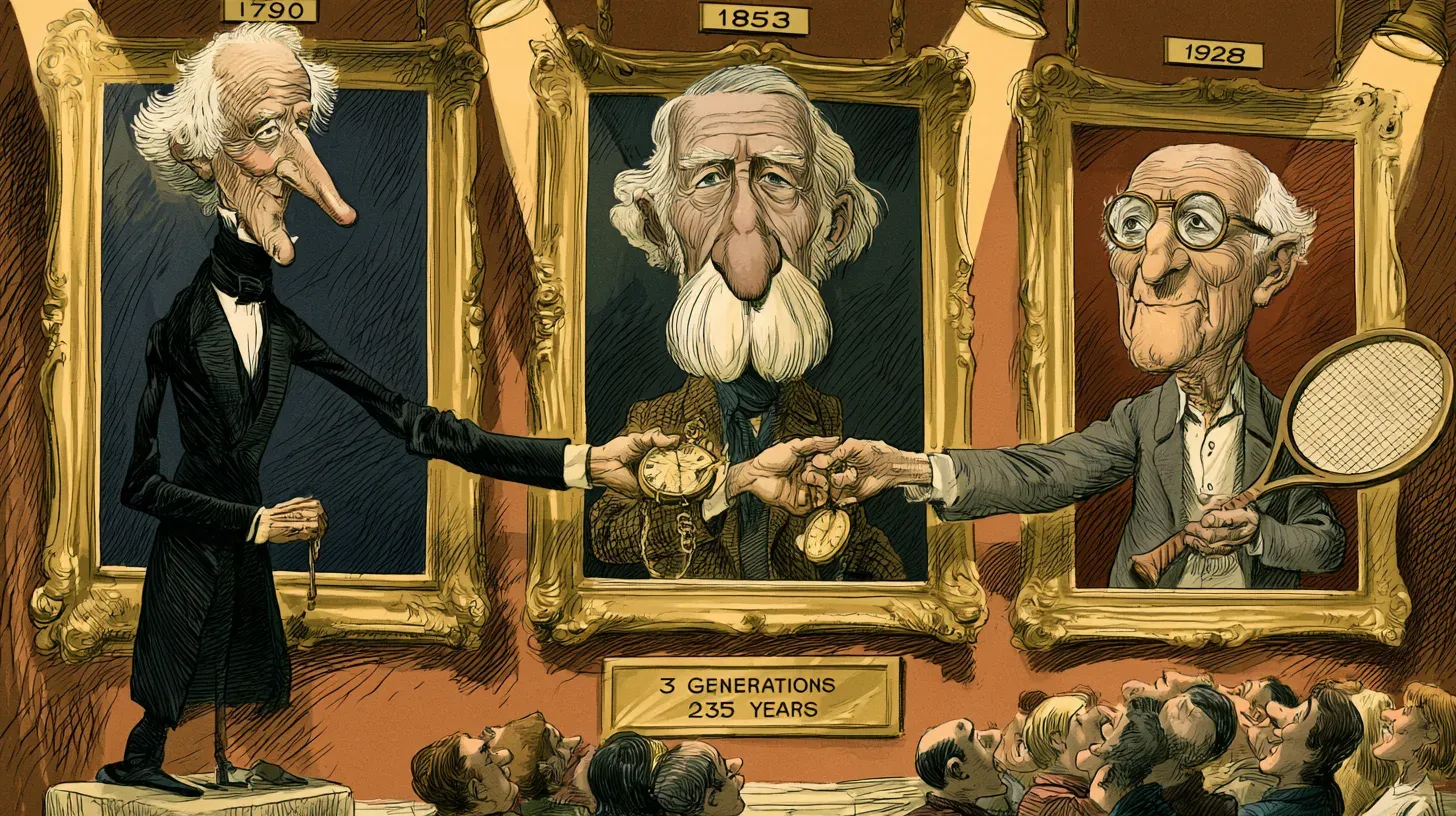
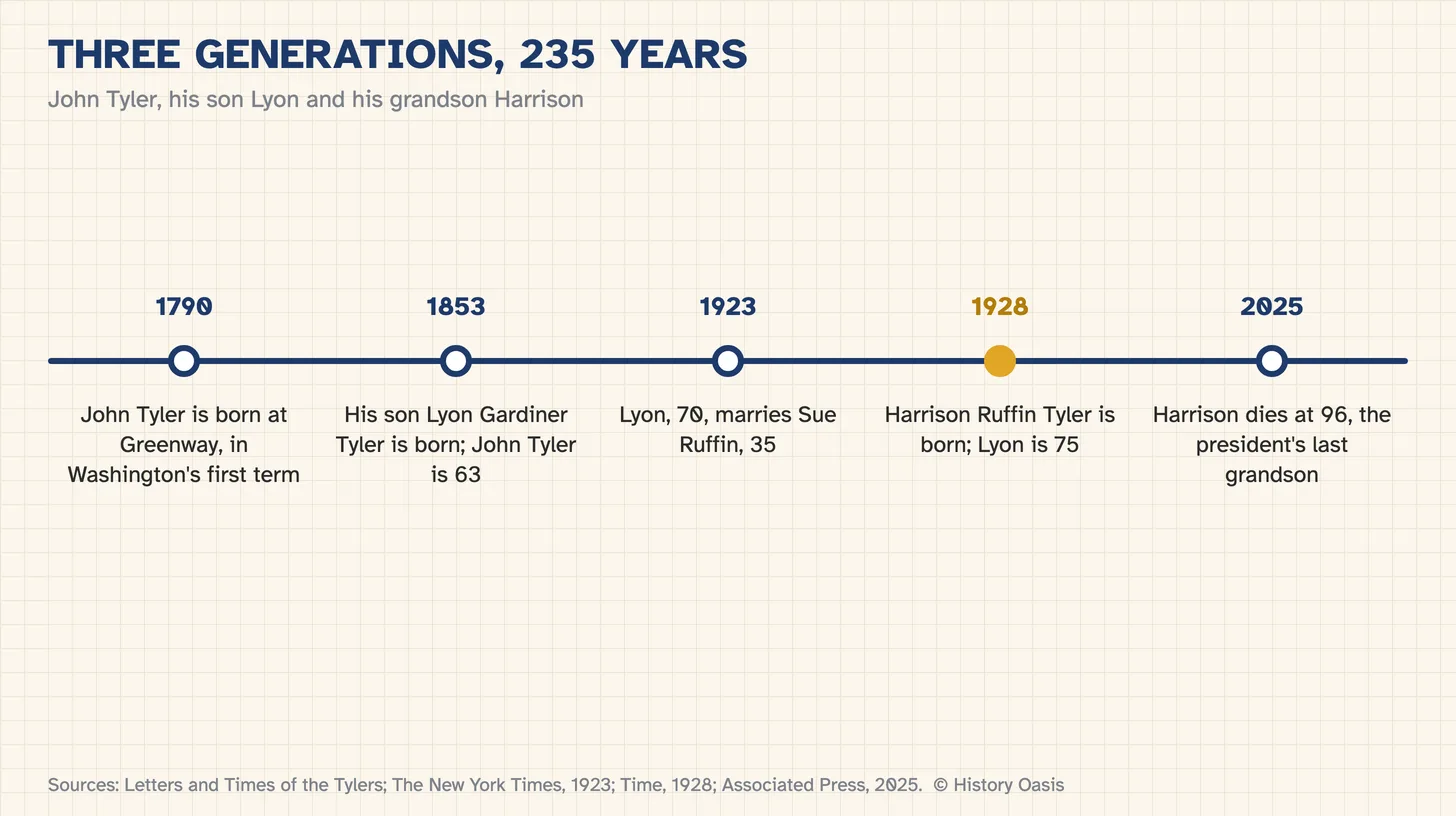
The boy was Lyon Gardiner Tyler. His father had been born in 1790, in the second year of George Washington’s first term as president. Lyon would be seventy-five when his own youngest son was born, and that son, Harrison Ruffin Tyler, lived until 2025. Three generations of one family, each father old when his son was born, covered 235 years between them, and the papers of each generation noticed it.
A merry, mischievous smile
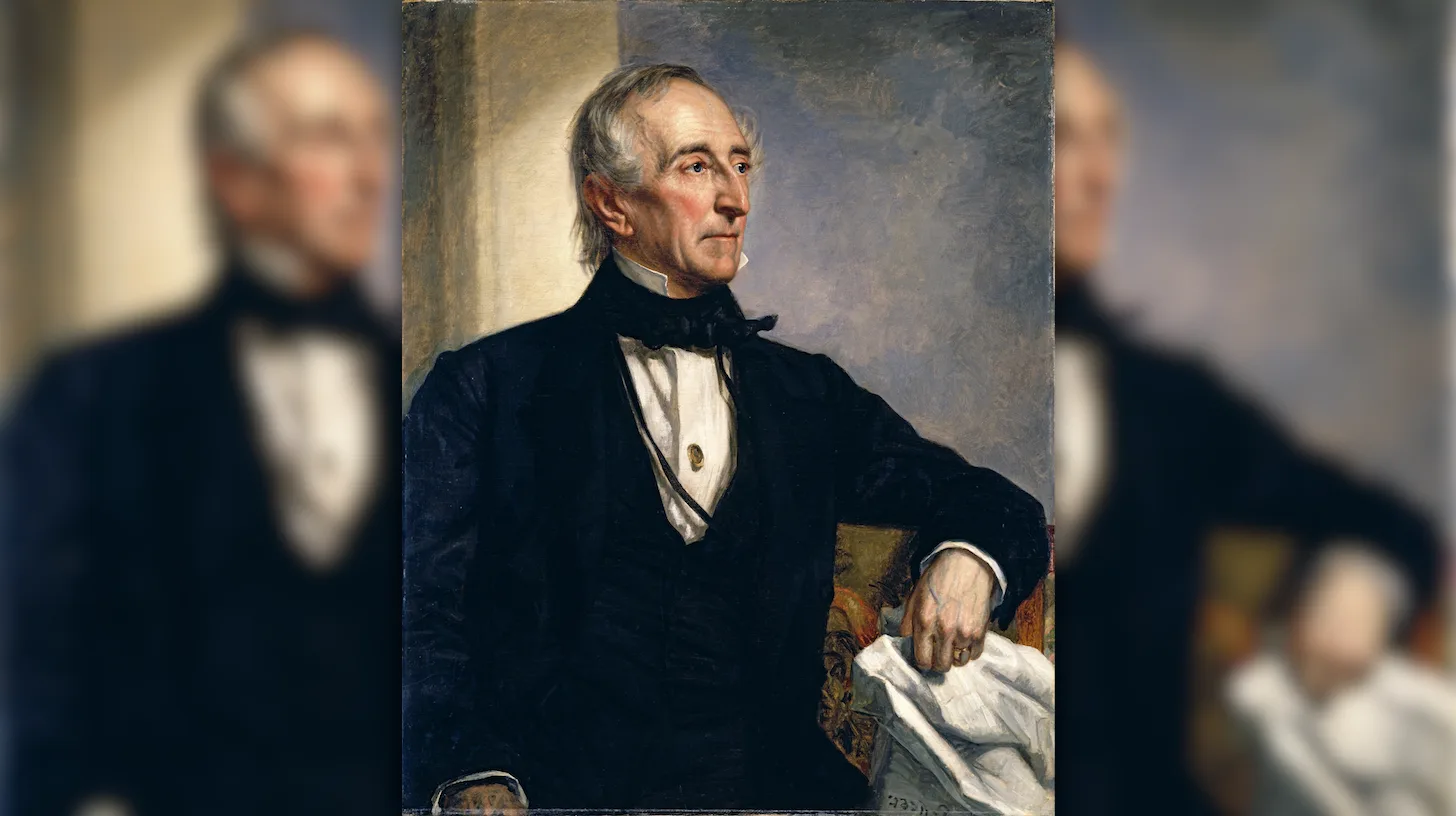
John Tyler was born on March 29, 1790, at Greenway, his father’s place in Charles City County, about eleven months after Washington took the oath of office in New York. The family’s own history, written a century later by his son Lyon, describes him as a boy with a slender frame, a thin and prominent Roman nose, silky brown hair, blue eyes and “a merry, mischievous smile and silvery laugh.”
The family liked to tell how, as a baby in his mother’s arms at a window at Greenway, he reached for the moon and cried for it, and how his mother said that the child was “destined to be a president of the United States, his wishes fly so high.” As a grown man he stood six feet, spare and active. Charles Dickens, who called on him at the White House in 1842, found him somewhat worn and anxious, but wrote that “the expression of his face was mild and pleasant, and his manner was remarkably unaffected, gentlemanly, and agreeable.”
His first wife, Letitia Christian, bore him eight children and died in 1842. On June 26, 1844, while he was still president, he married Julia Gardiner of New York at the Church of the Ascension in that city. He was fifty-four, and she was about twenty-four (her exact birth date, the White House Historical Association notes, is uncertain). She bore him seven more children, the last when he was seventy. Lyon, born on August 24, 1853, was the thirteenth of the fifteen, and his father was sixty-three.
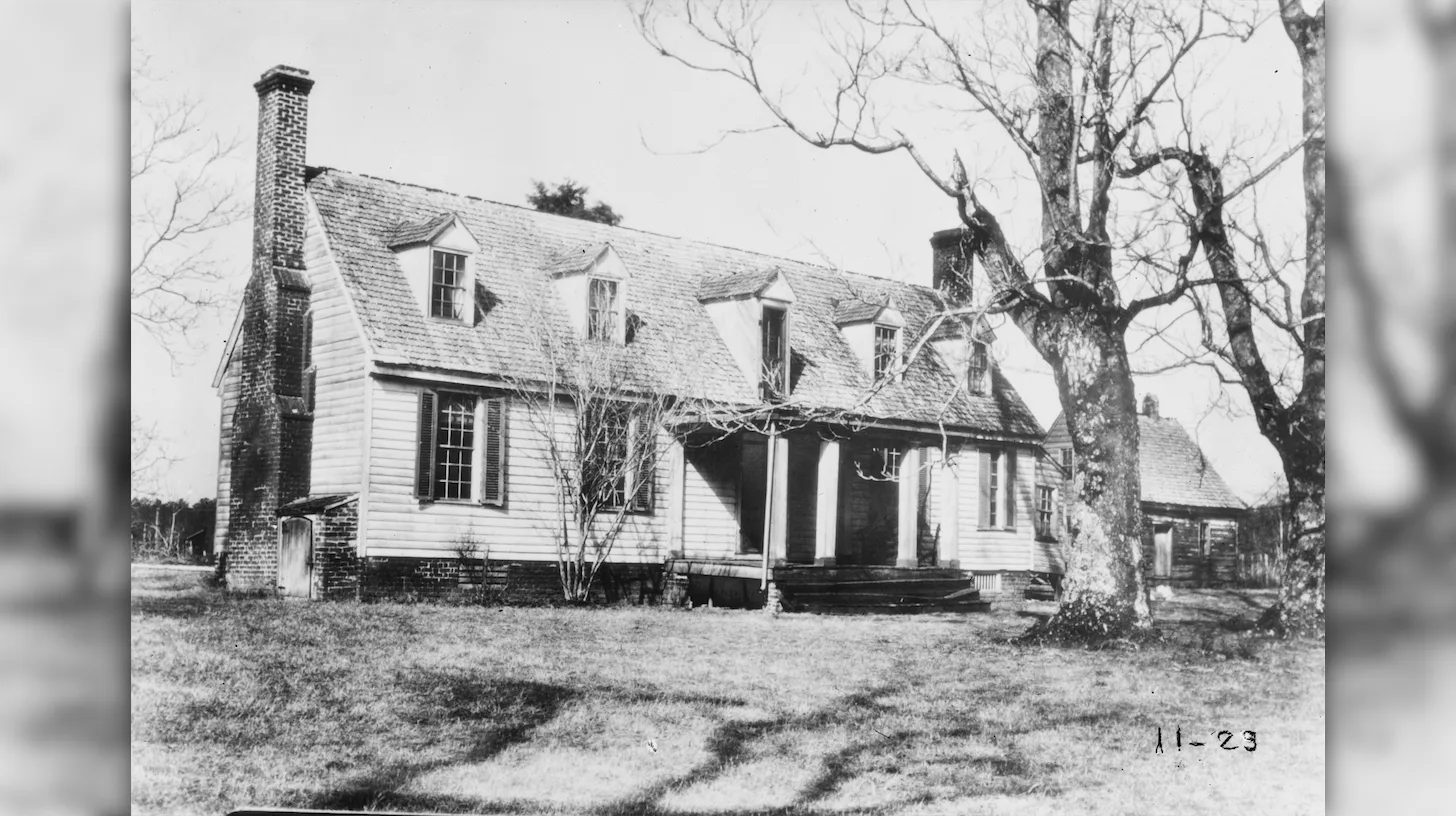
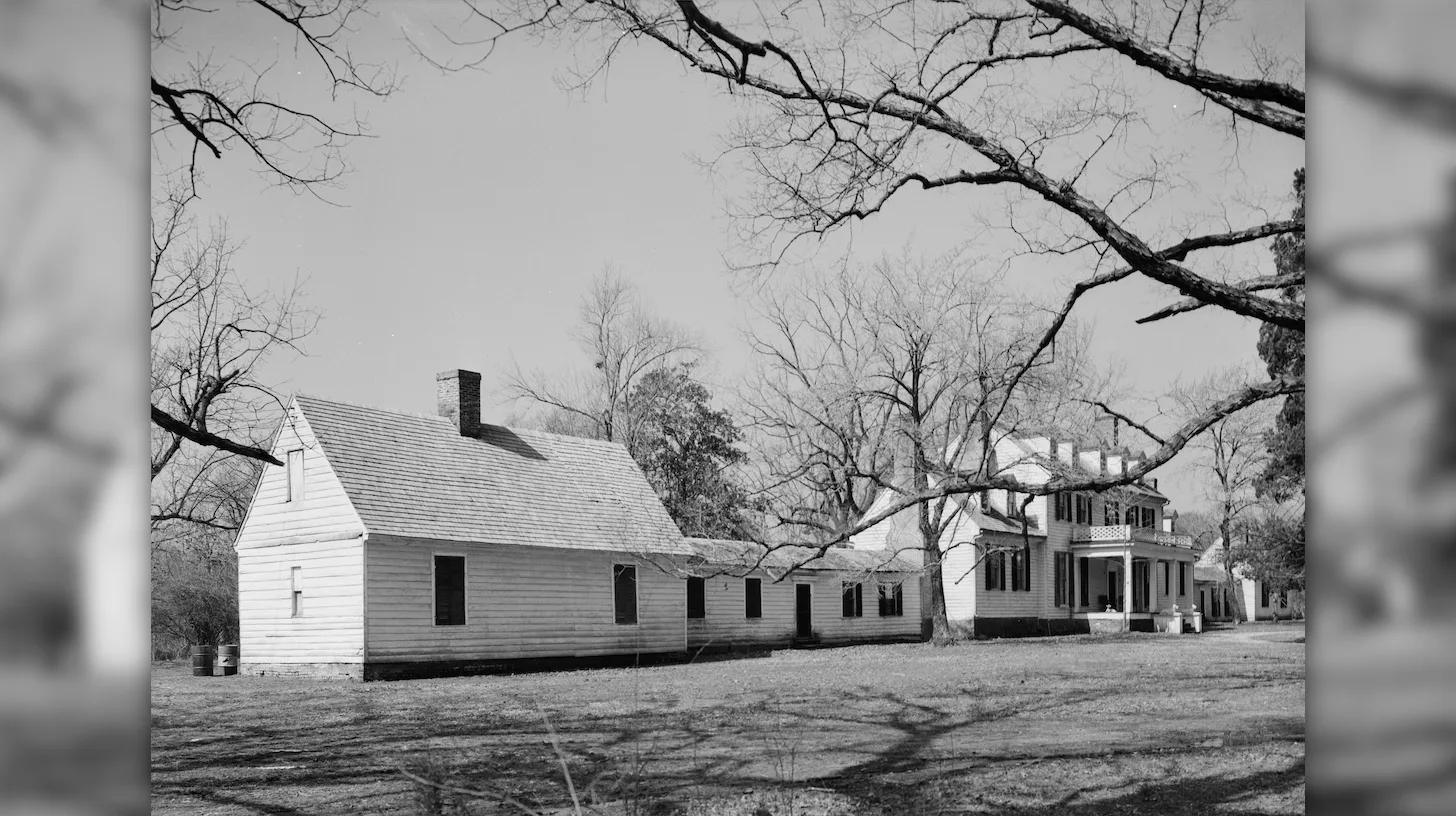
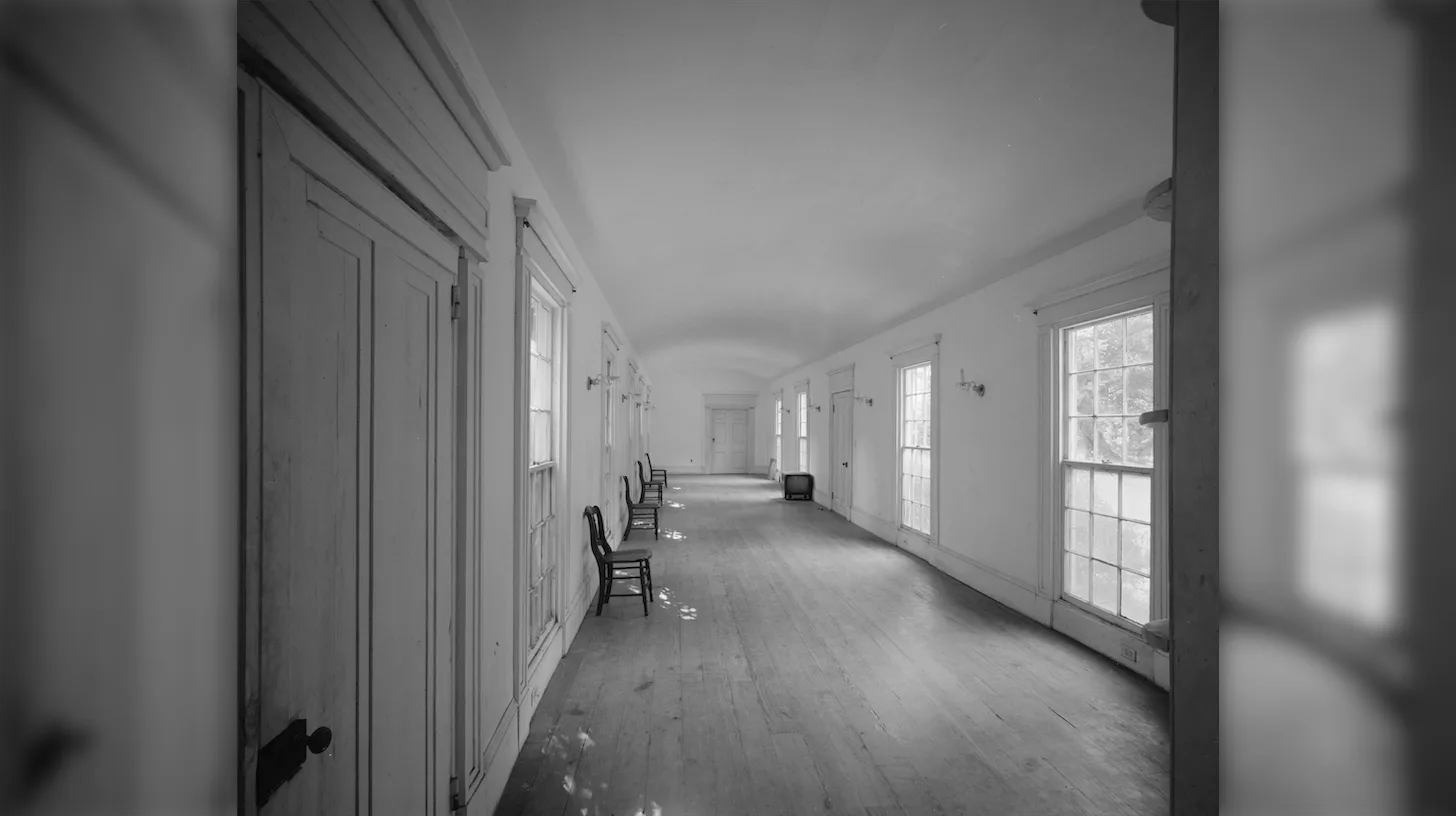
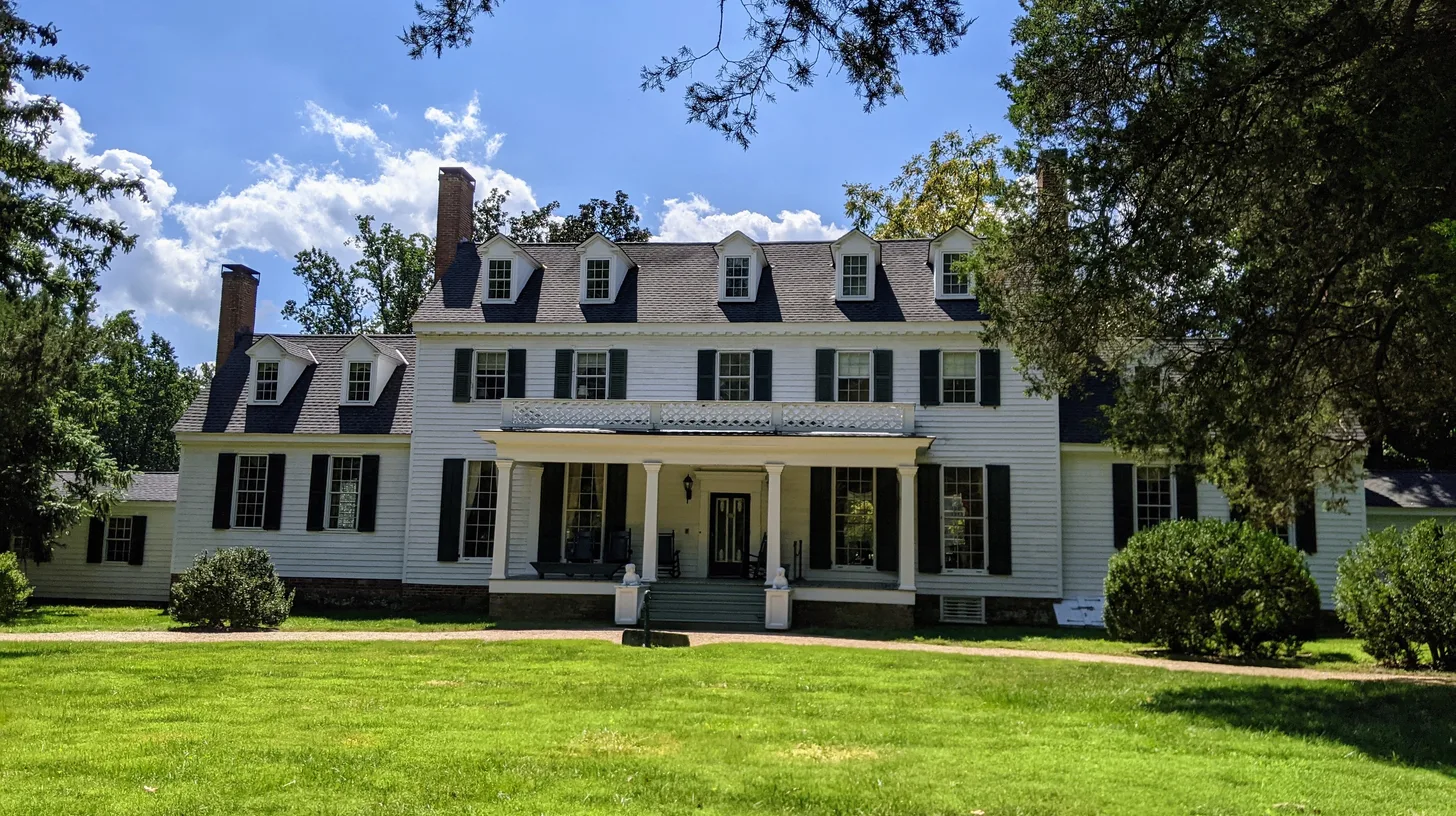
The children grew up at Sherwood Forest. Tyler had bought the place in 1842 and added land until it covered 1,600 acres, and when he left office he and Julia renamed it for Robin Hood, because the Whig party had made him an “outlaw”. The house was stretched to 300 feet, long enough to be called the longest frame house in the country. It was worked by enslaved people, and on the eve of the Civil War there were forty-three of them.
Christmas at Sherwood Forest
The Christmas barrels and boxes came by the Roanoke and reached the house at four o’clock on Christmas Eve. Among them was a hobby horse, which travelled without a crate, so that every child saw it on the wagon. Tyler set down what happened next the following morning, in a letter to Julia’s sister, Margaret Gardiner Beeckman.
“Time was scarcely given the wagon to reach the door before it had been seized upon, and, with the assistance of Andrew, was placed in the dining-room, and mounted in succession by each, Lachlan, of course, having the first ride, as the horse was his.”
Andrew, the man who carried it in, was one of the enslaved people of the house; the Sherwood Forest foundation identifies him from this letter. Then a doll was unpacked and set to opening and shutting its eyes, and the whole room admired the needle cases and pincushions Margaret had sent for a fair Julia was helping with. The children were hurried to bed early so that the night would pass faster. Near eleven o’clock Tyler went into the room of his two eldest boys by Julia and found them awake, watching for Santa Claus and complaining that he was late. He told them that Santa Claus did not like to be watched, and they went to sleep, “but the day had not fairly dawned when their exclamations filled the whole house.”
By eleven the next morning one boy was carrying on the siege of Sebastopol, another was busy with “Whittington and his Cat,” little Julia was arranging her furniture and Lachlan was spurring the hobby horse. Then came the smallest. Tyler wrote that Lionel, “last, though not least,” was calling for his drummer, and Lyon, editing the letter for print thirty years later, added a footnote to say that Lionel was himself. “A happier concern you rarely ever saw,” his father wrote. Outside, the mist was still “excessively dense.”
The household broke up within seven years. John Tyler died in Richmond in January 1862, a member-elect of the Confederate Congress, when Lyon was eight, and Union troops later ransacked the house. The boy was raised by his mother, and a biographical sketch of 1906 says he fell wholly under her influence, and that he was a strong, healthy boy who never missed a day of school and loved hunting and fishing.
Seventy years of age
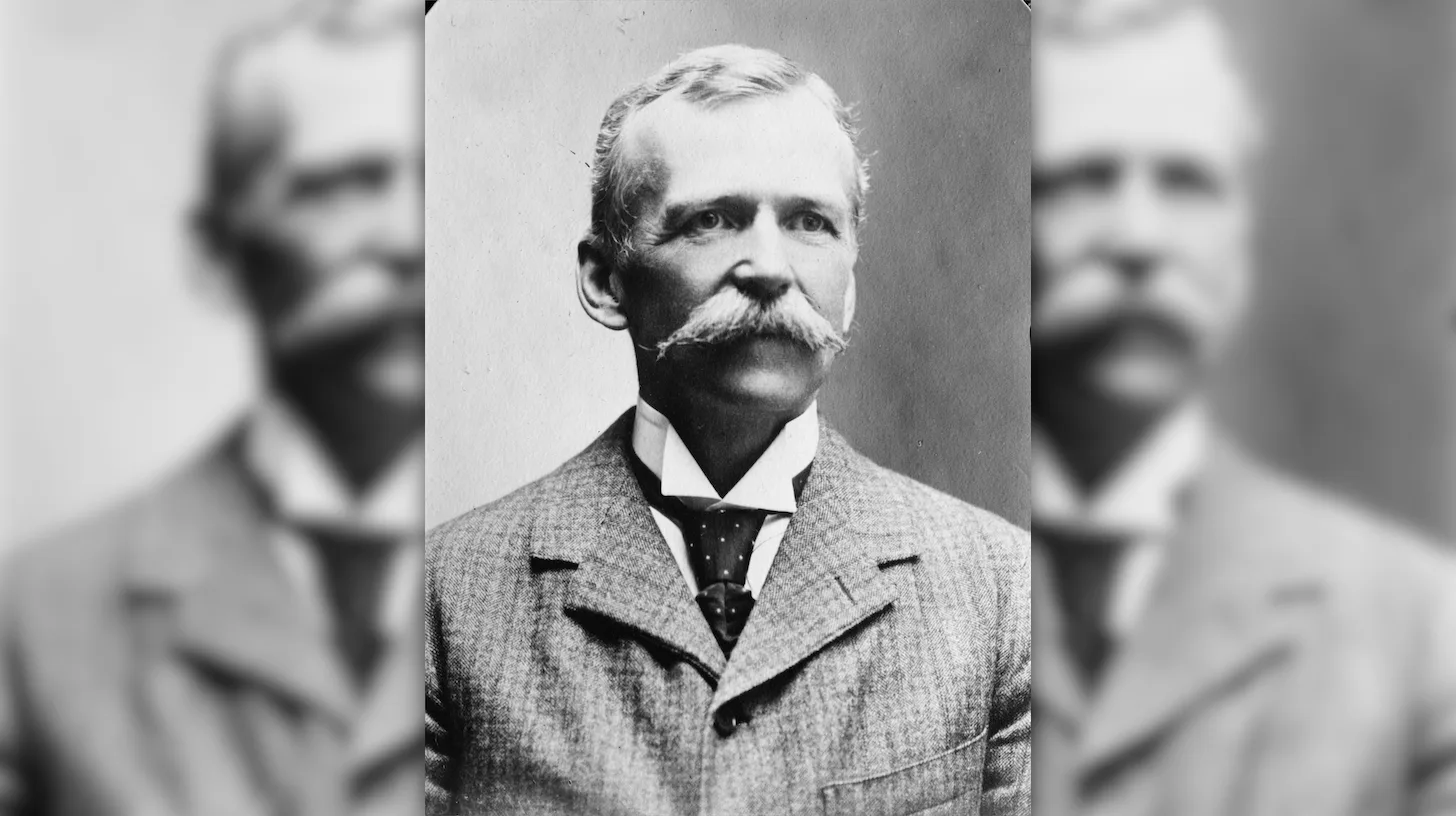
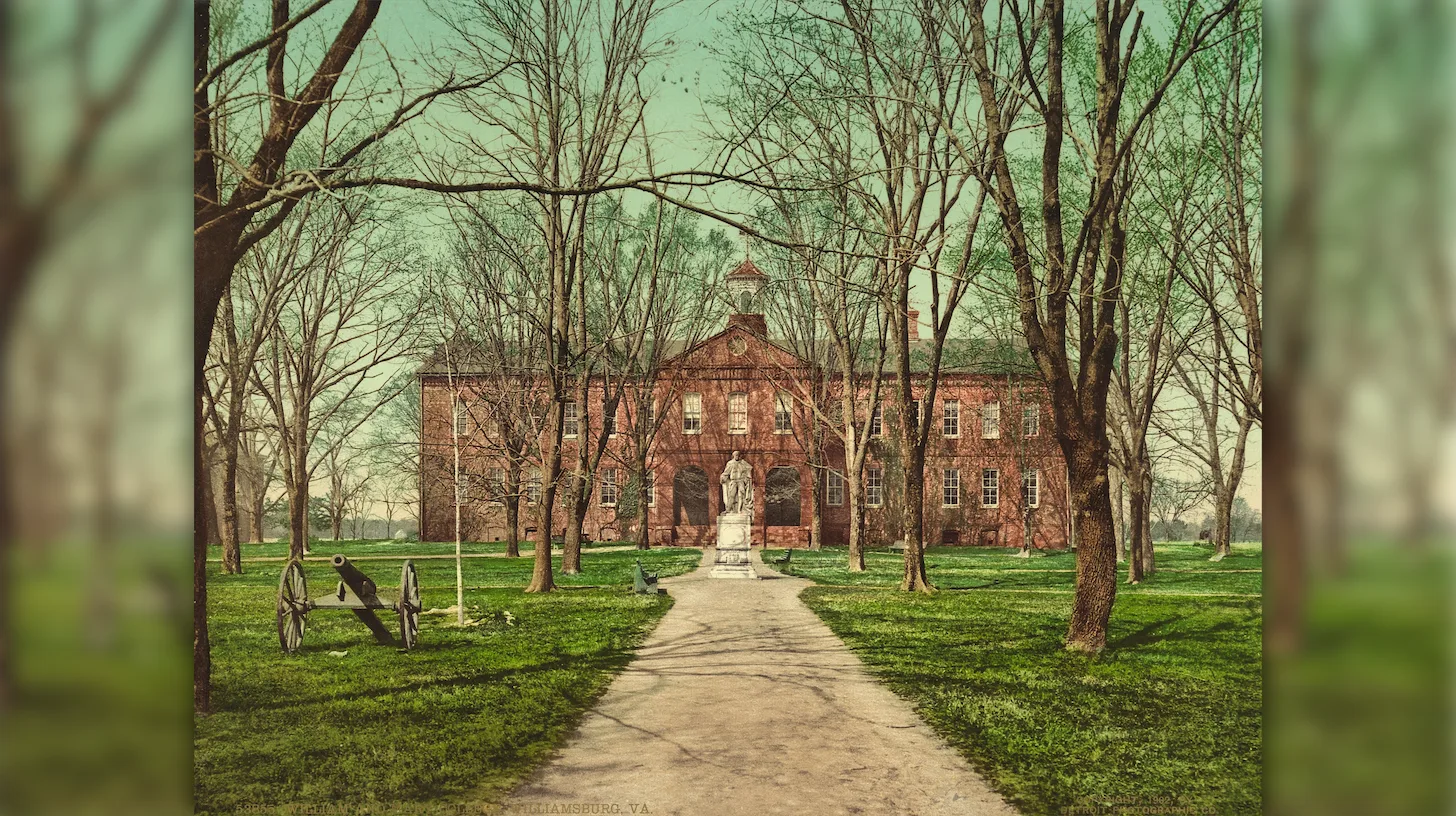
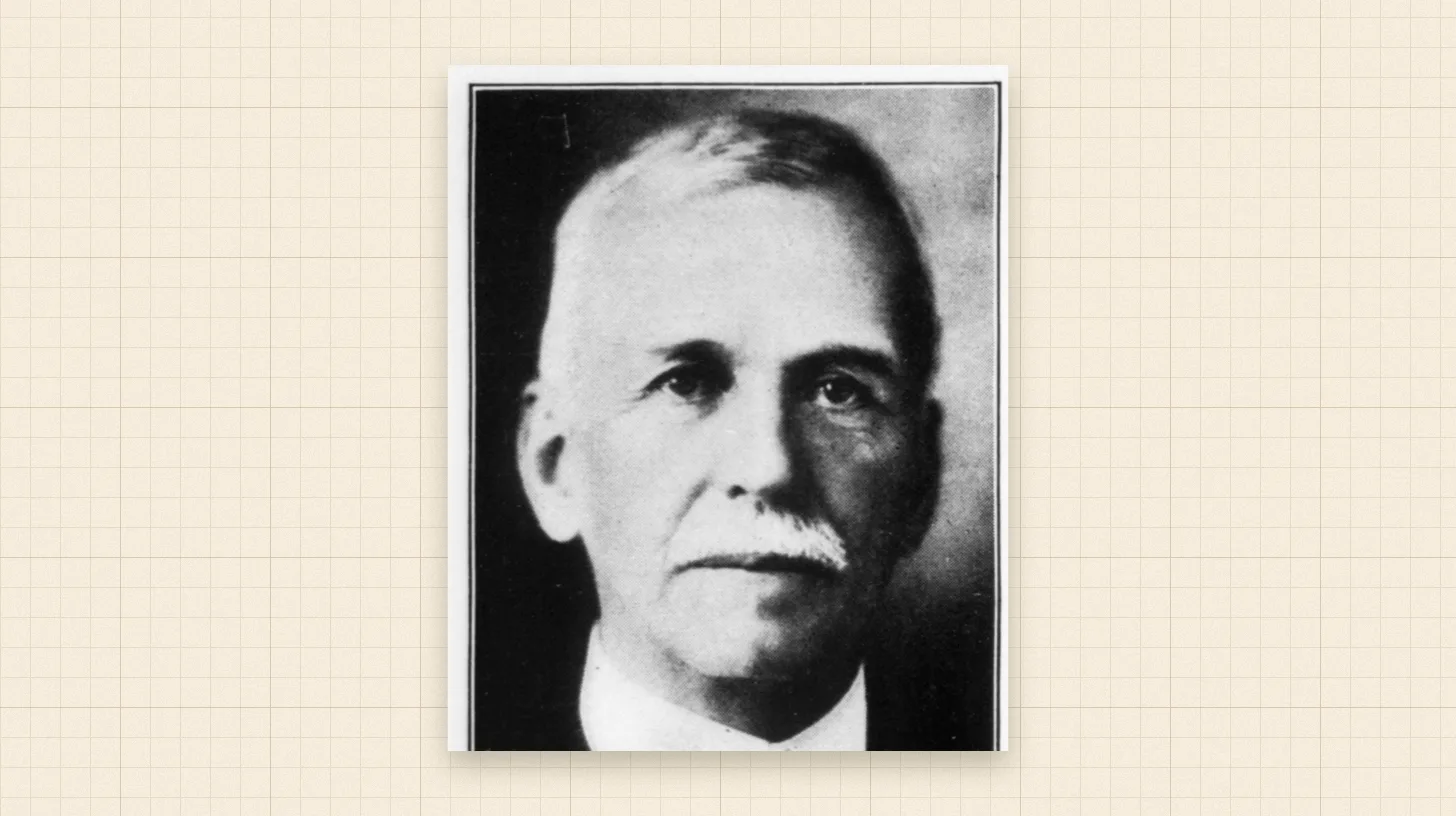
Lyon Gardiner Tyler practiced law in Richmond for seven years and spent the rest of his working life as an educator, from 1888 as president of the College of William and Mary, which he led for thirty-one years. He wrote the history of his father’s family in three volumes. In 1919 he resigned and retired to a farm in Charles City County that he called Lion’s Den. His first wife, Anne Tucker, died in 1921.
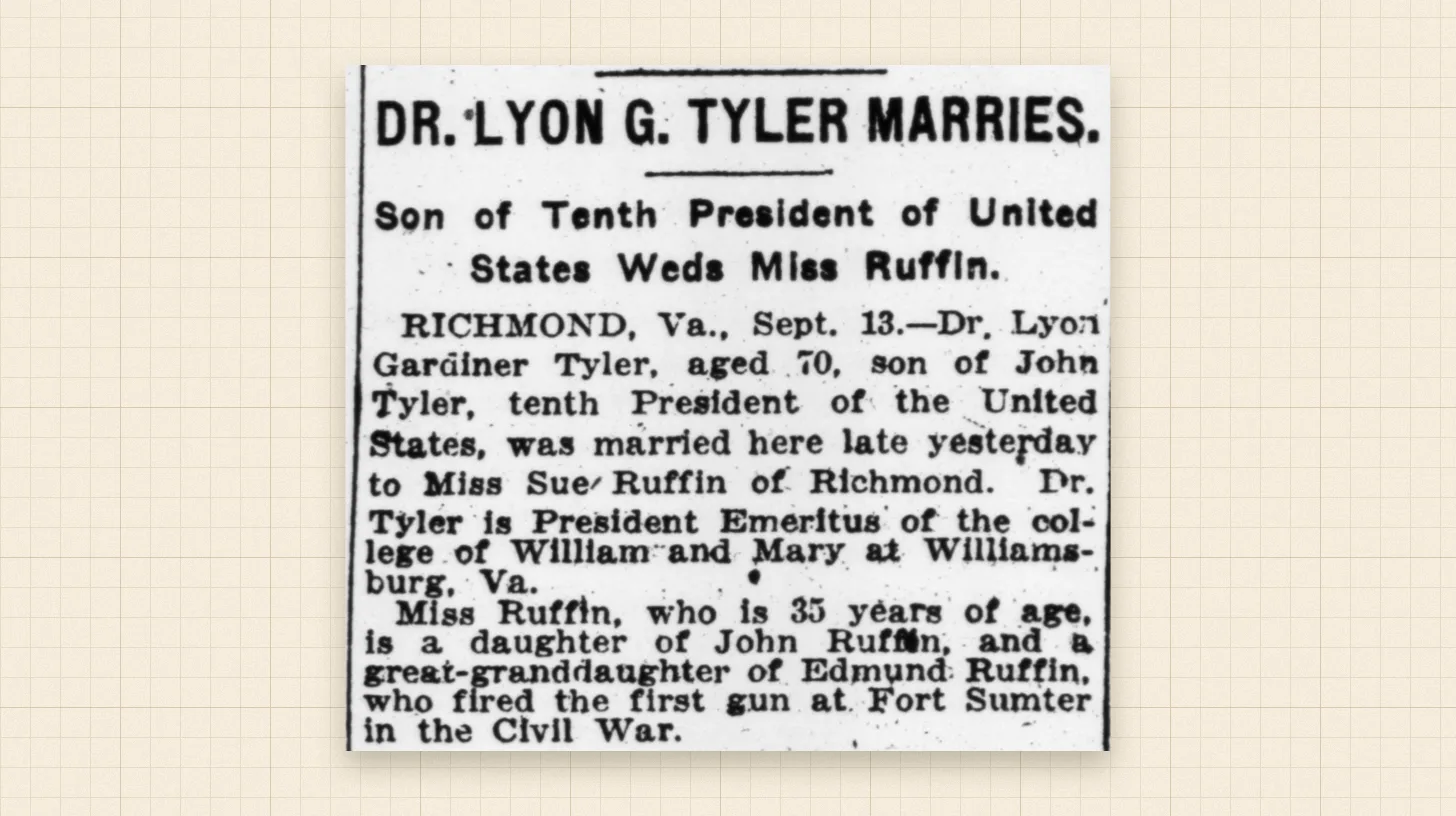
Late on Wednesday, September 12, 1923, in Richmond, he married again. The bride was Sue Ruffin of Richmond, and the New York Times, reporting the wedding two days later, gave her age as thirty-five and his as seventy. The paper added that she was a great-granddaughter of Edmund Ruffin, the Virginia secessionist, “who fired the first gun at Fort Sumter.” It was a claim the papers of 1923 repeated, though Encyclopedia Virginia says Ruffin is erroneously credited with that shot.
Time magazine ran the wedding the next week in an item about presidents’ sons and noted that while the son of the tenth president was at the altar, the sons of the thirtieth, Calvin Coolidge, were packing their tennis rackets for school. Dr. Tyler and his bride, the magazine said, would live at “The Den,” Holdcroft, Va.
A nine-pound son in Richmond
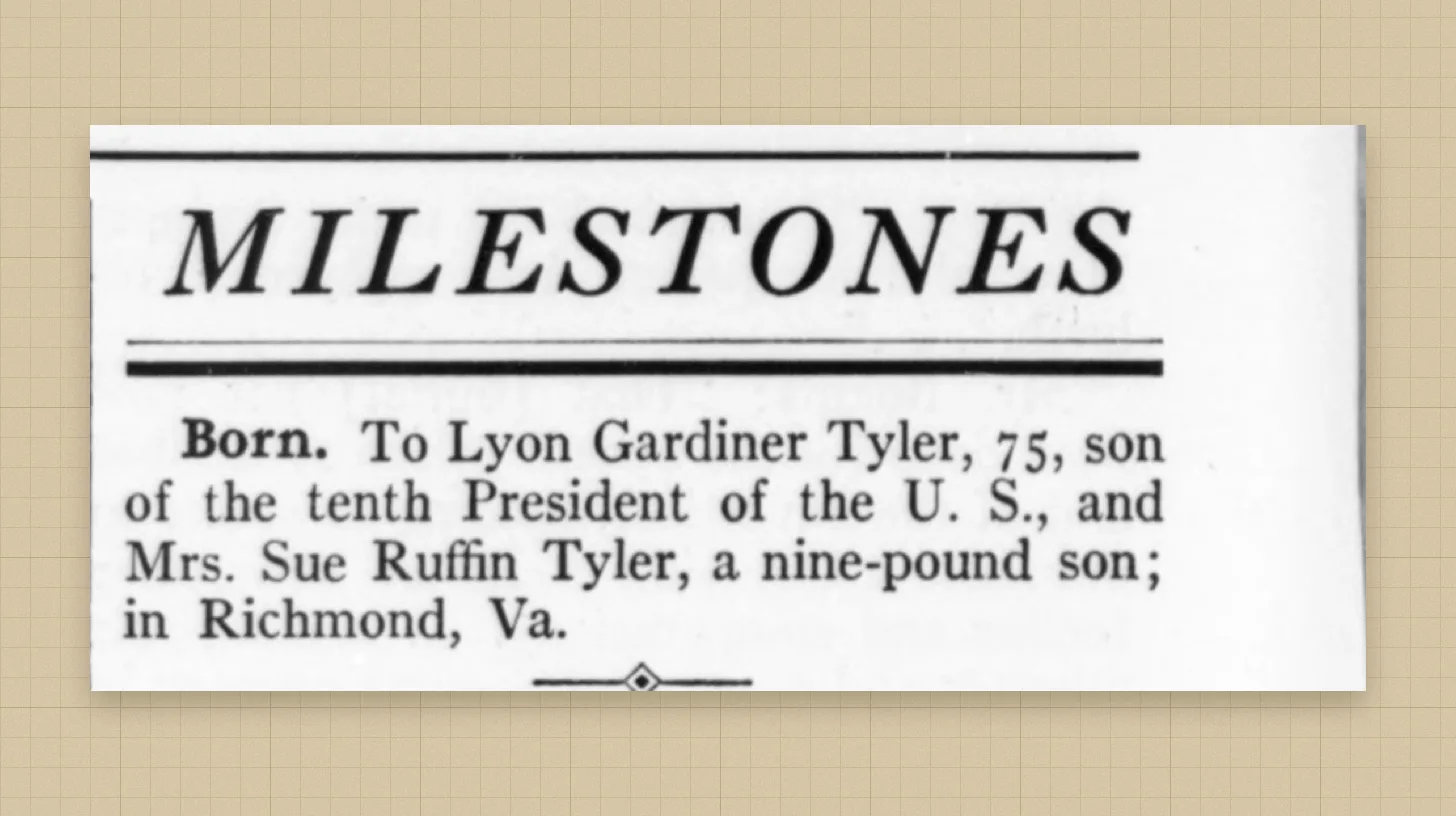
Their first son was born at a Richmond hospital in January 1925 and named for his father. The Associated Press sent the news across the country the next day: the boy weighed eight pounds, mother and son were “doing nicely,” and Dr. Tyler was seventy-one. The second came on Friday, November 9, 1928, also in Richmond, and was named Harrison Ruffin Tyler. The Times headed its item “President Tyler’s Son Father at 76,” a year too old. Time had it right in its Milestones column: “a nine-pound son; in Richmond, Va.,” born to a father of seventy-five. A third son, Henry, died in infancy.
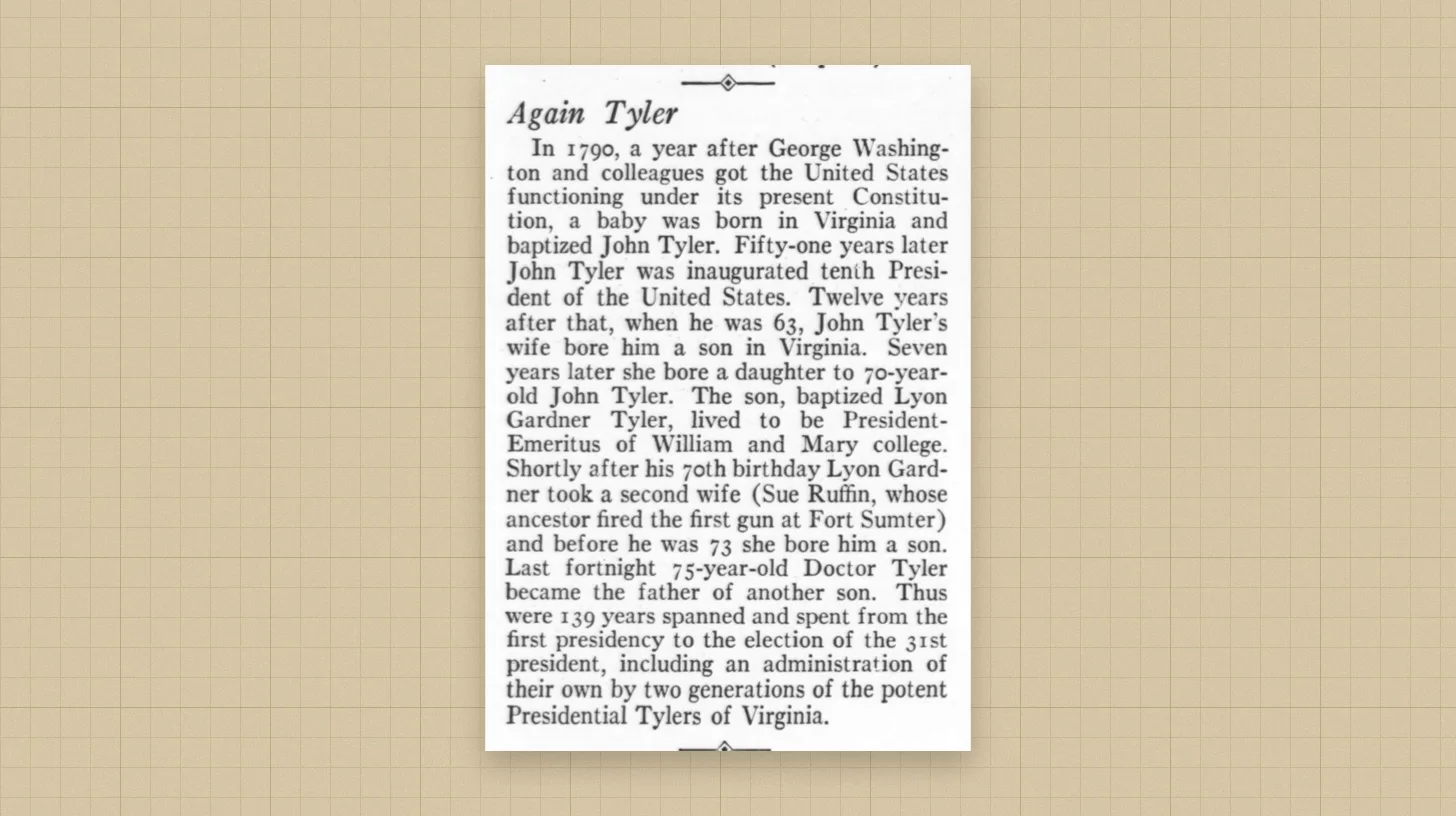
Later that month Time did the sum that has been repeated ever since. Its writer counted from the year after Washington’s government began, when a baby was born in Virginia and baptized John Tyler, through the son born when that baby was sixty-three, to the son born to the son at seventy-five, and set down the result in one sentence.
“Thus were 139 years spanned and spent from the first presidency to the election of the 31st president, including an administration of their own by two generations of the potent Presidential Tylers of Virginia.”
The old man at Lion’s Den was not only a curiosity that year. That February the Virginia House of Delegates had adjourned in honor of Lincoln’s Birthday, and Lyon Tyler, who had published criticisms of Lincoln for years, joined a protest against it in a pamphlet. Time, reporting his letter that spring, called him the oldest living son of a president and observed that it was odd for him to attack a president beside whom his own father was, historically, a dwarf. He answered the magazine in its letters column, from Holdcroft.
Lion’s Den at 7:40 in the evening
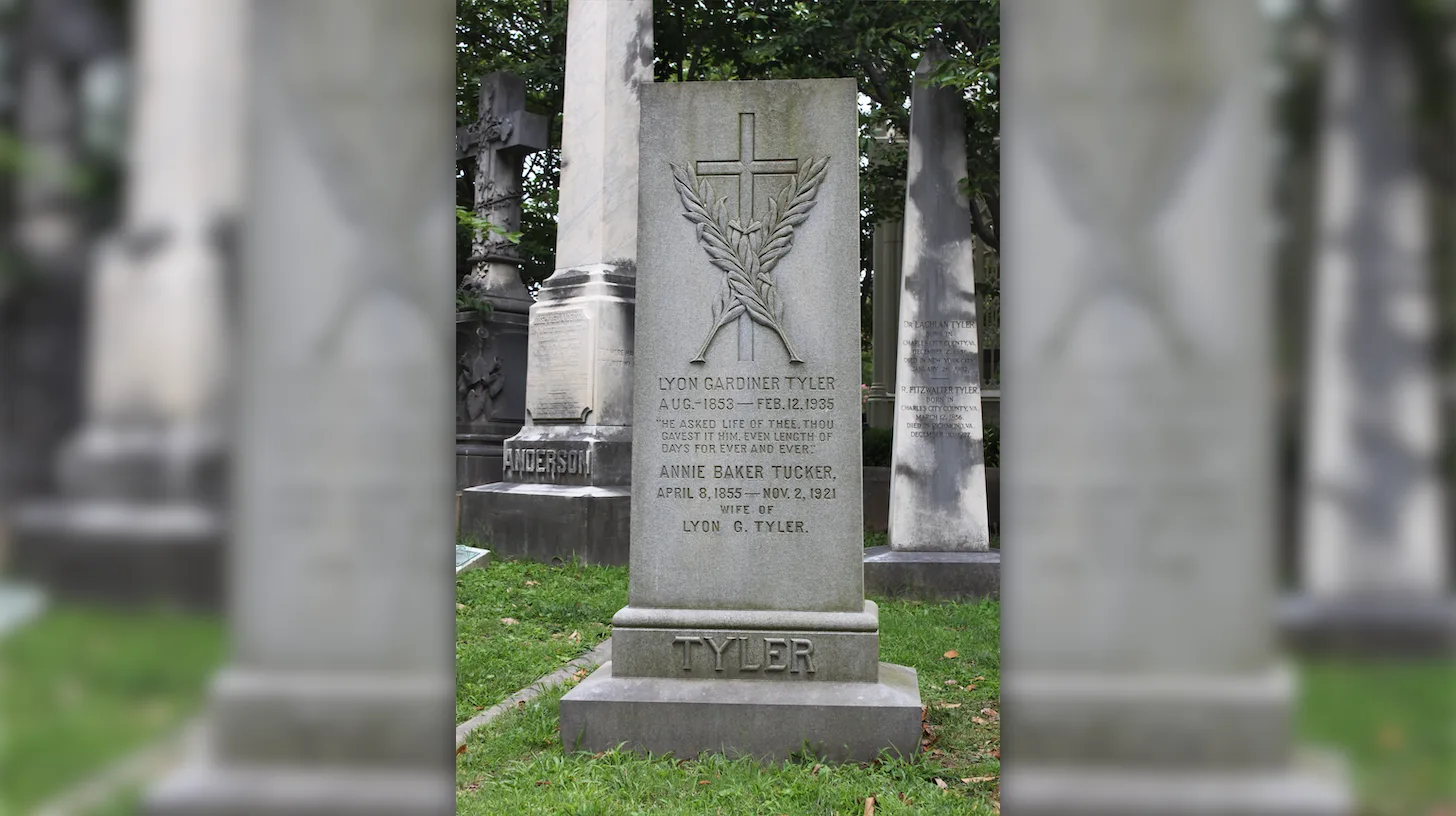
Lyon Tyler lived another six years. Early in 1935 he took pneumonia at Lion’s Den, and on Tuesday, February 12, Lincoln’s Birthday, an Atlanta paper reported from Holdcroft that he was “desperately ill” at his home. He died that night at 7:40. The wire stories gave his age as eighty-two, though he was eighty-one, and noted that two sons had been born of his second marriage. He was buried at Hollywood Cemetery in Richmond, near the monument over his father’s grave. The boy who had called for his drummer on that misty Christmas morning eighty years before left two sons, of ten and six.
The younger son grew up to be a chemist. Harrison Ruffin Tyler took a degree in chemistry at William and Mary, his tuition paid by Lady Astor, whom the family had never met, and a degree in chemical engineering at Virginia Polytechnic Institute two years later. In 1968 he and a partner founded ChemTreat, an industrial water treatment company.
In 1975 he and his wife, Payne, bought Sherwood Forest from his cousins and set about restoring it, and Payne Tyler later told a magazine of meeting the Gray Lady, the family’s ghost, while she slept there on a pallet during the work. Her husband, she said, once came into the kitchen “positively ashen” after seeing it too. It is a story the family tells. Later he bought Fort Pocahontas, a Civil War earthwork a few miles away, and he pledged five million dollars to the history department at William and Mary in memory of his father.
In my 84th year
In January 2012 the arithmetic went around the internet again, and on the morning of Friday, January 27, a writer for New York magazine reached Harrison by telephone at Sherwood Forest. He found him mentally sharp, with a soothing Southern drawl. Tyler said he was eighty-three and in his eighty-fourth year, and he still played tennis twice a week, though he admitted that “my legs don’t work as good.” Asked how it could be, he explained it as plainly as Time had in 1928: his grandfather and his father had each married twice, had children by a first wife who died, and then married again and had more children. “And my father was 75 when I was born,” he went on, “his father was 63 when he was born.”
People sometimes called him the great-grandson, and he said, “we have to correct that.” In the fall a Richmond television crew came out to the house, which stands off Route 5, and he showed them a writing box and a walking stick that had belonged to his grandfather. He told them how people took the news.
“People ask, ‘What?! He was born when?’ They have a hard time taking it in because most of their grandfathers were born 100 years later”
What became of the grandsons
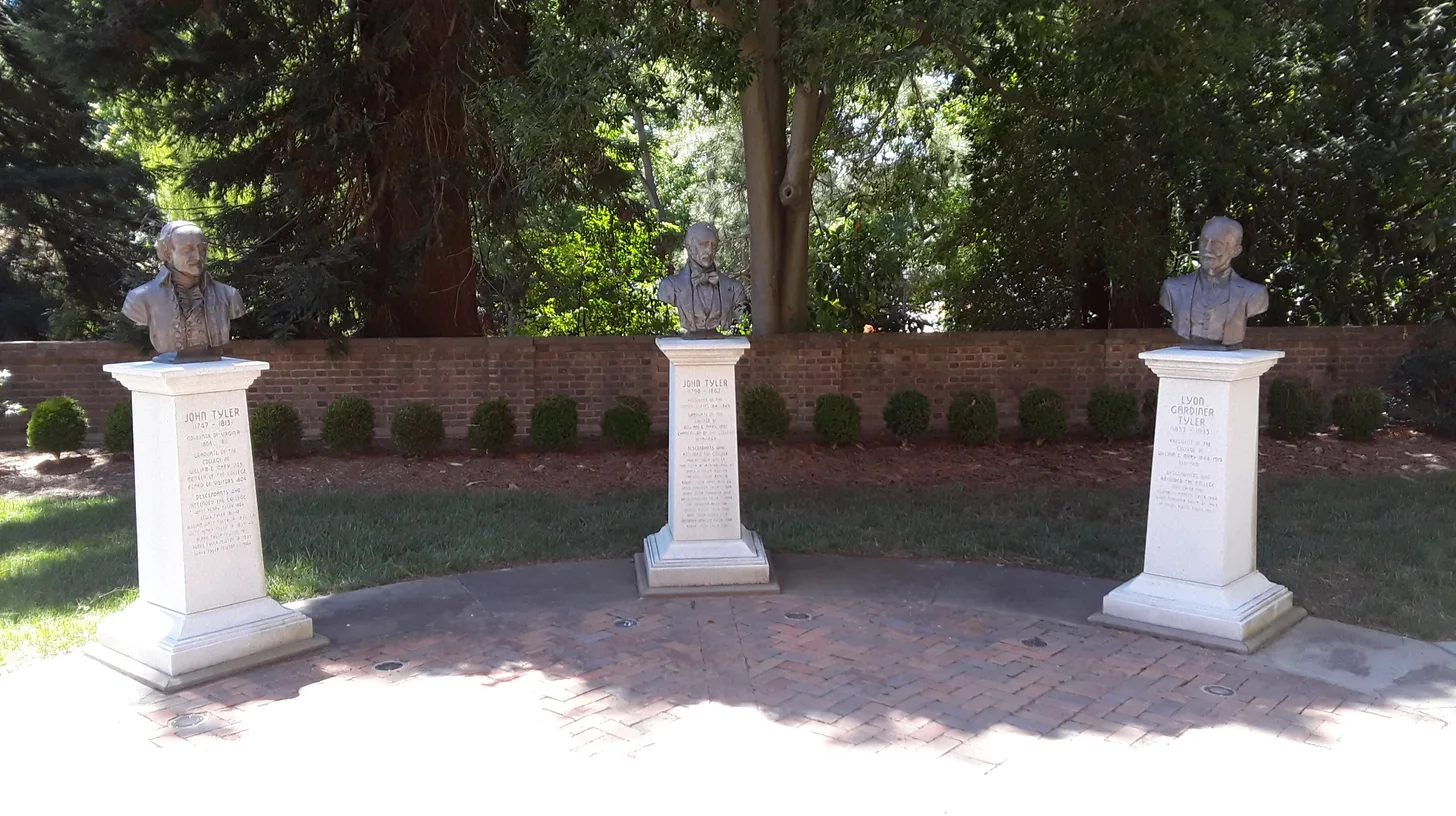
Harrison’s older brother, Lyon Gardiner Tyler Jr., had served as a naval officer in the Pacific in the Second World War and later became assistant director of Virginia’s Civil War Centennial Commission. He died on September 26, 2020, in Franklin, Tennessee, at ninety-five, and was buried at Westover Church in Charles City County. That left Harrison the president’s last surviving grandson. In 2021 William and Mary took their father’s name off its history department and renamed it for Harrison himself.
In his last years Harrison had strokes, and he was cared for in a nursing home near Richmond after a diagnosis of dementia. He died on the evening of Sunday, May 25, 2025, at ninety-six. The Associated Press, reporting it, noted that he had been born eighty-three years after his grandfather left the White House, and that 235 years lay between the president’s birth and the grandson’s death. Sherwood Forest stayed with the family.
Every year on March 29 the president’s birthday is marked at his grave in Hollywood Cemetery, and Harrison used to go. He told the television crew in 2012 where to look. “My father,” he said, “is buried next to the monument.”