13 min read
At eight o’clock on the morning of Thursday, October 17, 1799, among the rocks at the mouth of the bay of Muros on the coast of Galicia, the Spanish frigate Santa Brigida hauled down her colours to three British frigates that had chased her for a day and a half. She had been steering for the shore so close that all four ships were now among the rocks together, and when the colours came down the British captain who wrote the report found, as he put it, that “we found ourselves all in foul ground together.” Below her decks were some 1,400,000 Spanish silver dollars, loaded at Vera Cruz in Mexico in August. Her consort, the Thetis, with as many again, had been taken the day before.
Within three months the dollars had been landed, carted through Plymouth in sixty-three wagons and counted, and each of the four British captains had been paid a share of £40,730 18s. A frigate captain’s pay in those years was eight shillings a day. The share was worth about 279 years of it. Even the ordinary seamen who had sailed the ships received about ten years’ wages each. The letters the captains wrote, and the accounts of the money, tell how it was done and where it went.
Two frigates out of Vera Cruz
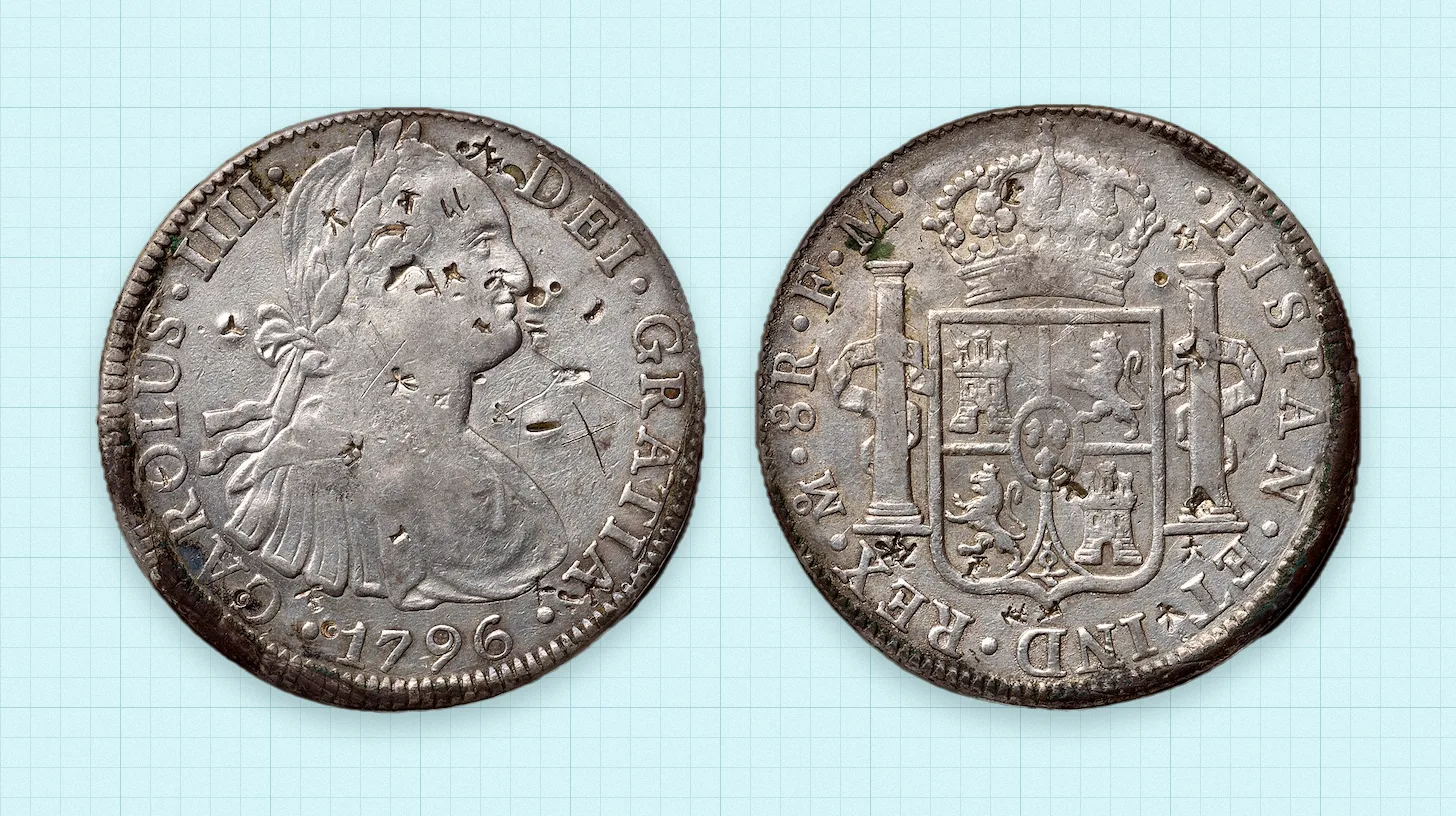
The Santa Brigida and the Thetis were Spanish frigates of 34 to 36 guns, and they had left Vera Cruz together on August 21, 1799, bound for any port in Spain they could reach. Spain was then at war with Britain. The Thetis was commanded by Don Juan de Mendoza and the Santa Brigida by Don Antonio Pillon. Their real cargo was in wooden boxes, most of them holding 3,000 Spanish silver dollars each, the coins also called pieces of eight, with bales of cocoa, cochineal, indigo and sugar besides.
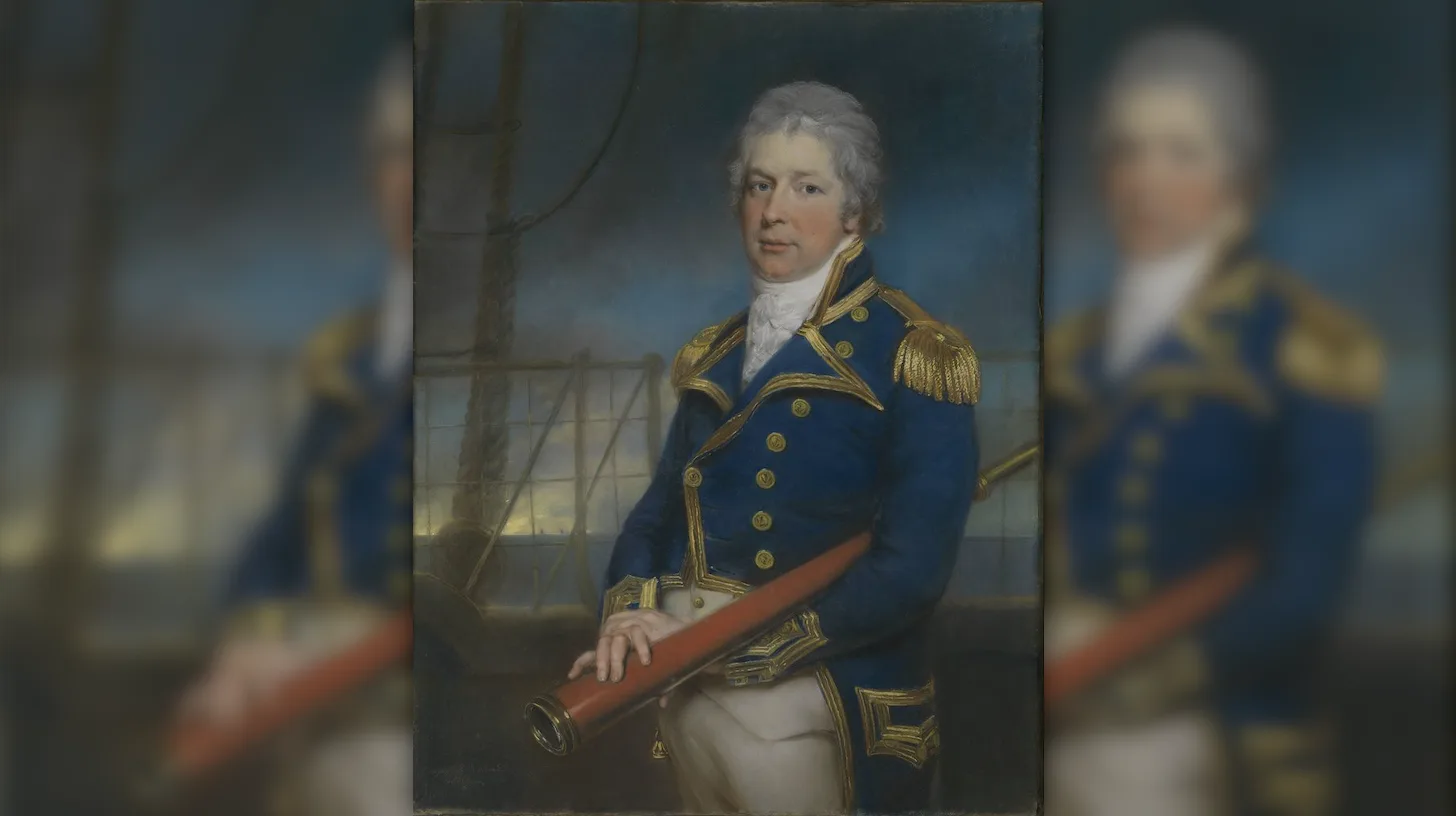
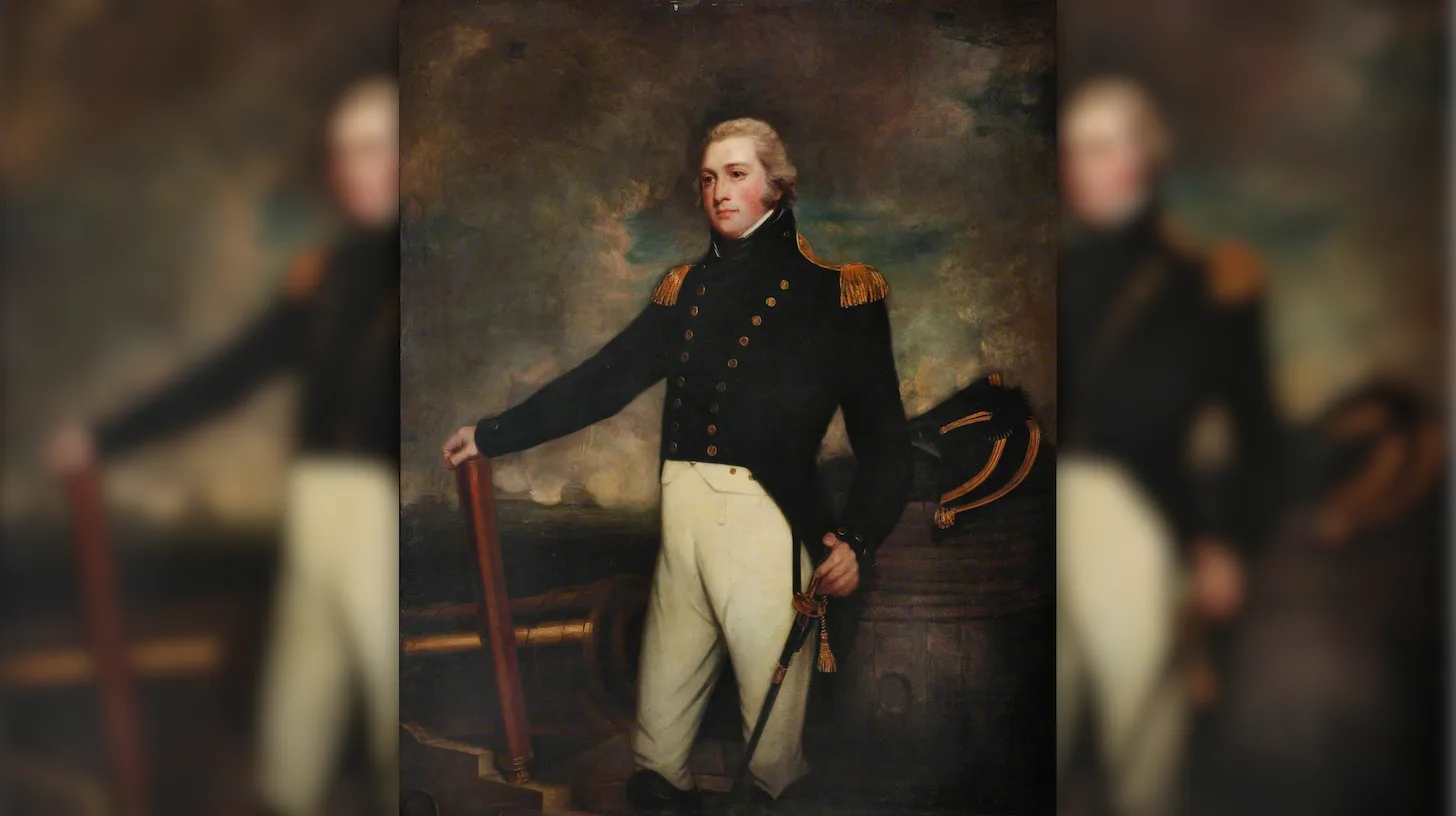
The British frigate that found them was the Naiad, of 38 guns, under Captain William Pierrepont. He was thirty-three, baptized at Uffington, in Lincolnshire, in 1766, and two years later the pastel artist John Russell would draw him in a captain’s full-dress coat with a telescope under his left arm, his hat on the quarterdeck rail and the open sea behind him, in a setting that, the museum which owns it says, speaks of taste and wealth. On the evening of October 15 the Naiad was cruising alone in the Atlantic west of Spain when, at eight o’clock, she sighted two large ships steering south-east, with the wind right behind them. By midnight Pierrepont was sure they were enemies, and he followed them through the night.
A chase of thirty-two hours
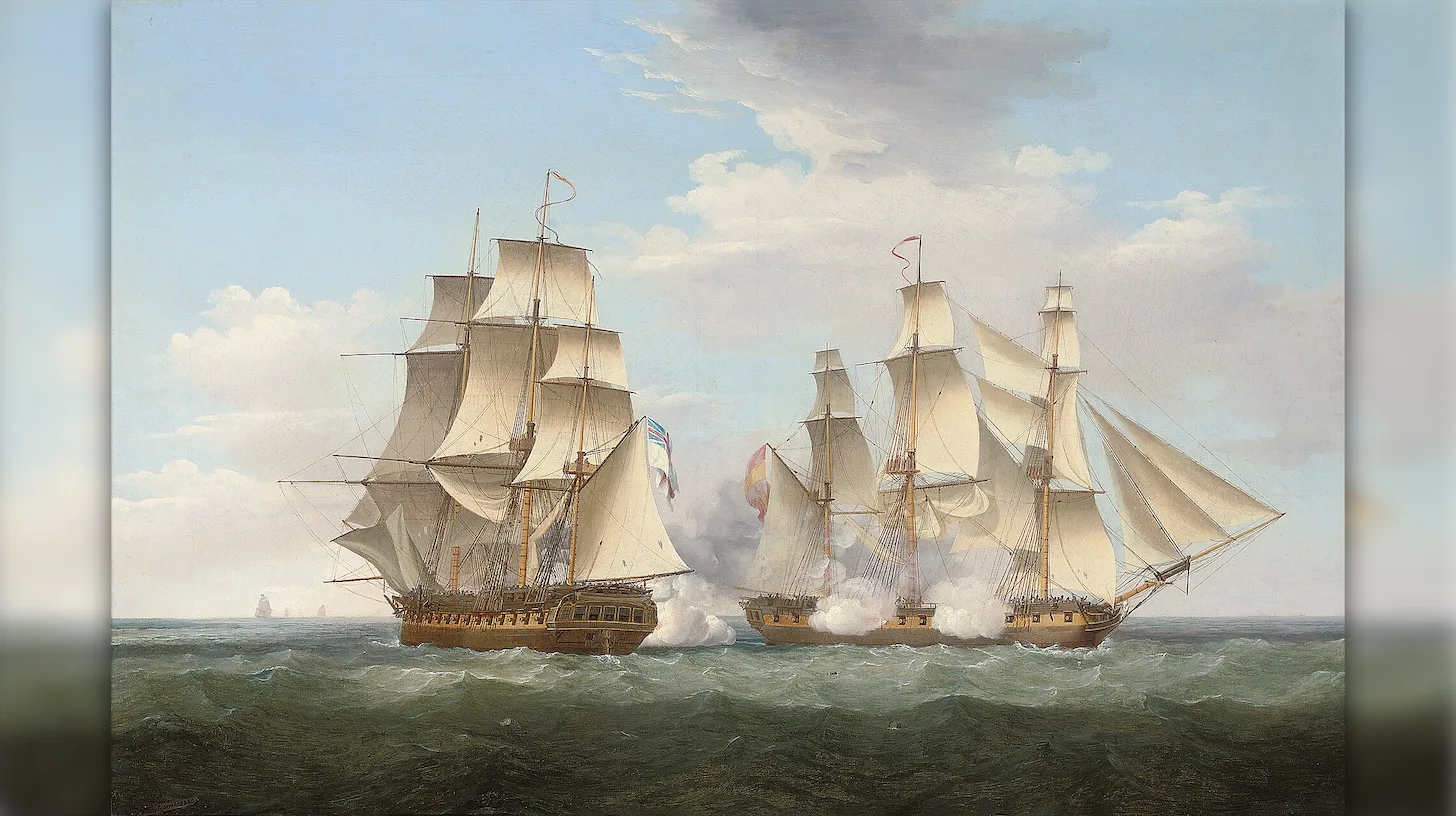
At half past three in the morning of the 16th another sail appeared to the south-west. It was the Ethalion, 38, Captain James Young, who had been following strange sails since the afternoon before and could not tell who the Naiad was until daylight, when, as he wrote, “At day-light I found her to be” the Naiad, one of his own side. At daybreak the Alcmene, 32, Captain Henry Digby, came up from the westward, and the Triton, 32, Captain John Gore, showed far astern. Four British frigates were now in chase of two Spanish ones.
At seven the Spaniards gave up keeping together and steered different ways. Pierrepont signalled Young to pass the sternmost and go after the headmost, which was the Thetis, and Young fired a few guns into the Santa Brigida as he went by. At about half past eleven the Thetis, with no other way out, turned across the Ethalion’s bows. Young answered with two broadsides, and then the two ships ran on together for an hour, firing from their bow and stern guns.
“exchanging bow and stern chaces, the latter part within half pistol-shot, I had the pleasure of seeing her haul down Spanish colours to his Majesty’s ship under my command.”
Not a man in the Ethalion was hurt. The Thetis had one killed and nine wounded. Young put a prize crew aboard and sent his report off, by one of his lieutenants, to Lord Bridport, the admiral commanding the Channel Fleet.
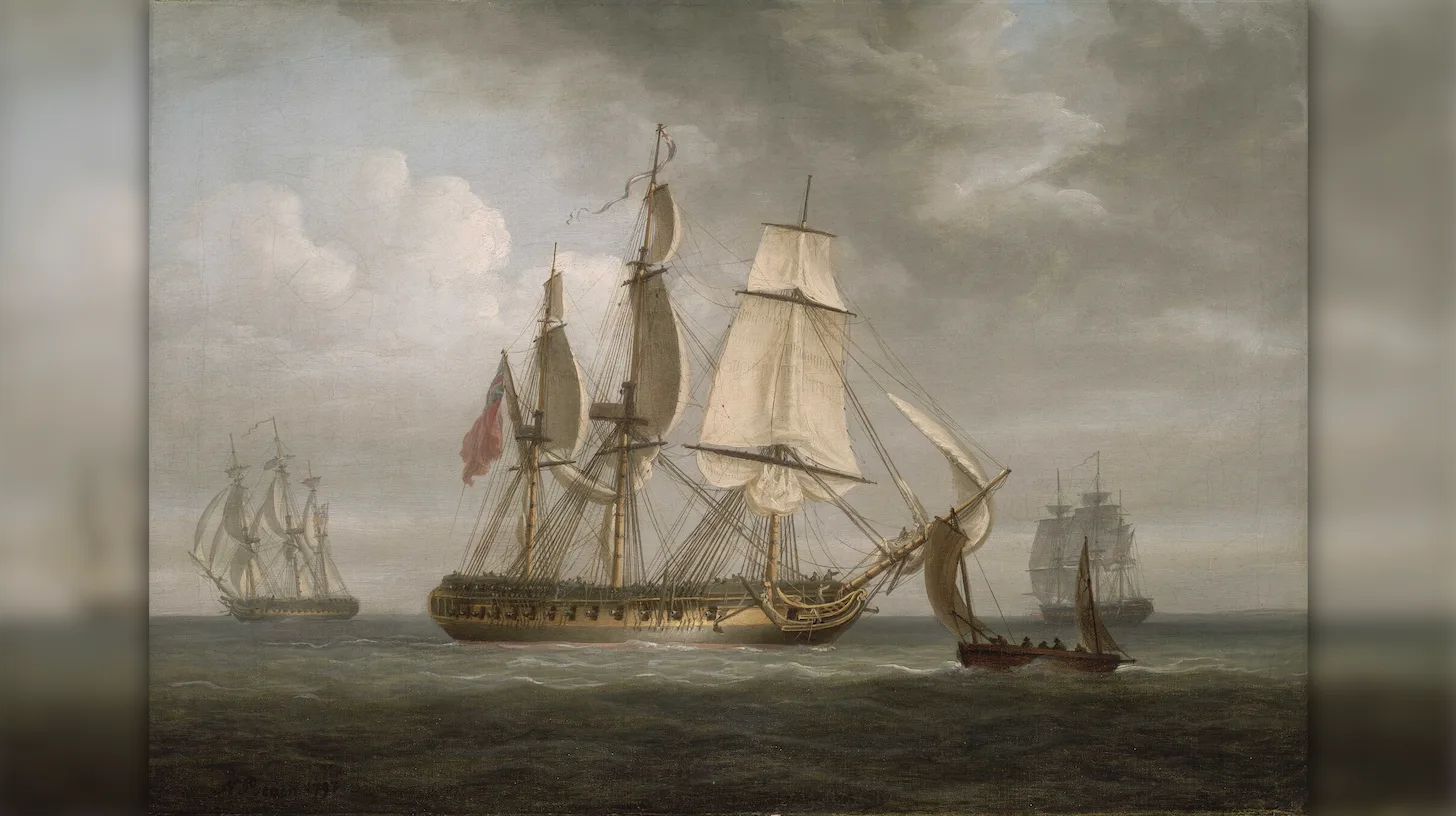
The other three frigates held on after the Santa Brigida through the rest of the day and the night that followed. She was, Pierrepont reported later, one of the fastest ships in the Spanish navy, built at Cartagena, and she was making for the coast.
Foul ground off Muros
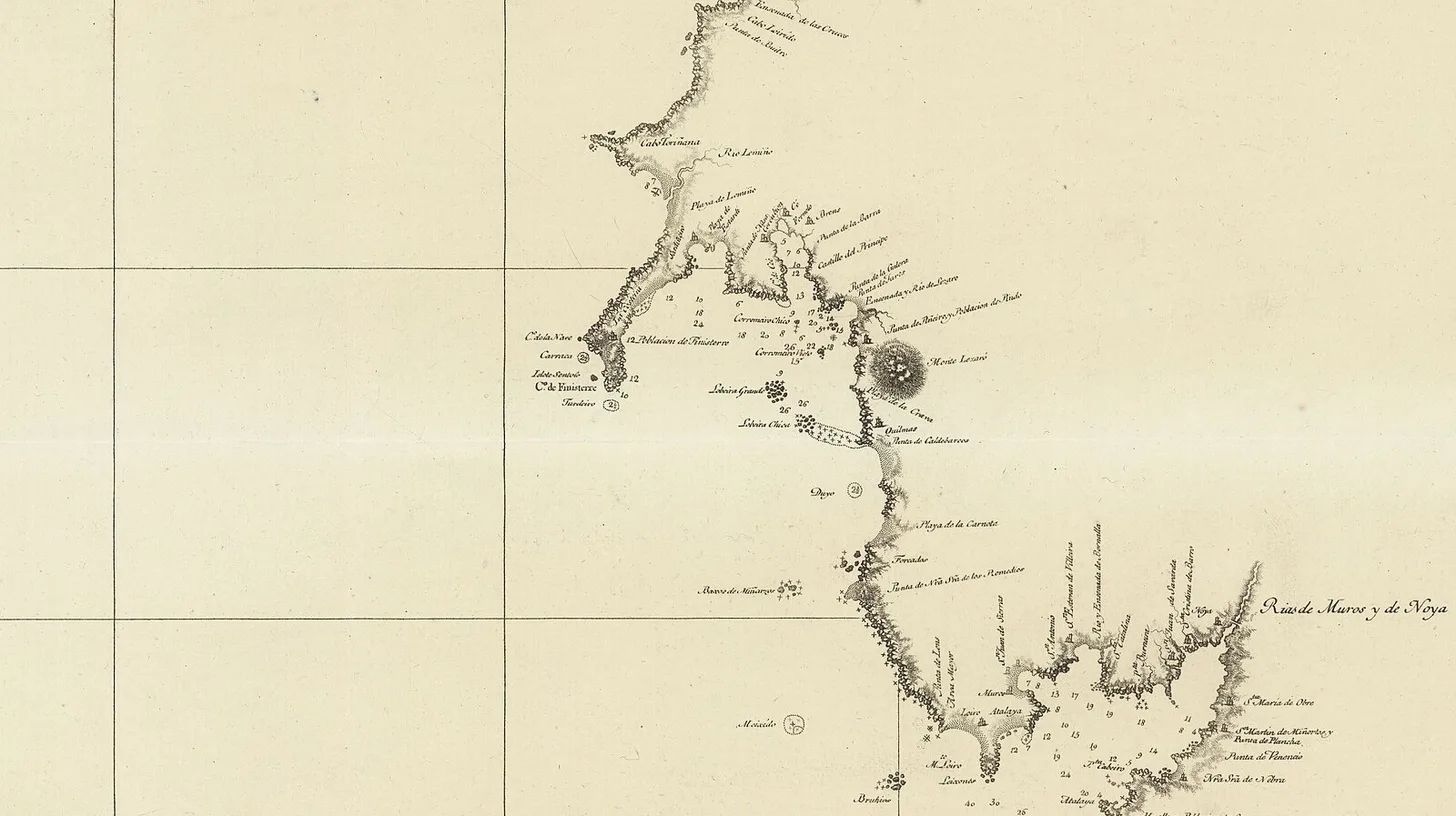
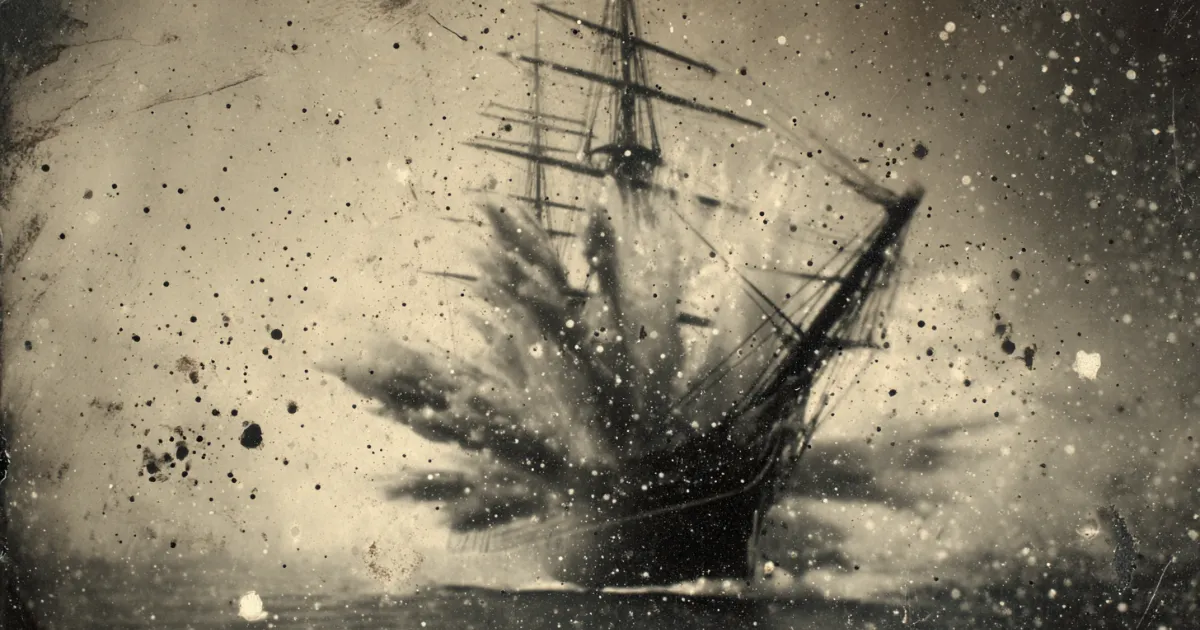
Early on the 17th the Santa Brigida rounded Cape Finisterre, the westernmost point of Galicia, so close inshore that her pursuers had to follow her among the rocks. The Triton was leading. At about five in the morning, going seven knots, she struck the rocks of Monte Lora, and Pierrepont described how it happened.
“Captain Gore being regardless of every thing but closing with the enemy), struck upon the said rocks, going seven knots at the time; I fear her damage is considerable: however she was soon off again,”
Gore himself reported to the Admiralty that the Triton had struck “with extreme violence upon a rock” and was leaking. She got off and was firing at the Spaniard again by seven. The Alcmene steered to cut the Santa Brigida off from the little harbour of Port de Vidre, and the Spanish captain threw his anchors and boats overboard to lighten his ship. At eight she ran among the rocks of Commarurto at the entrance to Muros and struck her colours. The Alcmene had one man killed and nine wounded, the Triton one wounded, the Santa Brigida two killed and eight wounded. The Naiad never got close enough to be hit.
A breeze off the shore got them all clear of the rocks. Four large ships, one flying a commodore’s broad pendant, came out of Vigo to the south and then went back in. Pierrepont stayed off the coast for two more days with his prize. “Light and variable winds have kept me still in sight of the Spanish coast,” he wrote on the 19th, “which is to day one continued blaze.” He put his first lieutenant in charge of the Santa Brigida and sailed for England.
Sixty-three waggons to the Citadel
The Thetis came into Plymouth on October 21 and the Santa Brigida the next day. Neither ship was wanted for the navy. Their value, the naval historian William James wrote, lay in “the cargoes they carried.” The Thetis held 333 boxes of 3,000 dollars, 93 of 4,000 and four smaller ones, with gold doubloons besides, and the Santa Brigida 446 boxes of 3,000 with dozens of bags still to be counted, in all something over 2.7 million dollars. At the official rate of four shillings and sixpence to the dollar, that came to more than £600,000.
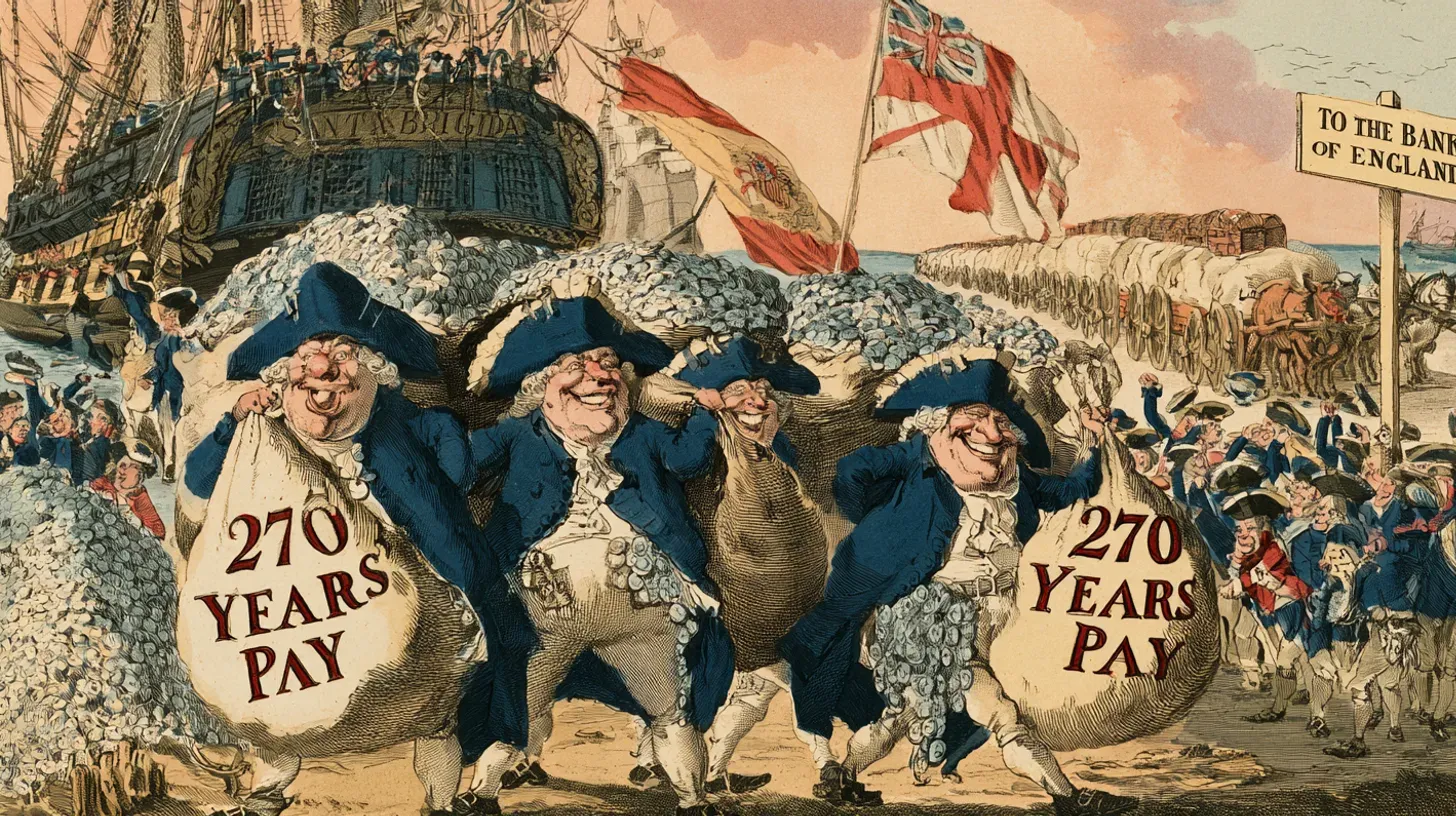
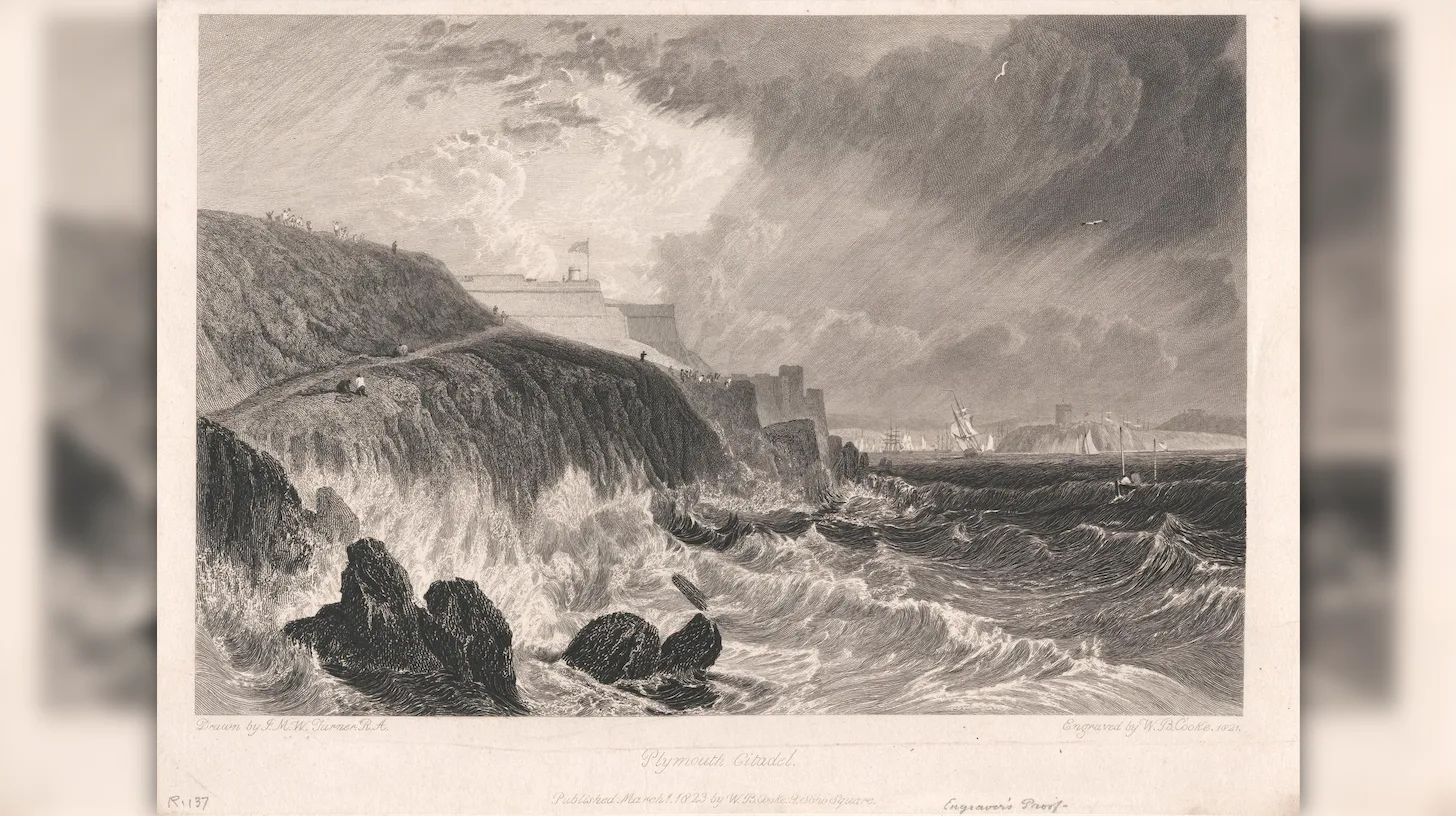
The dockyard commissioner did not want the silver landed in his yard. The captains went through every storehouse in the dockyard with a lieutenant general and an admiral, and then asked instead for the Citadel, the old fortress above the harbour, and a guard. On October 28 and 29 the treasure was moved, and the Naval Chronicle’s Plymouth correspondent set down the order of march. The wind was south-east and the weather fair. At ten each morning the procession came out of the dockyard gate and went through Dock, Stonehouse and Plymouth: a trumpeter of the Surrey Dragoons sounding a charge, dragoons two by two with drawn sabres, a band playing “Rule Britannia” and “God Save the King,” and then sixty-three wagons of dollars in nine divisions of seven.
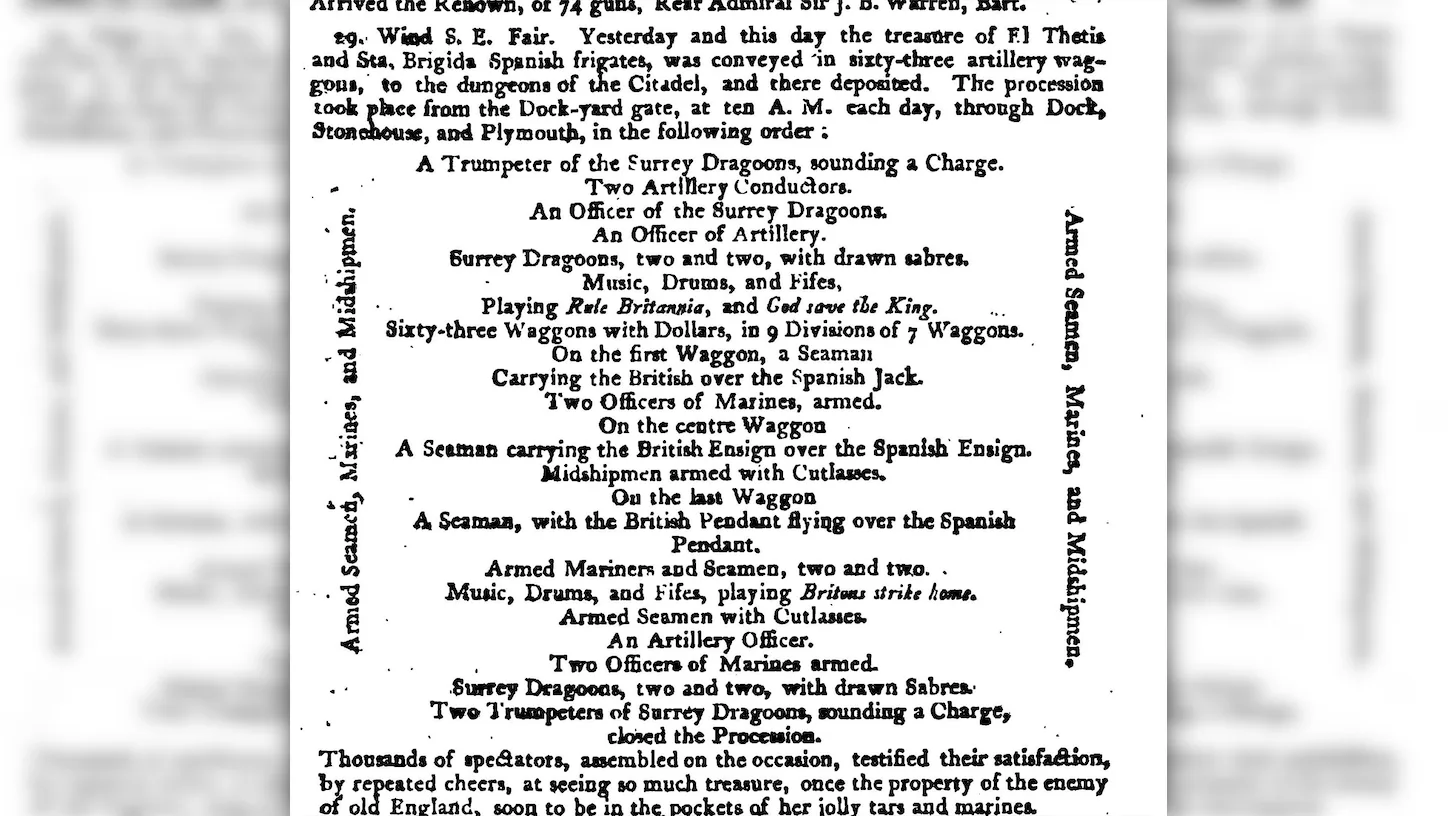
On the first wagon a seaman carried the British jack over the Spanish one, and on the middle and last wagons other seamen held the British ensign and pendant over the Spanish. Armed seamen, marines and midshipmen with cutlasses marched along both sides. A second band played Britons Strike Home. Thousands of people lined the way, the correspondent wrote, and cheered to see so much treasure, once the enemy’s, on its way into the pockets of the sailors who had taken it. James summed it up in one sentence.
“63 artillery waggons, escorted by horse and foot soldiers and armed seamen and marines, and accompanied by bands of music and an immense concourse of people, conveyed the treasures to the dungeons of the citadel of Plymouth.”
Six waggons to the Bank
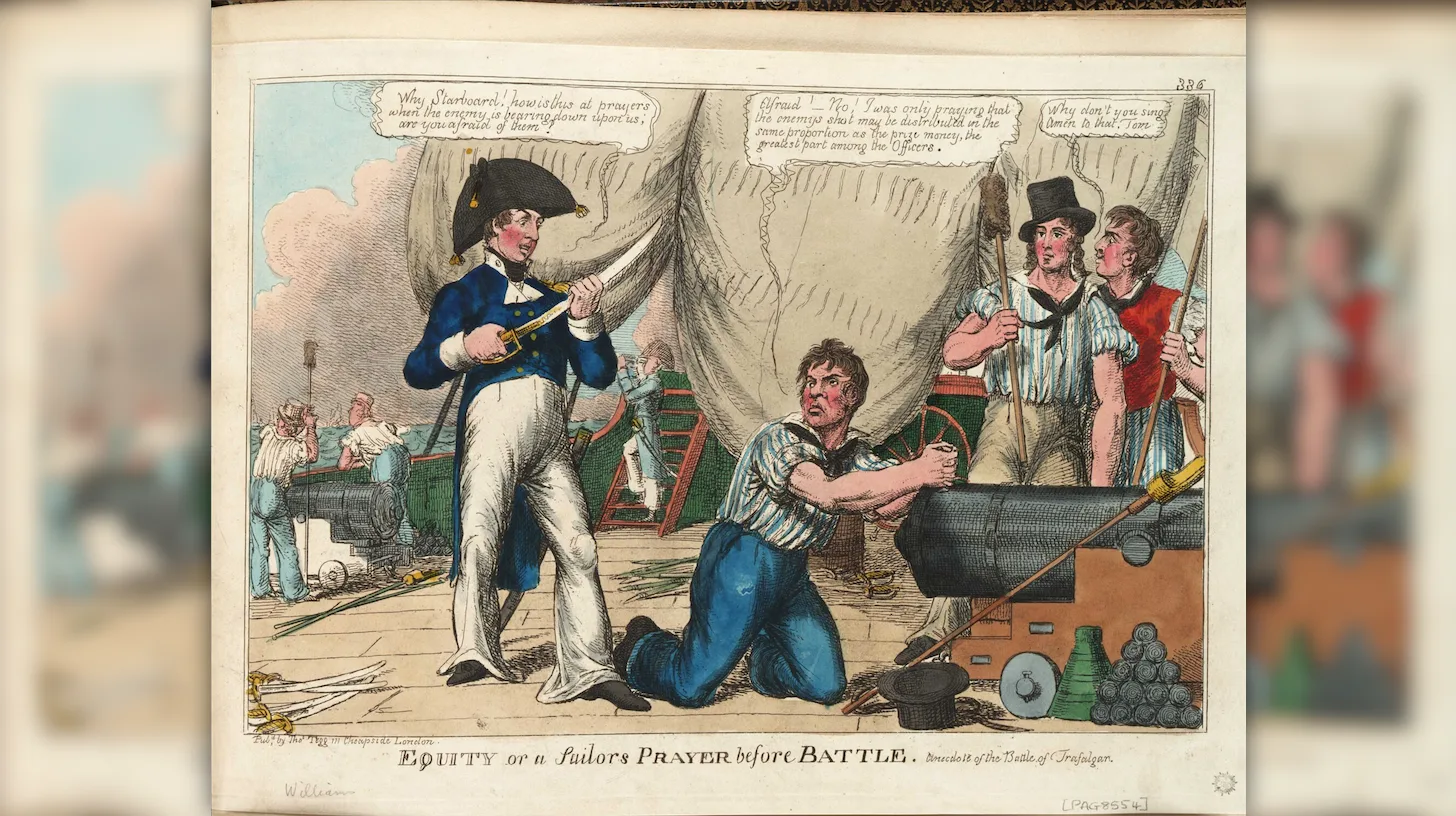
The silver did not stay long in Plymouth. Late in November it went on to London in divisions, by road, with an escort, and on December 4 six of the wagons reached the Bank of England. They had been met at Kensington at nine in the morning by a captain’s guard of the grenadiers of the Guards, and went in along Piccadilly, St James’s Street, Pall Mall, the Strand, Fleet Street and Cheapside. At the Mansion House the Lord Mayor and Lady Mayoress came out in front of the house with Captain Young and drank from a golden cup, while the band played “Rule Britannia” and the seamen with the wagons, who were given drinks of their own, gave the Lord Mayor three cheers.
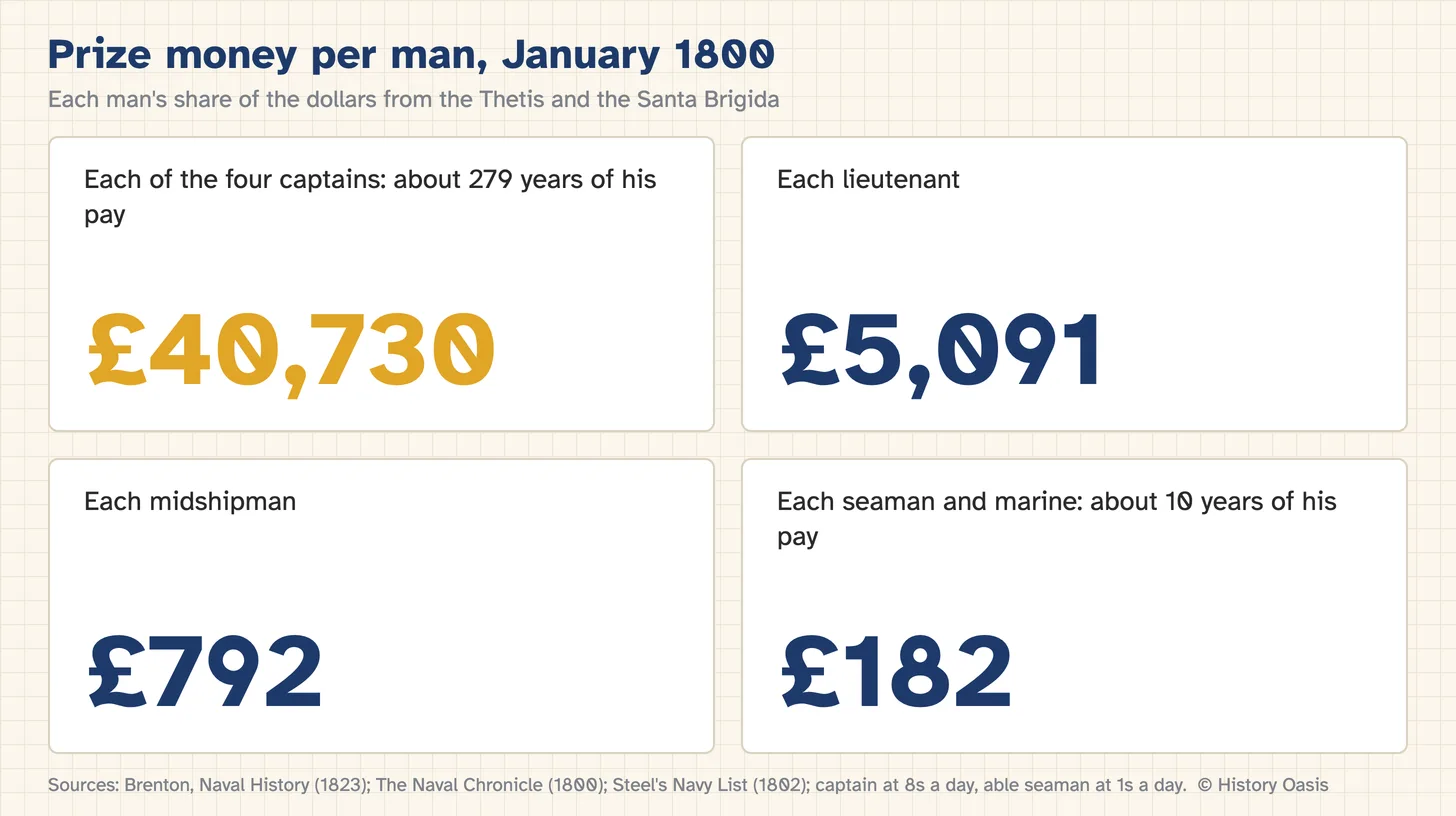
Royal Navy prize money was shared out by rank, and the prize money on the dollars was paid by the prize agents on January 14, 1800. The four captains received £40,730 18s. each. A lieutenant received £5,091 7s. 3d., a midshipman £791 17s. 0½d., and every seaman and marine £182 4s. 9¾d. The value of the hulls, stores and rigging was still to come. A captain of a ship the size of the Naiad was paid eight shillings a day, or £146 a year, so his share was worth about 279 years of his pay. An able seaman had earned one shilling a day since the mutinies of 1797, about £18 5s. a year, so his share was worth about ten years.
Eleven gold coins in a lid
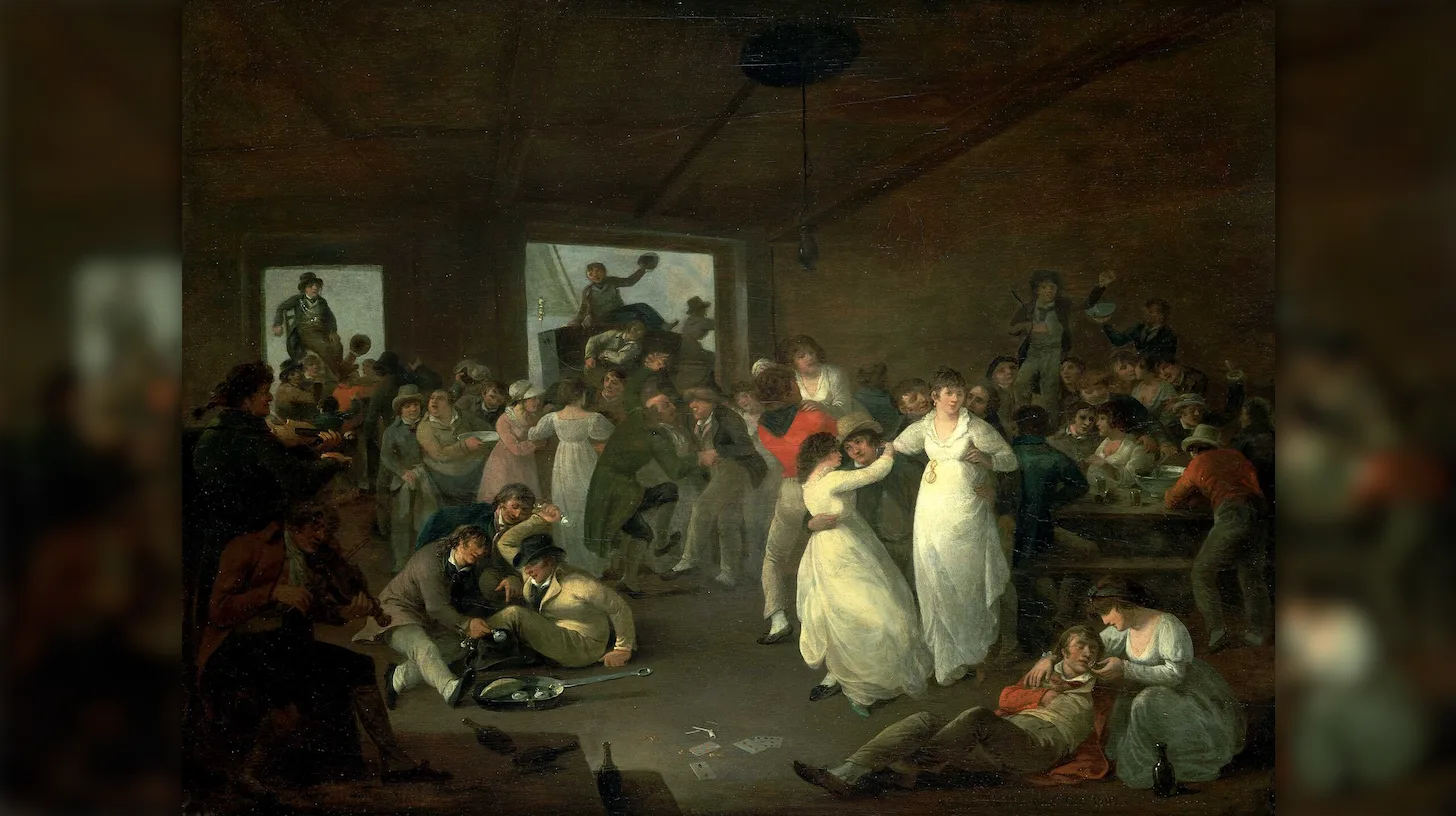
The Ethalion did not have long to enjoy her luck. On Christmas Day 1799 she was wrecked on the rocks called the Saints, off Brittany, through, a court martial found, “an unusual course of tide, and but little wind.” Her captain and crew were acquitted at Plymouth in January, and one of her seamen drank so much in celebration that he fell, fractured his skull and died. Pierrepont was ill by December, and a surgeon certified that his indisposition had been made worse by “cold and fatigue.”
He spent his money on land. In 1800 he bought Shalford Manor near Godalming, in Surrey, and in 1801 an estate called Farley Hill, and he had a silver-gilt tankard made with a high domed lid set with eleven Spanish gold coins, the latest of them struck in 1799. It is inscribed to commemorate the 17th of October 1799. He became a rear admiral in 1812 and died at Farley Hill the next year, aged forty-six. Digby, who later commanded a ship of the line at Trafalgar, said by his own account that he had made £57,000 in prize money before he was thirty.
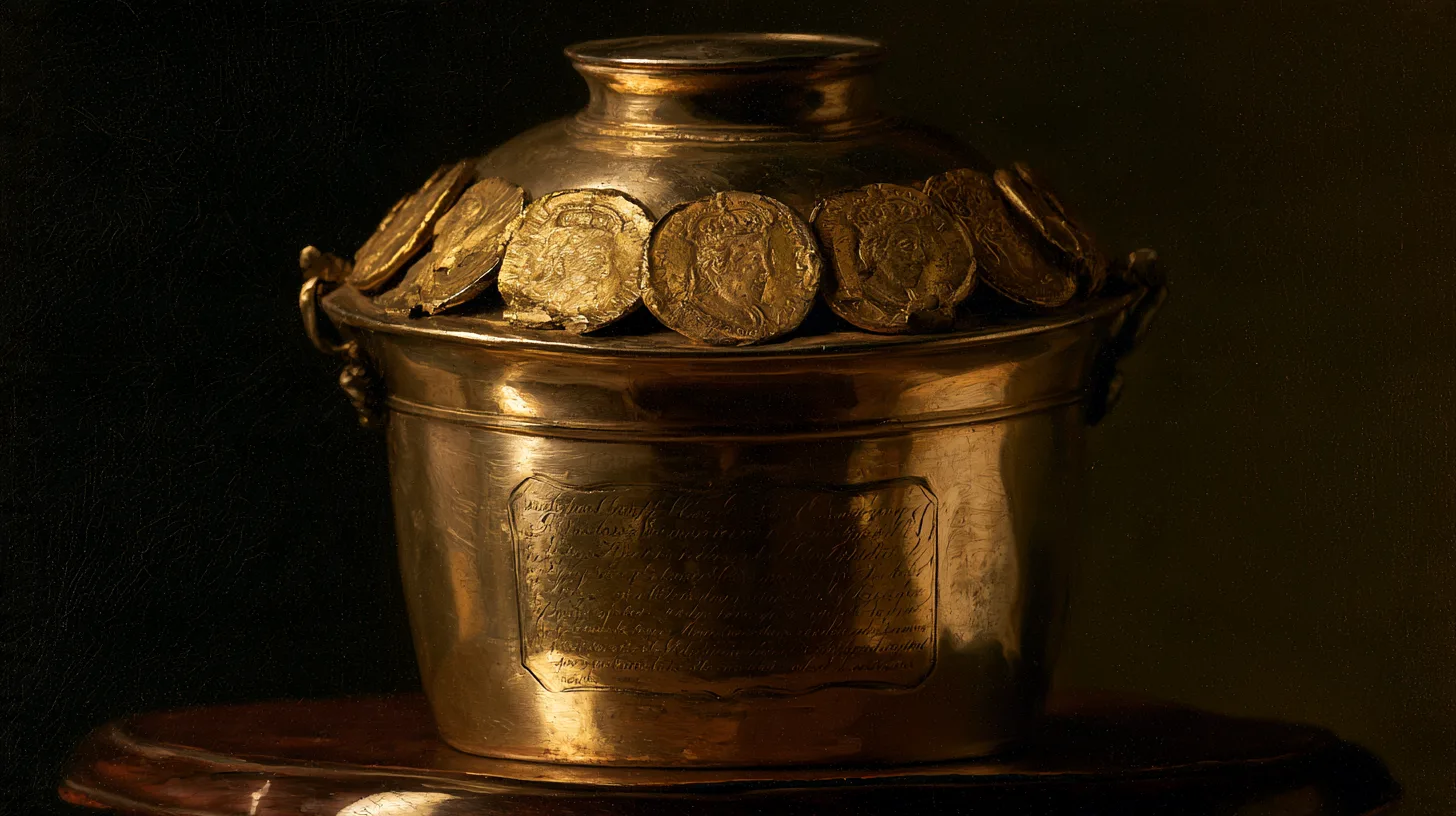
The share that went to the admiral of the station became a quarrel of its own. It went to the Earl of St Vincent, and Horatio Nelson, who claimed it, went to law over it, and the case was settled in 1803 with £10,000 to Nelson. Pierrepont’s tankard is now in the National Maritime Museum at Greenwich. The eleven gold coins are still in its lid.