14 min read
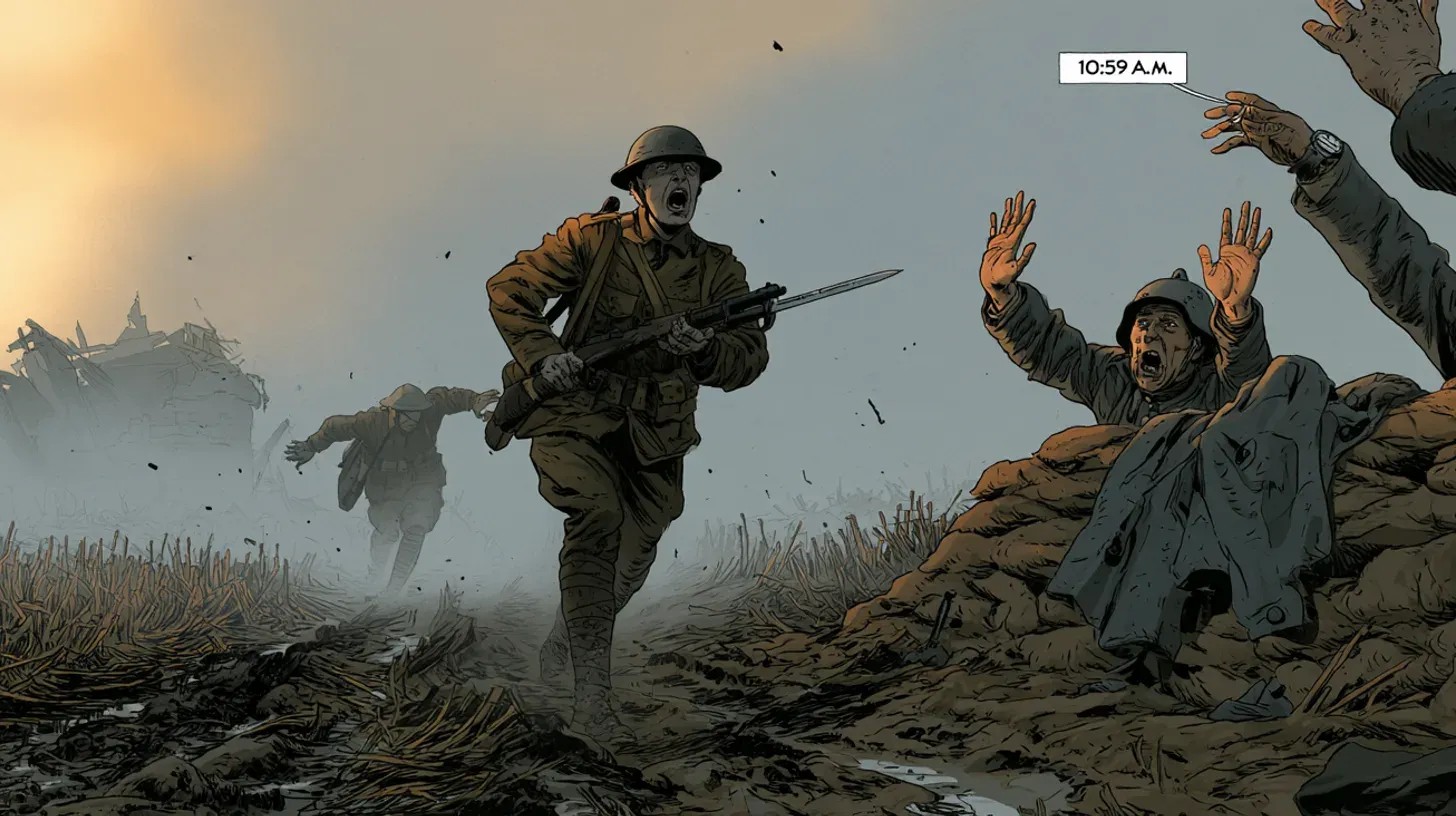
A few minutes before eleven o’clock on the morning of Monday, November 11, 1918, in fog outside the French village of Ville-devant-Chaumont, a private of Company A, 313th Infantry, announced that he was going to take the German machine gun nest that stood directly ahead of his company. His name was Henry Gunther, he was twenty-three, and he came from Baltimore. The men around him told him that in a few minutes the war would be over. The Germans at the gun, as his company told it afterward, waved at him and called to him to go back. He kept going, and at one minute to eleven they shot him.
The Armistice of 11 November 1918, which ended the First World War, had been signed a little after five o’clock that morning, and it was to take effect at eleven. Gunther has been named ever since as the last American soldier killed in the war. His story has grown in the retelling, with a letter about the trenches, a friend told to dodge the draft, a sergeant’s order he defied and an order from General John J. Pershing, the general who had chased Pancho Villa into Mexico two years before, naming him. The accounts his own division printed in 1919 and 1922 tell a plainer story, and they give a reason for the charge that the men of his company believed.
A supply sergeant from Eastern Avenue
Henry N. Gunther was the son of German-American parents, George and Lena Gunther, and the family lived at 3011 Eastern Avenue in East Baltimore. The state’s record of its soldiers gives his birth as June 5, 1895 (his grave marker and most later accounts say June 6). He had a new job at a bank and a new girlfriend when the draft took him, according to an archivist at the National WWI Museum, and the family later remembered the suspicion that fell on German names in Baltimore during the war. One great-nephew told NBC News, “We were told growing up that the local pharmacist accused my grandmother of being a German spy.” No record reached for this article gives his height or the colour of his eyes.
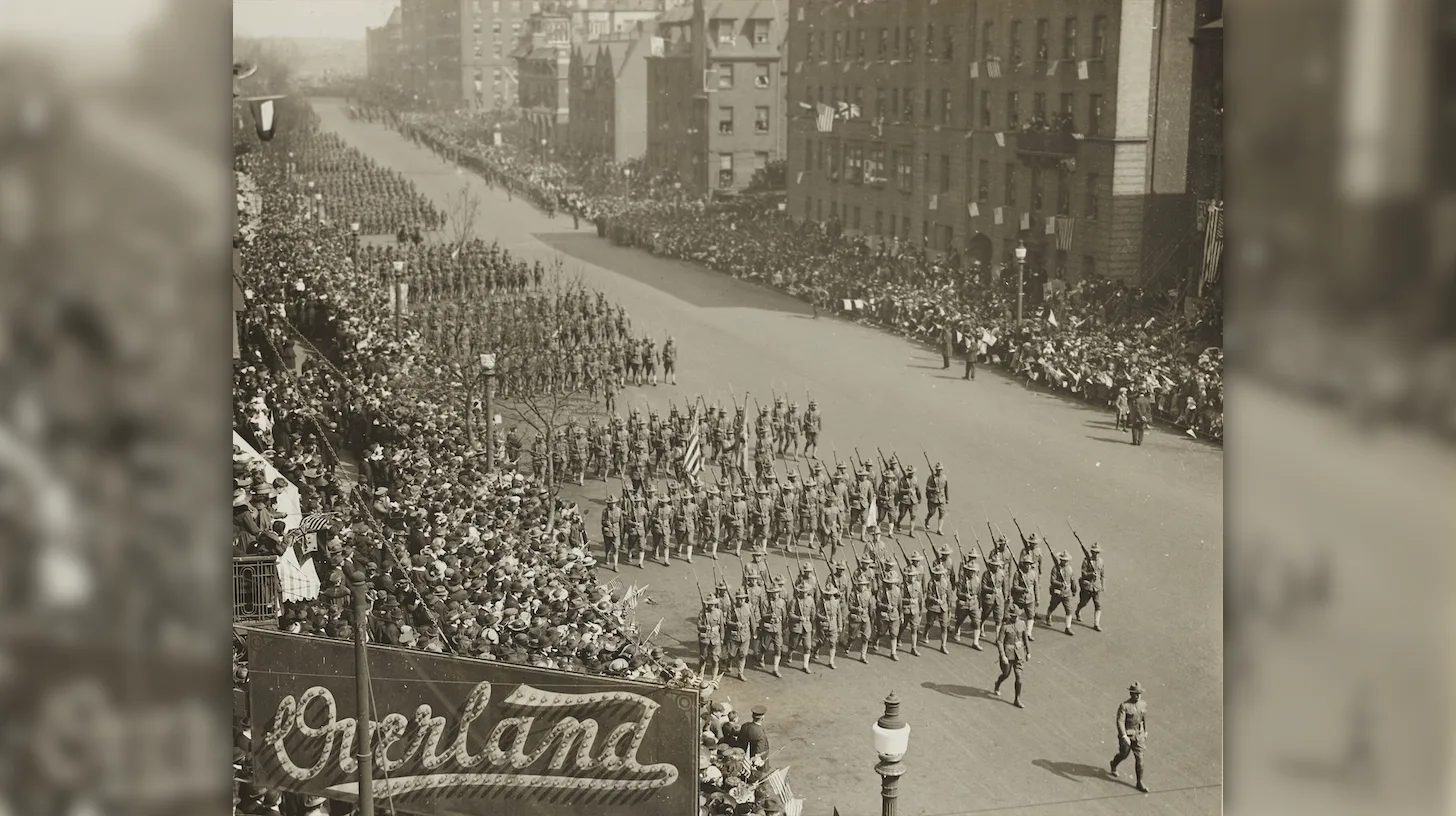
He was inducted at the end of September 1917, was soon made a sergeant, and within three weeks was the supply sergeant of his company, the man who kept its clothing and equipment. The 313th was a Baltimore regiment, and it called itself Baltimore’s Own. It crossed in July 1918 on the transport Leviathan, which anchored in the harbor of Brest one afternoon in the middle of the month. Then it went to train around the town of Champlitte where the band played at retreat in front of the town hall and the townspeople came to watch.
It was at Champlitte that Gunther lost his stripes. James M. Cain, a private in the division’s headquarters troop who later became a novelist, gathered the story from the men of Company A a few months afterward. Gunther, he wrote, “wrote a letter home complaining of certain things about army life, and as this was a violation of the censorship regulations, he was reduced to the grade of private.” The state’s record dates the reduction August 16, 1918, three weeks before the regiment left for the front.
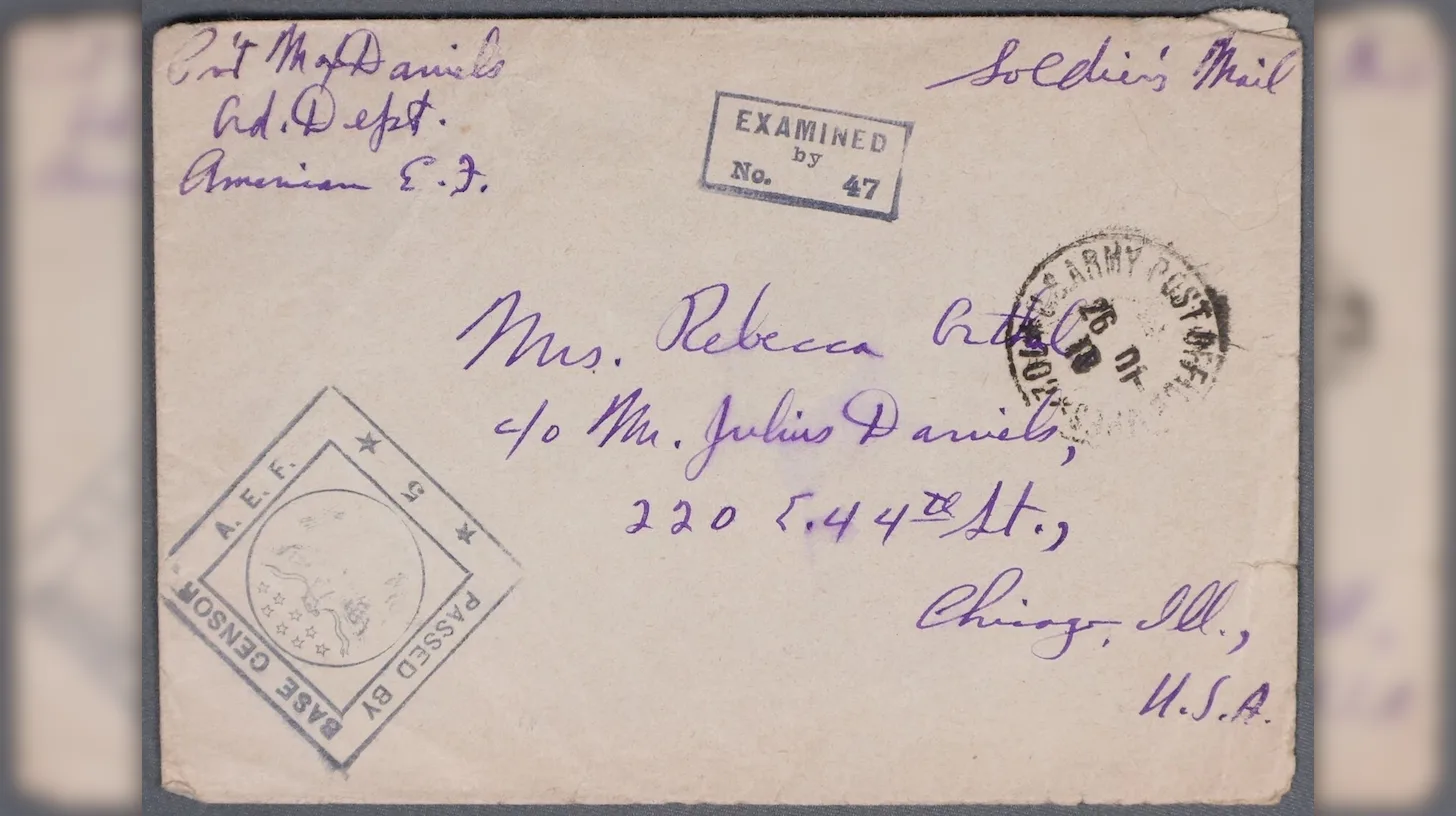
Later accounts say the letter urged a friend to stay out of the draft, but that detail first appears in family memory long after the war, the letter itself has never been found, and the family’s papers from those years were lost when their house burned. What the men of his company remembered was the effect on him, and the worry Cain heard most about was that “he thought himself suspected of being a German sympathizer.”
“According to his companions, Gunther brooded a great deal over his reduction in rank, and became obsessed with a determination to make good before his officers and fellow-soldiers.”
East of the Meuse in the rain
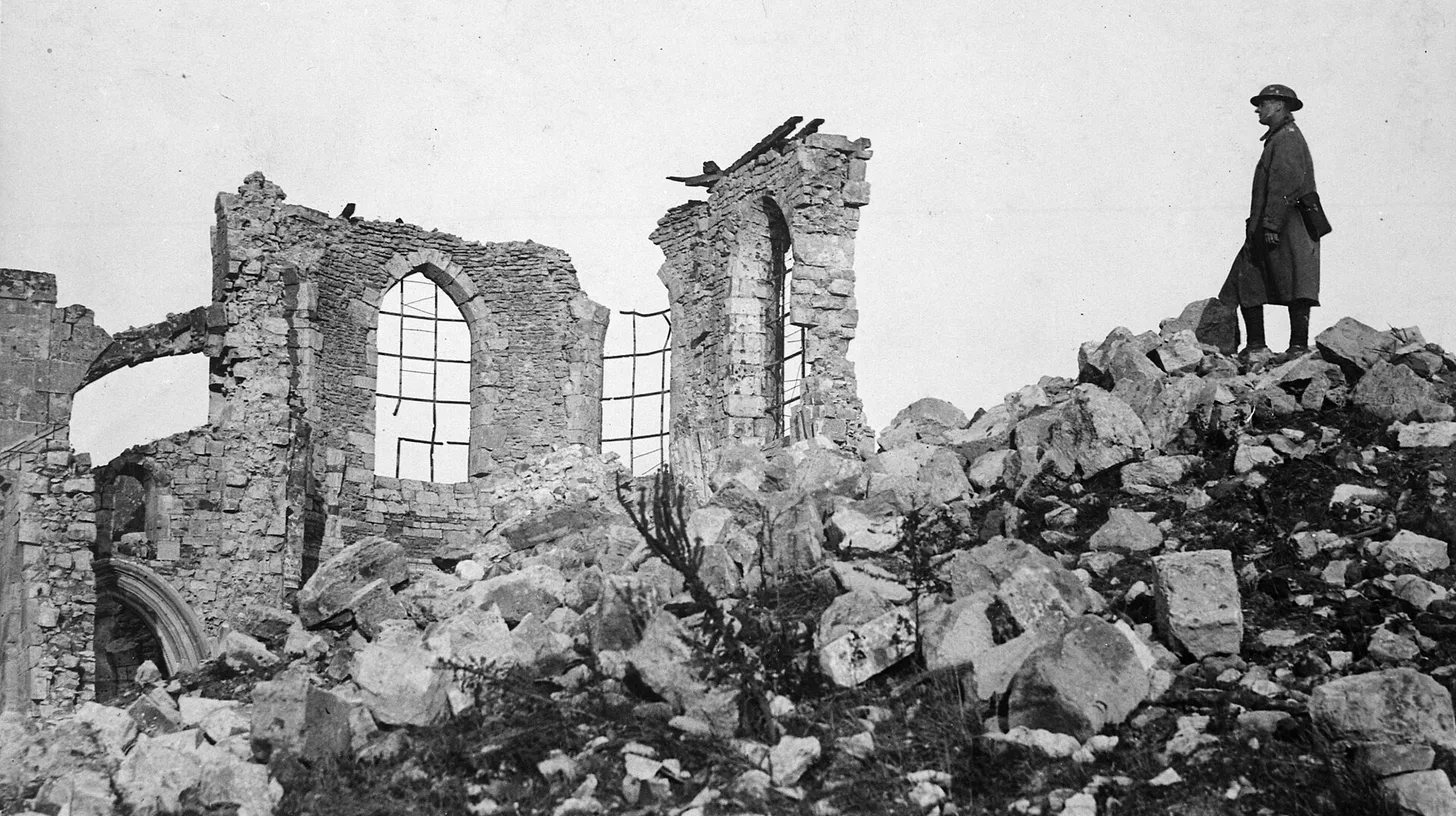
The regiment entrained for the front on a Sunday morning in September, and in the great American offensive between the Argonne Forest and the Meuse River Gunther took every risk that came to him. Cain’s informants said that from the start he showed “the most unusual willingness to expose himself to all sorts of risks and to go on the most dangerous kind of duty.” He did well in the fight for the hill town of Montfaucon, and when the division crossed to the heights east of the Meuse in the last weeks of the war he carried messages for his company as a runner.
A few days before the end, a German bullet went through his wrist while he was carrying a message. He bandaged it and kept on. When one of his officers noticed how worn out he looked and asked what was the matter, Gunther, by Cain’s account, said only that he was a little tired and thought he would take a rest. “He said nothing about his wound, however,” Cain wrote.
By the night of November 10 the 313th had been fighting for days in the woods near a place called Ormont Farm, and the men, the regimental history says, had “been exposed to the wet and cold.” Rolling kitchens came up with hot food. Rumours of an armistice were everywhere, and somebody remarked that the dove of peace must have gone absent without leave. That night the commander of the 1st Battalion, Major Gibbons, received orders for his battalion to attack in the morning. Gunther’s company, A, belonged to it.
Pressed with vigor until eleven
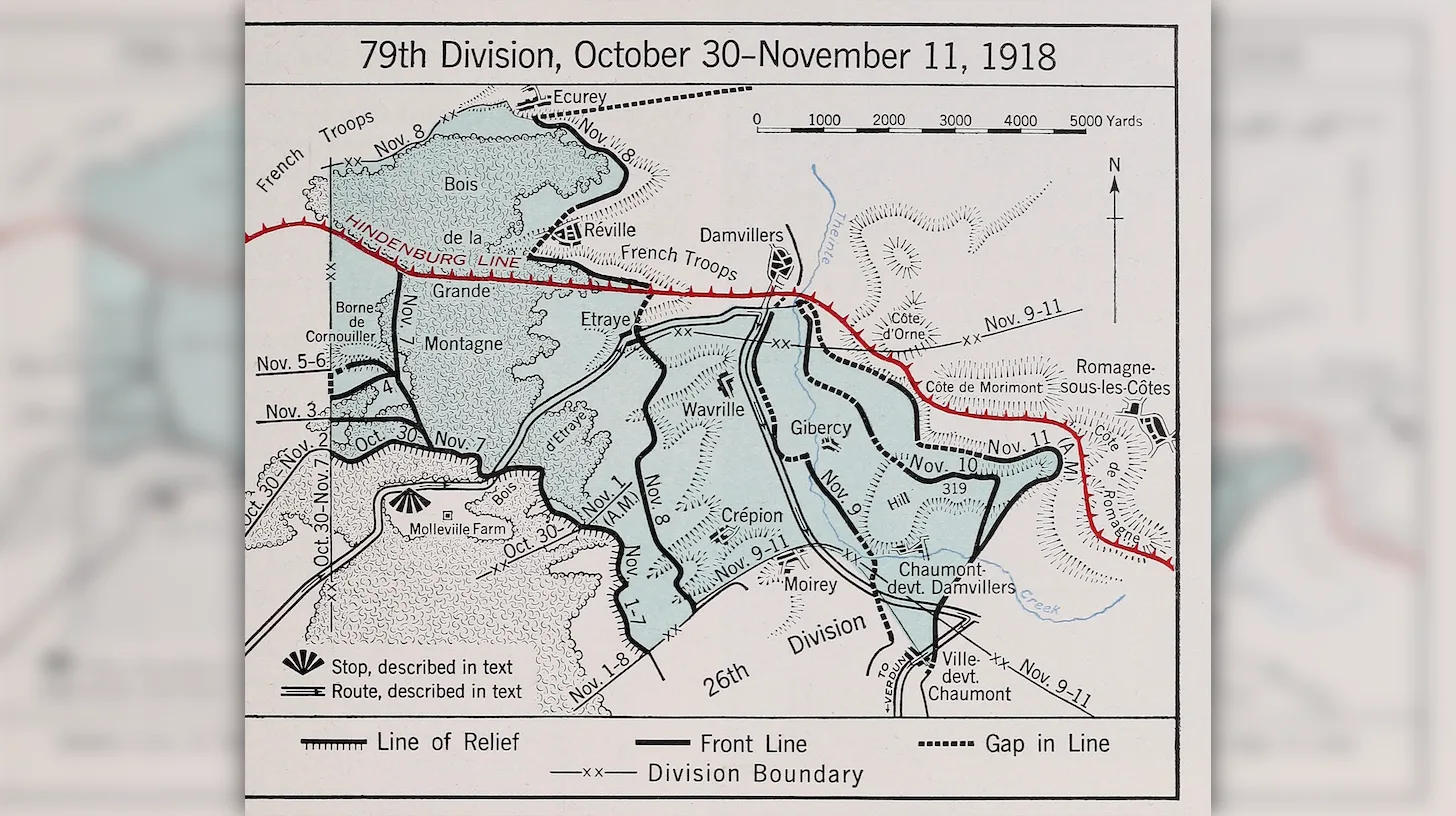
The armistice text says it was signed “at 5 o’clock French time,” and its terms took effect six hours later, at eleven. Nobody in the line knew it yet. Marshal Ferdinand Foch’s message reached the headquarters of the 79th Division at 8:15 that morning, and at nine o’clock the division sent its orders down by telephone. The war would stop on the whole front at eleven, and at that hour every line would halt where it stood. Until then, the order said, “the operations previously ordered will be pressed with vigor.”
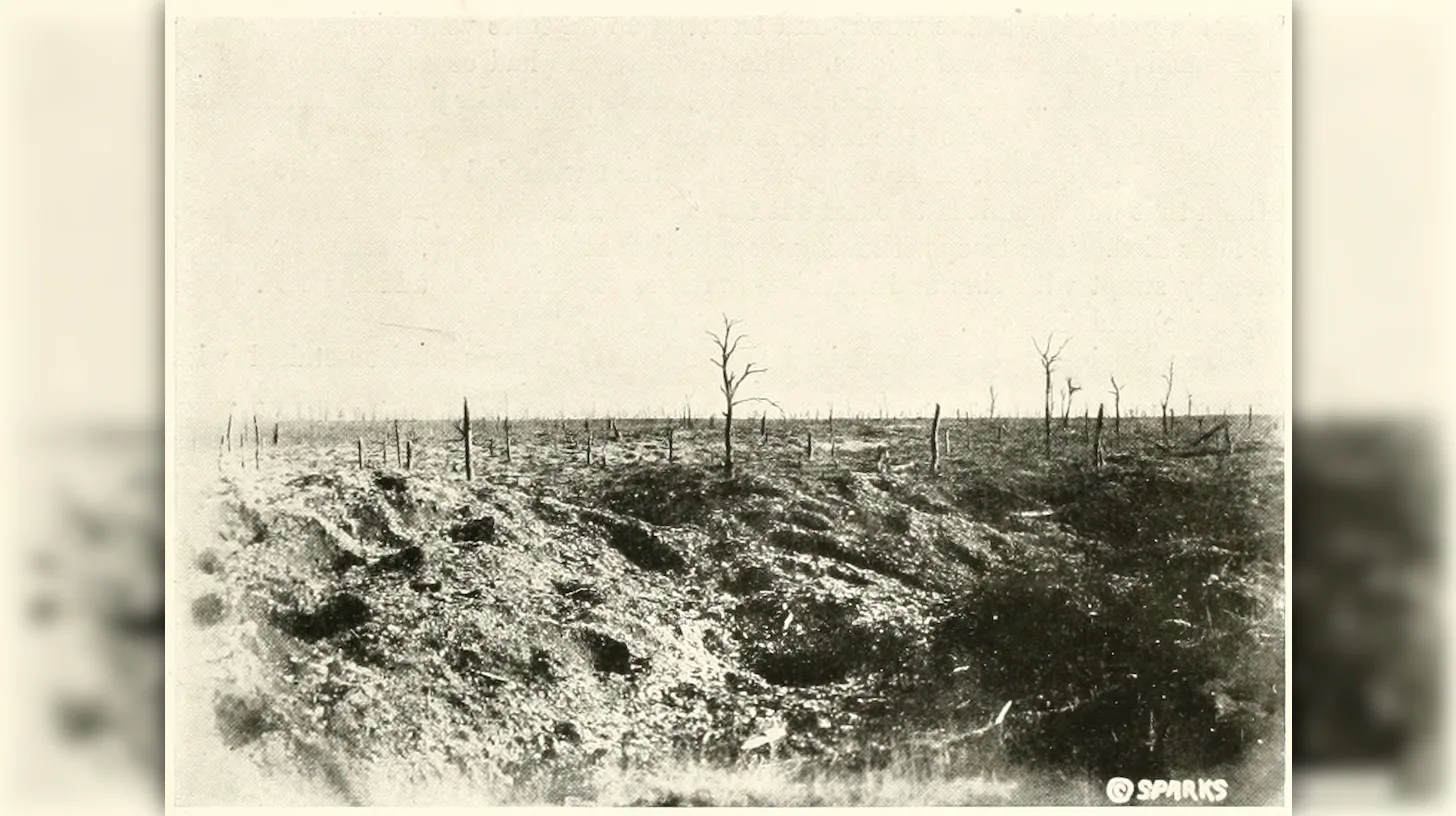
The 1st Battalion’s line ran south from the village of Chaumont-devant-Damvillers to the village of Ville-devant-Chaumont, on the extreme right of the division’s sector. At half past nine the infantry went forward. The fog was thick enough that the division history later credited it with spoiling the aim of the German artillery. The shells that did come over “struck deep in the boggy ground, hurling great columns of water and mud when exploding, but doing little damage.” To the men of the 313th the bursts seemed “to throw mud, water and iron straight up into the air.” Ahead of the regiment, German machine gun nests were being defended to the last.
The runners who carried the cease-fire order forward, the division history says, “knew that death lurked for them in the intervening minutes and, nevertheless, performed their duty.” One of them found the 1st Battalion in the middle of its attack. “At sixteen minutes to eleven a runner from Regimental Headquarters caught up with the Battalion Commander,” the regimental history says, and the battalion “still pressed the attack vigorously and kept gaining ground,” the history goes on. The order had been to press until eleven, and it was not yet eleven. All along the Western Front that morning other battalions did the same. The historian Joseph Persico later estimated that the last day of the war cost all the armies together about 10,900 men dead, wounded and missing.
A machine gun directly ahead
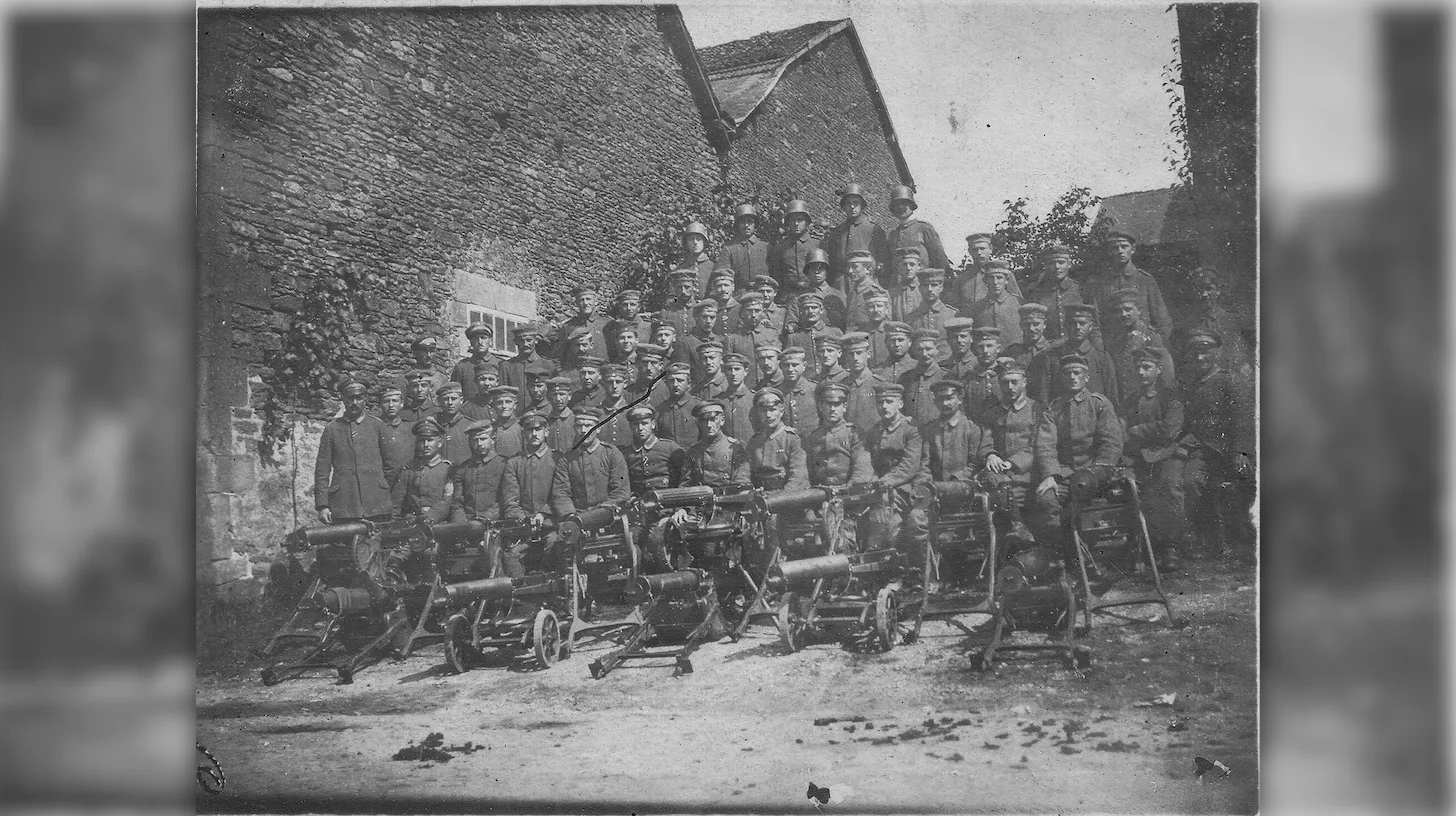
Henry Gunther was with the runners and riflemen of Company A on the outskirts of Ville-devant-Chaumont when the order came down that the fighting would stop at eleven. Directly ahead, Cain wrote, a German machine gun nest was in plain view. Cain was not there. He wrote from what the men of the company told him a few months later, and their account agreed in all essentials, his editors noted, with the report the regiment’s chaplain brought to Gunther’s parents.
At a few minutes to eleven, Cain wrote, Gunther “announced that he was going to take that machine gun nest.” His companions argued with him and told him the war would be over in a few minutes, and he started out, “armed with a Browning automatic rifle.” He fired as he went.
“When the Germans saw him coming they waved at him and called out, in such broken English as they could, to go back, that the war was over.”
Gunther paid no attention and kept on, Cain wrote, “firing a shot or two from his automatic as he went.” The Germans tried several times to turn him back. Then they turned their gun on him.
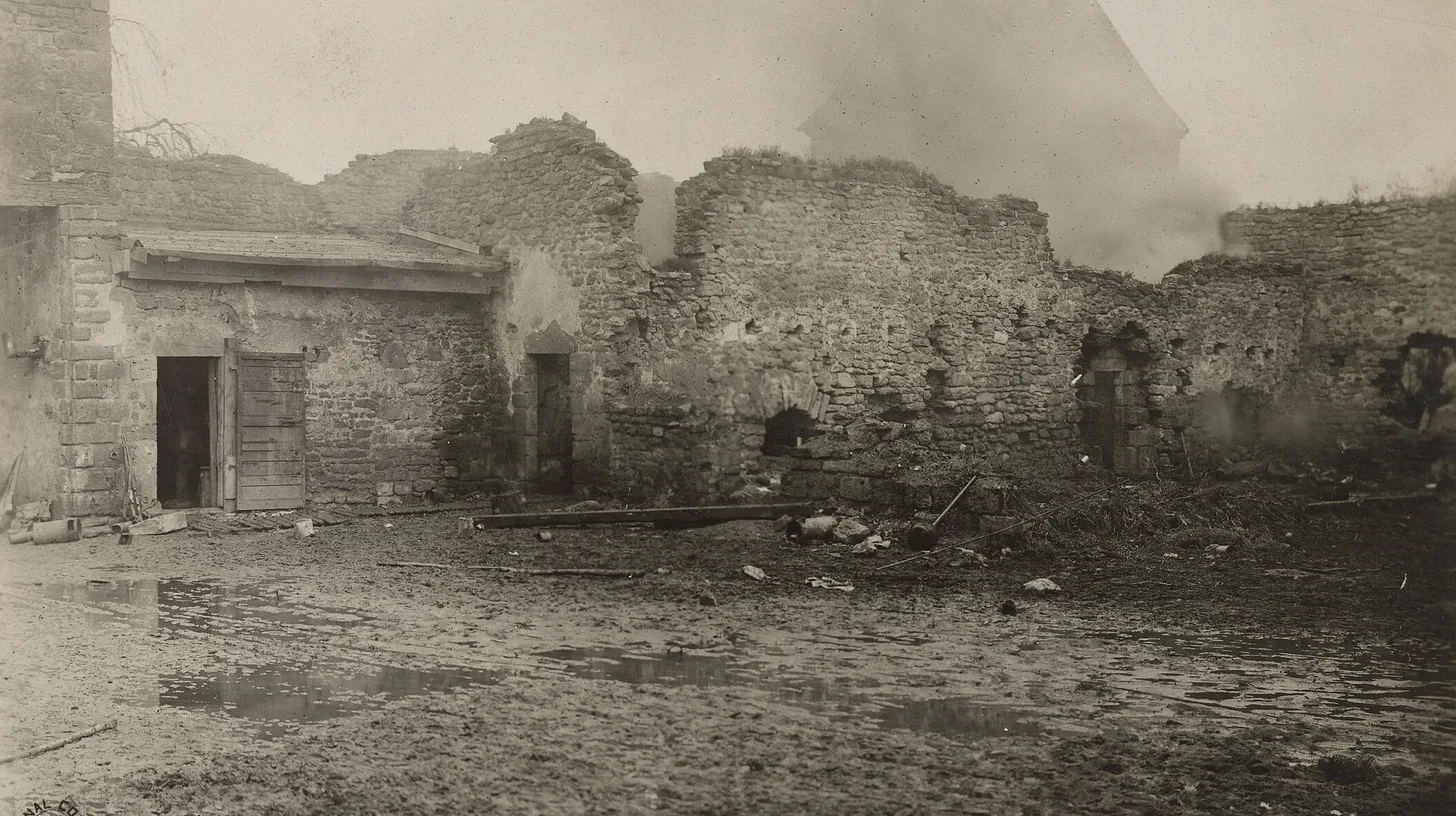
The regimental history gives it in a single sentence: “At one minute to eleven, Private Gunther of A Company was killed while attempting to rush a Boche machine gun.” The citation the division later issued places his body within a few yards of the gun. And the division history adds what followed, which was that the firing died away, “and an appalling silence prevailed.” Not every record agrees on the minute. A war diary that a National Archives historian read in 2018 puts it at 10:58, two minutes before the armistice, while the division, the regiment, the state and Cain all say one minute.
The story has gathered other details since. Later retellings have Gunther charging with a bayonet fixed, and they name a sergeant, Ernest Powell, who ordered him to stop. The 1919 accounts have no bayonet, and in them it is his comrades, not a sergeant, who beg him to stay back.
A stretcher at eleven o’clock
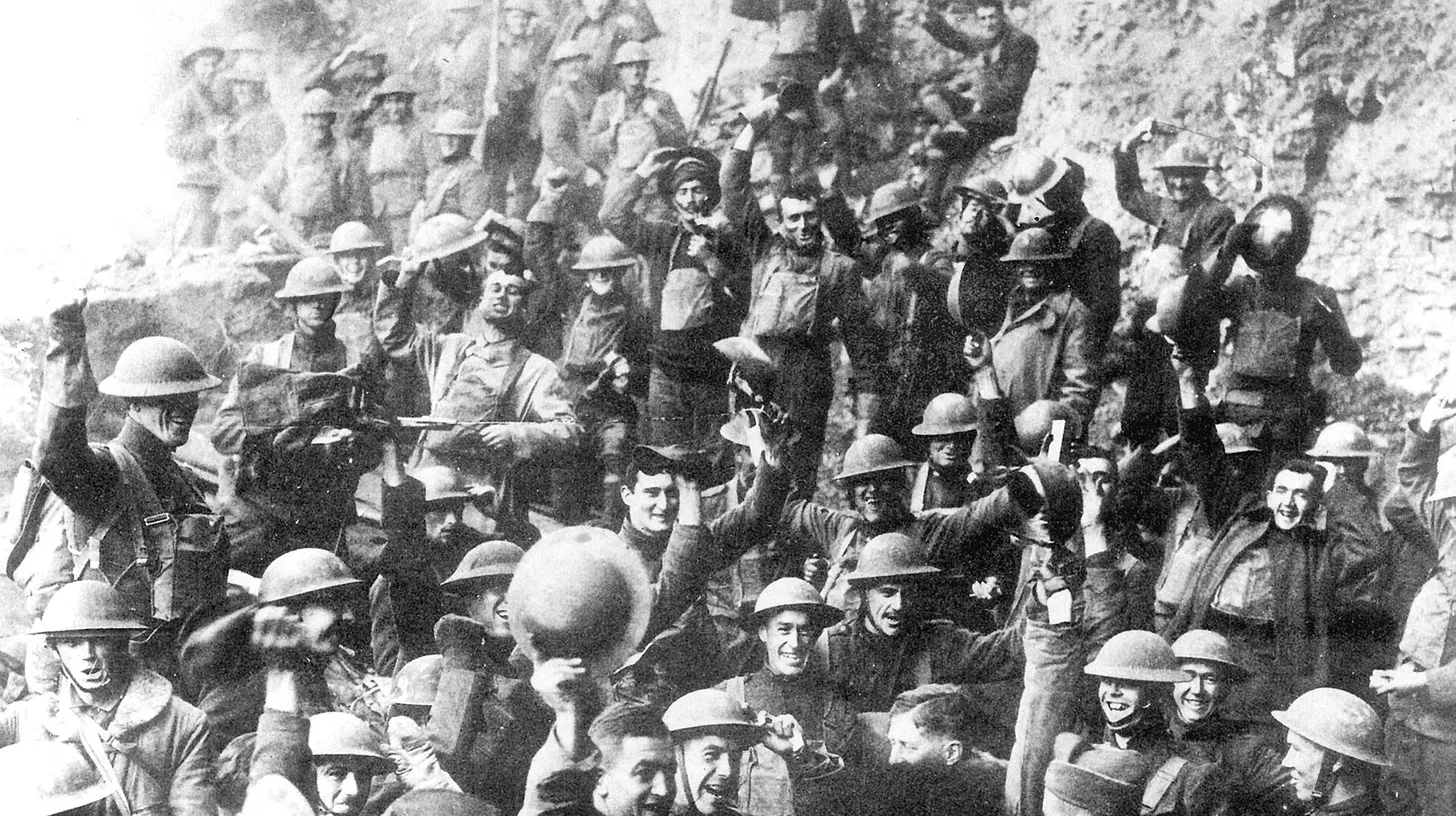
The guns along the front stopped firing at eleven, and every line halted where it stood. In Cain’s account, the first men to move afterward were the Germans who had killed Gunther.
A few minutes after eleven, “the German machine gun crew that had killed him came out with a stretcher and placed Gunther on it.” They carried him across to the Americans, and they explained, Cain wrote, “that they had tried to keep him from coming on, and that they had to shoot him in self-defense.” The division’s orders for the armistice forbade any fraternizing with the enemy, even talk from one line to the other. The Germans “insisted on shaking hands with the Americans,” and then they set Gunther down and went back to their own lines.
Along the rest of the line the men stayed where they were. “Somewhat dazed by the suddenness, troops rested on their arms in wonder,” the regimental history says. When night came, camp fires burned on both sides of the line, and the Germans sent up “Rockets and Very candles, red fire, blue fire, green fire,” and sang. “Men struck matches with no fear of a reprimand or a sniper bullet,” the division history says. Gunther was not the only man of the regiment killed that day; at least three other privates of the 313th died in the last morning of the war.
Perhaps the last
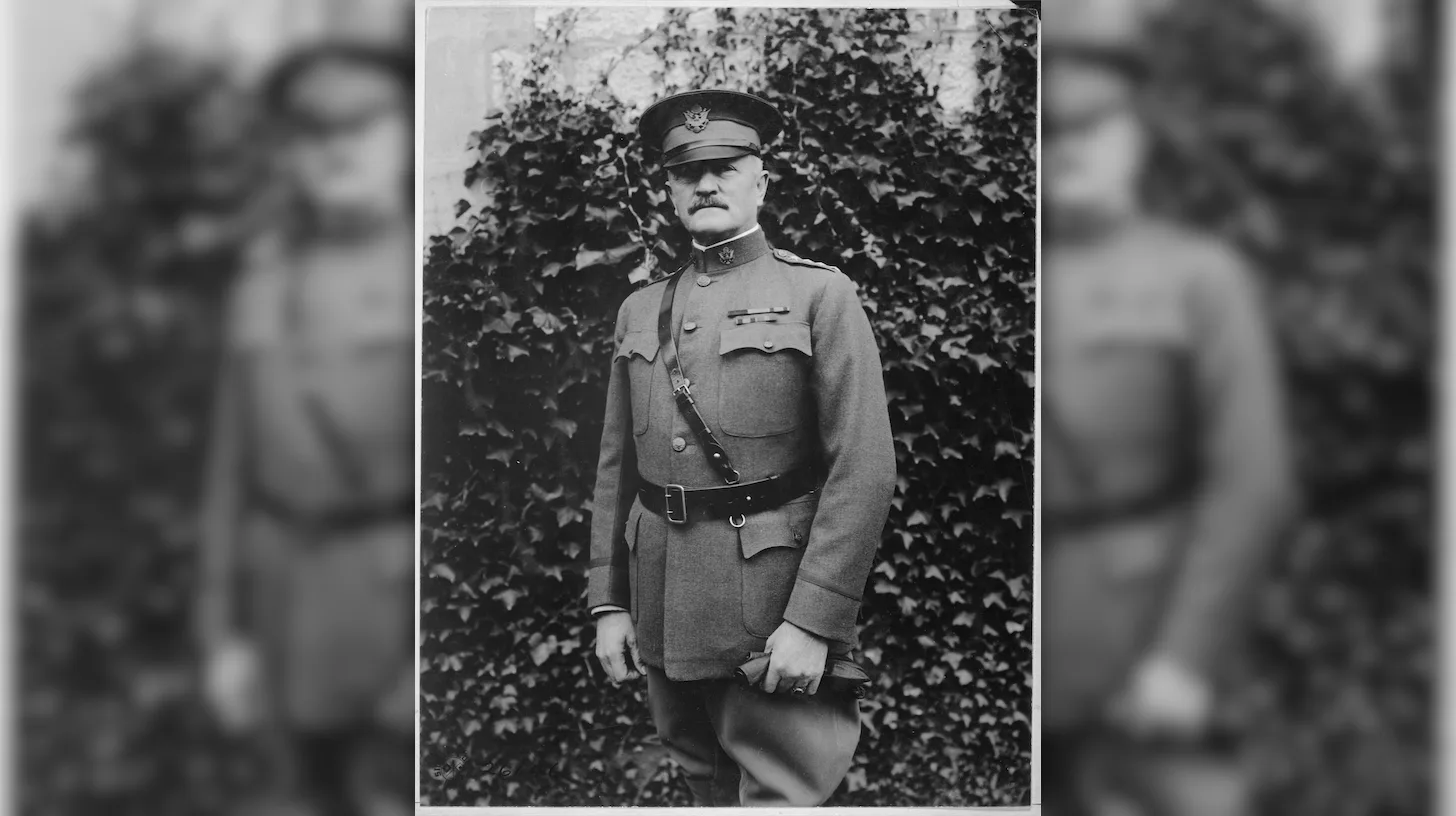
A chaplain of the division carried the report of his death to his parents on Eastern Avenue, and the Baltimore Sun printed Cain’s story on March 16, 1919, under the headline “DIED TO PROVE LOYALTY.” Cain did not doubt the reason his informants gave.
“Gunther, according to the men of Company A, must still have been fired by a desire to demonstrate, even at the last minute, that he was courageous and all-American.”
The division paper, the Lorraine Cross, put it more briefly: by its account, every man in Company A believed Gunther had made good. Neither paper claimed more than it knew about his place in history. Cain called him the last man killed in action in the 79th Division, “and perhaps in the whole American Army,” and the division history of 1922 called him “perhaps the last man killed in action on the Western Front.” The general order Pershing issued the day after the armistice thanked the whole army and named no one, and no order naming Gunther as the last American killed has been found.
He was not alone in the last hours. The last Canadian soldier killed, Pvt. George Lawrence Price, was shot by a sniper at 10:57 and died at 10:58. A French runner, Augustin Trébuchon, was killed about a quarter to eleven; and a British private, George Edwin Ellison, was killed at half past nine outside Mons. Of the soldiers whose deaths were written down by the minute, Gunther’s is the latest.
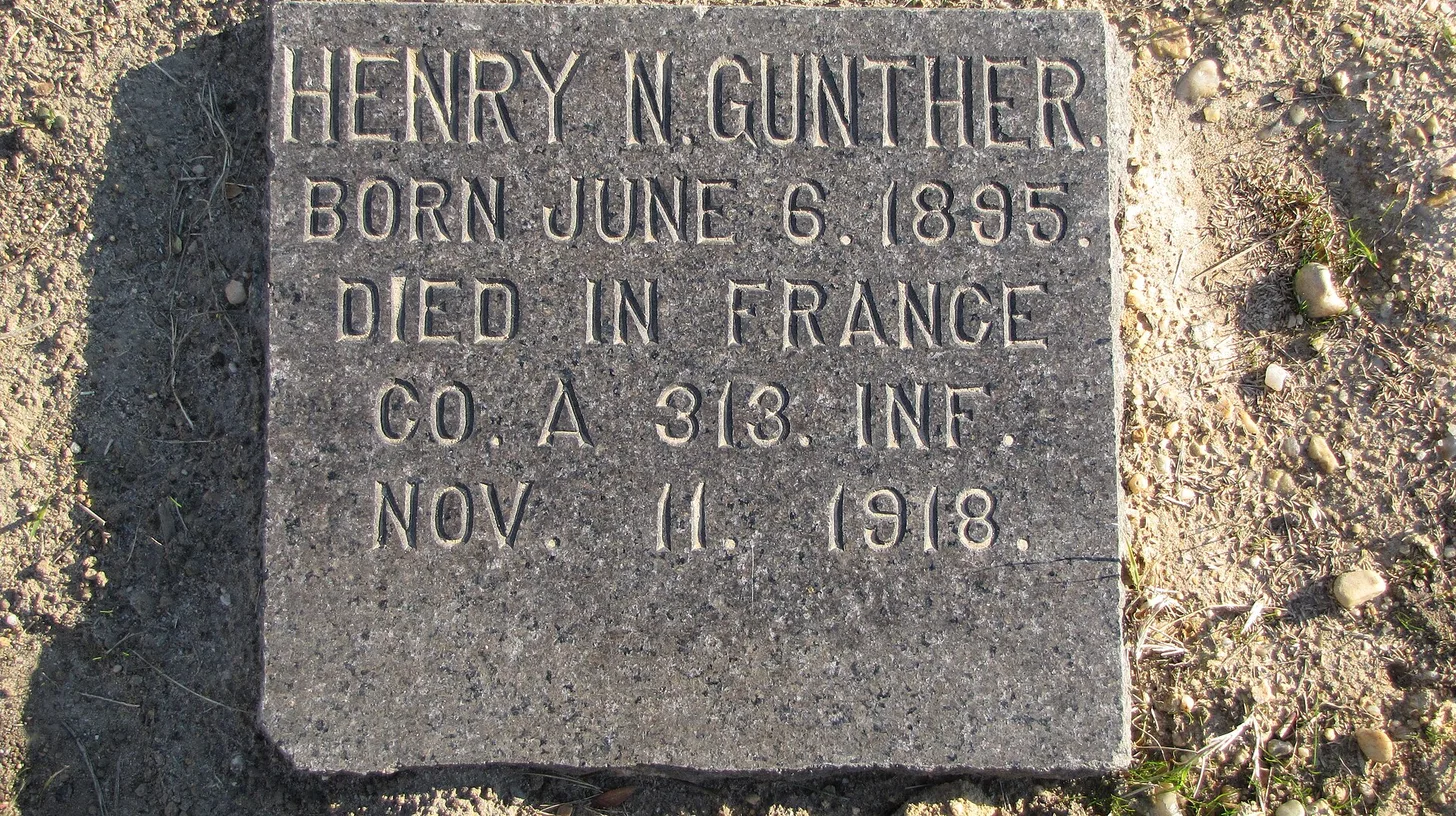
The division cited him for gallantry in May 1919, and the citation still calls him Private Henry Gunther. Later accounts say the Army restored his rank and awarded him the Distinguished Service Cross, but neither appears in the division’s lists of 1922 or the state’s record of 1933. His body came home in 1923 and was buried in Most Holy Redeemer Cemetery in Baltimore. In 2008 the French government dedicated a memorial to him near the place where he fell.
His stone in Baltimore says he died one minute before the armistice.