13 min read
On the afternoon of Friday, August 20, 1847, at the stone convent of Churubusco, a few miles south of Mexico City, three of the guns firing on the American army were worked by men who had deserted from it. They belonged to a company the Mexicans called the San Patricios, after Saint Patrick, and most of them were Irish. When the convent’s Mexican defenders tried to raise a white flag, an American officer wrote afterward, the deserters “pulled down the white flag of surrender no less than three times.” They knew what their old army did with deserters it caught.
They had been crossing over since the spring of 1846, one and two at a time, and by the summer of 1847 there were about two hundred of them, Irish above all, with Germans and other Europeans and a few men born in the United States. Their captain was an Irishman named John Riley, who had swum the Rio Grande a month before the war was declared. What became of them in the three weeks after Churubusco is the part of the story Mexico and Ireland still remember, and for each man it turned on the date he had crossed the river.
A soldier from Galway at Mackinac
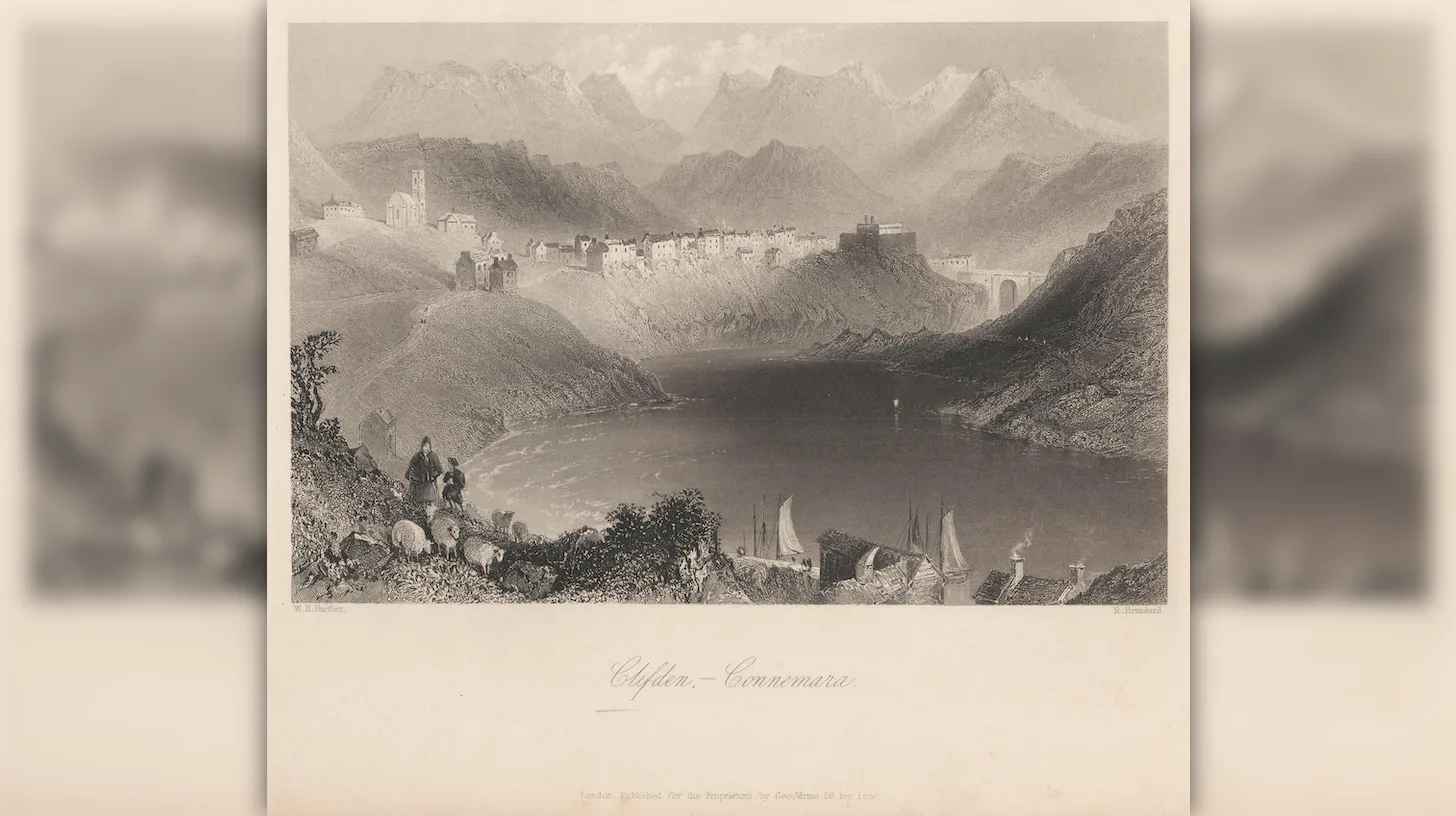
John Riley was a big man with a past nobody could pin down. He enlisted in the 5th U.S. Infantry on September 4, 1845, at Fort Mackinac in Michigan, and the muster roll, as his biographer Peter Stevens reports, described him as “twenty-eight years old, six foot one and three-quarter inches tall, blue eyed, and dark haired.” The enlistment records give his birthplace as Clifden, in County Galway. He had served in the British army and knew artillery, and his enemies later said he had deserted that army in Canada too. A Mexican historian, as one American writer quoted him, called him “a gentle, well-groomed, well-spoken, restless man of action.” His own letters show a proud man who spelled by ear.
At Mackinac he had worked as a laborer for a man named Charles O’Malley, and he went into the army as a private. Men like him filled its ranks. During the war that followed, 5,331 regulars deserted, nearly 13 percent of the ranks, and of those nearly a thousand were Irish and 445 German.
Across the Rio Grande
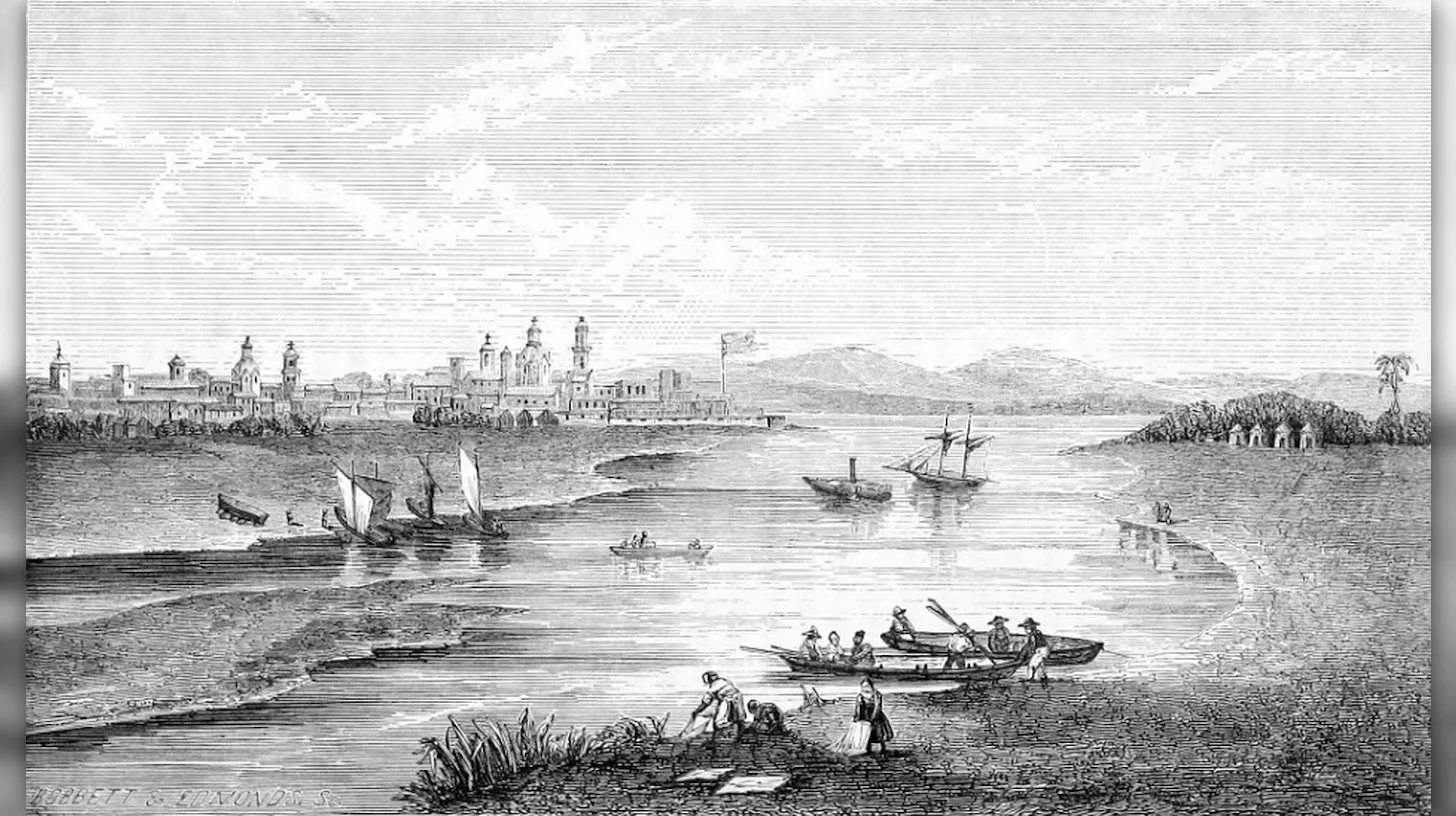
In the spring of 1846 the 5th Infantry was part of the army of General Zachary Taylor, camped on the north bank of the Rio Grande opposite the Mexican town of Matamoros. From the far bank came handbills, signed by the Mexican generals, inviting the Irish, Germans, French and Poles in the American ranks to come over, promising land and reminding Catholic soldiers whose side their faith was on. Taylor reported the result to Washington on April 6. “Efforts are constantly making to entice our men to desert,” he wrote, “and, I regret to say, have met with considerable success.” His pickets had already shot two men trying to swim across, and an officer’s journal records one man that month who reached the other shore, and as he crawled out on the bank a sentinel fired and he fell dead.
John Riley went across on April 12, 1846. Congress did not declare war on Mexico until the middle of May, in a war that began a long run of American interventions in Mexico. The Mexicans commissioned him a lieutenant, and he began to gather other deserters into a company of his own.
Why they went was argued about then and has been argued about since. George Ballentine, an Englishman who served in the American army in Mexico and wrote a memoir of it, gave the officers’ explanation and then his own.
“As the majority of these deserters were Irish, the cause commonly assigned by the officers for their desertion, was, that as they were Roman Catholics they imagined they were fighting against their religion in fighting the Mexicans. There was a portion of truth in that view of the subject, but it came very short of the whole truth.”
Harsh and unjust treatment by their officers, he believed, “operated far more strongly than any other consideration.” He also thought that going over to the Mexican service was “jumping out of the frying-pan into the fire.”
Under a green flag
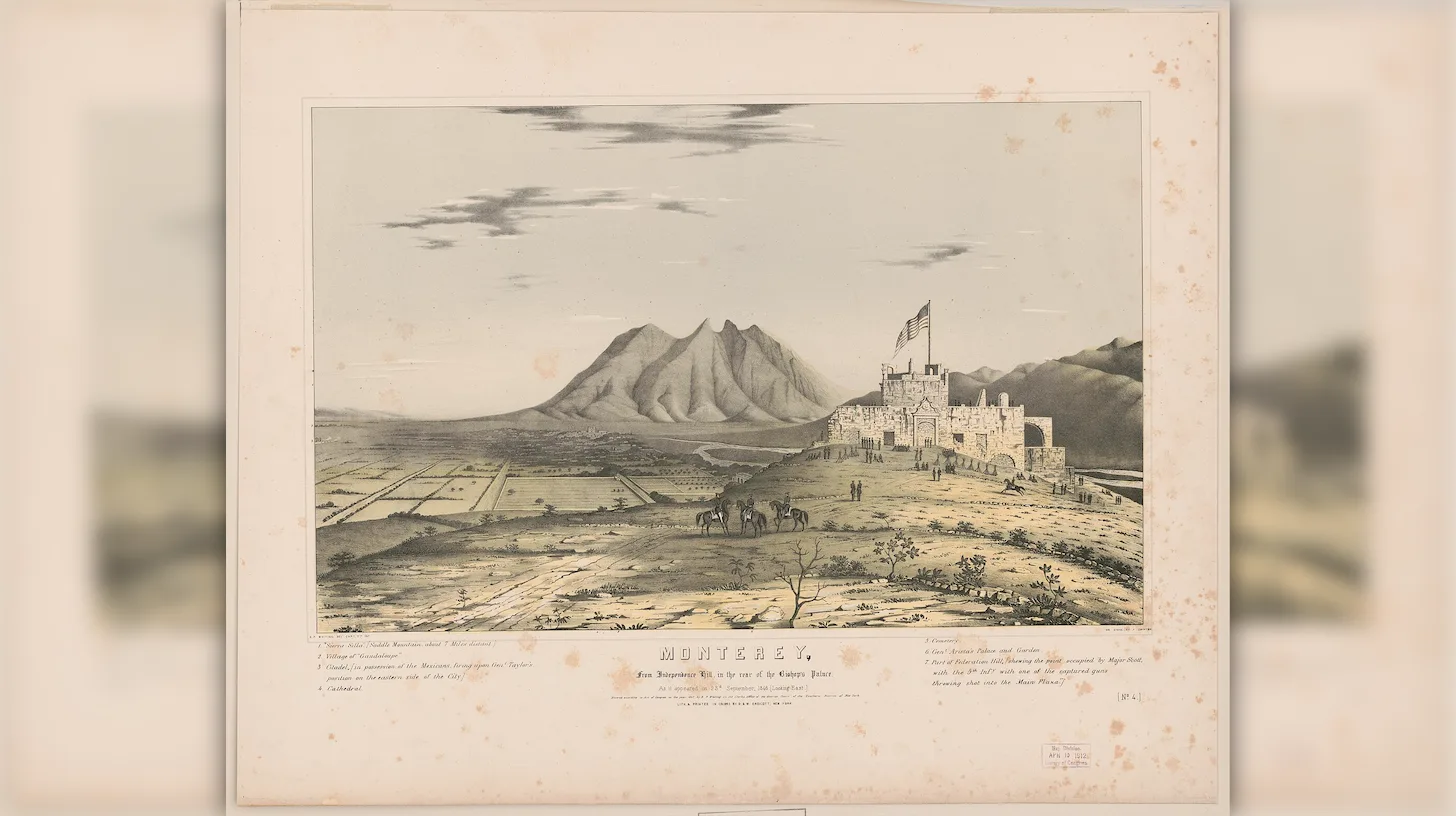
Riley was at Monterrey when the Americans took the city in September 1846, and he was a captain of Mexican artillery by then. When the Mexican army marched out under the terms of surrender, an American officer named W. S. Henry saw him in its ranks and watched his old messmates greet him “amid hisses and a broadside of reproaches.”
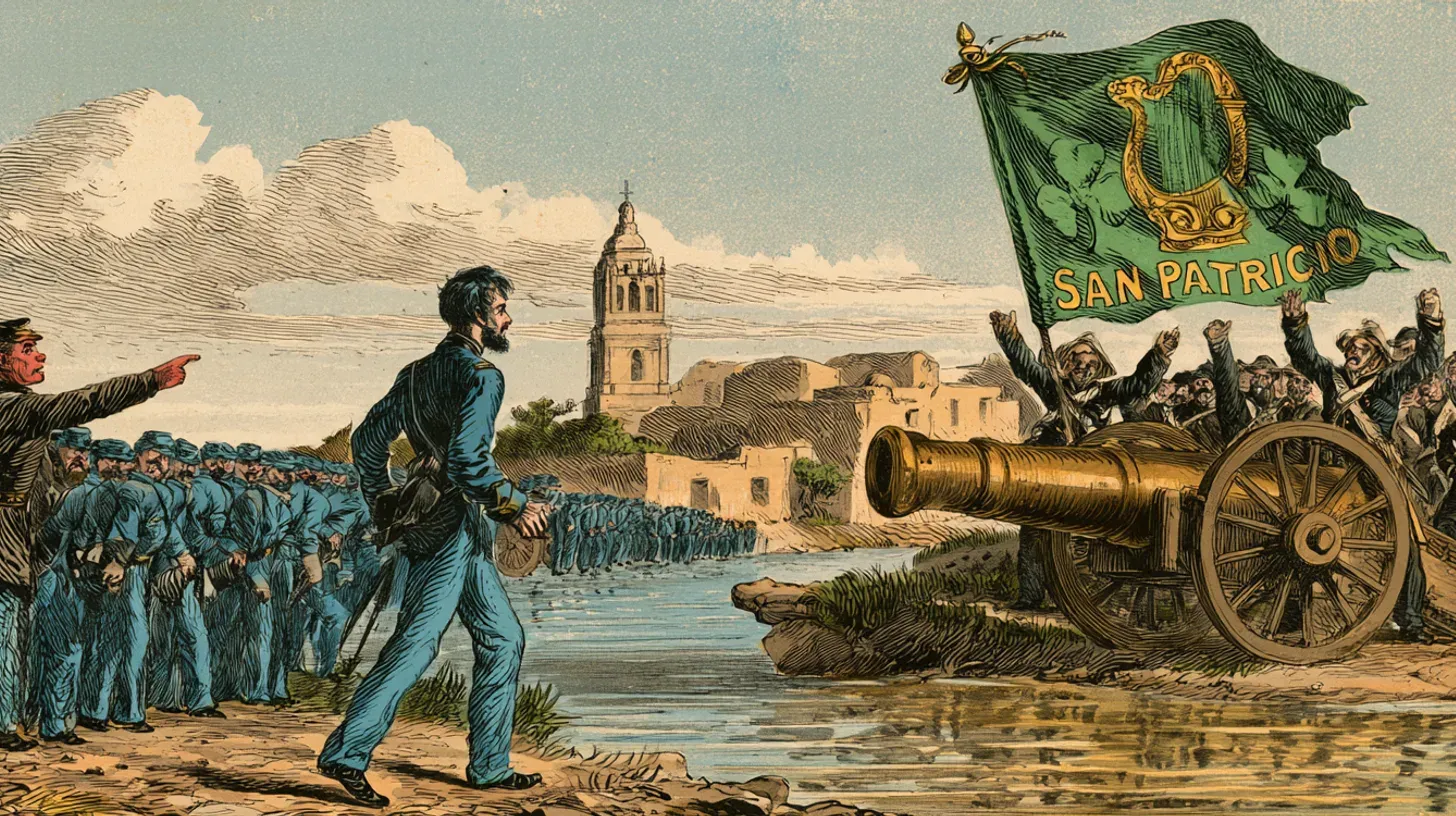
Early in 1847 a Mexico City paper, El Republicano, described the company being reviewed by the commanding general before it marched: “a company of American deserters, principally Irish.” The San Patricios had made a flag of their own, the paper said, with the arms of Mexico and the words “Long live the republic of Mexico” on one side, and on the other side a figure of Saint Patrick. Riley described it himself in a letter that autumn. It was, he wrote, “that glorious Emblem of native rights,” the banner that should have flown over their own country long before, and he set it down in his own spelling: “St Patrick the harp of Erin the Shamrock upon a green field.”
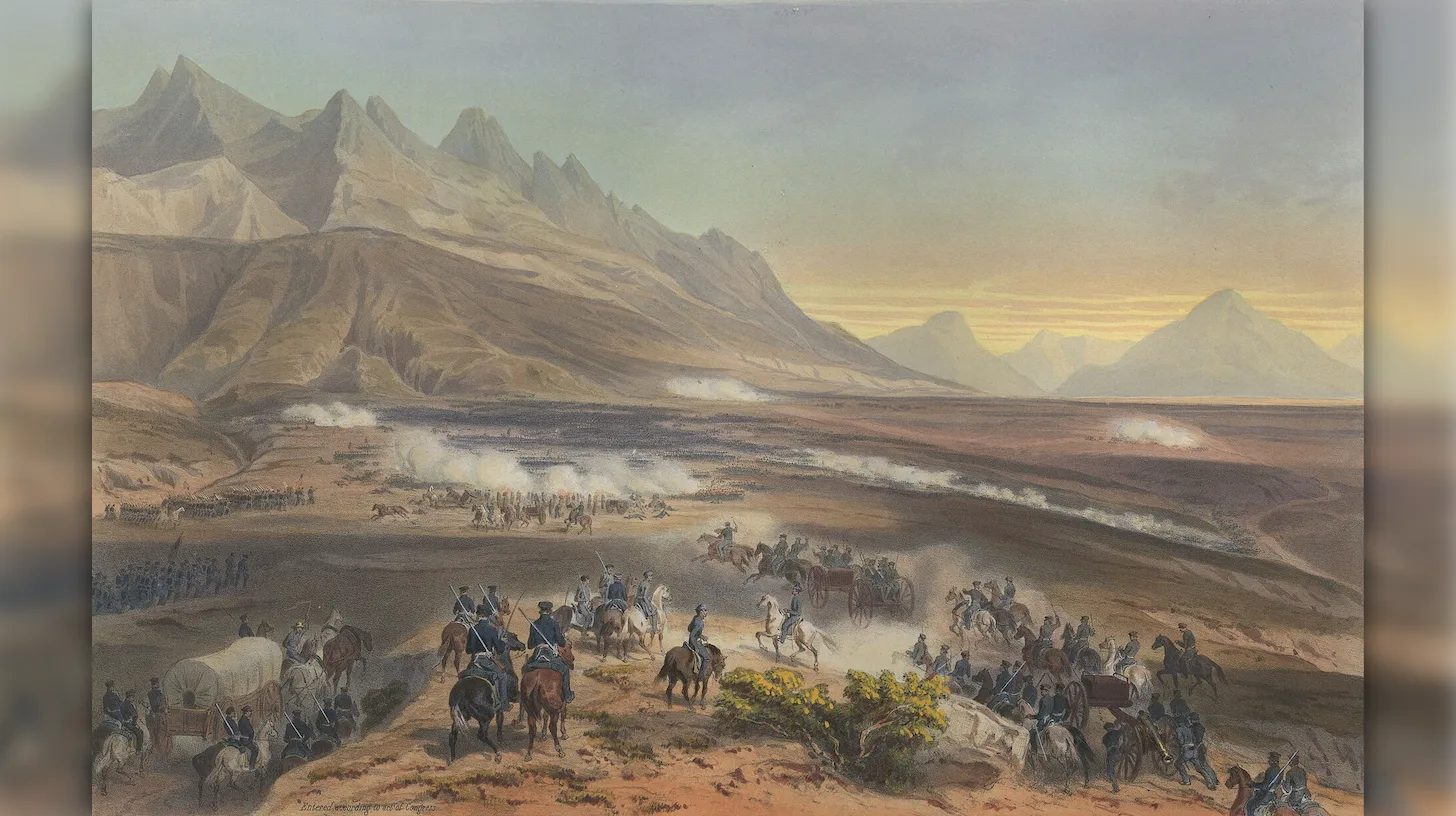
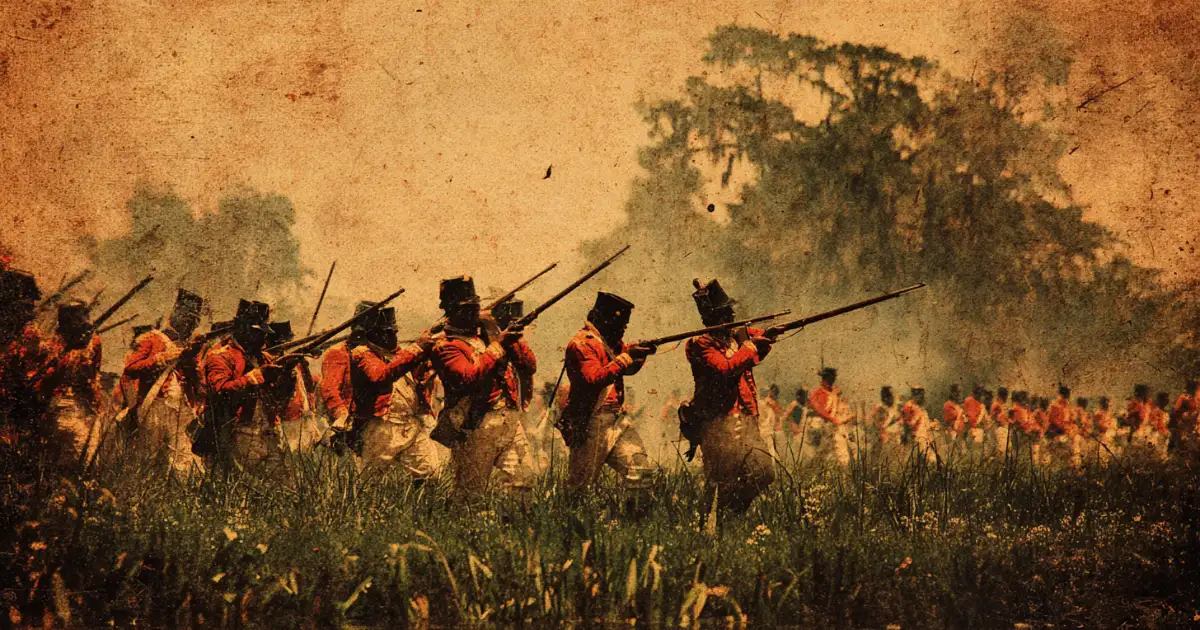
They fought under it at Buena Vista in February 1847, with heavy guns on the plateau, and when Santa Anna’s army fell back they carried off two bronze six-pounders taken from the Americans. By summer the Mexican army had enough deserters and other foreigners to form two companies of about a hundred men each. Riley later counted 204 men in the battalion, 142 of them Irish. Reports that it grew to 700 have no source behind them.
The convent at Churubusco
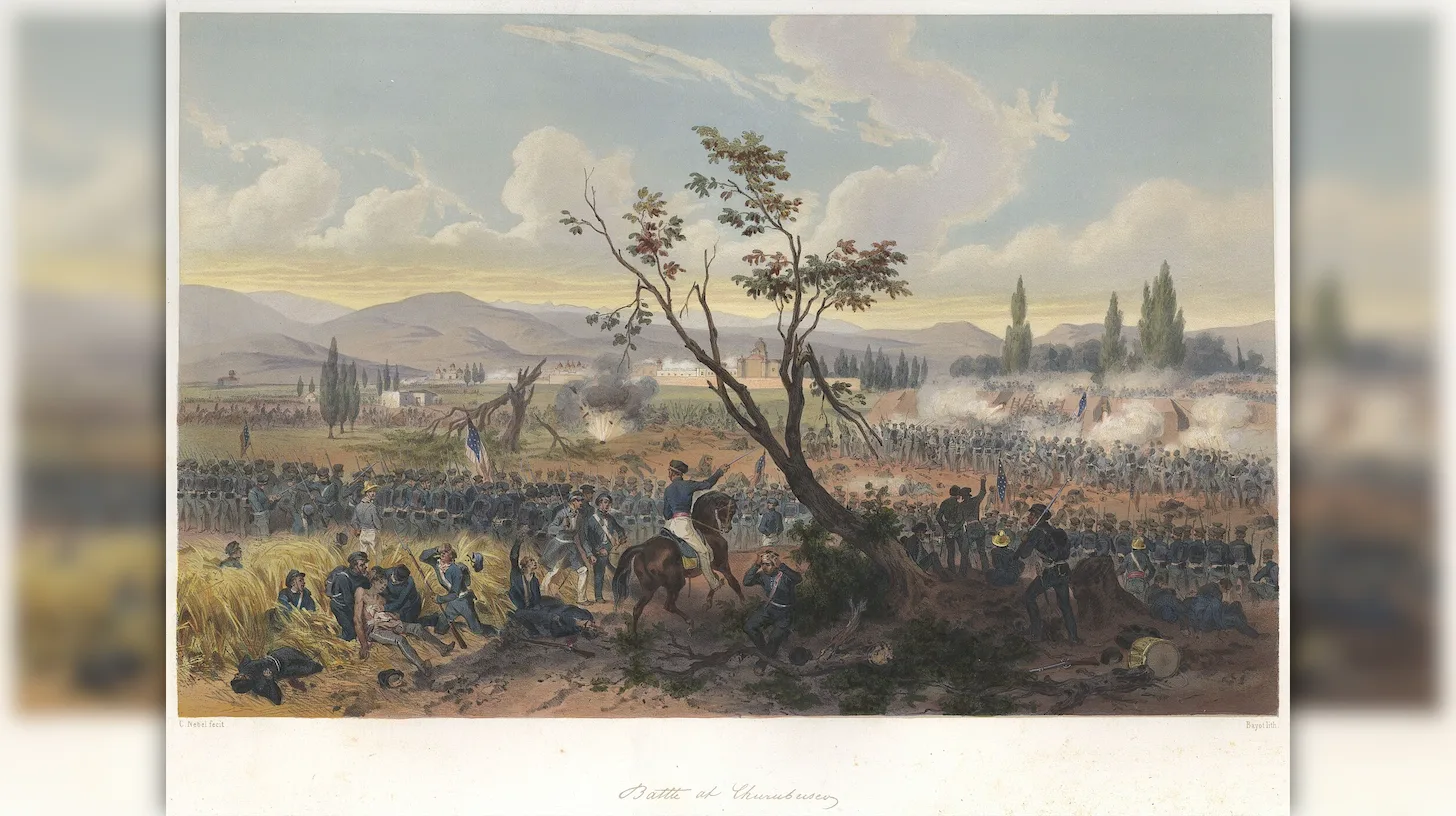
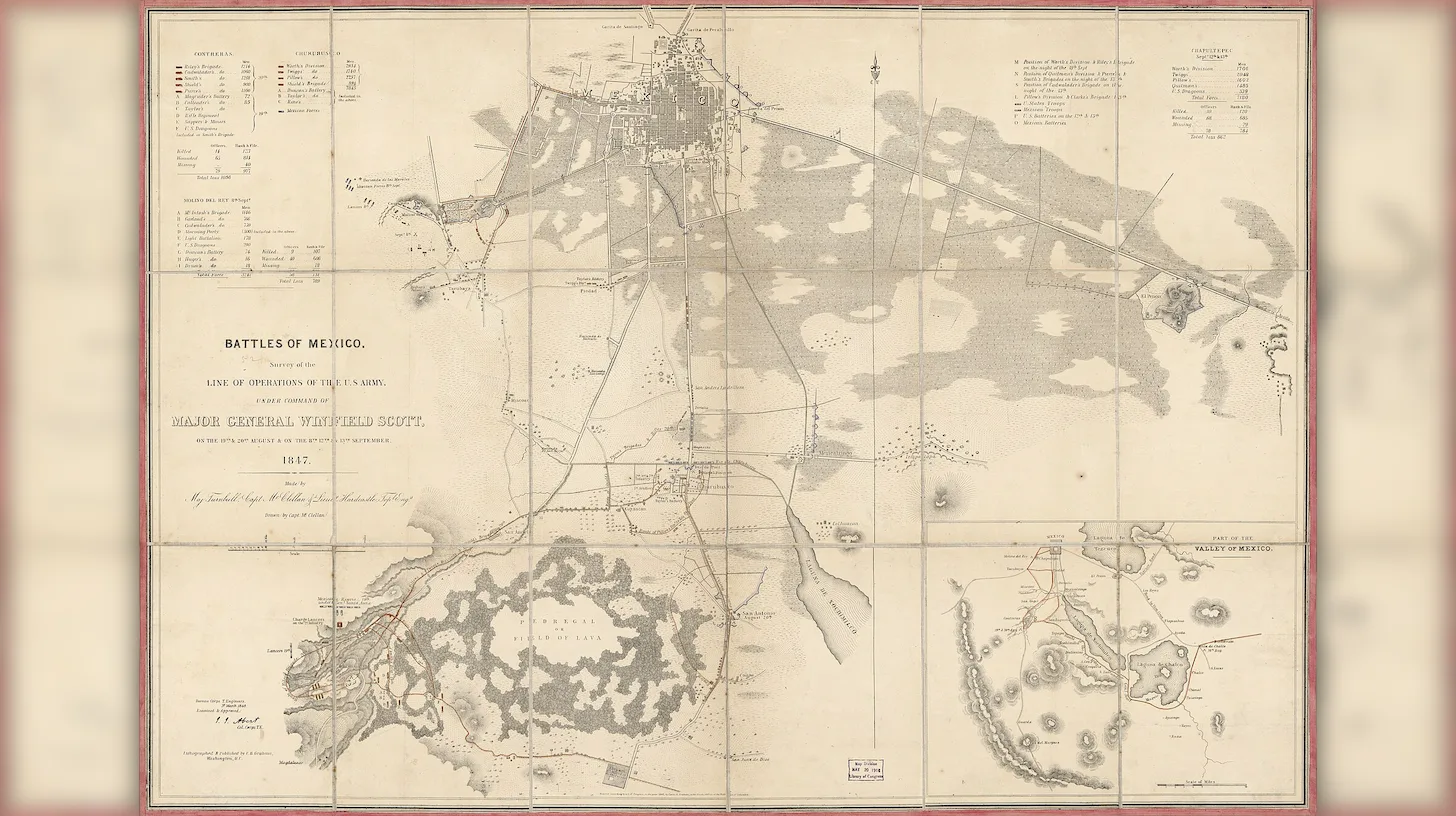
On August 20, 1847, General Winfield Scott’s army fought its way up to the outskirts of Mexico City, and at Churubusco the Mexicans made a stand at a fortified convent and at the bridge beside it. The convent was held by two Mexican battalions and the San Patricio company. A Mexican account of the war, written by a group of Mexican officers and writers and published in 1848, describes what went wrong inside it.
A wagon of cartridges had arrived that did not fit the Mexican muskets. The defenders broke the boxes open with their hands and carried the cartridges to the cannon and found them too narrow for the guns too. “The only men who used this park,” the Mexican writers said, “were the soldiers of the San Patricio, whose muskets were of the corresponding calibre.” A spark from a port-fire set off the ammunition at one gun and burned the San Patricio captain serving it, a man named O’Leary, and the Mexican general beside him. The fight went on for three and a half hours.
“Their deportment deserves the greatest eulogies, since all the time the attack lasted they sustained the fire with extraordinary courage.”
When the ammunition ran out the firing died away, and the first American up on the parapet, Captain James M. Smith of the 3rd Infantry, showed a white flag and held back the men behind him. Ballentine heard that the deserters had killed Mexicans who tried to hoist a white flag before that. Seventy-two of the “battalion of St. Patrick” were taken, the New Orleans correspondent George Wilkins Kendall reported, and John Riley was among them.
Two courts and fifty sentences
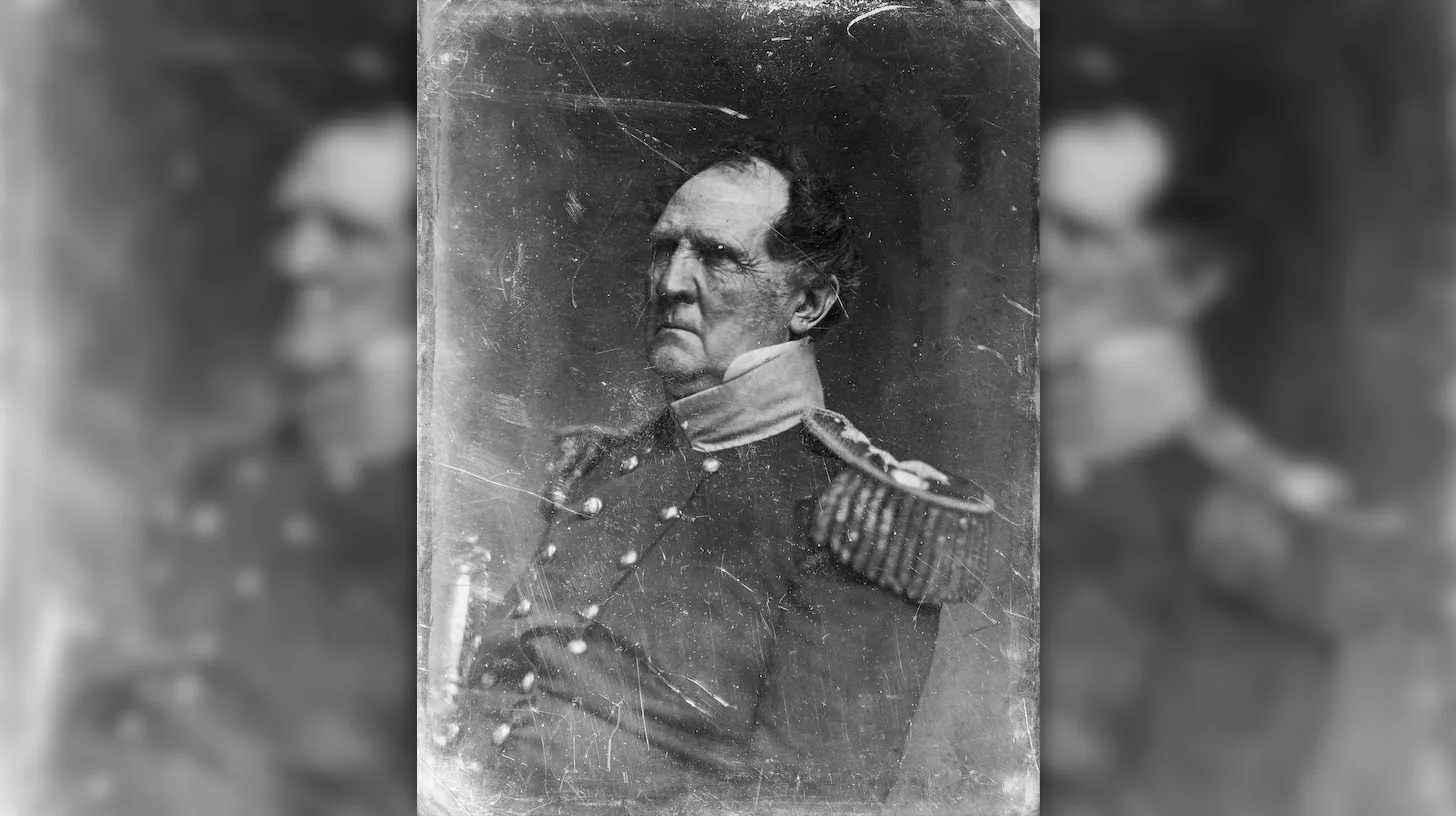
Two courts-martial tried them that week, one at Tacubaya and one at San Ángel, and nearly every man was sentenced to death. Mexican ladies of Tacubaya pleaded for them, and so did foreigners in the city. General Scott reviewed every sentence. He confirmed fifty and commuted the rest, and the men he spared included those who had deserted before the war began. That was the law. Riley, an American paper explained that autumn, “could not be hung, he having deserted from our army before the commencement of hostilities.”
Some of Scott’s officers wanted Riley hanged anyway, and Scott would not do it. Riley’s sentence was fifty lashes, the letter D for deserter branded on his face, and hard labor as a prisoner for as long as the American army stayed in Mexico.
The punishment was carried out at San Ángel on September 10, 1847. Sixteen men were hanged that morning. Then Riley and the others who had deserted before the war were tied to trees and given their lashes by Mexican mule drivers with whips, and branded with a D “high up on the cheekbone, near the eye,” as the sentence specified. The American Star, the army’s newspaper in Mexico City, put it plainly: “Riley, the chief of the crowd, came in for a share of the whipping and branding.” Later writers say his brand was put on upside down and had to be done again, but no witness of 1847 has been found who says so. The next morning four more were hanged at Mixcoac.
The flag over Chapultepec
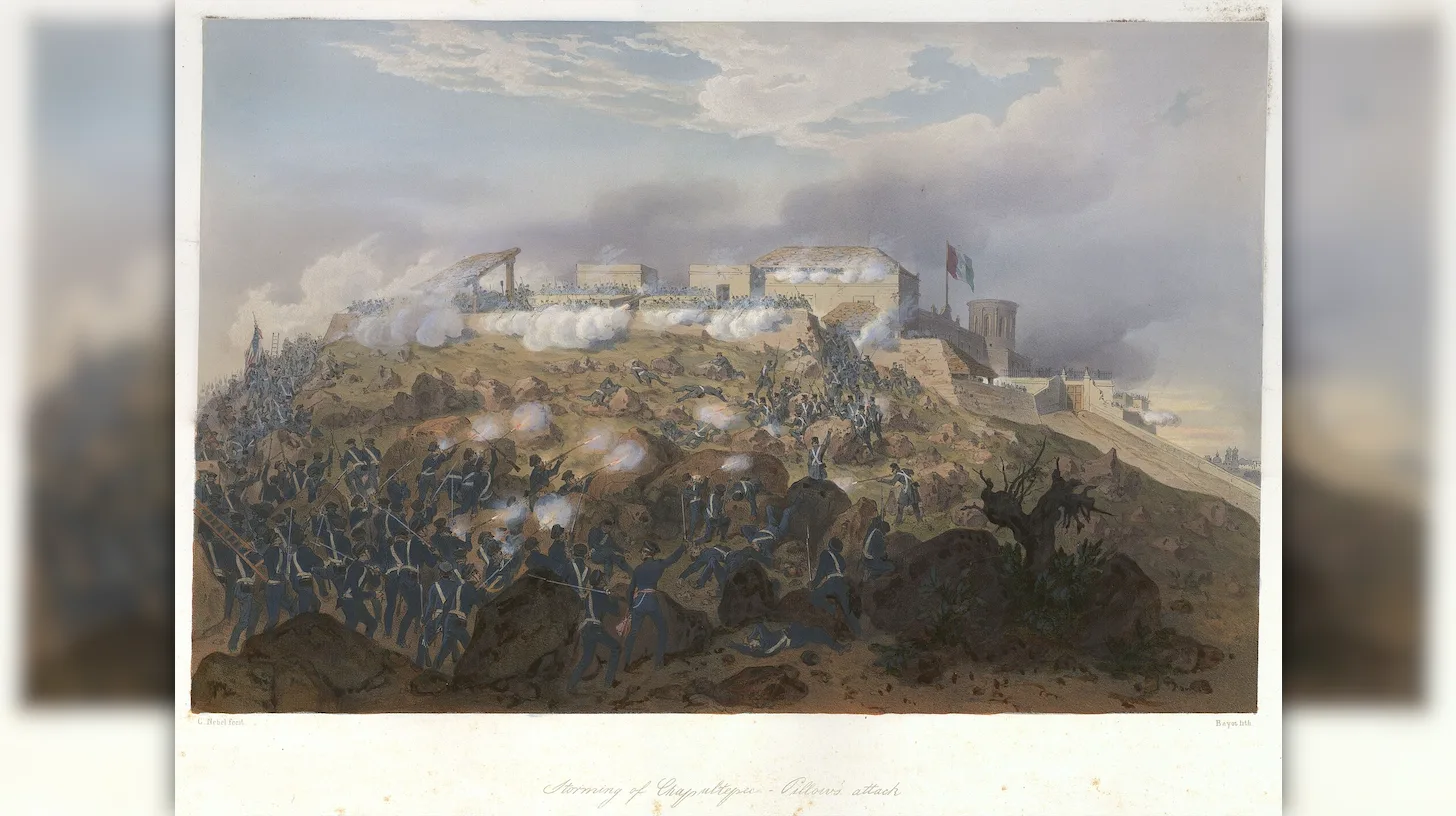
On Monday, September 13, the American army stormed Chapultepec, the castle on its hill at the edge of the city, and at Mixcoac, about two miles away, thirty of the San Patricios stood in wagons under a gallows with the nooses already around their necks. They had been fitted at daybreak, the Handbook of Texas says, and left standing while the battle went on. Colonel William S. Harney, who commanded the detail, pointed his sword toward the castle and told them that they would die when the flag of the United States went up over it. It went up at about half past nine, and the wagons were driven out from under them.
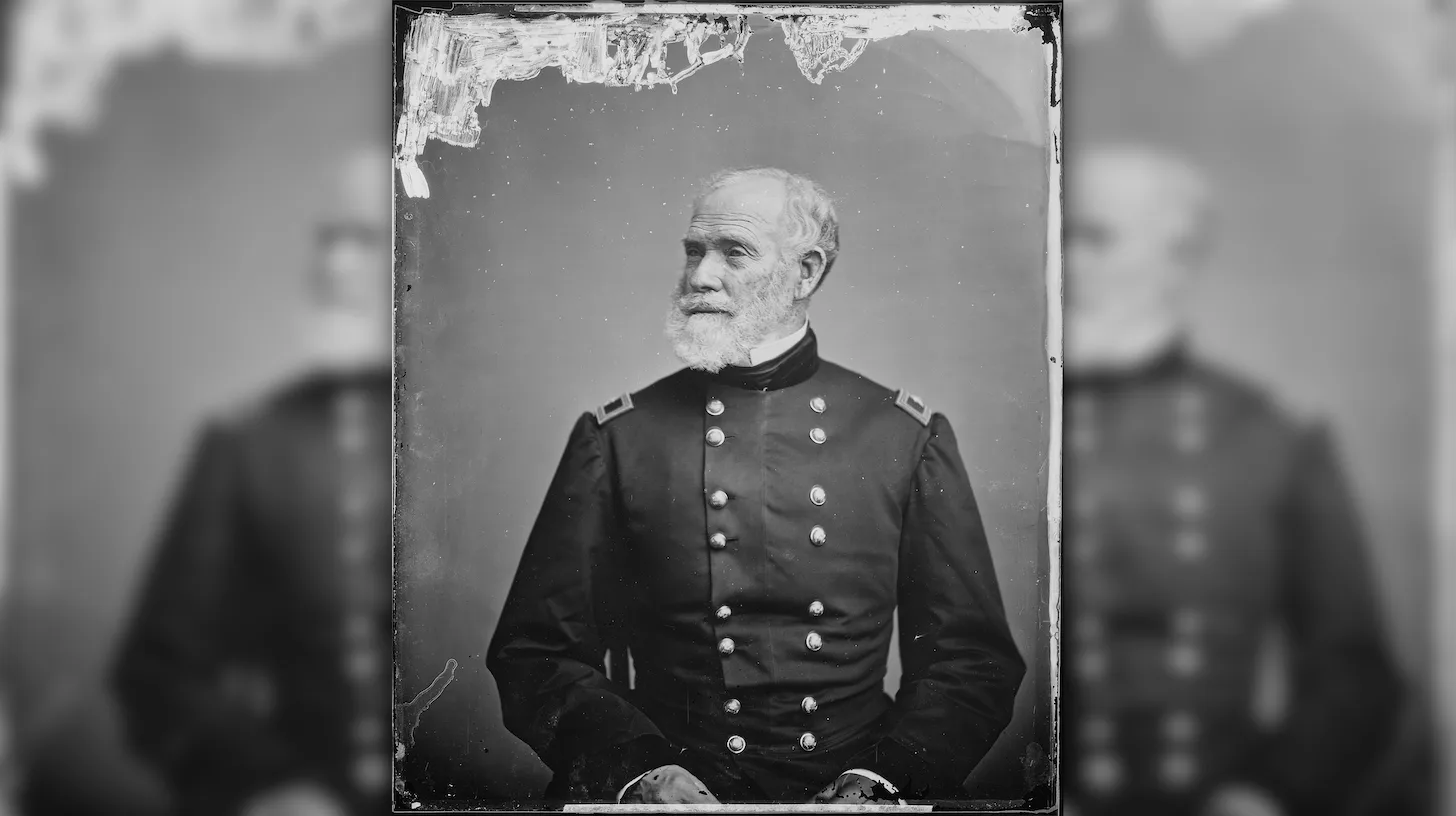
Some of the most repeated details of that morning, among them Harney’s oaths and a legless man hanged anyway, come from a memoir written long afterward and are not in the reports of 1847. What the reports do say is enough. “Fifty of them have paid for their treachery,” Scott told his army in a general order that month, and he told his soldiers, Protestant and Catholic, to remember it.
Riley wrote from his prison in the city on October 27, 1847, to his old employer at Mackinac, and the letter, which the Americans intercepted, survives in the University of Galway’s library. He gave himself the rank of major, and he gave his own count of the dead.
“it grieves me to have to inform you of the death of fifty one of my best and bravest men who has been hung by the Americans for no other reason than fighting manfully against them”
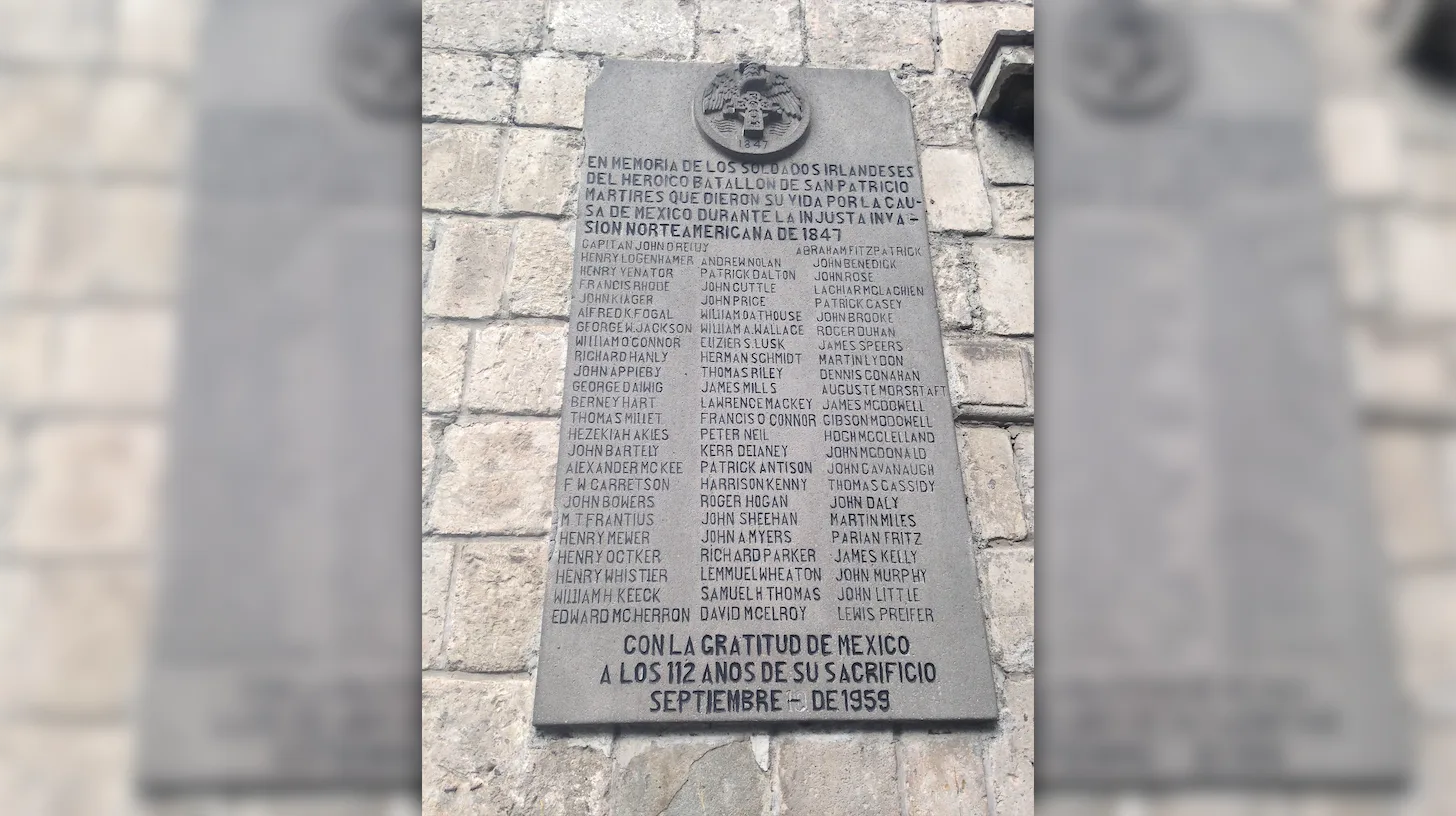
He named one of them, his first lieutenant, Patrick Dalton, from Ballina in County Mayo. When the war ended in 1848 the fourteen prisoners still held were drummed out of the city with their heads shaved, and Riley went back to the Mexican army, which discharged him as a major in 1850. Where and when he died is not known. In Mexico City a plaque put up in 1959 in the plaza of San Jacinto in San Ángel lists the battalion’s men, and in 1997 Ireland and Mexico issued matching stamps in their honor. At the end of his letter Riley had remembered to tell O’Malley what flag they fought under. He wrote that “it was St Patrick the harp of Erin the Shamrock upon a green field.”