11 min read
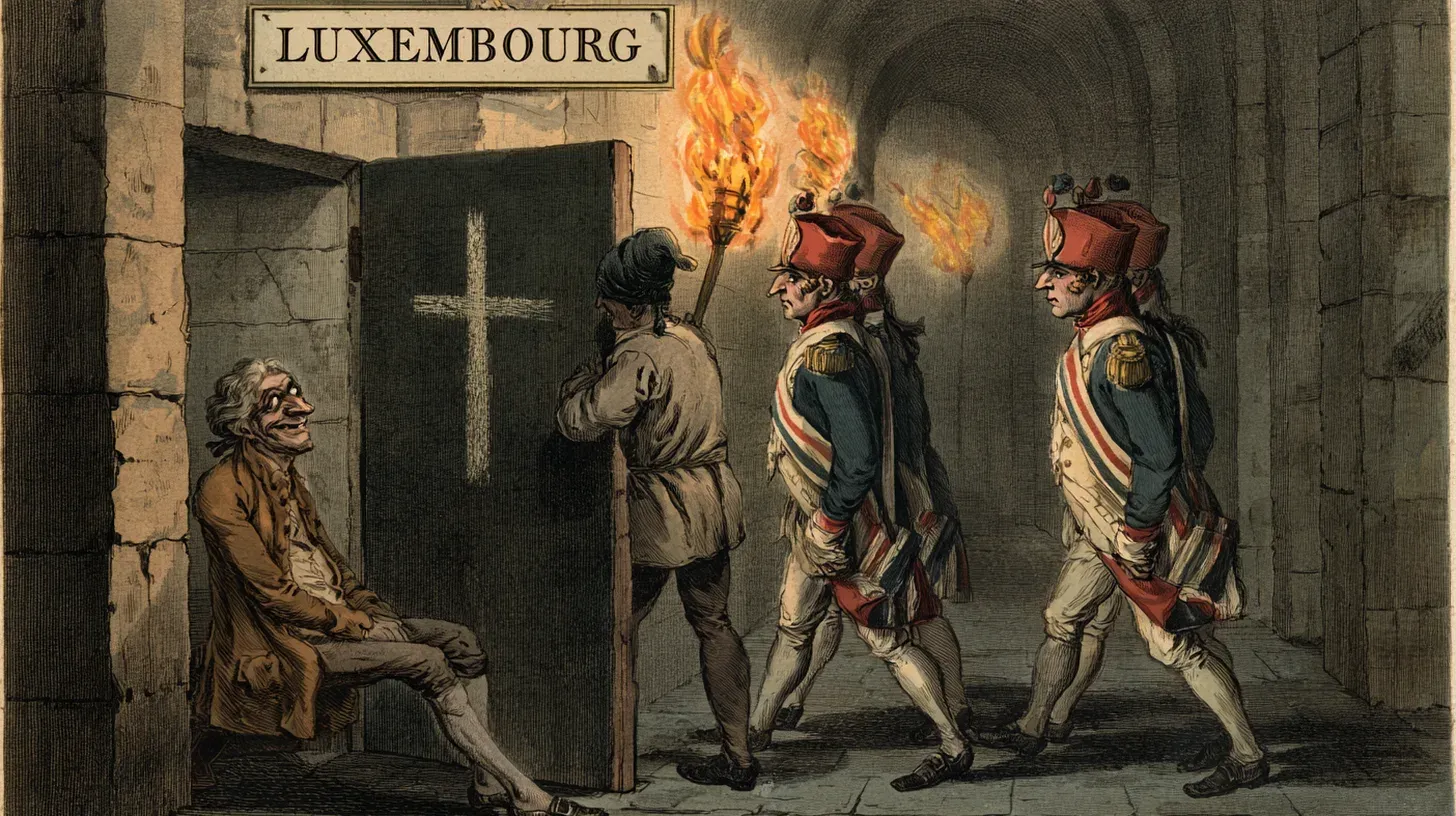
On a night in July 1794, by the account Thomas Paine gave eight years later, the men who collected prisoners for the guillotine came to the Luxembourg prison in Paris. They passed along a gallery on the ground floor and went by the door of the room where he lay. That night, he wrote, they took 168 people out of the Luxembourg, and the next day 160 of them were guillotined. The door of his room had been marked for them in chalk. But the door opened outward, and it had been standing open, flat against the wall, when the mark was made, so that when it was shut for the night the chalk was on the inside.
Paine was then fifty-seven, the author of Common Sense, the pamphlet of 1776 that urged the American colonies to declare their independence, and he was in a French prison by order of the revolution he had come to Paris to serve. He knew nothing of the mark at the time. He told the story first in 1802, and no other prisoner ever confirmed it. What follows is how he came to be in the Luxembourg, what the record shows of his ten months there, and what other witnesses made of the tale of the chalk.
A deputy for the Pas-de-Calais
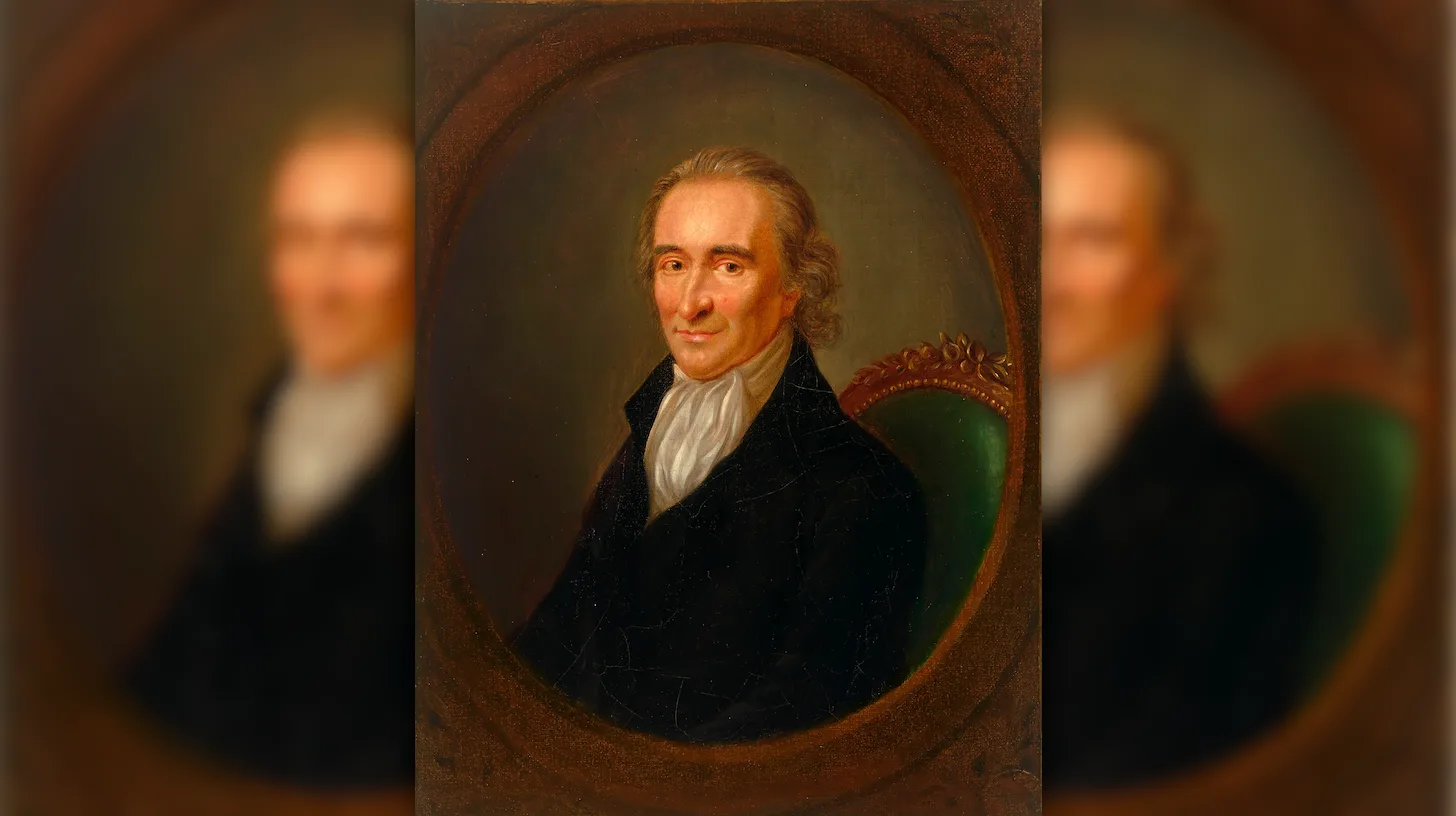
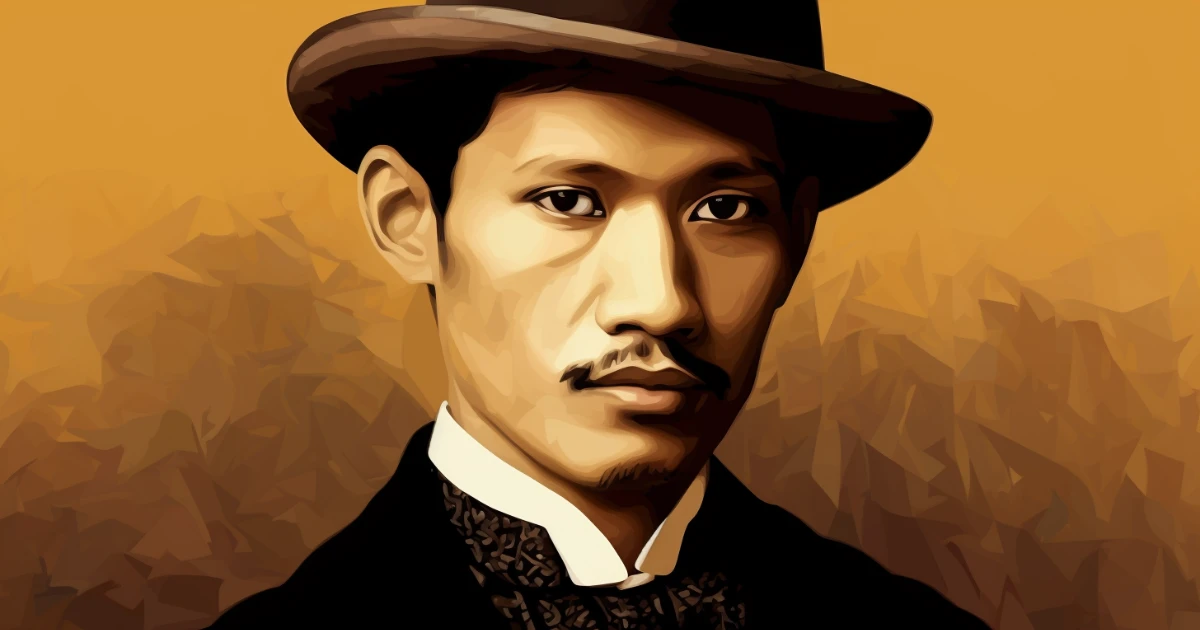
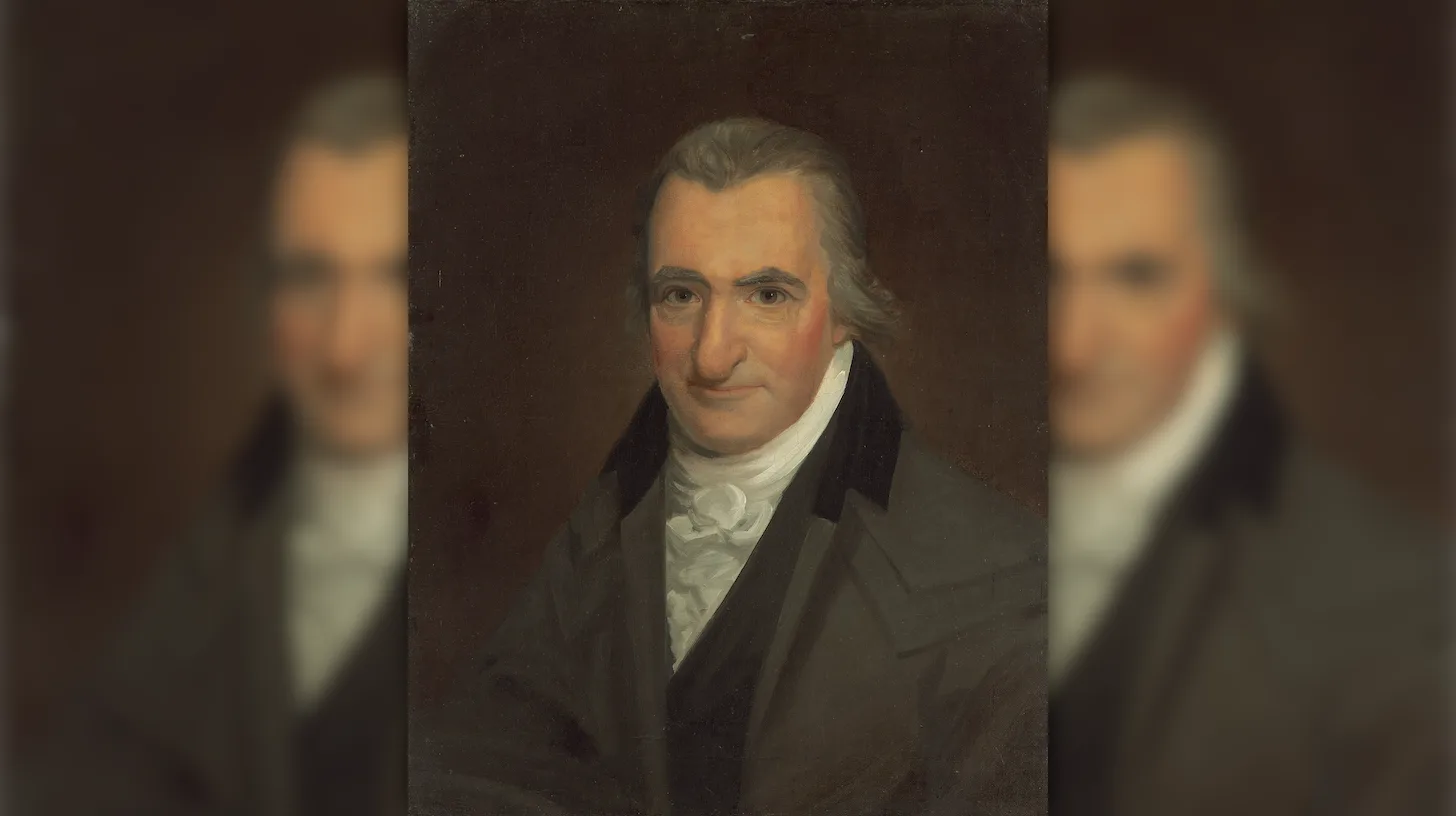
Thomas Paine was a tall man with a piercing eye. Thomas Clio Rickman, a London bookseller who knew him well, wrote that he stood about five feet “ten inches high; and rather athletic” and broad in the shoulders, and that his eye “was full, brilliant, and singularly piercing.” He wore his hair “cued, with side curls, and powdered, so that he looked altogether like a gentleman of the old” French school. Among strangers, Rickman added, “he said little,” and he was no public speaker. He had been born in Thetford, in England, in 1737, and had come to America at thirty-seven.
Common Sense went on sale in Philadelphia in January 1776, and it made him famous. What Thomas Paine did after the Revolutionary War was to go back to Europe. He had been living at Bordentown, in New Jersey, where he rode the lanes on a horse named Button and worked on a design for an iron bridge, and in April 1787 he sailed “for a year’s absence,” as his biographer Moncure Conway put it. He stayed away fifteen. In London in 1791 he published Rights of Man, in defence of the French Revolution, and the British government answered him. At the Guildhall the next year he was tried in his absence, found guilty and outlawed.
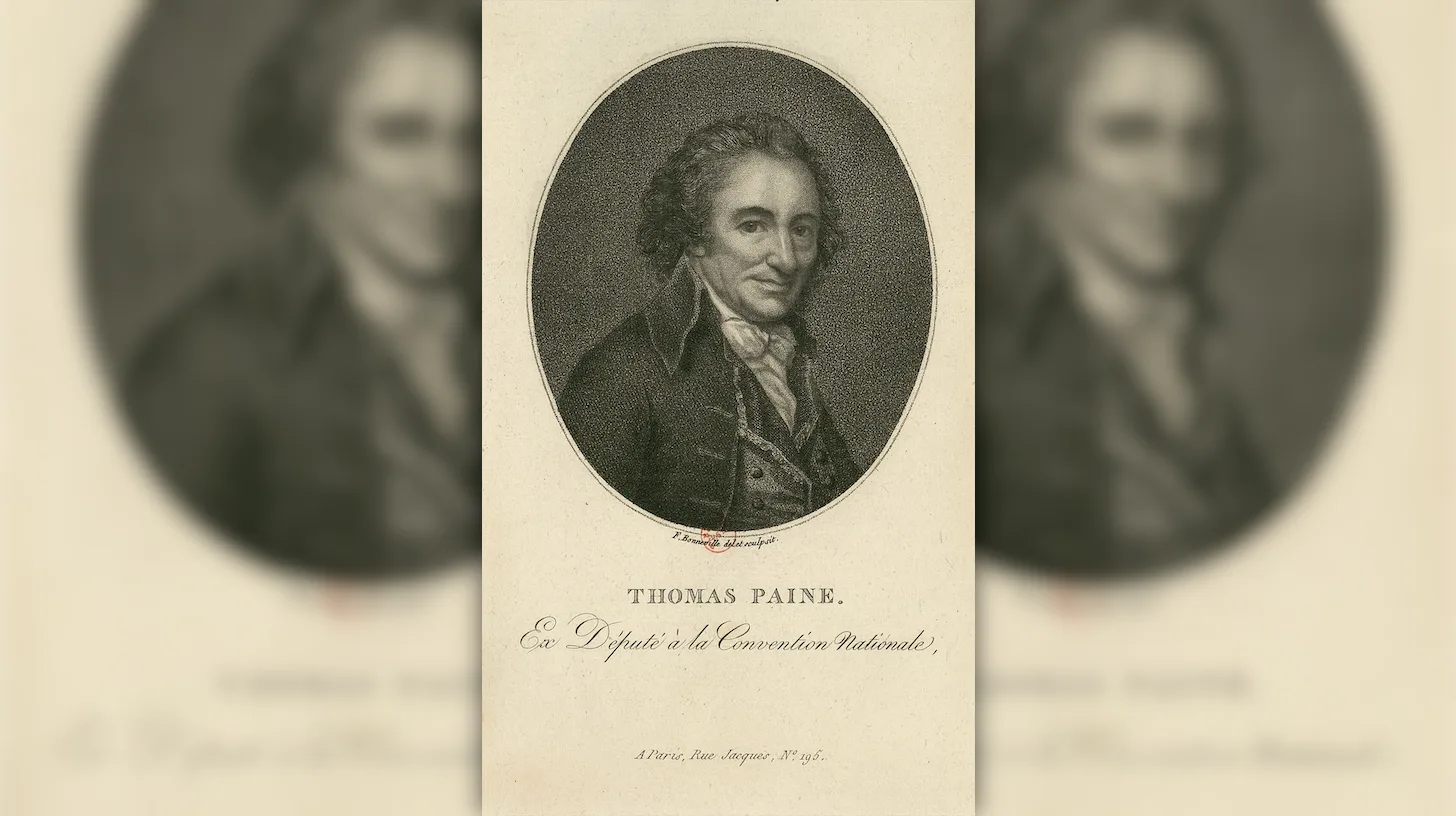
By then he was already in France. In the French elections of that year, he wrote to James Monroe later, “I was elected a Depute in four different departments without my knowing any thing of the matter.” He took the seat for the Pas-de-Calais in the National Convention. But the Revolution did not stay the one he had come to serve.
Three in the morning
By the end of 1793 the Terror was in full force. On Christmas Day, according to Conway’s Life of Paine, a deputy named Bourdon de l’Oise denounced him in the Convention, and the Convention voted to expel its foreign members. Two days later the Committee of General Surety ordered Paine and another foreign deputy, Anacharsis Clootz, arrested and imprisoned “as a measure of General Surety.”
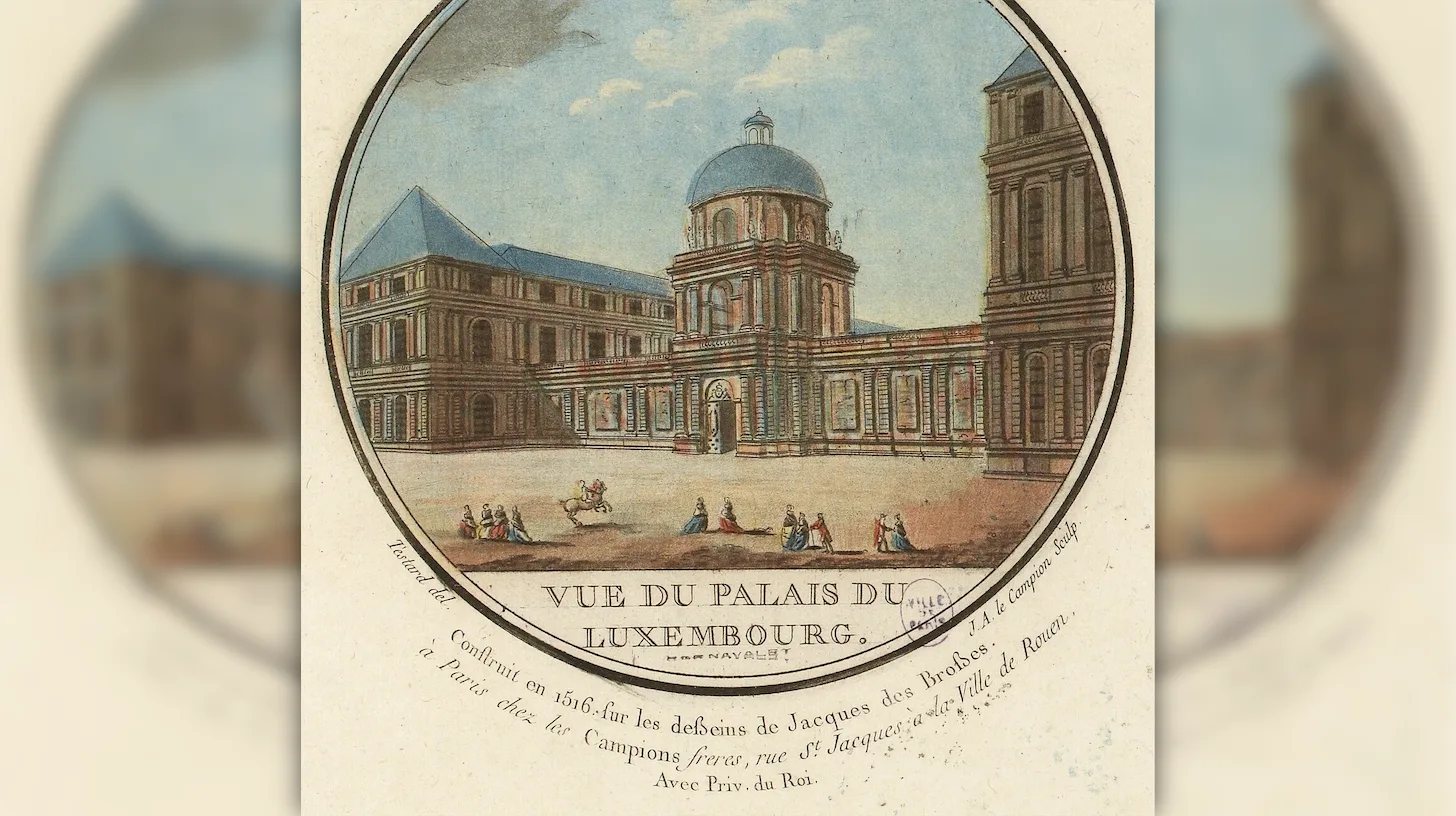
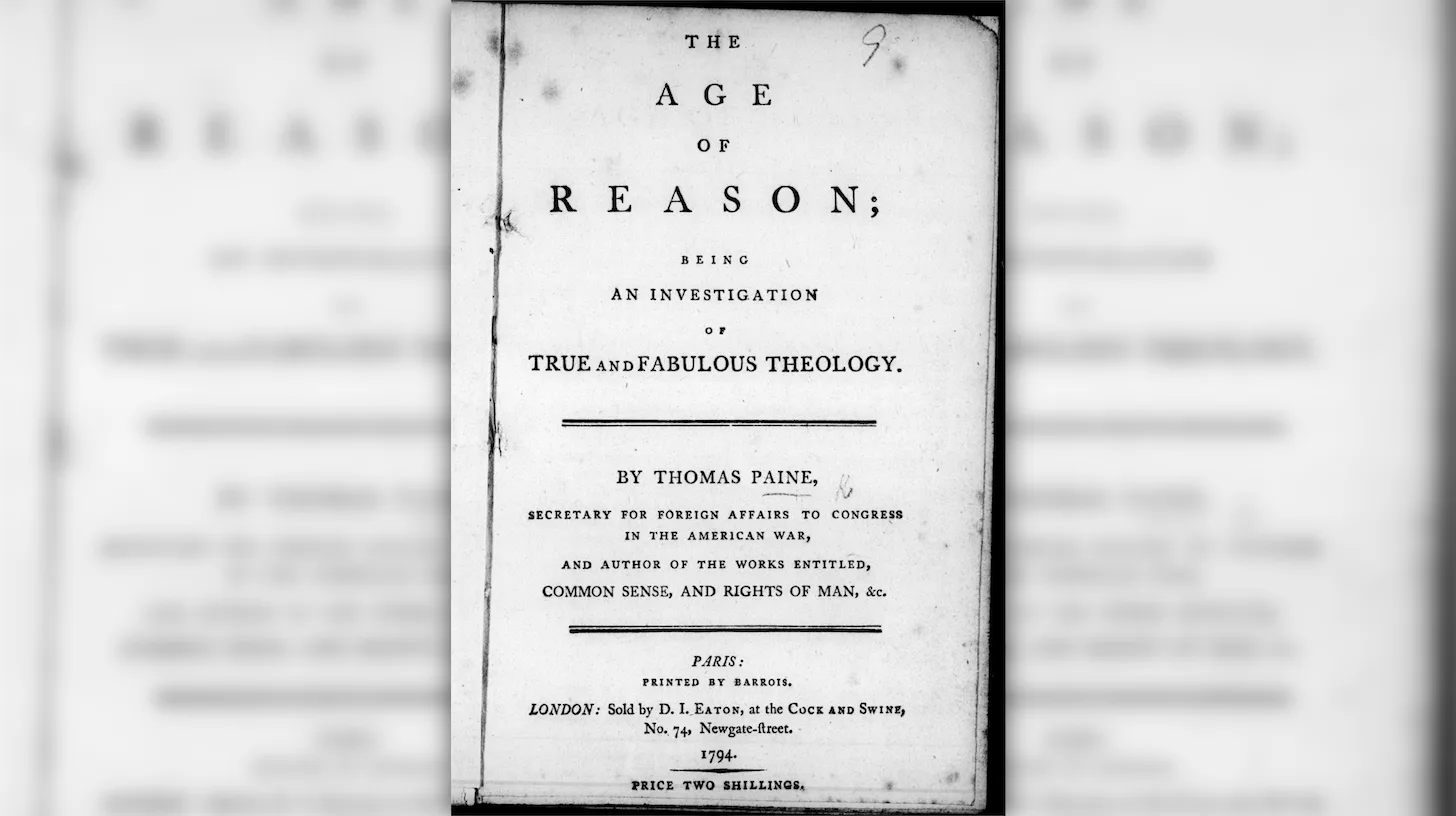
Paine had been writing a book. He finished the first part of The Age of Reason that same evening, and in the preface to the second part he wrote that he had not finished it “more than six hours” when “a guard came there, about three in the morning.” The guard had an order to arrest him as a foreigner. On the way to the prison he stopped at the house of Joel Barlow, an American poet in Paris, and put the manuscript “into his hands, as more safe than in my possession in prison.” The next day he was locked in the Luxembourg, a palace on the Left Bank that the Revolution had turned into a jail.
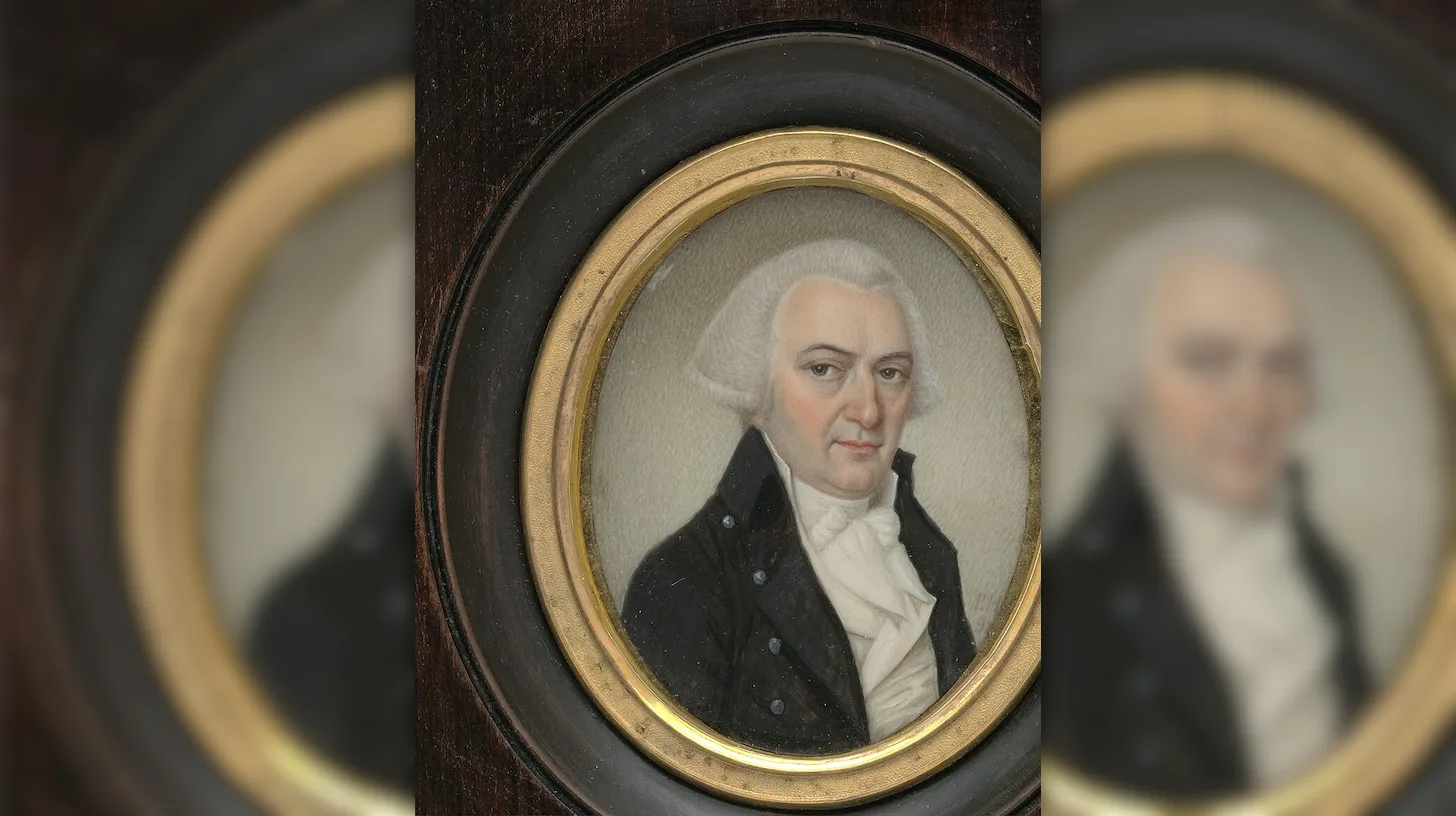
About three weeks later the Americans then in Paris went in a body to the Convention to ask for his release, and they were told he had been born in England. The American minister to France, Gouverneur Morris, was in no hurry. He mentioned Paine to Thomas Jefferson almost in passing.
“Lest I should forget it, I must mention that Thomas Paine is in prison, where he amuses himself with publishing a pamphlet against Jesus Christ.”
Morris thought that “if he is quiet in prison he may have the good luck to be forgotten,” and he doubted “much the right” to claim him as an American at all. Paine, for his part, came to call Morris “my inveterate enemy.”
A continued scene of horror
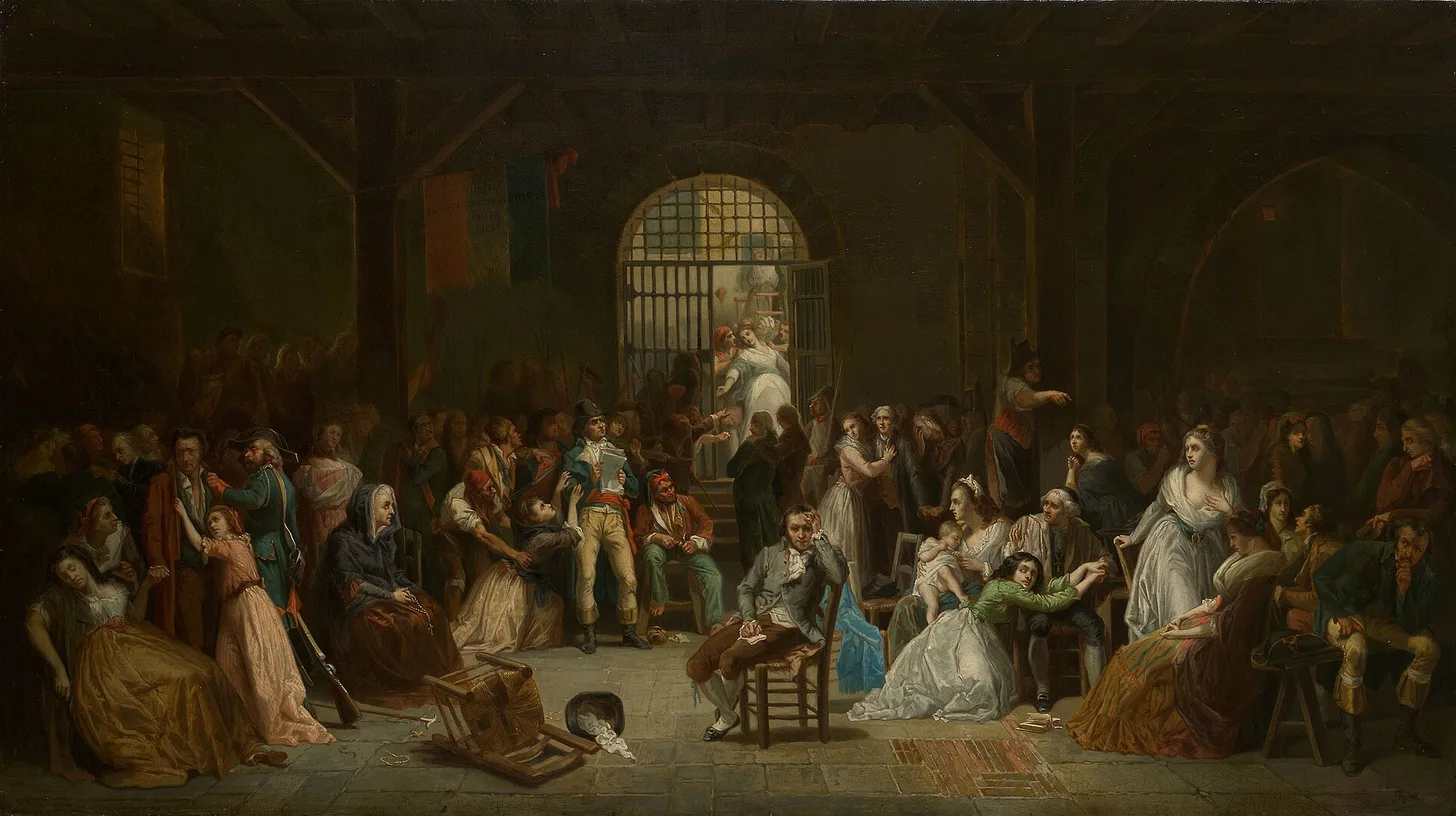
At first the Luxembourg was not a hard place. The keeper, Benoit, was “a man of good heart,” Paine wrote, and showed him “every friendship in his power.” He had money, which by one later account he hid inside the lock of his door, and he lent £200 of it to a British officer, General O’Hara, a prisoner like himself. He shared a room on the ground floor, one of a long range of rooms under a gallery, with three Belgians, Joseph Vanhuele of Bruges, Michael Robyns and Charles Bastini. When Georges Danton was brought in that spring on his way to the guillotine, he took Paine’s hand and told him, as a prison memoir set it down, that what Paine had done “for the happiness and liberty” of his own country, Danton had “tried in vain to do” for France.
From the middle of March, Paine wrote in a long letter to George Washington in 1796, “the state of things in the prisons was a continued scene of horror. No man could count upon life for twenty-four hours.” He heard from no one outside for six months.
“Scarcely a night passed in which ten, twenty, thirty, forty, fifty, or more, were not taken out of the prison,”
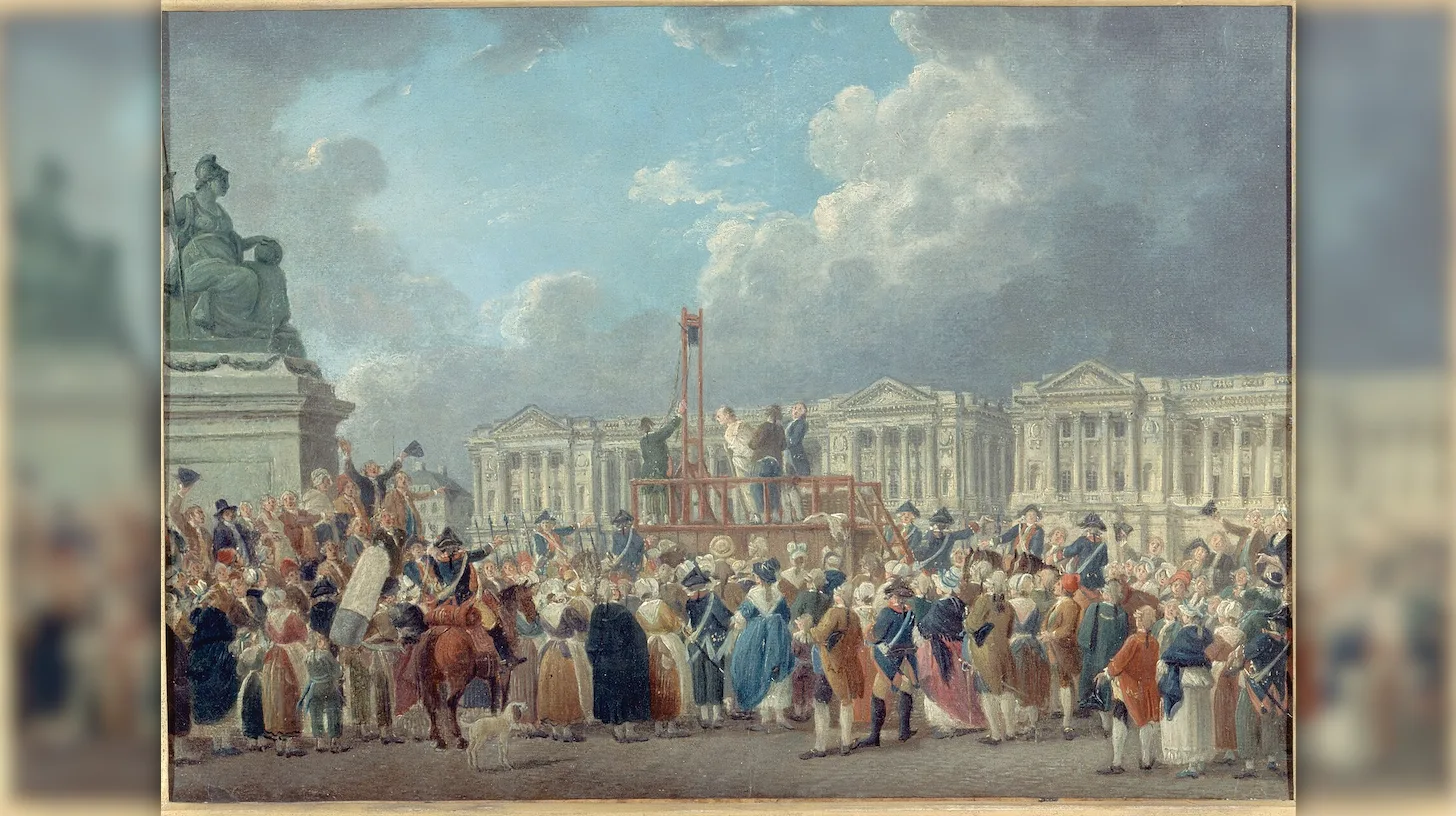
Robespierre had not forgotten him. Among his papers after his fall was found a note, which Paine later printed: “Demand that Thomas Paine be decreed of accusation for the interests of America as well as of France.” It was undated, and nothing came of it. About two months before Robespierre fell, Paine was seized with a fever that “had every symptom of becoming mortal,”, and a physician and a surgeon who were part of General O’Hara’s suite nursed him through it. In 1796 he described the weeks that followed.
“I was not in a condition to be removed, or to know of what was passing, or of what had passed, for more than a month. It makes a blank in my remembrance of life.”
The number on the door
Paine did not tell the story of the chalk in 1795, when he wrote the preface to The Age of Reason, or in 1796, when he wrote to Washington. In both he said that the fever had saved him. “A violent fever which had nearly terminated my existence, was, I believe, the circumstance that preserved it,” he wrote in 1796, and in the same letter he gave his own count of the worst night: “One hundred and sixty-nine were taken out of the Luxembourg one night, in the month of July, and one hundred and sixty of them guillotined.”
He told it six years later, back in America, in a public letter to the citizens of the United States that the National Intelligencer of Washington printed at the end of 1802. He began with how the prisoners were taken.
“When persons by scores and by hundreds were to be taken out of the prison for the guillotine it was always done in the night, and those who performed that office had a private mark or signal, by which they knew what rooms to go to, and what number to take.”
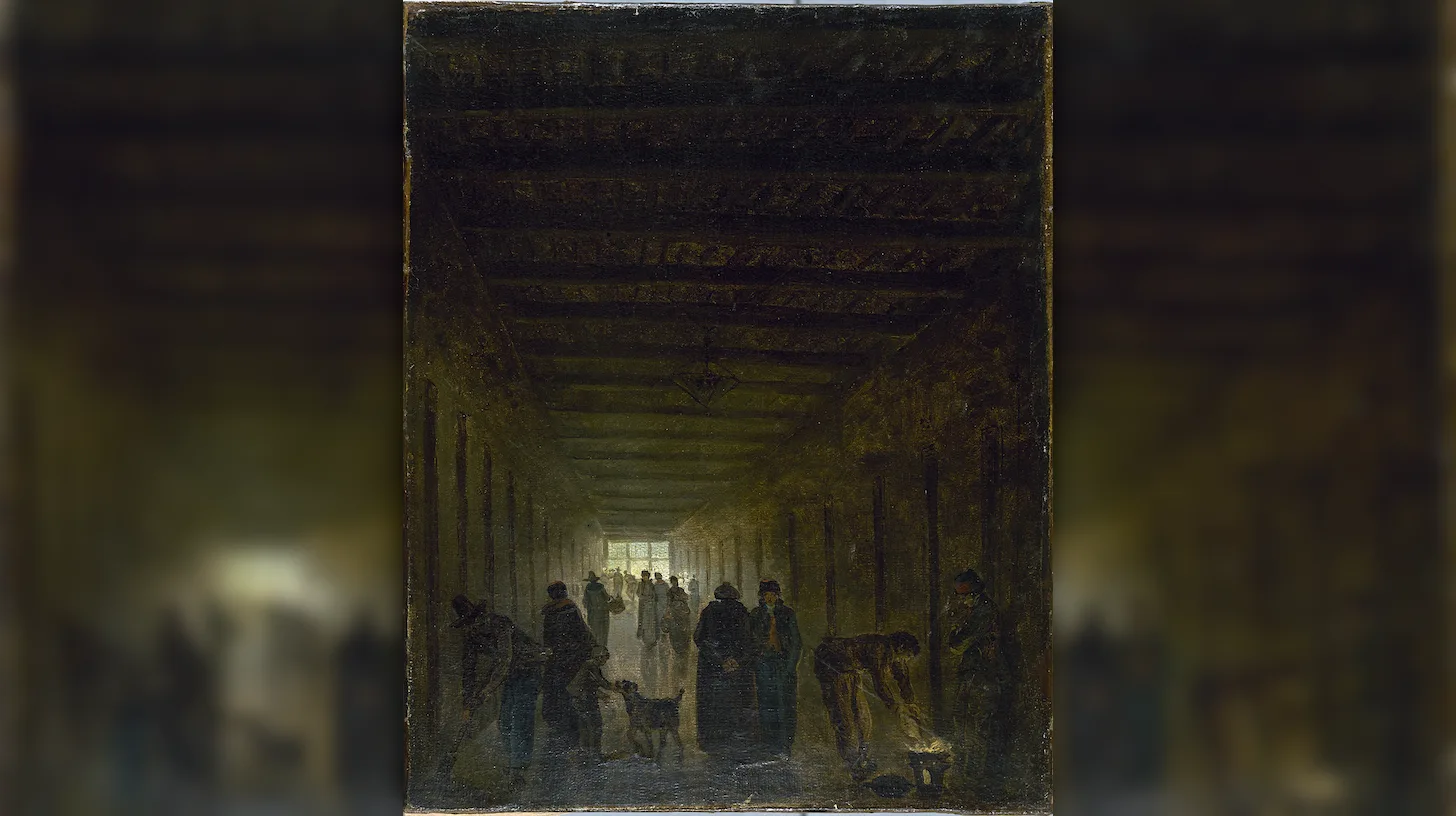
The room, he went on, “was on the ground floor, and one of a long range of rooms under a gallery,” and its door “opened outward and flat against the wall.” There were four men in it. “We, as I have stated, were four, and the door of our room was marked, unobserved by us, with that number in chalk,” he wrote. But, he wrote, “the mark was put on when the door was open, and flat against the wall,” and so it came on the inside “when we shut it at night, and the destroying angel passed by it.”
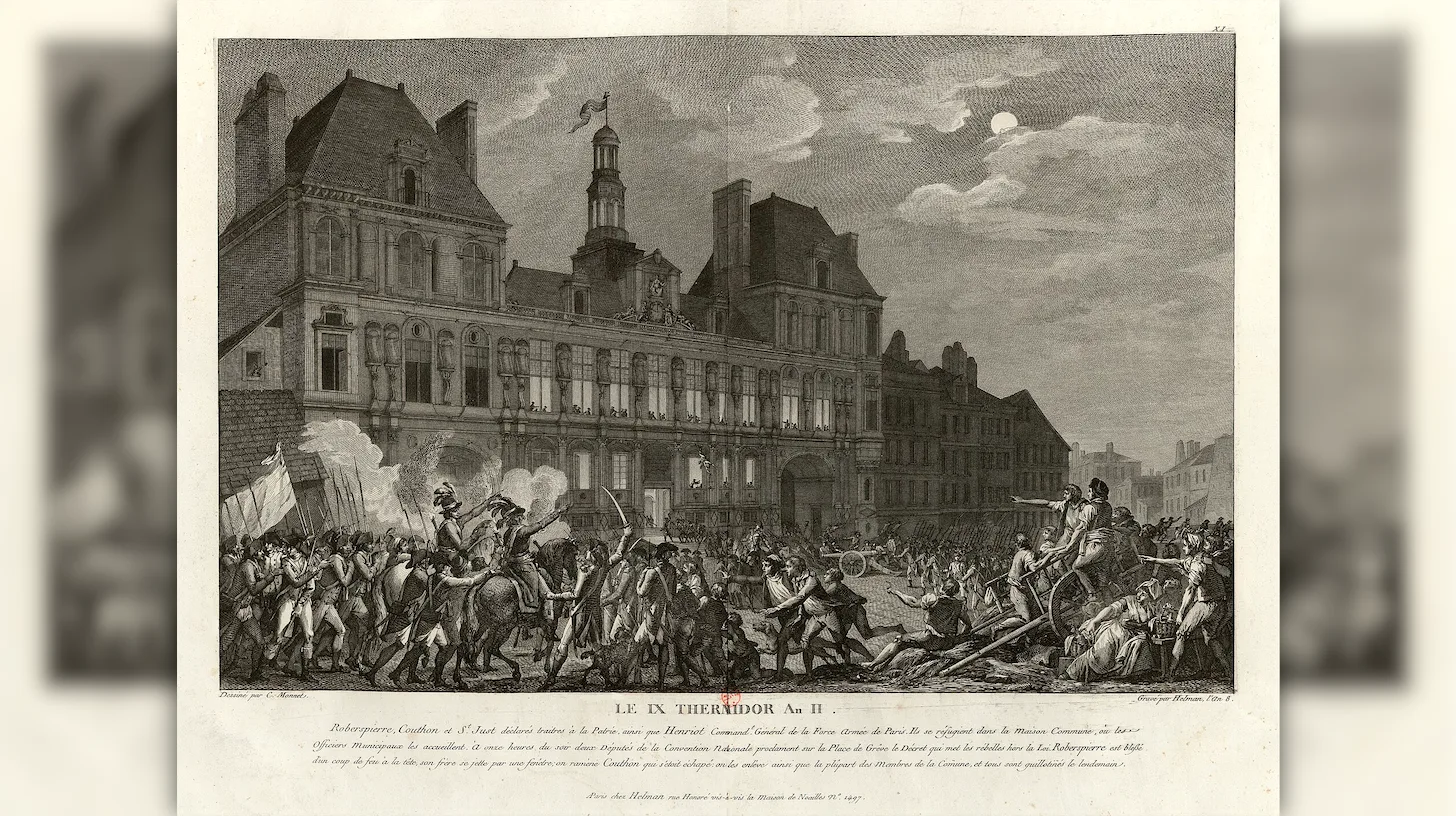
Paine never said who made the mark, or how he learned of it. Conway, who believed him, thought he heard of it only afterward, perhaps from Vanhuele, who had become mayor of Bruges. Others did not believe him. J. G. Alger, an English writer on the prisons of the Terror, went through the tribunal’s records in 1894 and wrote flatly, “There was no door-chalking.” No chalking of doors, he said, was mentioned by any other prisoner, the Luxembourg’s prisoners were never taken straight to the scaffold, and the men of the so-called Luxembourg conspiracy had been condemned “not in one batch of 168, but in three batches of 60, 48, and 36, 144 in all,” early in July, nearly three weeks before Robespierre fell. Conway answered that a debate in a London magazine that year had “conclusively proved, I think,” that the story was true. Nobody has settled it since. It is Paine’s account, and his alone.
The man who lighted the lamps
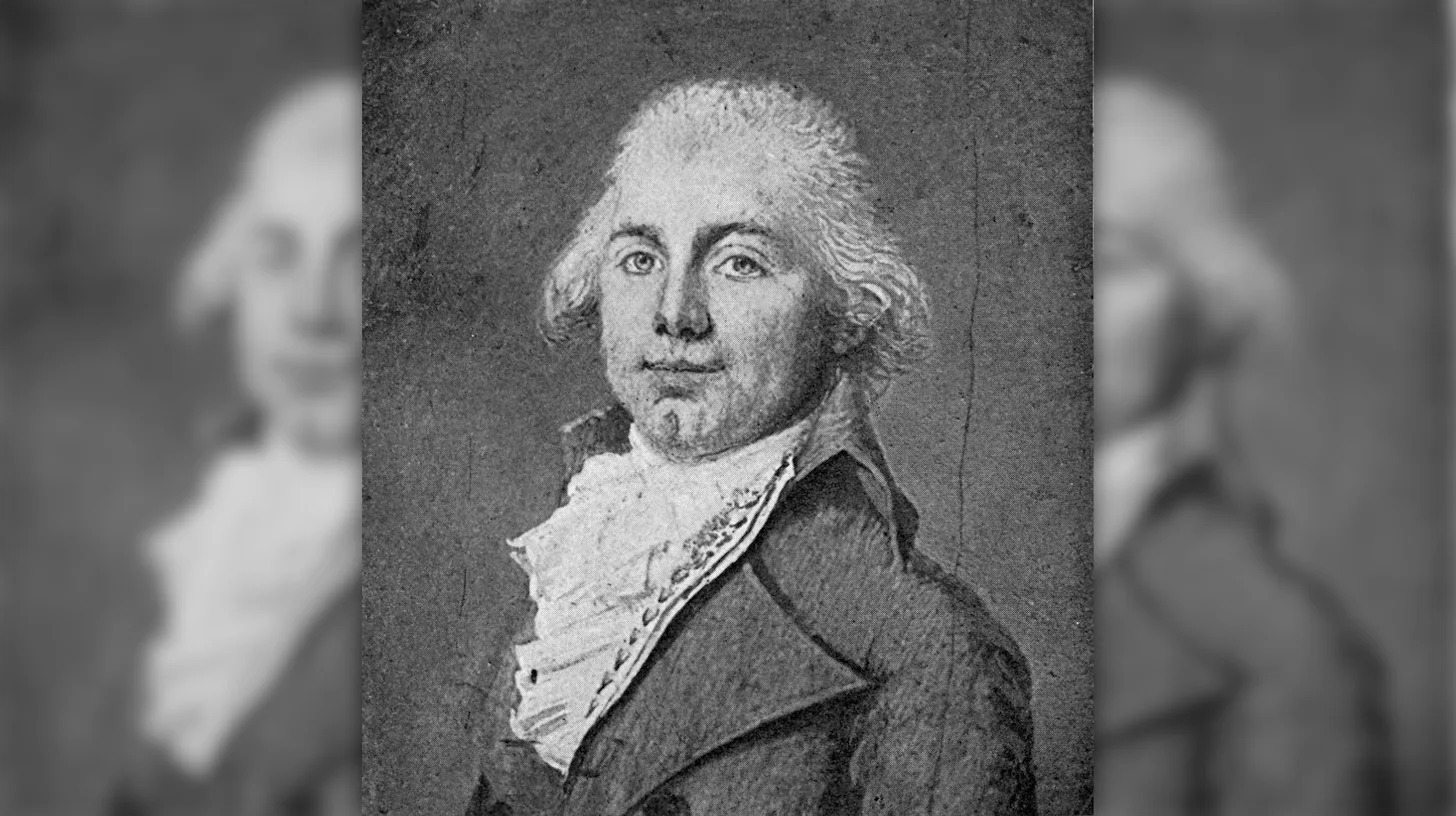
Robespierre went to the guillotine at the end of July, and the Terror ended with him. The first thing Paine was told when he came back to himself, he wrote, “was the fall of Robespierre.” About a week later a new American minister, James Monroe, arrived to take Morris’s place, and Paine found a way to reach him.
“I found a way to convey one to him by means of the man who lighted the lamps in the prison; and whose unabated friendship to me, from whom he had never received any service, and with difficulty accepted any recompense,”
That friendship, Paine added, put Washington’s to shame.
“Eight months I have been imprisoned, and I know not for what, except that the order says that I am a Foreigner,” he wrote to Monroe in August. Monroe answered in the middle of September, and the letter did not reach him until October. By then “the weather was becoming damp and cold, fuel was not to be had,” and an abscess was forming in his side. But the letter said what he wanted to hear.
“By being with us through the revolution you are of our country as absolutely as if you had been born there, and you are no more of England, than every native American is.”
Early in November Monroe wrote to the Committee of General Surety that the prisoner was “at this moment languishing in prison, affected with a disease growing more intense from his confinement.” The Committee ordered him set at liberty, and “Mr. Monroe reclaimed me,” Paine wrote, “and I was liberated the 4th of November.” He had been in the Luxembourg for ten months. Monroe took him into his own house, where he stayed more than a year and a half.
A rugged, barren field
The Convention voted to take him back that December, and he spoke there again the next summer, blaming his long silence on “a malignant fever” caught in the Luxembourg. Thomas Paine and the French Revolution had finished with each other by then. He went home to America at last in 1802, landing at Baltimore at the end of October, and it was that winter that he told the story of the chalk.
Thomas Paine died at eight o’clock on the morning of June 8, 1809, in a house on what is now Grove Street, in Greenwich Village. He was seventy-two. The Quakers would not give him a grave, and he was buried on his own farm at New Rochelle, north of the city.
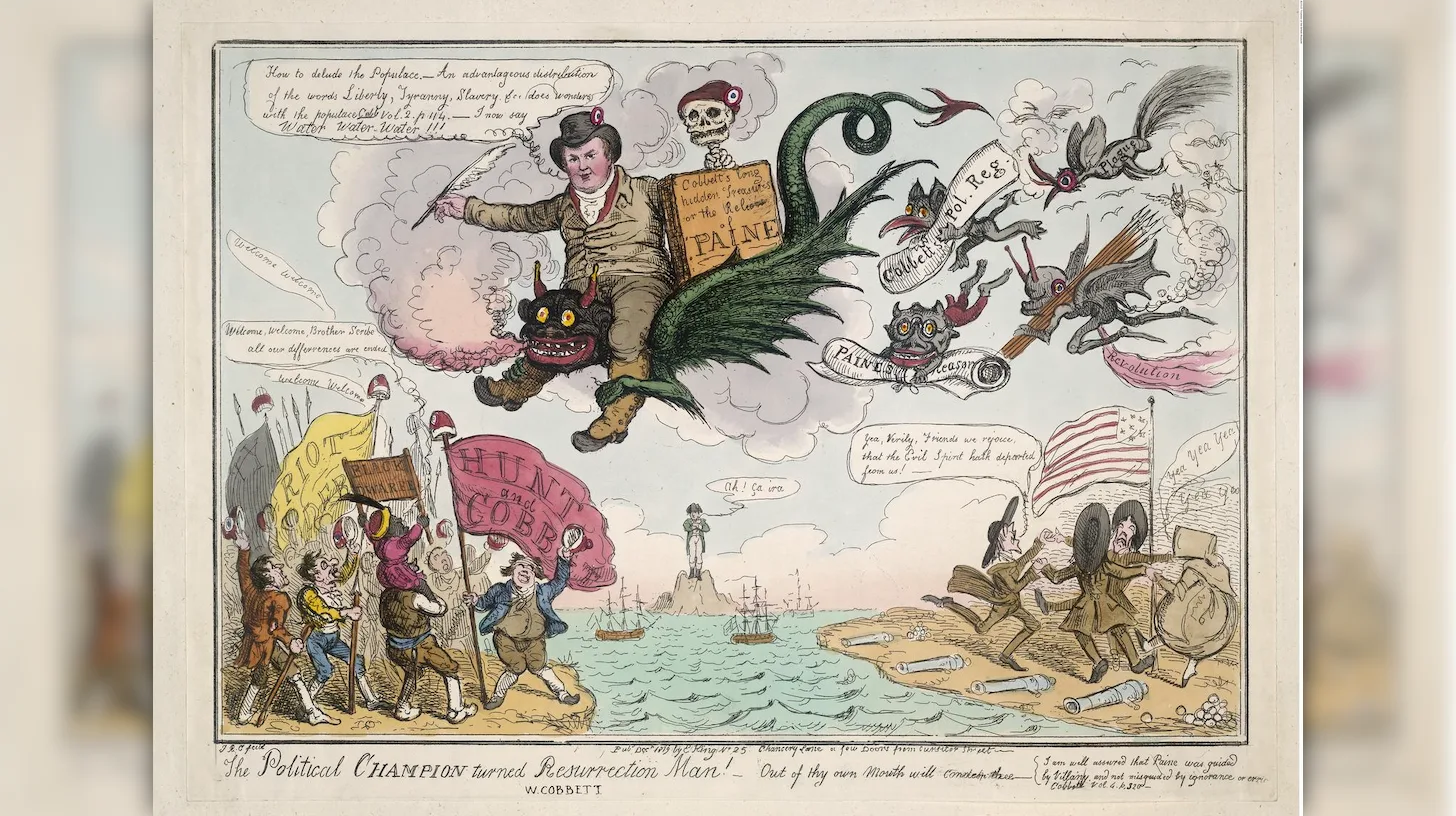
He did not stay there. In the autumn of 1819 the English radical William Cobbett dug up his bones to take them home to England for a monument. “The Quakers, even the Quakers refused him a grave!” Cobbett wrote. “And I found him lying in the corner of a rugged, barren field!” He landed at Liverpool with them on November 21, 1819, and a town crier at Bolton who announced their arrival was jailed for nine weeks. Where Thomas Paine is buried now, no one can say. After Cobbett died in 1835 the bones passed from hand to hand and were lost. The monument Cobbett planned was never raised.