16 min read
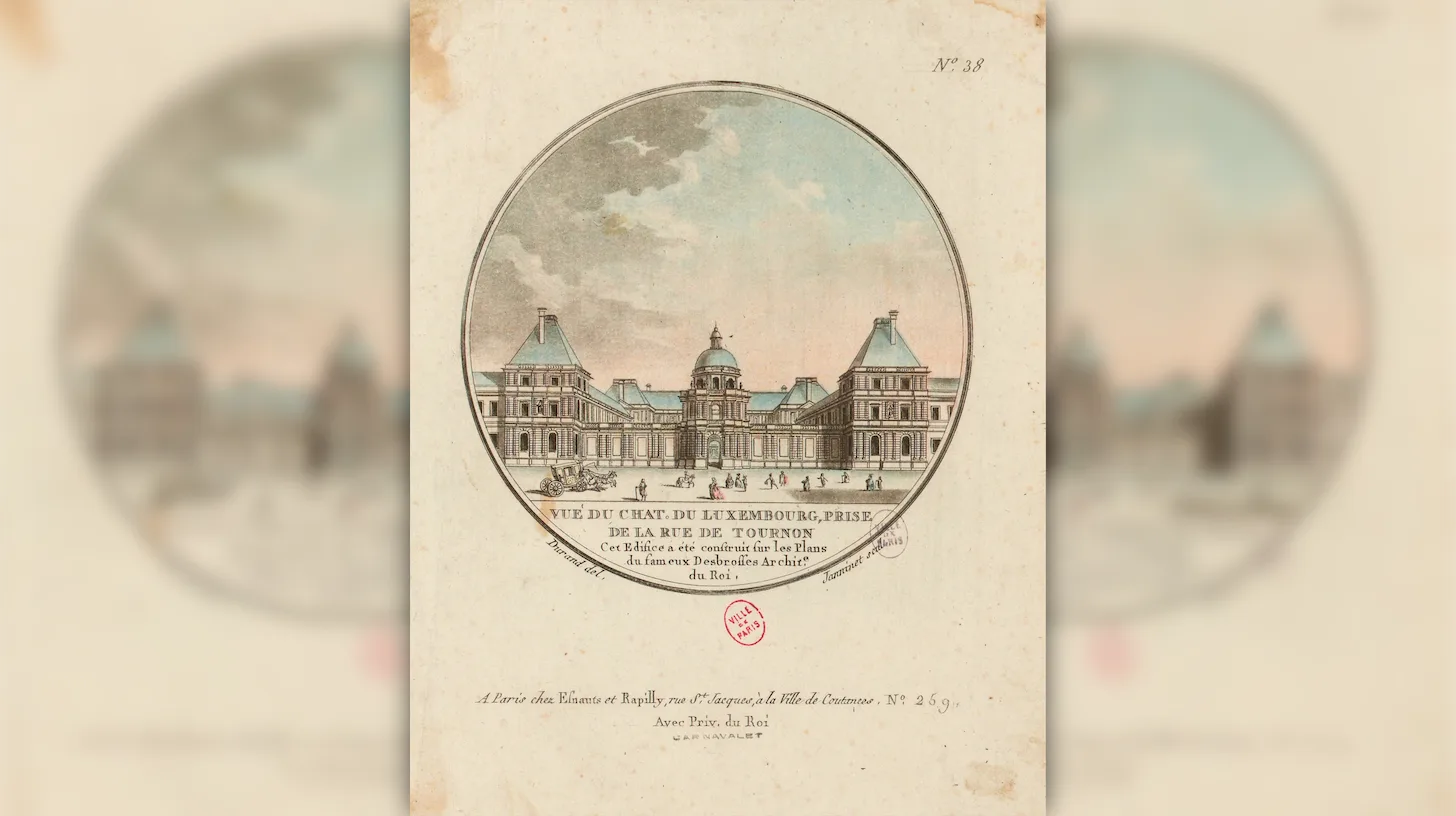
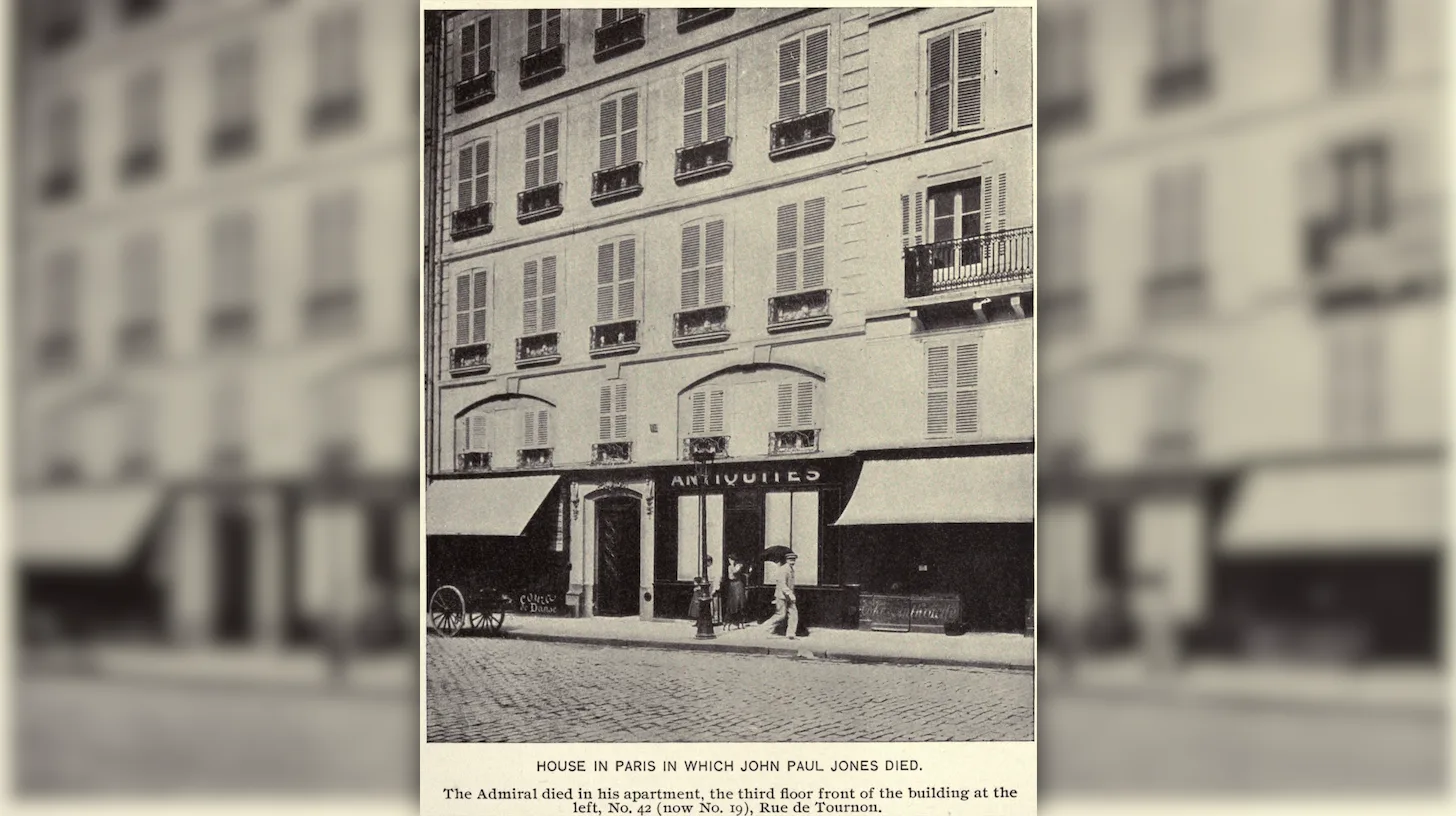
On Wednesday, July 18, 1792, a message came to Gouverneur Morris, the American minister in Paris, from a set of rooms in the rue de Tournon, on the Left Bank, where an American sea captain lay sick at the age of forty-five. Morris set it down in his diary in nine words: “A message from Paul Jones that he is dying.”
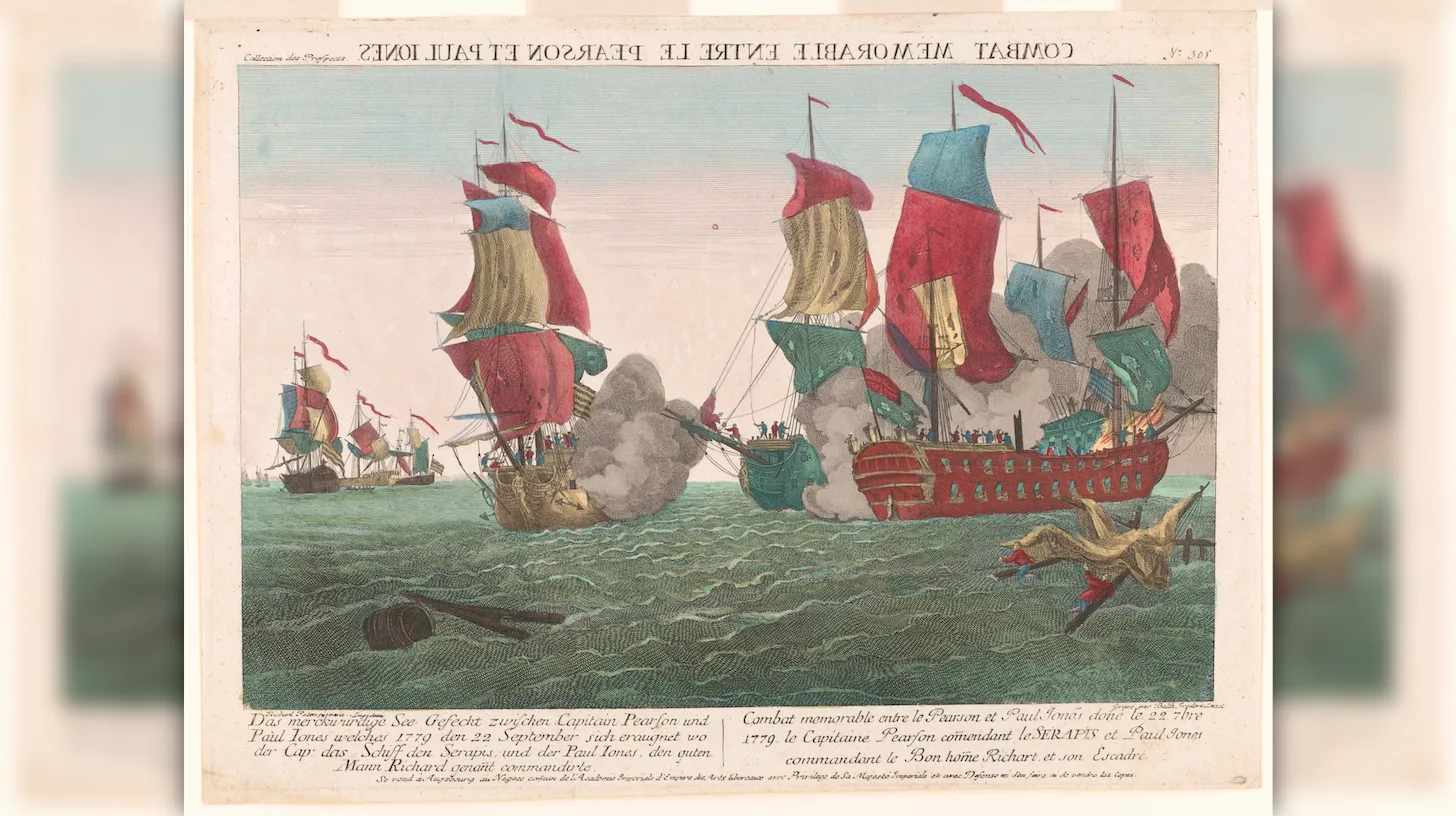
By night John Paul Jones was dead, the captain who had taken the British warships Drake and Serapis and been given a sword by the King of France. Who would pay to bury him was decided not by his country but by a French commissary of police, out of his own pocket. Within a few years the grave itself was lost, and it stayed lost for more than a century.
A message from the rue de Tournon
He was a small man. Abigail Adams, who met him at Auteuil, outside Paris, eight years before, wrote to her niece that from his record she had expected someone “rough, stout, warlike,” and that she should sooner think of “wrapping him up in cotton wool, and putting him into my pocket,” than of sending him against cannonballs. He was, she wrote, “small of stature, well proportioned, soft in his speech, easy in his address, polite in his manners,” and he knew the etiquette of a lady’s toilette as well as he knew the rigging of his ship. Morris, who saw more of him, remembered his “natural stammering.”
He did not like what he saw of the Revolution. “He is much vexed at the democracy of this country,” Morris noted after one of his calls. In his last two months he lost his appetite and grew yellow, and in the last days, according to an American friend, Col. Samuel Blackden, his legs swelled until the swelling reached his body, so that for two days “he could not button his waistcoat and had great difficulty in breathing.”
Morris went to the rue de Tournon that afternoon. He drew up the heads of a will while Jones’s hands and feet, he wrote later, were “already cold,” and he found it hard going, because what the dying man said, “besides his natural stammering, was interrupted by the strugglings against death.” He sent for a notary and left him, as the diary puts it, “struggling with his enemy between four and five.” He dined out. Afterward he called at the Louvre for a friend and for the Queen’s physician, and took them back to Jones’s lodgings, where he found him “dead, not yet cold.”
Blackden, who had witnessed the will, gave a closer account. A few minutes after the visitors left, he wrote, Jones “walked into his chamber and laid himself upon his face on the bedside, with his feet on the floor.” The physician came soon after, found him in that position and tried to lift him. The people of the house asked Morris whether they should put a seal on his papers. Among his things, when they came to be listed, were seven uniforms, twelve decorations and four swords, but no ready money for a funeral.
Twelve deputies at eight in the evening
The money was the minister’s decision, and Morris made it quickly. The next day Blackden carried a protest to the National Assembly, the body then governing France, and it was read there.
“the American minister has ordered the person at whose house the Admiral lodged to cause him to be interred in the most private manner, and at the least possible expense!!!”
The words were Blackden’s report of the order, and the three marks of exclamation were his own. The man who had charge of the dead in that part of the city, Pierre-François Simonneau, a commissary of the King and of the police, had already protested it. Blackden wrote that Simonneau “says that a man who has rendered such signal services to France and America ought to have a public burial. He adds that if America will not pay the expense he will pay it himself.” When the Assembly heard that Simonneau “was indignant,” the newspaper report of the session notes applause. The deputies voted to send twelve of their number to the funeral.
Simonneau paid. Three days after the death the Minister of Justice wrote to the Assembly that the commissary “has furnished the cost of the interment of Admiral Paul Jones, of which the bill amounts to 462 francs.” An ordinary funeral in Paris then cost 128 francs, according to the records of the time, and a hospital patient’s as little as 89, so Simonneau had paid about three and a half times the common price. The minister added that the gift was worthy of a man whose brother, the mayor of Étampes, had died enforcing the law. Blackden wrote to Jones’s sister that the body was put into a coffin of lead, so that if the United States should ever claim the remains, they “might be more easily removed.”
The burial was at eight o’clock on the evening of Friday, July 20, in the small cemetery for foreign Protestants in the northeast of the city. The twelve deputies came, with an escort of grenadiers of the gendarmerie and a Protestant pastor. Thomas Waters Griffith, one of the Americans who attended, remembered it many years later in a few lines: there was “no priest, nor any funeral service, but a few soldiers fired a volley of muskets in honor of the naval hero over his grave.” Morris’s name is not among those who signed the burial record. His diary for that day ends with a note that he had a large company to dinner.
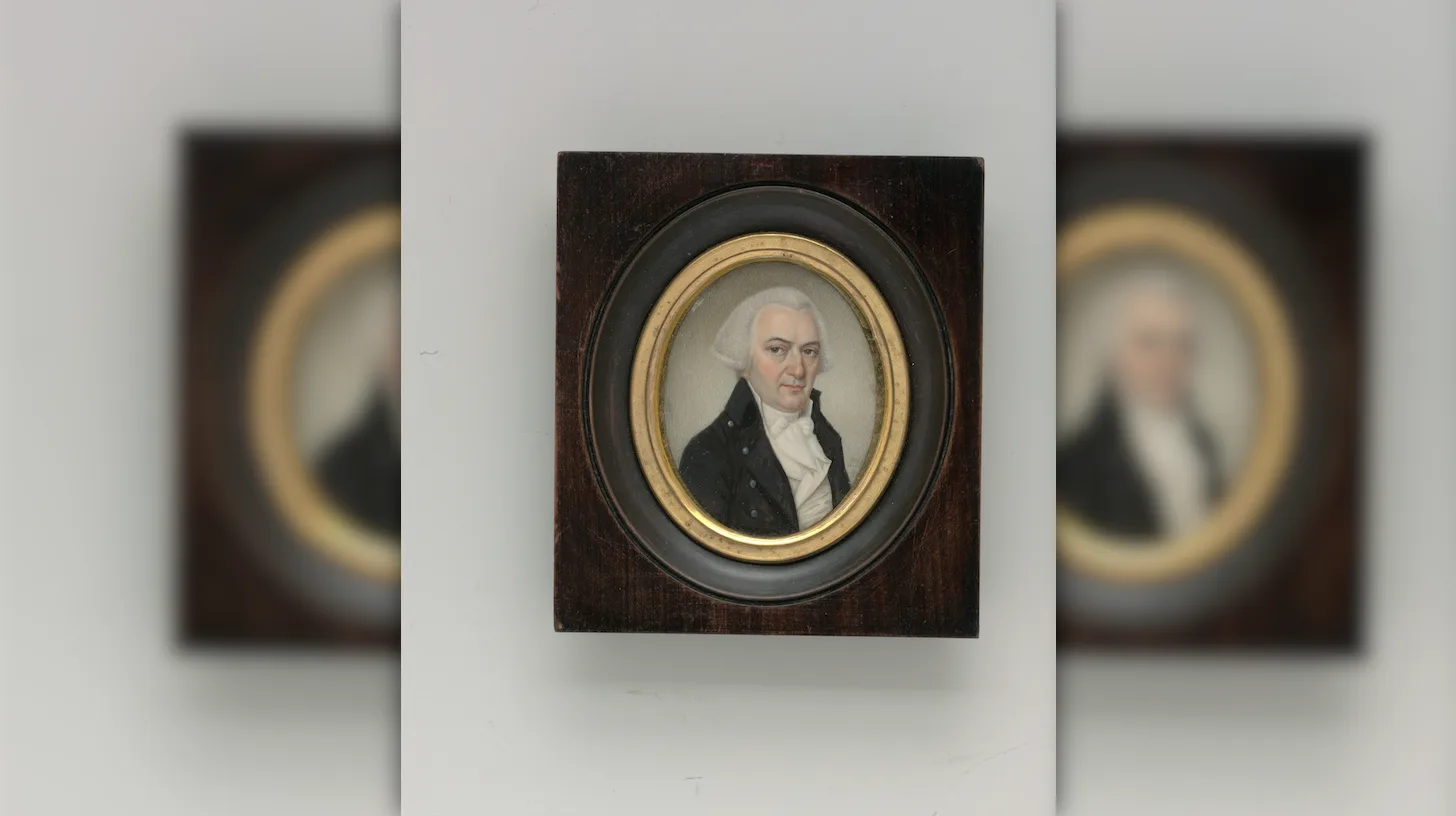
He explained himself the following year in a letter home. Certain people in Paris “who like rare shows,” he wrote, had wanted a grand funeral and had applied to him. He thought it “somewhat singular” that a man who “detested the French Revolution and all those concerned in it” should have been followed to the grave by a deputation from its Assembly.
“but as I had no right to spend on such follies either the money of his heirs or that of the United States, I desired that he might be buried in a private and economical manner.”
A laundry over the grave
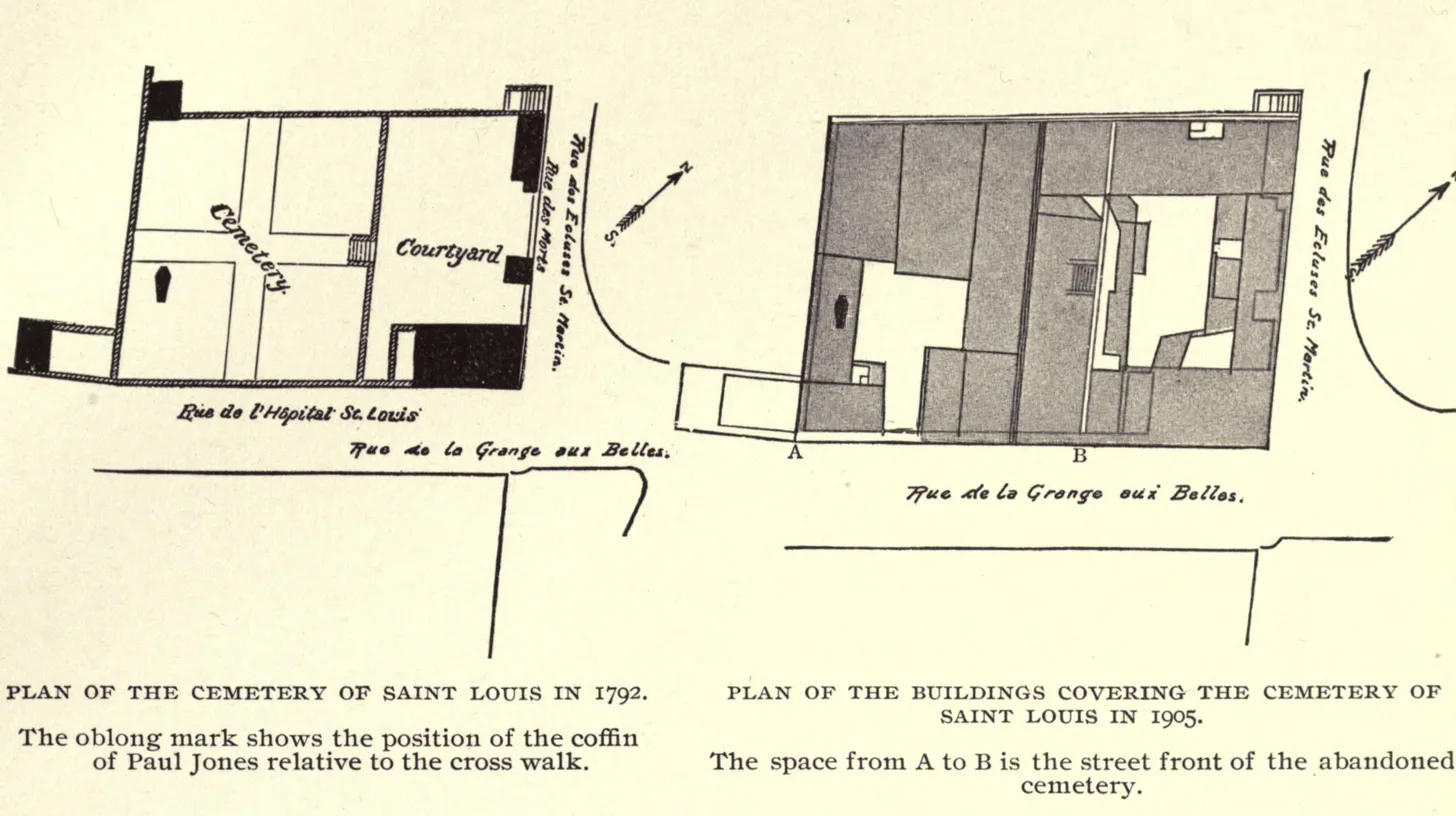
Four years after the funeral the cemetery was sold to a building contractor. In the first half of the next century the old graveyard was filled with rubbish to a depth of three or four meters, and on top of it rose “a public laundry, two houses, stables, barns, etc.” A dump pile fifteen feet high, where dogs and horses were buried, covered part of it, and for a time a contractor for removing night soil worked there. In May 1871 the Commune burned the government buildings that held the old Protestant burial register. A copy survived only because an archaeologist, Charles Read, had transcribed it twelve years before.
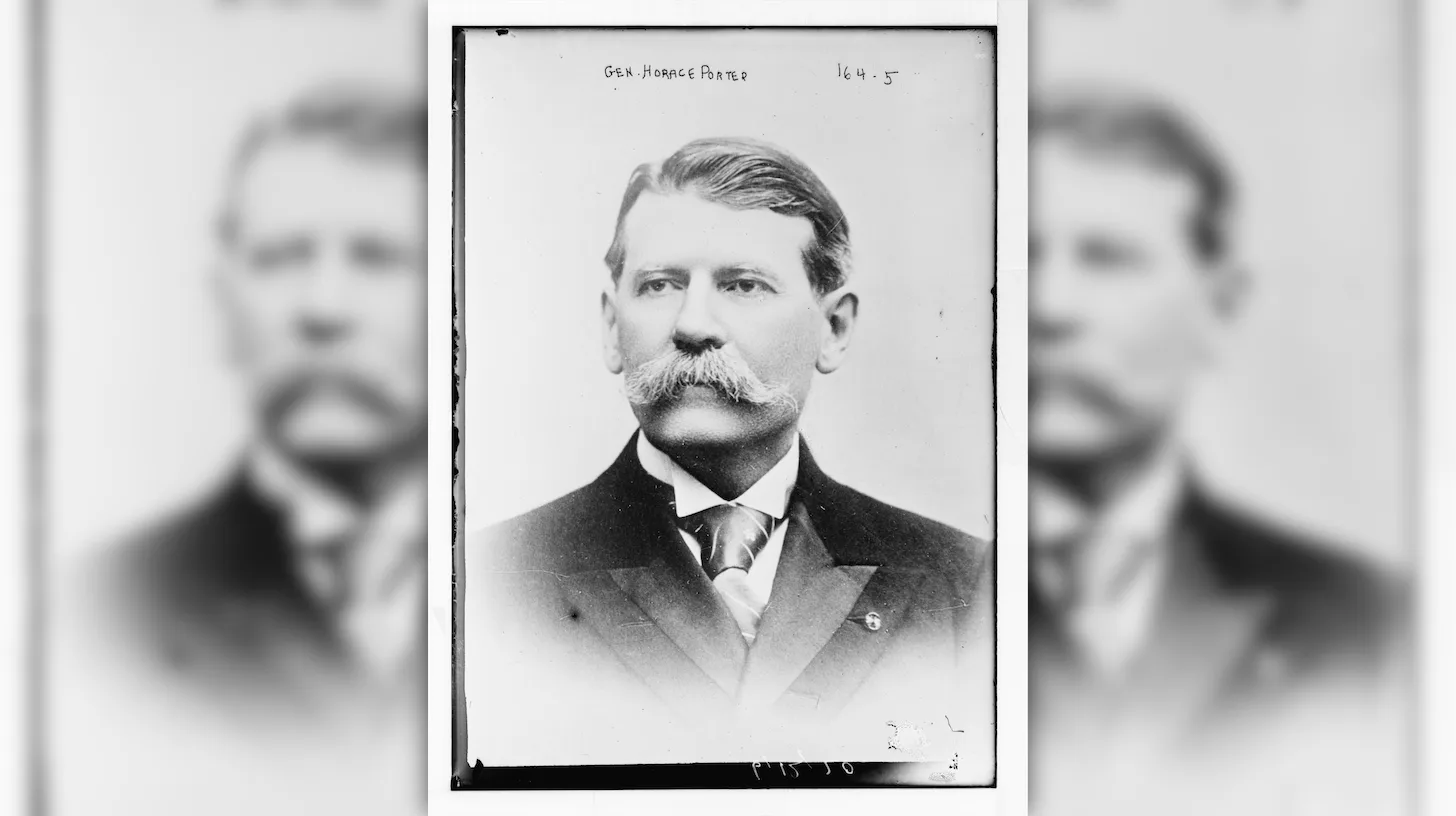
The man who went looking for the grave was Horace Porter, the American ambassador in Paris, a former general who held the Medal of Honor. He began the search in June 1899. He had the register’s transcript, the burial record, and the knowledge that the coffin was lead. What he did not have was the use of the land. When word got out that the United States was interested in it, he wrote, the owners and tenants began “circulating fantastic stories regarding the fabulous prices that were to be paid for the property,” and he let the matter rest for two years until talk died down.
In time he had options in writing from everyone concerned, granting “the right for three months to enter upon the premises and make the necessary excavations.” He paid the sums in advance himself. In February 1905 President Theodore Roosevelt asked Congress for the money, estimating the cost of searching the whole ground at no more than 180,000 francs, or $35,000. “It was late in the short session,” Porter wrote, “and no action was taken.” He went ahead.
Five shafts under the rue Grange-aux-Belles
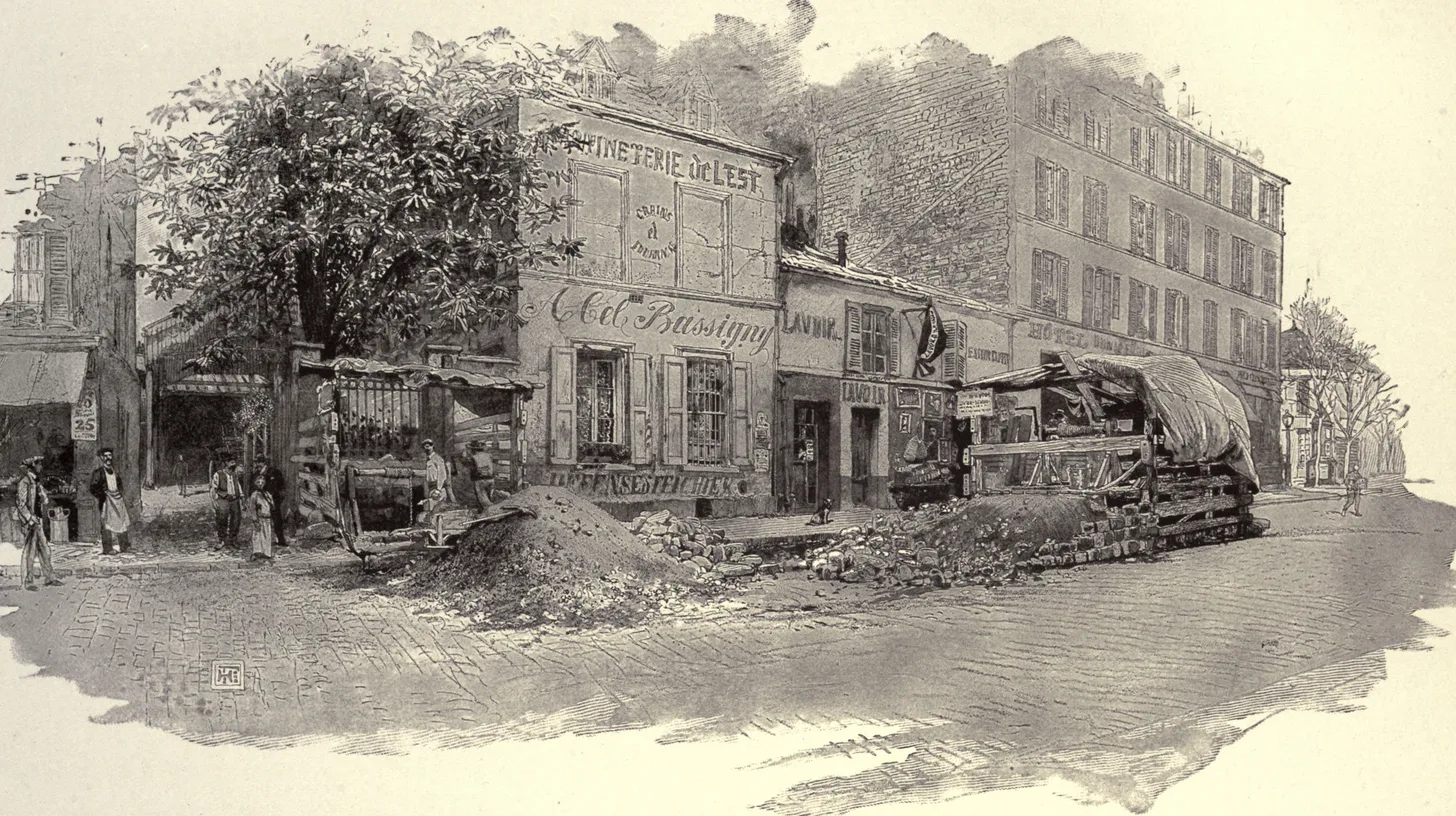
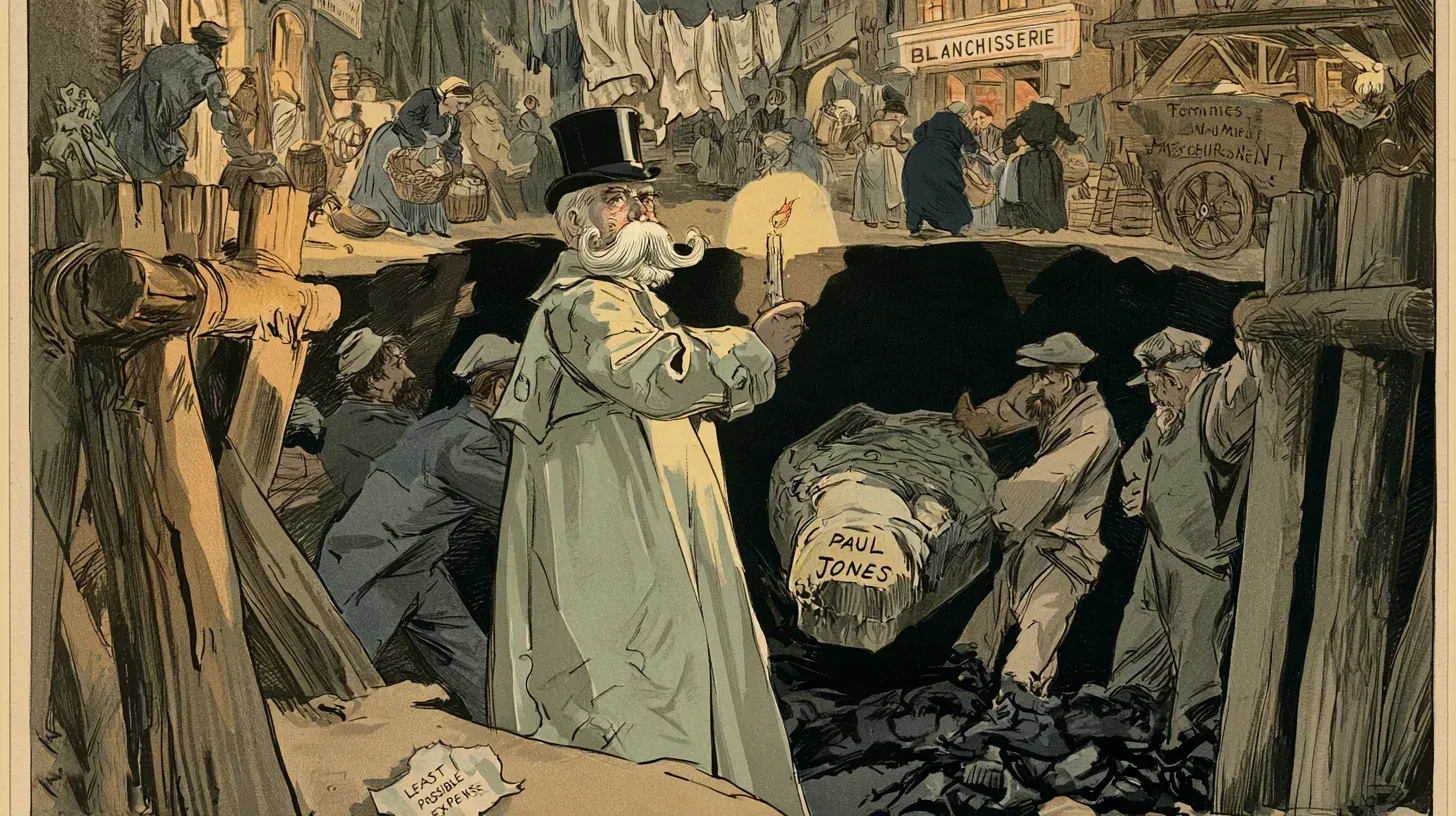
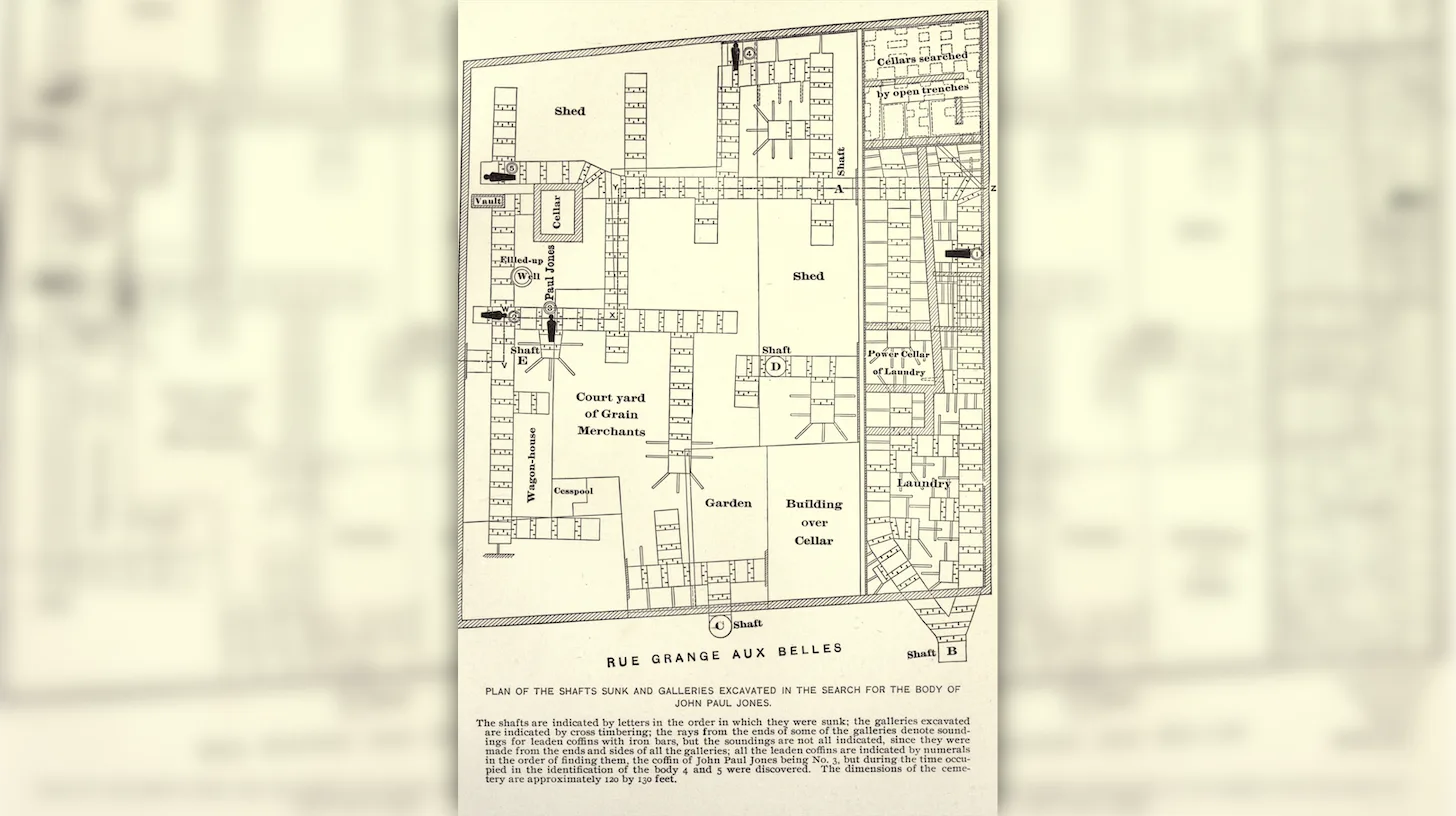
The work began on Friday, February 3, 1905, under a French engineer. Gangs of men worked by day and by night. They sank shafts through the fill at the corner of the rue Grange-aux-Belles and the rue des Écluses Saint-Martin, one of them under the shed of a grain dealer, and from the bottoms of the shafts they drove galleries along the old cemetery floor, sounding the earth ahead of them as they went. “Slime, mud, and mephitic odors were encountered,” he wrote, “and long red worms appeared in abundance.”
In one place the diggers came on a mass of skeletons, and Porter thought he knew why. He had found a drawing of the Swiss Guards killed defending the Tuileries in August 1792, three weeks after Jones’s funeral, and he believed their bodies had been thrown into this ground. On February 22 the men struck the first coffin of lead. Its plate showed that an Englishman lay in it. A second, a month later, carried a plate with the name of Richard Hay, who had died in Paris in 1785.
On March 31 a third lead coffin was unearthed. No inscription plate could be found on it, though it was better made than the others. The lid had a small round filler hole over the face, screwed shut and soldered, and the earth around it was hard and black. The air in the gallery was so foul that Porter would not have it opened where it lay until a second passage had been cut to let fresh air in. That took a week. In the meantime the copies of the Admiral’s Congressional medal, which Porter had had struck from the original die after finding it in the Paris mint, were handed out to the men in charge, so that they would know his profile when they saw it.
Candles at the head of the coffin
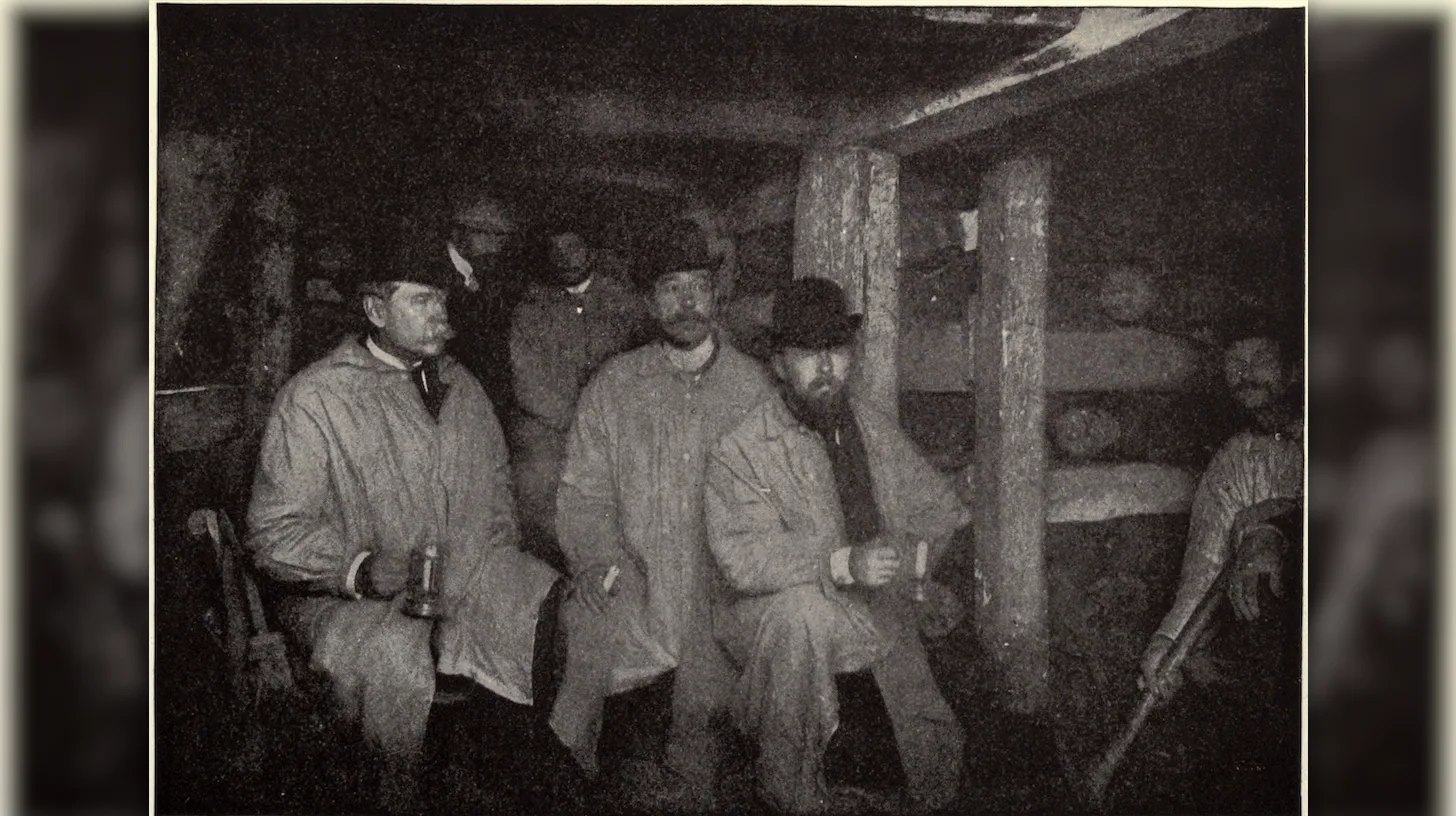
The coffin was opened in the gallery on April 7. Porter was there, with an officer of the embassy, the engineer, the superintendent of the work, the foreman and several workmen. The lid was soldered so firmly that it came off “with considerable difficulty,” and a strong smell of alcohol came up out of the box. The body inside was wrapped in a winding sheet and packed with hay and straw. Half a dozen candles were set near the head, and the sheet was drawn back from the face.
“To our intense surprise the body was marvelously well preserved, all the flesh remaining intact, very slightly shrunken, and of a grayish brown or tan color.”
The nose had been bent over to one side by the pressure of the lid, but the rest of the face looked natural. Someone held the medal beside it. Porter wrote that they “instinctively exclaimed” the Admiral’s name and that every man around the coffin took off his hat. He took the right hand in his own and found that the knuckles could still be bent. The long hair, about thirty inches of it, dark brown and streaked with gray, had been dressed and gathered into a linen cap at the back of the head, and on the cap was a worked initial that read as a J one way up and a P the other. On the night of April 8 the coffin was carried quietly to the School of Medicine.
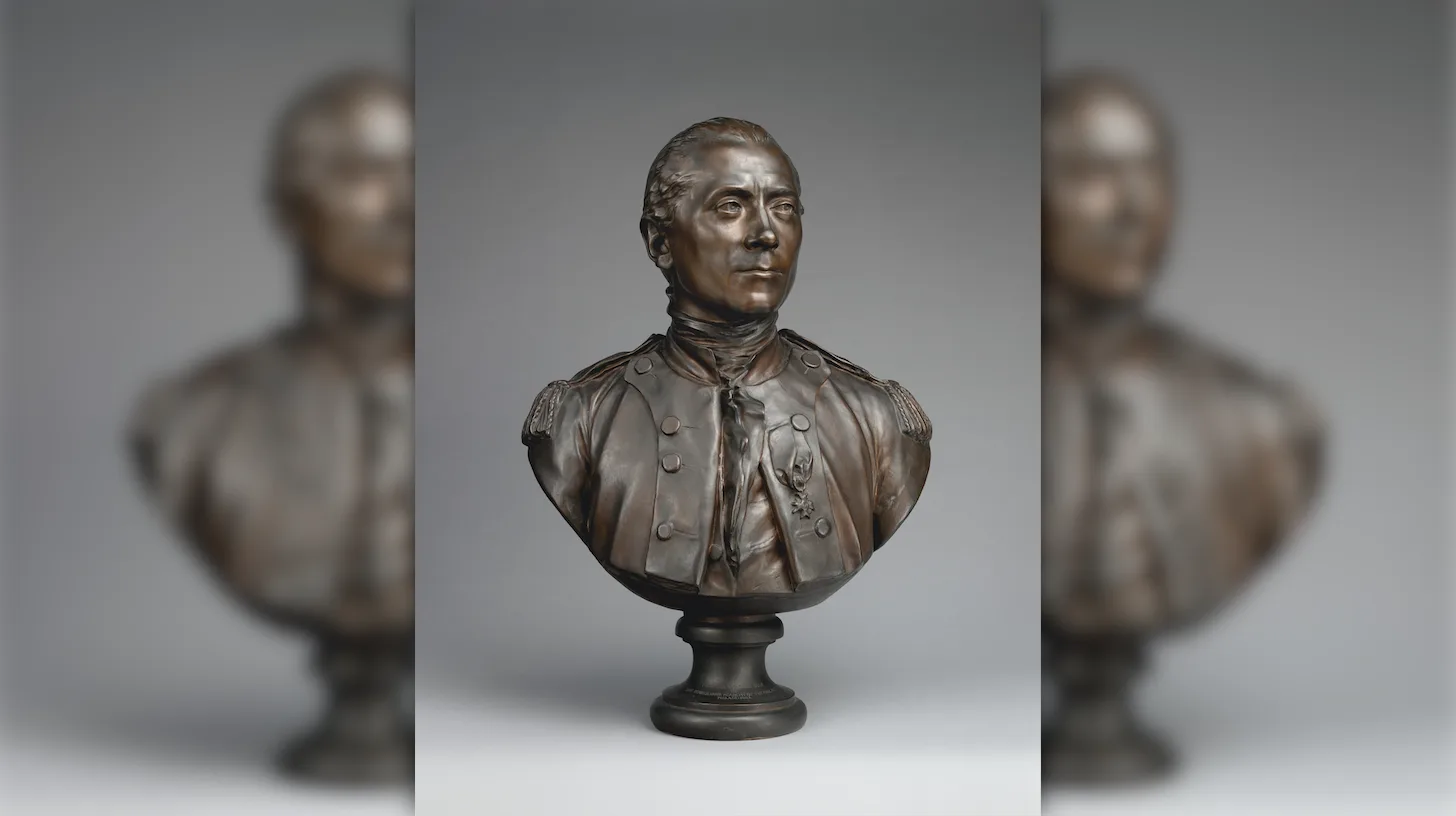
There the anthropologists took over. Georges Papillault measured the head and face against the busts that the sculptor Jean-Antoine Houdon had made of him in life and found the proportions so close that the busts, he concluded, had been made from the man before him. The body lying on the table measured 1.71 meters, about five feet seven, which was the height the scientists had been given. That figure came partly from a biography by Augustus Buell, later shown to quote documents that did not exist, and so the face and the bust carry more of the weight.
Louis Capitan then made what Porter called the only autopsy ever performed on a body buried 113 years. The organs, soaked in alcohol, could be cut and put under a microscope, and they showed a disease of the kidneys that fit the swelling Blackden had described.
“It can therefore be said that we possess microscopic proof that Paul Jones died of a chronic renal affection, of which he had shown symptoms toward the close of his life.”
On April 14 Porter cabled Washington. “My six years’ search for remains Paul Jones has resulted in success,” he wrote. In May the scientists, the prefects of Paris and the embassy signed a certificate, and those present were unanimous.
America claims her dead
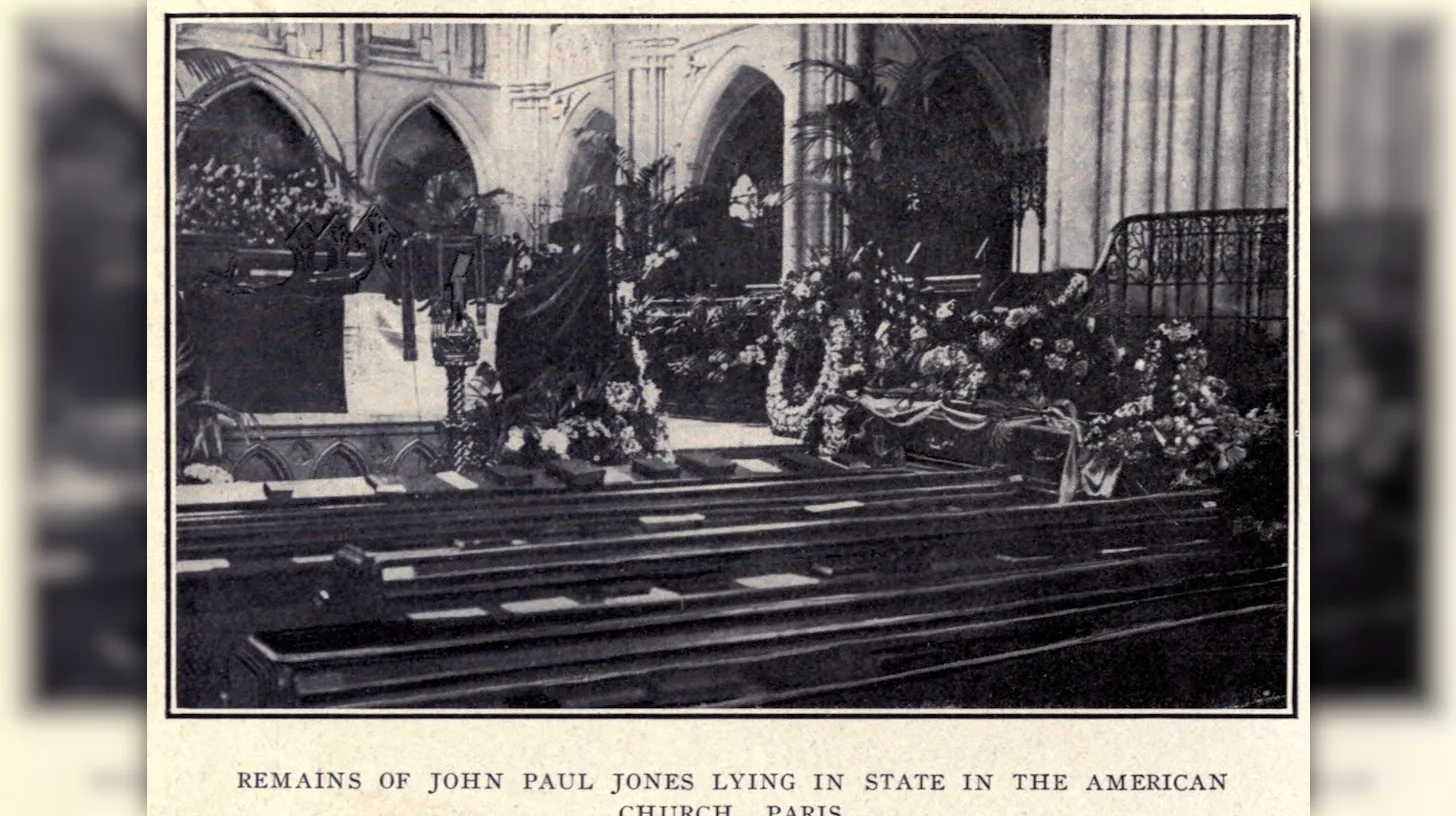
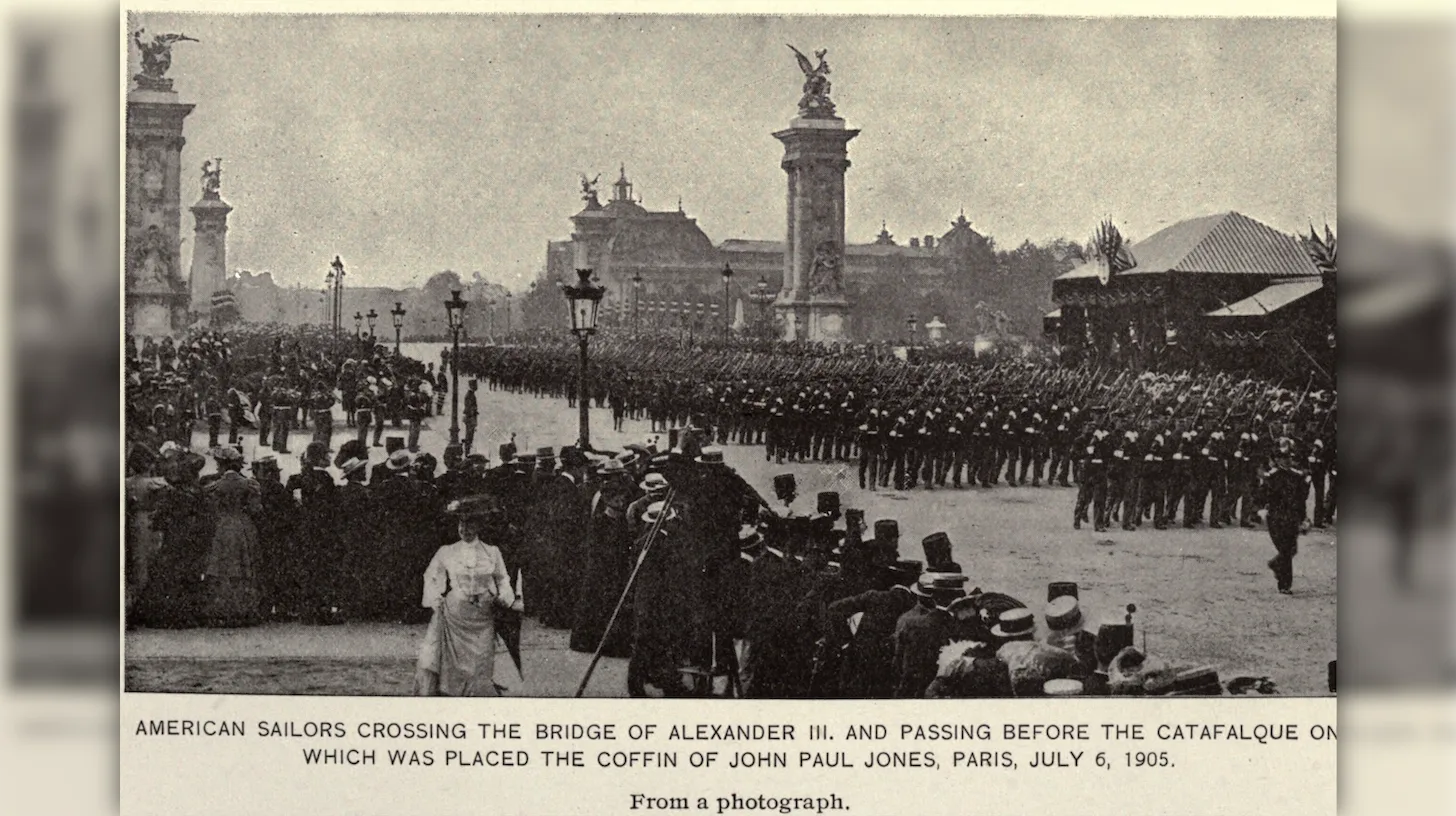
On July 6, the anniversary of Jones’s birth, Rear Adm. Charles Sigsbee brought five hundred sailors to Paris for a procession, and Porter handed over the body with the words, “This day America claims her illustrious dead.” Two days later the squadron of four ships, led by the Brooklyn, sailed from Cherbourg. It anchored off Annapolis late in July, and on the next day the casket was carried ashore at the Naval Academy and put into a brick vault built for it on the grounds. A company of marines fired three volleys, and a bugler sounded taps.
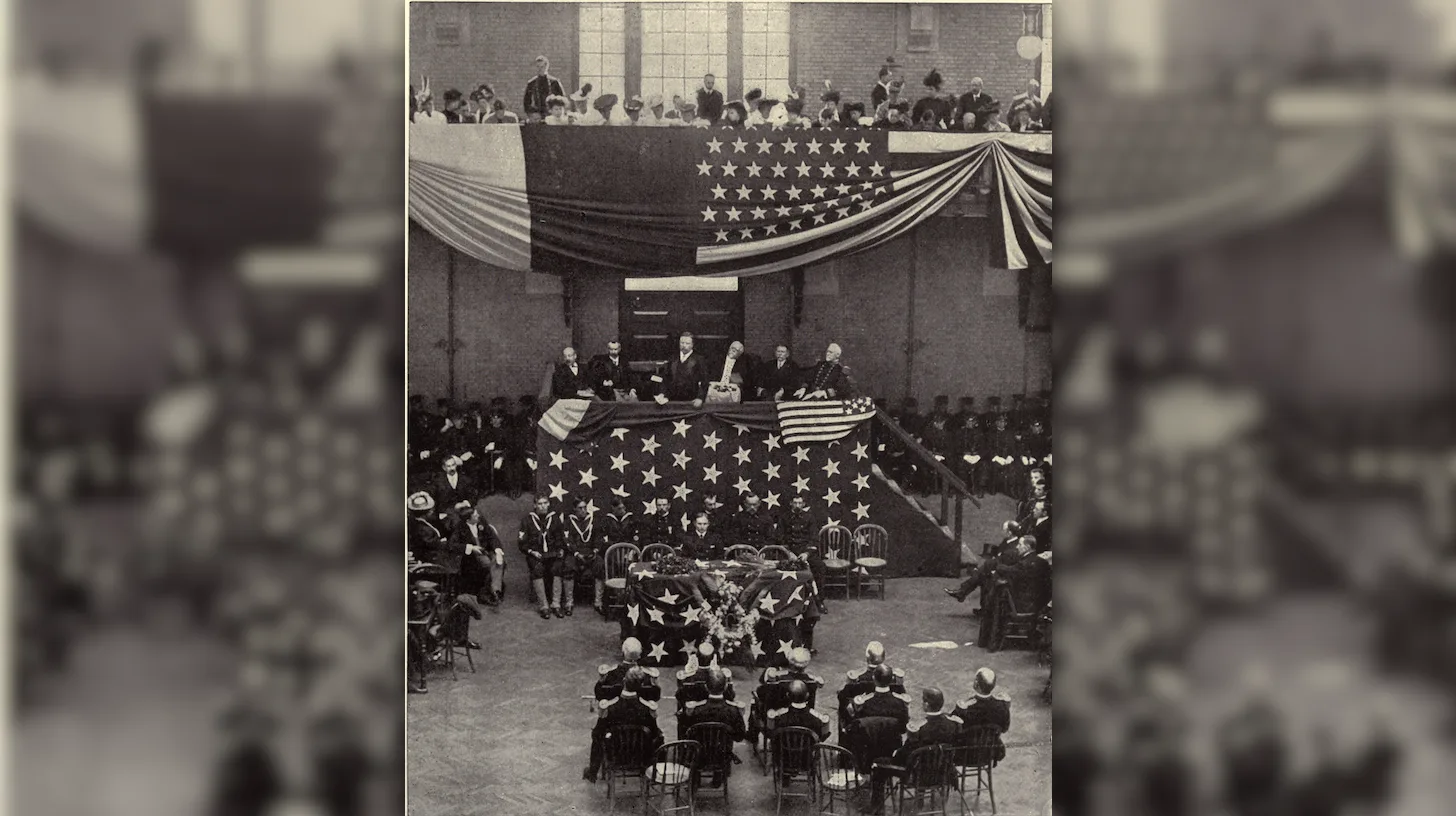
The ceremony came the following spring, on April 24, 1906, the anniversary of the day Jones took the Drake off the coast of Ireland. The day was “clear and cool with a fresh northwesterly breeze.” The casket rested in the Academy’s Armory with a wreath of laurel on it and the gold-mounted sword Louis XVI had given its occupant. Roosevelt spoke for thirty minutes and was often interrupted by applause. “Every officer in our Navy should know by heart the deeds of John Paul Jones,” he said, and he gave the credit for the recovery to Porter, “to whose zealous devotion we particularly owe it that the body of John Paul Jones has been brought to our shores.” When the speeches were over the casket was carried to a space beneath the stairs in Bancroft Hall, and it stayed there for nearly seven years, until a crypt was built beneath the Academy’s chapel. The crypt, with a marble tomb, was dedicated in 1913.
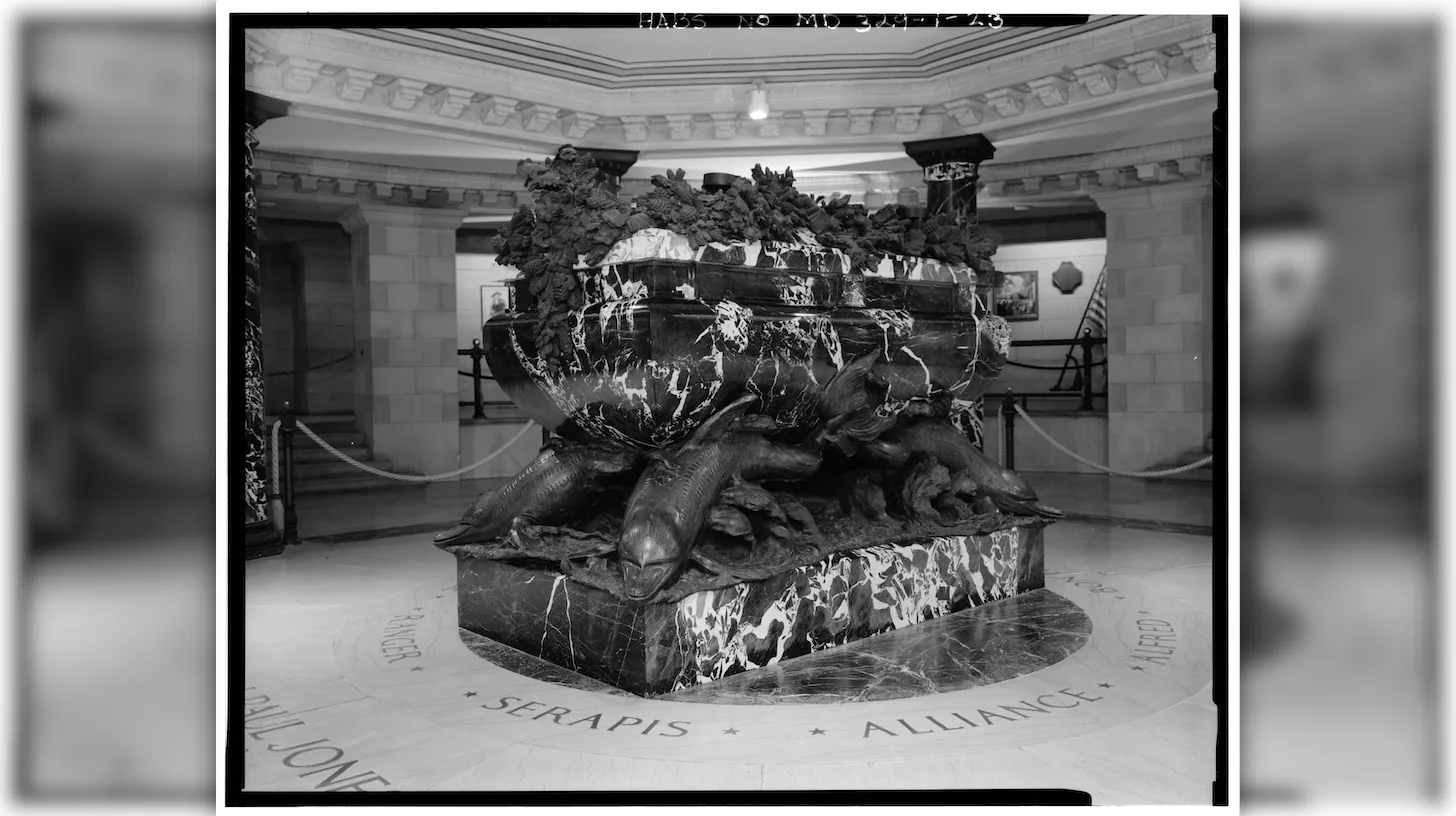
Congress gave Porter its thanks by joint resolution. Whether he was ever paid back for what he had spent is not settled by the record, and no figure for what he spent has been found. But he had looked, while he was in Paris, for the family of the commissary who had paid for the funeral, meaning to repay the 462 francs with interest. Six people named Simonneau were found and written to, and none could prove descent.
The 462 francs were never paid back.