12 min read
On the morning of Friday, May 30, 1806, Andrew Jackson walked away from a stand of poplars on the Red River in Kentucky beside his second, Thomas Overton. He had gone about a hundred yards before the surgeon who rode with him noticed that one of his shoes was full of blood. Behind him, in a house down the river, a young lawyer named Charles Dickinson was dying of the shot Jackson had fired a few minutes before. Jackson looked toward the house. “But say nothing about it there,” he told the surgeon, as James Parton, his first full biographer, set down the story half a century later.
Dickinson had fired first, and he had hit Jackson in the chest at a distance of 24 feet. Jackson had stood, aimed and killed him, and now he meant to keep the wound to himself. It was the only time Andrew Jackson killed a man in a duel, and it began, as the papers of that spring show, with a horse race that was never run, a promissory note and a word printed in a Nashville newspaper. Retellings of the Andrew Jackson duel say that he hid his wound to spite the dying man. The record behind that reason is thinner than the story, and one detail in it is wrong.
A slender man in a loose coat
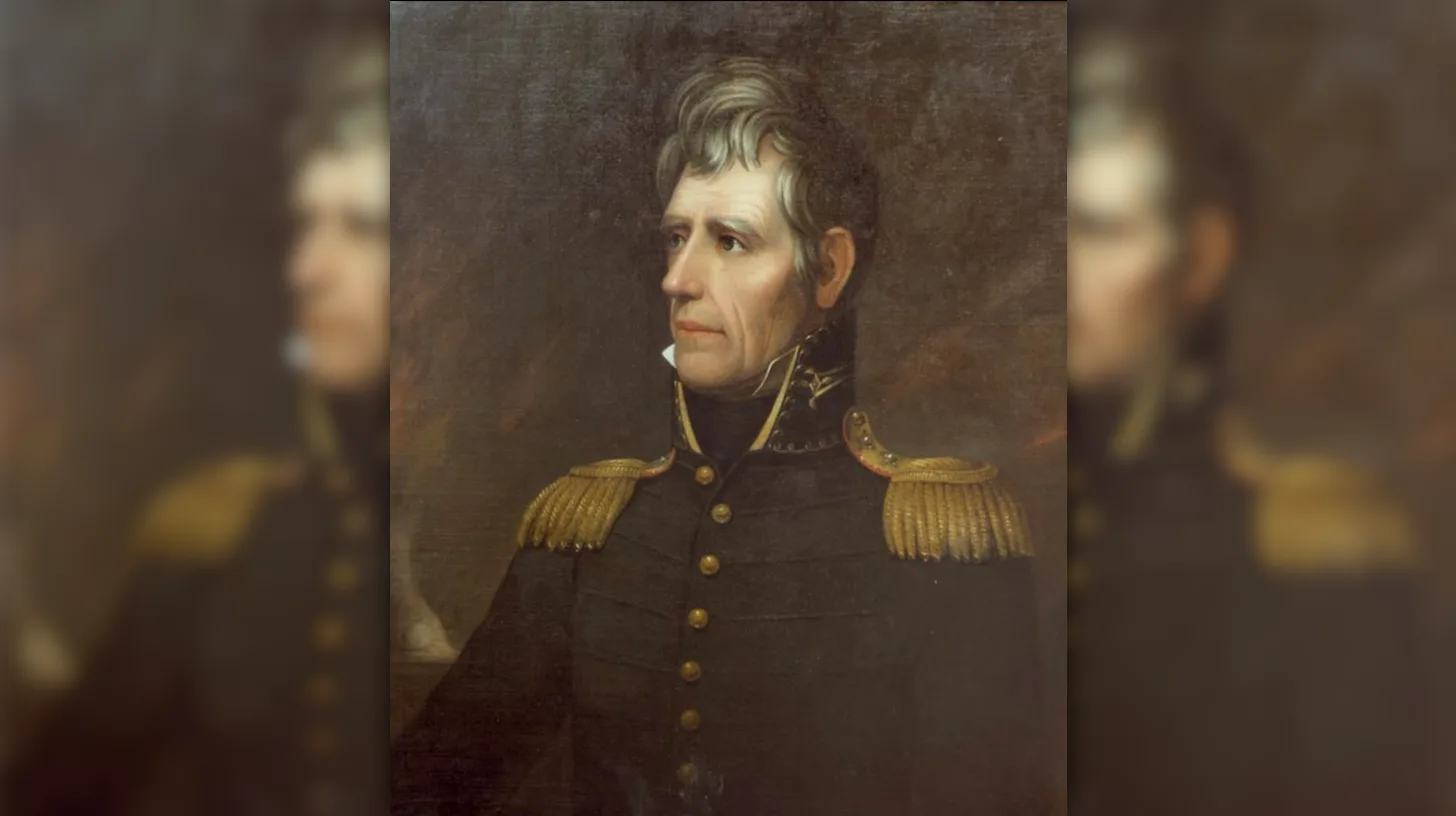
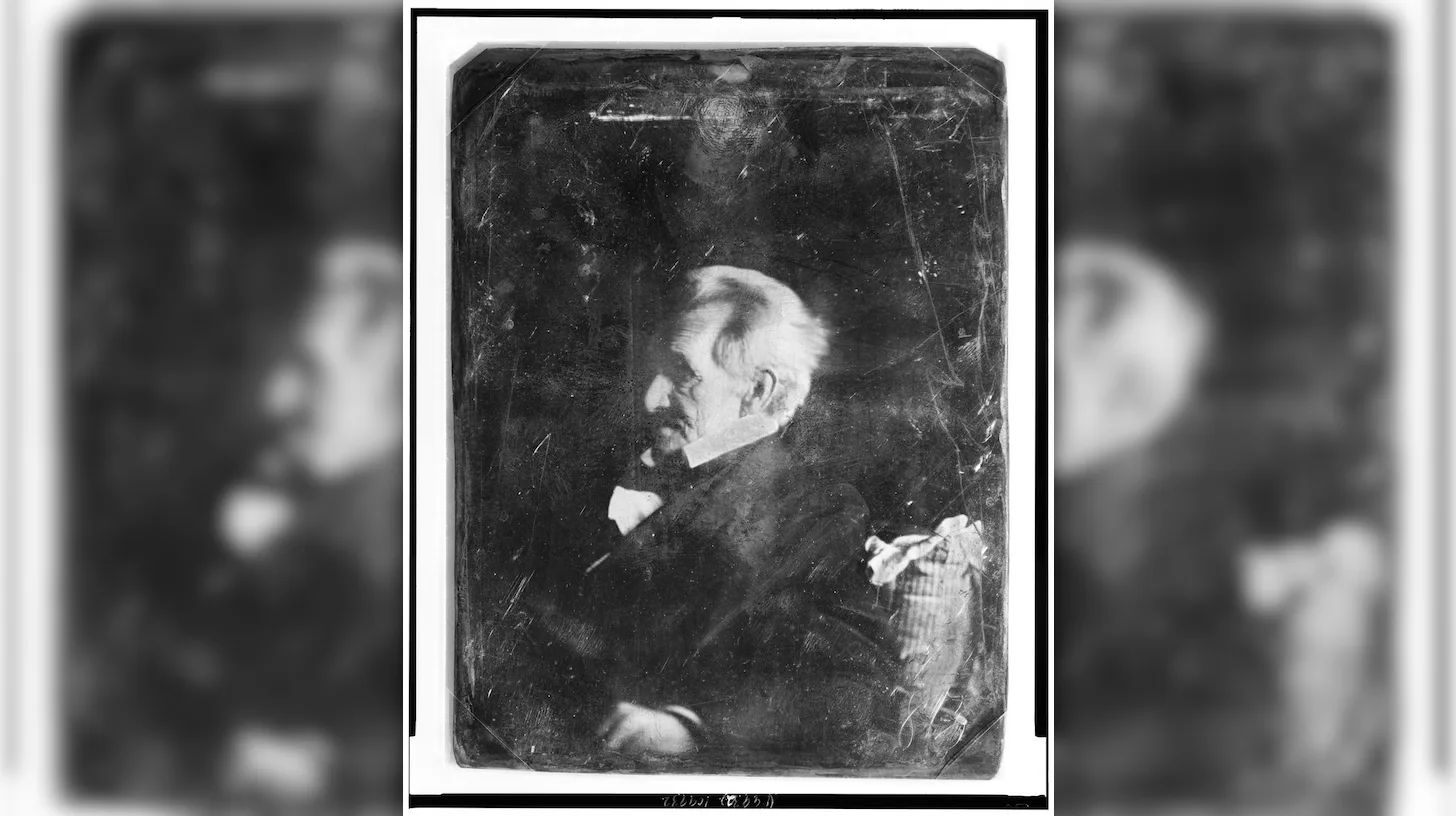
Jackson was thirty-nine. He was a lawyer and planter at Nashville and a major general of the Tennessee militia, and he raced horses. He was tall and very thin, with a long, fair face and thick hair of a reddish-sandy colour, and his eyes, as old Tennesseans remembered them to Parton, were “of a deep blue, and capable of blazing with great expression when he was roused.” The bristling white hair of his later portraits belonged to the second half of his life. Ten years earlier the Pennsylvania politician Albert Gallatin had described him as “a tall, lank, uncouth-looking personage” with long locks over his face and a queue down his back tied in an eel skin, a picture Jackson’s friends disputed.
Charles Dickinson was the younger and, by Parton’s account, the handsomer man. He was in his twenty-eighth year, a native of Maryland who had come west to practise law, and he had married Jane Erwin, the daughter of a planter named Joseph Erwin. That spring they had a baby. Dickinson had the reputation “of being the best shot in Tennessee,” and the men around Jackson believed that when he drank he talked loosely, and that he had once talked loosely about Jackson’s wife, Rachel.
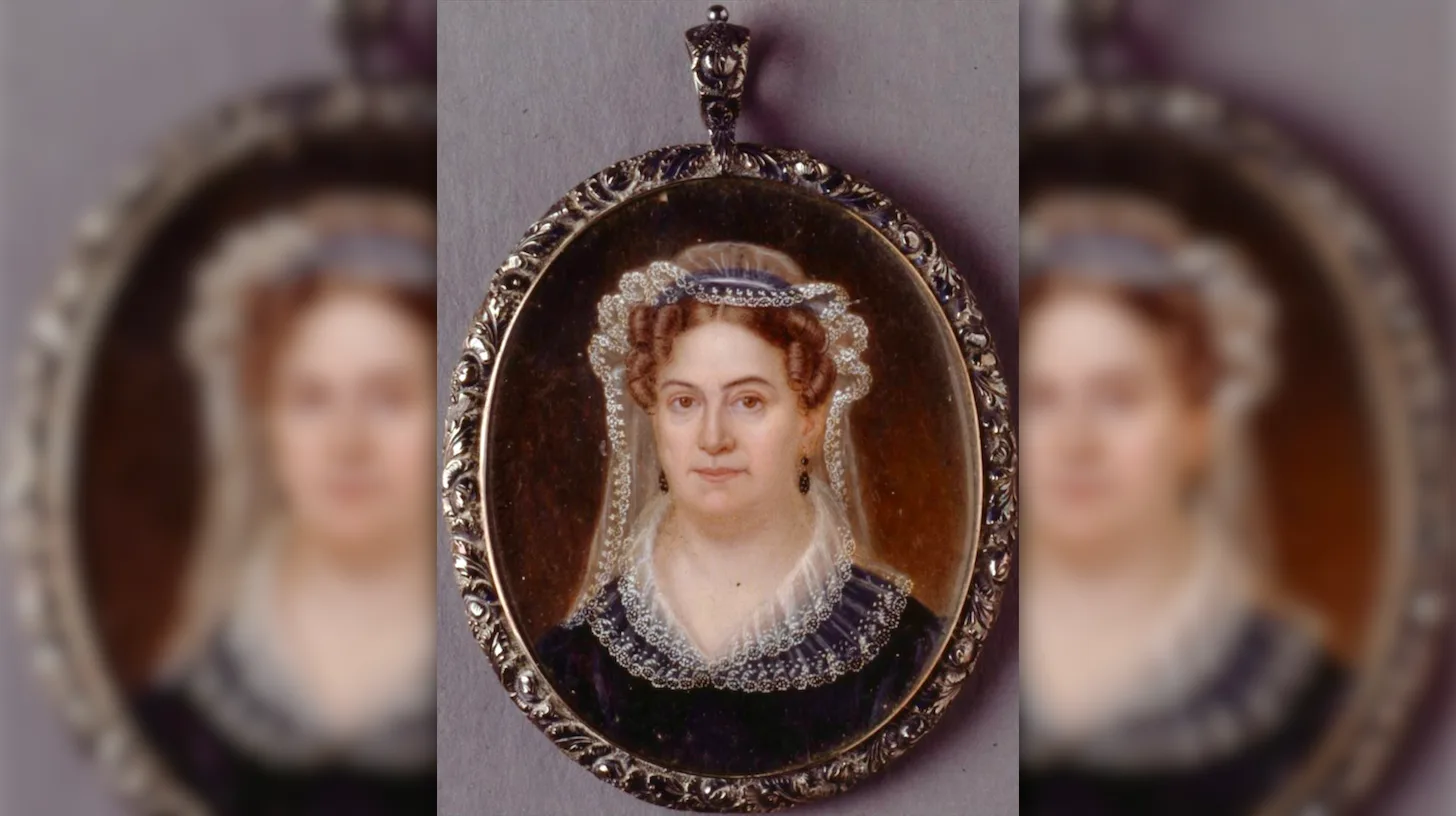
That story came down through Jackson’s own circle, and Parton wrote that the tradition among his nearest friends was “clear and strong” that Dickinson had reviled Mrs. Jackson in his cups. The letters and newspaper cards of 1806 say nothing of it. What they record is a quarrel about money and honor between two men who each thought the other a liar, and a third man, a young lawyer named Thomas Swann, who carried words back and forth between them.
The race that was never run
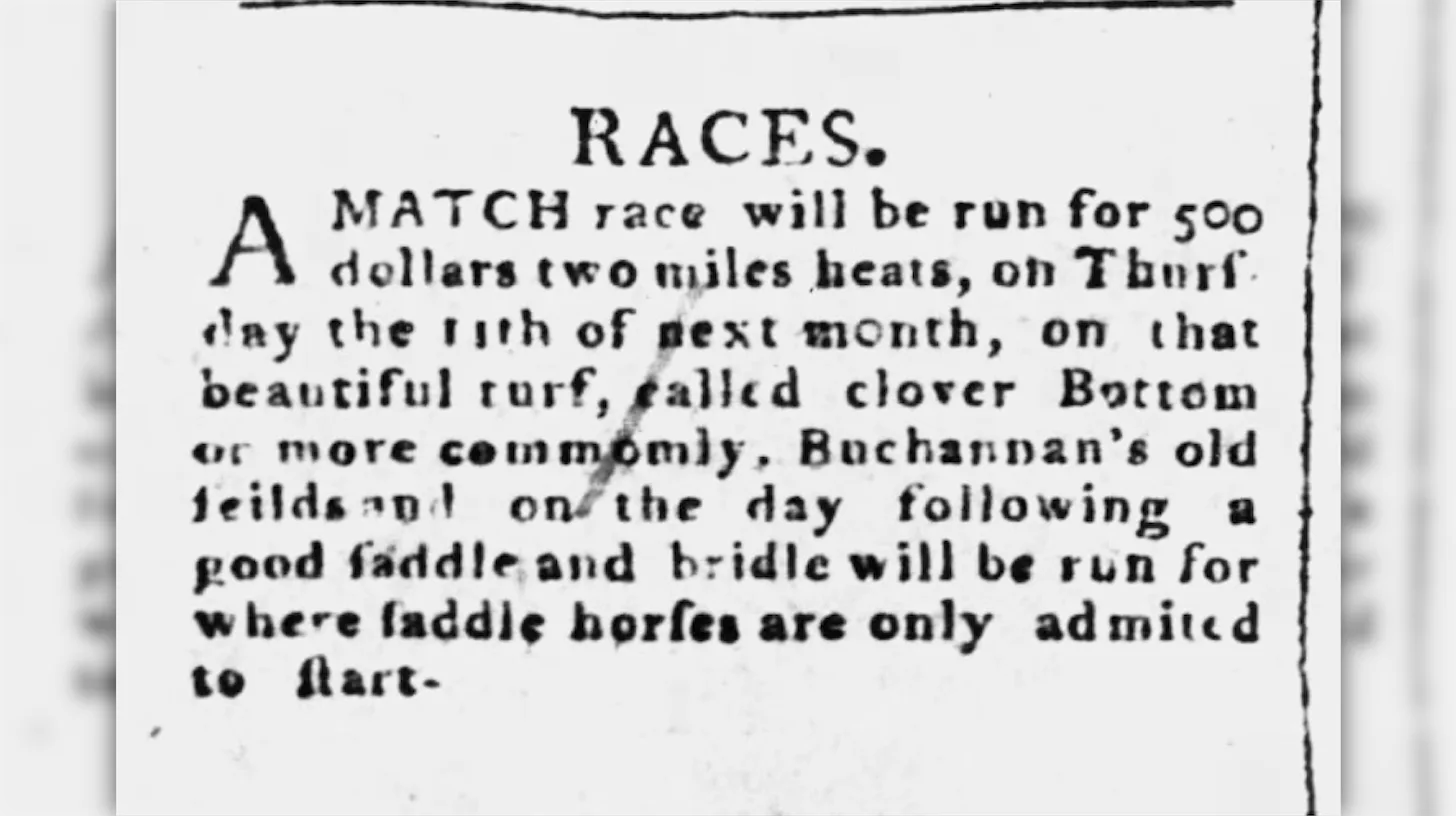
The trouble began in the autumn of 1805 with a match between Jackson’s horse Truxton and Joseph Erwin’s horse Ploughboy. The stakes were two thousand dollars, payable in notes, with a forfeit of eight hundred dollars if either side withdrew. Erwin and his son-in-law withdrew Ploughboy before the day and paid the forfeit, and then a dispute broke out over which notes had been offered to settle it. Swann carried the tale between the two sides, and the quarrel over the notes grew.
Dickinson entered the quarrel on Swann’s side. In January he wrote Jackson a letter that told him the word coward was “as applicable to yourself as any one I know,” and he arranged for it to be delivered after he had left the country, as Jackson complained, some days before. In the meantime the horses met after all. On April 3, 1806, Truxton and Ploughboy ran their race at last, and Truxton, though he had been hurt in training, won it. The quarrel did not end there.
On May 21 Dickinson wrote a card for the Impartial Review, a Nashville weekly, and it appeared in the issue of May 24. In its last lines he declared the major general of the militia to be “a worthless scoundrel” and, in so many words, a poltroon and a coward, who had dodged the satisfaction due to a gentleman he had injured.
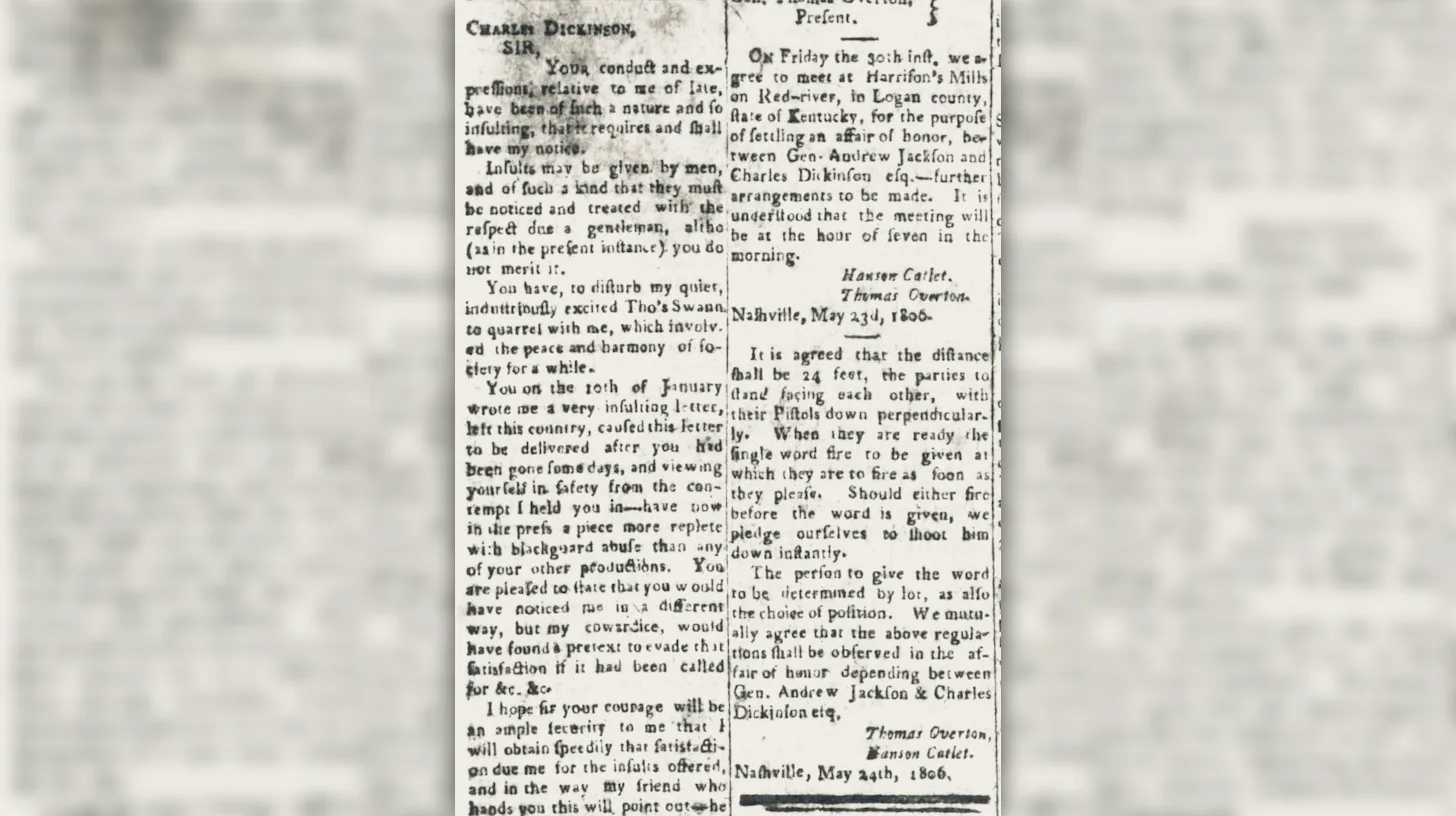
Jackson’s friend Thomas Overton read it first, and Jackson saw it himself at the newspaper’s office. On May 23 he wrote to Dickinson.
“Sir, Your conduct and expressions, relative to me of late, have been of such a nature and so insulting, that it requires and shall have my notice.”
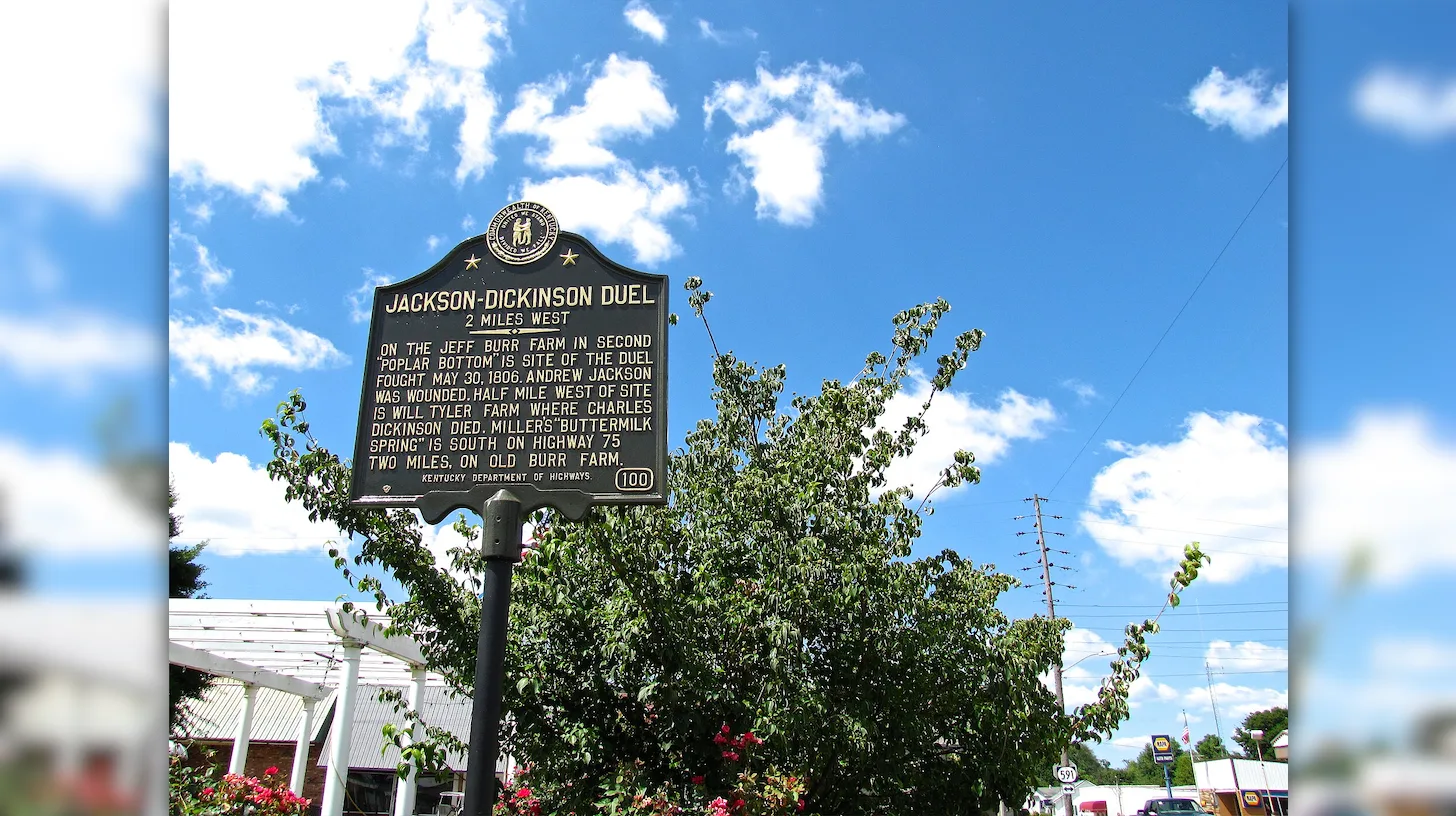
Dickinson’s acceptance came back the same day: “Sir, Your note of this morning is received, and your request shall be granted.” Overton acted as Jackson’s second, and Dr. Hanson Catlett as Dickinson’s. Dueling had been outlawed in Nashville, and the seconds named a place across the state line, at Harrison’s Mills on the Red River in Logan County, Kentucky, at seven in the morning on Friday the 30th. Overton pressed for an earlier day, “for God’s sake,” and Catlett refused.
The written terms were short. “It is agreed the distance shall be 24 feet, the parties to stand facing each other, with their pistols down perpendicularly.” The word fire would be given once, and each man could fire when he pleased. “Should either fire before the word is given,” the seconds wrote, they would “shoot him down instantly.”
Supper at Miller’s tavern
Jackson and Overton rode north on Thursday with a few friends and a surgeon, and as they rode they talked over how the thing should be done. Dickinson was known to be quick and sure. The two men agreed, at length, that it would be better to let Dickinson fire first and to take the risk of the shot, and then to aim with care. “I should have hit him, if he had shot me through the brain,” he said once, in a remark Parton recorded.
Late in the afternoon of Thursday, May 29, the people at David Miller’s tavern on the Red River were surprised by the arrival of seven or eight horsemen who asked to stay the night. It was Jackson’s party. Not long after, a second party rode up, Dickinson’s, and was told that the house was full and sent on to William Harrison’s, two miles lower down the river. Jacob Smith, the overseer of the place, remembered the evening for Parton many years later. Jackson ate heartily at supper, talked in a lively, pleasant manner and “smoked his evening pipe as usual.” Smith wished him a safe deliverance.
Stories were told afterward about Dickinson’s ride north, that he had cut a string with a pistol ball along the road to show what he could do. Parton heard them and printed some of them, and then said plainly that he neither believed nor denied one of them. Nor is it known for certain how the betting stood, though Parton was told that bets were laid on the meeting, the odds being against Jackson.
Twenty-four feet under the poplars
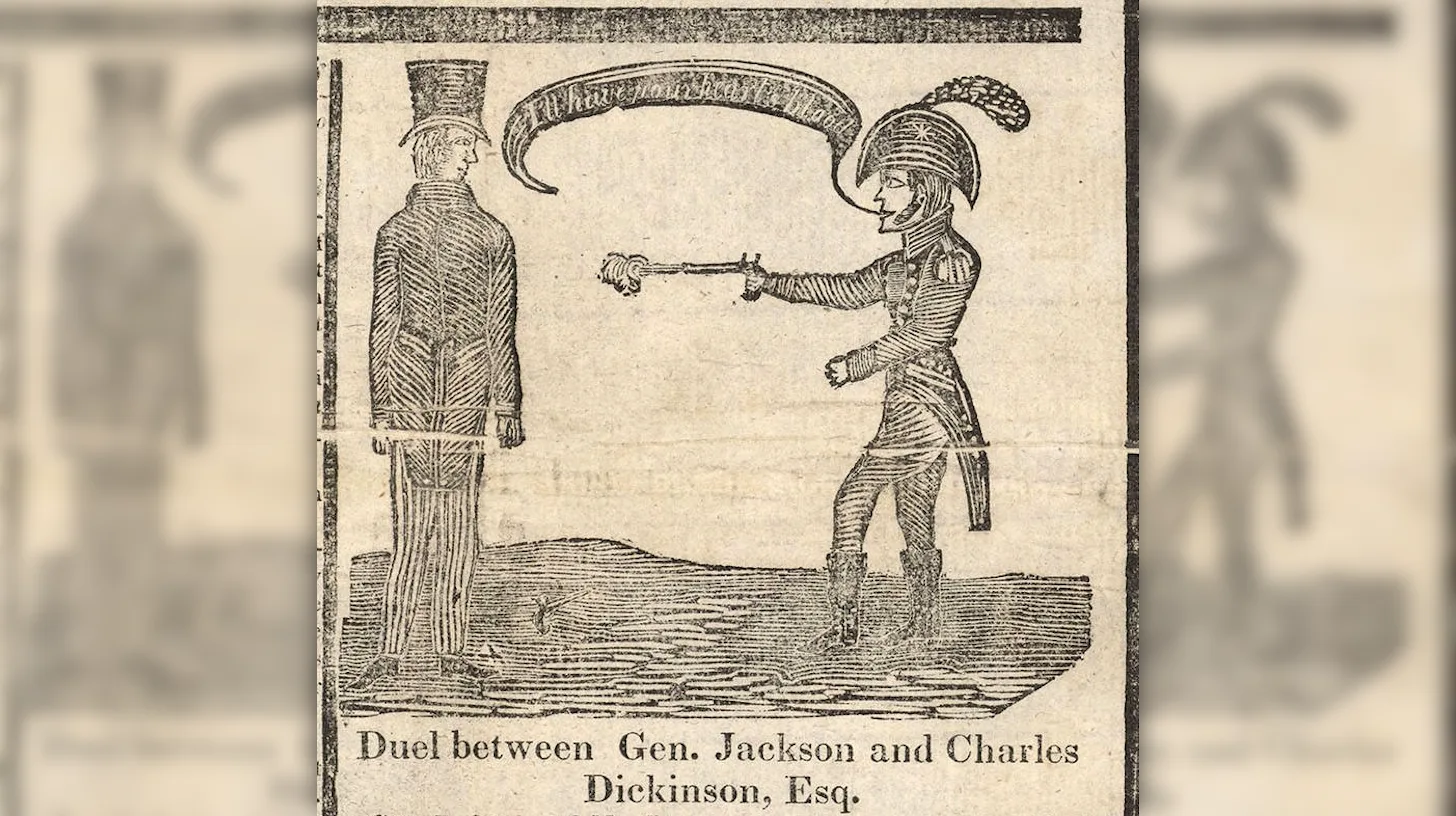
In the morning no ferryman came, and Jackson spurred his horse into the river and splashed across, and his party followed him. On the far side they rode into a poplar bottom, a stretch of level ground under tall trees. “I shall wing him, never fear,” Jackson said on the way, by Parton’s account. Dickinson’s second won the choice of position, and Overton won the right to give the word.
The 24 feet were measured off, eight paces, and the two men took their places facing each other. Jackson wore a loose frock coat, buttoned, which hid how thin he was. Overton asked whether they were ready, and both said that they were. Then he shouted the word, in what Parton called his old-country pronunciation: “Fere!”
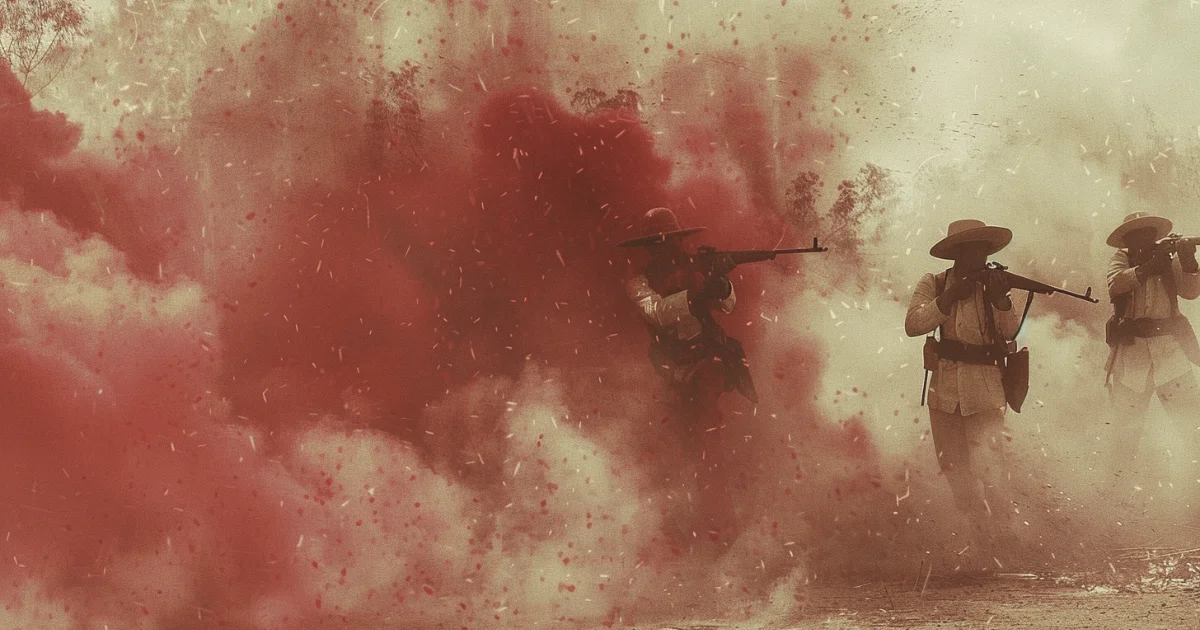
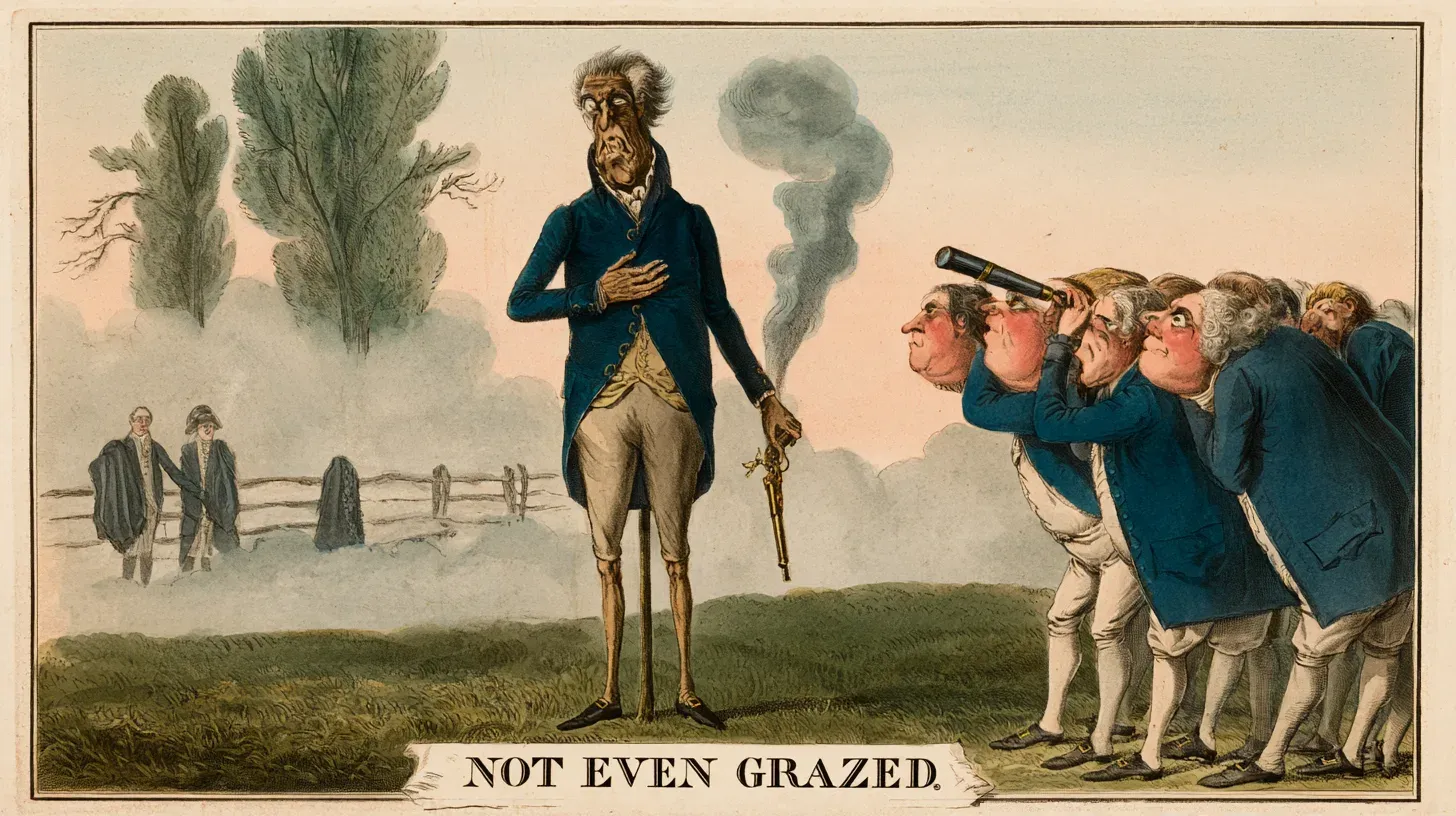
Dickinson raised his pistol and fired first. The watchers saw a puff of dust fly from the breast of Jackson’s coat, and they saw him lift his left arm and press it tight across his chest. He did not fall. Dickinson stepped back from the peg. “Great God!” he said, “have I missed him?” Overton put his hand on his own pistol and ordered him back to the mark, and Dickinson went back and stood at the peg, waiting for Jackson’s shot.
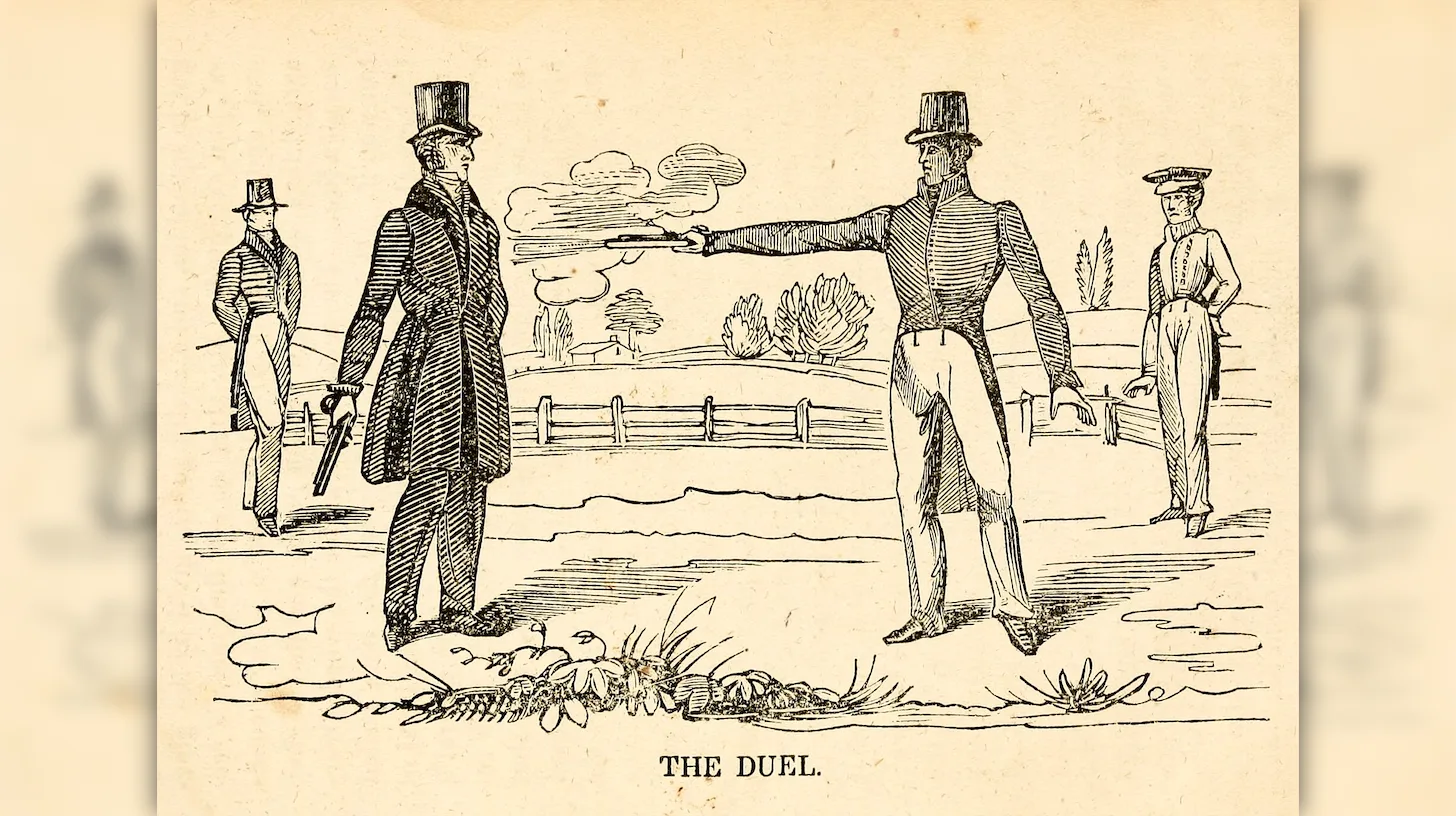
Jackson aimed and pulled the trigger, and nothing happened. The hammer had stopped at half cock. He drew it back, aimed again and fired. Dickinson reeled, and the men around him caught him and sat him down against a bush, and his trousers began to redden. Jackson’s ball had passed through his body, below the ribs. “He won’t want anything more of you, General,” Overton said, and the two of them turned and walked off the field, and it was a hundred yards off, under the poplars on that bright May morning, that the surgeon saw the blood in Jackson’s shoe.
A shoe full of blood
Jackson told the surgeon that Dickinson had “pinked me a little,” and they opened his clothes to look. Dickinson had aimed where he supposed Jackson’s heart to be, and he had judged the place by the coat, which hung loose on a narrow body, and so the ball went in at the chest and missed the heart. It had broken a rib or two and raked the breastbone, by the account Parton was given. Retellings that the ball shattered on the breastbone go further than any source of the time.
At the house where they stopped, a woman enslaved there was churning butter. Jackson asked her for a drink of buttermilk, and when he leaned toward her she saw the blood on his shirt, and he buttoned his coat again and drank a quart measure of the buttermilk at one draught. He sent word to Dr. Catlett offering the services of his own surgeon. The reply came that Dickinson’s case was past surgery, and Jackson sent a bottle of wine for the dying man.
He had told no one of the wound, not even his own friends, until the shoe gave him away. A very old friend of Jackson’s, whom Parton did not name, gave the reason as Jackson himself had once explained it. Dickinson considered himself the best shot in the world and was certain of killing him at the first fire, and Jackson did not want him to have that gratification, the friend wrote, “even of knowing that he had touched him.” That is the whole of the source for the story that he hid the wound to spite a dying man. It comes from one friend, many years later, and no account says whether anyone ever told Dickinson he had hit his mark.
Dickinson lay all that day on a mattress at the Harrison house and bled. Parton was told that he cried out through the long day, and that at nine in the evening he suddenly asked why they had put out the lights, and died a few minutes later. His wife had been sent for. She was on the road when she met a line of silent horsemen escorting a rough emigrant wagon, and in it was her husband’s body.
The pistol on the mantel
The Impartial Review printed an obituary of Dickinson, and seventy-three citizens of Nashville asked the paper to go into mourning for him.
“In the prime of life, and blessed in domestic circumstances with almost every valuable enjoyment, he fell a victim to the barbarous and pernicious practice of dueling.”
Joseph Erwin published a protest against the second pull of the trigger. The rule that a snap of the hammer did not count as a shot, he wrote, had never been put in writing, and his son-in-law had “gallantly maintained his ground” and fallen a victim to “this unguarded, illiberal and unjust” advantage.
The seconds answered with a joint card certifying that the meeting had been fair, and a man named Corbin Lee, who had handled Erwin’s horse and stood on the field that morning, said the same. A letter from a correspondent named Washington Jackson, written at New Orleans on June 19, is the one paper of that summer that mentions the wound.
“Allow me to congratulate you, on your safety from the field of honor, without broken bones and hope ere this reaches you, you may be perfectly recover’d of the Wound you received in your breast”
It was nearly a month before Jackson could move about with ease, and the Hermitage says that his reputation was tarnished and that he withdrew to his farm. Later historians were harder. John Spencer Bassett, who edited his letters, wrote in 1911 that he had killed a man he hated because he wanted to kill him, and that it was “little less than murder.”
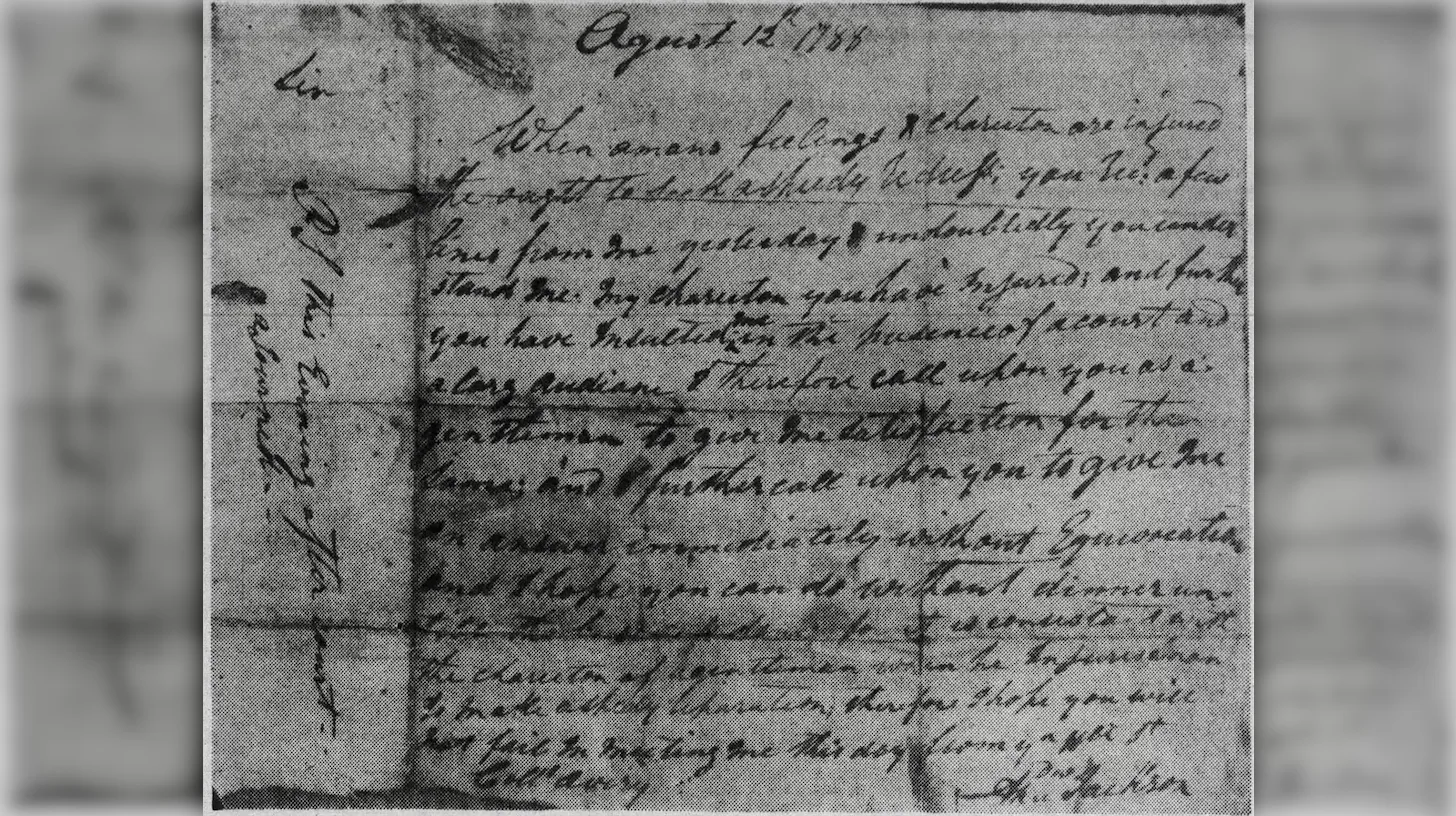
It was one of two true duels Jackson fought as a principal, the first being a bloodless meeting with Waightstill Avery in 1788, though he came close to a third with Governor John Sevier in 1803 and fought the Benton brothers in a brawl in 1813. In that brawl Jesse Benton’s pistol shattered his left shoulder and left a ball in his arm, which a Philadelphia surgeon cut out in 1832, while he was president. The Dickinson ball was never removed, the Miller Center says, though no record of his own time says so. In 1825, on a dark stair in Washington, he fell and reopened the old wound inside his chest, and he had bleeding at the lungs for the rest of his life.
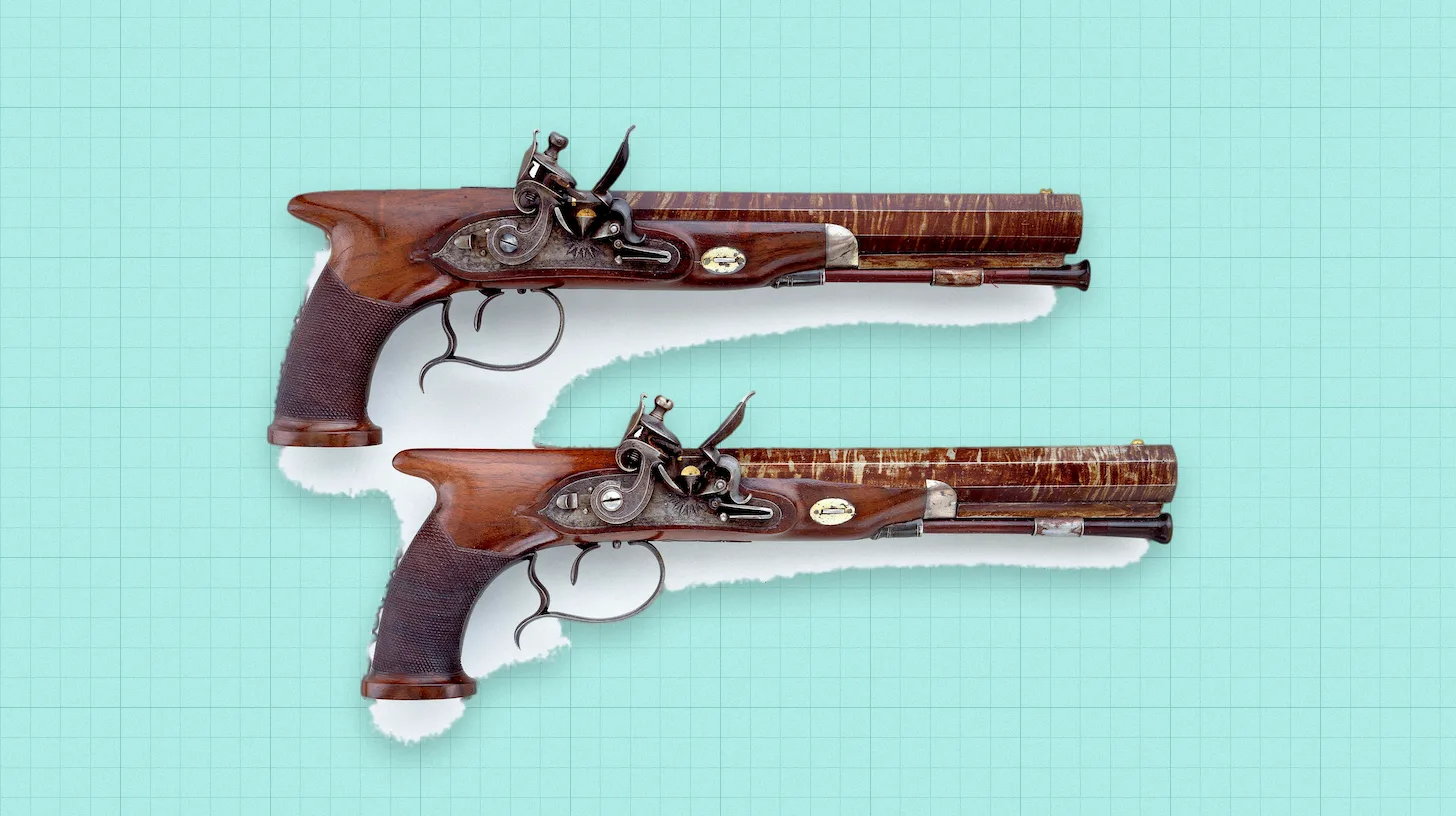
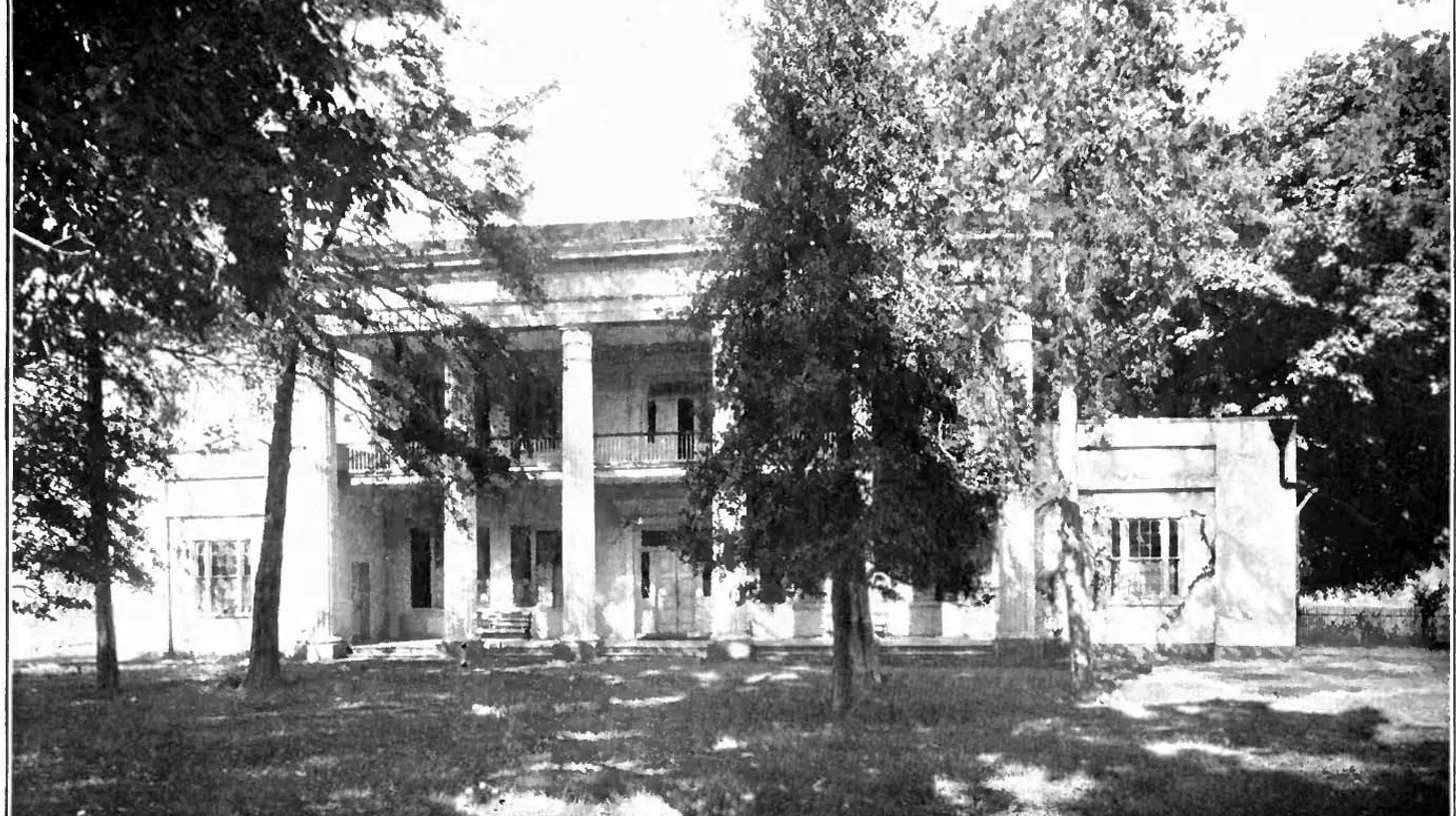
Dickinson was buried on Joseph Erwin’s land west of Nashville. In 1926 the sides of his box tomb disappeared, and the grave was lost until an archaeologist found it in 2009 under the front yard of a house on Carden Avenue, and on June 25, 2010, Charles Dickinson was buried again in the Nashville City Cemetery. Jackson kept his pistols. Late in life one of them lay on the mantelpiece of his bedroom at the Hermitage, and he told a visitor what it was, in the most ordinary tone of conversation.
“That is the pistol with which I killed Mr. Dickinson.”