13 min read
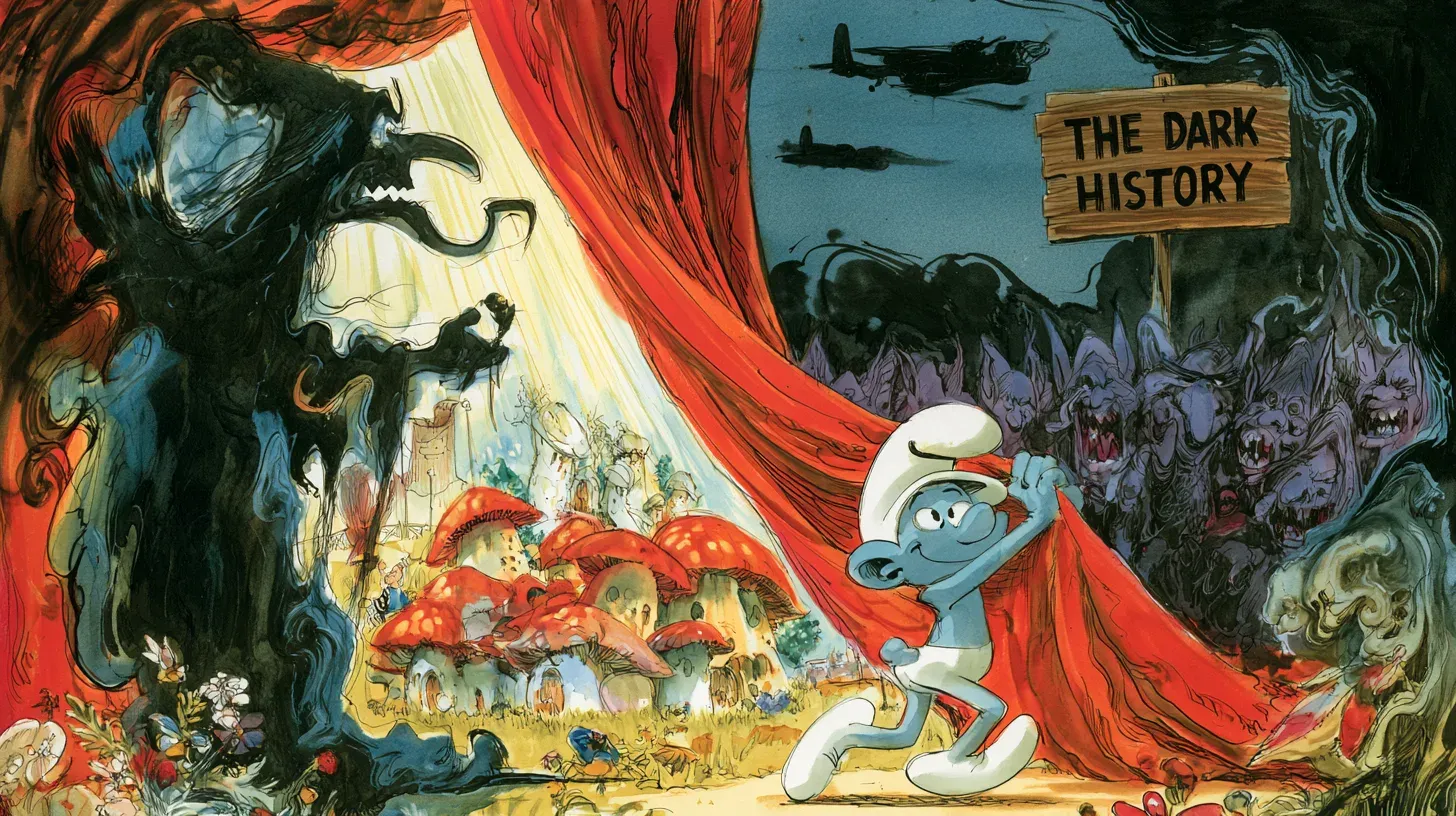
The Smurfs were created by Belgian cartoonist Peyo — the pen name of Pierre Culliford — and debuted on October 23, 1958, in the comics magazine Spirou. Their real history holds chapters dark enough that an American publisher recolored an entire comic to dodge its racial overtones, UNICEF carpet-bombed their village on national television, and a French lecturer wrote a book arguing their society is Stalinist.
It also holds fakes — invented origin stories about alchemists, drug slang, and dead children that circulate endlessly online. This article covers both: the dark history that actually happened, and the legends that deserve a debunking.
| Year | Dark chapter | What happened |
|---|---|---|
| 1958 | The debut | Smurfs first appear October 23 in Spirou, as side characters in a Johan and Peewit story |
| 1959 | The Black Smurfs | A fly bite turns Smurfs black, mute, and violent — the story America later refused to print as drawn |
| 1959 | Gargamel arrives | The wizard debuts in “The Smurfnapper” on December 10 |
| 1964 | King Smurf | A rigged election turns the village into a dictatorship with forced labor and a civil war |
| 1966 | Smurfette | Gargamel builds the first female Smurf from clay to sabotage the village |
| 1981 | The purple recolor | Hanna-Barbera airs “The Purple Smurfs” with the black Smurfs recolored purple |
| 2005 | UNICEF bombs the village | A Belgian charity ad shows warplanes leveling the Smurf village |
| 2011 | Smurfgate | Antoine Buéno’s book calls Smurf society totalitarian; Peyo’s family calls the claims grotesque |
WHO ACTUALLY CREATED THE SMURFS?
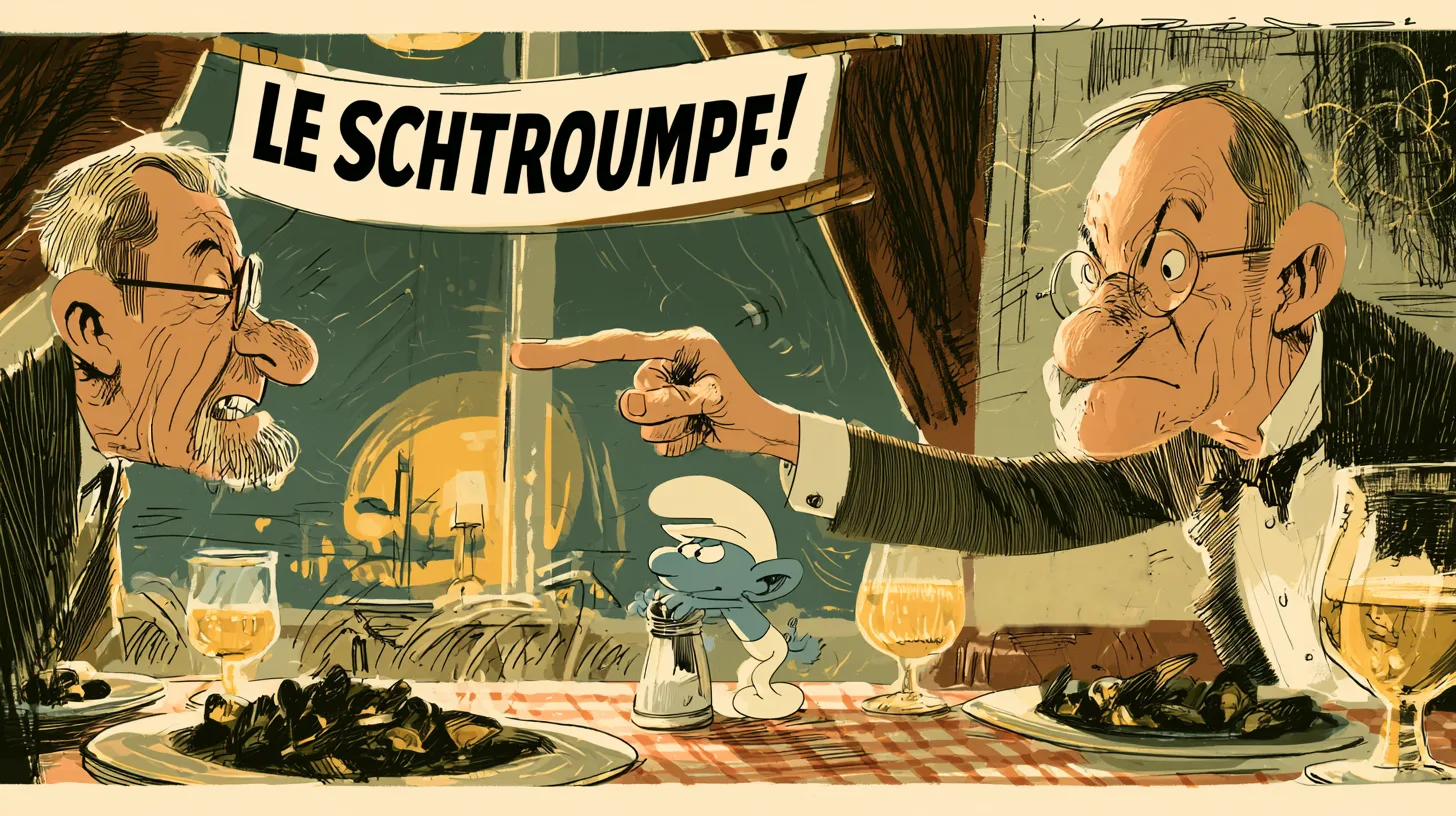
The Smurfs began as a slip of the tongue. Over a meal on the Belgian coast in 1957, Peyo blanked on the French word for salt and asked his fellow cartoonist André Franquin to pass “le schtroumpf.” As Peyo told it, Franquin played along — “Here’s the schtroumpf — when you are done schtroumpfing, schtroumpf it back” — and the two spent the rest of the weekend talking in schtroumpf.
A year later, on October 23, 1958, the little blue creatures made their first appearance in Spirou magazine — not as stars, but as side characters in “The Flute with Six Holes,” a story in Peyo’s medieval series Johan and Peewit. Readers wanted more, and by July 1959 the Smurfs had their own serialized stories. Peyo, according to the St. James Encyclopedia of Popular Culture, was unconvinced: “three years from now, no one will talk about them any more.”
Even the blue was pragmatic. Peyo’s wife Nine Culliford, the strip’s colorist, later explained she chose it by elimination: “Green would have mixed them up in the foliage; yellow would make them look ill. If they were pink, they would seem embarrassed and, if they were red, readers would think they were angry.” The English name came secondhand — the Dutch translation rendered “Schtroumpf” as “Smurf,” and the rest of the world followed.
THE BLACK SMURFS — THE STORY SO DARK AMERICA RECOLORED IT
The Smurfs’ very first solo story is also their most notorious. In “Les Schtroumpfs noirs” — The Black Smurfs — serialized in Spirou beginning July 2, 1959, a fly bites a Smurf and turns him jet black, strips him of speech except the word “gnap!”, and sends him racing through the village biting other Smurfs’ tails, spreading the condition until nearly everyone has turned. Papa Smurf cures the horde with magnolia pollen.
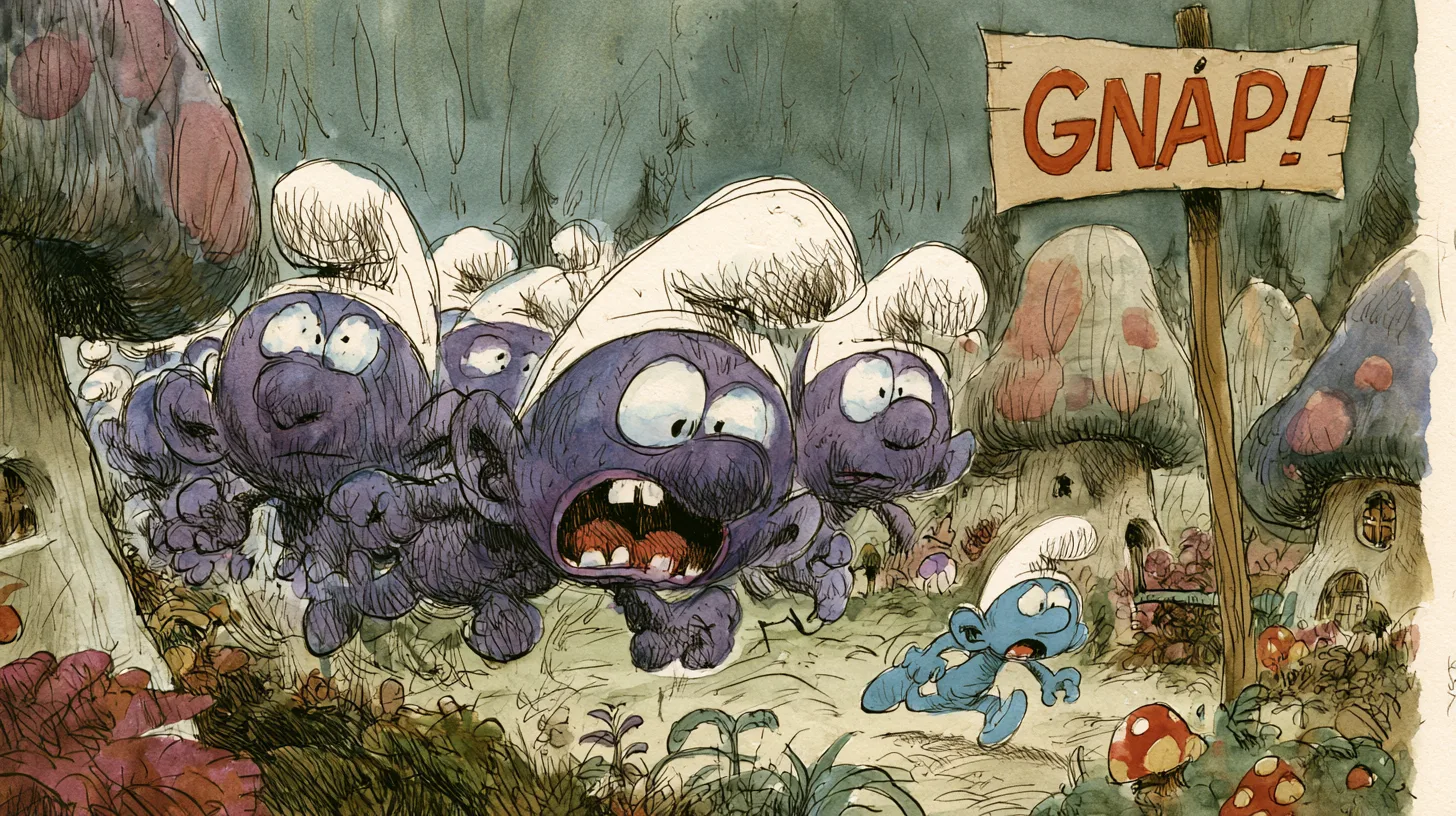
Every American adaptation flinched. When Hanna-Barbera adapted the story for the 1981 cartoon, the black Smurfs became purple — a change Wikipedia records as made “to avoid possible racial connotations.” When Papercutz finally published the comic in English in 2010, artist Diego Jourdan Pereira recolored every black Smurf purple with red eyes, and HuffPost reported that American publishers had previously declined the book outright because of the imagery. Advertising made the same calculation in the same era — the Frito Bandito was retired in 1971 for trading on a Mexican stereotype.
Whether the original story was racist is still argued by scholars. Antoine Buéno reads it as a blood-purity panic. The French image historian André Gunthert counters that it is a zombie-contagion story — published nine years before Night of the Living Dead and drawing on Richard Matheson’s I Am Legend — whose racial reading only emerged when American eyes met a Belgian comic. Both agree on one thing: a children’s story about neighbors turning into biting, speechless versions of themselves was dark from the start.
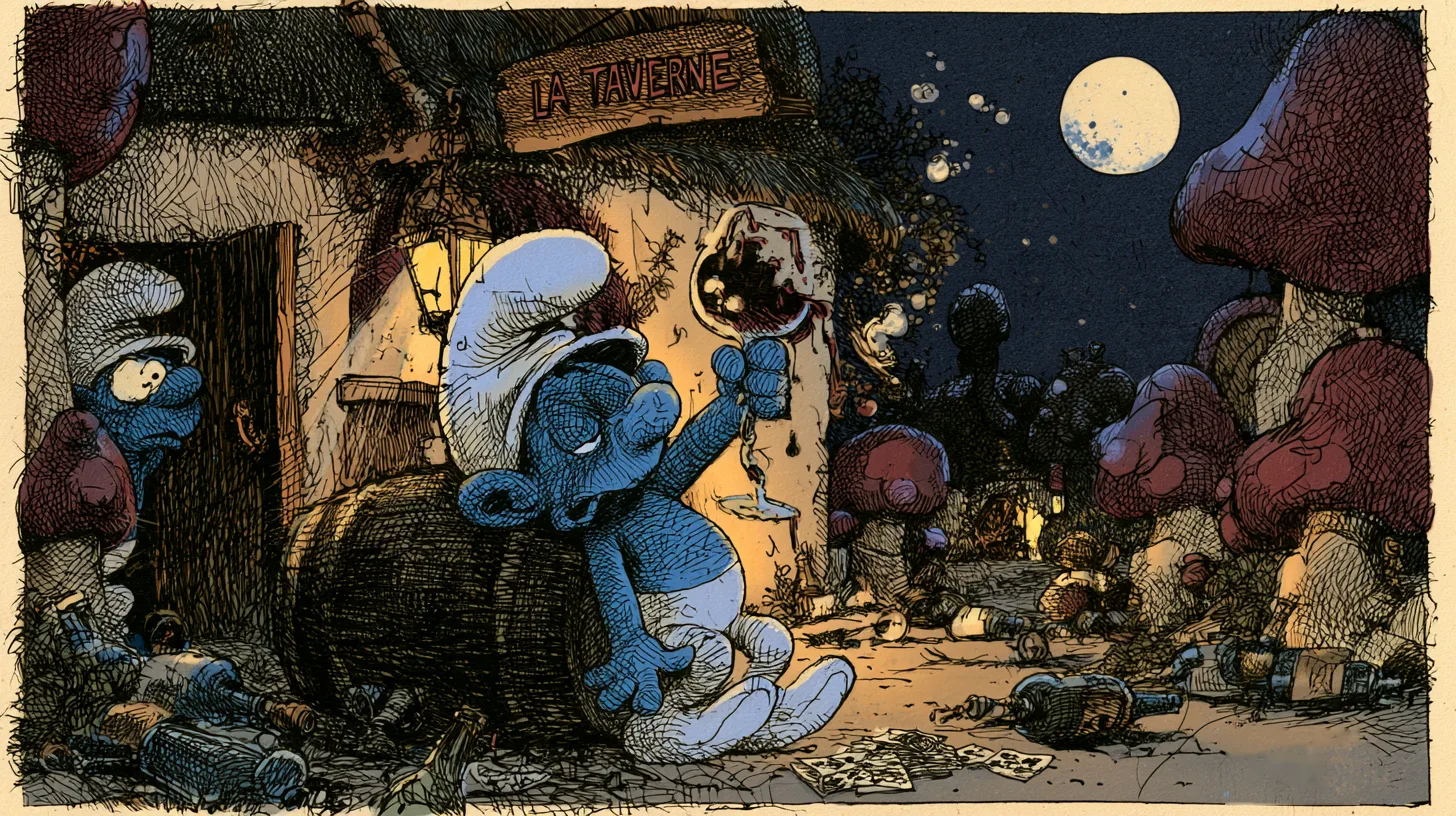
IN EARLY SMURFS COMICS, THEY ENGAGE IN HARMFUL BEHAVIORS LIKE SMOKING & DRINKING TOO MUCH
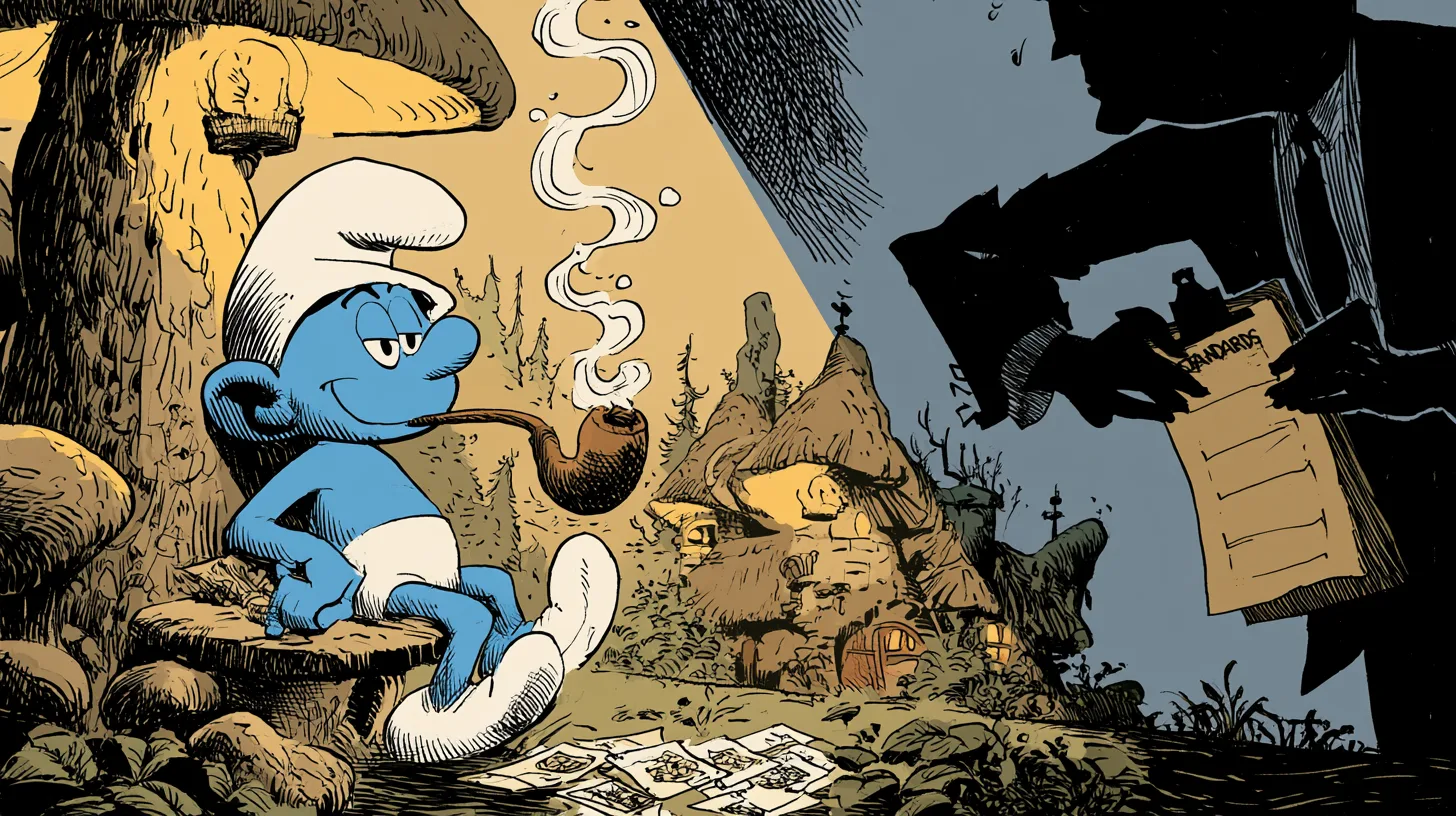
When the Smurfs first appeared in Belgian comics in the late 1950s, their society reflected the less idyllic aspects of postwar life.
The European strips let Smurfs smoke and drink with a freedom American television never permitted — Papa Smurf’s pipe was standard equipment. Degenerates, by Saturday-morning standards.
The habits were quietly toned down as the franchise crossed the Atlantic and the Hanna-Barbera cartoon sanded off what remained — the same scrubbing that turned the black Smurfs purple.
KING SMURF: THE VILLAGE BECOMES A DICTATORSHIP
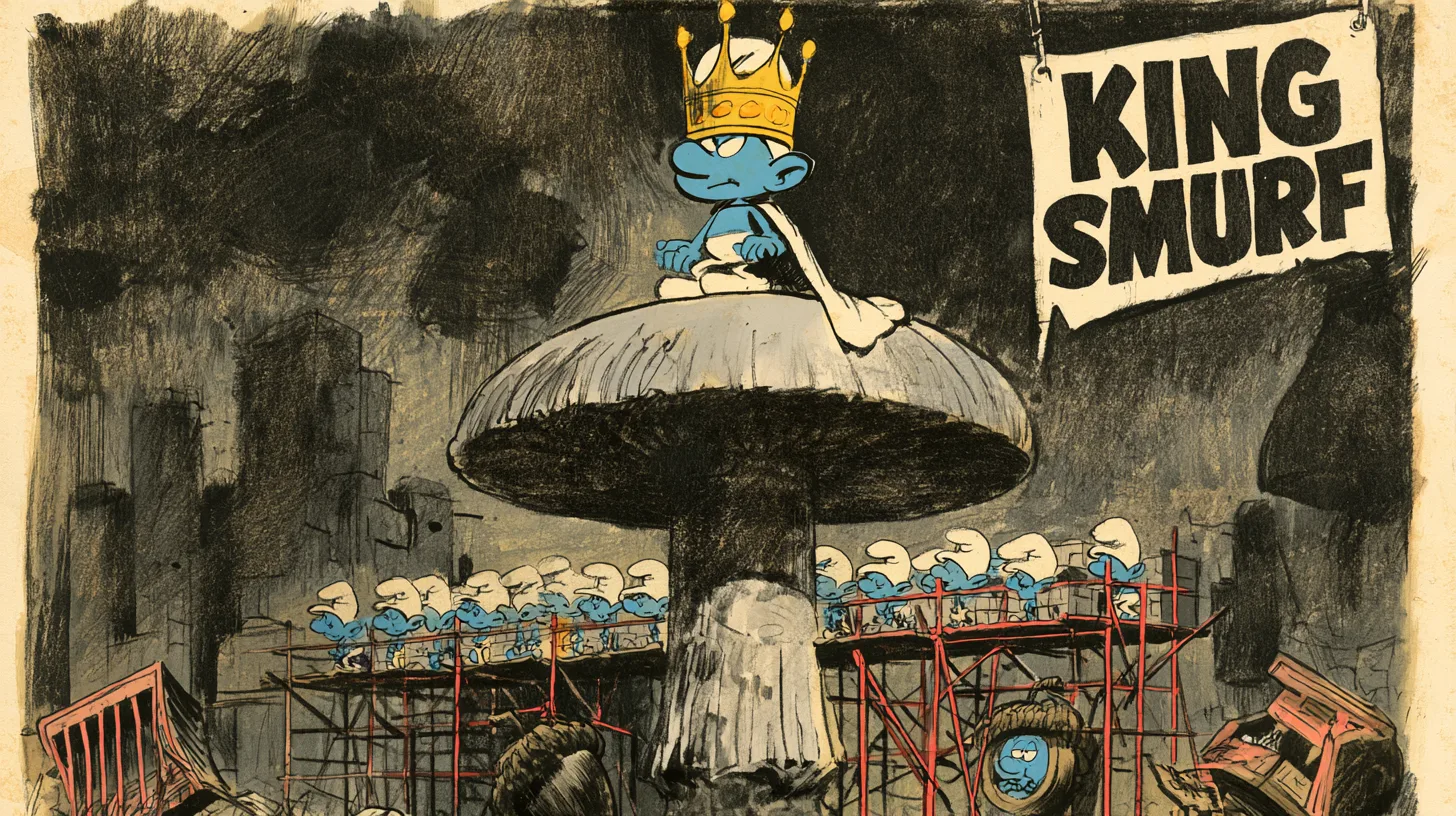
In 1964, Peyo and co-writer Yvan Delporte published “Le Schtroumpfissime” — King Smurf — in which Papa Smurf leaves the village and an election is held to replace him. One Smurf wins on demagogic promises, crowns himself king, builds a palace with forced labor, and jails dissenters. A resistance forms in the forest, and the story ends in open civil war among the Smurfs until Papa Smurf returns.
Critics have read it ever since as a satire of a dictator’s legal rise to power — several point specifically at Hitler, though Peyo himself left no recorded comment on the story’s targets. For a children’s comic published nineteen years after the war ended, in a country that had spent it under occupation, the reading was never much of a stretch.
THE ONLY FEMALE SMURF, SMURFETTE, WAS ORIGINALLY CREATED BY THE EVIL WIZARD GARGAMEL TO SABOTAGE THE OTHER SMURFS
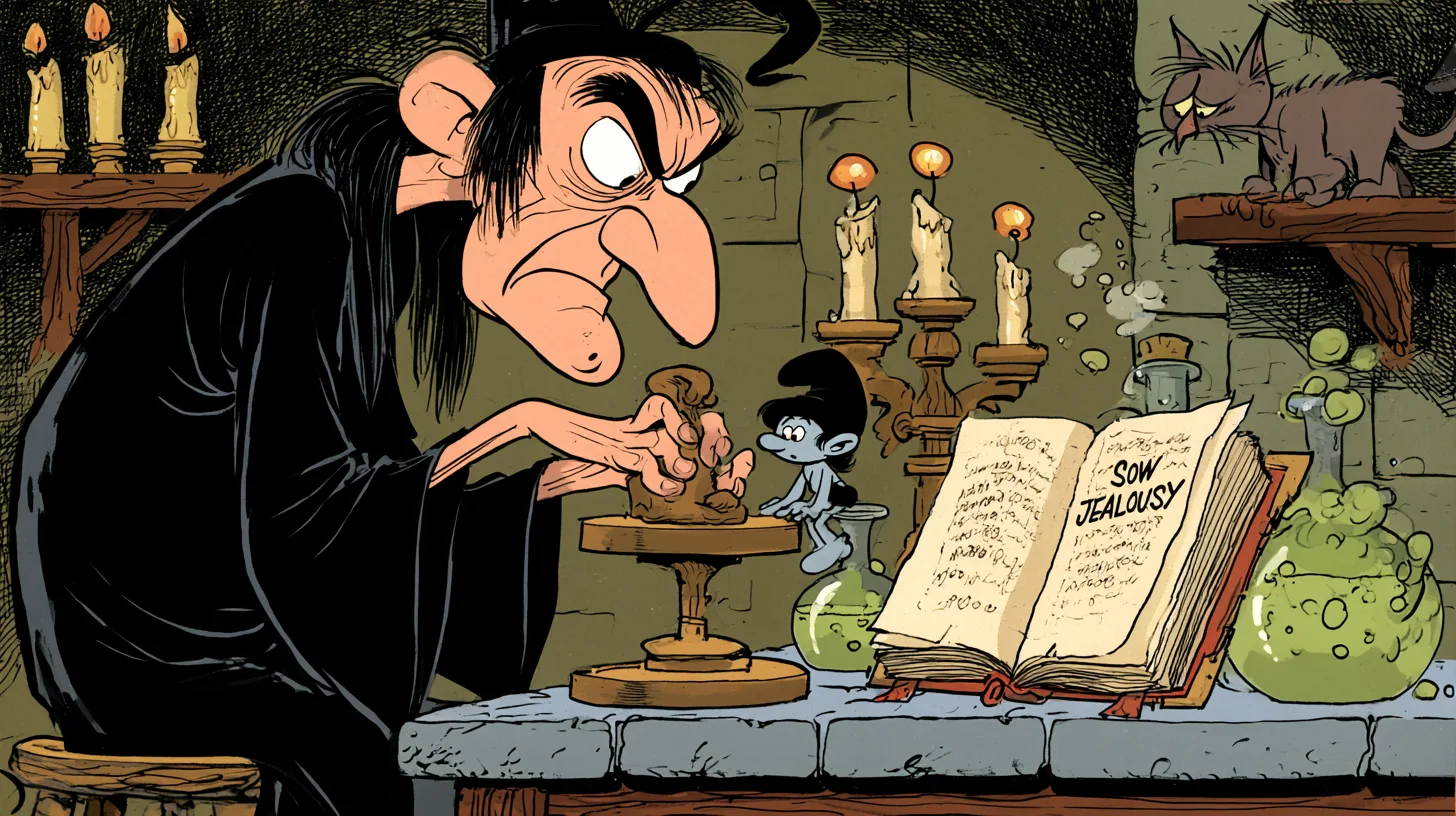
When Smurfette first appeared in Peyo’s comics in 1966, she was not a real Smurf but an artificial creation of the evil wizard Gargamel.
She was designed to infiltrate and destroy the Smurf village.
In the comic, Gargamel sculpts her from clay to sow jealousy among the Smurfs; the 1981 cartoon added the notorious recipe — crocodile tears, half a pack of lies, the chatter of a magpie, and “the hardest stone for her heart.” The original Smurfette has dark, unkempt hair, and the village ignores her. Then Papa Smurf performs what he calls “plastic smurfery,” and she emerges blonde and long-lashed — only after the makeover do the Smurfs fall for her.
The arrangement eventually earned its own term. Writing in The New York Times in April 1991, Katha Pollitt named it the “Smurfette Principle”: “a group of male buddies will be accented by a lone female, stereotypically defined… Boys are the norm, girls the variation; boys are central, girls peripheral.” Smurfette became the type specimen for a pattern critics still track across children’s media.
SMURFGATE: THE 2011 BOOK THAT CALLED THE SMURFS RACIST AND STALINIST
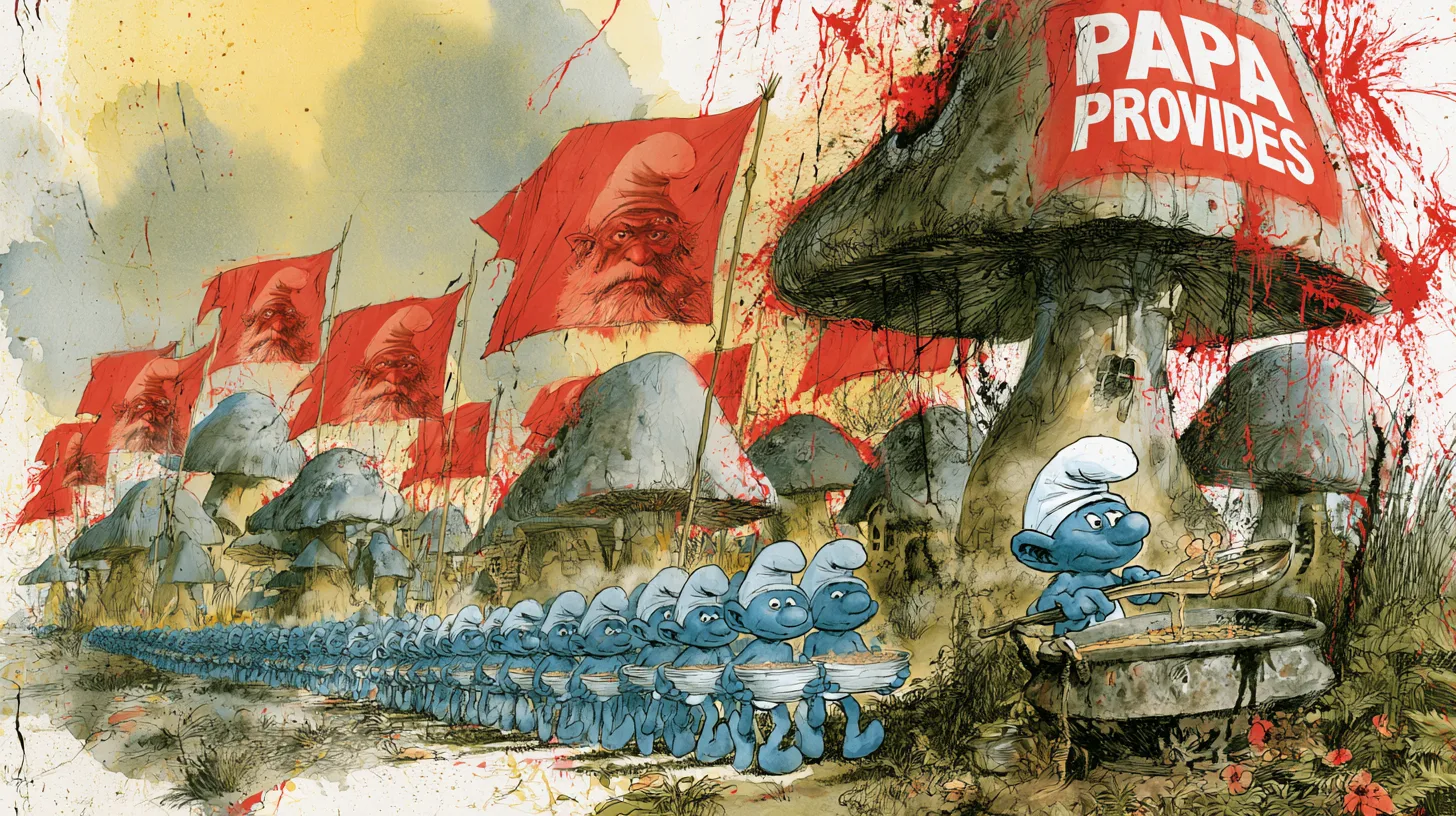
In 2011, Antoine Buéno, a lecturer at Sciences Po in Paris, published “Le Petit Livre bleu,” arguing that Smurf society is a totalitarian utopia steeped in Stalinism: communal meals, no private property, a red-clad patriarch running everything. He read Gargamel — hook-nosed, gold-obsessed, with a cat named Azrael — as an antisemitic caricature, and Smurfette’s blonde makeover as an Aryan ideal. The press dubbed the ensuing storm “Smurfgate,” and it ran through The Guardian, Time, and half the internet.
Peyo’s son Thierry Culliford, who runs the studio, told the Flemish daily De Morgen that the accusations sat “between the grotesque and the not serious,” and said elsewhere that his father had no interest in politics. Buéno himself half-retreated: “I’ve gotten two types of knee-jerk reactions: people saying that I’m either an idiot or a crook.” Scholars like André Gunthert have since treated the book as part provocation — but the fight it started, over what a 1950s Belgian comic absorbed from its era, has never fully ended. Cheerful mascots hiding uglier histories is a genre of its own — the killer clowns post covers its grimmest wing.
THE DAY UNICEF BOMBED THE SMURF VILLAGE
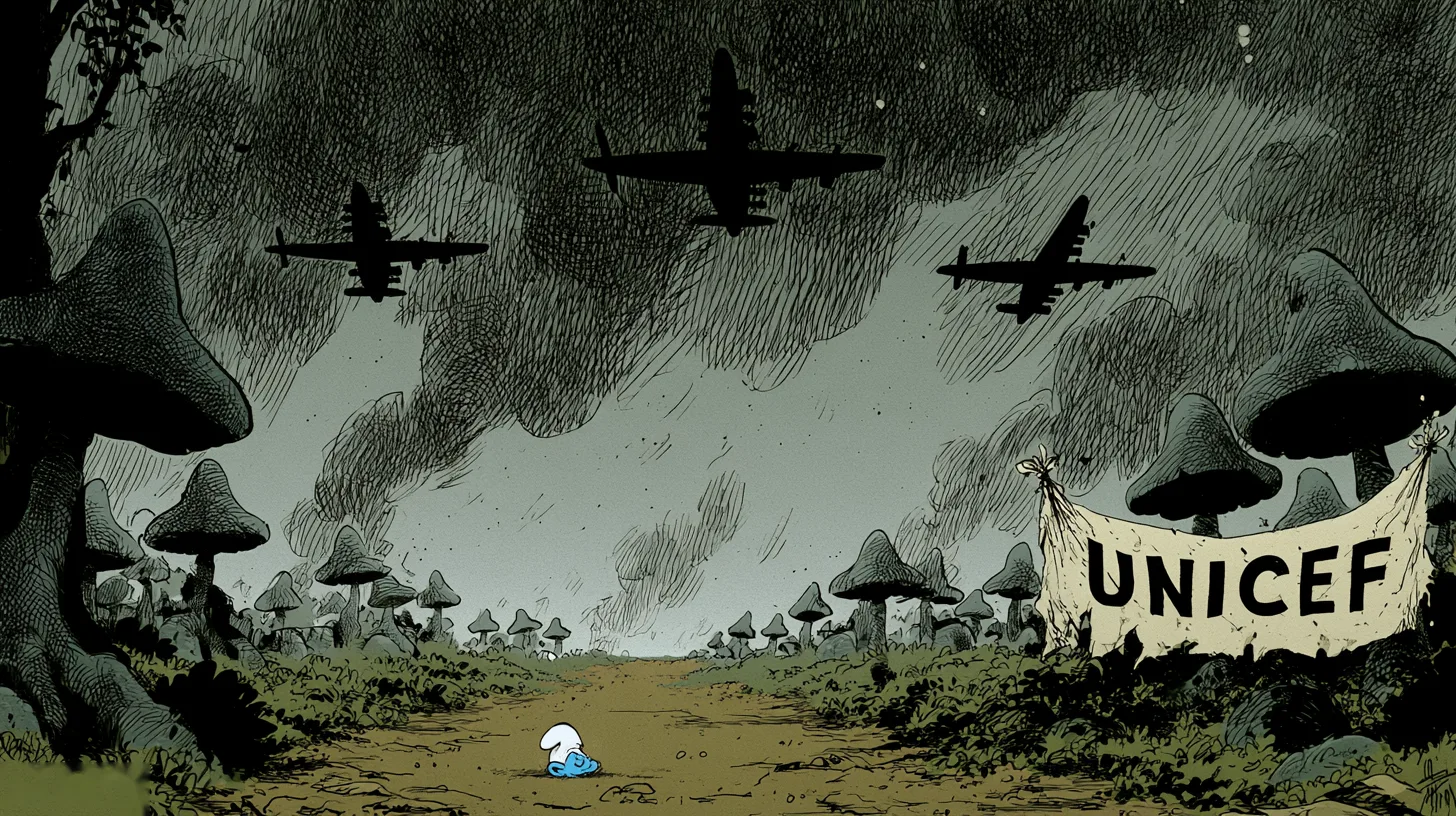
The darkest Smurf footage ever aired was made by a charity. On October 7, 2005, Belgian national television began running a 25-second UNICEF ad — approved by Peyo’s family and restricted to after 9 p.m. — in which warplanes carpet-bomb the Smurf village mid-singalong, ending on a crying Baby Smurf alone among the ruins. “In 35 seconds we wanted to show adults how awful war is by reaching them within their memories of childhood,” said Julie Lamoureux, account director at Publicis, the agency behind it.
The campaign raised money for UNICEF Belgium’s rehabilitation programs for former child soldiers in Burundi and the Democratic Republic of Congo. It worked — and it remains one of the most jarring uses of a children’s property in television history.
THE FAKE DARK ORIGIN STORIES, DEBUNKED
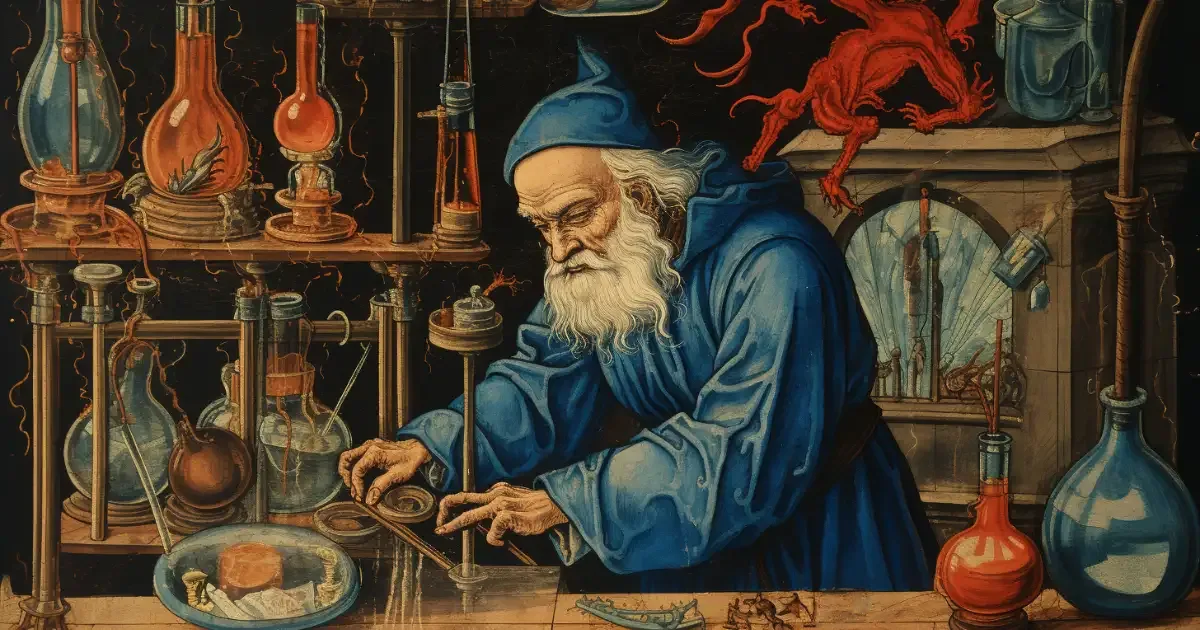
The Smurfs attract invented histories the way the village attracts Gargamel, and an earlier version of this article repeated two of them. For the record, here is what checks out — which is nothing.
The medieval alchemist. A story circulates that a 14th-century alchemist named Pierre Smurf accidentally created small blue homunculi while trying to turn lead into gold. No such person appears in any archive, encyclopedia, or history of alchemy — the tale is internet fiction, and “Smurf” wasn’t even the characters’ name until the Dutch translation coined it in the late 1950s.
The drug slang. Another legend claims “smurf” was postwar Belgian-Dutch slang for heroin, and that Peyo winked at it. No dictionary or drug-history source records any such usage. The real drug connection runs the other way and came decades later: since the 1980s, “smurfing” has been law-enforcement slang for splitting illegal activity into small, identical pieces — buying pseudoephedrine for meth labs a box at a time, per the Justice Department, or breaking cash deposits under the $10,000 reporting threshold, a money-laundering technique reportedly named by Miami attorney Gregory Baldwin after the many small identical blue men.
The frozen children. TikTok’s favorite version claims the Smurfs come from Northern European folklore about children who froze to death and were found in spring, blue-skinned and ringed by mushrooms. No such folklore exists anywhere outside the videos citing it.
The communist allegory. “SMURF,” the legend goes, stands for “Socialist Men Under Red Father.” The acronym is nonsense on its face — the original name is Schtroumpf — and the theory’s actual genealogy is modern: a 1998 parody essay, a 2008 YouTube video, and then Buéno’s book carried it into the mainstream before it died back down.
DARK HISTORY OF THE SMURFS FAQ
Are the Smurfs real?
No. The Smurfs are fictional characters invented by Belgian cartoonist Peyo in 1958, though their look borrows from a real European tradition of forest gnomes and little folk. The persistent “based on a true story” claims — frozen children, medieval alchemists — have no documented basis whatsoever.
Did Gargamel create the Smurfs?
No — he created only Smurfette, sculpted from clay in the 1966 story “La Schtroumpfette” to sabotage the village. Gargamel himself debuted in December 1959, a year after the Smurfs, and his name comes from Gargamelle, the giant’s mother in Rabelais — not from any real person.
Is Papa Smurf evil?
No — in the comics he is consistently the rescuer, curing the black Smurfs and ending King Smurf’s civil war. The “evil Papa Smurf” idea comes from critics like Antoine Buéno, who read his red-clad, all-powerful role as Stalin-like — a claim Peyo’s family dismissed as grotesque.
What do Germans call the Smurfs?
Die Schlümpfe. Every language localized Peyo’s invented word “Schtroumpf” its own way — Dutch made it Smurf (the version English borrowed), Spanish made it Pitufo, and Italian made it Puffo. The word also carried Europe’s strangest chart hit: Father Abraham’s 1977 “Smurf Song” spent seven straight weeks at number one in the Netherlands.