10 min read
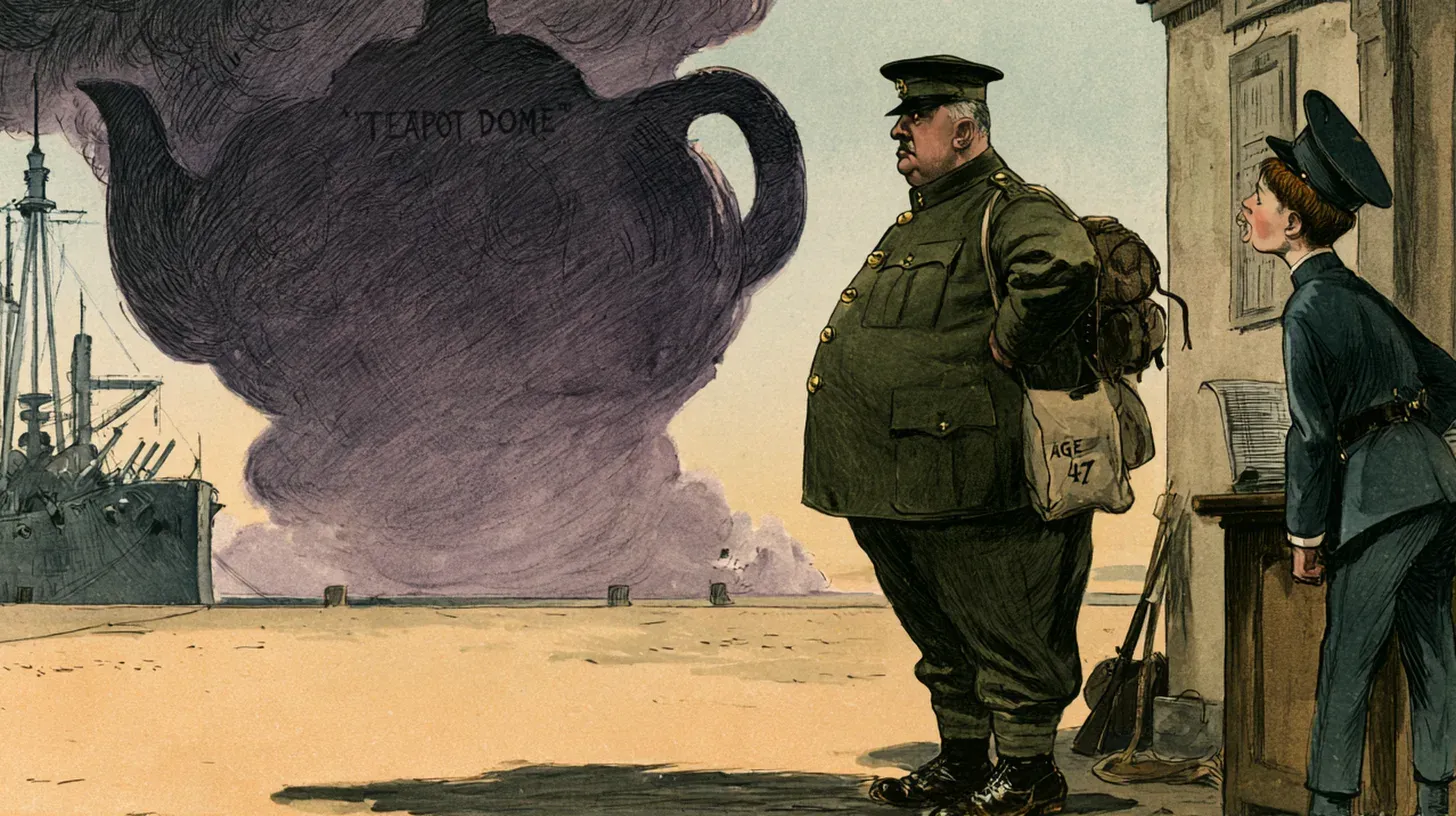
On Thursday, April 26, 1917, three weeks after the United States declared war on Germany, a former congressman applied at the Marine Corps recruiting station in Detroit to enlist as a private for the duration of the war. He was Edwin Denby, forty-seven years old, and by one account he weighed more than 250 pounds, which put him over the Corps’ limits for both age and size. The commandant, Maj. Gen. George Barnett, let him in anyway. Asked by the press why he had done it, Denby said, “The country needs men.”
Seven years later, as Secretary of the Navy, he would be the first man driven out of office by the Teapot Dome scandal, the secret leasing of the Navy’s oil reserves in Wyoming and California to two oilmen who had paid the Secretary of the Interior. The Senate voted to ask for his resignation. No court ever found that Denby took a cent, and he was never charged. What the record shows is a man who signed what he was given, and what it cost him.
The old grad type
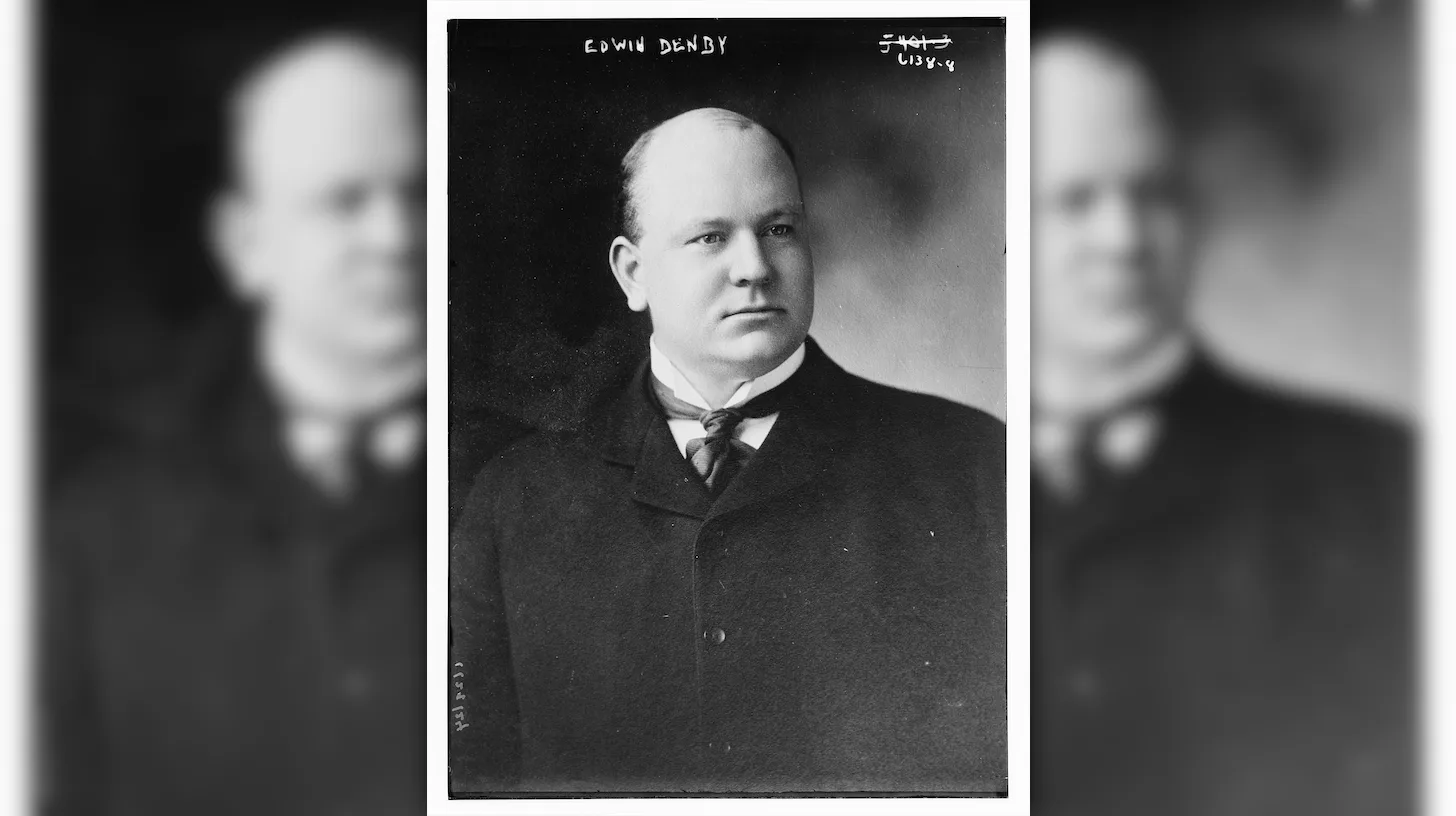
He was a big man and a cheerful one, and the Chicago Tribune, describing him a few years later, ran the words “Tall, Robust, Jovial, Modest.” over its story, and called him “tall, heavy, well proportioned,” with a bald head and the “rugged Bryan chin and nose” of the old orator William Jennings Bryan. A Washington correspondent, Clinton Gilbert, called him “the old grad type,” a former guard on the University of Michigan football team, and added that he had “an almost irresistible impulse to give the college yell.”
Edwin Denby had been born in Evansville, Indiana, in 1870, and he went to China at fifteen with his father, Charles Denby, the American minister there, and two years later went to work in the Chinese imperial maritime customs service. He came home to Michigan, played on the football team in 1895 and took a law degree in 1896. In the Spanish-American War he served afloat, as a gunner’s mate third class on the USS Yosemite. Then he practised law in Detroit, and from 1905 to 1911 he sat in Congress as a Republican, one of the House members loyal to Speaker Joe Cannon. He went into the motor truck business, married Marion Thurber in 1911 and became president of the Detroit Board of Commerce.
Gilbert’s verdict on him in 1924 was mixed. He called Denby “an honest, well-intentioned, good-natured, slow-witted man who has never grown up.”
Sergeant Denby
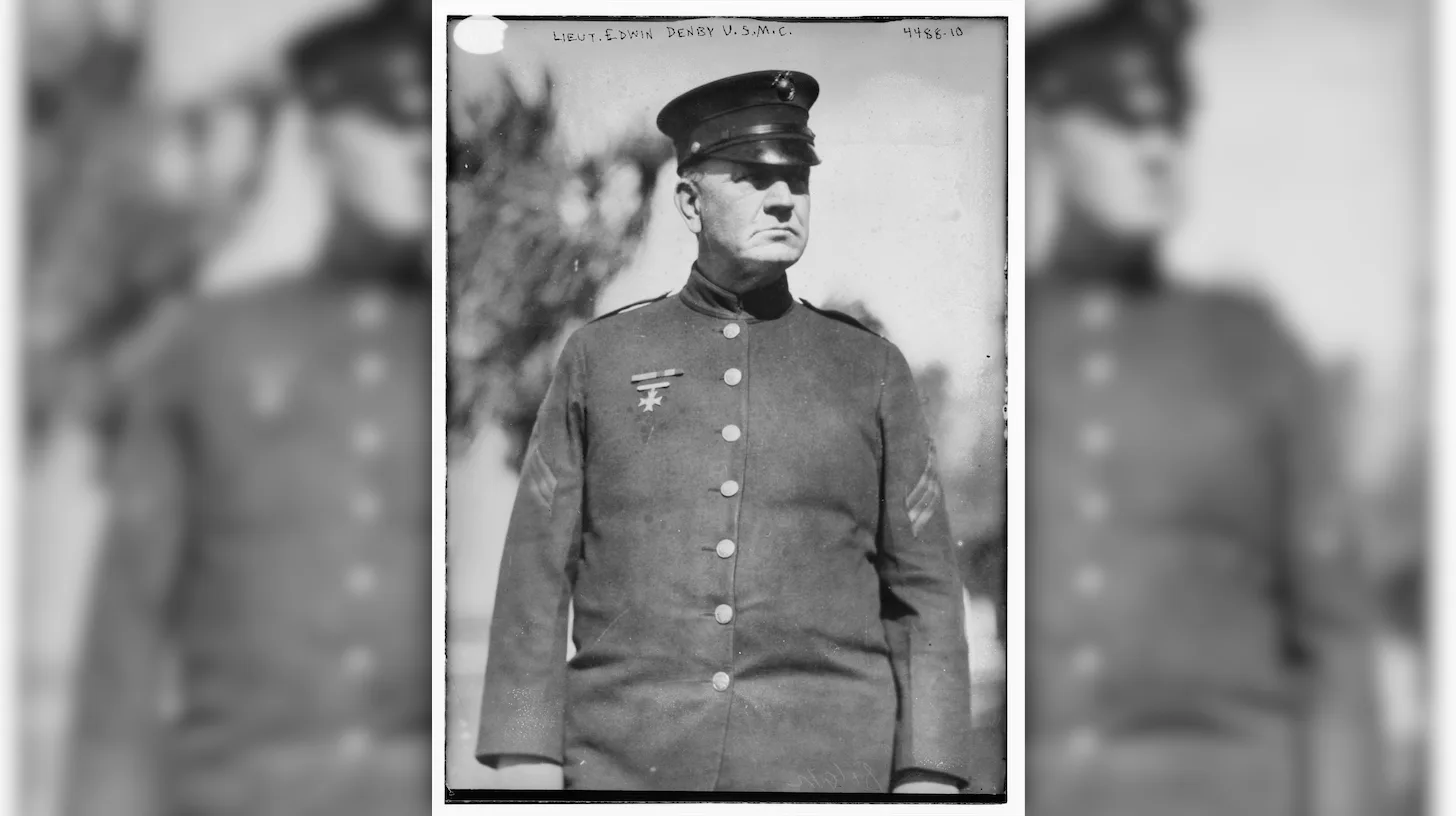
He enlisted at the Marine barracks at Parris Island, South Carolina, on May 5, 1917, and he stayed there. The Navy Department Library’s record of his service shows him made a corporal in June and a sergeant in August, and in November he qualified as a sharpshooter. TIME, years afterward, gave his reason in other words: “Someone must enlist in the ranks. We can’t all be officers.”
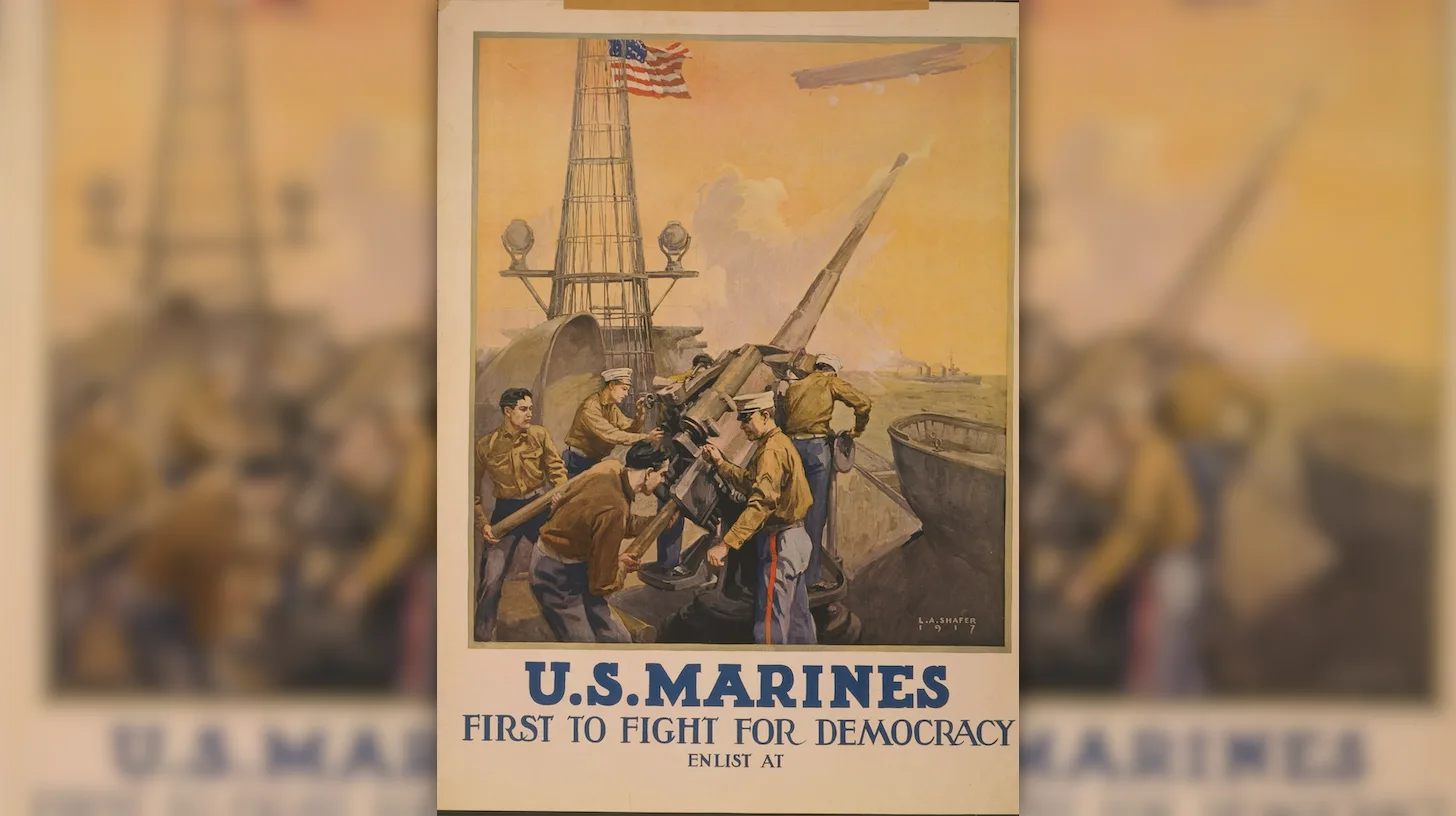
As a sergeant he lectured the recruits, who were coming in under the Corps’ new First to Fight posters, on how a Marine should live. The Corps’ own history quotes him telling them what the service meant.
“Nowhere in the world does a man stand more squarely on his own feet, to make or mar his character, than in the military service”
In January 1918 he was commissioned a second lieutenant in the Marine Corps Reserve, and by July he was a captain. In August he sailed for France on the transport Henderson to observe how the Marines there were trained, and he came home in October. He never served with a fighting unit. He was made a major at the end of December 1918, and he was discharged in that rank in July 1919. In nineteen months he had gone from private to major.
A sunlit room at St. Augustine
In February 1921 he was chief probation officer of the recorder’s court in Detroit when a telegram came from the President-elect, Warren G. Harding, asking him to come to St. Augustine, Florida. On the morning of February 26 the two men talked for an hour in Harding’s room over the hotel gardens, a “pleasant, sun flooded room,” the Chicago Tribune reported. When the newspapermen came in, “Mr. Harding and Mr. Denby stood beside the open window.” Denby wore the button of the American Legion on his coat. Harding told the newspapermen that he had nominated Mr. Denby to be secretary of the navy, and that he had accepted.
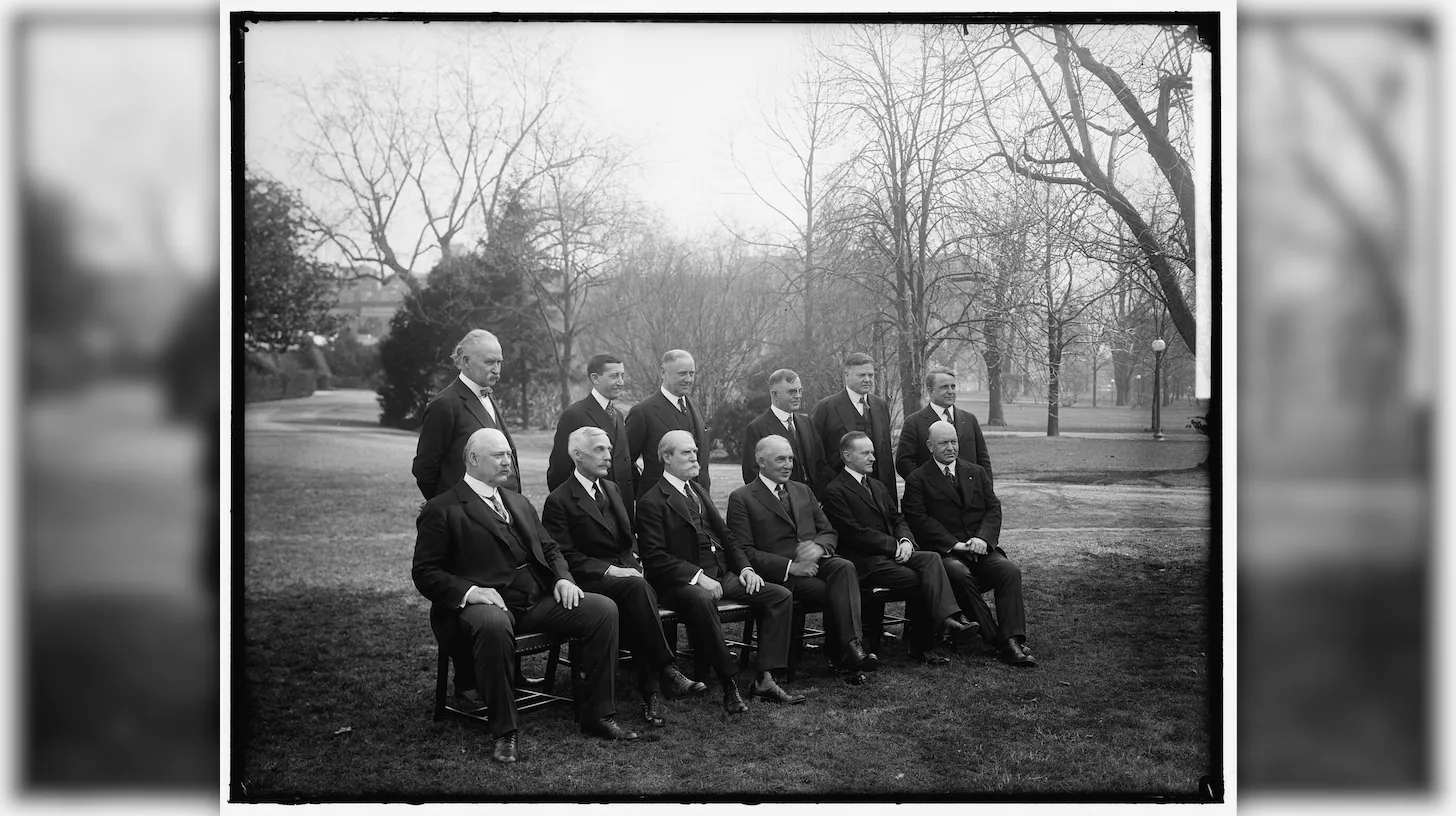
The Tribune noted that he was the same physical build as his new chief. He took office on March 6, 1921, with Theodore Roosevelt Jr. as his assistant secretary. Across the cabinet table sat the new Secretary of the Interior, Albert B. Fall, a former senator from New Mexico, who would soon ask for control of the Navy’s oil.
Full of dynamite
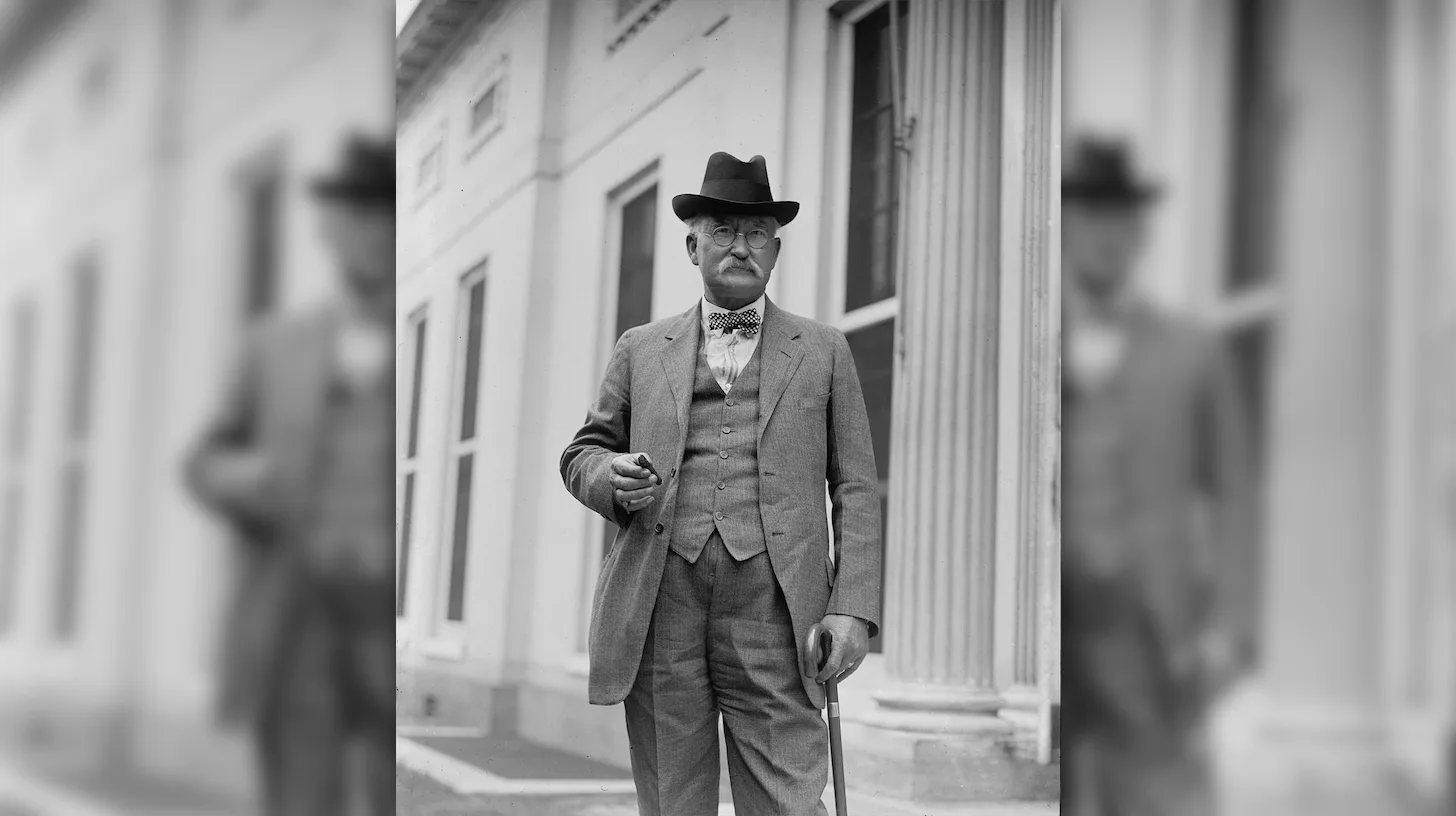
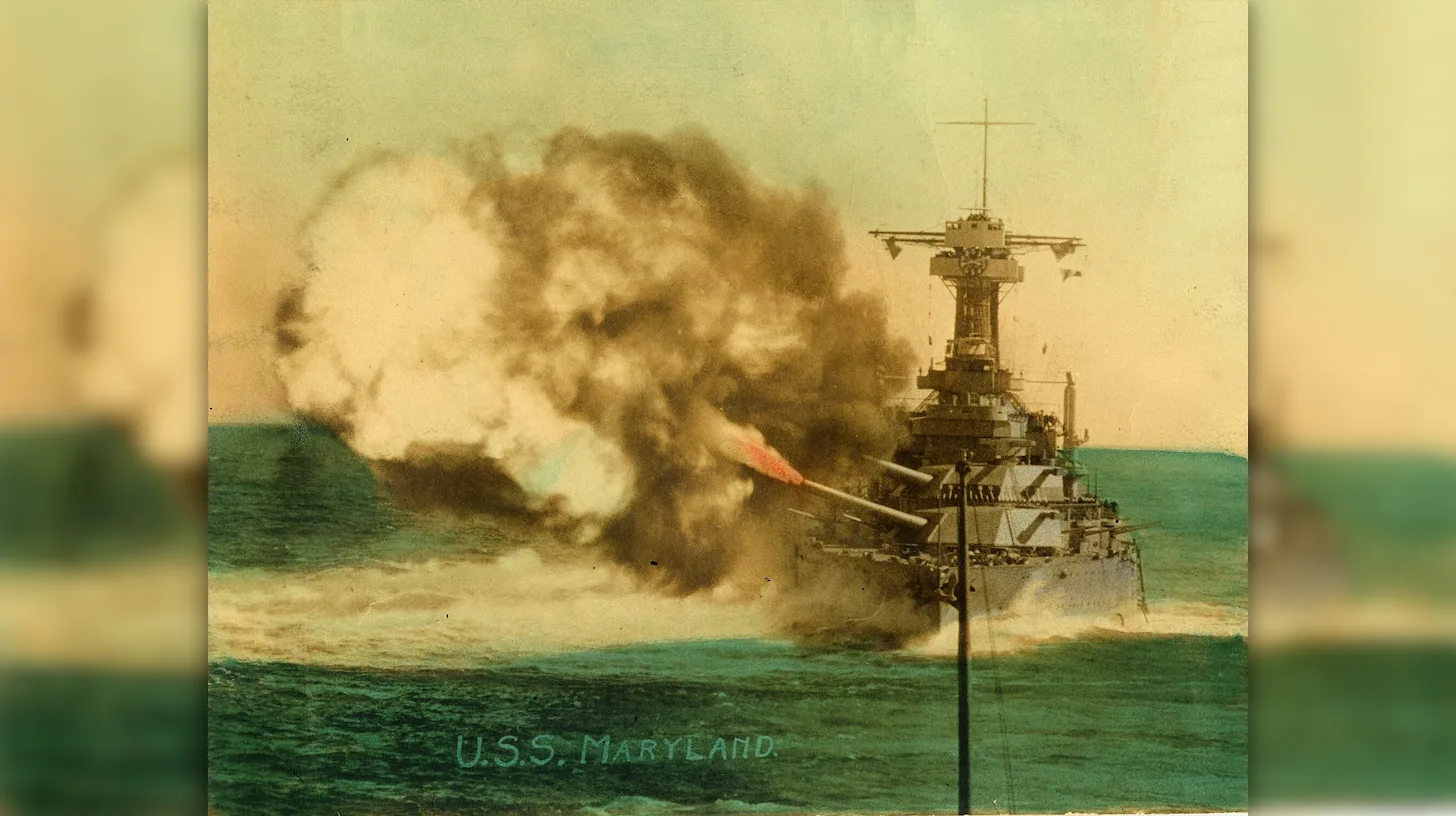
The Navy owned three oil reserves in the West, set aside for its oil-burning fleet, among them Elk Hills in California and a tract of 9,321 acres in Natrona County, Wyoming, called Teapot Dome after a rock on the land shaped like a teapot. On May 11, 1921, Fall sent Denby the draft of an executive order moving their administration from the Navy to the Interior Department. When Roosevelt objected, the Supreme Court later found, “Denby replied that the matter had been decided by the President, Fall, and himself.” Navy officers persuaded him to ask for a clause giving the Navy a say, and he told them, “If you can get Fall to agree to this modification, then it will be all right with me.” Fall cut it down to a promise of consultation. Harding signed the order on May 31.
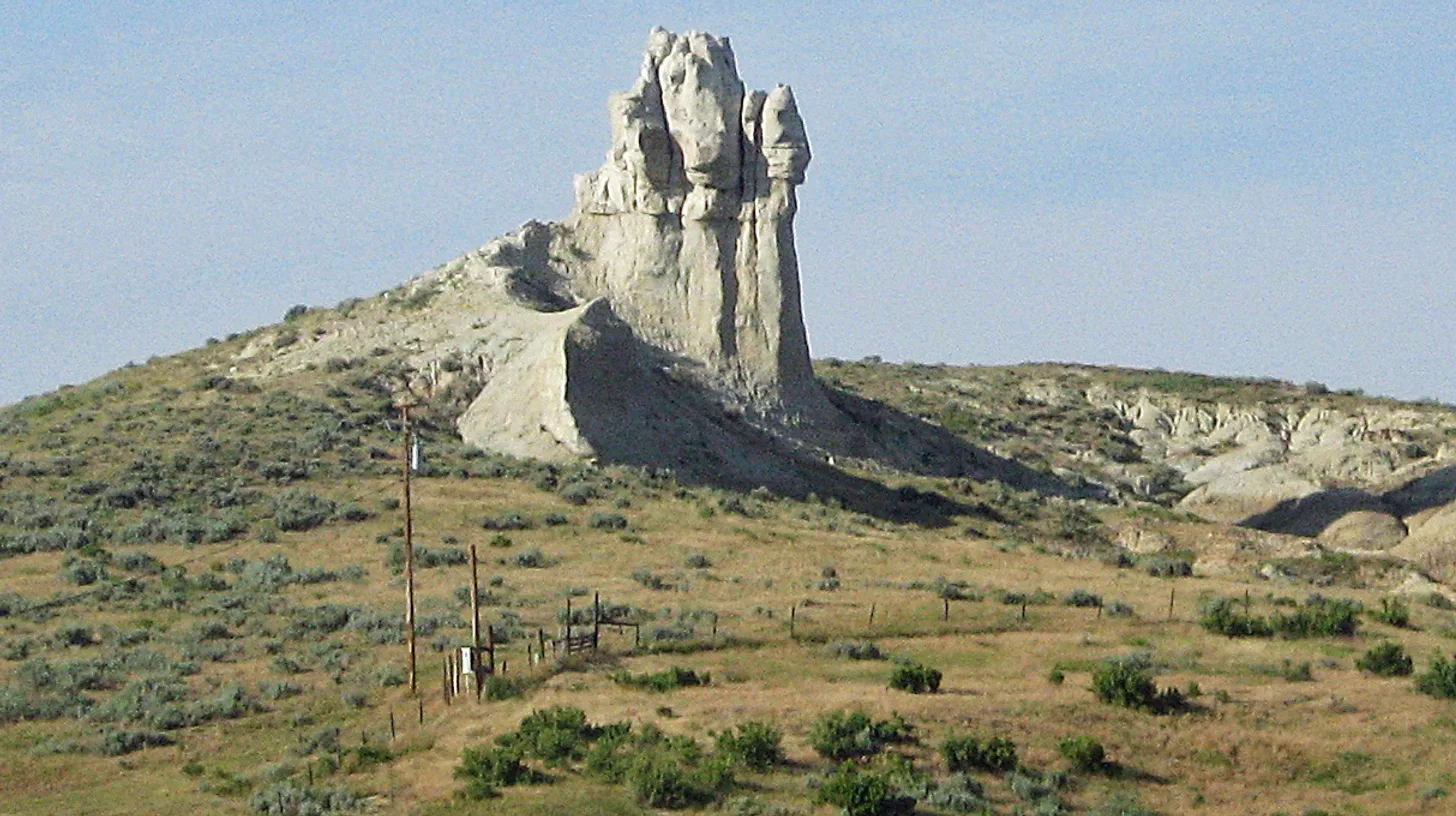
Fall did not mean to consult anyone, and in July he wrote to the oilman Edward L. Doheny about where Denby stood.
“He understands the situation and that I shall handle matters exactly as I think best and will not consult with any officials of any bureau of his department, but only with himself”
The leases came next. On April 7, 1922, Fall leased Teapot Dome to Harry F. Sinclair’s Mammoth Oil Company, without competitive bidding, and locked the lease in a drawer of his desk. Denby signed his part of it five days later. Doheny got Elk Hills and a contract for oil tanks at Pearl Harbor, and Denby signed those too. Fall, it came out later, had taken $100,000 in cash from Doheny “in a little brown satchel,” and some $269,000 in Liberty bonds and cash from Sinclair. No one ever showed that Denby took anything. But a federal judge found in 1925 that Denby had called the oil leases dangerous to touch and had said he wanted nothing to do with them.
Forty-seven to thirty-four
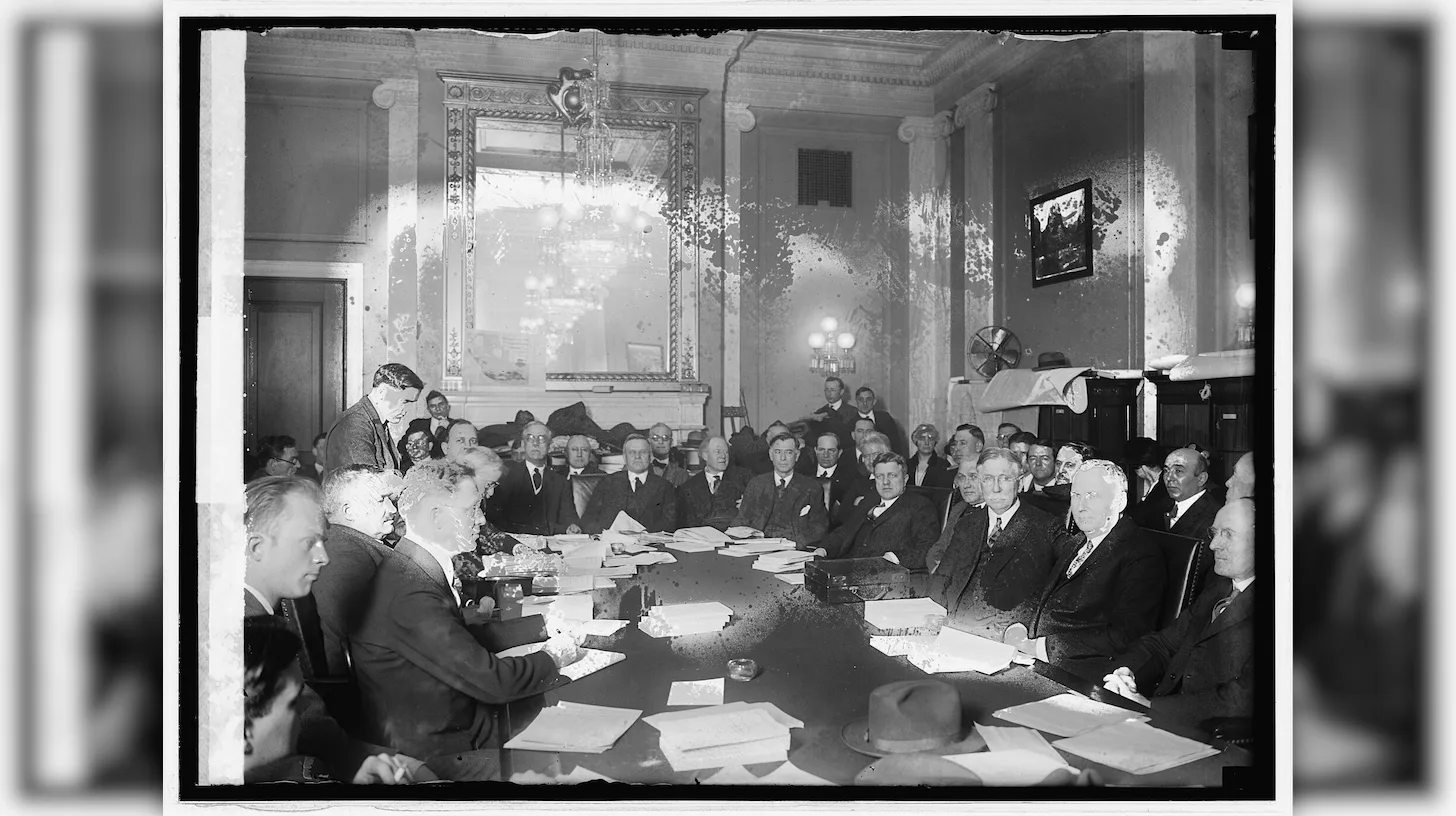
Who was president during the Teapot Dome scandal depends on which half of it is meant. Warren Harding was president when the leases were signed, and he died in August 1923. Calvin Coolidge was president when the scandal broke. The Senate had begun asking questions in April 1922, and the hearings of its public lands committee, under Senator Thomas J. Walsh of Montana, opened on October 23, 1923. By January 1924 Doheny had told the committee about the satchel, Fall was out of office, and the Senate turned on the man still in the cabinet.
On Monday, February 11, 1924, the Senate took up a resolution by Joseph T. Robinson of Arkansas asking the President to request Denby’s resignation at once. Its sponsors charged him with neglect and indifference, not with fraud. Even Senator Claude Swanson of Virginia, who voted for it, said on the floor that Denby carried no taint of the fraud itself, only that he had acted stupidly or defiantly. Senator David Reed of Pennsylvania reminded the chamber that Denby had loved his country enough to enlist as a private. At a quarter past five the resolution passed, 47 to 34, and it was “sent at once to the white house by special messenger.”
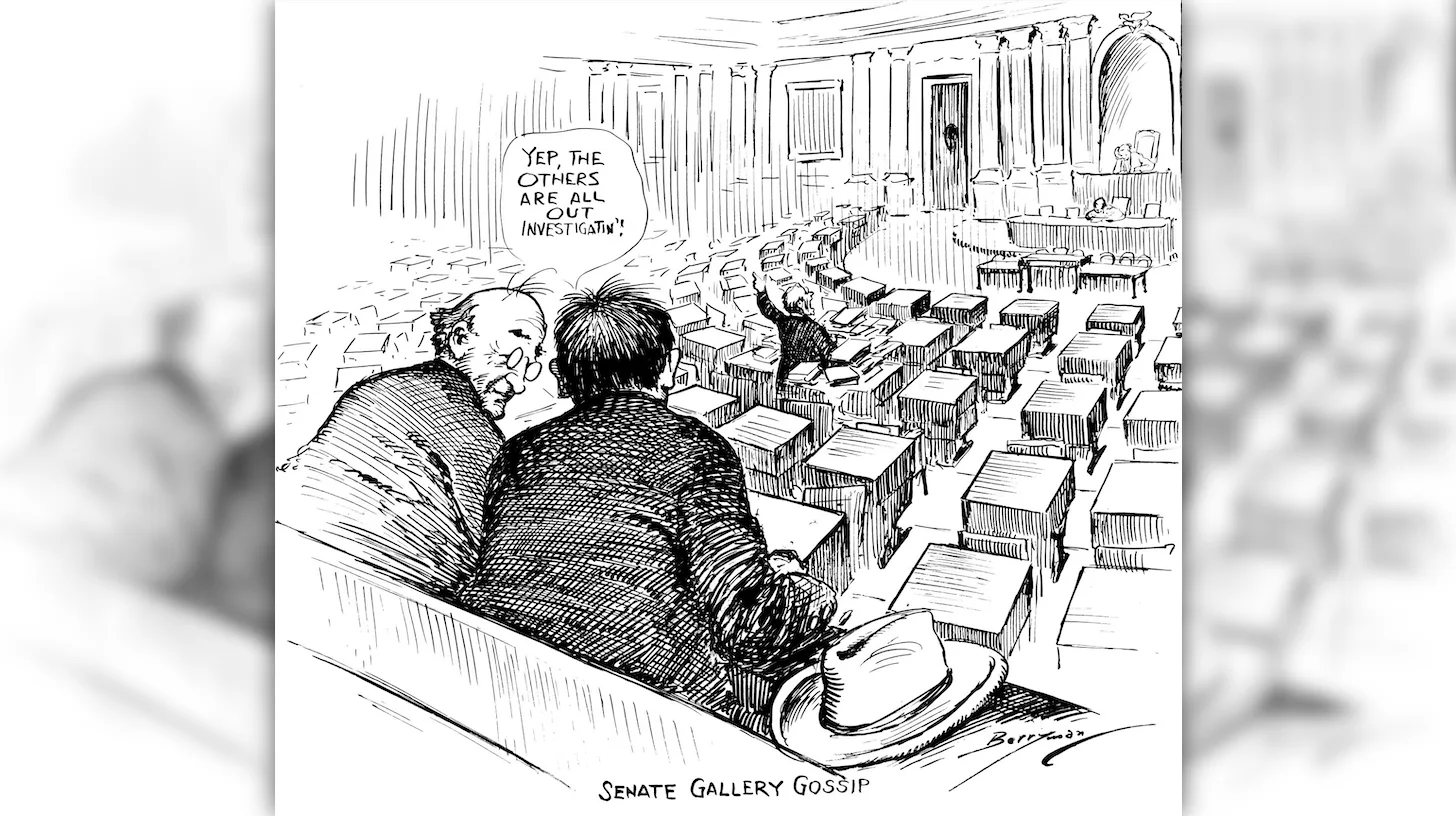
Coolidge answered four hours later, in writing, and he refused.
“The dismissal of an officer of the government such as is involved in this case, other than by impeachment, is exclusively an executive function,”
Denby said he would not resign, and he told the reporters, TIME recorded, that “if he had it all to do over again, he would do precisely as he had done.”
His fifty-fourth birthday
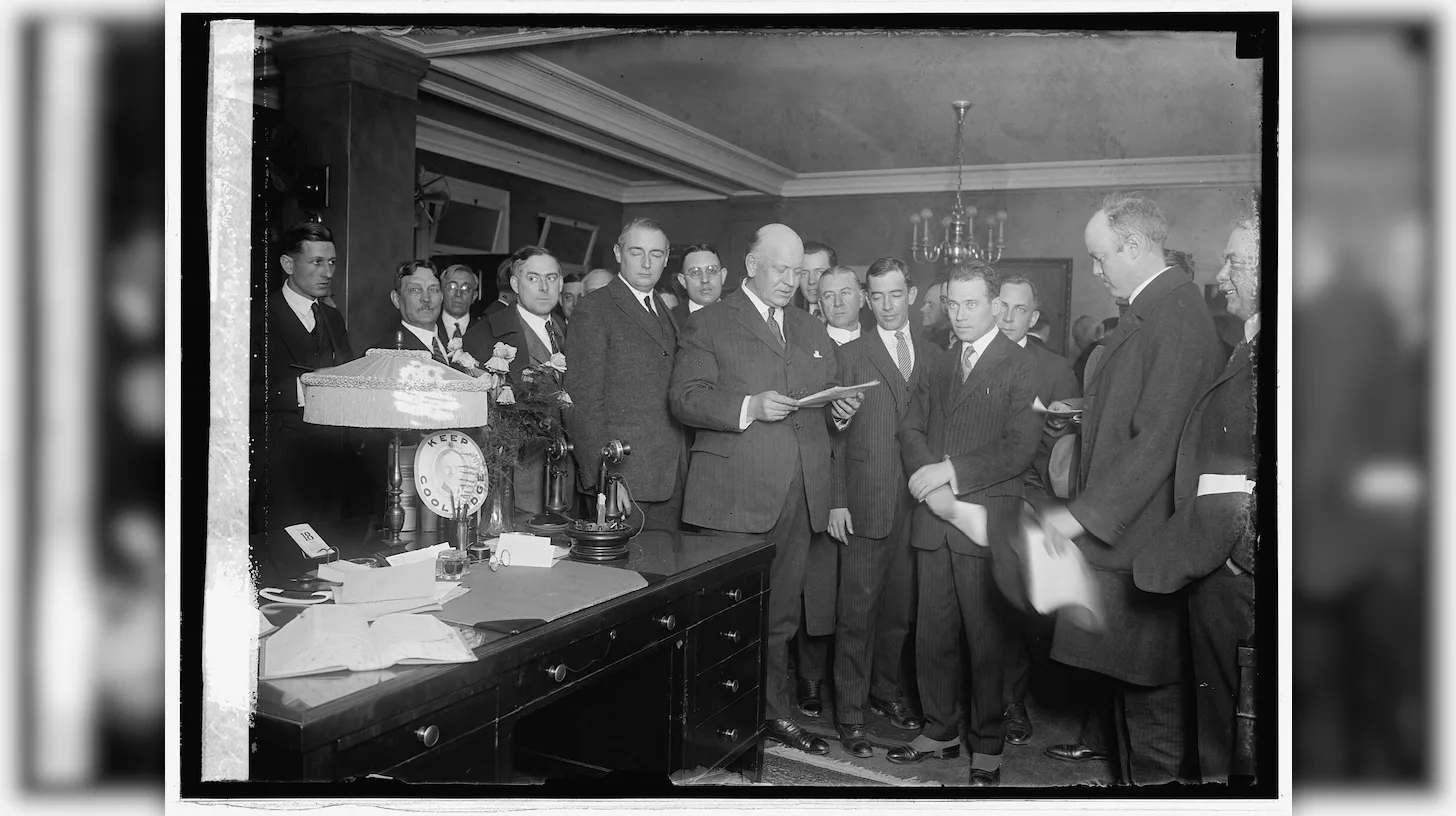
One week later, on Monday, February 18, Edwin Denby was fifty-four years old. At eleven in the morning he came out of a private entrance of the Navy Department, and the reporters were waiting for him. He gave them a few sentences.
“This is my birthday. I am 54 years old today. I am going home. I have absolutely nothing to say. I won’t say I have resigned or that I haven’t or that I intend to. I hope you let me alone on my birthday.”
When he came back in the afternoon the reporters crowded into his office expecting, the United Press correspondent Raymond Clapper wrote, “a weary, broken, disillusioned man,” and they were surprised. Denby stood before a large portrait of Warren Harding. On the mantel were two old photographs of himself as a young sailor, and on the desk stood “A vase of birthday roses.” In his lapel was the service star of the World War. He laughed at the crowd, and then “With steady hand he took up the sheaf of papers” and read out the letter he had written the day before.
“No one appreciates better than I how difficult your situation has become. I fear that my continuance in the Cabinet would increase your embarrassments. Therefore, I have the honor to tender my resignation.”
It was to take effect on March 10, and Coolidge wrote back the same day that he accepted it with regret: “You will go with the knowledge that your honesty and integrity have not been impugned.” In a statement of his own Denby said he went “gladly and fearlessly,” and that any man who said he was resigning for fear of impeachment simply lied.
No evidence against him
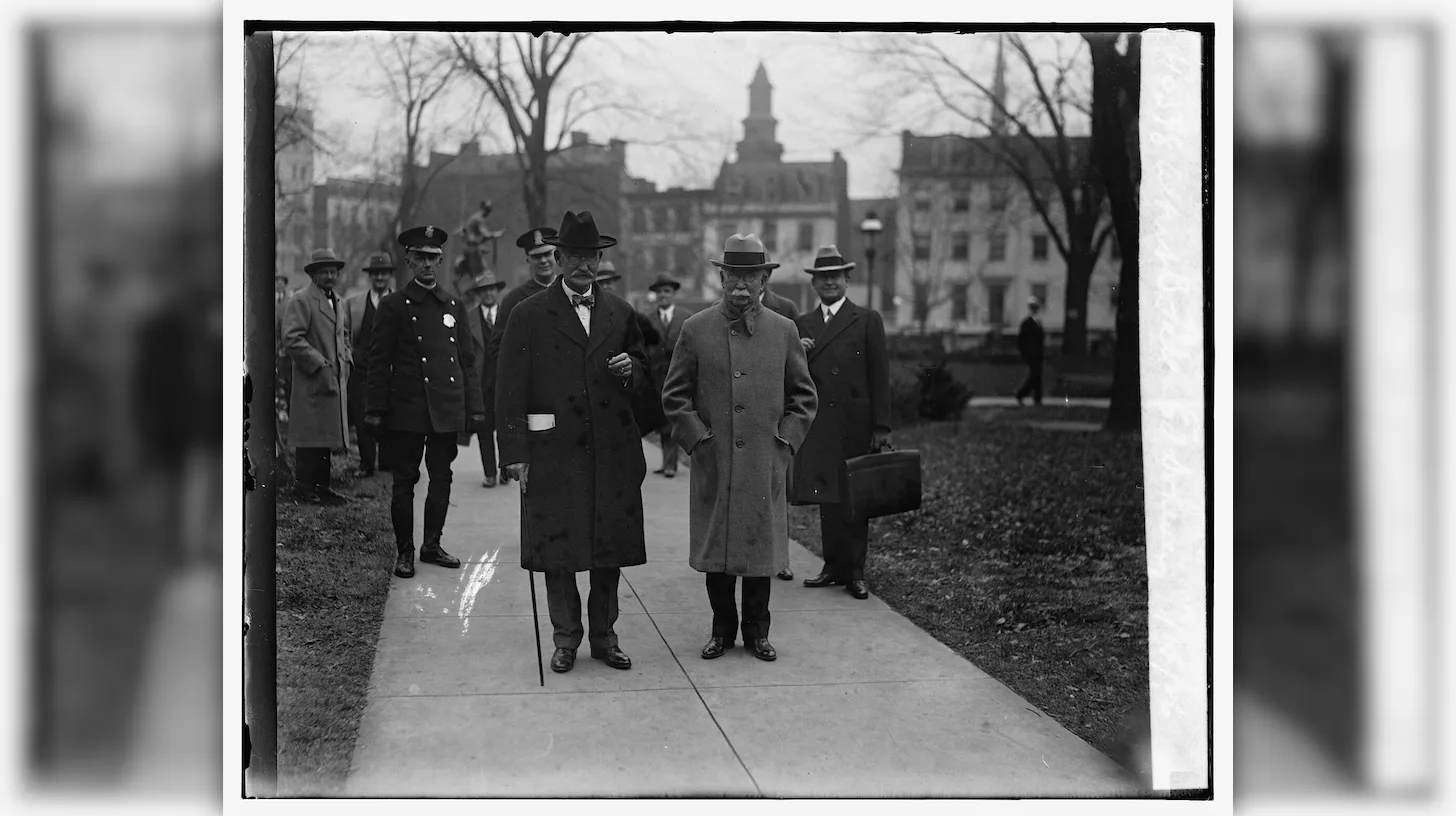
The courts took years over the rest, and in 1927 the Supreme Court cancelled the Elk Hills contracts and the Teapot Dome lease as obtained by fraud. On Denby the Court was exact. The Court found that “he took no active part in the negotiations, and that Fall, acting collusively with Doheny, dominated the making of the contracts and leases.” But it would not excuse him on the ground that he had not understood. “He is presumed to have had knowledge of what he signed,” the justices wrote.
Sinclair went to jail for contempt of Congress and contempt of court, and he was acquitted of conspiracy. Doheny was acquitted of giving the bribe. Albert B. Fall was convicted in October 1929 of taking it, and sentenced to a year in prison and a fine of $100,000. He was the first member of a president’s cabinet to go to prison.
Denby did not live to see it, for he had gone back to his law practice in Detroit and died there of heart disease on February 8, 1929, at fifty-eight. TIME’s notice of his death said that “No evidence was ever found against him.” He is buried in Elmwood Cemetery in Detroit, and a high school on the east side of the city bears his name.