11 min read
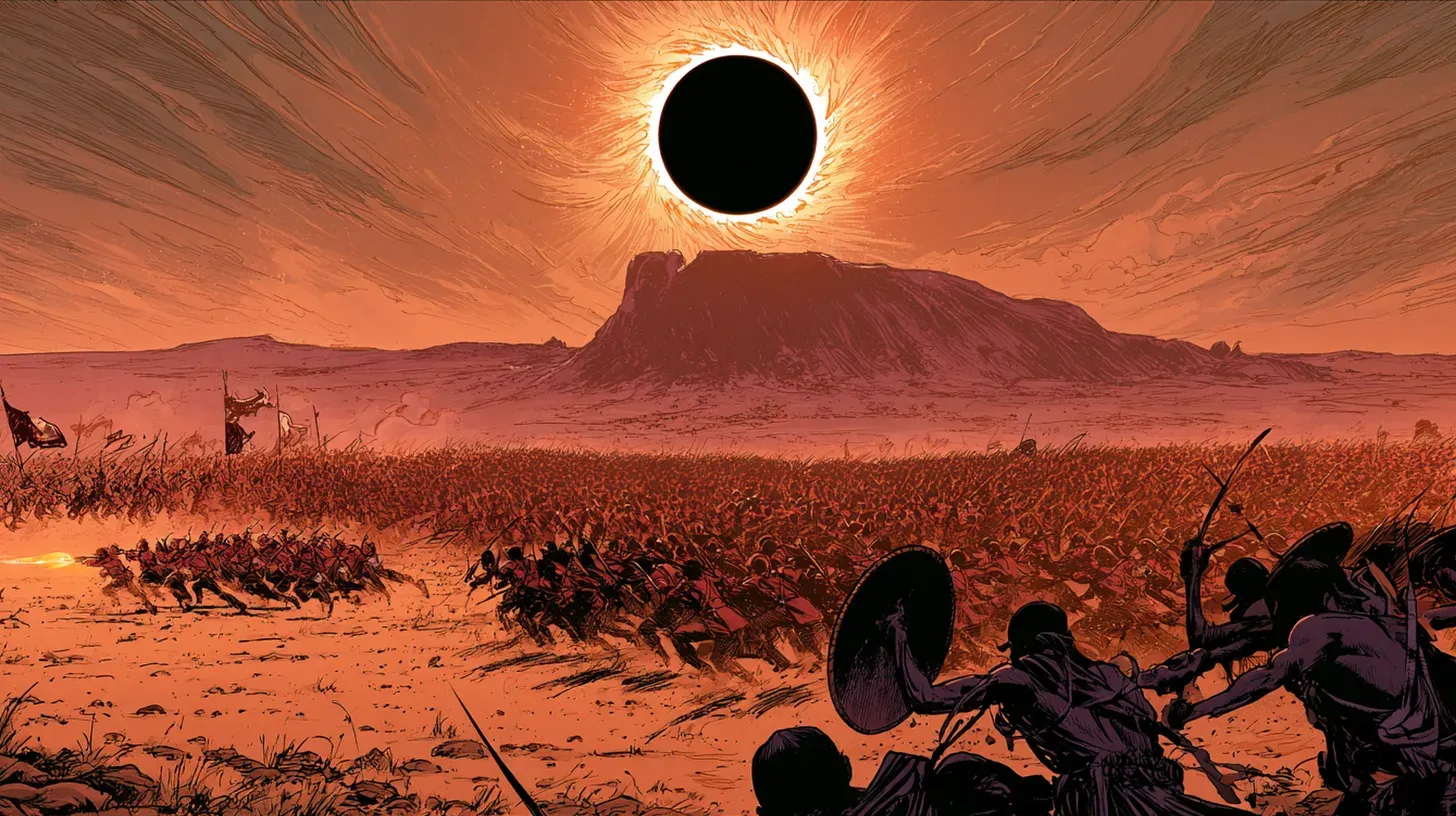
In the early afternoon of Wednesday, January 22, 1879, on the plain below the rock of Isandlwana in Zululand, the camp of a British column was being overrun by the army of the Zulu king Cetshwayo. Among the warriors who came in on the right was a man of the uNokhenke regiment. Three years later he walked the field with an English traveler, Bertram Mitford, and told him what he remembered of the sky. “The sun turned black in the middle of the battle,” he said, as Mitford printed it in 1883.
That afternoon, as it happened, the moon passed across part of the face of the sun. The Battle of Isandlwana was the opening battle of the Anglo-Zulu War, and more than 1,300 of the men in and around the camp were killed, hundreds of them African soldiers fighting for the British. How it happened is told in the War Office’s own narrative, in the memoir of one of the few officers who rode away, and in the words of the Zulus who won it. The darkness they remembered was real, though not quite what the retellings say.
An ultimatum and an invasion
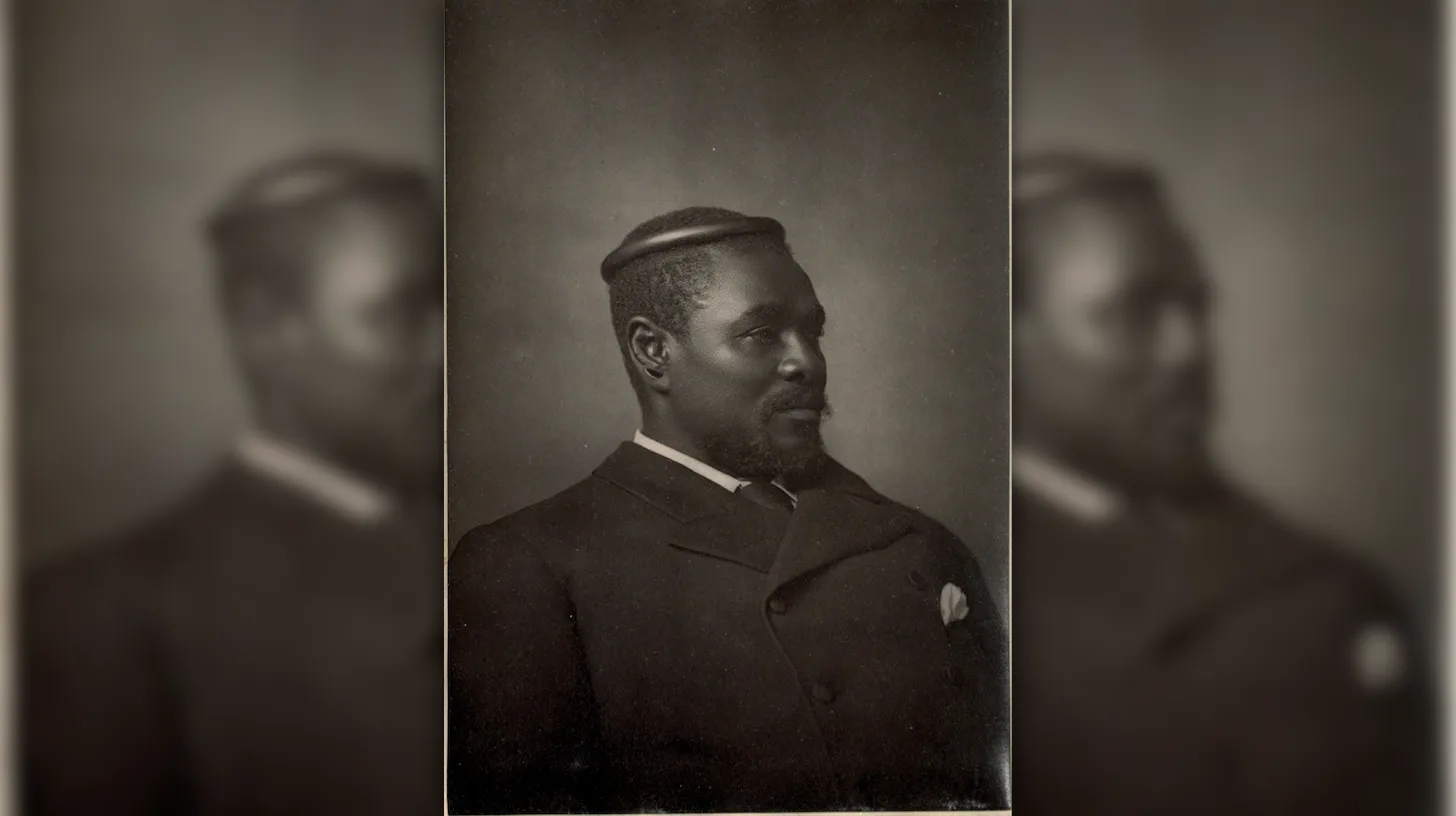
On December 11, 1878, a party of Cetshwayo’s deputies came down to the Lower Tugela Drift, on the border of the British colony of Natal, to hear the demands of the High Commissioner, Sir Bartle Frere. The chief of them was that the Zulu army should be disbanded and brought together only with the permission of a great council of the nation. The deputies said they could not understand why. The men the British accused of raids across the border were to be handed over, and fines of cattle paid, by January 10, 1879. Cetshwayo would not disband his army, and in January 1879 Lieutenant-General Lord Chelmsford led his columns across the border.
That, in short, was what the Anglo-Zulu War was: an invasion to enforce demands the Zulu kingdom could not accept. The Anglo-Zulu War of 1879 would be over by the end of August. A Zulu prisoner told the Times afterward that the king had addressed his regiments at Nodwengu on January 17, as they set out. “I am sending you out against the whites,” Cetshwayo said, “who have invaded Zululand and driven away our cattle.” The army that marched from Nodwengu was 13,700 strong by the War Office’s count, and the National Army Museum puts it at more than 20,000. It was commanded by Ntshingwayo kaMahole, with Mavumengwana beside him.
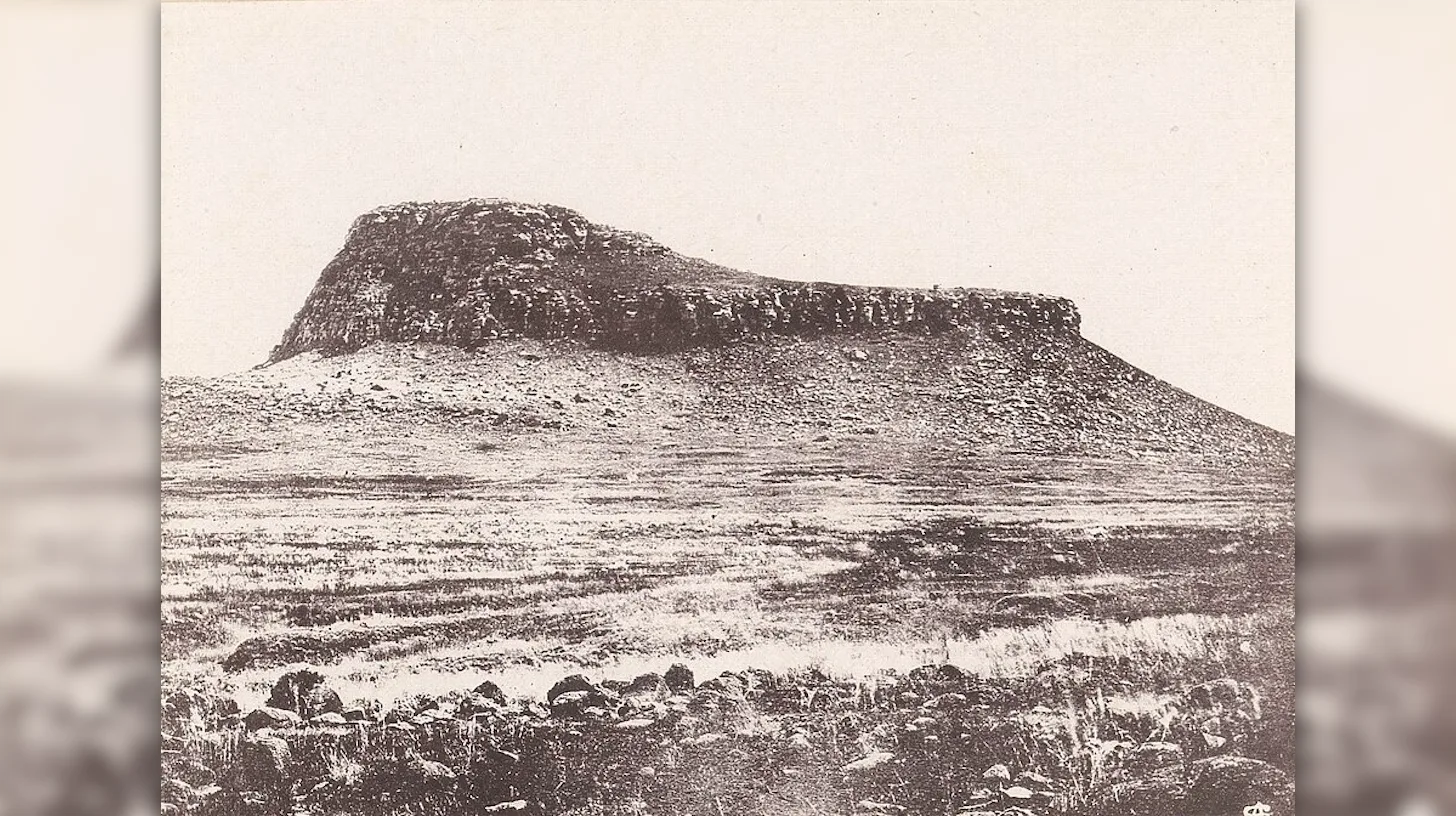
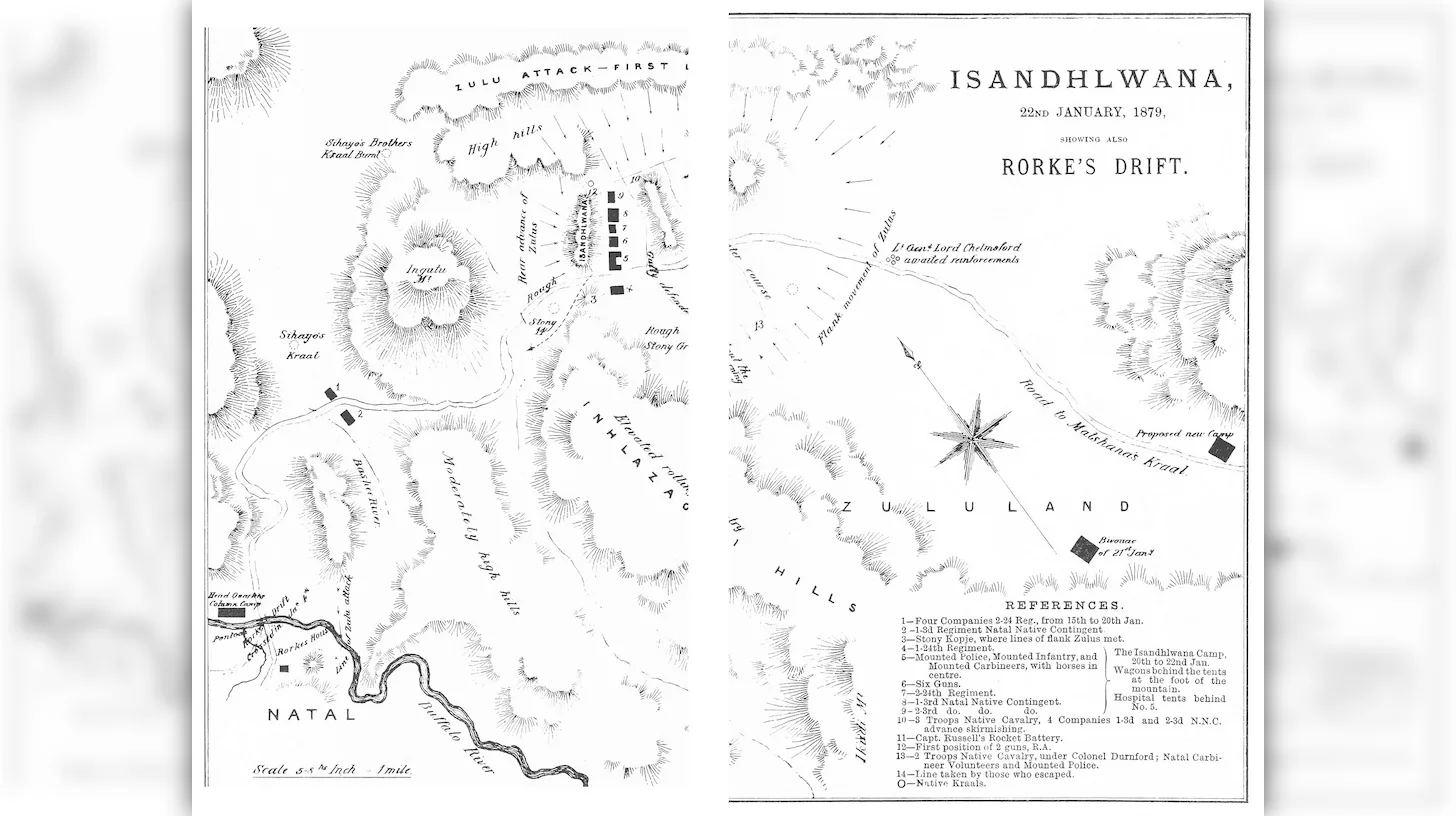
Chelmsford’s own Centre Column, with the 1st and 2nd battalions of the 24th Regiment at its heart, crossed at Rorke’s Drift and made camp at the foot of Isandlwana, a steep, flat-topped rock above a stony plain. The 24th were war-worn, matured men, mostly with beards. No entrenchment was dug around the camp, though Chelmsford’s own standing orders called for one. As Smith-Dorrien put it later, not a sod was turned.
A ride in the dark
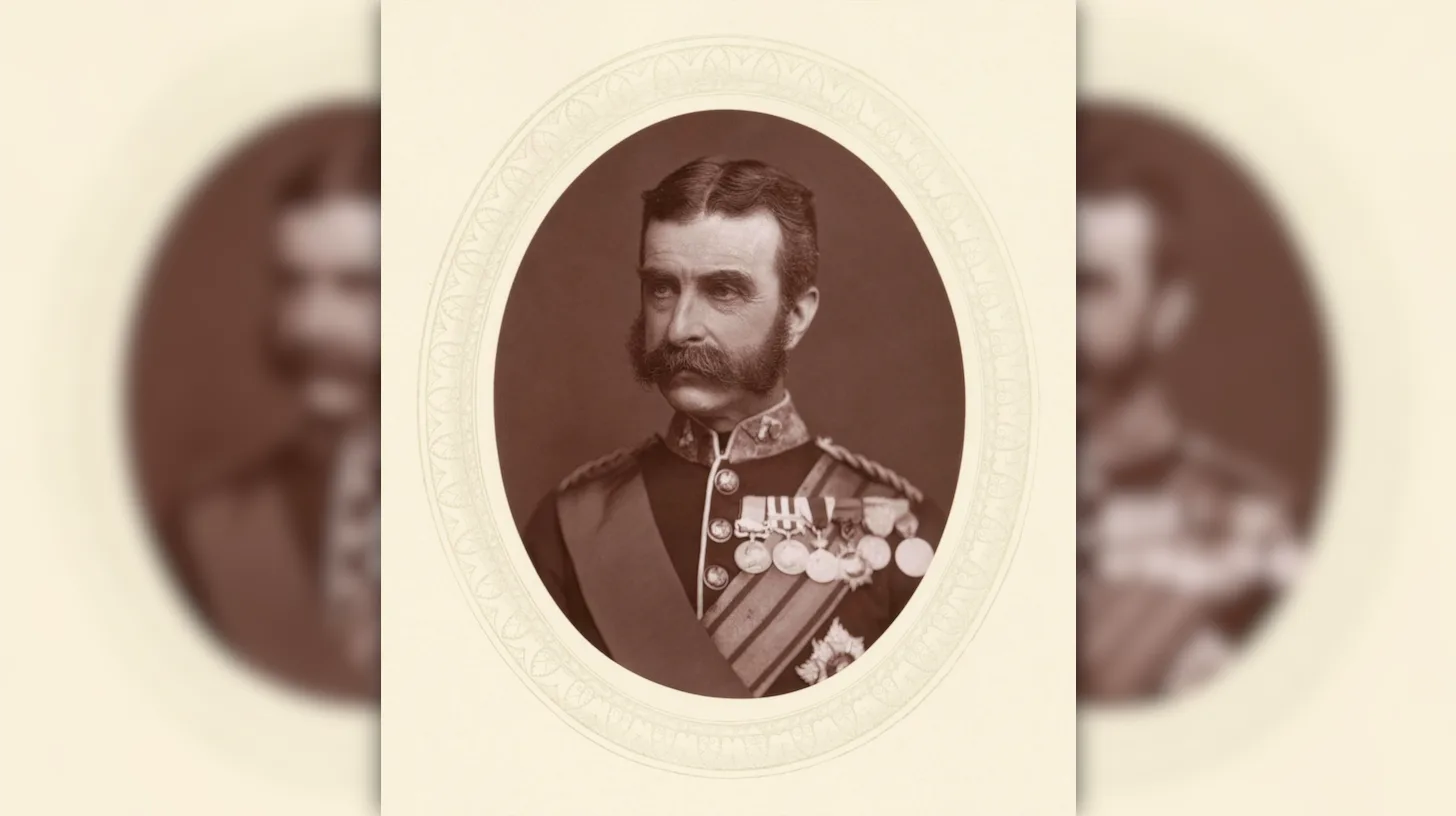
Horace Smith-Dorrien was twenty. He was the eleventh of fifteen children of an English family, a lieutenant of the 95th Foot who had come out to Natal to run wagons as a transport officer, and he would become a general in the First World War. At midnight on January 21 he was woken in the camp and given a dispatch from Chelmsford. Smith-Dorrien rode back alone, 10 miles in the dark, to Rorke’s Drift, arriving just before dawn, and gave Colonel Anthony Durnford the order to advance at once to Isandlwana.
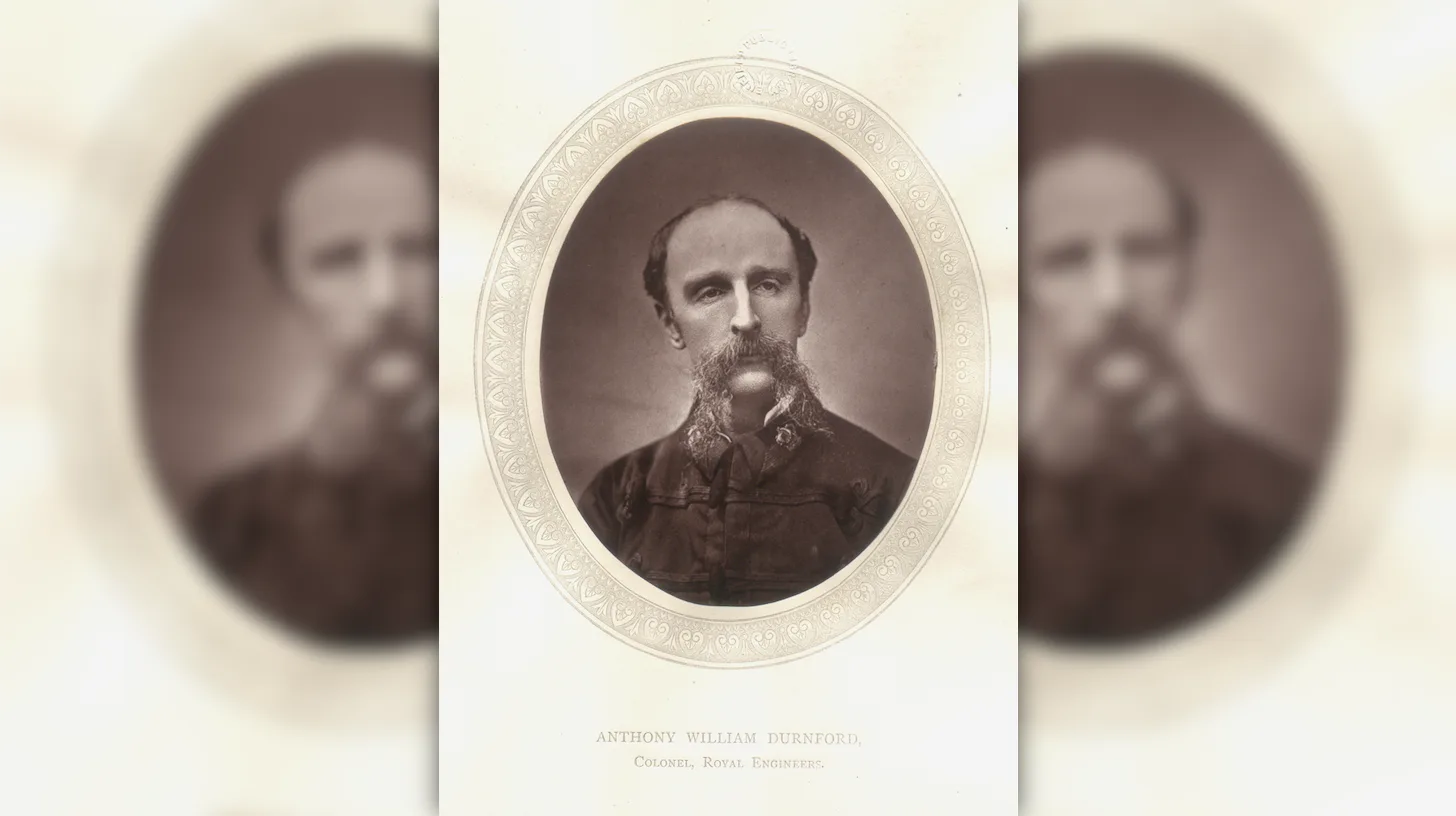
Durnford was a colonel of the Royal Engineers. In a fight at Bushman’s River Pass in 1873 he had taken an assegai stab in the left arm, and it had been disabled ever since. Chelmsford’s force paraded before daybreak, each man with one day’s cooked rations and 70 rounds, and marched out about four o’clock. The camp was left to Lieutenant-Colonel Henry Pulleine of the 24th, with written orders that if attacked he was to act on the defensive.
When Durnford arrived, about ten in the morning by the War Office’s account, the two colonels disagreed. Durnford wanted to go out and attack, and Pulleine said that his orders were to defend the camp, and he objected even to lending Durnford two companies of the 24th. Out beyond the hills the Zulu army had not meant to fight that day, because the state of the moon was considered unlucky. Then a troop of Durnford’s mounted men climbed a rise and saw the Zulu army about a mile off, advancing in line, and the indunas said, as one warrior remembered, that since the whites had found them they had better go on.
Like a swarm of bees
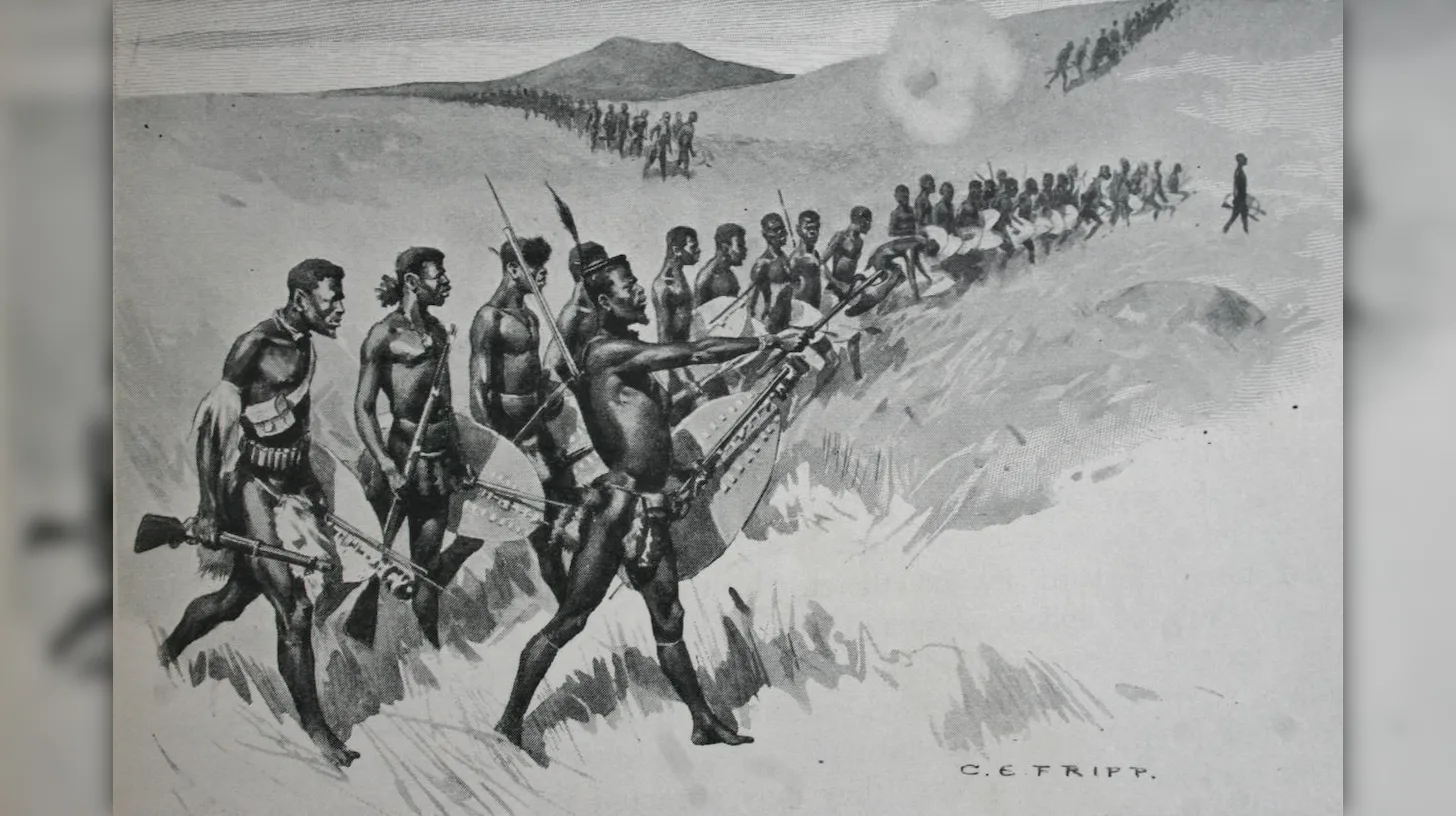
The Zulus came on from the northeast in the shape of a horseshoe, the deep chest in the middle and the two horns reaching out to either side to close behind the camp. Smith-Dorrien, who had come back up from the drift, watched them come over the hill.
“They were giving vent to no loud war-cries, but to a low musical murmuring noise, which gave the impression of a gigantic swarm of bees getting nearer and nearer.”
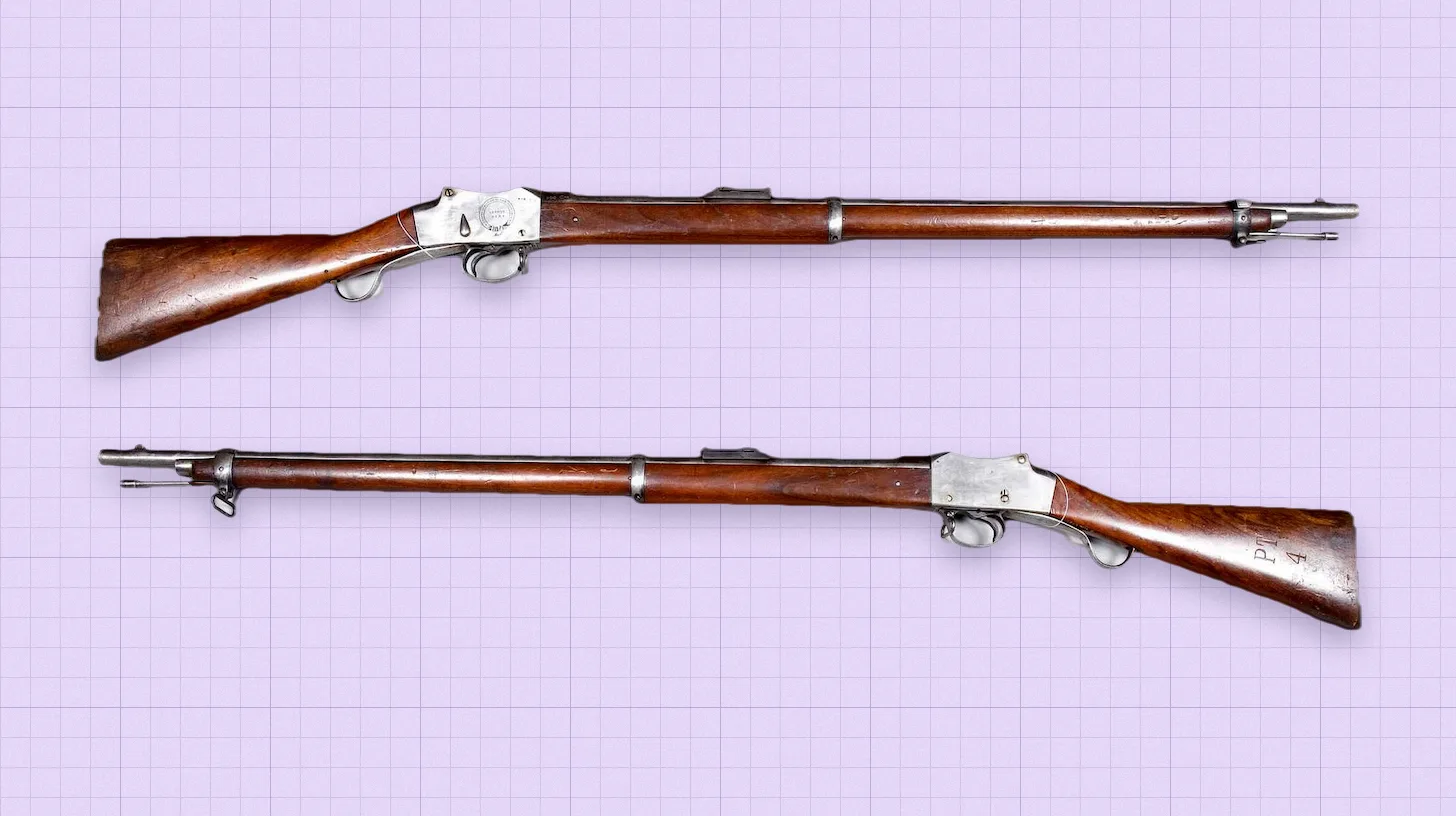
They came on line upon line, he wrote, in slightly extended order, one behind the other, a few of them firing as they came. Most Zulus went into battle armed only with shields and spears, the short stabbing assegai and the oxhide shield, though the army also had thousands of old muskets and some modern rifles. The 24th carried the Martini-Henry, a single-shot breech-loader that fired a heavy black-powder cartridge and threw up a cloud of smoke at every volley. Those were the Anglo-Zulu War weapons of the two sides. The companies of the 24th lay down and fired, and every round told. A warrior of the uMbonambi said his regiment lost a lot of men there, and that “they kept tumbling over one upon another.” When the Zulu army was some 400 yards off, Smith-Dorrien saw it waver.
He went back to the wagons for ammunition. With a party of stragglers he broke open boxes and sent the packets out to the line, until the quartermaster of the 2nd Battalion stopped him. “For heaven’s sake, don’t take that, man,” the quartermaster said, “for it belongs to our Battalion.” Out of that scene grew the most repeated story of the battle, that the line died for want of screwdrivers. Smith-Dorrien himself wrote that the boxes were screwed down and hard to open. But the lid of the ammunition box of 1879 slid in a groove and was held by only one brass screw, and archaeologists working on the field in 2000 found box linings and bent screws out on the firing line, where men had broken the boxes open with whatever was at hand. The trouble, Smith-Dorrien wrote, was that the firing line used up all it had while thousands of rounds lay 400 yards behind it.
The game is up
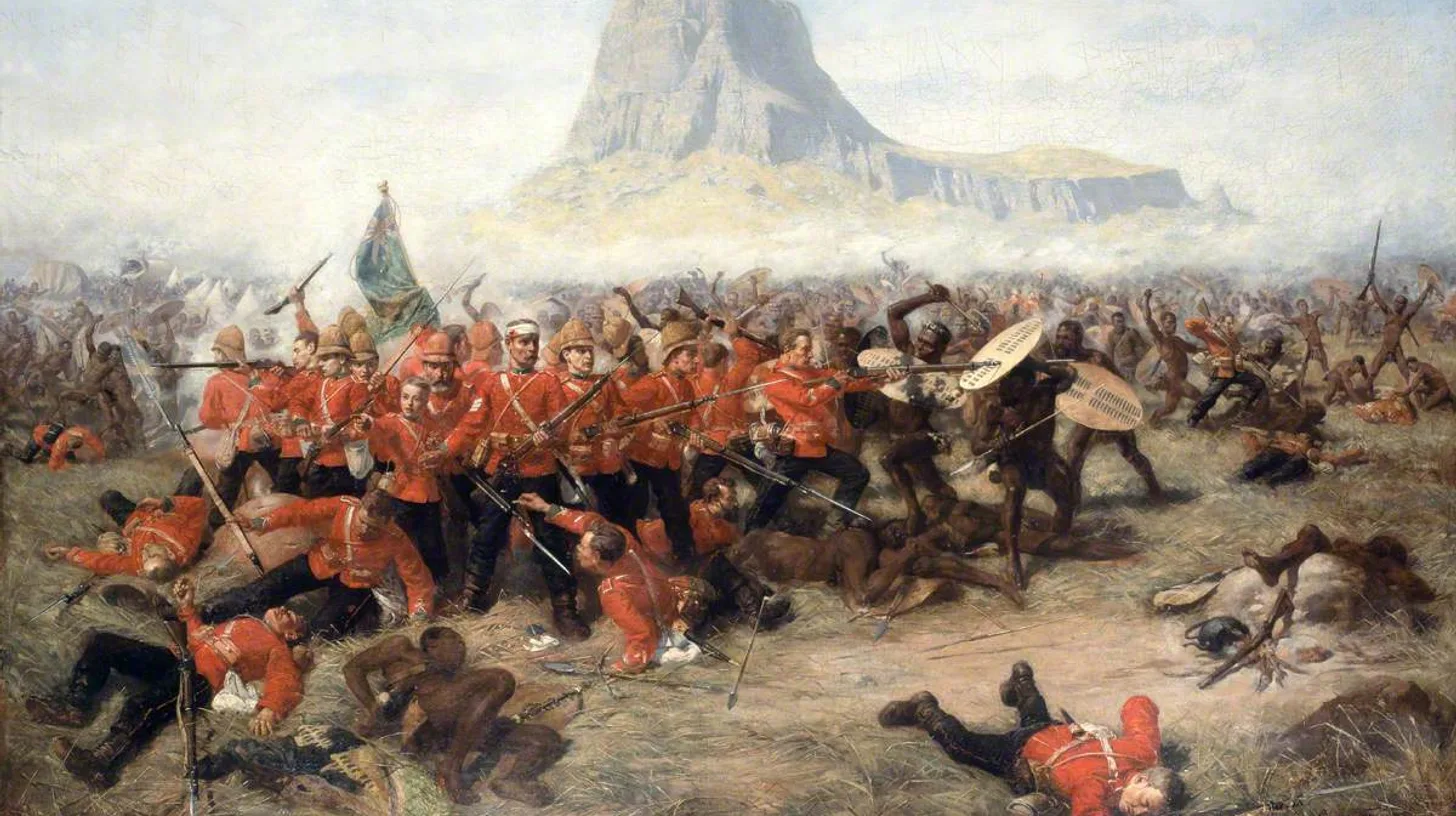
Soon after one o’clock the front ranks of the Zulus came within some 200 yards of the men of the Natal Native Contingent, of whom only one in ten had been allowed a rifle, and the Contingent turned and fled. Its flight left the right and rear of the 24th open. Mehlokazulu kaSihayo, an induna of the iNgobamakhosi regiment, described the end of the firing in a statement he gave in jail that September.
“The soldiers when they got together fired at a fearful rate, but all of a sudden stopped, and then they divided and some commenced to run.”
The horns had closed behind the camp. Durnford fell at the neck below the rock, and Mehlokazulu remembered an officer there “with his arm in a sling, and with a big moustache.” A colonial wagon conductor told Smith-Dorrien, “The game is up.” He mounted his pony, which had had no rest for thirty hours, and rode, revolver in hand, through some 4,000 Zulus who had come in behind the camp and were “busy with shield and assegai.” They let him pass.
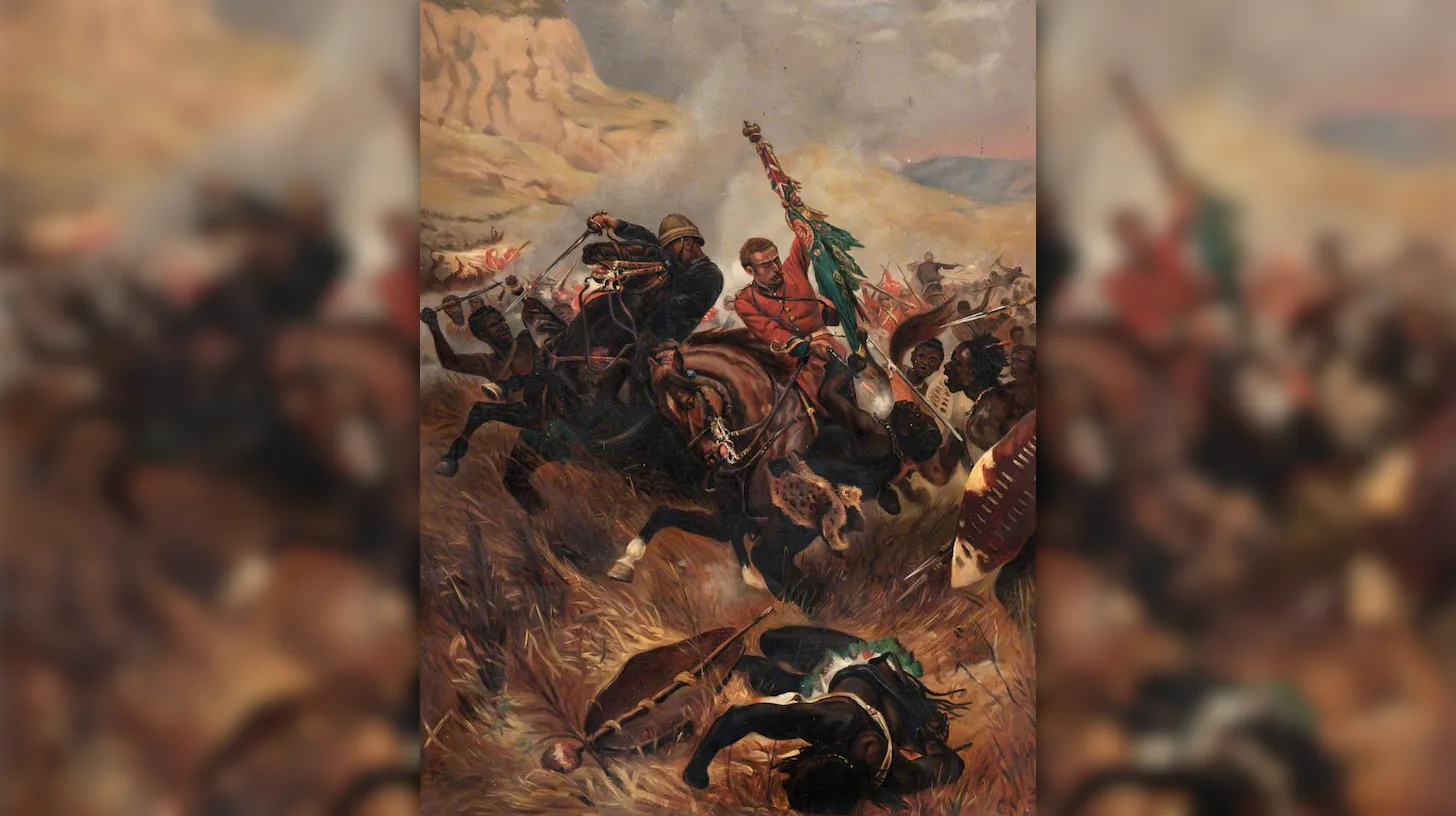
He wore a blue patrol jacket, and he noticed later that the only five officers who got away all wore blue. He heard afterward, he wrote, that Cetshwayo had told his men that black coats were civilians and not worth killing. That is the whole of the source for the story that a dark coat could save a man’s life at Isandlwana, and his own pages tell against it: Lieutenant Coghill of the 24th, who also wore a blue patrol, was killed. Zulu veterans told Mitford that all were killed on the field, and the order the king was said to have given was to eat up the red soldiers. Lieutenant Melvill rode past Smith-Dorrien in a red coat with the cased Queen’s Colour of his battalion across his saddle. At the Buffalo River, in flood and 80 yards wide, Smith-Dorrien was swept away and got across holding the tail of a loose horse. He walked twenty miles and reached Helpmakaar at sundown.
The sun turned black
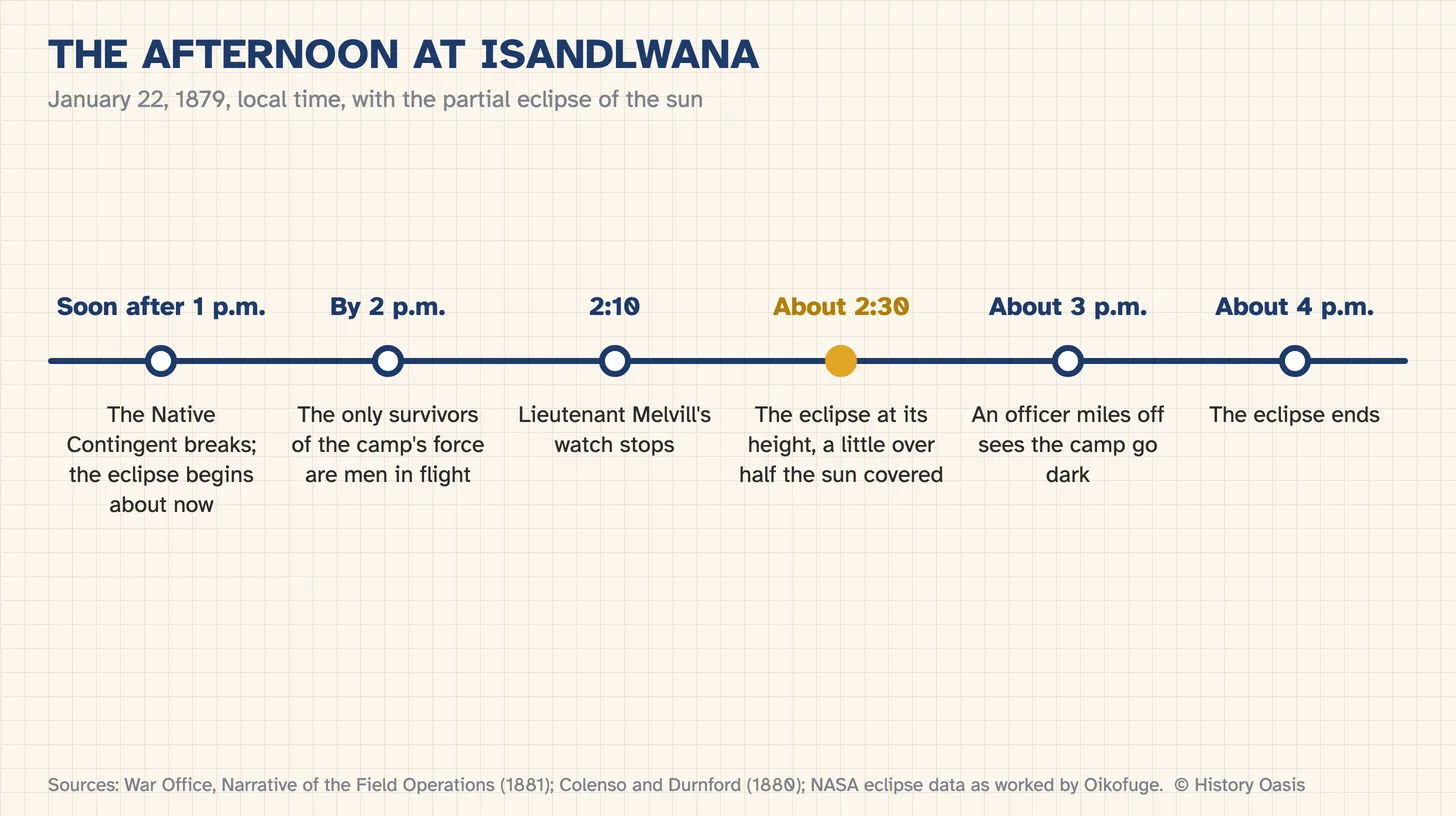
By two o’clock the only survivors of the force that had held the camp were the men in flight. Melvill and Coghill reached the far bank of the Buffalo and were killed there, and when Melvill’s body was found, his watch had stopped at ten minutes past two. Here and there companies of the 24th, their ammunition spent, had been overpowered and died where they stood.
The eclipse of January 22, 1879, was an annular one, with the moon too small to cover the whole sun, and its path of greatest eclipse lay out in the Atlantic. At Isandlwana the sun was only partly covered. Worked out with NASA’s own tools, it was a little over half covered at its height, which came at about half past two local time, after a start around one o’clock. Other writers have put the share lower. The sun did not go black. But the man of the uNokhenke remembered it so.
“The sun turned black in the middle of the battle; we could still see it over us, or should have thought we had been fighting till evening.”
The warrior of the uMbonambi gave another cause. The sun got very dark, he told Mitford, “like night, with the smoke,” and some historians think the black-powder smoke of thousands of rifles and muskets accounts for much of the darkness. It was Mitford, in a footnote, who joined the old man’s words to the eclipse. Miles away, an officer with Chelmsford’s force looked toward the camp about three o’clock and saw it darken. “The sun was shining on the camp at the time,” he said, “and then the camp looked dark, just as if a shadow was passing over it.” Military histories of the battle did not mention the eclipse at all until 1963.
The War Office counted 52 officers and 806 white men killed at Isandlwana, and probably 200 to 300 African troops, whose number was never taken with care. Later historians, counting the Native Contingent fully, put the dead at more than 1,300 of a force of about 1,800. Of the Zulus, by the official estimate, not less than 1,000 fell. The victors took about 800 Martini-Henry rifles and some 400,000 cartridges from the camp.
Ulundi
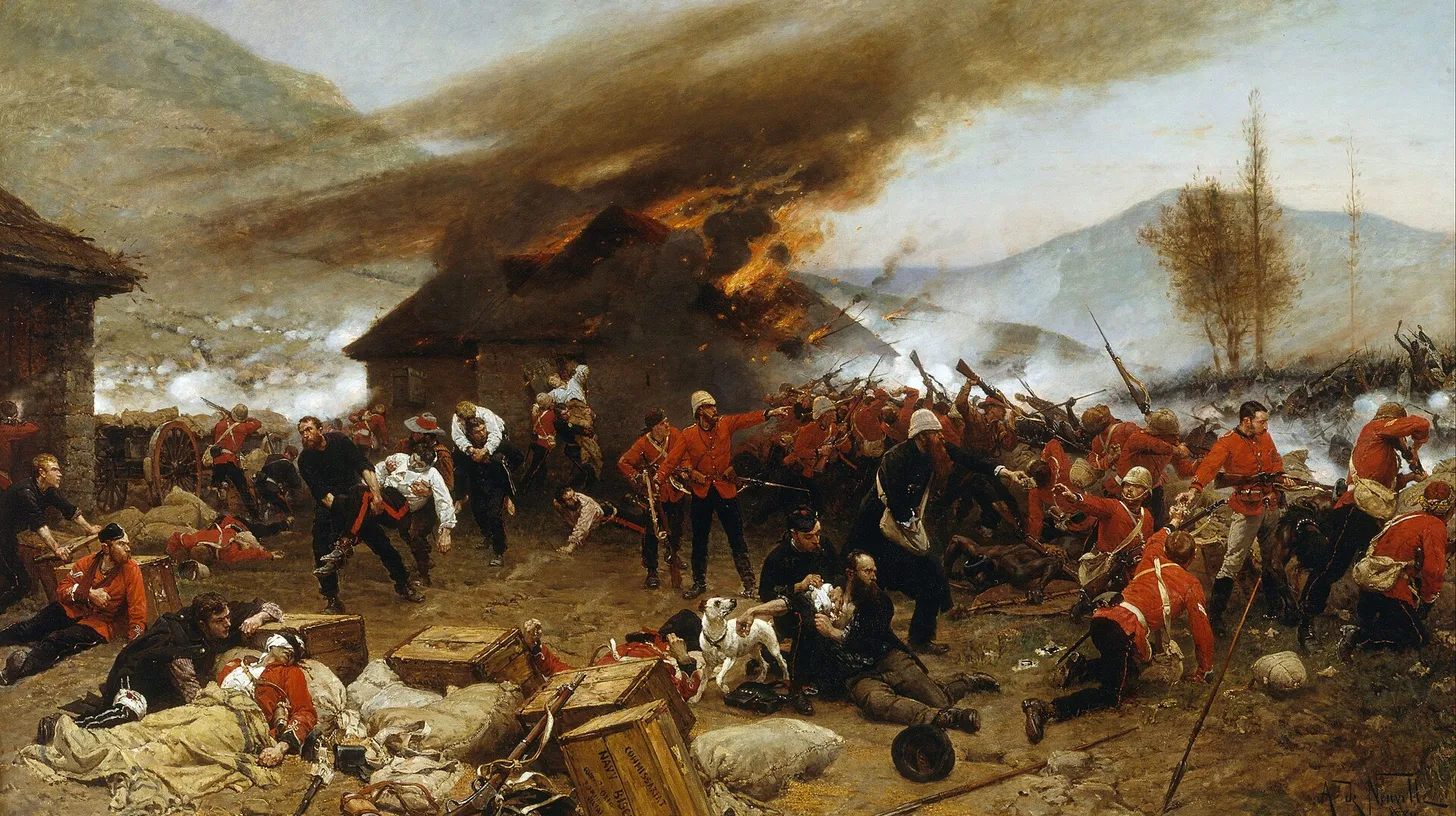
That afternoon and night a reserve of Zulus who had not fought crossed the river and attacked the mission station at Rorke’s Drift, where a small garrison behind barricades held out through the night. Seventeen of the defenders were killed and 400 Zulus lay dead, and eleven Victoria Crosses were given for it. The Colour of the 24th was found in the Buffalo River on February 4. A court of inquiry sat at Helpmakaar on January 27 and, having been given no instructions to judge, gave no opinion.
Cetshwayo told a Dutch trader who lived at his court through the war how he saw it.
“I merely defended myself in my own country, and overcame them there (at Isandhlwana), when, of course, my people took possession of all their goods.”
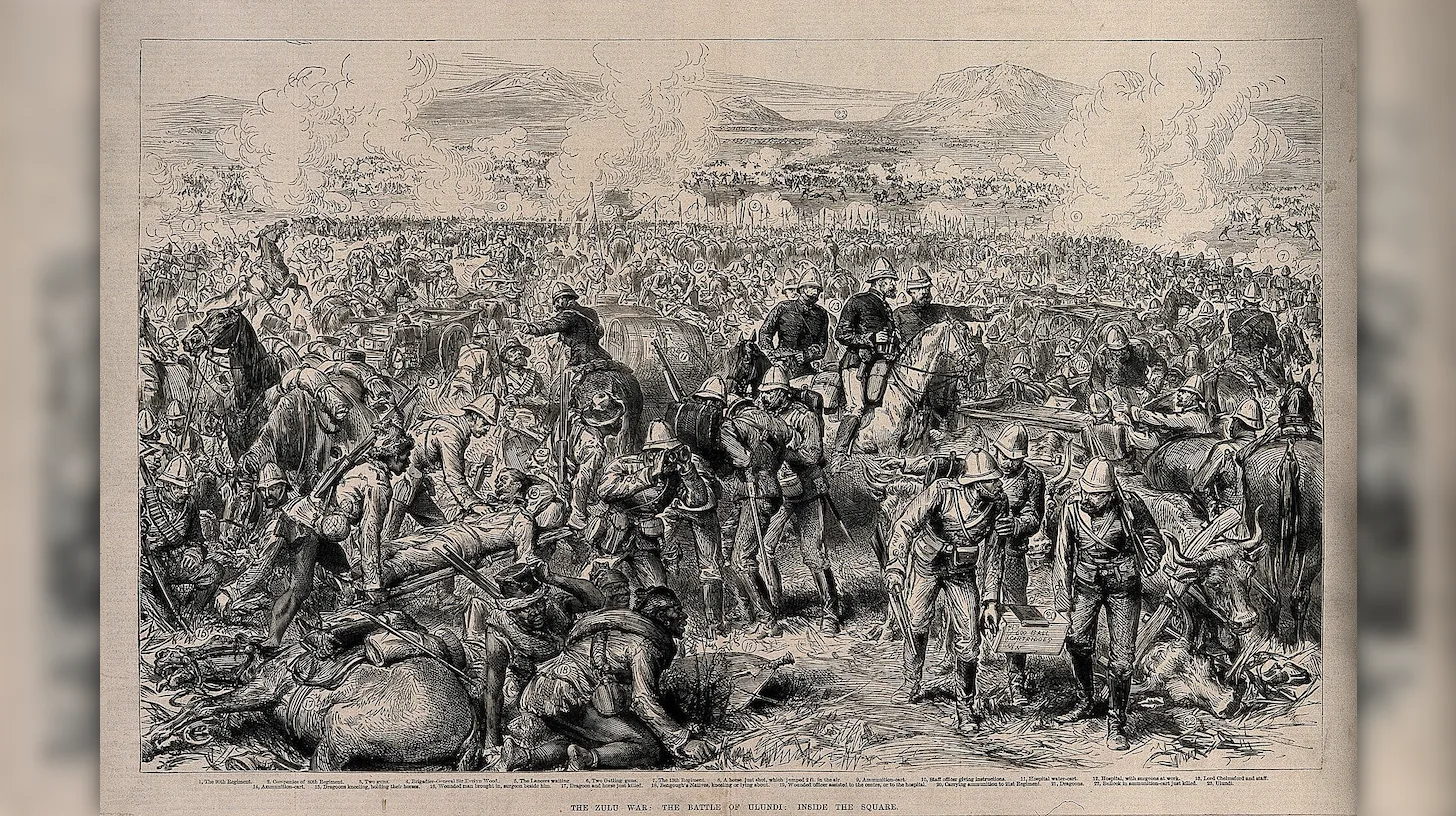
Britain sent reinforcements. On July 4, 1879, Chelmsford marched a force of more than 5,000 men in a hollow square onto the plain before the royal kraal at Ulundi, and the Battle of Ulundi was over in the morning. The British lost 12 killed and 88 wounded, the Zulu dead were put at not less than 1,500, and by the War Office’s verdict Zulu military power was completely broken. Who won the Anglo-Zulu War was settled there. Cetshwayo was found at the end of August in a kraal in the Ngome forest, shipped to Cape Town, and held in the castle, and his kingdom was divided among 13 chiefs, Ntshingwayo among them. He was allowed back in 1883 with reduced powers, and he died the next year.
The eclipse over Isandlwana had ended at about four o’clock that afternoon.