11 min read
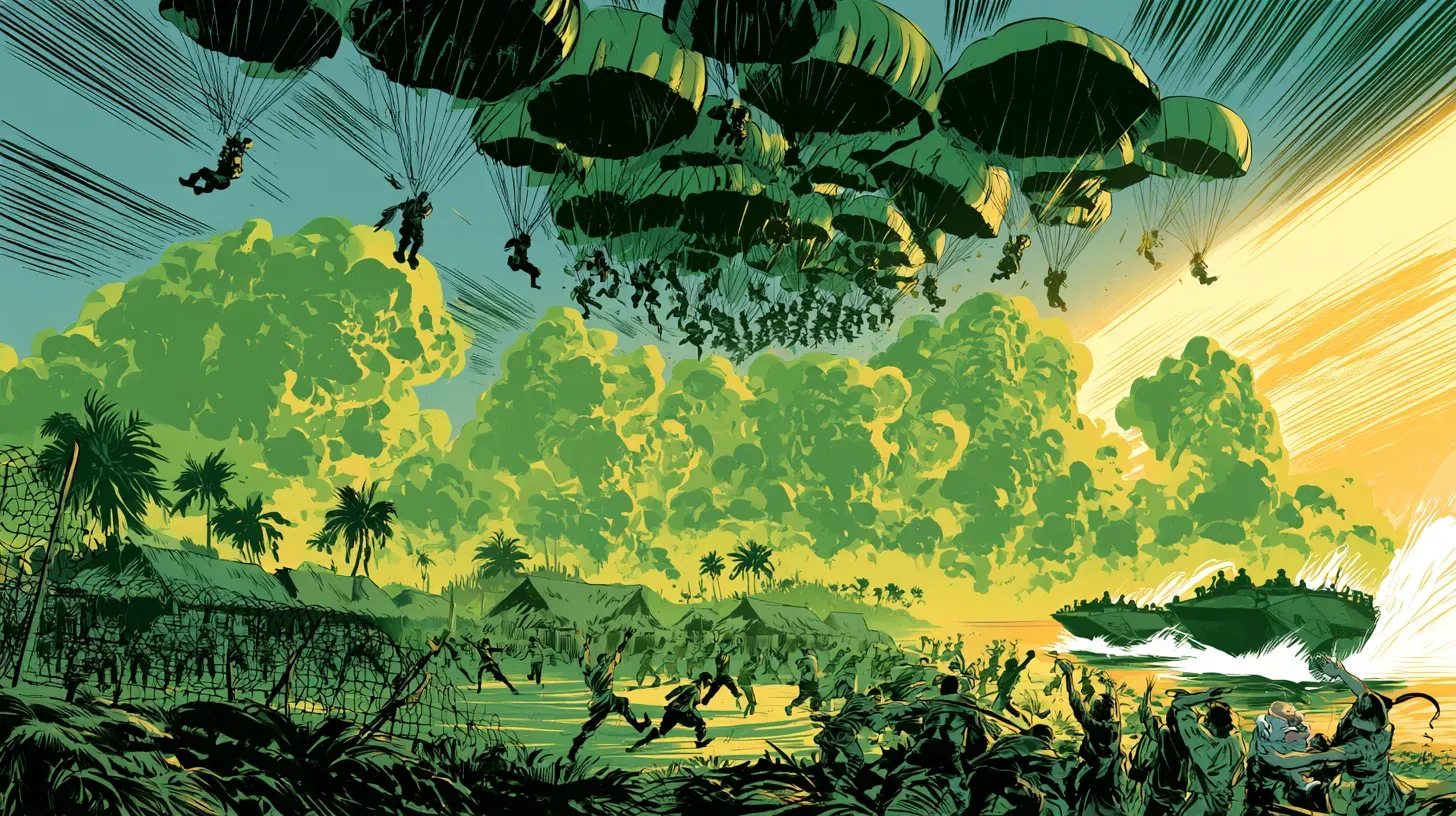
A few minutes before seven on the morning of Friday, February 23, 1945, the people held in the Los Baños internment camp, south of Manila, were coming out of their barracks to line up for roll call. The Japanese guards who were off duty were outside doing their morning exercises. A boy of twelve named Robert Wheeler looked up and saw transport planes over a field near the camp. Then two columns of white smoke rose behind the fence, and at seven o’clock exactly, by the account of the 11th Airborne Division, a parachute snapped open over the camp, and the air was filled with them.
What followed was the Los Baños raid, in which paratroopers, Filipino guerrillas and a column of amphibious tractors brought 2,147 starving civilians out from some fifty miles behind the Japanese lines. It was planned in under three weeks, with the help of a map an escaped prisoner corrected, and it was over by the middle of the afternoon. The documents of the men who planned it and the people who were inside show how it was done, and what it cost the town around the camp.
Rice by the gram
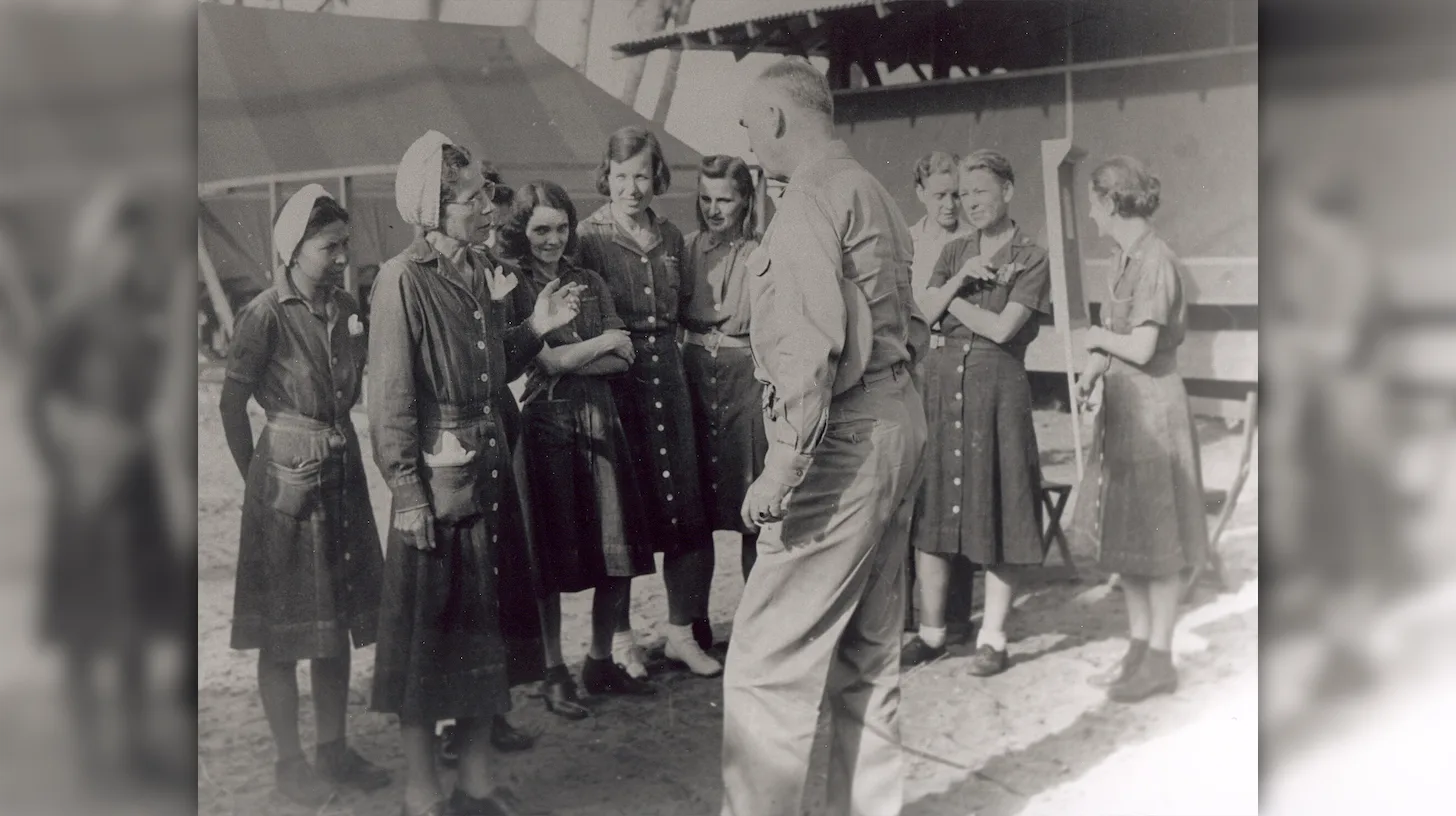
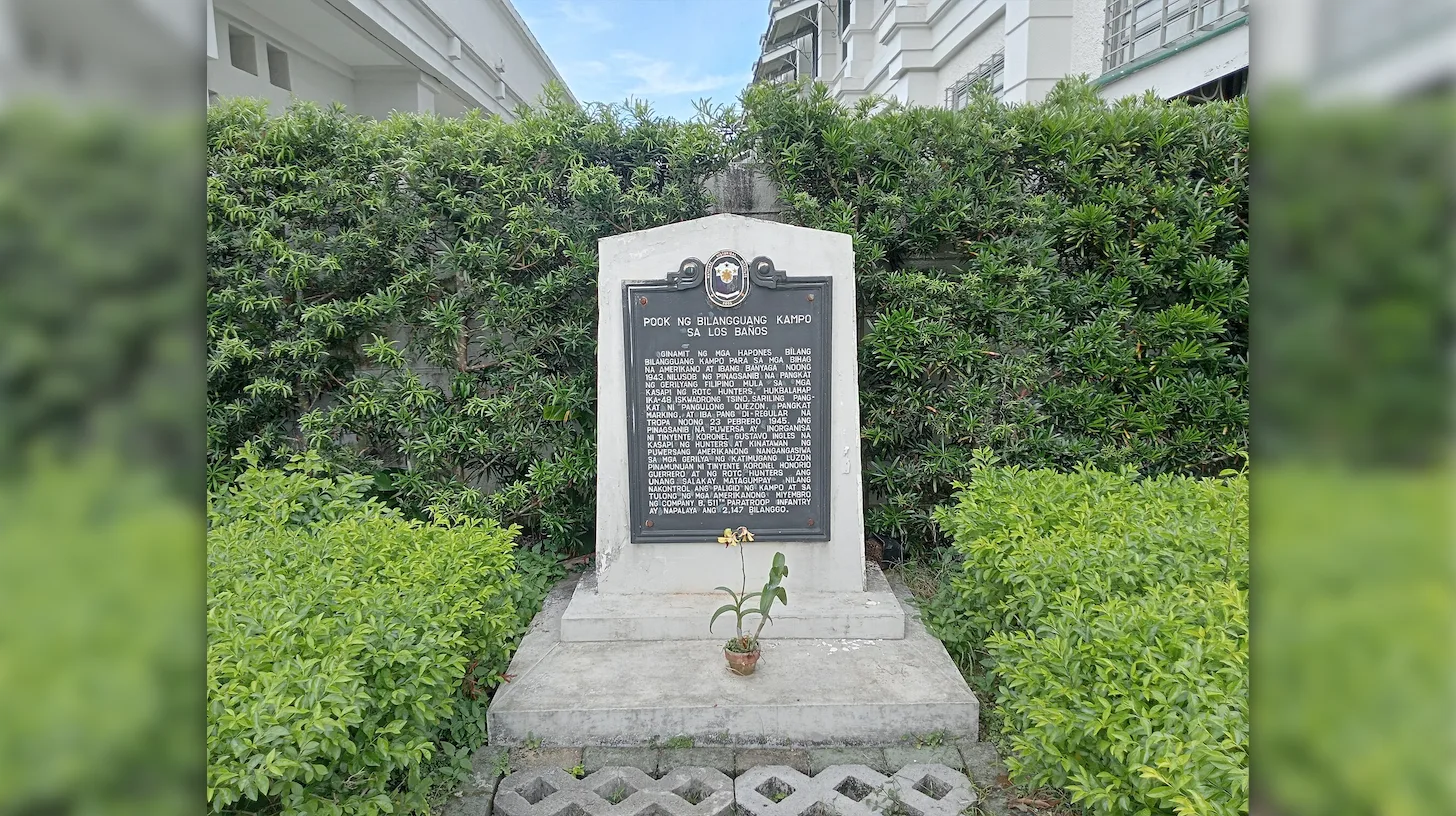
The Los Baños internment camp stood on the grounds of the University of the Philippines College of Agriculture, near the shore of a great lake, Laguna de Bay. The Japanese had sent the first 800 men there in May 1943 to build it, as an overflow for the crowded Santo Tomas internment camp in Manila, and they took a plot “of about 55 or 60 acres and put a barbed wire fence around it.” By the beginning of 1945 it held more than two thousand people, most of them American, among them priests, Maryknoll sisters, children and eleven nurses of the United States Navy, who ran a hospital inside the wire.
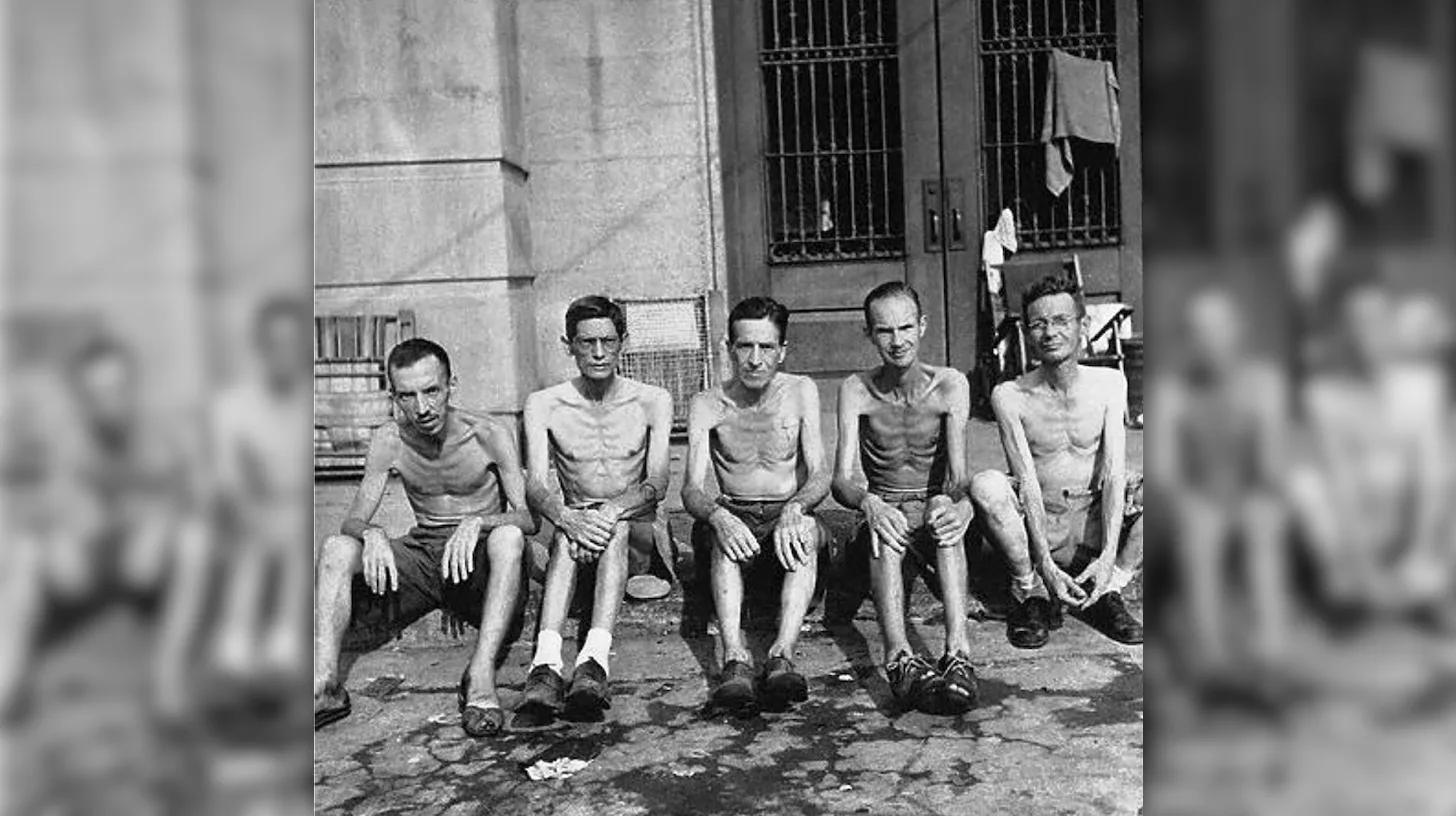
The hunger began in 1944. A Japanese warrant officer named Sadaaki Konishi came that year to take charge of supply, and one of the Navy nurses, Lieutenant Dorothy Still Danner, said he came “to make life miserable for us.” The meals fell to two a day of rice cooked down into a thin paste the internees called lugao, and by 1945 the ration had been cut to 500 grams of low-grade rice a day. A Catholic priest among them, Father William McCarthy, wrote that it forced them to eat “weeds, flowers, vines, salamanders, the pulpy insides of banana trees, and juicy black bugs.”
A teenage girl who kept a diary wrote in it, “I weigh 83 pounds.” Many of the internees weighed barely 100 pounds, and in January 1945 they were dying at the rate of two a day. A girl in the camp remembered afterward that whenever the American troops came closer, the rations were cut again.
The Americans were coming closer. On the evening of February 3 a flying column of the 8th Cavalry drew up at the gates of Santo Tomas in Manila, and a tank broke through the gates, and in the liberation of Santo Tomas almost 4,000 civilians were freed. The people at Los Baños were still behind the lines.
A map from Peter Miles
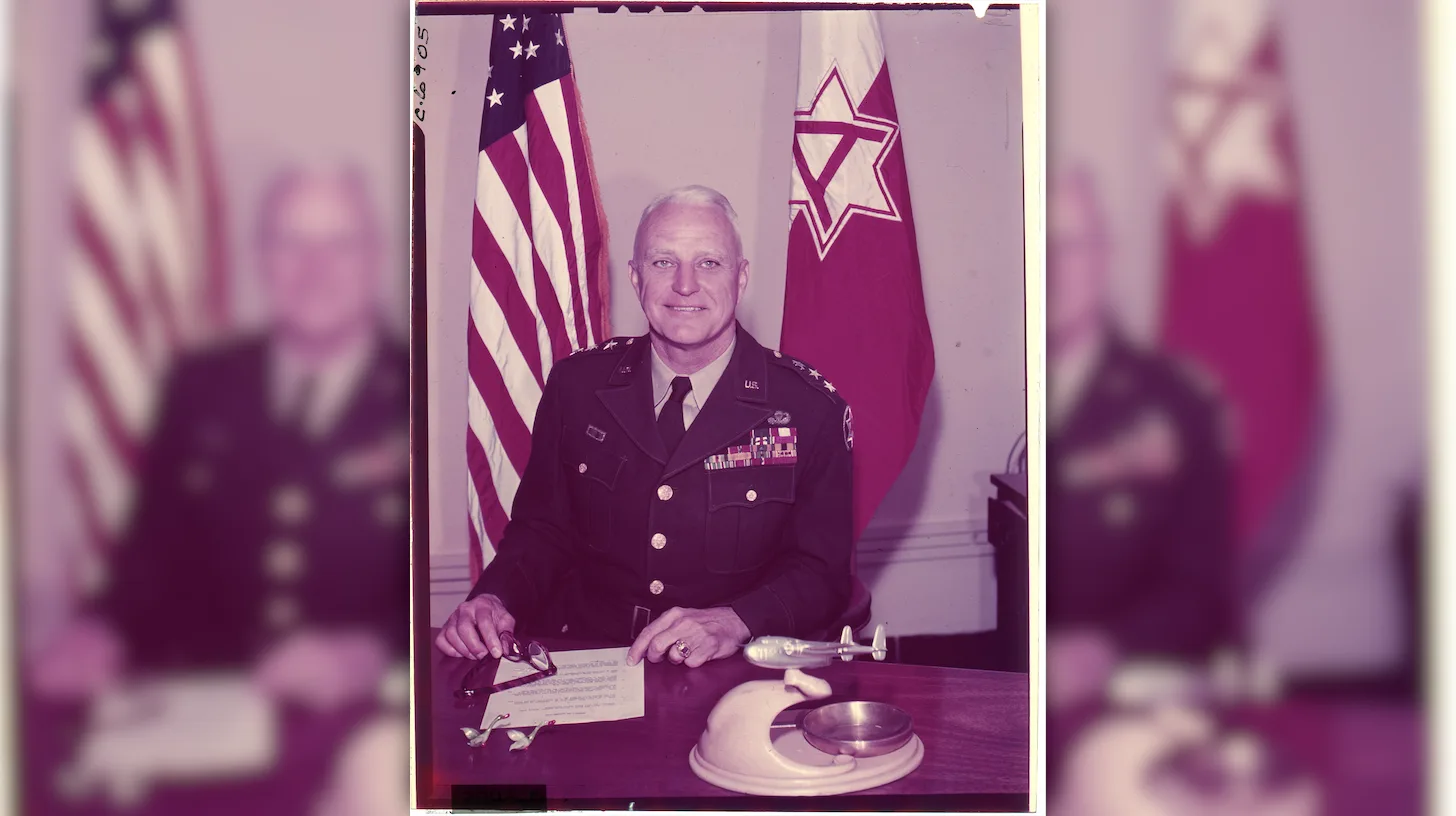
That same day the commander of the 11th Airborne Division, Major General Joseph M. Swing, was ordered to attack the camp “as soon as possible.” He was fifty, a West Point man of the class of 1915, the same as Eisenhower’s, and a writer who studied the raid described him as “tall, slender, prematurely white-haired, eagle-eyed, sharp-featured.” His division was fighting south of Manila, and the camp lay some fifty miles behind the Japanese lines.
His staff questioned guerrillas and people from the area for days. Then, a few days before the raid, an engineer named Peter Miles, who had slipped out of the camp and joined a guerrilla scout, came into the division’s command post at Parañaque and corrected their map. He showed them the guardhouses, the posts of the sentries, the blockhouses and pillboxes armed with machine guns, and the daily routine of the guards, who did their exercises each morning at seven with their rifles put away. Filipino guerrillas of the Hunters ROTC, a band that had begun with former cadets of the Philippine Military Academy, would join the attack.
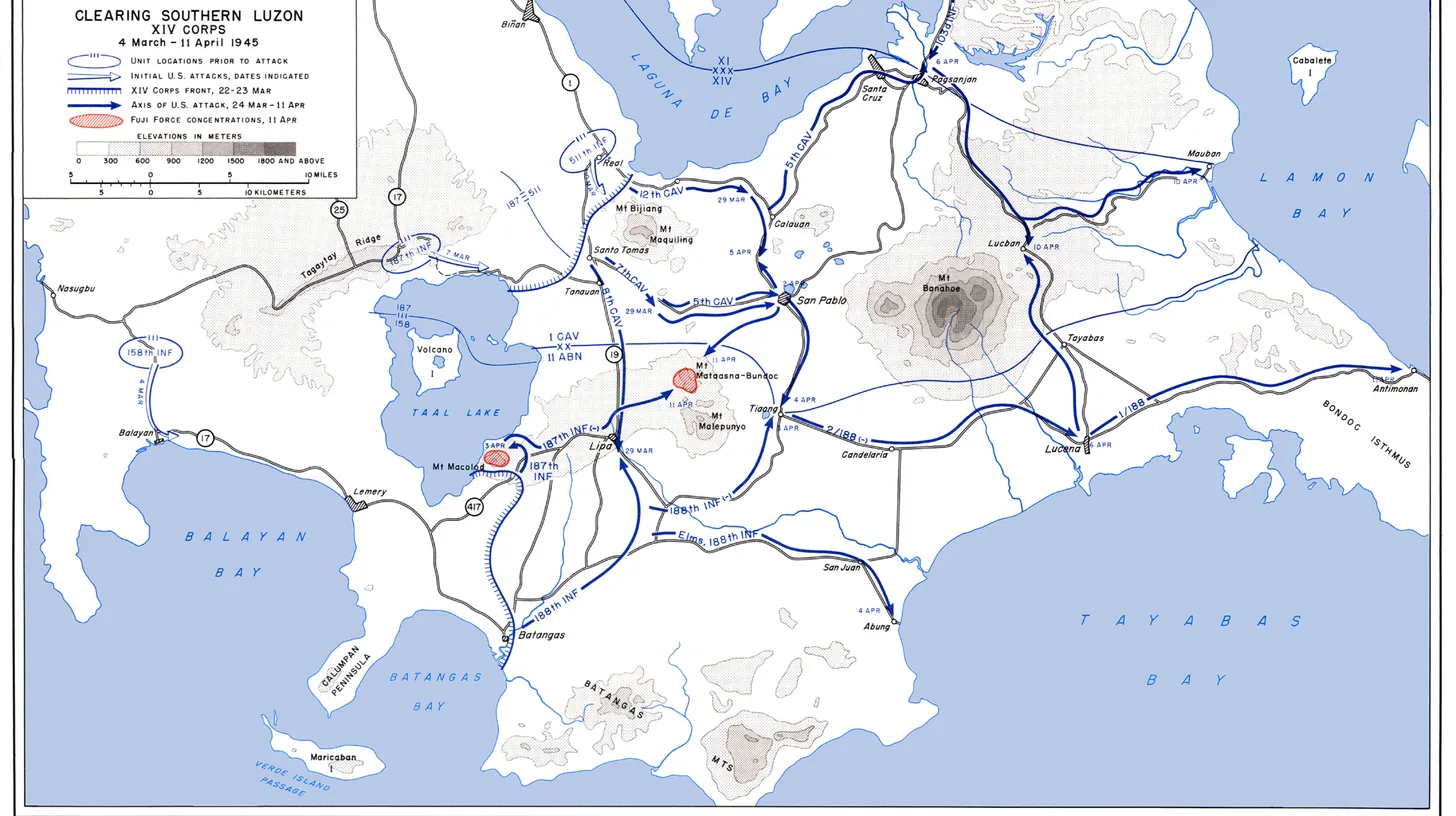
The plan had several parts, and each had to happen at once. A reconnaissance platoon and guerrillas would cross the lake by night, creep up to the sentries and mark a drop zone with smoke. One company of paratroopers, B Company of the 1st Battalion, 511th Parachute Infantry, under First Lieutenant John Ringler, who was twenty-six, would jump beside the camp from nine C-47 transports. Ringler planned the jump from about 500 feet. The rest of the battalion, under Major Henry Burgess, would cross Laguna de Bay in amphibious tractors, called amtracs, and carry the internees back across the water, while another force pushed down the road at the San Juan River to keep the Japanese busy.
The corps commander approved it for the 23rd. On the 21st a radio message reached the division from the guerrillas, in capitals. “URGENT HAVE RECEIVED RELIABLE INFORMATION THAT JAPS HAVE LOS BANOS SCHEDULED FOR MASSACRE.” No source shows whether the report was true.
Hundreds of trucks
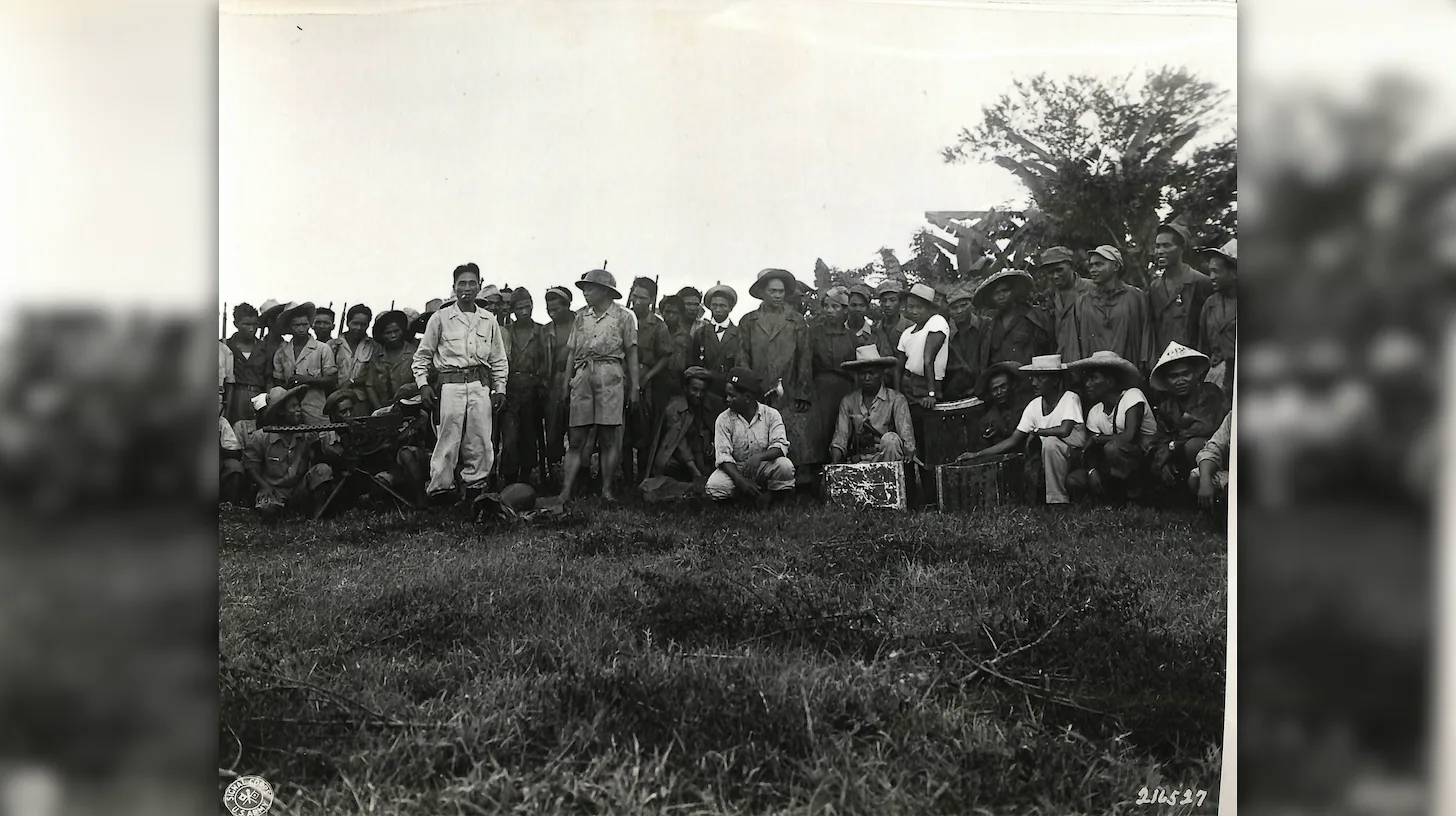
The reconnaissance men went first. On the stormy night of the 21st, about thirty of them and some eighty guerrillas crossed the choppy lake in native boats called bancas and landed before dawn on the far shore. On the night of the 22nd they started for the camp across the flooded rice paddies, and it took each man about seven hours of plodding to come within reach of the guard posts, some of them as close as three feet from a sentry.
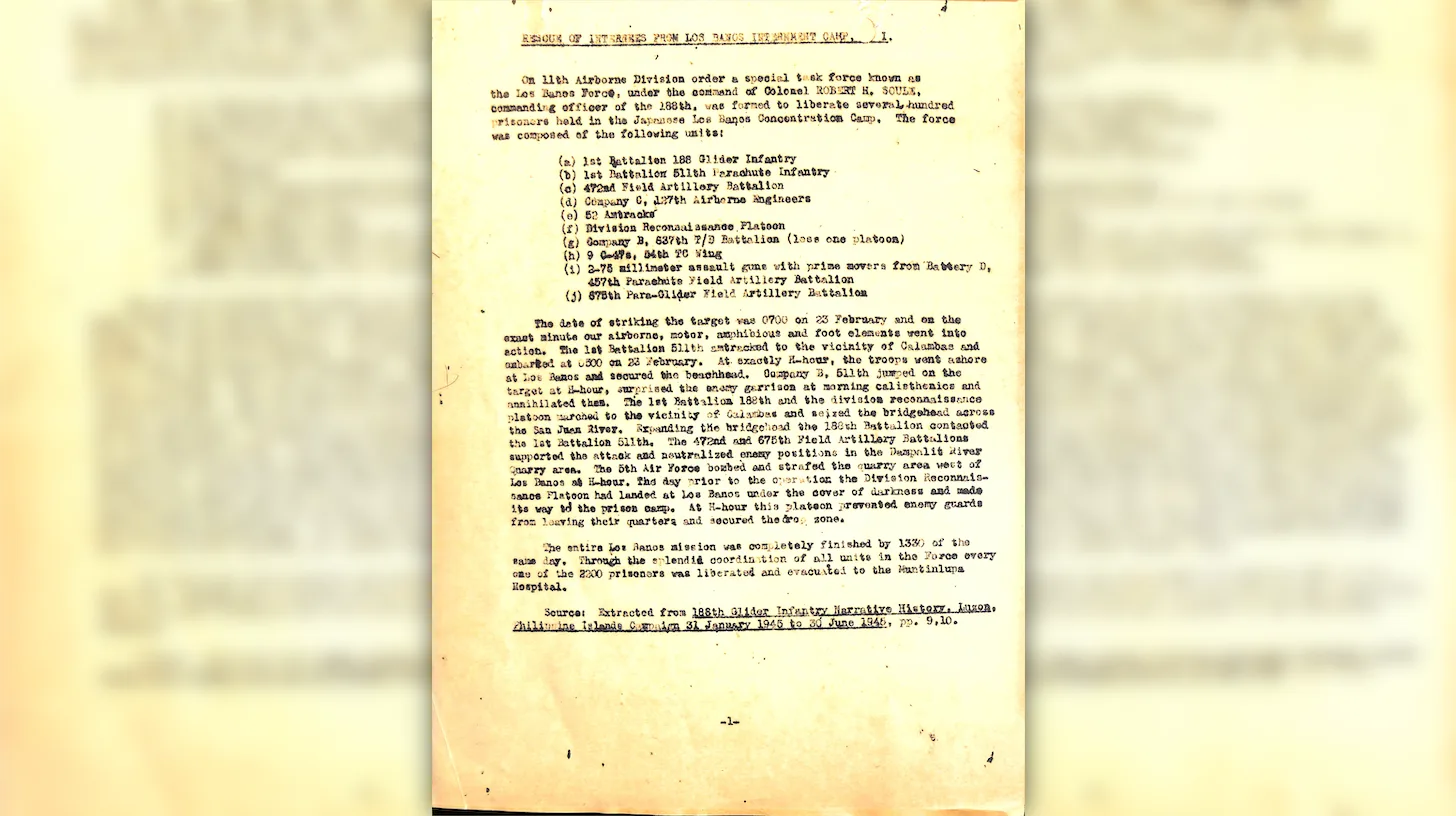
There was no moon. On the beach at Mamatid, on the near side of the lake, the amtracs of the 672nd Amphibian Tractor Battalion were loaded with Burgess’s men, and before dawn they started across. The division’s history counted 59 of them, and most later accounts give 54. Their course was seven and four-tenths miles long, with a turn at a right angle in the middle, and they steered it by compass in the dark. At Nichols Field the paratroopers of B Company slept under the wings of their planes.
At about midnight the pilots of night fighters reported that they had seen hundreds of trucks, with their lights blazing, entering the camp. Swing weighed the report, and the division’s history says what he decided: after due and deliberate consideration, the General “decided to ignore the reports, and not pass the message on to the participating troops.” Then he drove past New Bilibid Prison, where the trucks waited with their lights on to receive the people from the camp, and went down to watch the last of the amtracs go into the dirty, tepid, shallow water of Laguna de Bay.
Seven o’clock
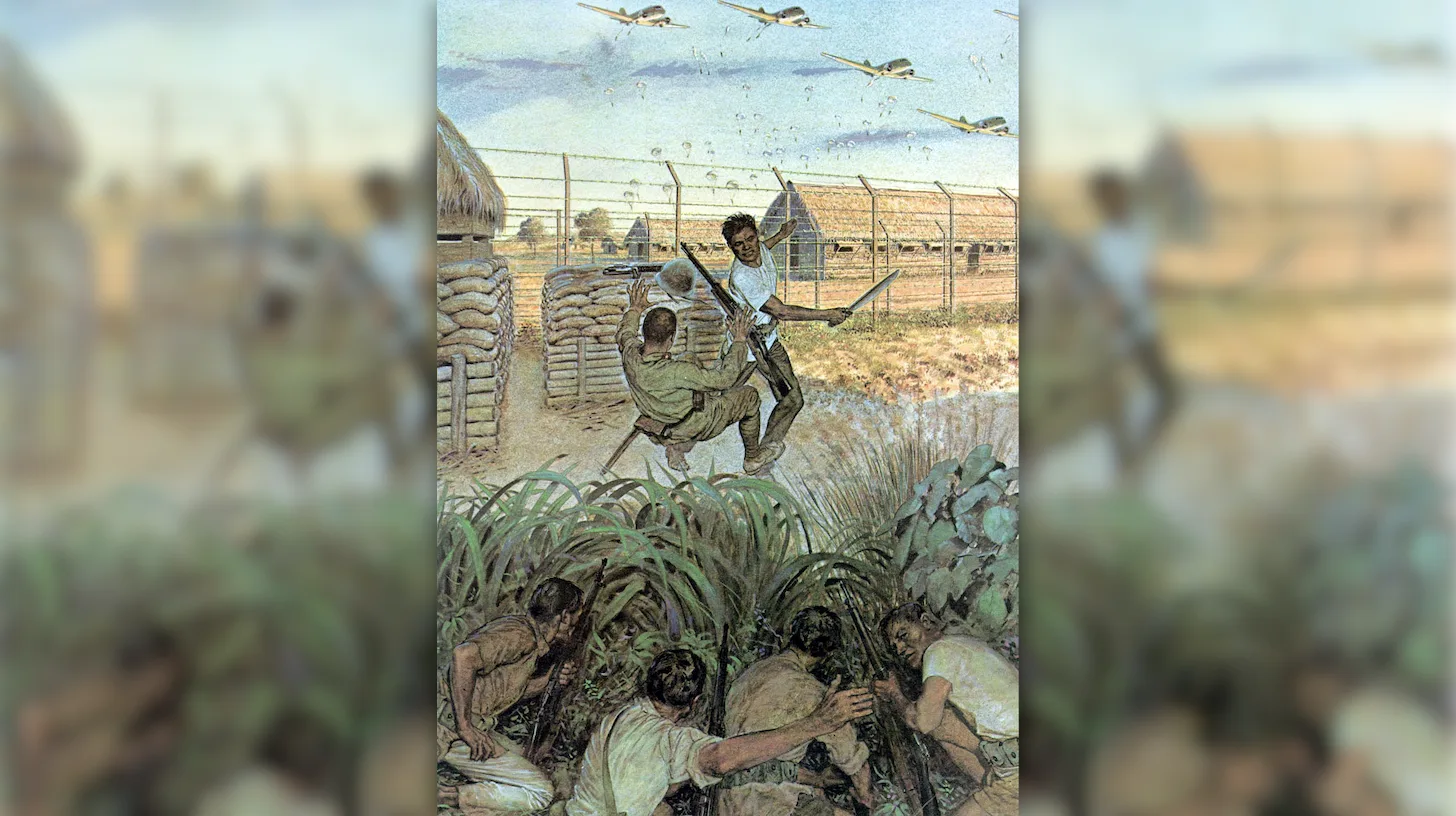
Thirty seconds before seven, the history says, two white columns of phosphorus smoke rose from the drop zone behind the camp, and two more from the beach. In the lead plane the co-pilot threw the switch for the green jump light. On the ground the shooting had already begun, two or three minutes early, when a sentry fired and the scouts and guerrillas opened up on the machine-gun posts. At seven the first chute opened, and in under a minute B Company was down into a small field with trees on three sides, a railroad track on the fourth and a high-tension wire across it. Inside the wire, Danner was in the hospital feeding a newborn baby when the planes came over.
“Nobody paid any attention to them. Then, all of a sudden we saw a formation of aircraft coming over. As the paratroopers started jumping out, the guerrillas and soldiers around the guard houses began killing the Japanese there.”
The guards at exercise were caught in the open, and internees remembered them in their G-strings. The scouts set fire to the barracks where the guards’ arms and ammunition were stored. Some internees went on eating breakfast with the bullets going over, and the Wheeler boy ate his under his bunk. The firing was mostly over in about fifteen minutes. At seven the first wave of amtracs had climbed up onto the beach, under scattered machine-gun fire from two hills, and they came on to the camp and crashed through the fence near the front gate. Danner remembered the look of the men who came in.
“Oh, we never saw anything so handsome in our lives. These fellows were in camouflage uniforms wearing a new kind of helmet, not those little tin pan things we were used to seeing. And they looked so healthy and so lively.”
Out through the fire
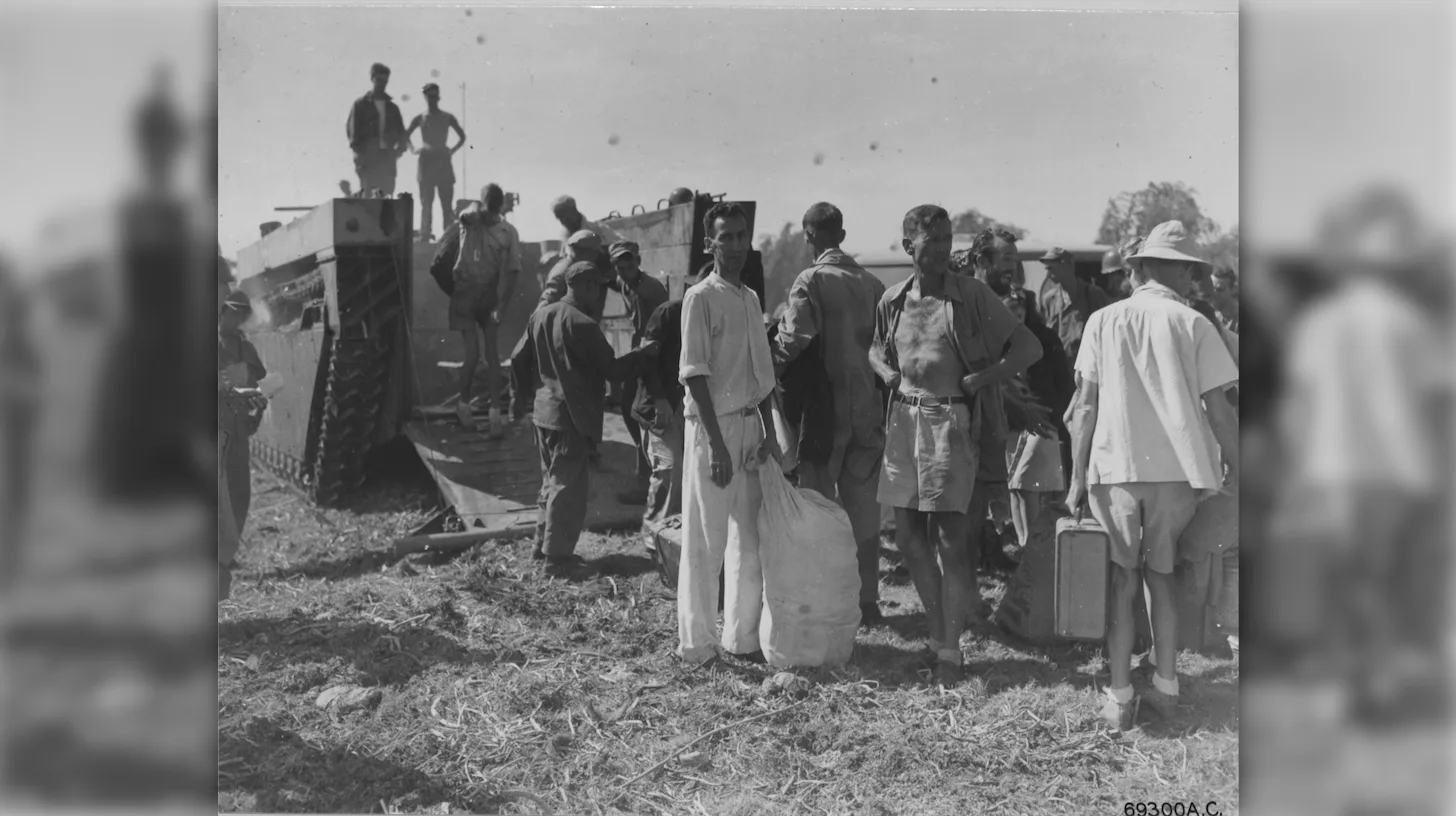
The hard part was getting two thousand people to leave, and the soldiers at last set fire to the barracks to get them moving. A Maryknoll sister wrote that they thought each soldier “an angel, and a giant one at that.” An elderly woman told one of them that night after night she had dreamed of being rescued, always by Marines. “You’re not Marines,” she said. The chief nurse, Lieutenant Commander Laura Cobb, told her nurses, “Protect the babies with all your life,” and one of them carried a baby born three days before onto an amtrac under a hat. Father McCarthy walked out with the rest.
“With many others we walked over the highway of freedom against a background of flames, as one straw barracks quickly followed another in an all-consuming fire fanned by the morning breeze.”
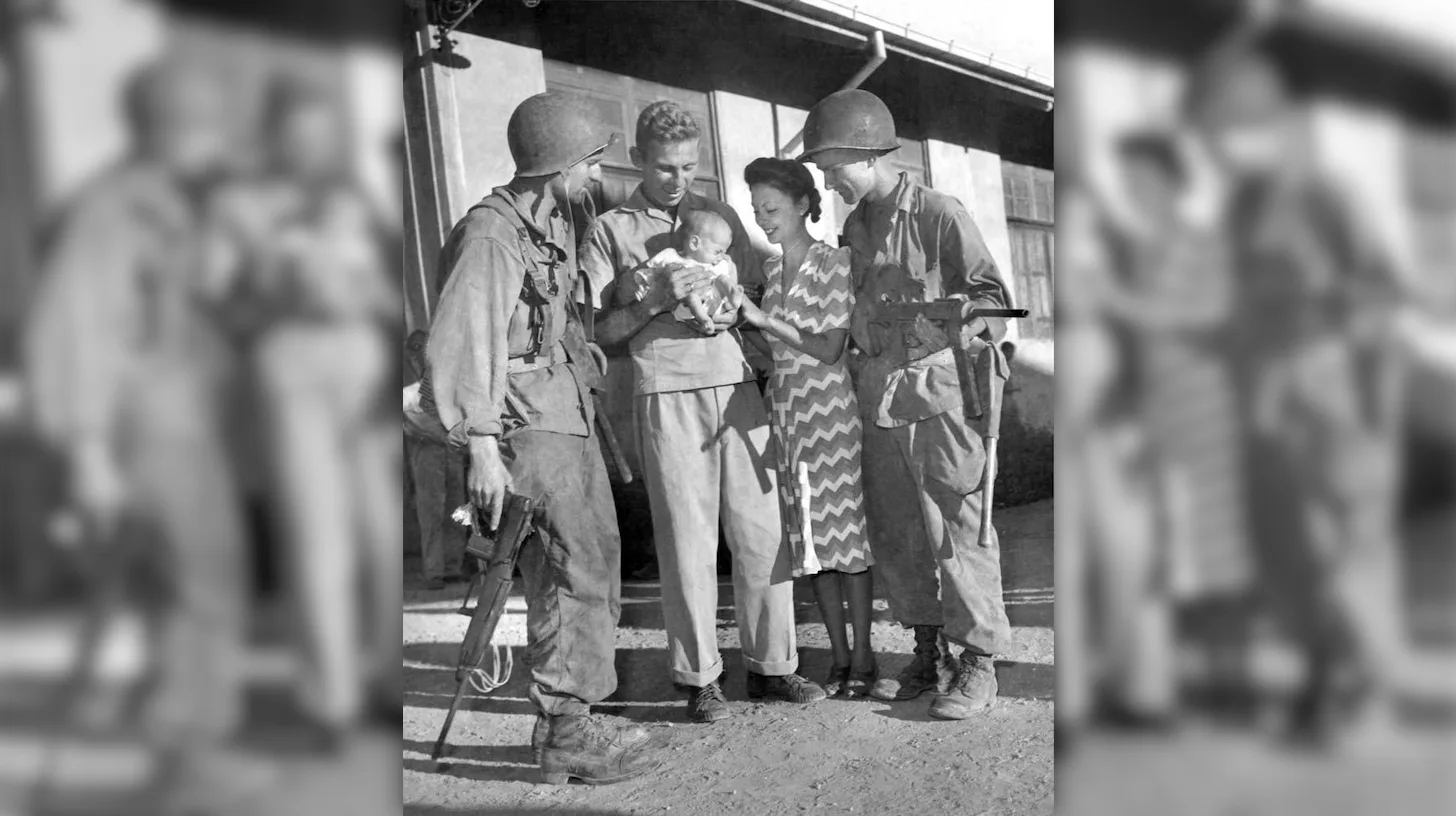
Burgess had radioed that he could hold the beach until the amtracs made one round trip, and they would need two. Over 130 of them could not walk and had to be carried, and he described the scene.
“The results were spectacular. Internees poured out and into the loading area. Troops started clearing the barracks in advance of the fire and carried out to the loading area over 130 people who were too weak or too sick to walk.”
By noon he held the beach with about 420 men and some 720 internees still waiting. Swing, circling overhead in a small plane, suggested by radio that the battalion stay and hold the ground, and Burgess, by his own account, was so startled that rather than reply he turned off his radio. The amtracs came back about one o’clock and took everyone, internees, soldiers and pack howitzers, and by three in the afternoon the beach was empty. At New Bilibid, a girl of fourteen remembered, the first meal was vegetable soup straight from the can, with no water added, and crackers.
What came after
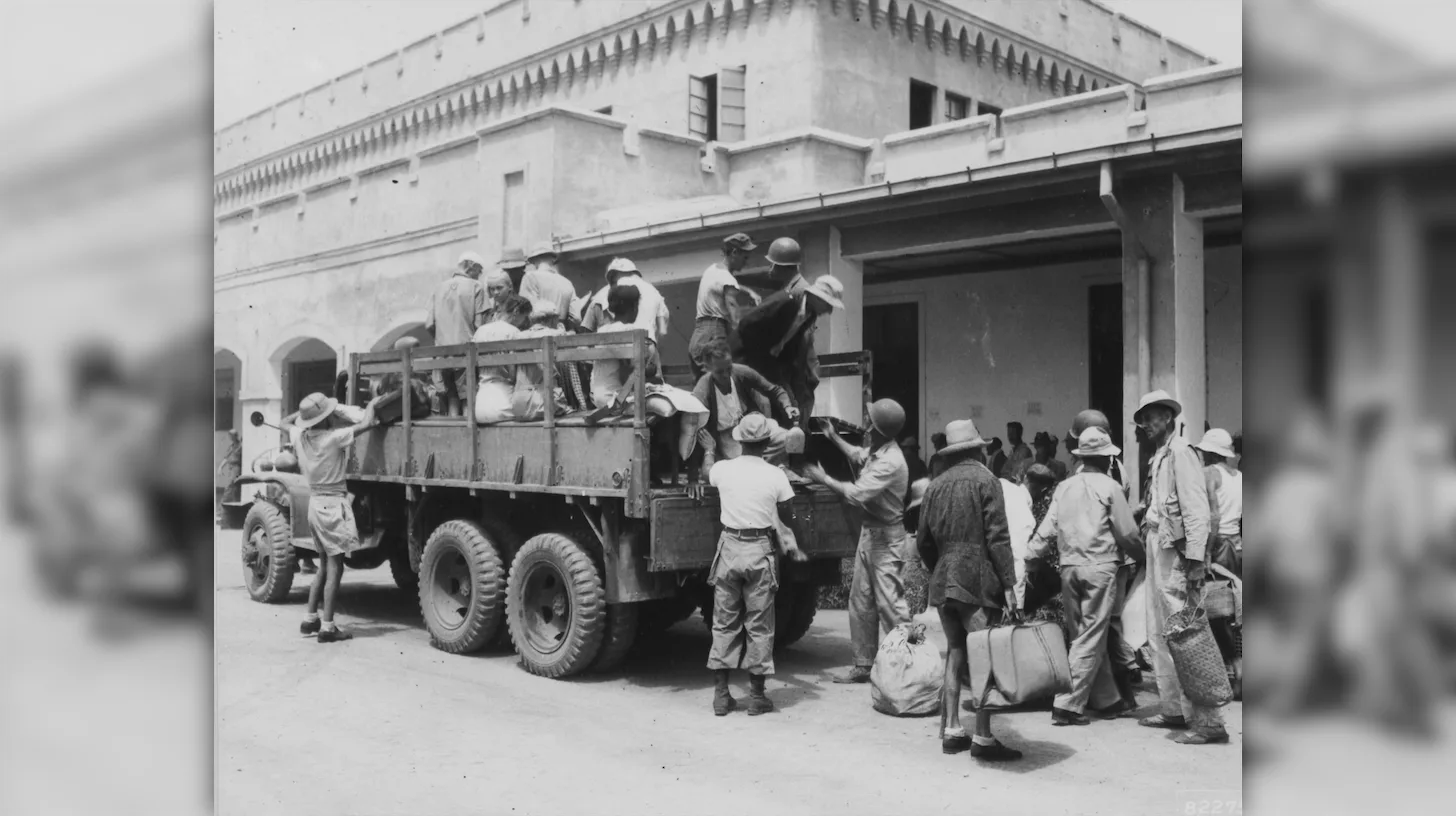
The division’s report that evening counted 2,147 people brought out. Of all the internees, “only one was wounded, and he very lightly.” Two Americans were killed in the division’s count, along with two guerrillas of the Hunters, and the history put the Japanese dead at 247, though later writers give much lower figures. Ringler said afterward that he never understood how there could be live fire coming in from four sides and not a single casualty inside the camp. General Douglas MacArthur radioed the division that the operation “will gladden the hearts of soldiers throughout the world.” The same day, on Iwo Jima, Marines raised the flag on Mount Suribachi, and the rescue at Los Baños was mostly lost in that news.
The people who had helped the raiders stayed behind. In the days that followed, Japanese troops and Filipino collaborators came into the barrios around Los Baños, and Burgess estimated that more than 1,500 Filipinos had been killed in revenge. Whole families had been tied to the stilts under their houses, and the houses set on fire. After the war Konishi was tried and executed as a war criminal.
Among the people freed that morning was Frank Buckles, who would later be known as the last surviving American veteran of the First World War. Some fifty years after the raid, General Colin Powell sent a letter to the division’s veterans’ association, as Military.com reported it: “I doubt that any airborne unit in the world will ever be able to rival the Los Baños prison raid.”
The camp itself burned on the day of the raid, and its ground is the campus of the University of the Philippines Los Baños again. The first 800 prisoners had come there to build it in 1943. Nothing of the barracks was left.