14 min read
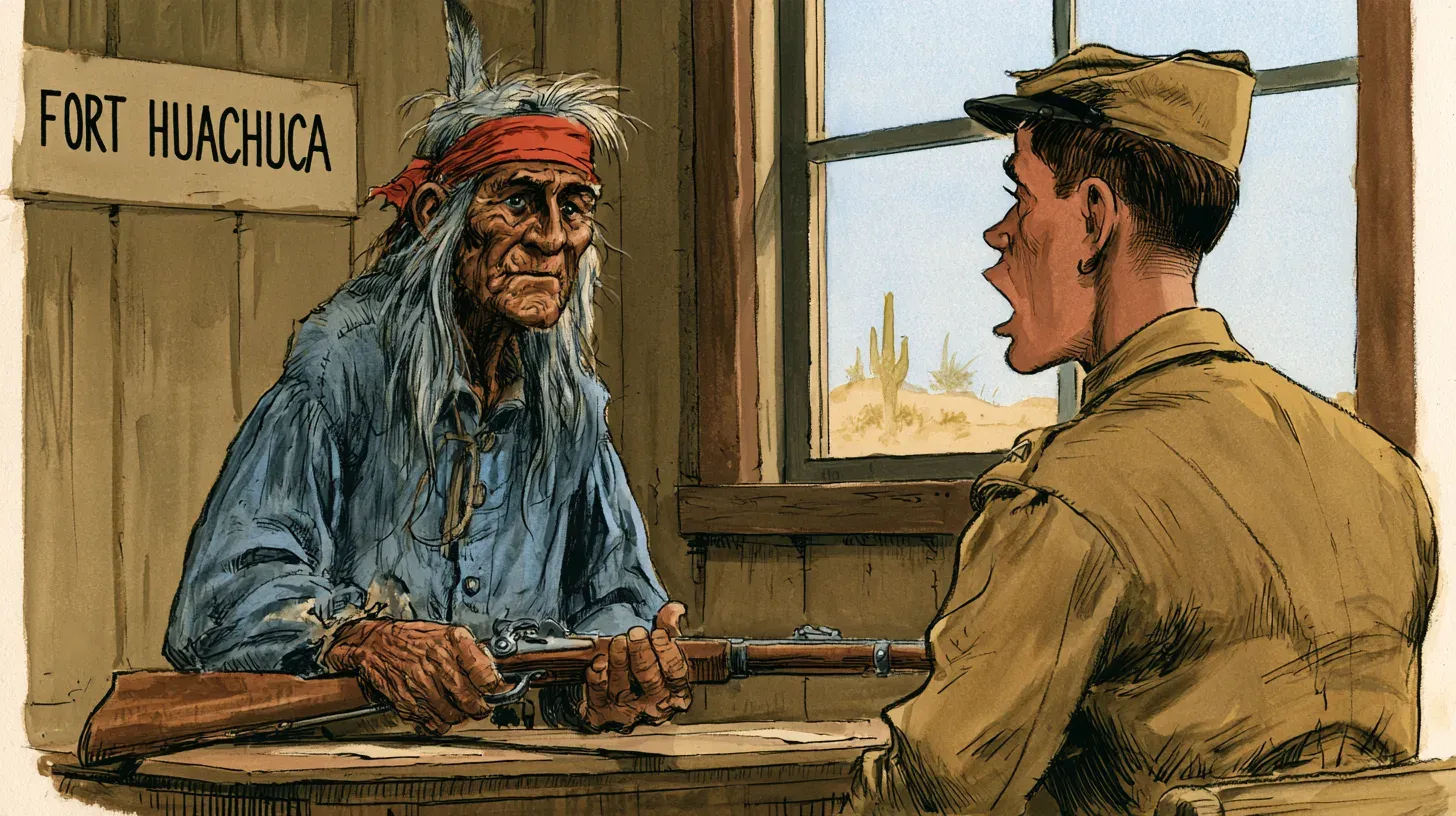
On Thursday, August 28, 1947, at Fort Huachuca in the southeastern corner of Arizona, four men in Army uniform stood at attention for their last muster, and the post commander, Col. William L. Roberts, congratulated them. They were Sinew Riley, William Major, a man the Army carried on its rolls as Kessay Y-32, and Ivan Antonio, all of them Apache, and they were the last four Indian scouts in the United States Army. Just before the muster they had been made sergeants, so that their pensions would be larger, and Riley had been made a staff sergeant.
When the post announced it two days later, the Associated Press put it this way: “The last of the United States Army’s Indian scouts reached the end of the trail.” It was two years after the end of the Second World War and eighty-one years after Congress had first allowed the Army to hire Indians as scouts. In those years the Apache scouts had led soldiers to their own people’s hiding places, won the Medal of Honor, been hanged for mutiny and been sent to prison in Florida for their loyalty. Riley, the staff sergeant, was the grandson of one of the men the Army hanged.
One thousand Indians to act as scouts
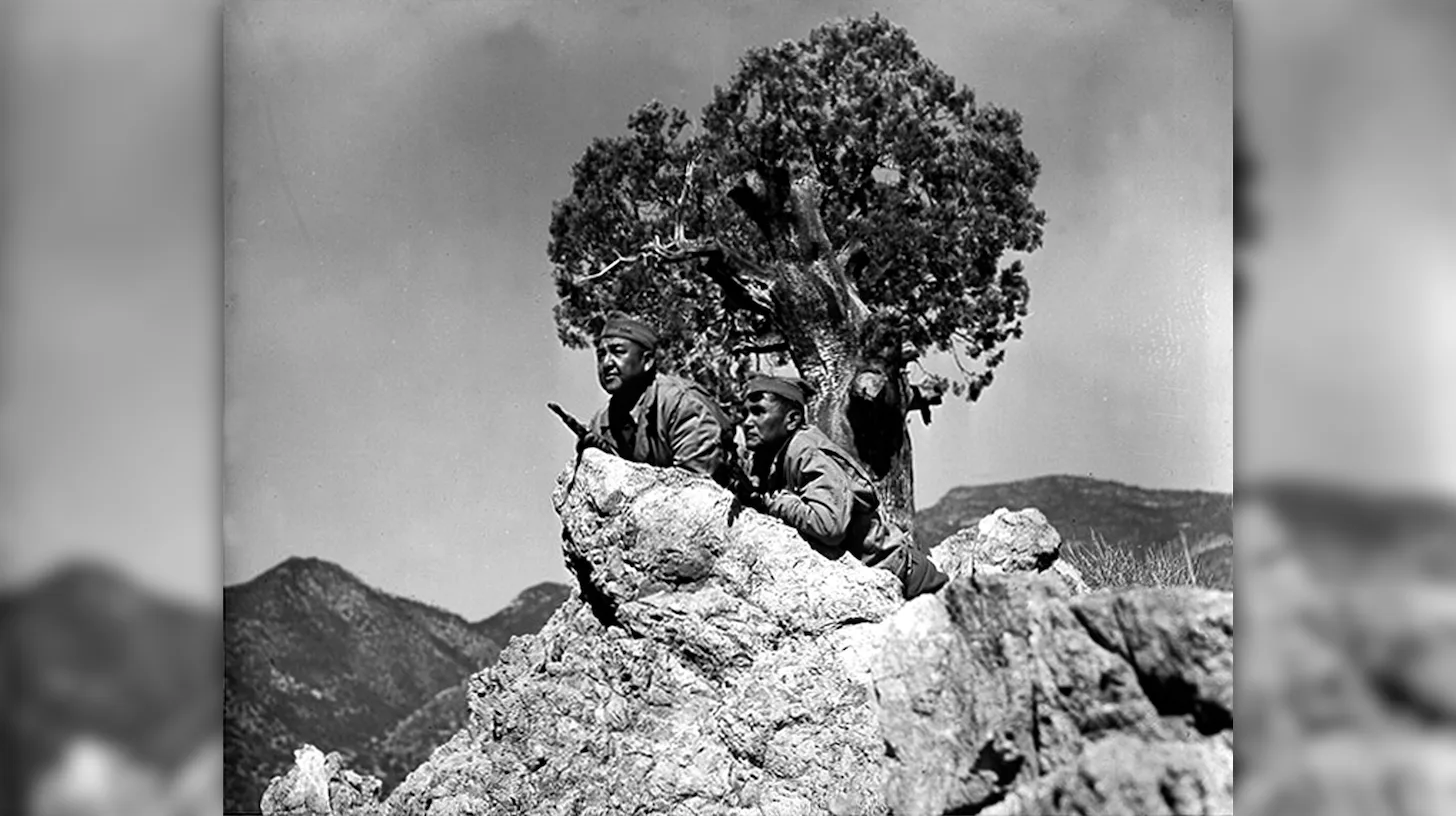
The scouts began with an act of Congress approved on July 28, 1866, which reorganized the Army after the Civil War. One section of it authorized the President to enlist “a force of Indians, not to exceed one thousand, to act as scouts,” at the pay of cavalry soldiers, to be discharged when the department commander no longer needed them. The name became attached above all to the Apache, and to the general who used them in Arizona, George Crook.
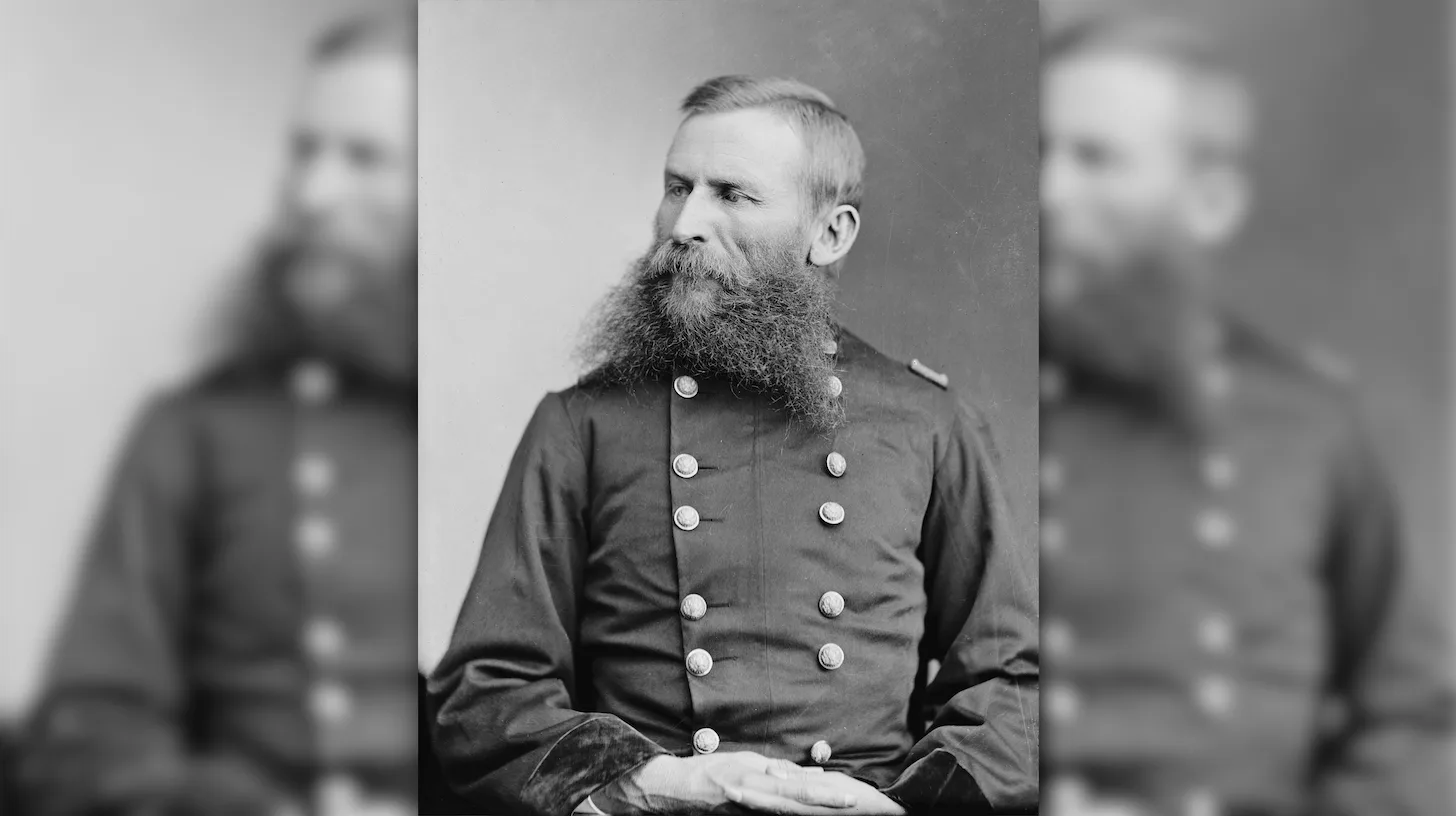
Crook came to Arizona in 1871 and made Apache and Yavapai scouts the center of his method, setting them to find the bands that the soldiers could not. He explained it years later to a newspaper reporter at Fort Bowie, just before he left the territory. It had been his policy, he said, “to use them against each other.” He put it another way too, in a line that the Army and Navy Journal reprinted that May.
“Nothing breaks them up like turning their own people against them.”
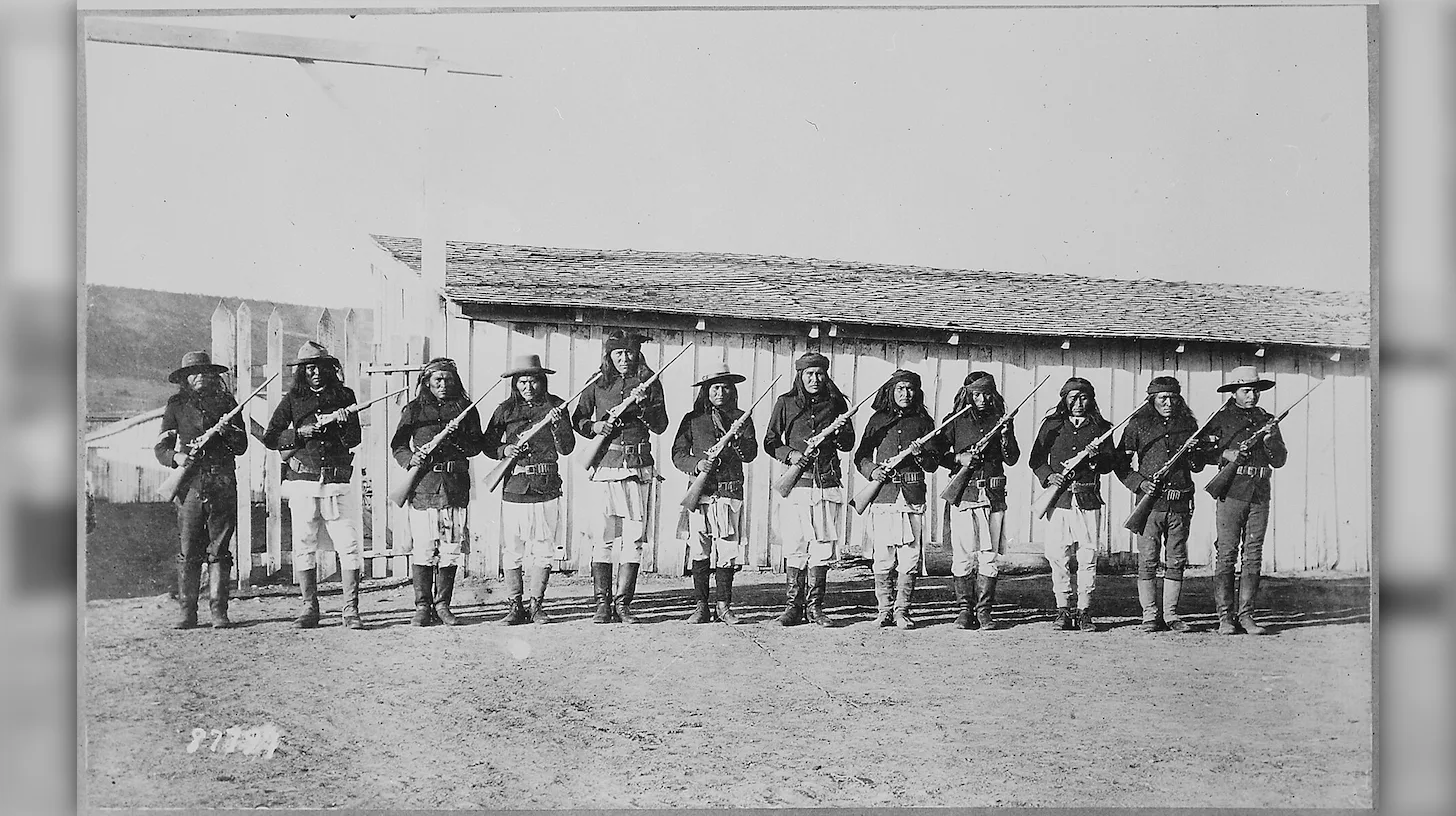
His aide, Lt. John G. Bourke, remembered the first Apache couriers he ever saw coming into camp in Arizona, their only clothing “a muslin loin-cloth”, pointed-toed moccasins and a hat of hawk feathers. In the photographs of the 1880s the scouts wear Army blouses and cartridge belts, and they were paid as cavalry. Each was given a number on the company rolls, a custom that lasted long enough to produce, in 1947, a sergeant named Kessay Y-32.
A star over the Salt River
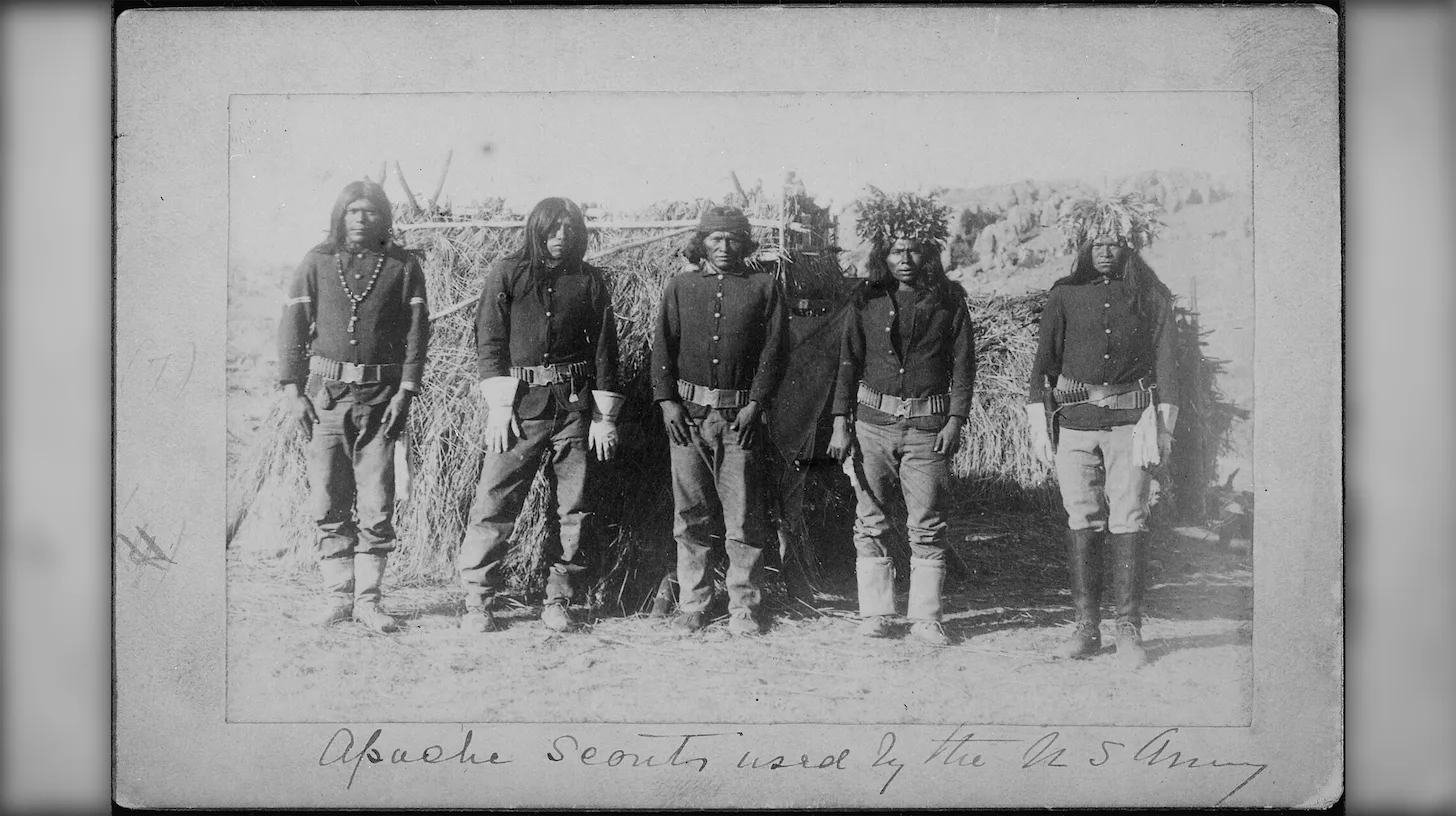
On the evening of December 27, 1872, Crook’s troops were camped in a narrow canyon at the foot of the Mazatzal Mountains, and one of the Apache scouts, Nantaje, whom the soldiers called Joe, offered to take them to a band of raiders hiding in a cave above the Salt River, the cave where he had grown up. He would not start, Bourke wrote, until a certain star appeared above the eastern horizon, and he warned the officers that if they were seen on the way, not one of them would come back alive. When they doubted him, “Wait and see,” Bourke wrote, “was all the reply he would vouchsafe.”
They went in the dark, through cold so bitter that a man who had to cough wrapped his head in his blanket first. Once they struck a match under a blanket to read a track in the trail, and it was the track of a great bear. At first light Nantaje led a dozen marksmen down a slippery, rocky path to the mouth of the cave, where men were dancing around a fire while women cooked. The volley came on an order given in a whisper. Later that morning, as the fight went on, the guides shouted a warning that Bourke set down: “Look out! There goes the death song”
When it was over, the soldiers took eighteen captives, women and children, and the women of the San Carlos agency afterward mourned seventy-six dead. Bourke called them Apaches, but they were Yavapai, and among them, he admitted, were several babies killed by glancing bullets. The place is known as Skeleton Cave. In 1875 Nantaje and nine other Apache scouts of that winter’s campaign received the Medal of Honor, all with the same citation: “Gallant conduct during campaigns and engagements with Apaches.”
Three scouts on the gallows at Fort Grant
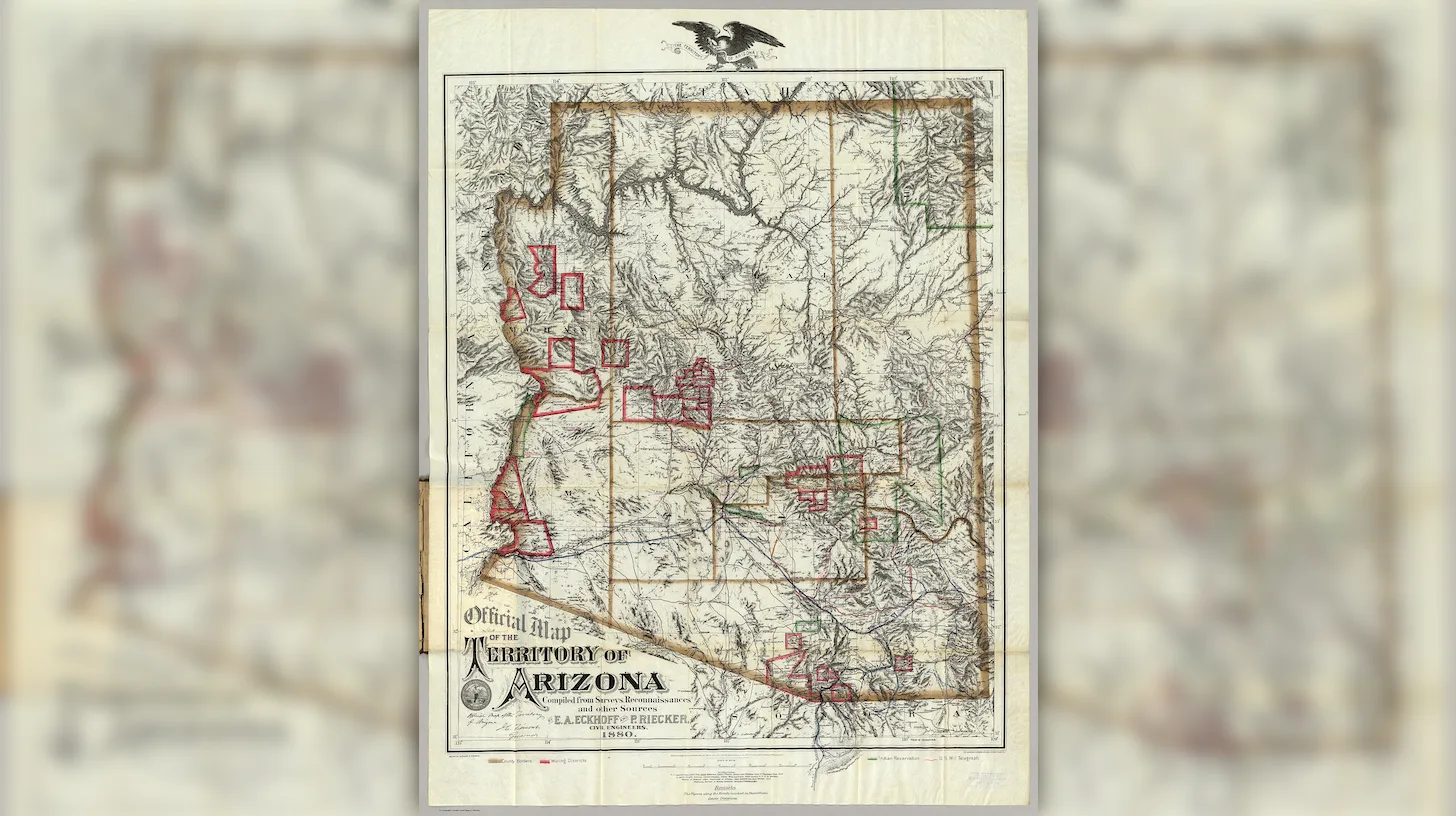
On August 30, 1881, on Cibecue Creek, soldiers arrested an Apache medicine man, and as the troops made camp for the night, some of their own scouts turned their rifles on them. The Army lost Capt. E. C. Hentig and four soldiers, and the medicine man was killed. Lt. Thomas Cruse, who commanded the scouts, wrote that it was a scout sergeant, Dandy Jim, who shot Hentig. Three scouts were sentenced to hang: Dandy Jim, Skitashe and an older man named Dead Shot. Cruse said he had always regretted the fate of Dead Shot and Skippy, as the soldiers called Skitashe: “The former was the sage of the Indian company, the latter our clown and wag.”
They were hanged at Fort Grant on March 3, 1882. An Associated Press dispatch from the fort described the day. The three ate little at breakfast and did not once look toward the gallows. At twenty past noon a trumpet sounded, the troops marched to within twenty yards of the scaffold, and the sentences were read. The men climbed up smiling. They said, the dispatch reported, that “it was not right to hang them,” that the white men had given them good clothes and food and now were going to take all of it away. Dead Shot said that he had suffered a good deal in this world and would soon be at rest. The trap fell at 1:05, before about two hundred people, most of them soldiers.
That same day at San Carlos, Cruse and Will C. Barnes both wrote, Dead Shot’s wife hanged herself from a tree, leaving two small boys. Barnes signed a bond of $500 to take care of them, and the cowboys nicknamed the elder “Riley.” That boy later went out on scouts with the troops himself, by Barnes’s account, and his son was Sinew Riley.
Of more value than all other troops
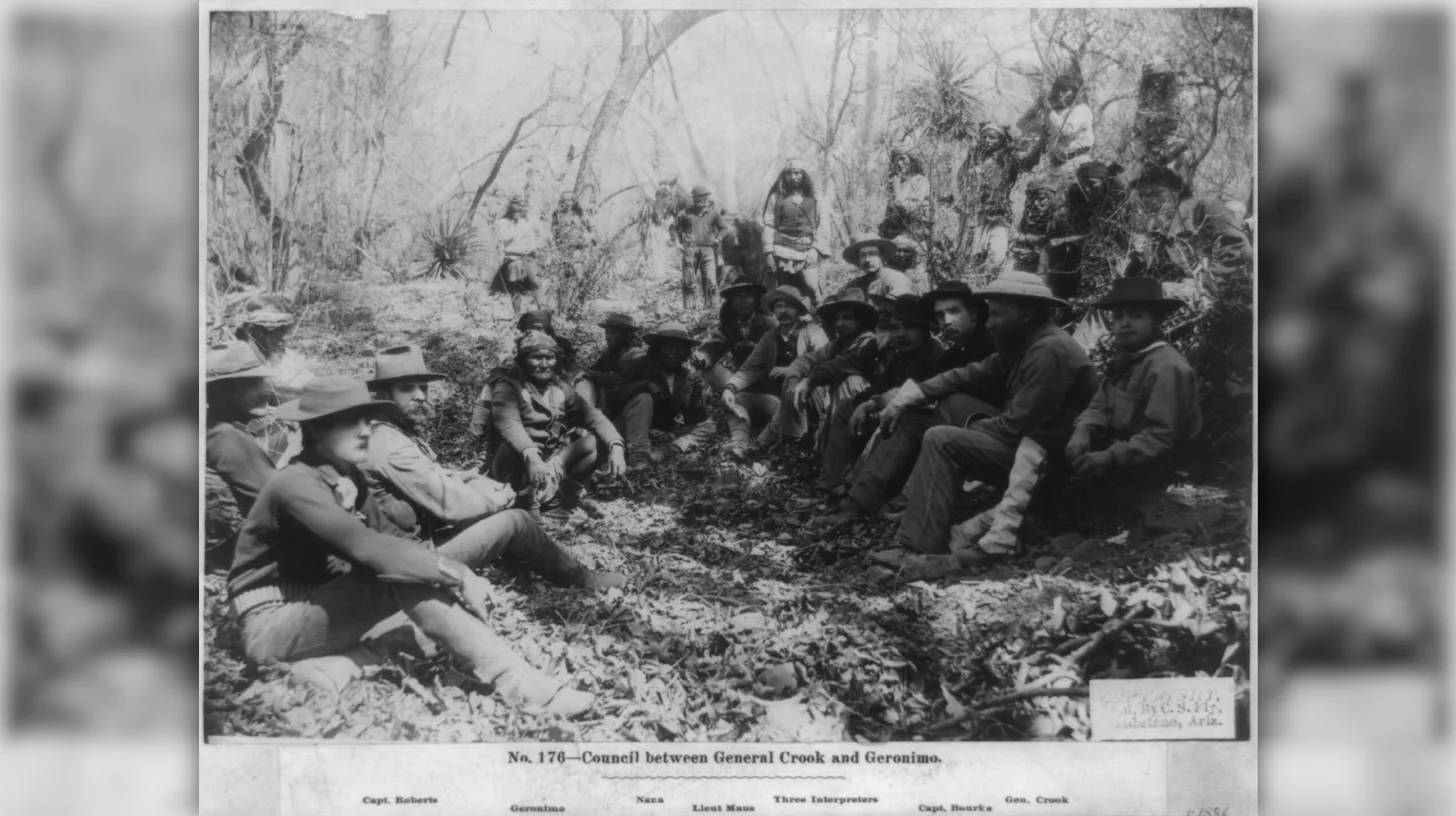
The scouts did the work that ended the Apache wars. In May 1883 Crook took 193 Apache scouts into the Sierra Madre of Mexico, with only one company of regular cavalry beside them, and came back with the surrender of the Chiricahua. When Geronimo broke out again in 1885, Crook sent Chiricahua scouts after him, men from Geronimo’s own people. In his report of 1886 Crook wrote that these scouts had done most excellent service, and that they had been of more value in “hunting down, and compelling the surrender of the renegades than all other” troops engaged.
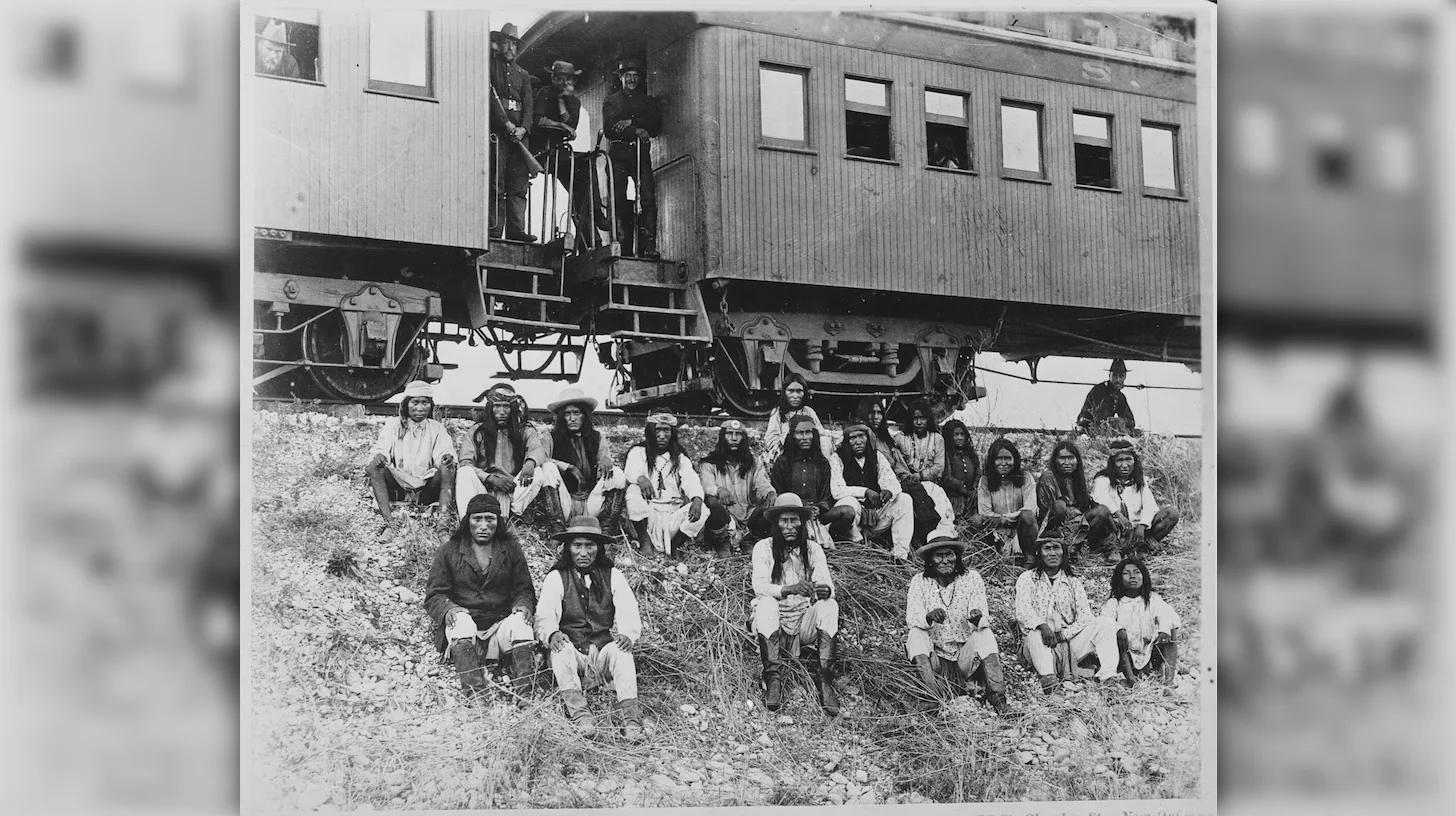
It did them no good. After Geronimo’s last surrender in September 1886, the government sent the Chiricahua to prison in Florida, and the loyal scouts went with them, among them Kayitah and Martine, who had served the Army to the end. Bourke wrote about it five years later.
“There is no more disgraceful page in the history of our relations with the American Indians than that which conceals the treachery visited upon the Chiricahuas who remained faithful in their allegiance to our people.”
A lieutenant who had served with the scouts, Britton Davis, wrote that “four hundred innocent people, men, women, and children, who had kept the faith with us” were punished for the guilt of barely a quarter of their number. The Chiricahua were not set free until 1913, after twenty-seven years as prisoners.
Heap much Mexican
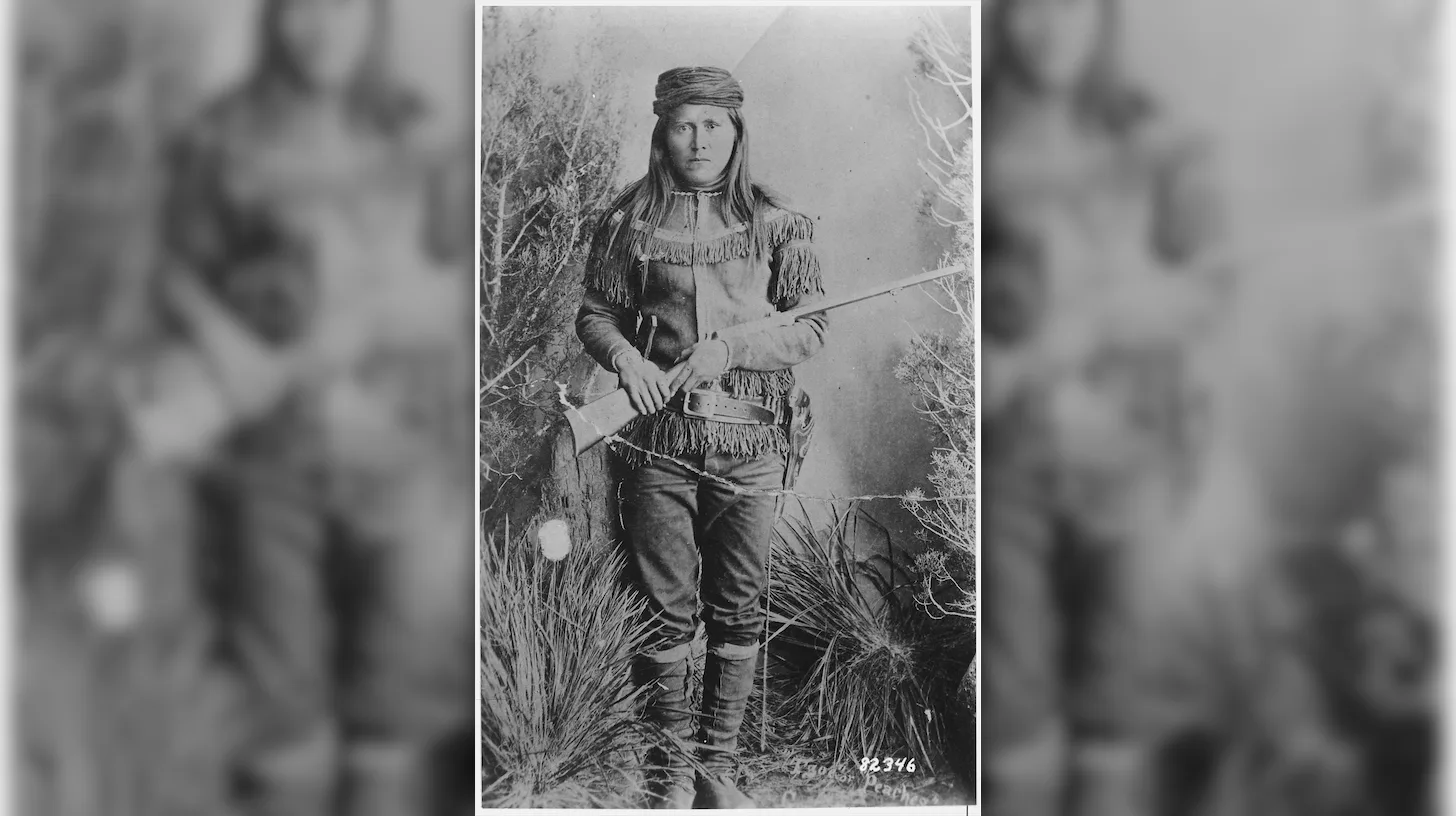
The scouts outlived the wars. In 1891 the War Department limited them to 150 men, and a small detachment of Apache stayed on at Fort Apache. In 1916, after Pancho Villa’s raid on Columbus, New Mexico, twenty of them went into Mexico with the Punitive Expedition. A cavalry officer who took charge of them, James A. Shannon, wrote that he found “twenty short, stocky, pleasant mannered individuals,” some of them too fat, all in cavalry uniform from leggings to campaign hat. They had come too late for the pursuit of Villa. One of them, a sixty-three-year-old named Nakay, carried the number Y-5, and two others had been with Capt. Emmet Crawford in Mexico thirty years before.
Their first sergeant was a man the Army called Chicken. Shannon wrote that Chicken once fingered his gun and said, “Heap much Mexican, shoot ‘em all!” Shannon thought him the best of them.
“First Sergeant Chicken is probably, all things considered, the most valuable man in the detachment. He is finishing his seventh enlistment period.”
Chicken retired in 1924 and lived to be ninety-five. By then the detachment had moved, in November 1922, to Fort Huachuca, near the Mexican border in southern Arizona, and the Army had stopped taking new scouts after its last enlistment, in 1923, so that every man who died or retired from the detachment left it one man smaller.
Riding the fence lines at Huachuca
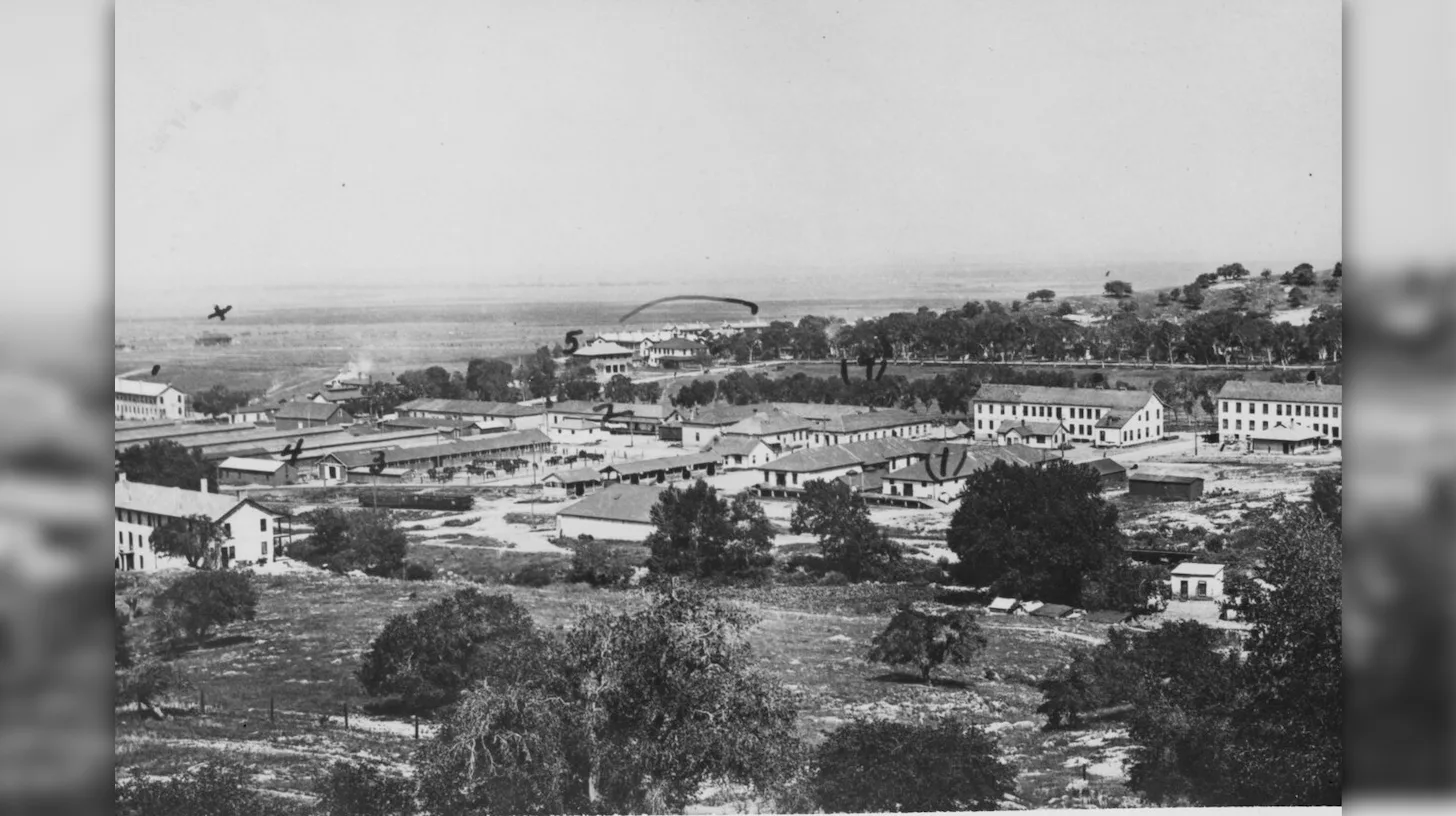
At Huachuca the scouts patrolled the boundaries of the military reservation, ten to twenty miles on a side, rode the fence lines and took part in parades. When the Works Progress Administration built adobe houses for them in 1933, an officer found that the families had moved back into their tepees and the horses were living in the houses. William Major, one of the last four, remembered the parades decades later for an Army historian.
“On occasion when special visitors were present we would dress in Indian costumes which we glamorized. We’d put on a lot of feathers and paint our faces to create an impression of ferocity.”
Sinew Riley led them. A wire-service reporter who met him in 1935 called him small and said he had been educated in the reservation and mission schools, and he quoted Riley: “Indian is just like white man now.” He had a wife named Peela and, by 1947, seventeen children. In December 1938 he was flown to New York to appear on the radio program We, the People. He came home early. “New York, too many people, too much noise, I come home,” he said in Tucson. In the Second World War, with only a handful of scouts left, he went out with a sheriff’s deputy and two military policemen to track German prisoners who had escaped from the camp at Papago Park, near Phoenix.
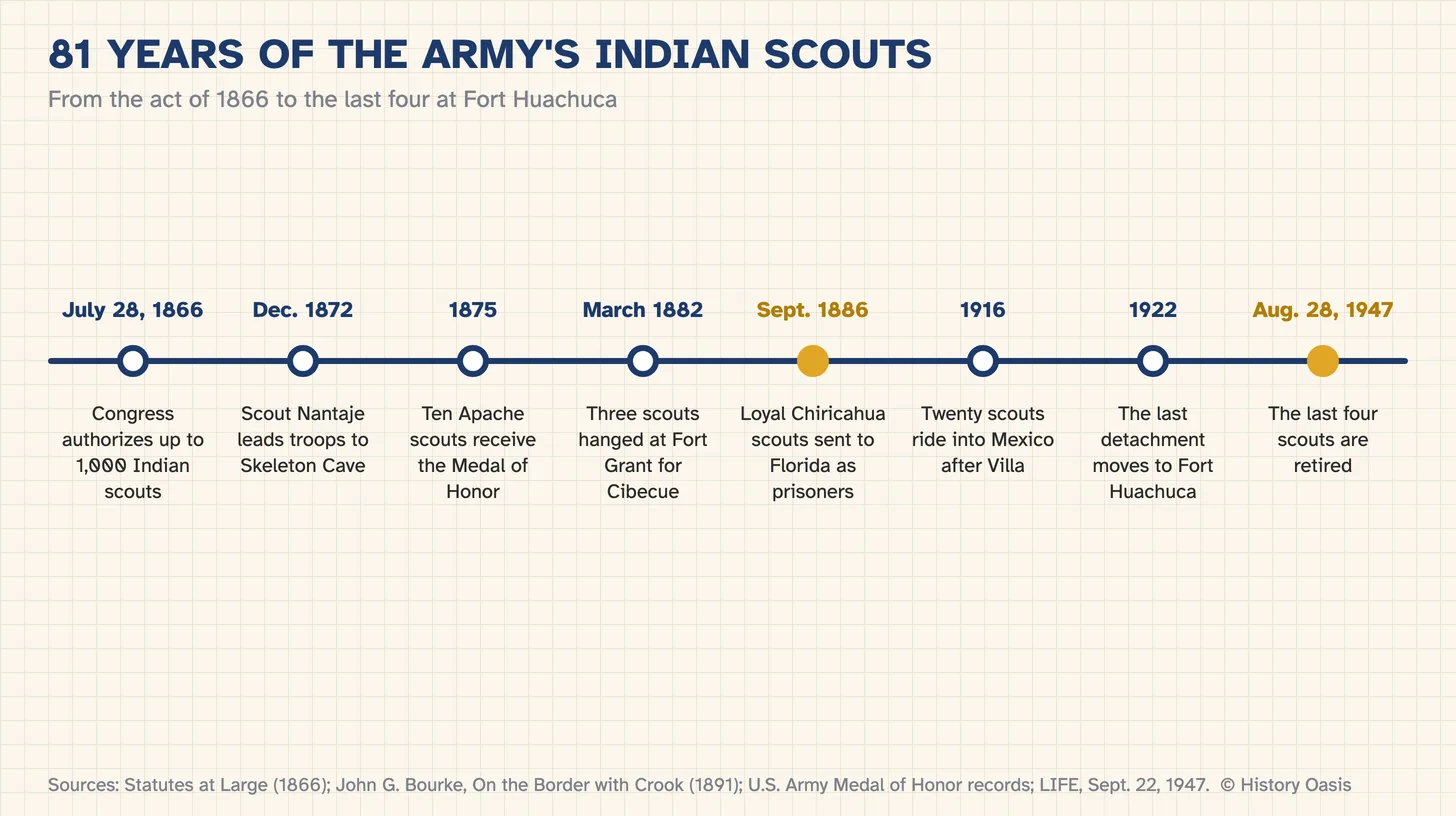
In 1941 eight scouts were left, the youngest of them William Major, who was thirty-nine. One retired that year, one in 1944 and one in 1945, and in 1945 Andrew Paxton died after a fall from his horse. That left four.
The last muster
The War Department ordered the four retired, effective September 30, 1947, and in the last days of August, Colonel Roberts held a final parade and review for them. The post itself was closing, and Roberts gave up command on Friday, August 29, the day after he shook their hands, and Fort Huachuca was to be deactivated in the middle of September. LIFE ran a photograph of the four with the colonel and noted that their recent work had been mending fences and tracking criminals along the border. Riley and Major were going home to farms on the White River reservation, from which the scouts had come to Huachuca a quarter of a century before, while Ivan Antonio was going into the veterans’ hospital at Pasadena, and Kessay into the Army hospital at Fort Bliss, in Texas.
The Indian scouts did not end in law that year. They were taken out of the Army’s organization by an act of 1950, and in 1955 a few of them were still on the retired list. But no scout served after the summer of 1947. Joe Kessay talked about it to an Army historian in 1973.
“We loved our life at the fort. We had pride in what we were doing and our relationship with the troops was excellent at all times. We were very well-treated and our work, we felt, was important. We were crushed when the scouts were disbanded.”
Long after 1947, by an understanding no one ever wrote down, the scouts’ descendants were still allowed onto the post. They came to gather acorns in Huachuca Canyon.