10 min read
Vera Bradley used to publish its own list of retired patterns. Then the company deleted the page. Below are 19 retired Vera Bradley patterns by year — nine discontinued classics covered one by one, plus the first ten pink-ribbon patterns as a set — the dated pattern archive that no longer officially exists anywhere else.
LIST OF DISCONTINUED VERA BRADLEY PATTERNS
| Pattern | Launched | Retired |
|---|---|---|
| Apple Green | January 2004 | July 2006 |
| Blue Citrus | January 2006 | July 2007 |
| Java Blue | Spring 2006 | Fall 2010 |
| Mesa Red | July 2006 | July 2008 |
| Peacock | January 2007 | December 2008 |
| Pink Elephants | January 2007 | July 2008 (revived) |
| Purple Punch | January 2009 | March 2011 |
| Baroque | Winter 2010 | Spring 2013 |
| Heather | July 2013 | May 2015 |
| The pink-ribbon series (10) | 1999–2014 | staggered |
APPLE GREEN
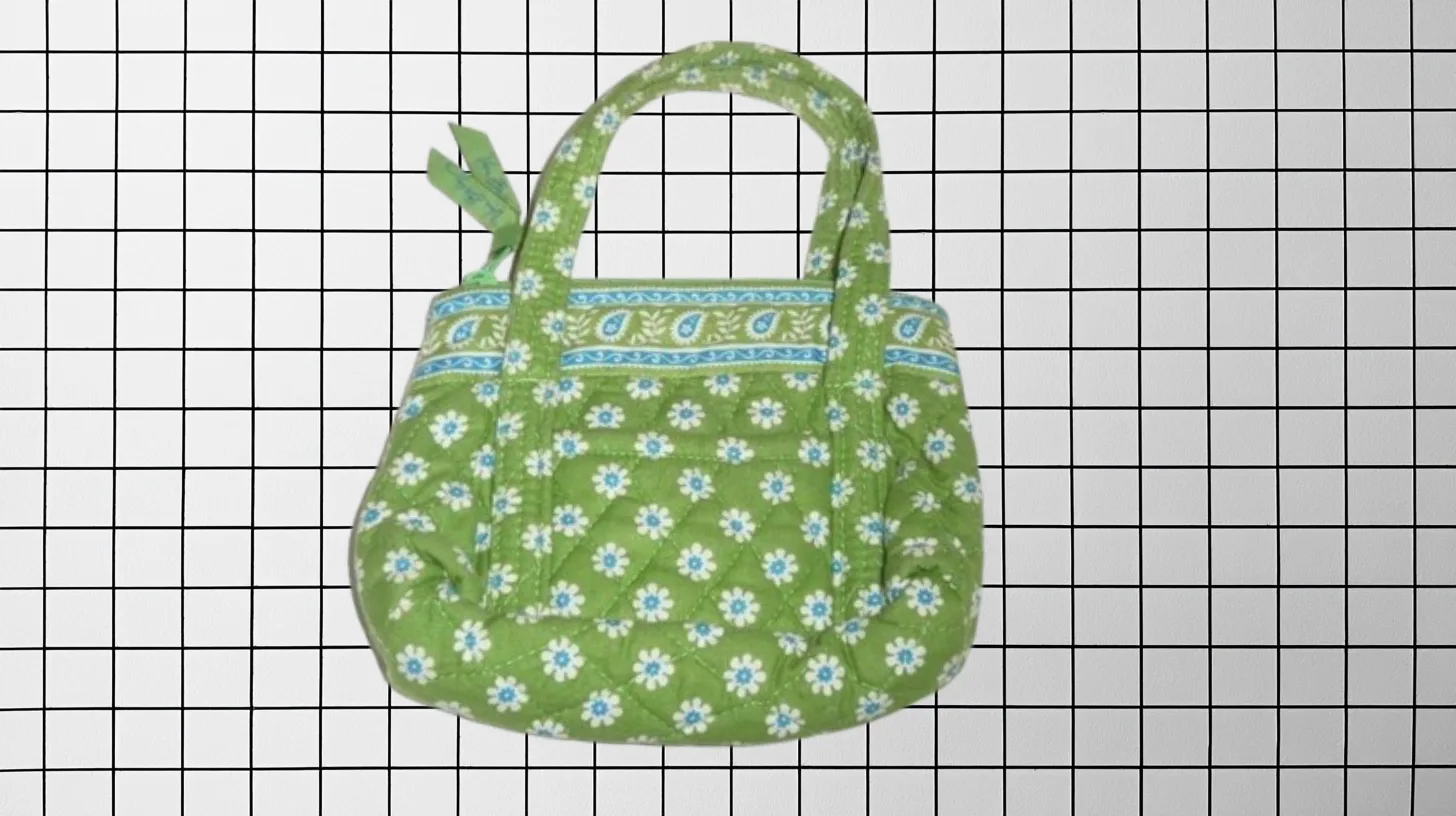
Retired: January 2004 – July 2006
Apple Green launched in January 2004 and ran two and a half years — a solid stretch for the company’s early catalog. Fans remember it as a happy, springy print, green as a Granny Smith, and requests to bring it back in newer bag styles were still being posted a decade after it vanished. It retired in July 2006, and unlike the luckier patterns on this list, it stayed retired.
BLUE CITRUS
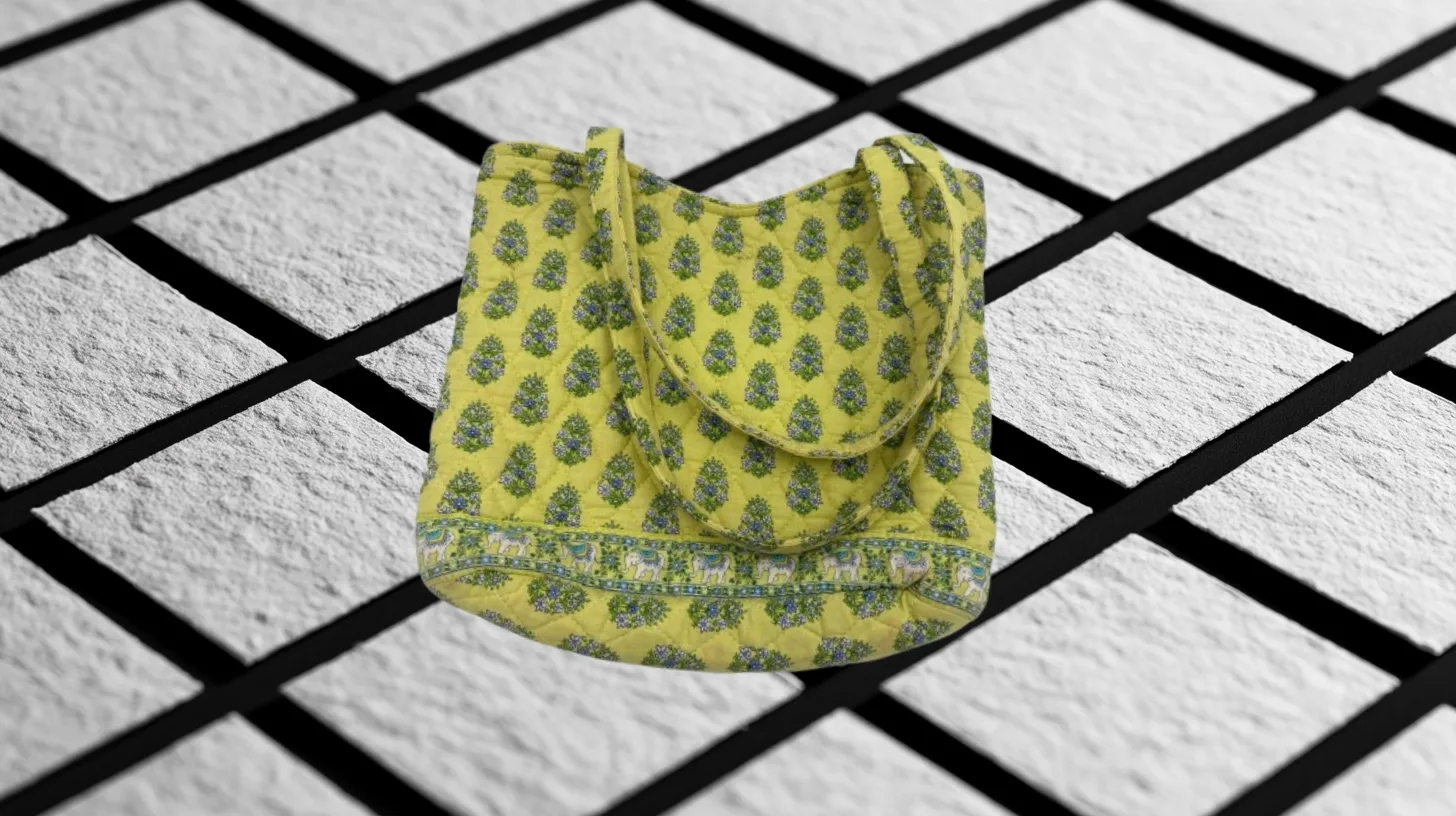
Retired: January 2006 – July 2007
Blue Citrus lasted eighteen months, January 2006 to July 2007 — a short run next to the catalog’s usual two-year rotation. Short runs like this rarely came with a stated reason; the company simply moved on to the next season’s prints and left this one behind. Blue Citrus never got a revival, which has done nothing to dim its standing with the fans who started collecting because of it.
JAVA BLUE
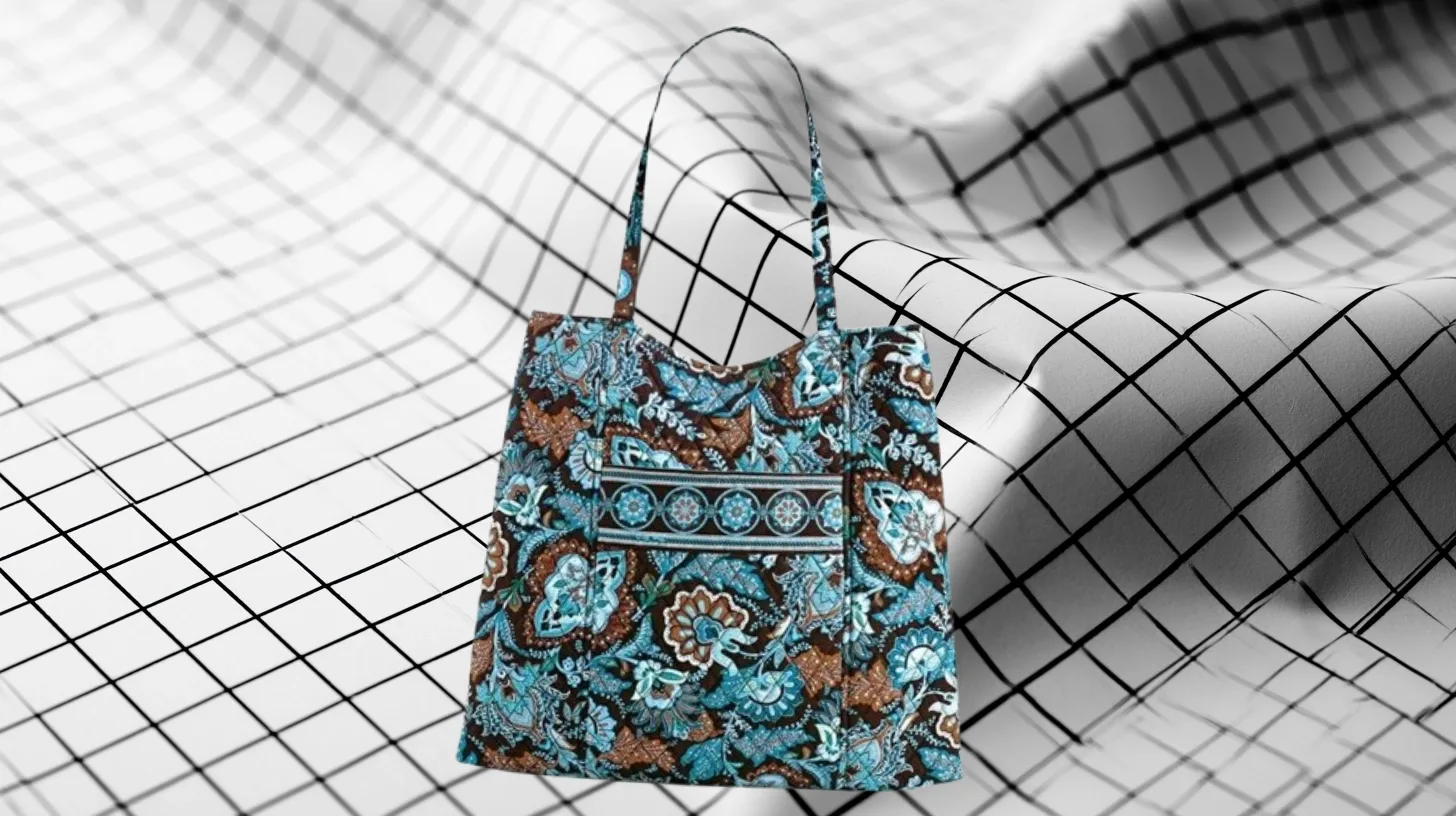
Retired: Spring 2006 – Fall 2010
Java Blue is arguably the most famous retired Vera Bradley pattern of the bunch — dark brown and blue paisley that turned into dorm-room shorthand for the entire late-2000s catalog, the same campus-uniform stretch as the UGG boot styles since discontinued. It launched in spring 2006 and held on for four and a half years, an unusually long run next to its two-year peers. Collector rankings still put it at or near the top of every “best pattern” list written since, and a clean secondhand tote gets treated like a small trophy. It retired in fall 2010, having already achieved something rarer than sales: recognition on sight.
MESA RED
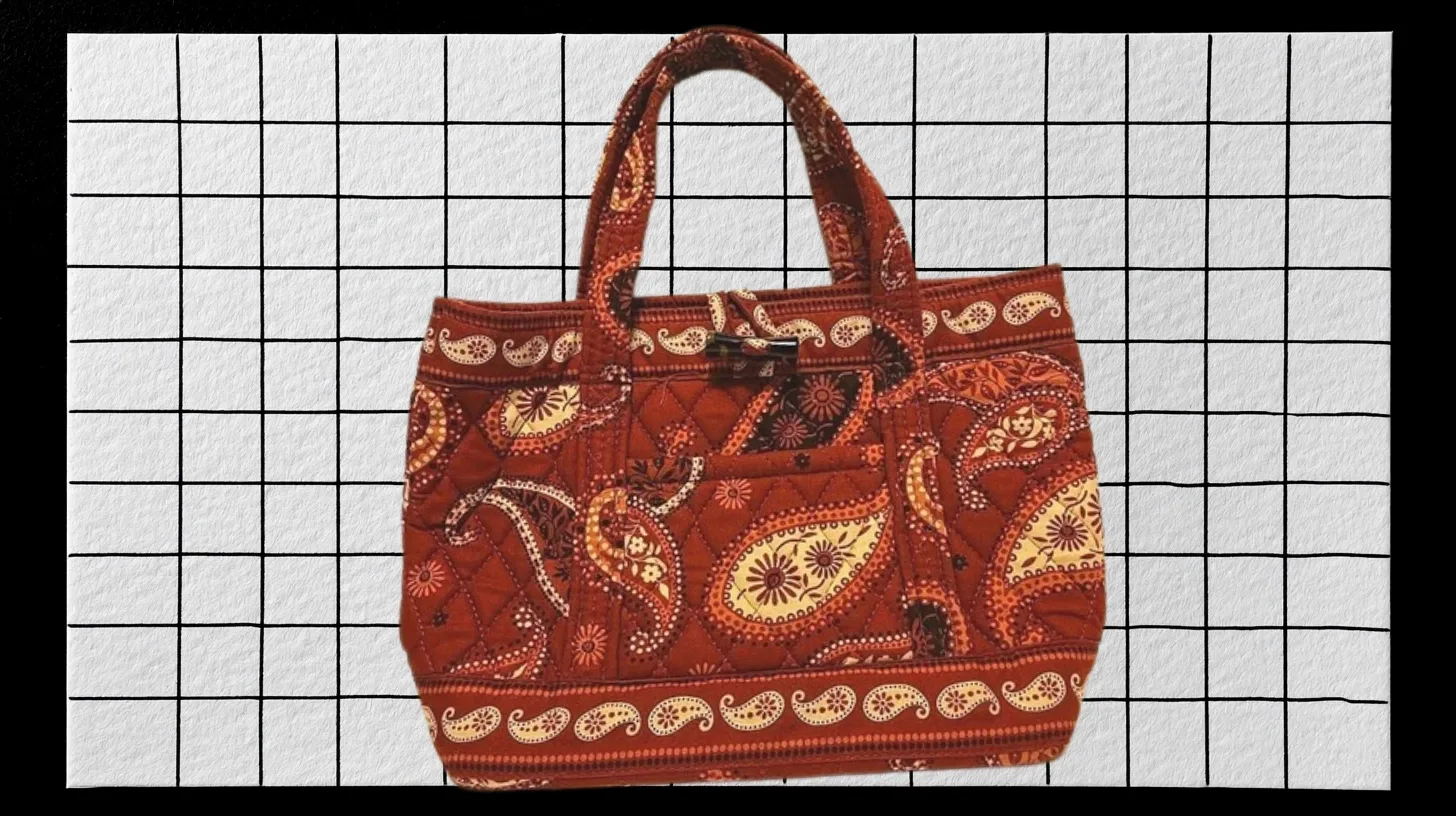
Retired: July 2006 – July 2008
Mesa Red leaned into a western theme the catalog rarely touched — rust and cream paisley, more saddle bag than diaper bag. Fans still describe it as “the truest red pattern Vera has made,” a line that gets recycled in resale listings like scripture. It launched in July 2006 and lasted exactly two years, about average for a mid-2000s print. Mesa Red just happened to be a better-loved one than most of its era-mates.
PEACOCK
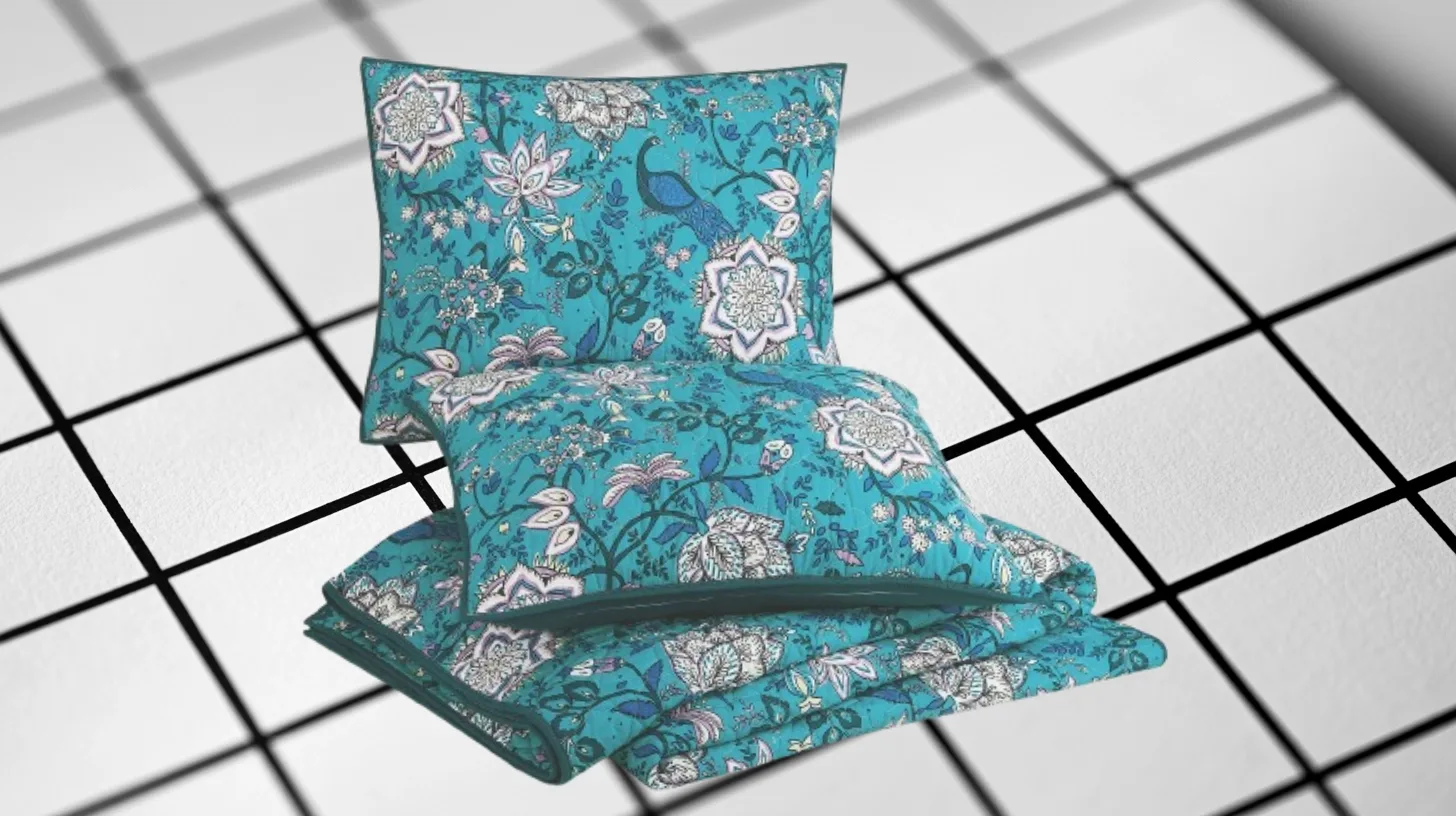
Retired: January 2007 – December 2008
Peacock ran barely two years, January 2007 to December 2008, and collectors still rate it among the most sought-after retired prints the company ever made — especially in bedding. Yes, the company made bedding: comforters, shams, the works, not just totes and cosmetic bags. A short production run plus a format collectors rarely expect is a reliable recipe for scarcity, and Peacock has both working in its favor.
PINK ELEPHANTS
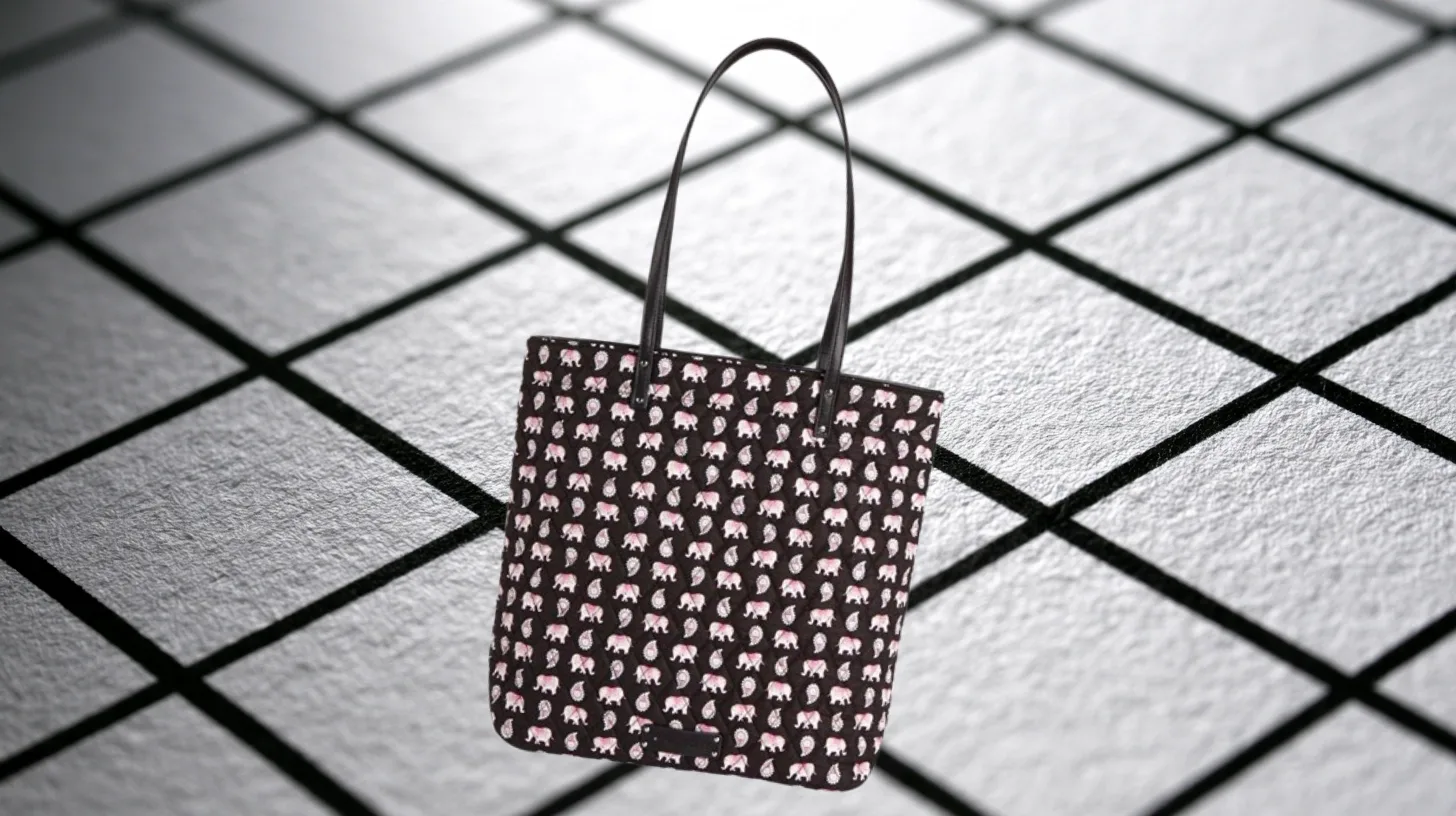
Retired: January 2007 – July 2008, later revived by demand
Pink Elephants launched in January 2007 as one of the earliest patterns tied to the company’s breast-cancer cause line — little pink elephants parading across a black ground, whimsical rather than somber by design. Its original run ended in July 2008, and fan rankings peg it as probably the best-selling breast-cancer pattern the company ever made. Then demand did something the catalog rarely accommodates: it brought Pink Elephants back. Most retired patterns here stay retired. This one has a second act.
PURPLE PUNCH
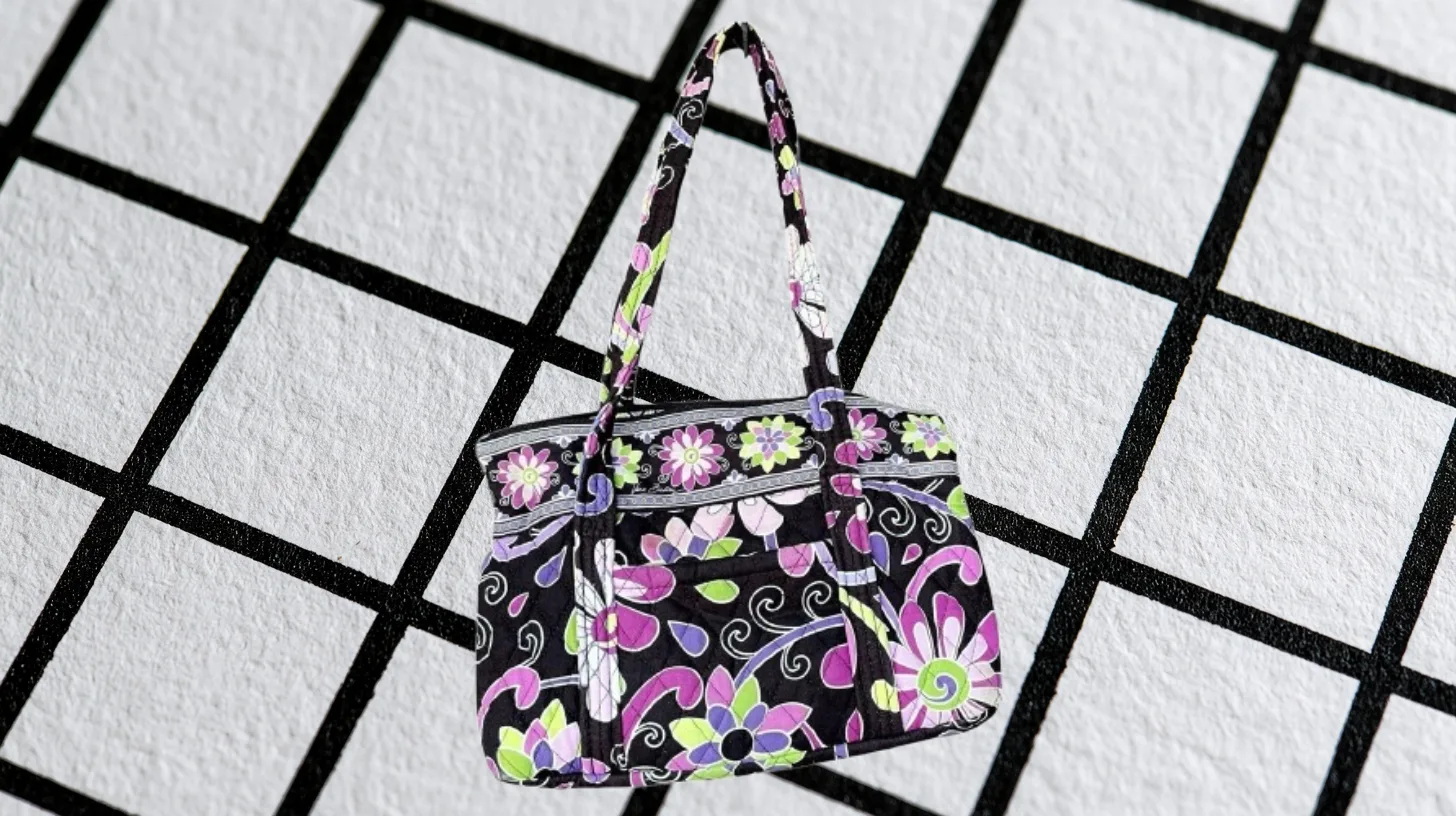
Retired: January 2009 – March 2011
Purple Punch ran just over two years, January 2009 to March 2011, squarely in the recession-era stretch of the catalog. A near-black ground carried punchy magentas, purples and acid greens — a print aimed, by the company’s own standards, at a younger crowd. It sits in the awkward middle of the timeline: after Peacock, before Baroque, beloved enough to make fan top-ten lists without ever becoming shorthand for an era the way its neighbors did.
BAROQUE
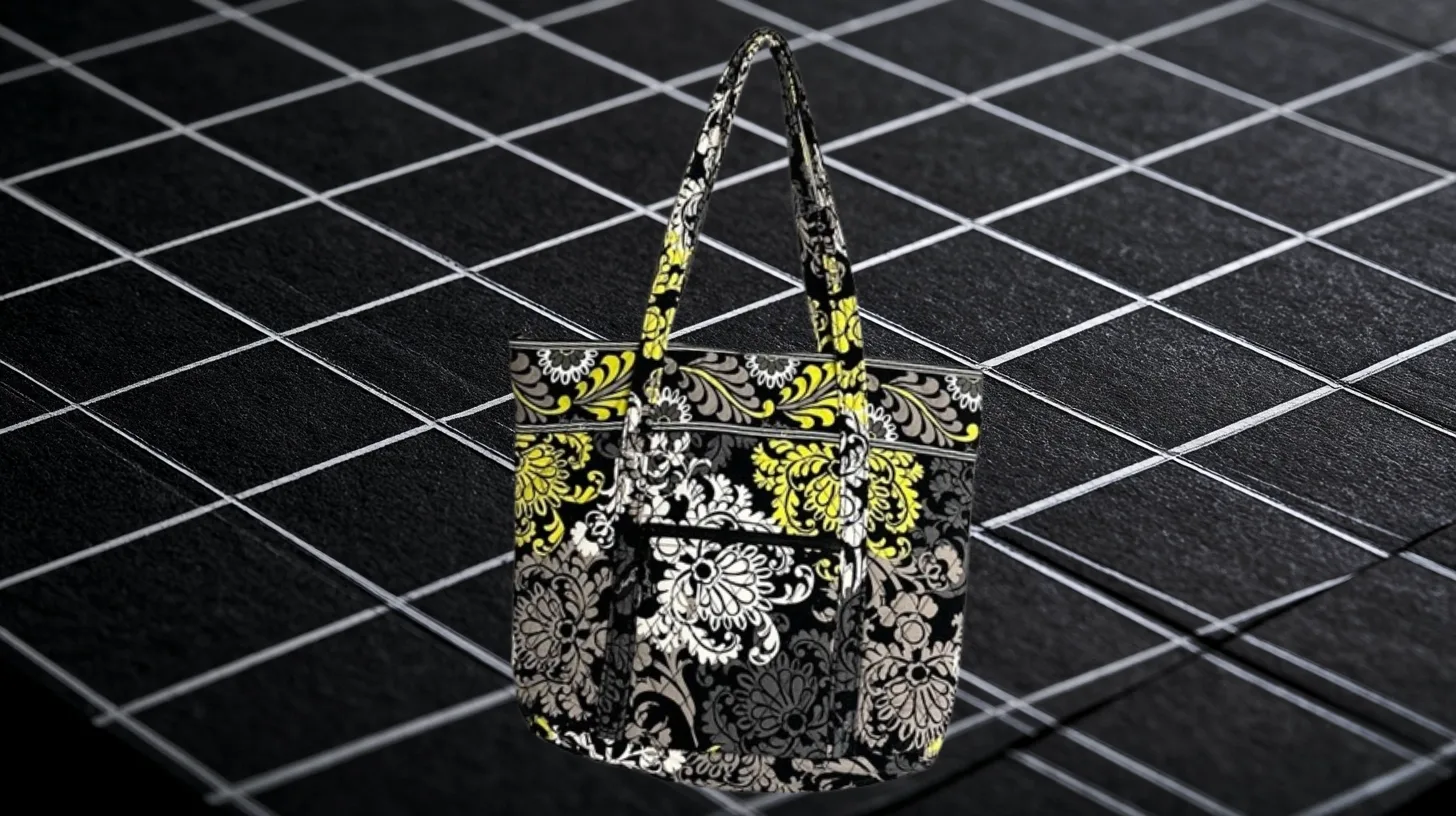
Retired: Winter 2010 – Spring 2013
Baroque reportedly overtook Java Blue as the company’s best-selling pattern, a genuine changing-of-the-guard moment for a catalog that rarely produces a clear successor. Ornate black, gray and white scrollwork with a splash of yellow read closer to upholstery fabric than a lunch tote — and sold anyway. Baroque launched in winter 2010, right as Java Blue was winding down, and retired in spring 2013. If Java Blue defined the late 2000s, Baroque quietly ran the early 2010s.
HEATHER
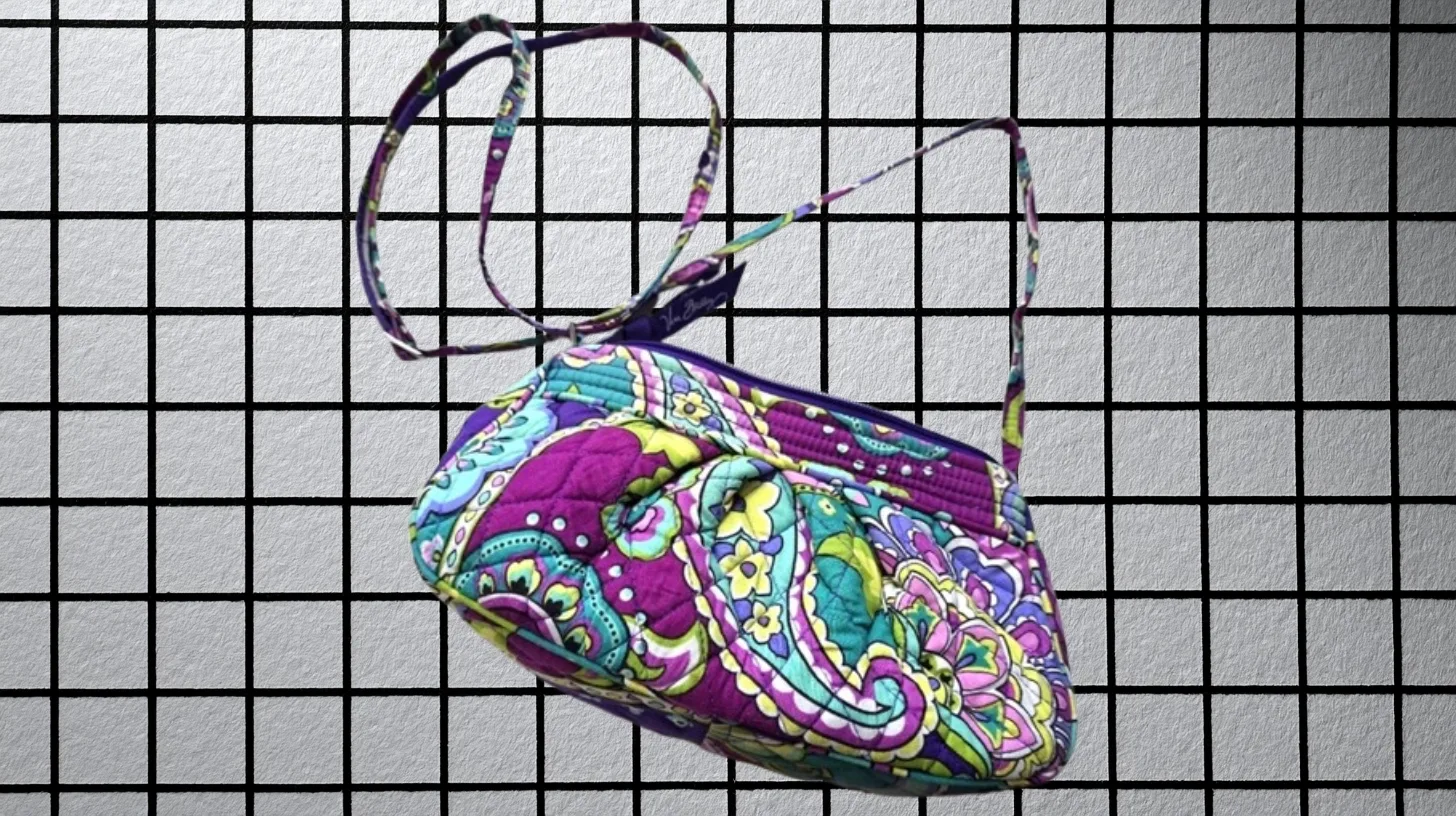
Retired: July 2013 – May 2015
Heather closed out the classic run, July 2013 to May 2015 — the last of the nine before the company’s fortunes turned. Magenta, teal and chartreuse swirled through a dense paisley: the house style at full volume, not a retreat from it. It retired in May 2015, right as a tougher stretch for the business set in. Heather isn’t famous. It’s a hinge point.
THE PINK-RIBBON PATTERNS — TEN AT ONCE
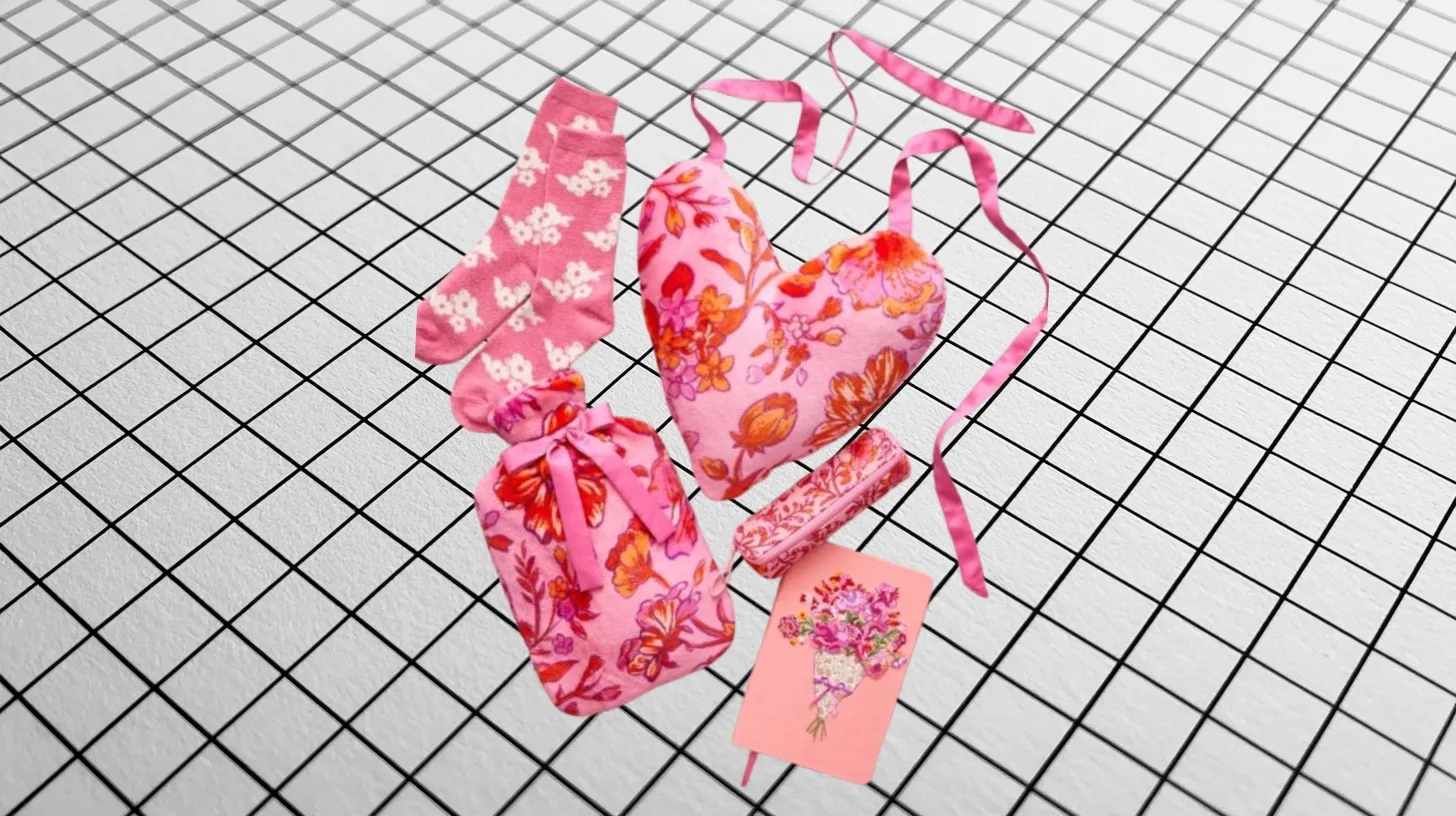
The pink-ribbon patterns have arrived almost yearly since 1999, each one funding breast-cancer research and each one retiring as its successor shipped — a deliberate, single-purpose rotation that runs on entirely different rules than the rest of the catalog. Brighton ran a near-identical annual program with its Power of Pink bracelets, a new design every year and all profits to breast-cancer charities, until that series ended too. The first ten, 1999 through 2014, are all retired now.
| Pattern | Year |
|---|---|
| Return to Happiness | 1999 |
| Hope | 2002 |
| New Hope | 2004 |
| Hope Toile | 2006 |
| Pinwheel Pink | 2008 |
| Hope Garden | 2009 |
| Loves Me | 2010 |
| Twirly Birds Pink | 2011 |
| Ribbons | 2012 |
| Pink Swirls | 2014 |
Return to Happiness came first, in 1999, six years after the founders began funding breast-cancer research following the 1993 death of a friend and early sales rep, Mary Sloan. The Vera Bradley Foundation for Breast Cancer formalized in 1998 and has since committed roughly $50 million to the research center bearing its name at the Indiana University School of Medicine. The rotation was strict — Hope gave way to New Hope, Hope Garden to Loves Me — and the line kept going well past 2014, with Pink Elephants, the 2007 entry covered above, as its one great comeback.
WHERE THE PATTERNS COME FROM
Barbara Bradley Baekgaard and Patricia Miller watched beige luggage roll past at the Atlanta airport in March 1982 and decided the world needed color instead. They borrowed $500 from their husbands, set up shop on a ping-pong table in a basement, and named the company after Baekgaard’s mother, Veronica “Vera” Bradley — a 1930s model for Elizabeth Arden. Baekgaard told Fortune in 2015: “You could call it a light bulb [moment] or a God-wink. I don’t know what it was, but we went back and started the company the next day.”
Every print since has come out of an internal design team, which still hand-paints some motifs in watercolor before they’re digitized. Development starts twelve to eighteen months before a launch date, and the company holds roughly 1,000 copyrights on its prints, according to its own SEC filings. That’s the real answer to what makes these patterns distinctive: not a formula, but a design department with a filing cabinet full of protected artwork.
WHY DOES VERA BRADLEY RETIRE PATTERNS?
Vera Bradley retires patterns on a seasonal schedule by design: each retirement clears shelf space for the next collection, and retired stock has historically flowed into outlet channels — above all the company’s long-running Annual Outlet Sale in Fort Wayne, Indiana, now itself in flux.
For nearly four decades that sale filled the Allen County War Memorial Coliseum; the 2016 edition alone drew more than 60,000 shoppers from all 50 states and eight countries, and local officials estimated a $5 million tourism impact on the city. On March 12, 2026, the company announced the sale was pausing for the year, with a “reimagined” version promised for 2027. Somewhere along the way, the company also deleted its own retired-patterns reference page, so collectors now keep the archive themselves — a Reddit-built spreadsheet has become the closest thing to an official record. The resale market runs on it: eBay, Poshmark, Mercari and Depop are full of old Vera Bradley patterns being resold as Y2K nostalgia to a Gen Z audience that never shopped the originals the first time — the same market that keeps long-dead fashion trends in circulation. All of this sits against a company mid-reinvention — a 2024 logo overhaul and Zooey Deschanel ad campaign, then a March 2026 CEO change that brought in Coach veteran Ian Bickley.
Retirement used to just mean the outlet table. Now it means a spreadsheet, a resale app, and a market the company no longer tracks itself — the same fate that turned discontinued Brighton handbags and discontinued Louis Vuitton bags into collector bait, and the same instinct chasing retired Yankee Candles, discontinued Bath & Body Works scents and discontinued perfumes. Nostalgia doesn’t care what category it’s shopping in. It just needs something to be gone.