10 min read
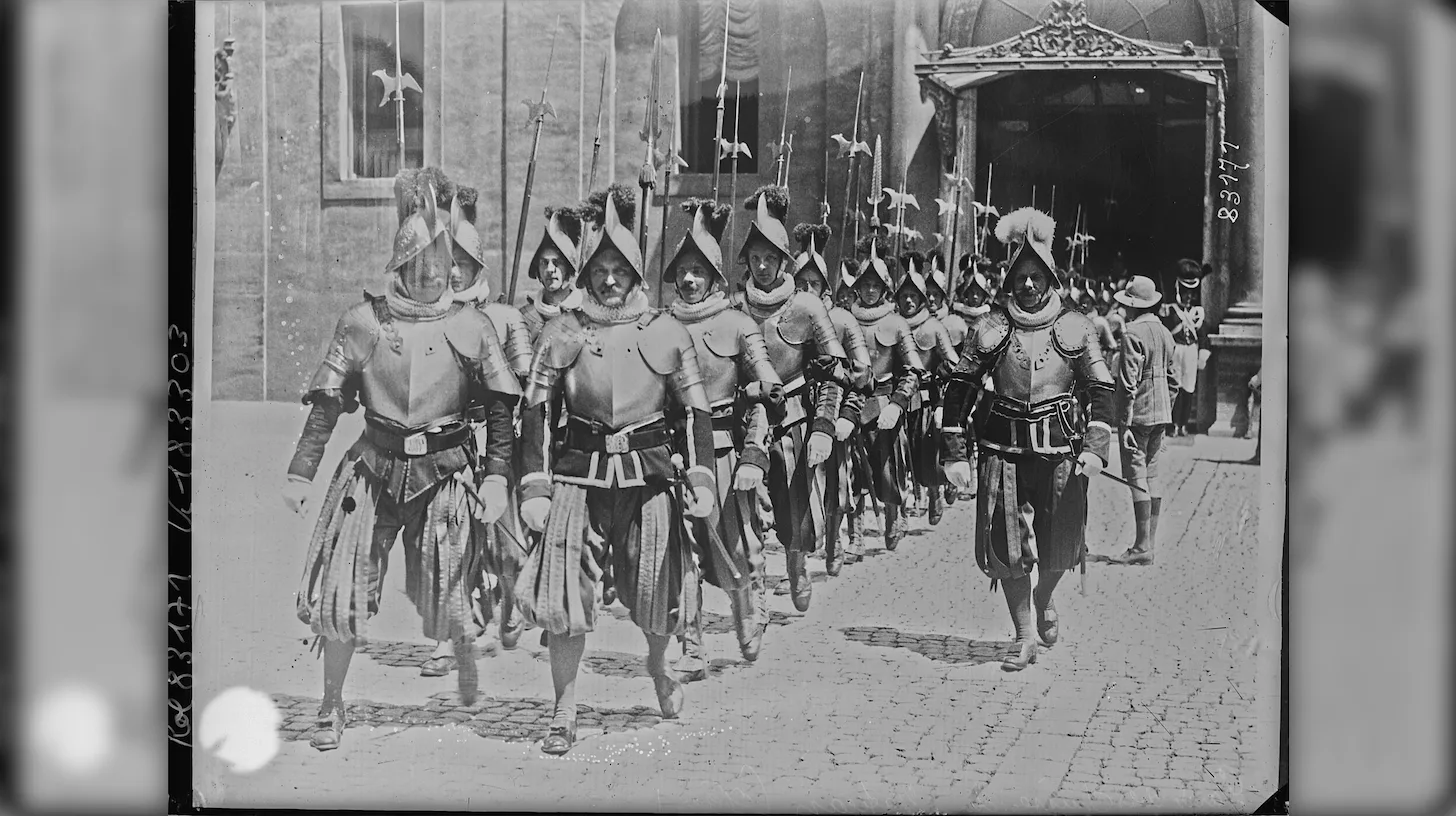
At a quarter to four on the afternoon of Saturday, January 4, 1919, the car carrying President Woodrow Wilson came to the gate of the Vatican, where a platoon of Swiss Guards in their striped uniforms presented arms. He was led up the stairs and through the Clementine Hall, where twenty-four more guards with halberds presented arms again. Pope Benedict XV came toward him “dressed in white robes and white cap,” one reporter wrote, in red slippers and with his arms held out, and clasped the president’s hands in both of his.
No sitting president of the United States had met a pope before. Wilson had come to Europe for the peace conference, two months after the Armistice, and seventeen months earlier he had turned down this pope’s plea to end the war. The Associated Press noted that official Rome had waited for the meeting with great interest for that reason. A story told about it nearly a century later, of a president who would not kneel, has become the best-known thing about the day. The papers of that week tell a different story, and they do not tell that one at all.
A useless massacre
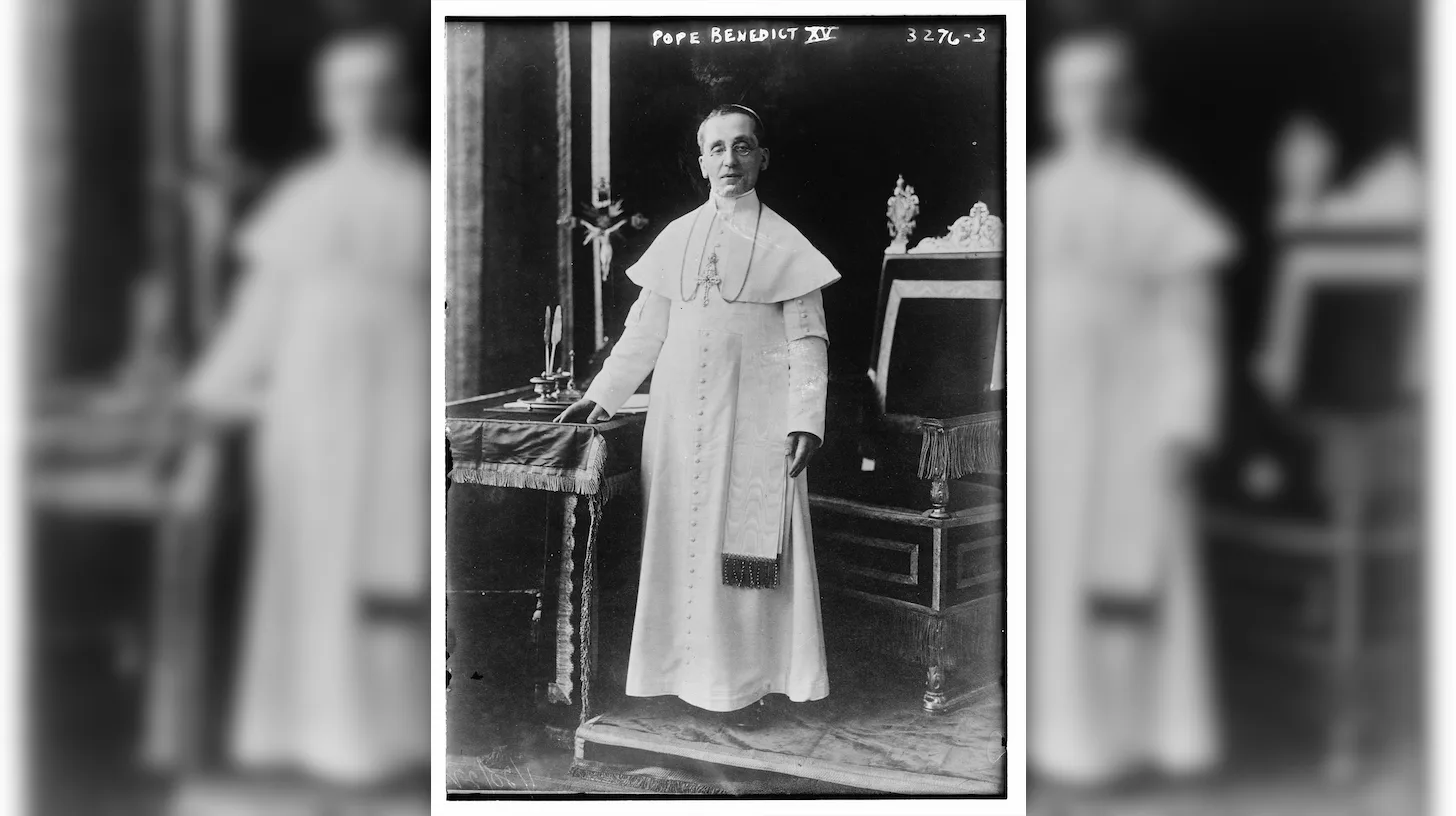
Pope Benedict XV was elected in September 1914, a month after the war began, and he spent the rest of it asking the nations to stop. That December he proposed that the armies lay down their arms for Christmas, though, as the Chicago Tribune’s headline put it, “Pope Benedict Has Little Hope” that the warring nations would agree. Germany answered that it would agree if the other nations did, and Russia declined, so Pope Benedict XV’s Christmas truce never came about. The truce in the trenches that Christmas was the soldiers’ own.
In the summer of 1917, with the United States newly in the war, he tried again. His note to the warring governments, dated at the Vatican on August 1, asked that “the material force of arms give way to the moral force of right,” proposed the evacuation of Belgium, and called the war “a useless massacre.” The Holy See had no diplomatic relations with Washington, and the note reached Wilson through the British. It ended with a question.
“Is this civilized world to be turned into a field of death and is Europe, so glorious and flourishing, to rush, as carried by a universal folly, to the abyss and take a hand in its own suicide?”
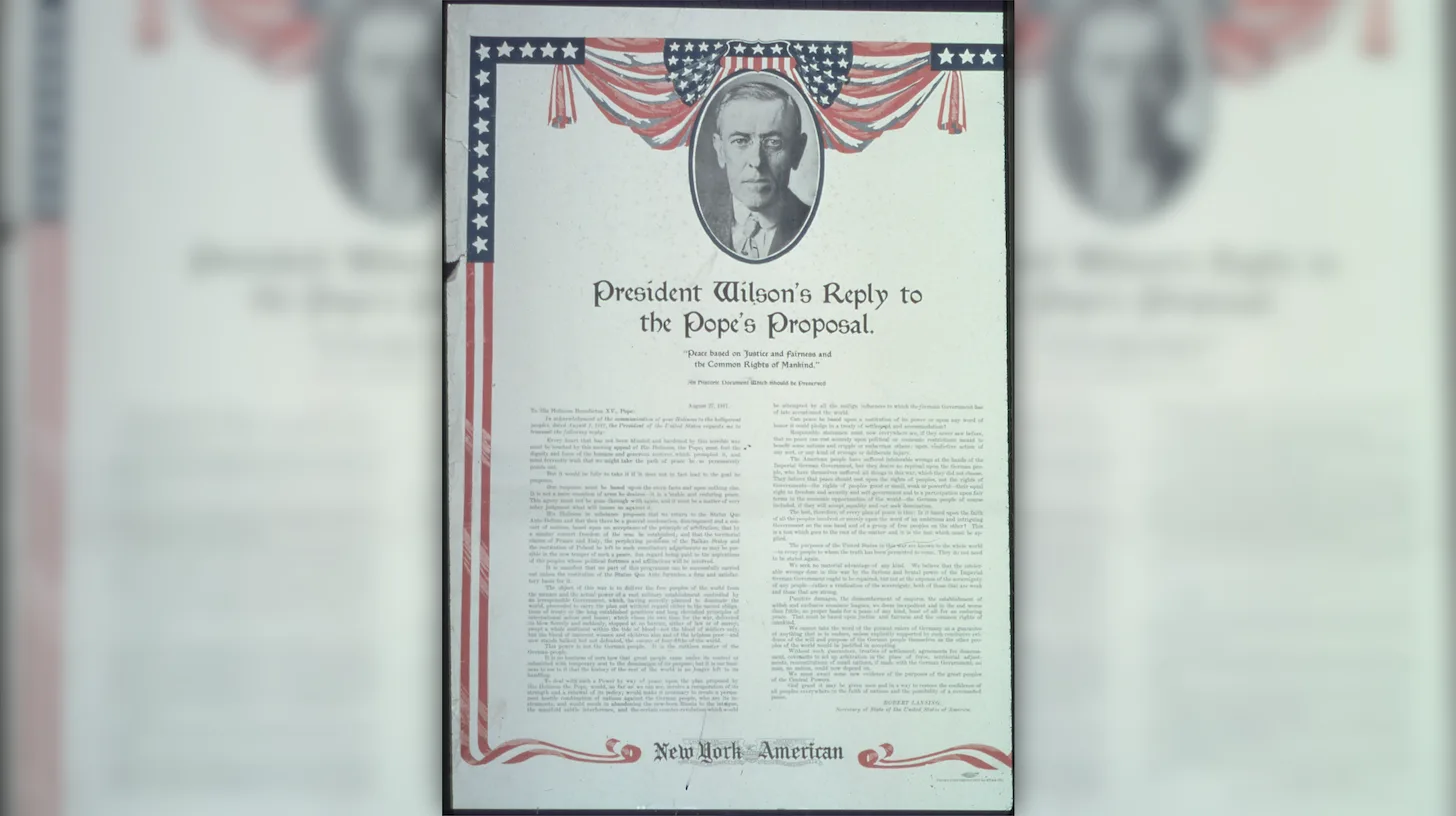
Wilson’s answer went out over his secretary of state’s name on August 27. It began with courtesy, saying that every heart “that has not been blinded and hardened by this terrible war must be touched by this moving appeal of His Holiness the Pope,” and then it said no.
“But it would be folly to take it if it does not in fact lead to the goal he proposes. Our response must be based upon the stern facts and upon nothing else.”
“We can not take the word of the present rulers of Germany as a guarantee of anything that is to endure,” the reply went on. The New York American printed the reply as a poster. Fifteen months later the war ended on terms the Allies set, and in December 1918 Wilson sailed for France, the first president ever to go to Europe while in office.
Flowers from the windows
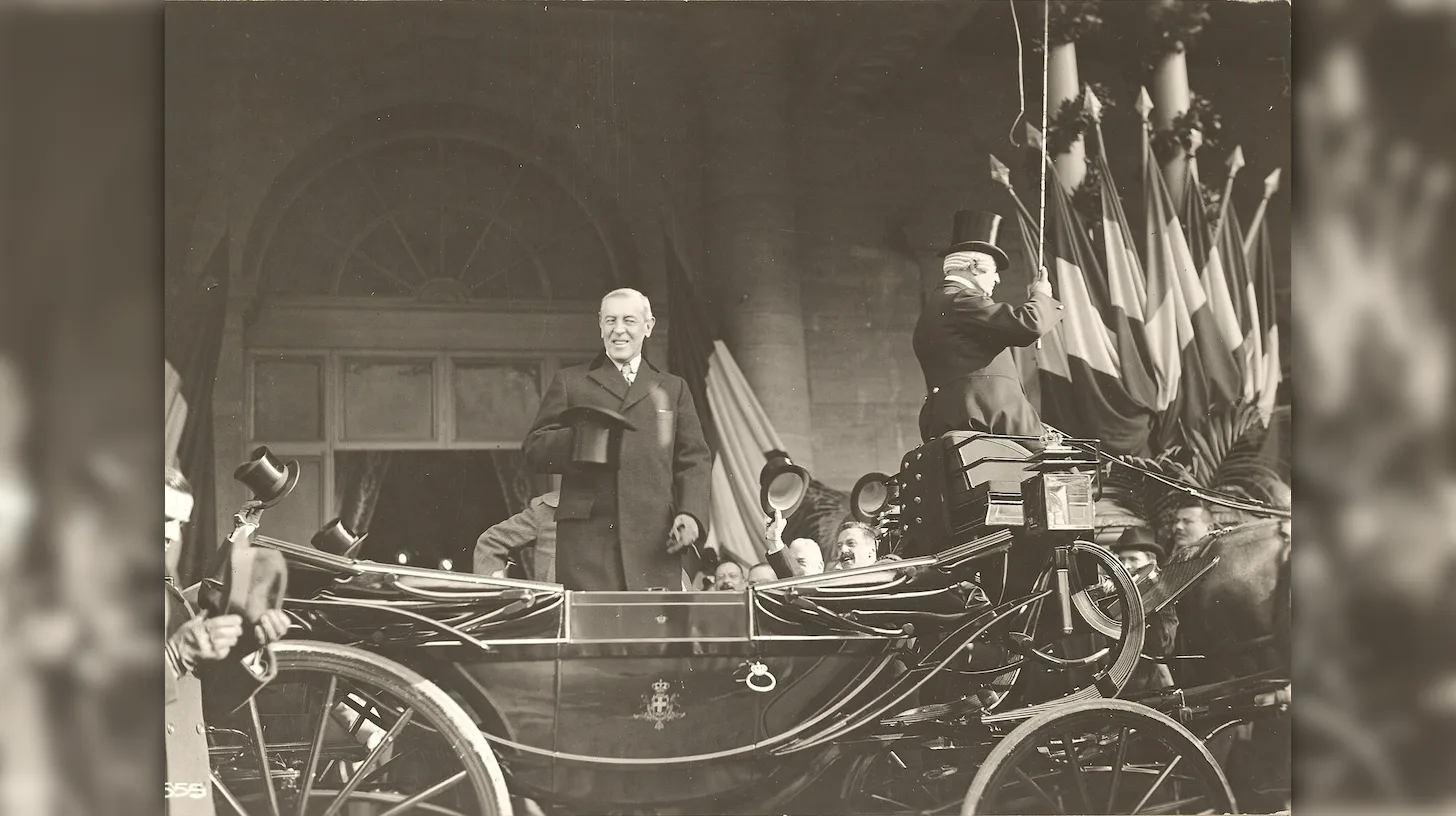
His train came into Rome on the morning of Friday, January 3. The Associated Press reported that “the people were disappointed by the weather,” for the morning was overcast, with now and then a sprinkle of rain. Wilson was the first to step down from the train, and King Victor Emmanuel III, in a general’s war-worn uniform, shook his hand and introduced him to Queen Helena. A senator who had just turned a hundred was there to see it.
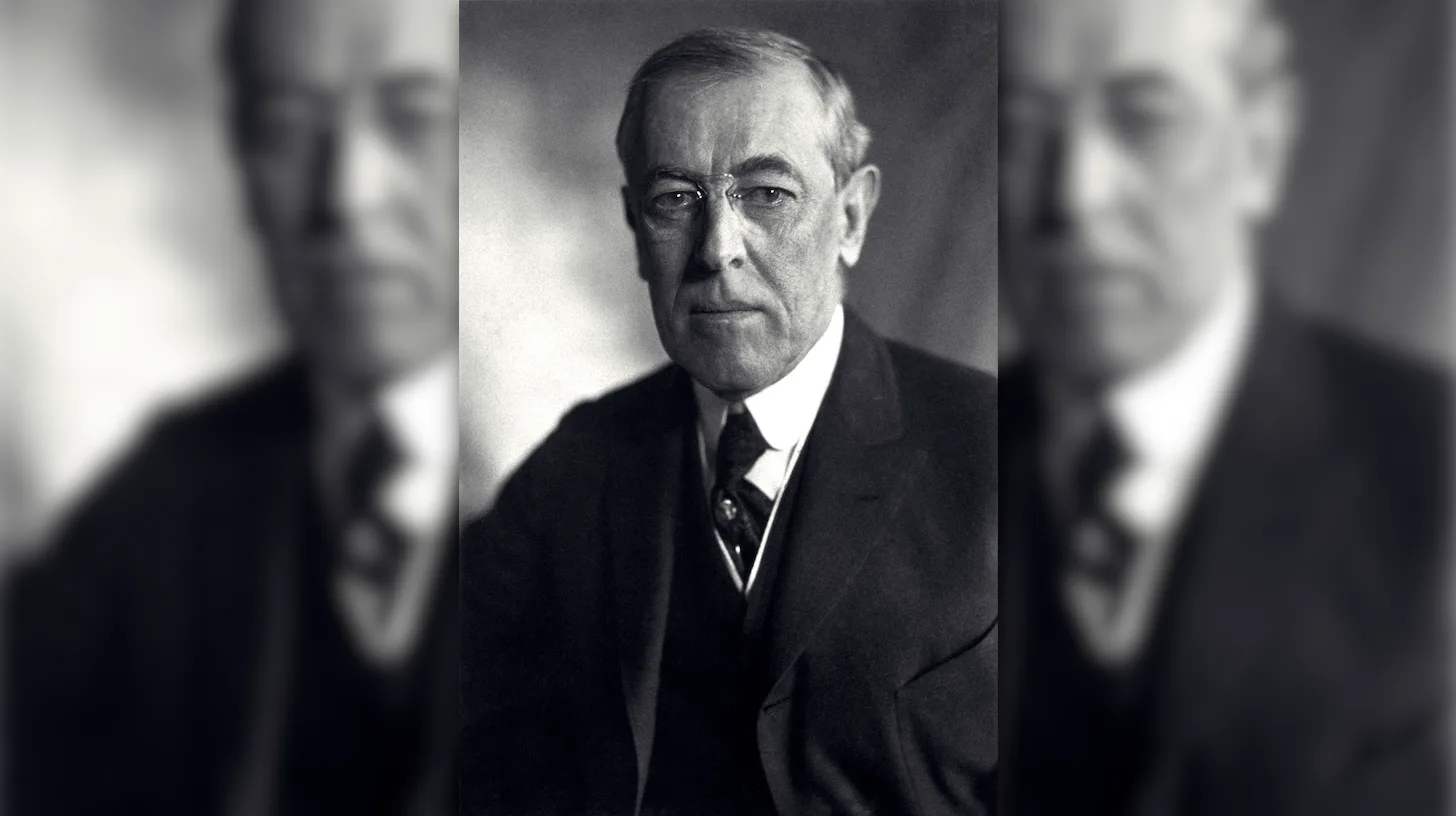
Wilson was sixty-two, a Presbyterian minister’s son and a former president of Princeton, and he spoke neither French nor Italian, so that, a New York Times correspondent wrote, he could not understand much of what the crowds of Paris and Rome shouted at him. He did not need to. As the carriages went down the Via Nazionale, flowers were thrown from the windows onto Mrs. Wilson and their daughter Margaret, and around the royal palace of the Quirinal “the crowd seemed completely to have lost its senses.”
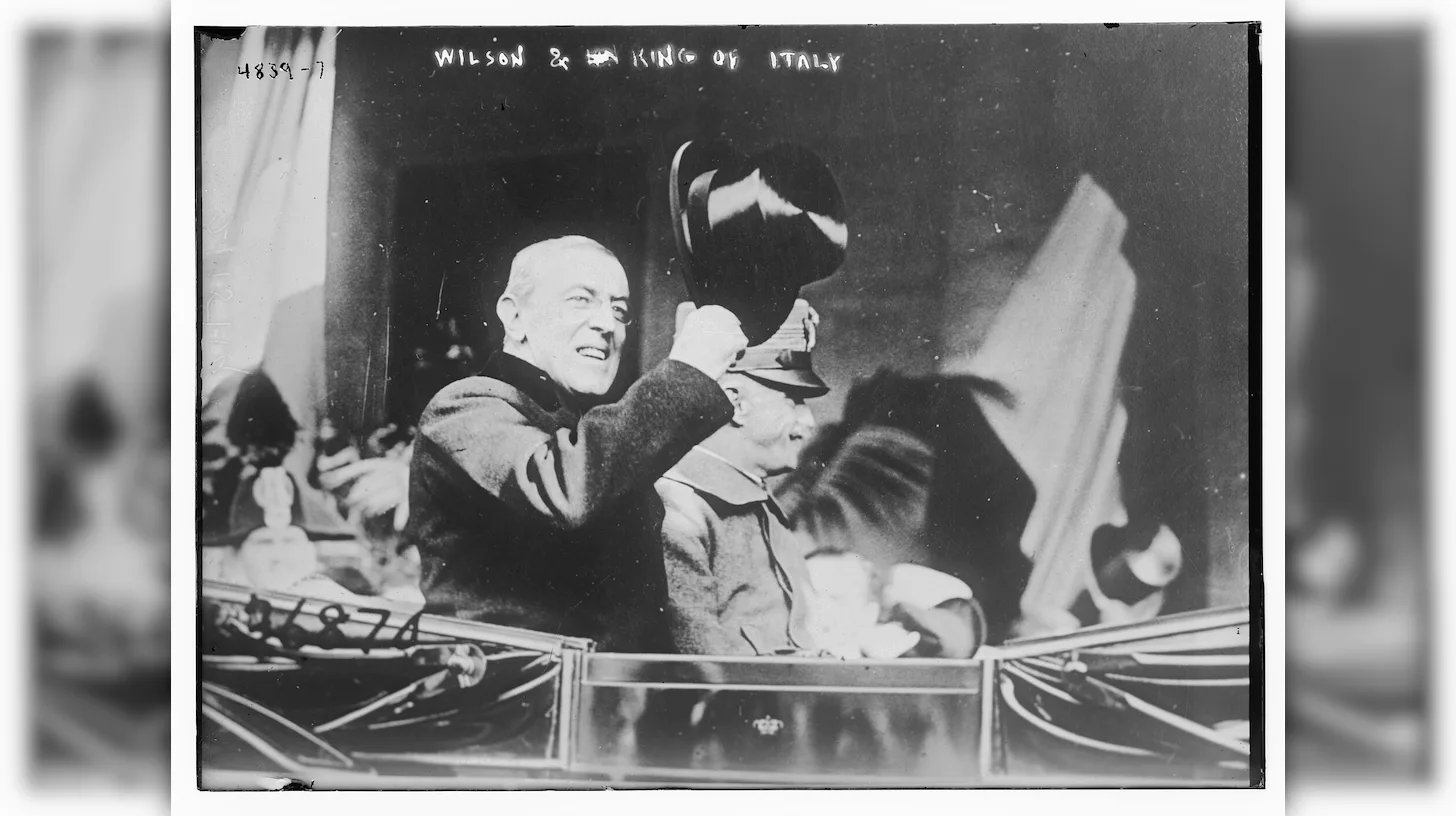
The Quirinal was a Red Cross hospital that winter, and he walked through its wards, where wounded Italian soldiers greeted him “from their beds or standing on their crutches.” He smiled the whole way, and waved his hat. He lunched with the Queen Mother, was received by the Parliament and dined with the King, and that night, at the Capitol on the hill Michelangelo had laid out, the city of Rome made him a citizen.
Not everything went to plan. A rumour went round that he would speak to the people from a balcony on the Piazza Venezia, and, the St. Louis Post-Dispatch reported, in less than an hour “the square was packed with such a mass of humanity that the American secret service men,” after one look, gasped. The arrangement had been made without him, and Wilson, it turned out, knew nothing of it.
A Presbyterian in Rome
Wilson had to call on two sovereigns in one city, and they were not speaking to each other. The popes had refused to recognize the Italian kingdom since it took Rome from them in 1870, so a guest of the King could not drive to the Vatican from the King’s palace. Wilson was to go, the Times correspondent explained, “directly from American territory,” from the house of the American ambassador, Thomas Nelson Page.
There was a Protestant difficulty too, and it had a history. In 1910 former President Theodore Roosevelt had been due to see Pope Pius X, and the audience was called off when the Vatican set conditions he refused to accept, over a promise not to address the Methodists in Rome. Wilson’s advisers did not mean to have that again. He would receive the Protestant churches of the city at the American Episcopal church, of which Mrs. Wilson was a member, the AP reported, “planning not to visit the Methodist college,” where Roosevelt’s visit had raised such a storm.
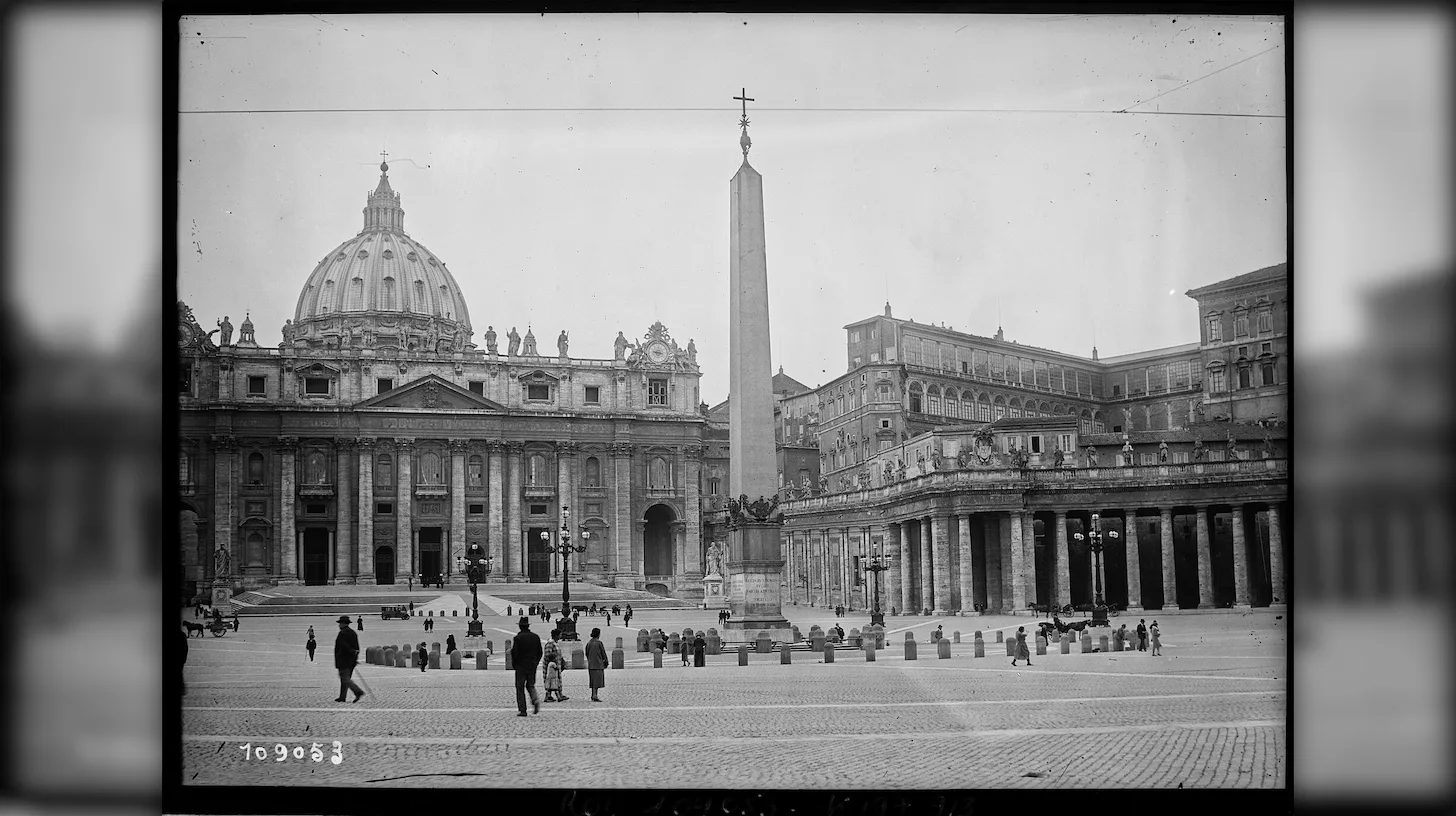
On Saturday morning he laid wreaths at the royal tombs in the Pantheon and drove up to the statue of Garibaldi on the Janiculum hill. He got out of the car, the AP reported, and stood bareheaded beside the statue, looking down at the city, with the dome of St. Peter’s below him and the Vatican gardens spread out at its foot. He looked at it in silence for several moments. At about the same hour, inside the Vatican, Benedict XV was receiving a delegation of American newspapermen and telling them of his hopes for a lasting peace.
A quarter to four at the Vatican
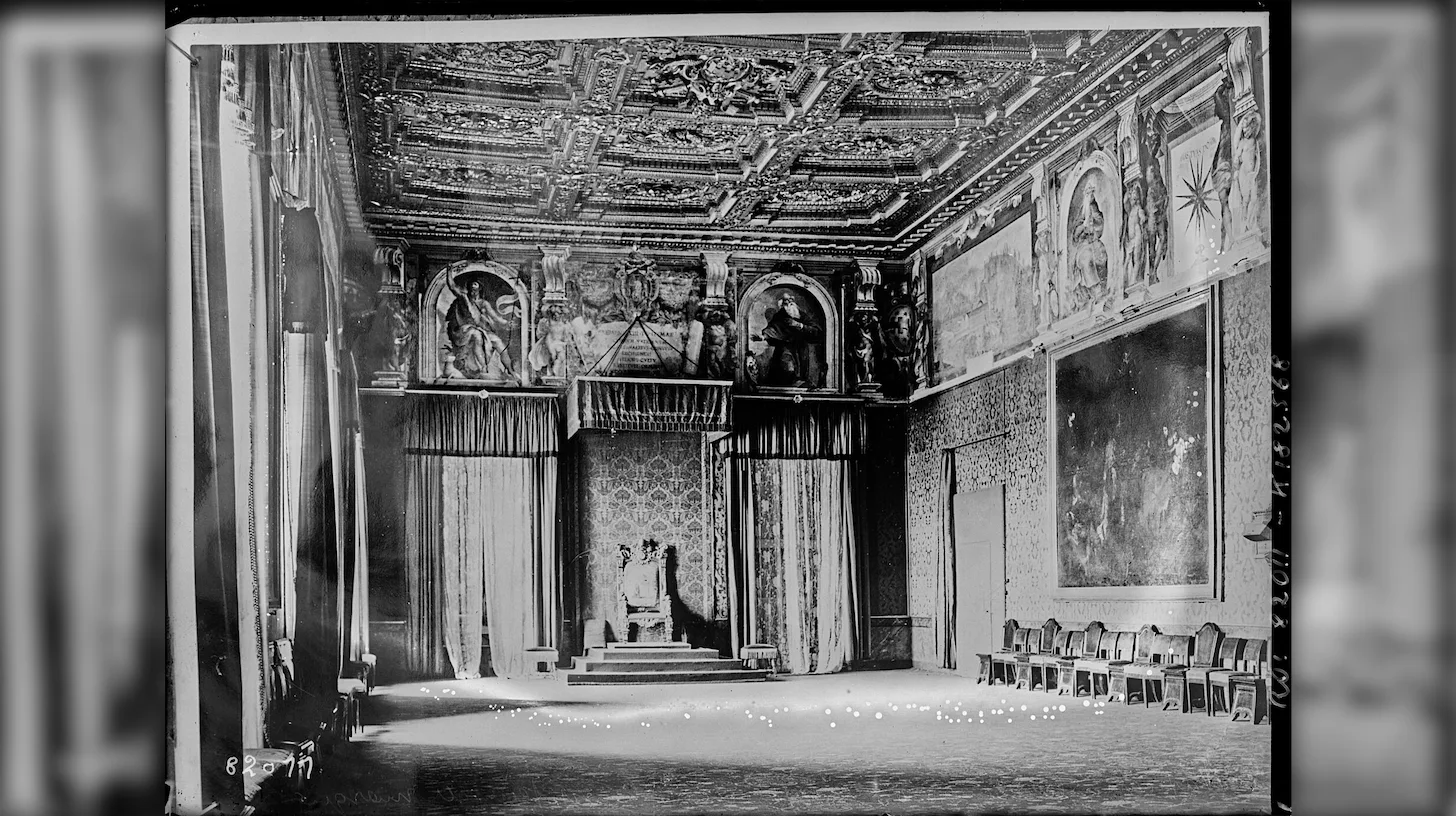
After lunch at the embassy he set out, with the rector of the American College in Rome, Monsignor Charles O’Hearn, beside him. Thousands of people lined the streets and “cheered and waved their hats when the automobile passed.” At the gate the Swiss Guard, in uniforms the AP said had been “designed by Raphael,” presented arms, and in the courtyard of San Damaso the papal gendarmes sounded bugles. At the foot of the great staircase a papal chamberlain met him with an escort of four guards, and attendants led him up into the Clementine Hall and on toward the Pope, “who awaited Mr. Wilson in the Throne Room,” as the Jesuit weekly America reported.
They talked for about half an hour. “It is not, of course, officially known” what they talked about, America wrote. A British news agency heard that they talked of the great social problems of the day and of treaties, and touched on Palestine and Armenia, and the AP was told that the Pope showed the President “numerous telegrams which he had just received regarding the plight of the Armenians.”
Benedict gave Wilson a mosaic of Guido Reni’s painting of St. Peter, made in the Vatican’s own mosaic works. It was a yard square, and the AP put its value at $40,000. The cardinal secretary of state, Pietro Gasparri, gave him two bound copies of the new code of canon law the Church had just finished, and one of them, bound in red leather, was inscribed “Homage to Princeton University.” The same afternoon the President also called at the Episcopal church, where the Protestants of Rome were waiting to receive him.
A story told ninety-six years later
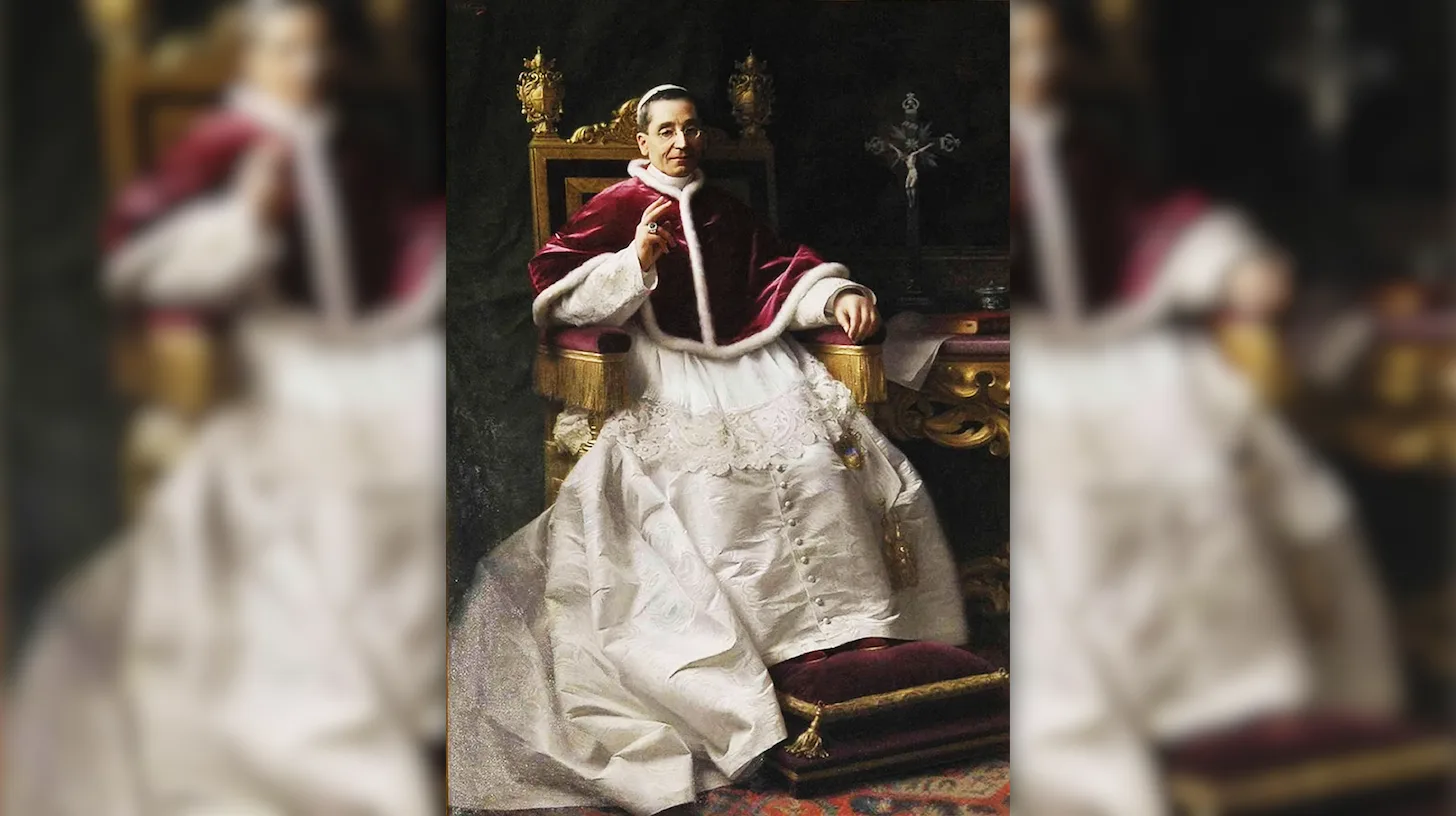
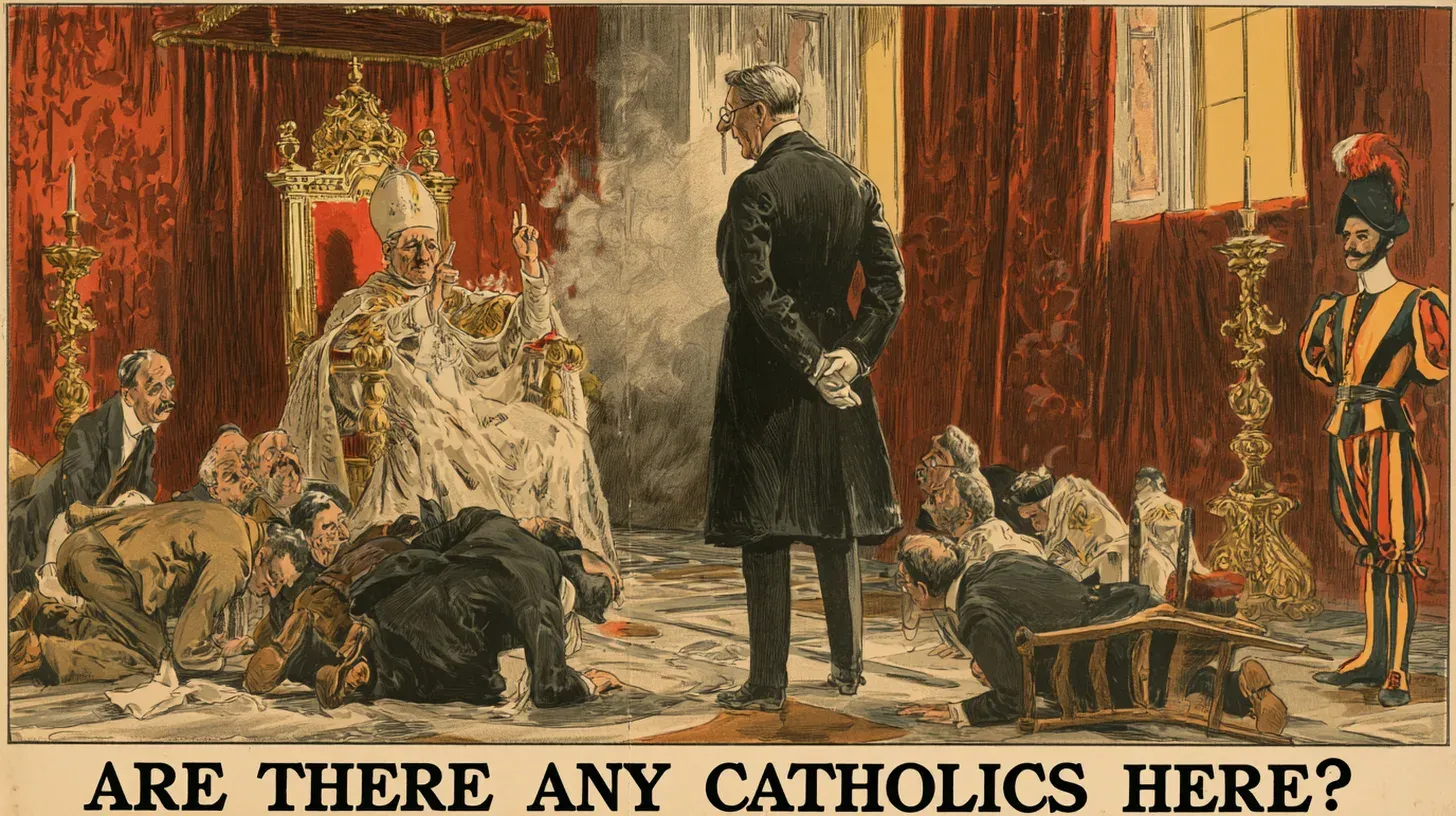
The story that is told about that afternoon now is not in any of those reports. It appeared in America, the same Jesuit magazine, in September 2015, when Pope Francis was about to visit the United States. The writer had the Pope, at the end of the audience, offer his blessing to everyone present, and Wilson, a Presbyterian, then turn round and, “according to whatever account survived,” the article said, he “basically barked out” the question “Are there any Catholics here?” In that telling the Catholics in the party knelt, and Wilson bowed his head. The same article gave another version, “Very well, how many are Catholics?”, and named no source for either.
NPR and other outlets repeated the story, and it grew. One retelling said that among the Catholics who knelt was Wilson’s devoted secretary, Joseph Tumulty. But Tumulty was not in Rome. He wrote in his memoir of the trip, “As my duty held me in Washington, I am dependent upon others,” for what happened there.
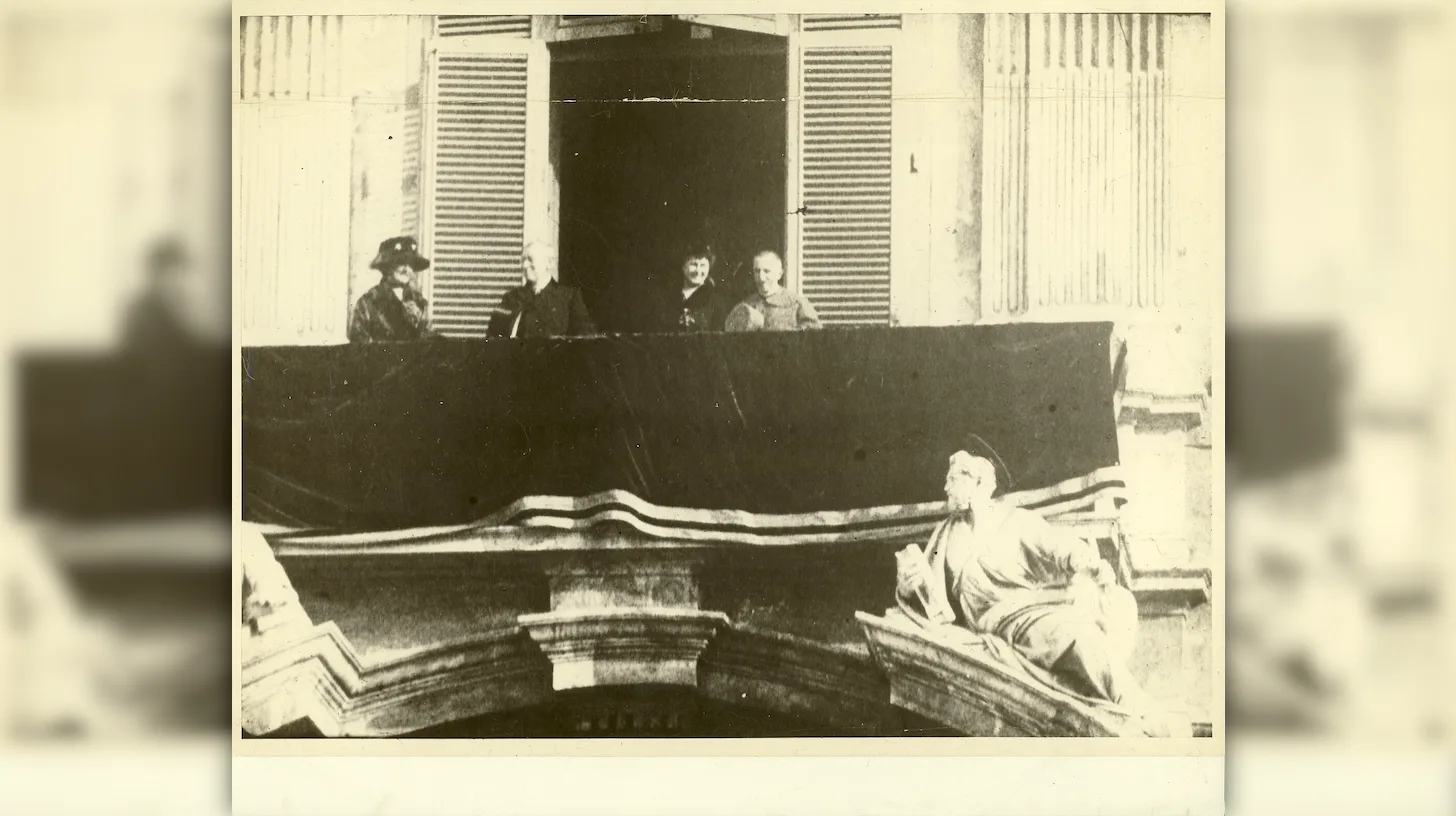
The reports written that week by the Associated Press, the United Press, the New York Times and America itself describe the guards, the robes, the gifts and the half hour, and say nothing of a blessing, of kneeling or of any question to the room. The diary kept in Rome by Wilson’s physician, Cary Grayson, could not be checked for this article. Nothing in the record shows Wilson refusing to kneel. The story may be true. It has not been traced to anyone who saw it.
Two men of sixty-seven
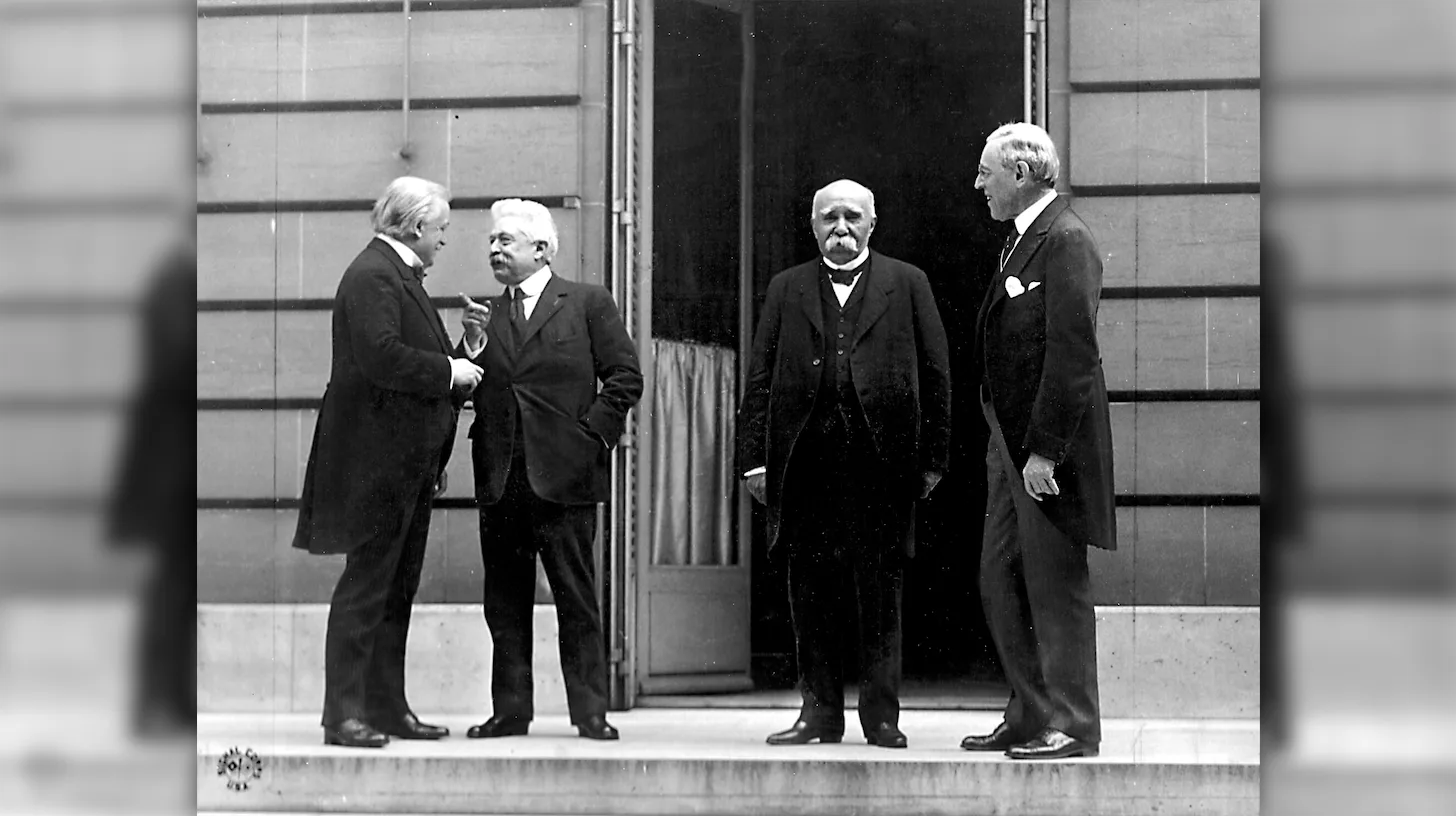
Wilson left Rome for Paris “shortly after 9 o’clock” that night, the AP reported, “with the cheers of the Roman throng that had gathered to witness his departure ringing in his ears.” In Paris he got his League of Nations into the treaty. That autumn, touring the country to sell it, he collapsed, and a few days after he reached the White House he suffered a massive stroke. The Senate voted on the treaty twice, in November 1919 and March 1920, and defeated it both times.
Pope Benedict XV died of pneumonia at six o’clock on the morning of January 22, 1922. He was sixty-seven. He had asked that his body not be embalmed, and for the first time in the history of united Italy, the government declared a period of official mourning for a pope. The obituaries remembered that “Woodrow Wilson called on him while abroad.” Wilson died at his house in Washington on February 3, 1924, at sixty-seven as well.
Ulysses S. Grant had been received by Leo XIII in 1878, but Grant was no longer president then. Wilson was the first sitting president to meet the pope, and for forty years he was the only one. The next was Dwight D. Eisenhower, who was received by John XXIII on Sunday, December 6, 1959.