14 min read
On the morning of Friday, April 30, 1954, in the version the historian Stephen Ambrose published thirty years later, President Dwight D. Eisenhower listened to his national security assistant, Robert Cutler, raise the idea of using atomic weapons to save the French garrison at Dien Bien Phu, and turned on him. “You boys must be crazy,” Ambrose has him say. “We can’t use those awful things against Asians for the second time in less than ten years. My God!” The line has been quoted ever since as the moment Eisenhower said no to the bomb in Vietnam. Ambrose credited it to an interview with Eisenhower, and no other record of that spring contains it.
Two of the men in the room that morning left their own accounts of it, and neither records the outburst. Cutler’s memorandum, written the same day, has Eisenhower doubting that what it calls a new weapon would work in the jungle, and suggesting that the French might be offered a few. The papers of those weeks, now published by the State Department, show a president who turned the French down by a slower road than the famous line suggests: by conditions, by Congress and by allies, while a French army died in a valley in the hills of northern Vietnam.
A valley in Tonkin
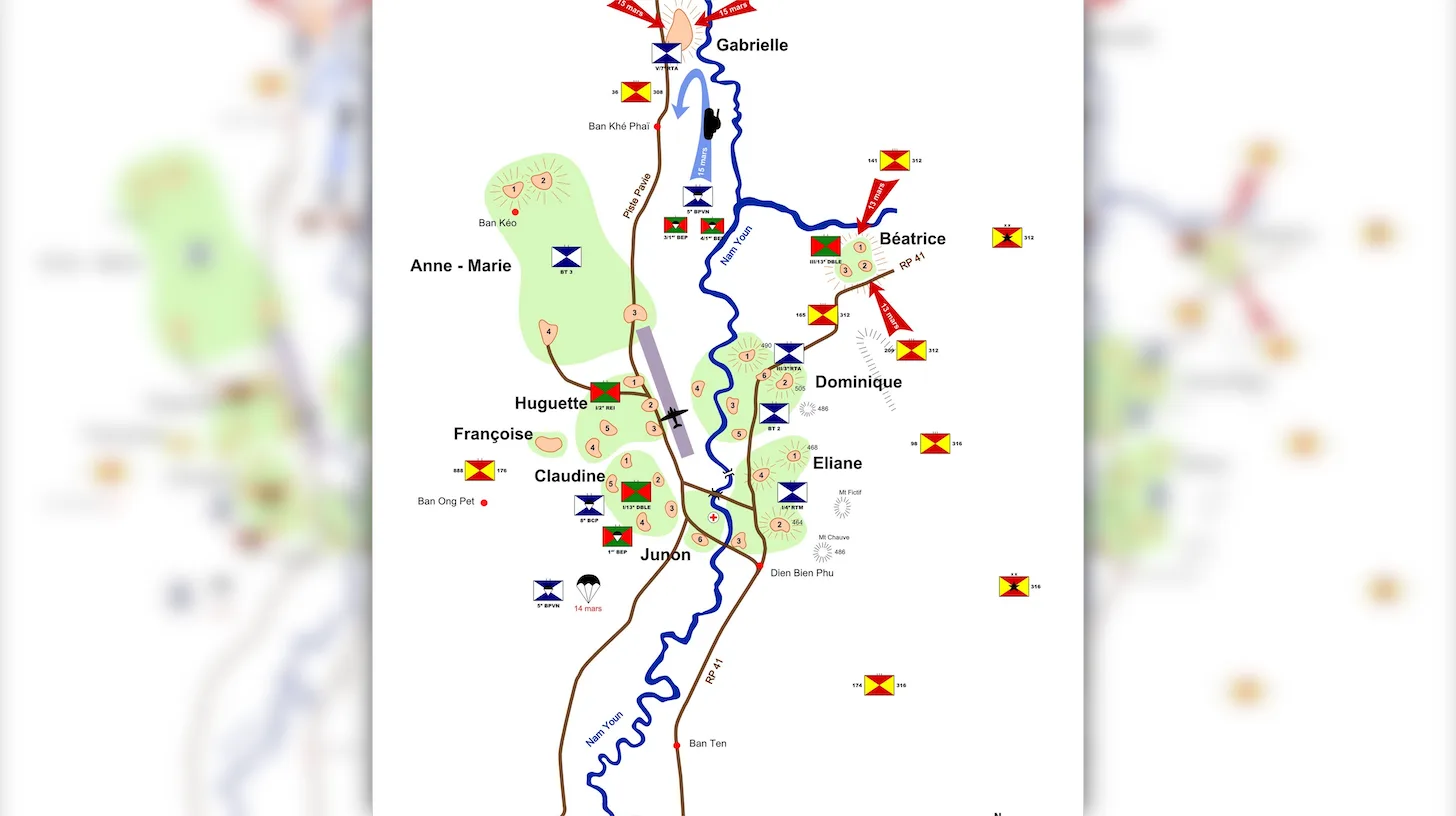
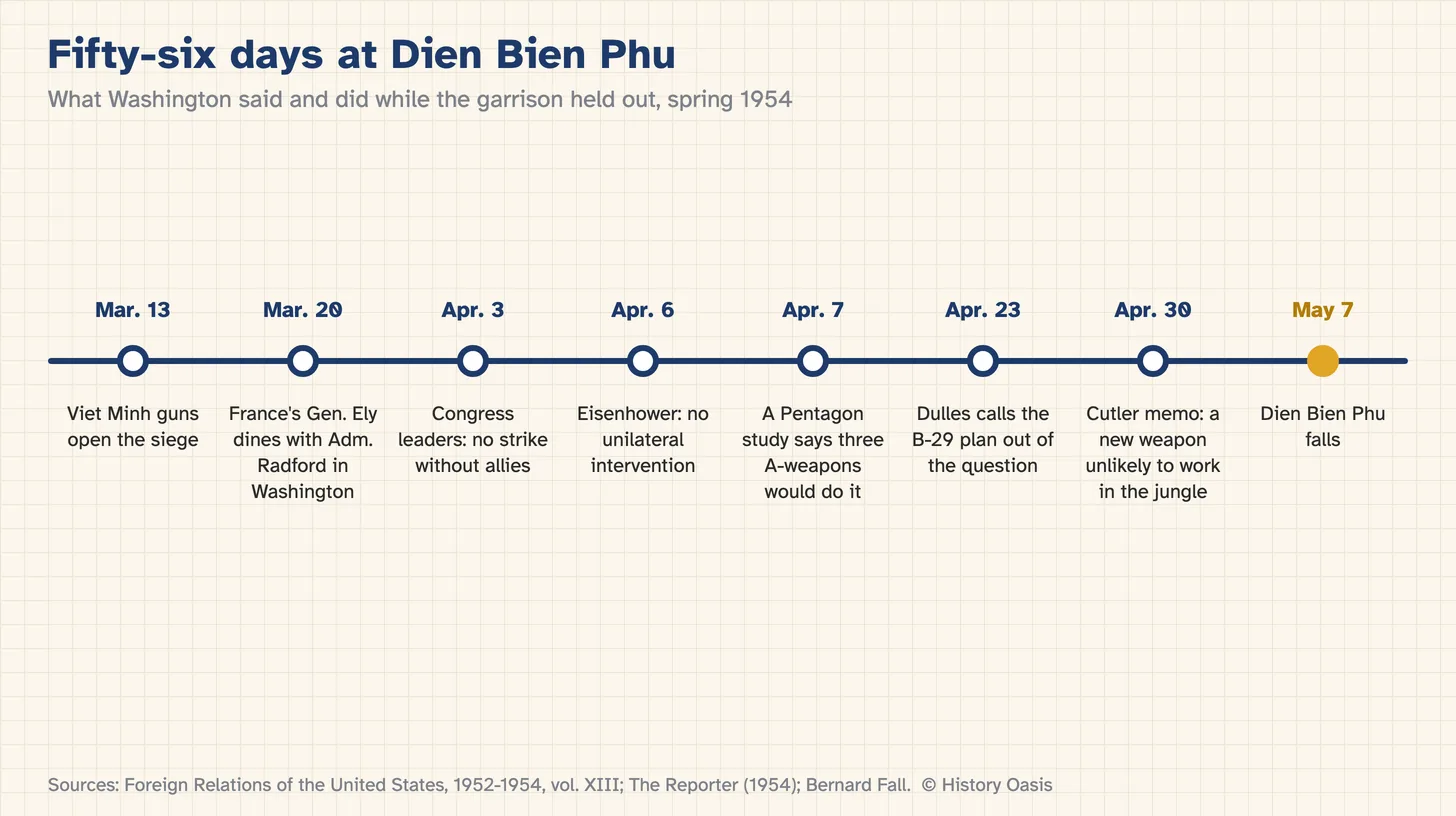
The French had dropped paratroopers into the valley of Dien Bien Phu in November 1953 and turned it into a fortress of strongpoints around an airstrip. At ten minutes past five on the afternoon of March 13, 1954, Viet Minh artillery in the surrounding hills opened on the strongpoint called Béatrice, and the battle of Dien Bien Phu began. Over its course, the historian Bernard Fall later counted, some 15,094 men of the French Union forces were inside the valley.
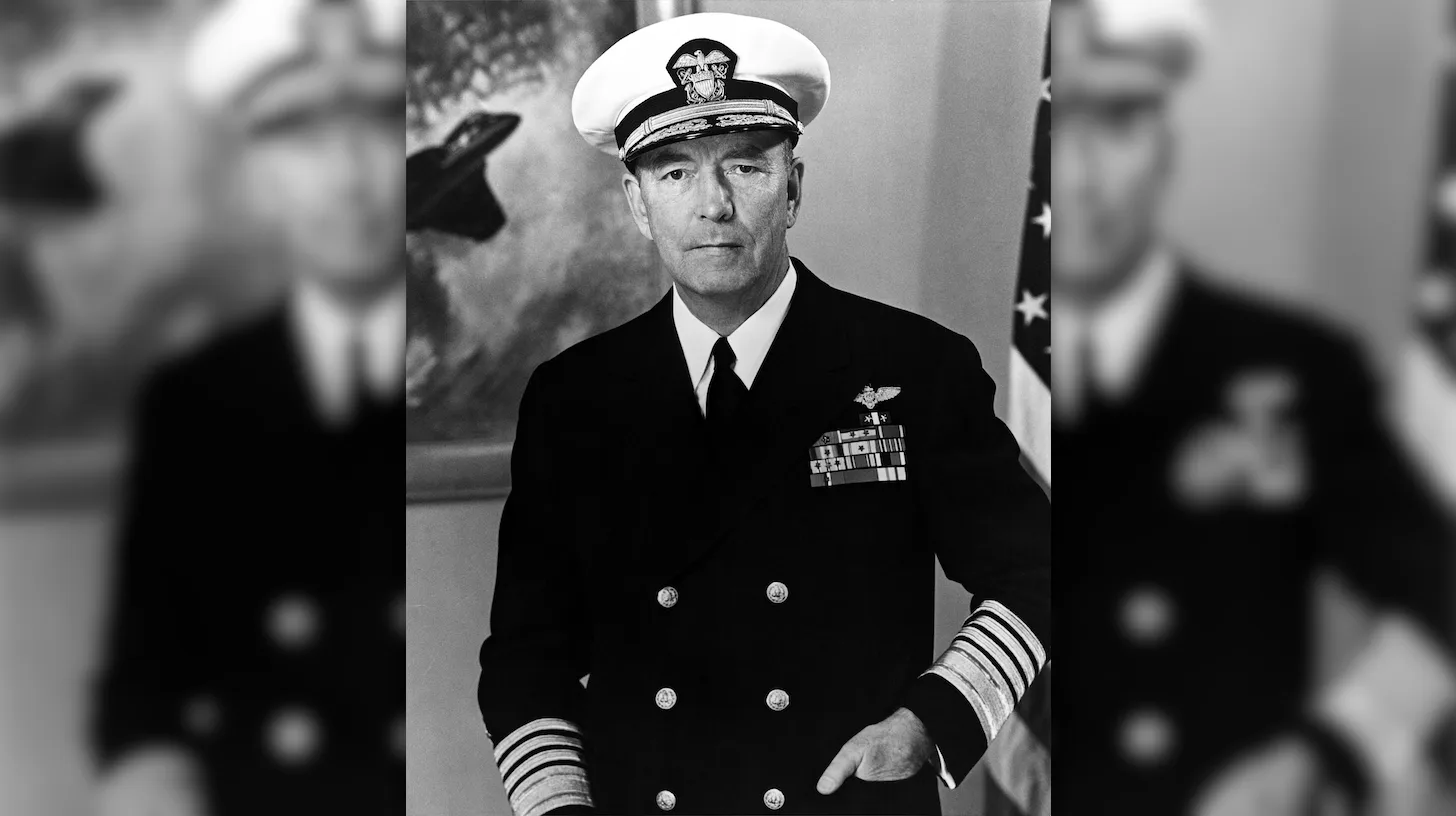
A week later the French chief of staff, Gen. Paul Ely, was in Washington. The talks opened on the evening of Saturday, March 20, at a private dinner at the quarters of Adm. Arthur W. Radford, the chairman of the Joint Chiefs of Staff, and Ely told his hosts that the chances of holding Dien Bien Phu were 50–50. He asked in writing whether “direct intervention by U.S. aircraft” could be envisaged. Radford, fifty-eight, a naval aviator since 1920, wrote to the president that the United States “must be prepared to act promptly and in force possibly to a frantic and belated request by the French for U.S. intervention.”
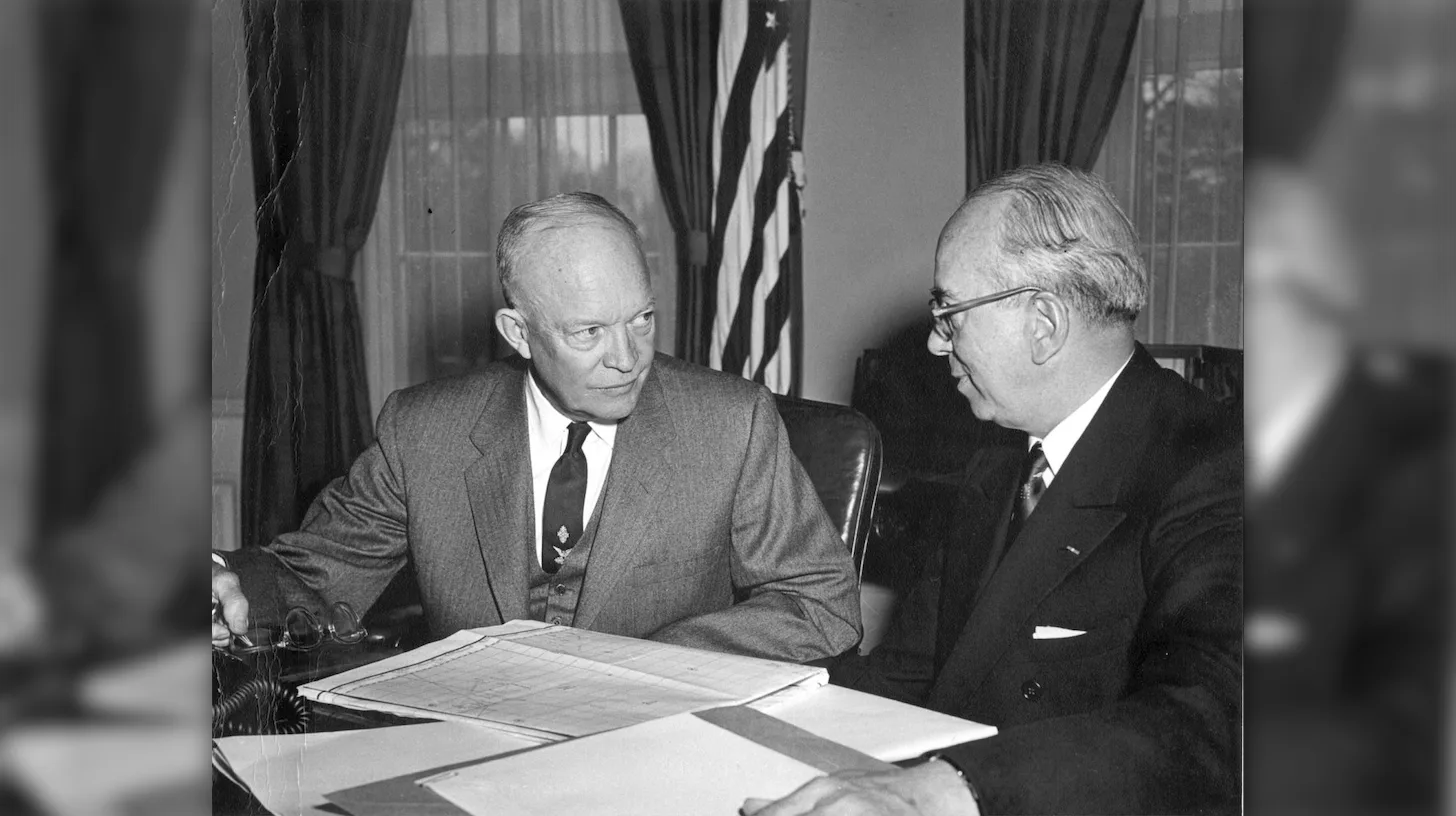
Eisenhower was sixty-three. Nine years earlier, as Supreme Allied Commander in Europe, he had walked through Ohrdruf, the first Nazi camp American troops overran. He had told reporters on March 10 that there would be no American involvement in war “unless it is a result of the constitutional process that is placed upon Congress to declare it.”
He played golf that spring whenever he could, and the notes his staff kept record his temper too. His letters show his humour, as when he made fun of Gen. Charles de Gaulle as a man six feet five who, he wrote, thought himself descended from Clemenceau and Joan of Arc. His press secretary, James Hagerty, wrote down that the president “angrily ended” one argument with a senator, and the minutes of his National Security Council record him answering one member of his cabinet sharply and another impatiently. On March 24, the minutes show, he did not “wholly exclude the possibility of a single strike, if it were almost certain this would produce decisive results.”
How many of the three
On April 1 the National Security Council took up the question. The president understood, the minutes say, that all the Joint Chiefs except the chairman opposed an air strike with American planes and pilots, and Radford answered that help could reach the garrison “as early as tomorrow morning” if the decision were made. At lunch that day Eisenhower told two newspapermen that the United States might have to send squadrons from two carriers off the coast to bomb the enemy at Dien Bien Phu, and added, as Hagerty recorded it, that if it did, “we’d have to deny it forever.” The next day the Army’s chief of staff gave his own answer in writing, an “emphatic and immediate” no.
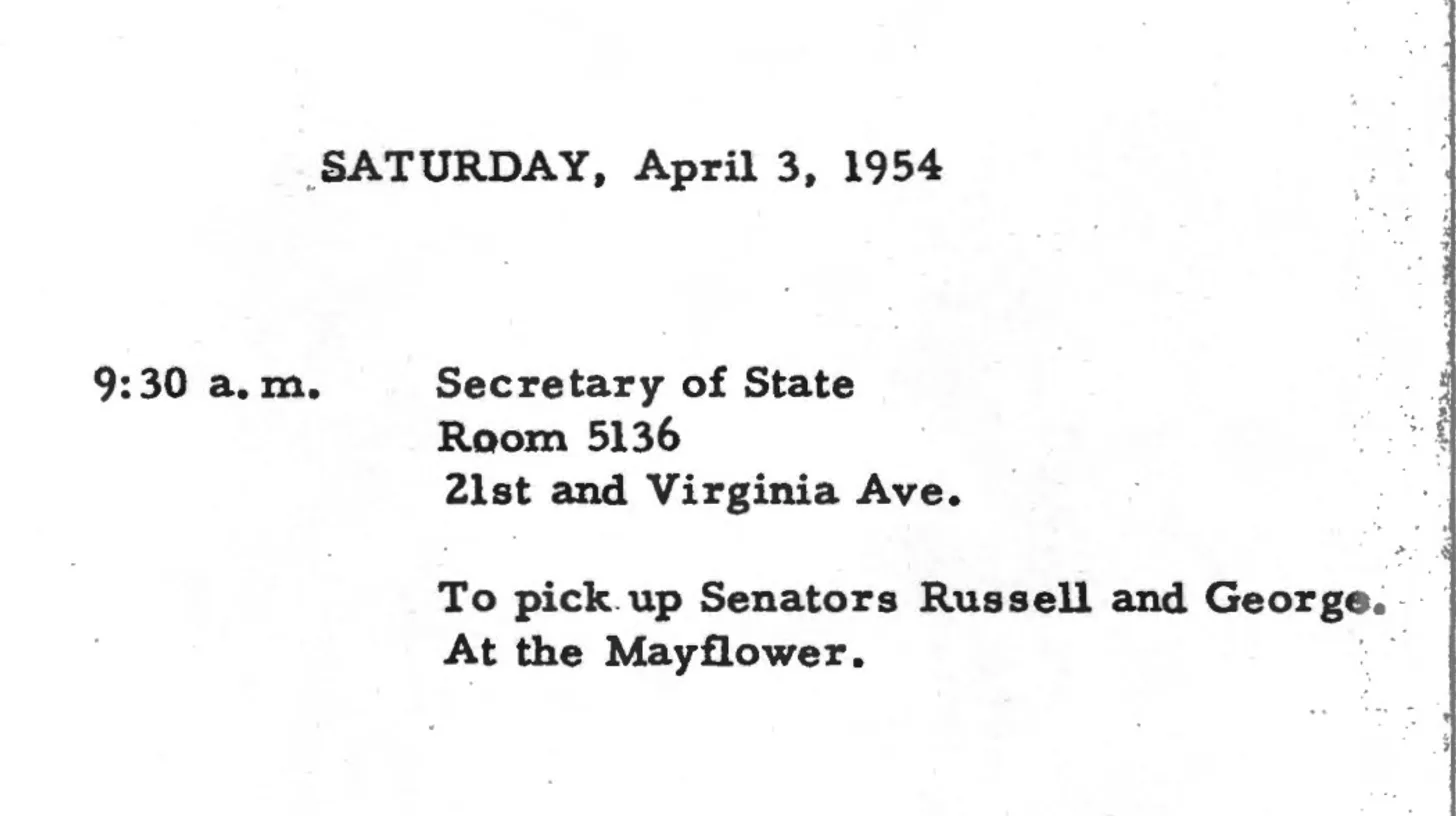
On Saturday, April 3, at half past nine, Secretary of State John Foster Dulles met eight leaders of Congress at the State Department. It was a raw, windy morning, the journalist Chalmers Roberts reported, and a large map of the world hung behind Dulles’s seat. Eisenhower was at Camp David. Dulles said the president wanted a resolution from Congress so that he could use air and sea power if he felt it necessary, and Radford laid out the plan: some two hundred planes from the carriers Essex and Boxer, with Air Force planes from the Philippines, in a strike on the Viet Minh around the fortress.
A senator from Kentucky asked Radford whether the plan had the approval of the other members of the Joint Chiefs. “No.” Then the question that Roberts remembered best.
“How many of the three agree with you?” “None.”
The Senate minority leader, Lyndon B. Johnson of Texas, asked whether Dulles had consulted the nations who might be allies in such a war, and Dulles said he had not. The feeling in the room, Dulles’s own memorandum says, was unanimous that “we want no more Koreas with the United States furnishing 90% of the manpower.” Asked whether air power could save Dien Bien Phu now, Radford said it was too late. The meeting lasted two hours and ten minutes, and at 1:44 that afternoon Dulles telephoned Camp David to report that Congress would go along with vigorous action “if we were not doing it alone.”
Fight for it like dogs
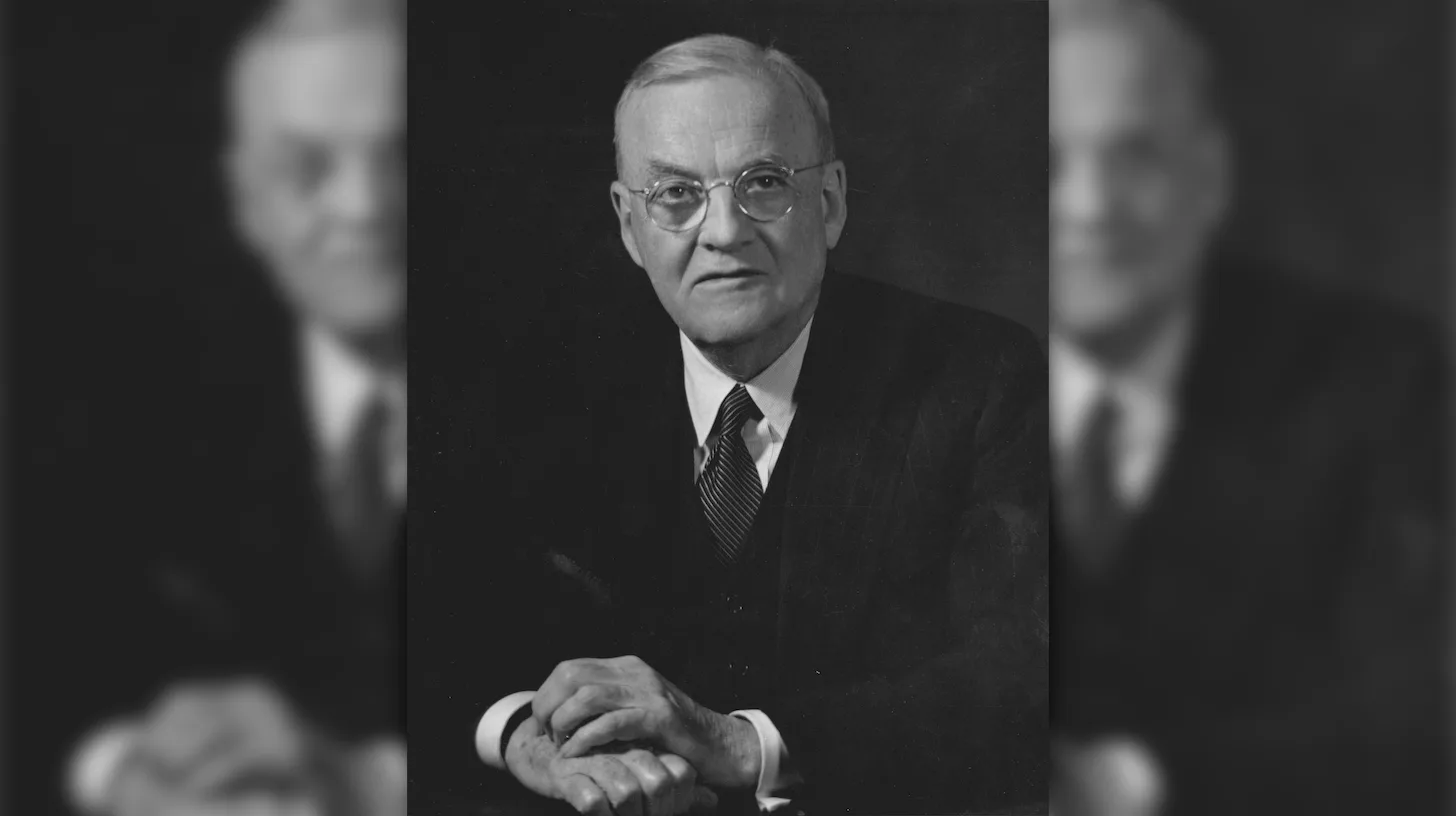
The French asked formally the next day for carrier strikes at Dien Bien Phu. Eisenhower’s answer, given to Dulles by telephone on April 5, was that without the support of Congress such a move “would be completely unconstitutional & indefensible,” and he was annoyed that Radford had told the French he would do his best. At the Security Council the following day he put it more plainly.
“there was no possibility whatever of U.S. unilateral intervention in Indochina, and we had best face that fact.”
Even if they tried, he went on, they would have to take it to Congress and “fight for it like dogs.” The vice president, Richard Nixon, wrote in his diary that night that the president had “backed down considerably” from the strong position he had held. The next morning Eisenhower gave reporters the image behind what became known as the domino theory. “You have a row of dominoes set up,” he said, “you knock over the first one, and what will happen to the last one is the certainty that it will go over very quickly.”
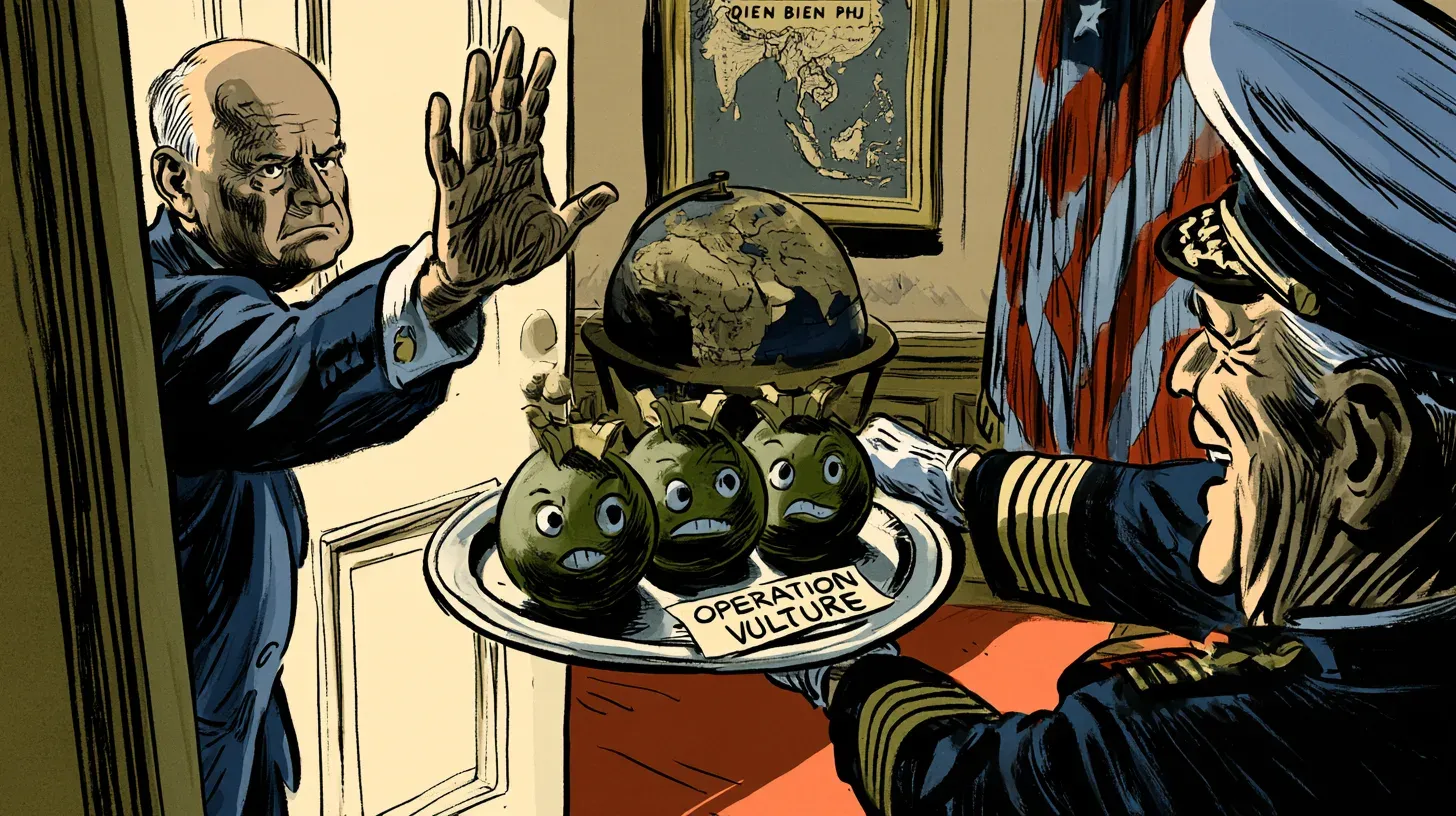
The bomb came up that same day, and not in front of him. A State Department counselor, Douglas MacArthur II, wrote a memorandum on April 7 recording that a study group of the Joint Chiefs had “reached the conclusion that three tactical A-weapons, properly employed, would be sufficient to smash the Vietminh effort there.” The memorandum is in the published papers. Radford, through an aide, wondered whether the French might be asked to approve atomic weapons in principle if a coalition were ever formed. MacArthur thought the French would never accept that responsibility, and Dulles did not want to raise it. No paper shows that the study reached Eisenhower.
Massive B-29 bombing
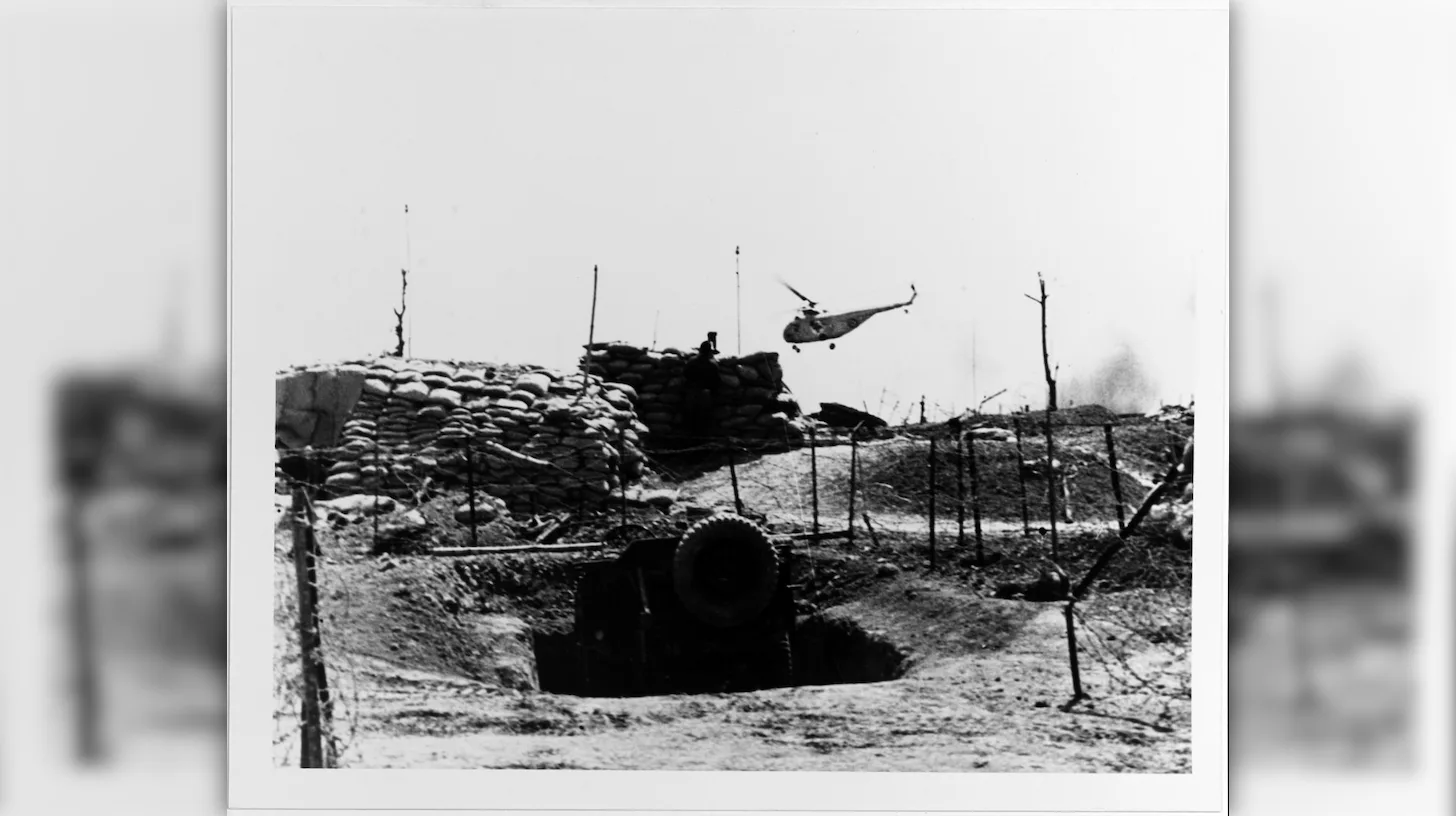
The plan the French called Vautour, remembered in English as Operation Vulture, appears in the American record only once that spring. On April 23 Dulles cabled from Paris that the French commander in Indochina saw only two choices, one of them “Operation Vautour which would be massive B–29 bombing,” and that he had told the French foreign minister, Georges Bidault, that such an intervention “seemed to me out of question under existing circumstances.” Bidault, he added, gave “the impression of a man close to the breaking point.” The plan was a conventional raid, about sixty B-29s from the Philippines with fighters from the Seventh Fleet, and the Pentagon’s own later history of the war found no record of it in American files.
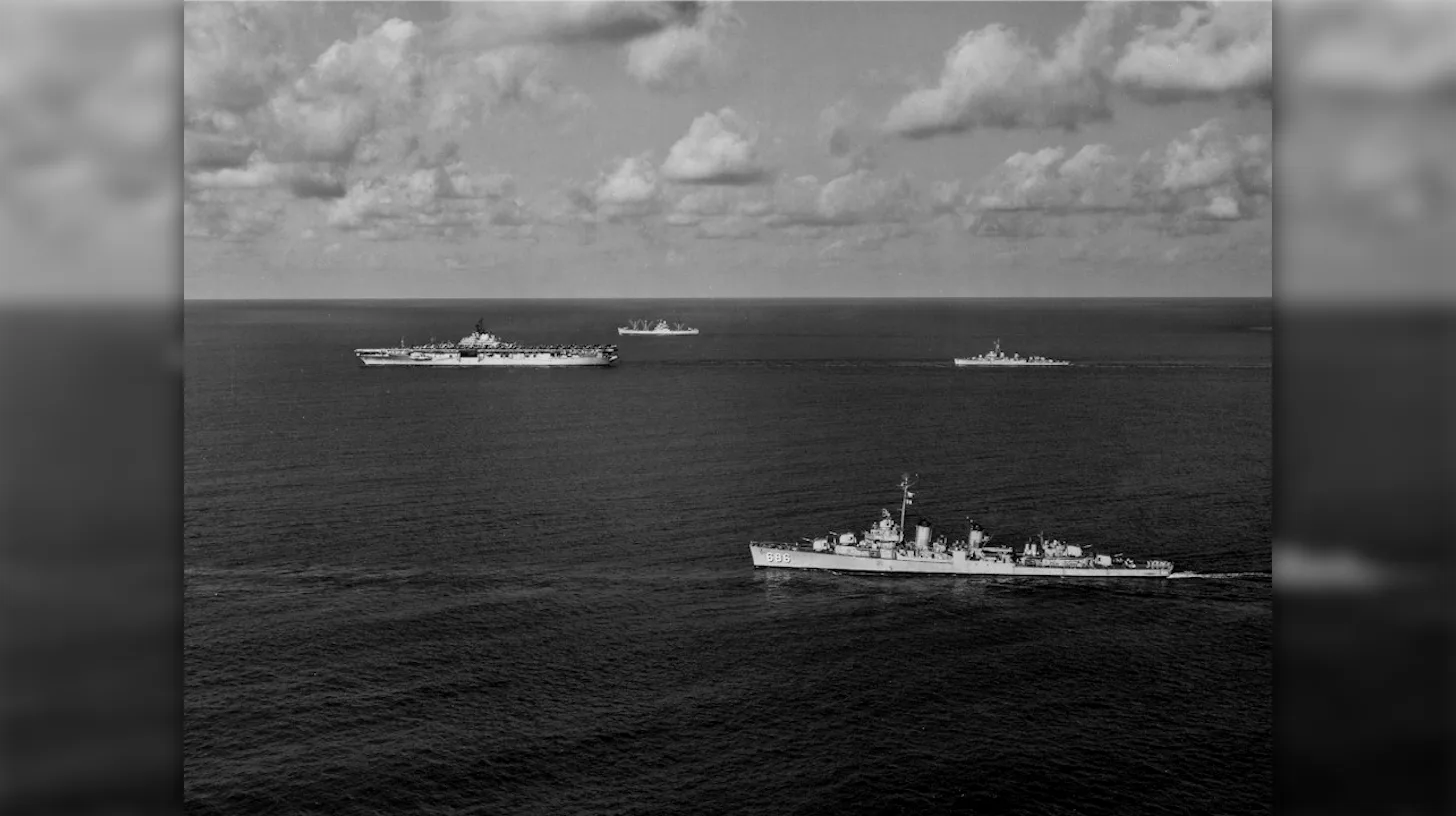
Britain refused to join any strike, and with that the conditions Eisenhower had set could not be met. On April 26 he wrote to Gen. Alfred Gruenther in Europe that even “if we could by some sudden stroke assure the saving of the Dien Bien Phu garrison,” the free world would lose more than it gained on the terms the French proposed.
A new weapon in the jungle
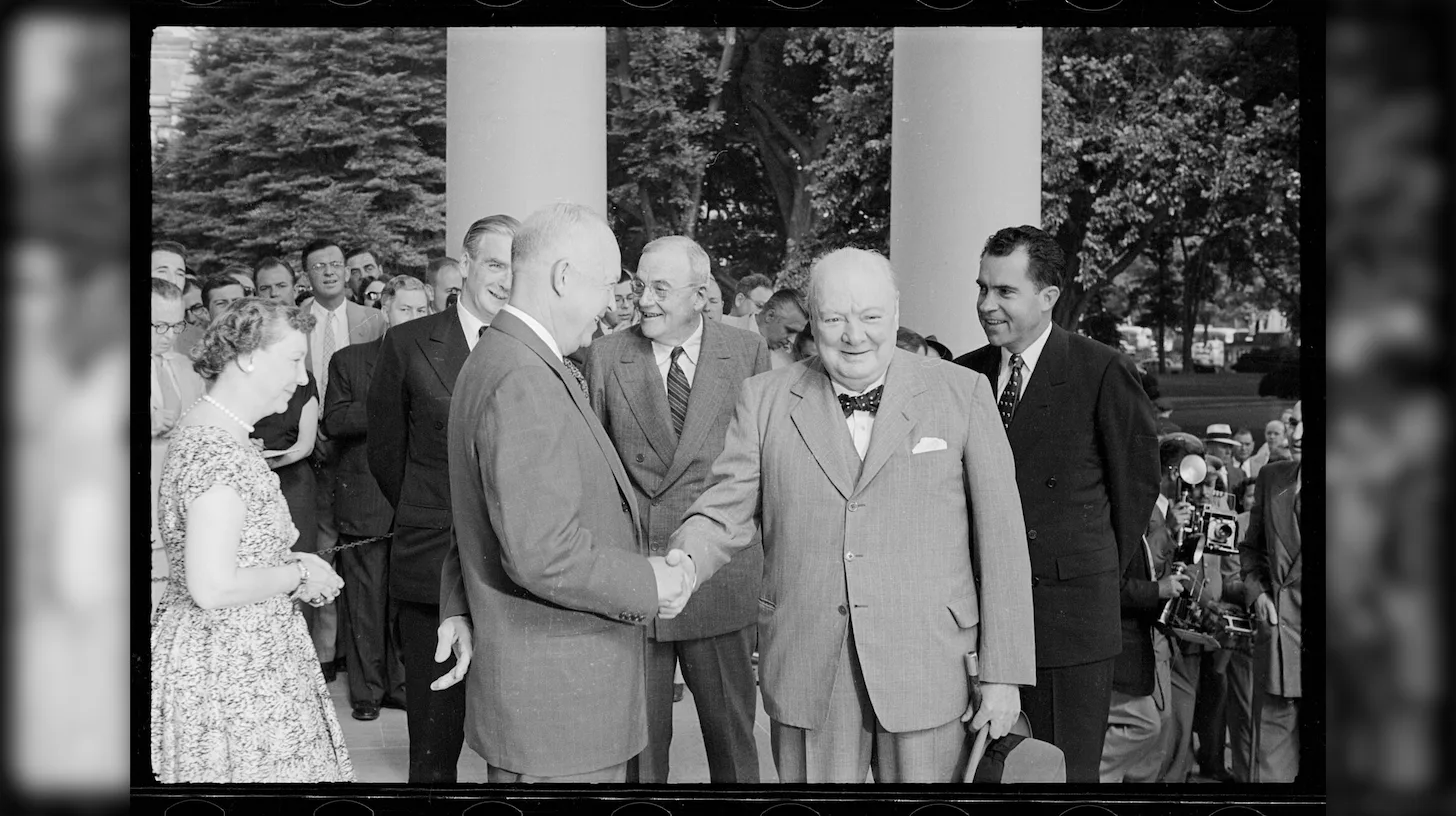
The Security Council met again on Thursday, April 29, from ten until one. Radford reported that the ground the French held had shrunk to about 1,500 yards across, with some 8,500 infantry and 1,200 artillerymen left against an estimated 40,000 Viet Minh. The director of foreign aid urged going in alone. Eisenhower answered that to him leadership implied associates, and that “Without allies and associates the leader is just an adventurer like Genghis Khan.” Late that afternoon he went out on the White House lawn with Hagerty to hit golf balls, and told him that any action was on hold until they saw how the peace conference at Geneva was coming along.
That afternoon the council’s planning board talked over whether one new weapon, dropped on the Viet Minh reserves behind Dien Bien Phu, would be decisive, and the next morning Cutler brought the question to Eisenhower and Nixon. His memorandum records that they thought such a weapon very unlikely to be effective “in the jungles around DBP,” that Navy Corsairs with bombs and napalm would do better, and that they might tell the French the Americans had never given them any new weapons, but “if they wanted some now for possible use, we might give them a few.” Nixon remembered the president saying something else.
“First, I certainly do not think that the atom bomb can be used by the United States unilaterally, and second, I agree with Dick that we do not have to mention it to anybody before we get some agreement on United action”
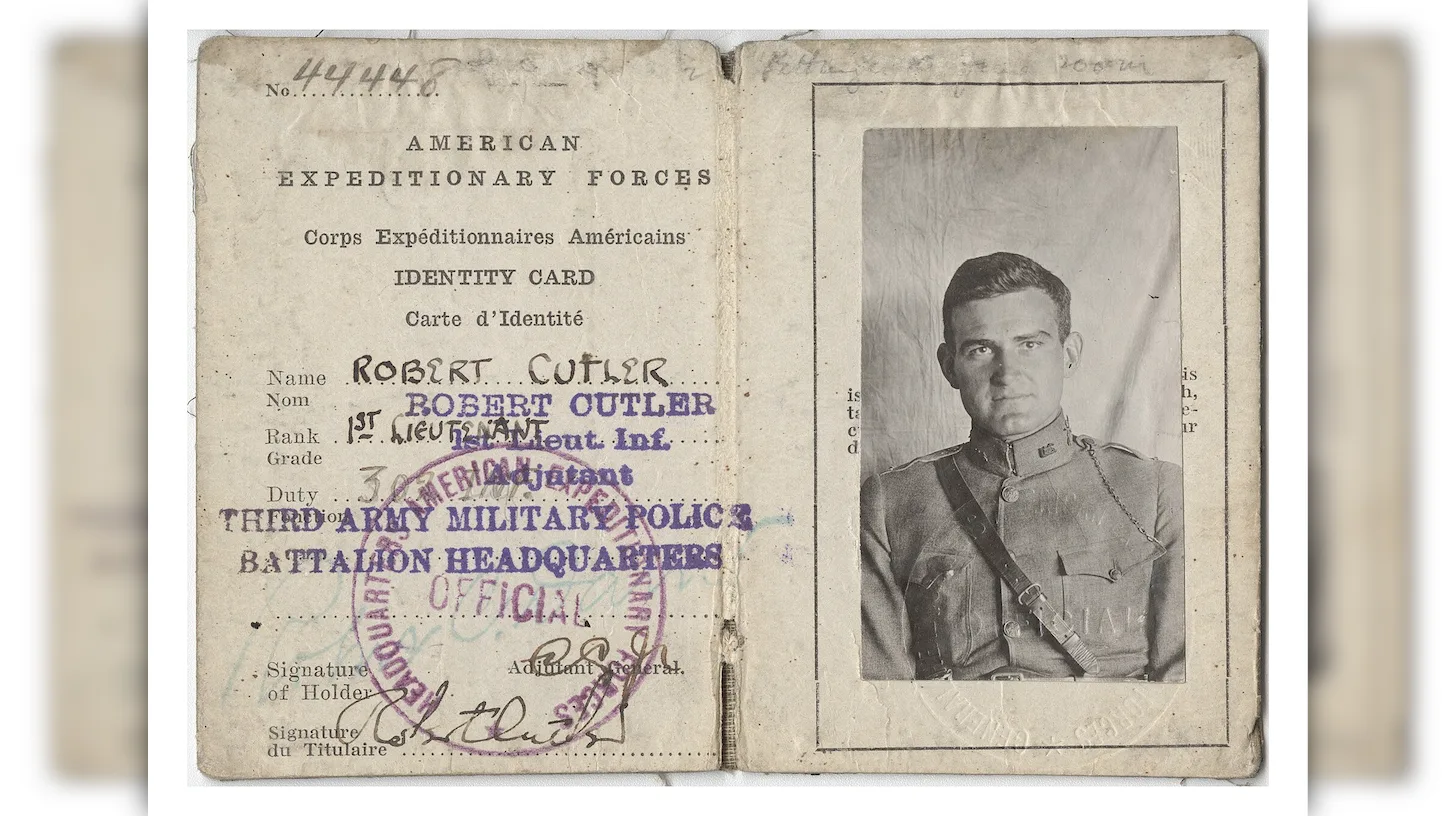
This is the conversation in which Ambrose set “You boys must be crazy.” In 2010 the deputy director of the Eisenhower Library found that Ambrose had met Eisenhower only a few times, for a few hours in all, and never alone, and a historian who searched the library for any record of the line found none. The French had a story of their own. Bidault later said that Dulles had offered him two atomic bombs in Paris that April, and when Bidault’s aide raised it in August, Dulles cabled back that he had “no recollection whatever of alleged offer,” and that “it is incredible that I should have made offer since the law categorically forbids it.”
No white flag
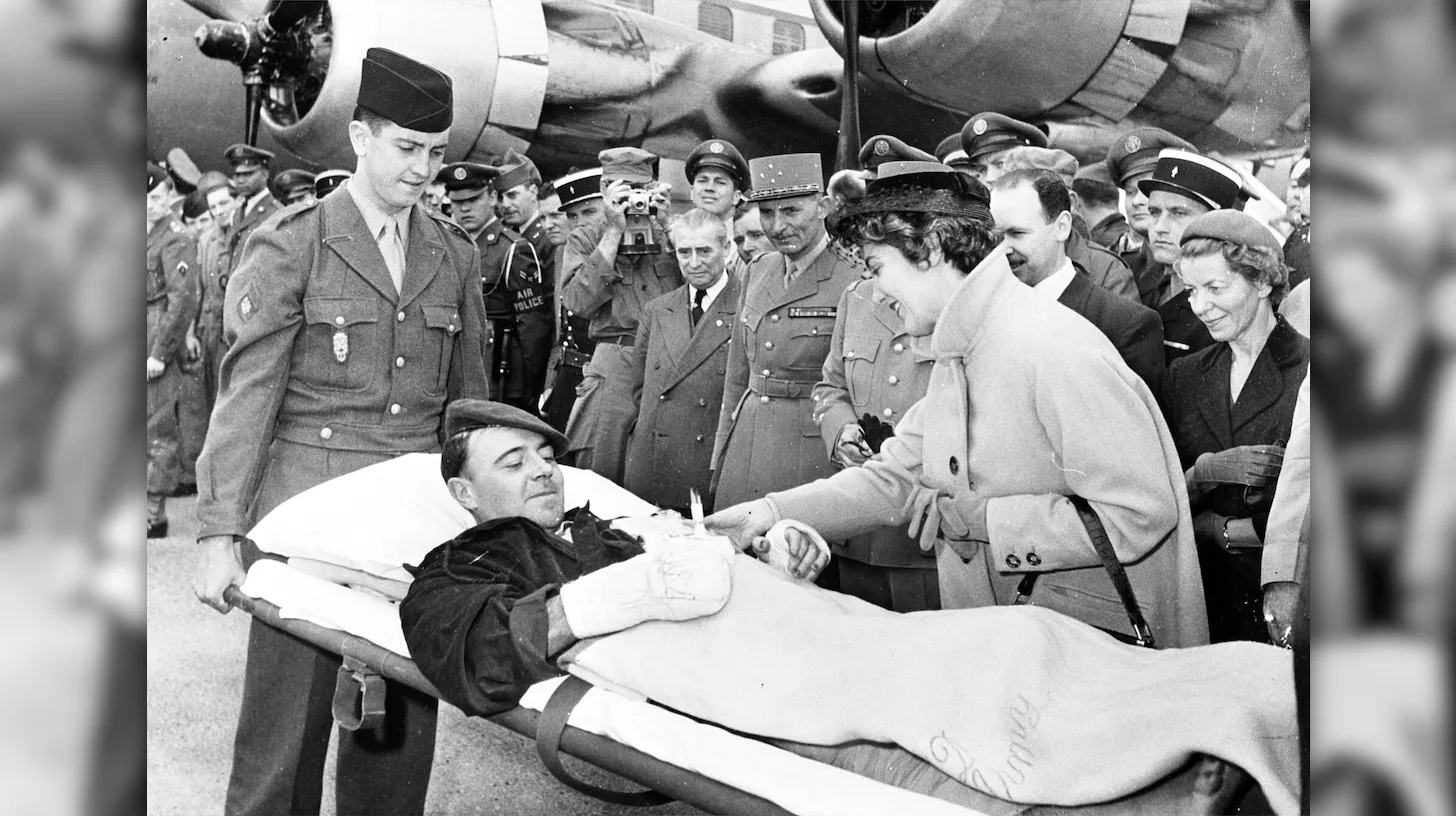
At Dien Bien Phu the end came in rain and mud on Friday, May 7, 1954. The French commander, Brig. Gen. Christian de Castries, talked by radiotelephone with his superior in Hanoi, 220 miles away, who told him, as Fall reconstructed the exchange, “no surrender, no white flag.” The last word from the main position came at ten minutes to six in the evening. In Washington, where it was still morning, a news ticker was handed to Radford at 11:55 during a meeting at the Pentagon, and he read it aloud. Dien Bien Phu had fallen.
Eisenhower had asked a fortnight earlier for a message to be drafted for the fall of Dien Bien Phu, and it went to the President of France that evening. “The entire free world has been inspired by the heroism and stamina displayed by the gallant garrison at Dien Bien Phu,” it said. Close to 10,000 men were marched off to prison camps 300 miles to the east, about 2,000 lay dead in the valley, and Fall counted only 73 who got away. At Geneva that summer the French and the Viet Minh agreed to divide the country, for the time being, at the 17th parallel.
Cutler’s memorandum of April 30 is printed in the State Department’s volume on Indochina for those years. It does not say “My God.”