13 min read
On Sunday, July 3, 1938, seventy-five years after the last day of fighting at Gettysburg, President Franklin D. Roosevelt stood on the battlefield and spoke to the old soldiers who had come back to it, men who had worn the blue and men who had worn the gray, “a fragment spared by time.” In the camp that week, quartered in the tents of the Confederate veterans, was a mountain farmer from Wilkes County, North Carolina, named Mose Triplett, who was ninety-two years old and had worn both.
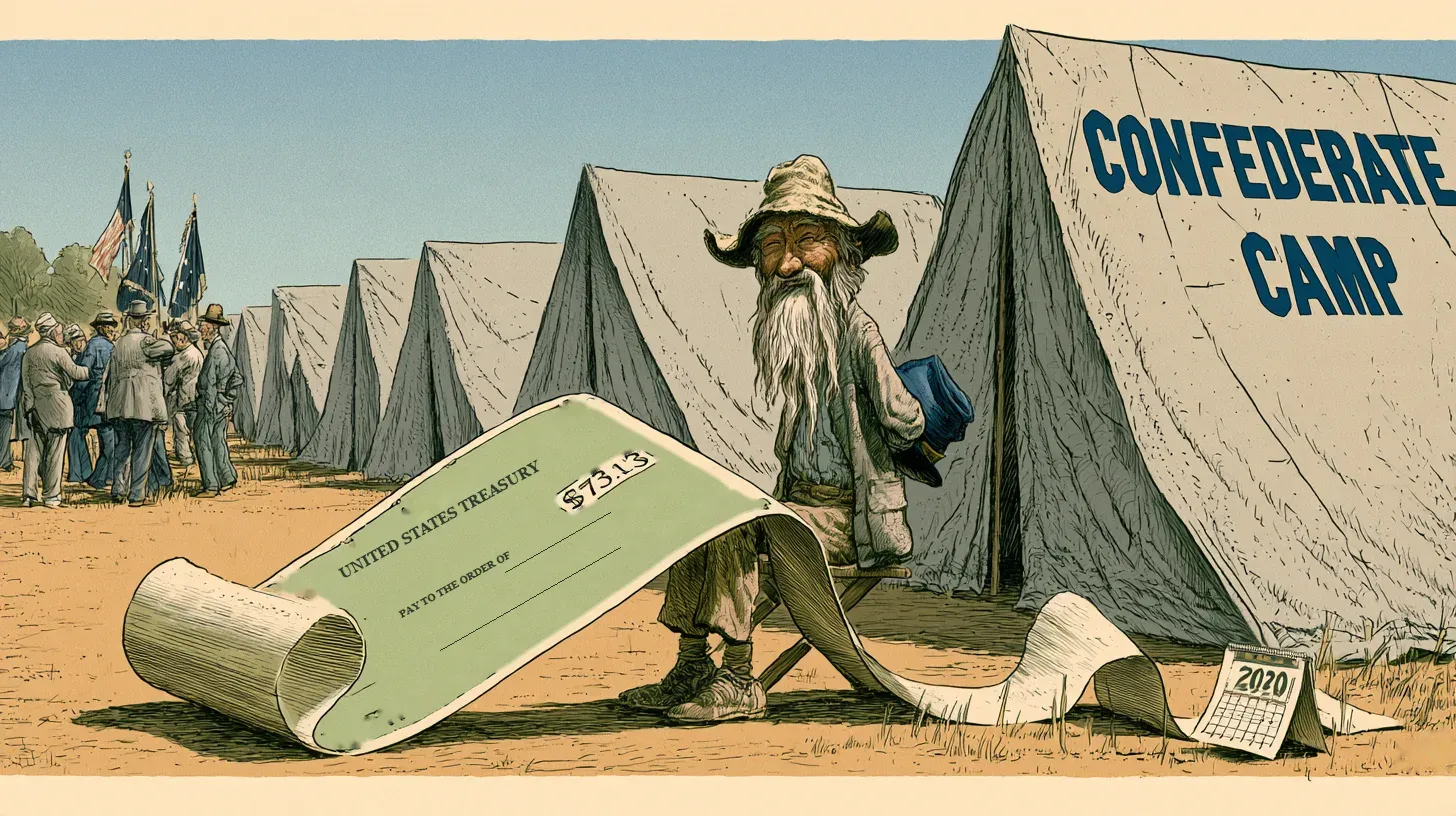
He told a reporter that he had fooled everybody. He died within days of getting home. But he left a daughter, born when he was eighty-three, and for eighty-two years after his death the United States government went on paying a pension for his service in the Civil War. The last check went to her, $73.13 a month, until she died in a nursing home in May 2020.
Sixteen years old in the 53rd North Carolina
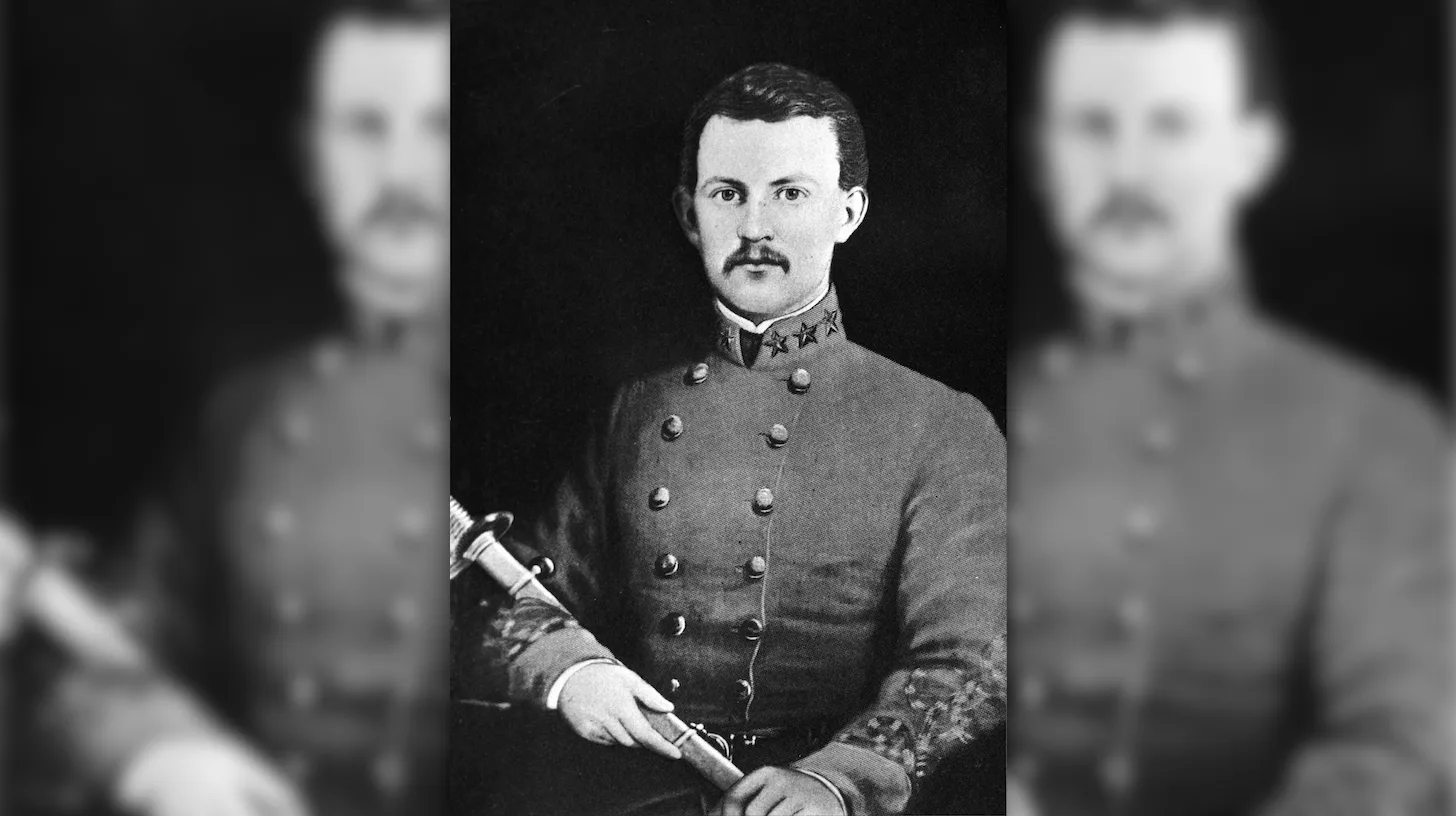
He was born in 1846 in Watauga County, on the mountainous border with Tennessee, and was living in Wilkes County when he enlisted in the Confederate army in May 1862, at sixteen, in Company K of the 53rd North Carolina Infantry. He spent half of that enlistment in the hospital, though the records do not say whether for sickness or a gunshot wound to the shoulder. In January 1863 he transferred to the 26th North Carolina, whose Company C was made up mostly of Wilkes County men, five other Tripletts among them, and whose colonel was twenty years old.
The only description of him as a young man is in a Union enlistment record of a year later. He was a farmer, five feet eight inches tall, with blue eyes and sandy hair, and he could not write his name. On June 15, 1863, the 26th North Carolina left its camps near Fredericksburg, Virginia, and started north with Lee’s army toward Pennsylvania.
He fell sick with fever on the way and was sent to a Confederate hospital in an old tobacco warehouse in Danville, Virginia. Eight days later he was gone. The state’s records carry him as “present or accounted for until he deserted on June 26, 1863.” About a week afterward his regiment went into the fight at Gettysburg, and a history of North Carolina’s regiments published in 1901 counted its loss in that battle as 588 killed and wounded and 126 missing out of 800 engaged.
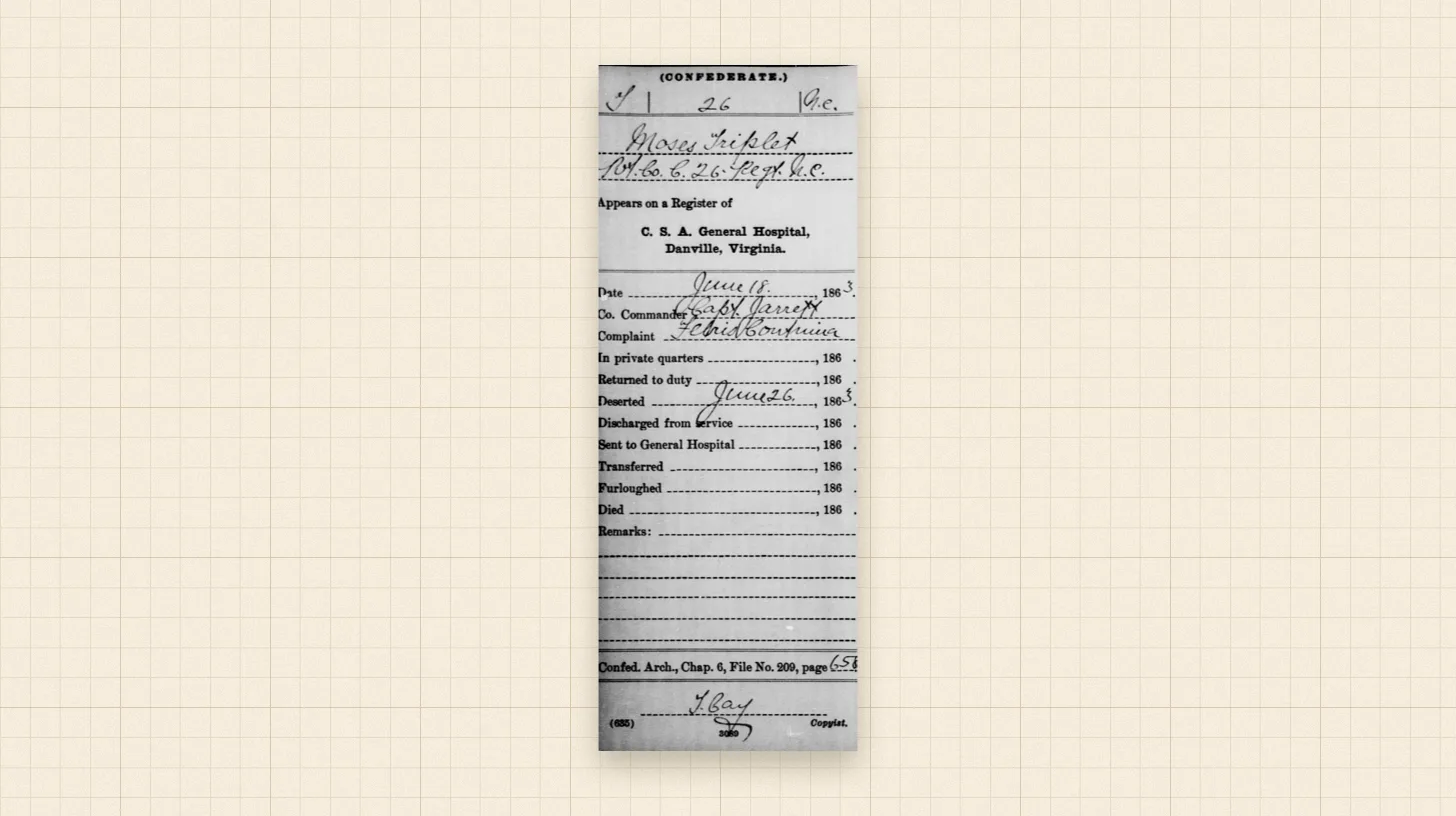
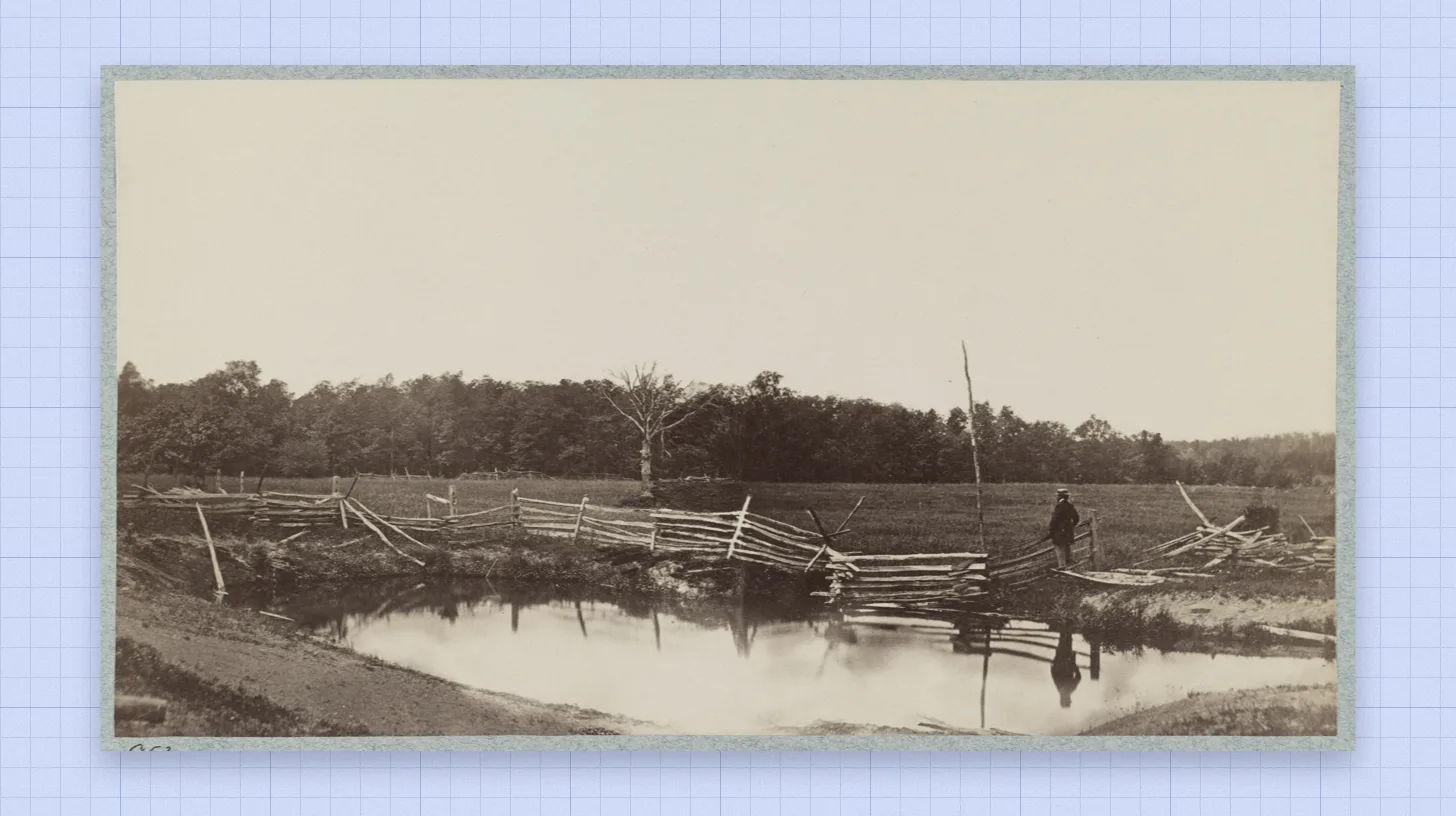
A mark on a Union enlistment
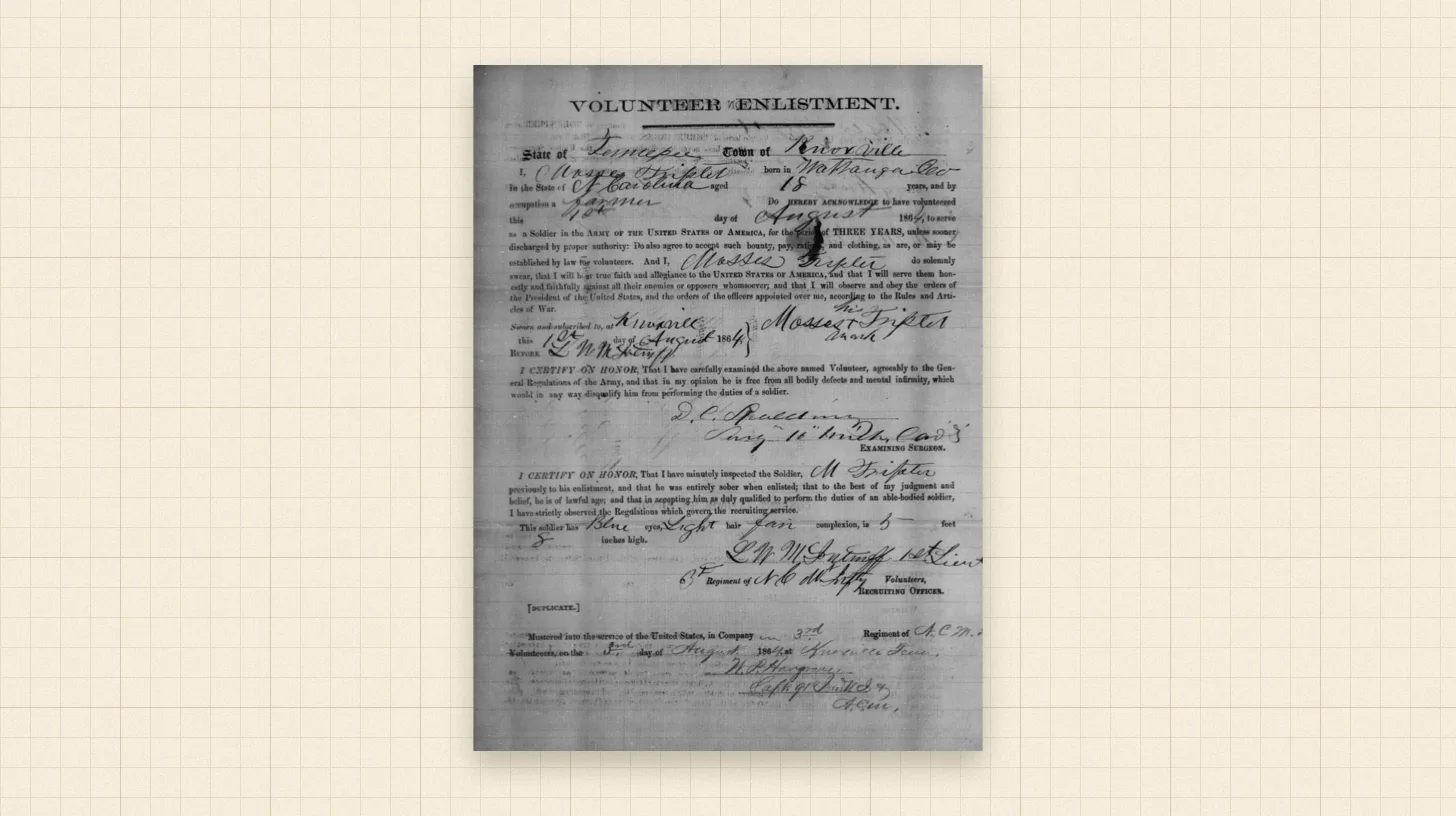
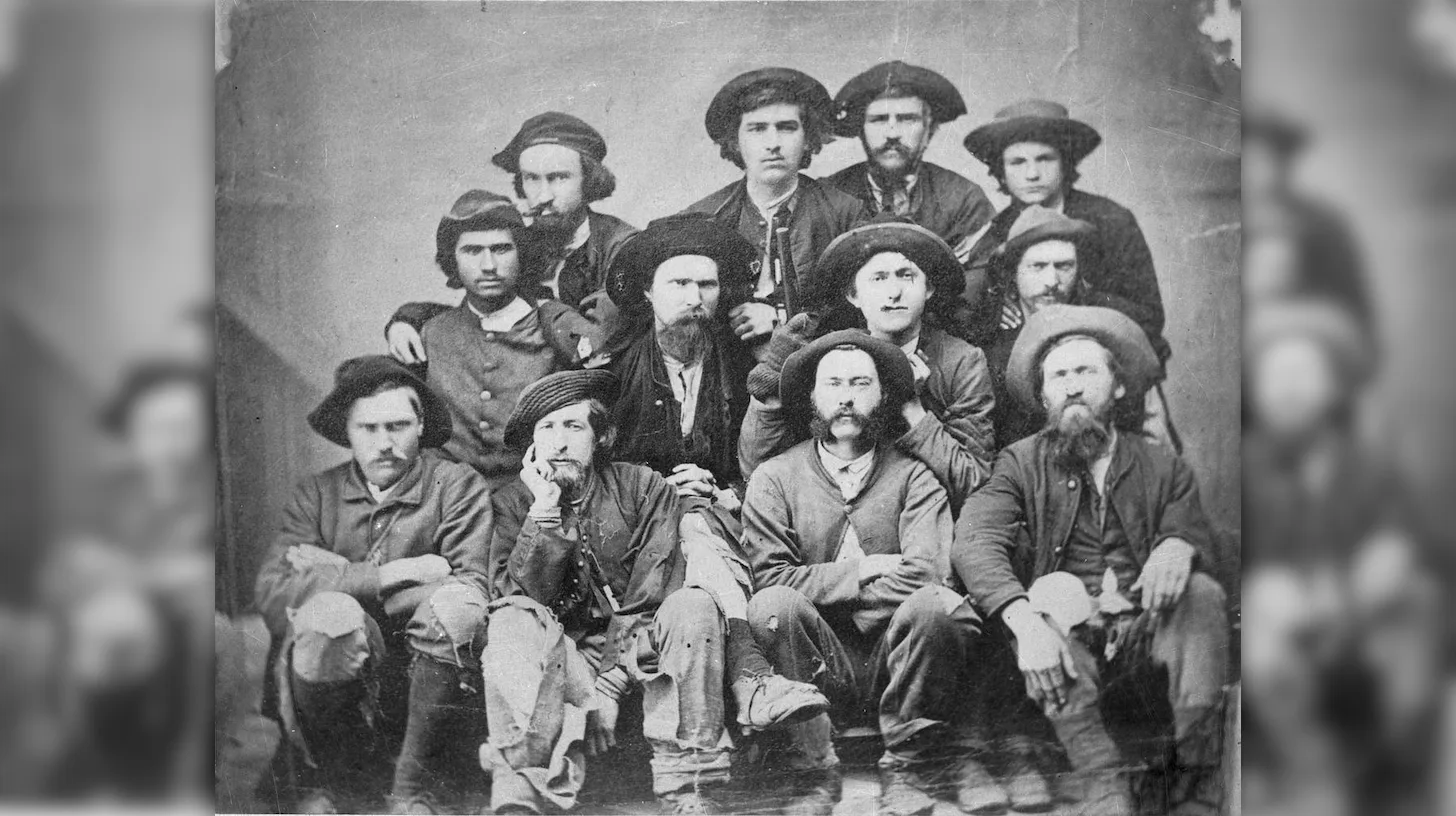
There was a strong strain of Union feeling in the mountains of western North Carolina, and people there often hid deserters. Triplett made his way across the mountains to Knoxville, Tennessee, and on August 1, 1864, he and his older brother enlisted together in the 3rd North Carolina Mounted Infantry, a Union regiment. He signed with an X. An Army surgeon certified him, in the words of the form, as fit for service.
“free from all bodily defects and mental infirmity, which would in any way disqualify him from performing the duties of a soldier.”
The recruiting officer swore that he was “entirely sober when enlisted.” The regiment had been raised that summer by Col. George W. Kirk, a carpenter who had risen from private, from Union men of the North Carolina and Tennessee mountains, and it came to be known as Kirk’s Raiders. About ninety of its men came from Wilkes County, and many had served the Confederacy first. It slipped back into North Carolina to burn supply depots, railroads and bridges in the country where Triplett had grown up, and the Confederates regarded its men as little better than hooligans and turncoats. He was discharged four months after Appomattox owing the government $129.99 for his uniforms and gear, which was set against a $100 enlistment bonus the Army owed him.
A wife of twenty-eight
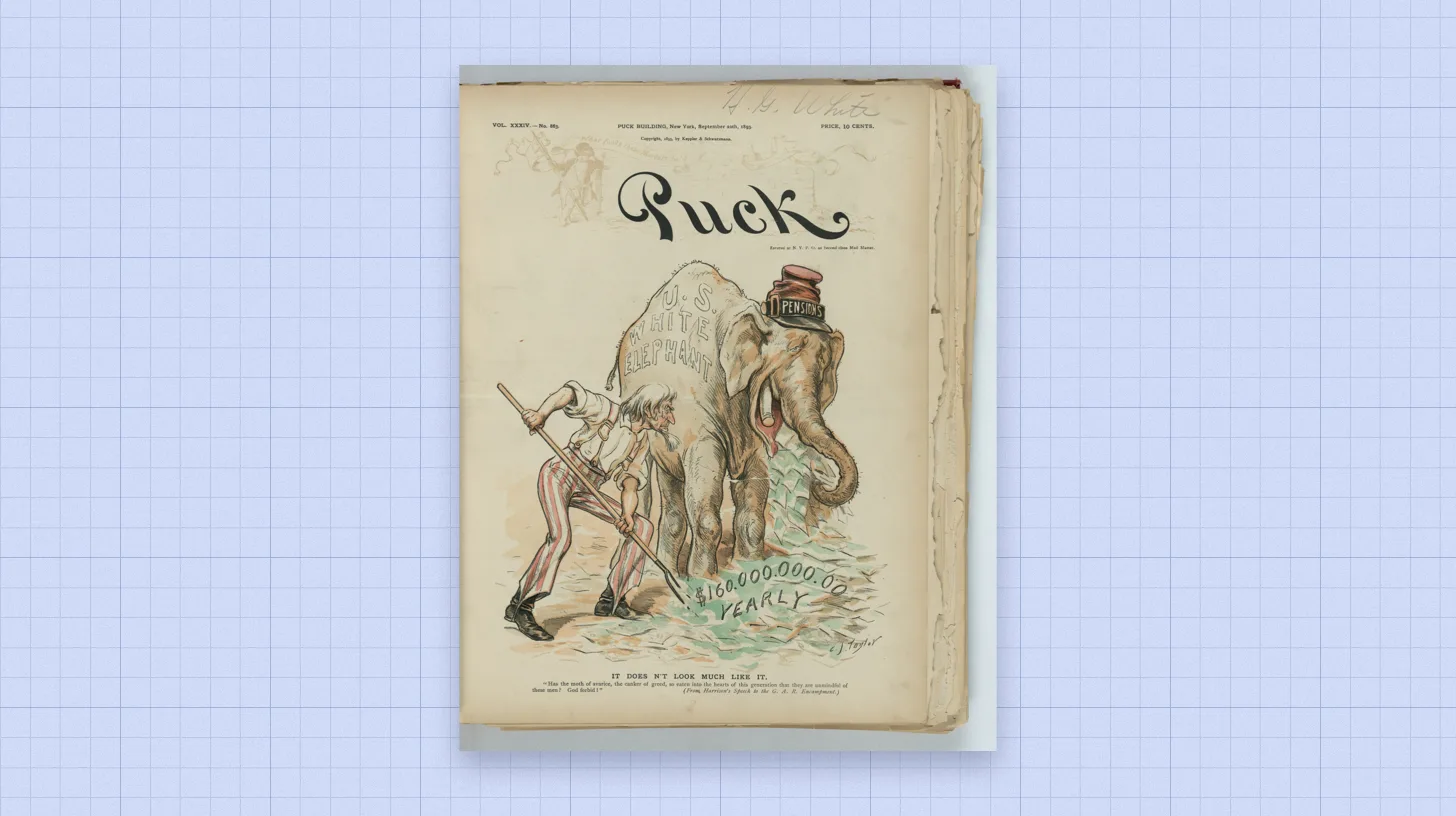
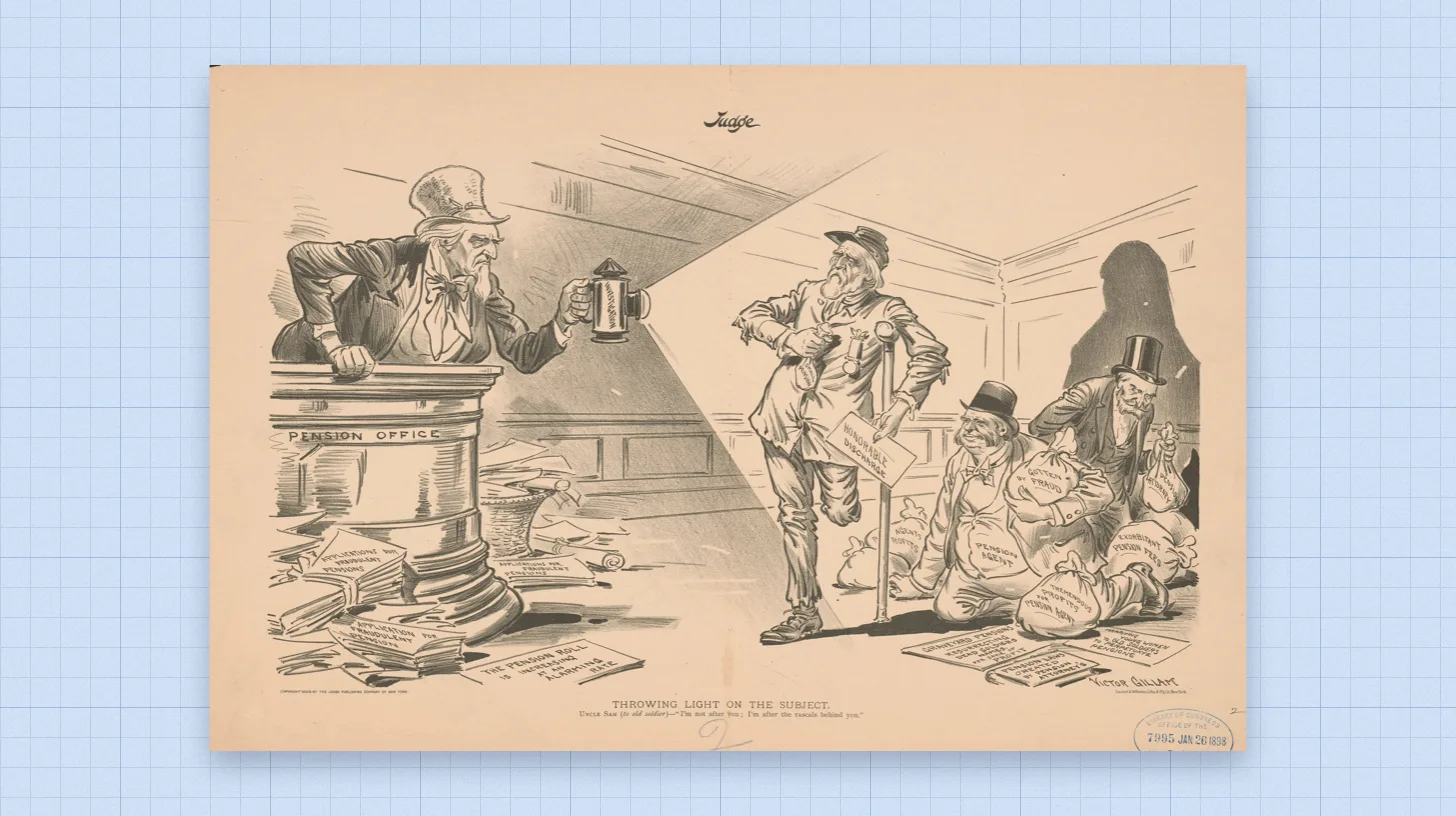
In 1885 he applied for a pension, and the next year his congressman put in a bill to hurry it through, as congressmen often did. The bill died. He got a Union pension in the end, though the records do not say when or for how much. By then the pensions were one of the largest things the government did. In 1890 Congress opened them to any disabled Union veteran, whether or not the disability came from the war, and by June 1894 there were 969,544 pensioners on the rolls. Military pensions that year took 37 percent of the whole federal budget. The commissioner of pensions reported 194 convictions for pension fraud in a single year and wrote that “the worthy and deserving soldiers are still modest, and in the race for pensions are elbowed to the rear by the unworthy.”
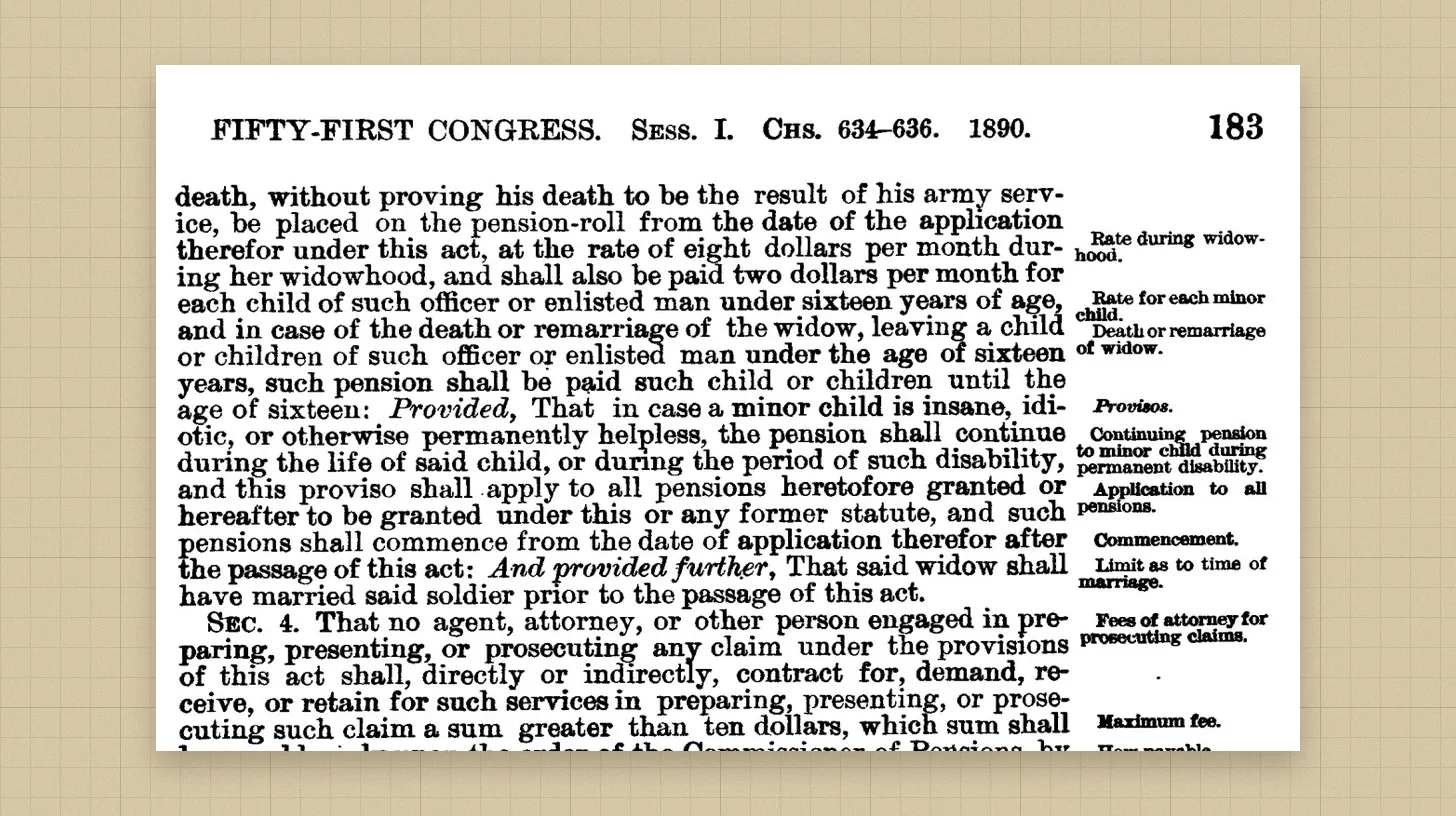
The same law of 1890 held that when a soldier’s child was “permanently helpless,” the pension “shall continue during the life of said child.” Triplett, meanwhile, had a farm and a big house near Elk Creek in Wilkes County. A grandson, repeating what his father had told him, said that people were afraid of him and that he sat on his porch with his old Army pistol and shot walnuts off the trees, and once he stood on top of a car in Wilkesboro and cursed a bank that had failed with his money in it.
His first wife, Mary, died in the 1920s, and apparently they had no children who lived. In 1924 he married Elida Hall. He was seventy-eight, and she was twenty-eight. Such marriages were common enough among old veterans that the Social Security Administration, writing its own history, notes that the pensions attracted young wives to old soldiers whose pensions they could inherit. People who knew Elida said she had mental disabilities. They lost three babies. Then, on January 9, 1930, when Mose was eighty-three, a daughter was born and named Irene, and three years later a son, Everette.
The gray tents
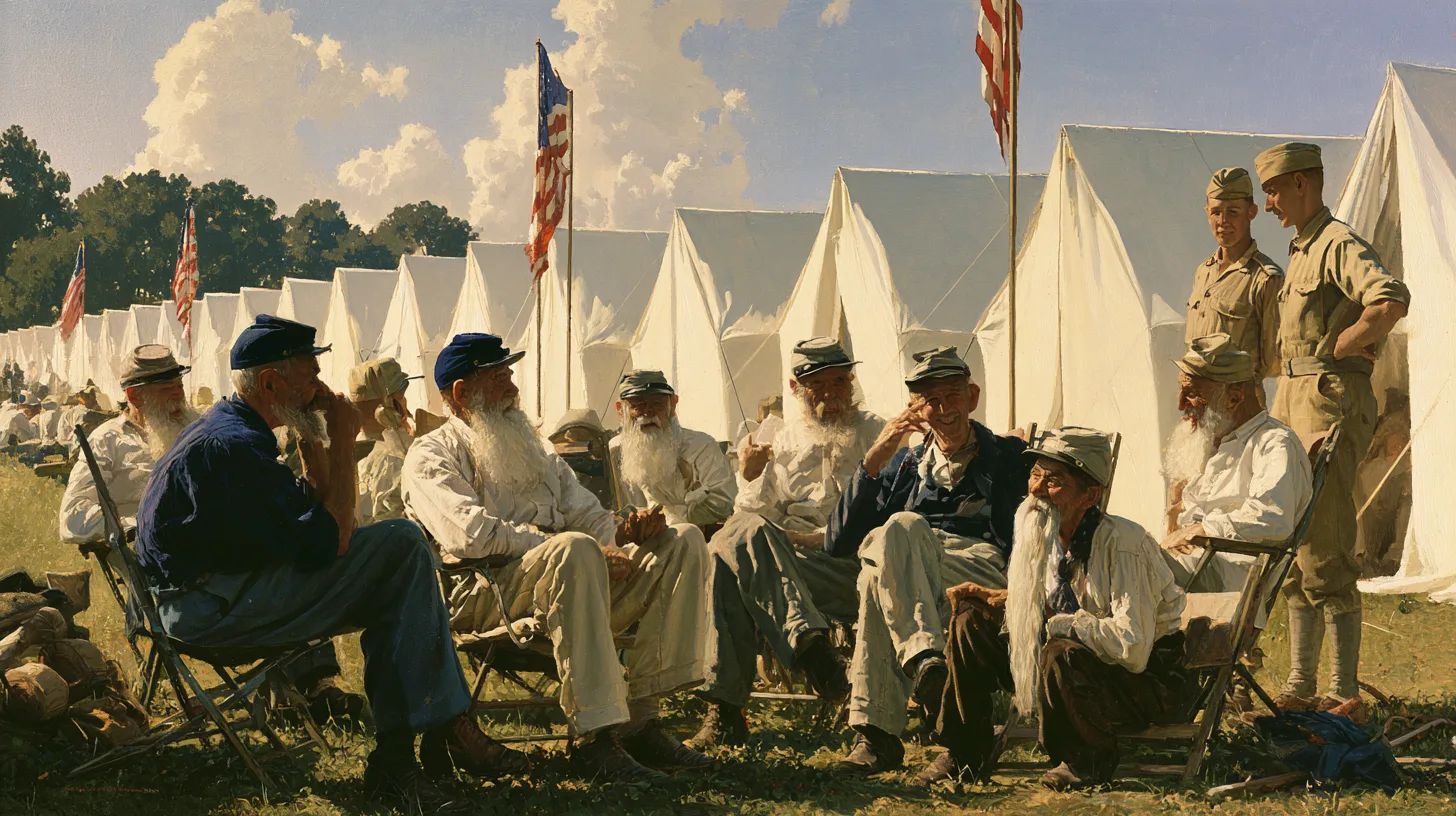
The reunion at Gettysburg in the summer of 1938 was the last great gathering of the war’s veterans. The government paid their way, and from June 29 to July 6 1,359 men from the North and 486 from the South lived in a tented city at the north end of the town and on the college campus, with their attendants and a field hospital beside them. Triplett came up from Wilkes County with an attendant, and the organizers put him in the Confederate camp. On the third day of July the President dedicated a peace memorial on the field and spoke of the men before him.
“Lincoln spoke in solace for all who fought upon this field; and the years have laid their balm upon their wounds. Men who wore the blue and men who wore the gray are here together, a fragment spared by time.”
Triplett had worn the gray for a year and the blue for a year, and he told the Gettysburg Times that he had “fooled everybody,” because, he claimed, he had been in the Union army the whole war, which his records do not bear out. “We didn’t want to leave the Union,” he said, “but our neighbors did.” His own attendant did not know he had been a Union soldier until a reporter questioned him in Hickory on the way home.
He came home feeble. On July 18 the Journal-Patriot in North Wilkesboro reported that Uncle Mose, as many people knew him, had died the night before at his home at Denny, only a few days after the reunion, and recalled that he had “fooled them all” at Gettysburg. He had cancer, and he was ninety-two. His family put pennies on his eyes and buried him in the Hall and Triplett family graveyard, on a wooded hill of holly, pine, oak and cedar above Elk Creek. Irene was eight years old.
Eight hogs
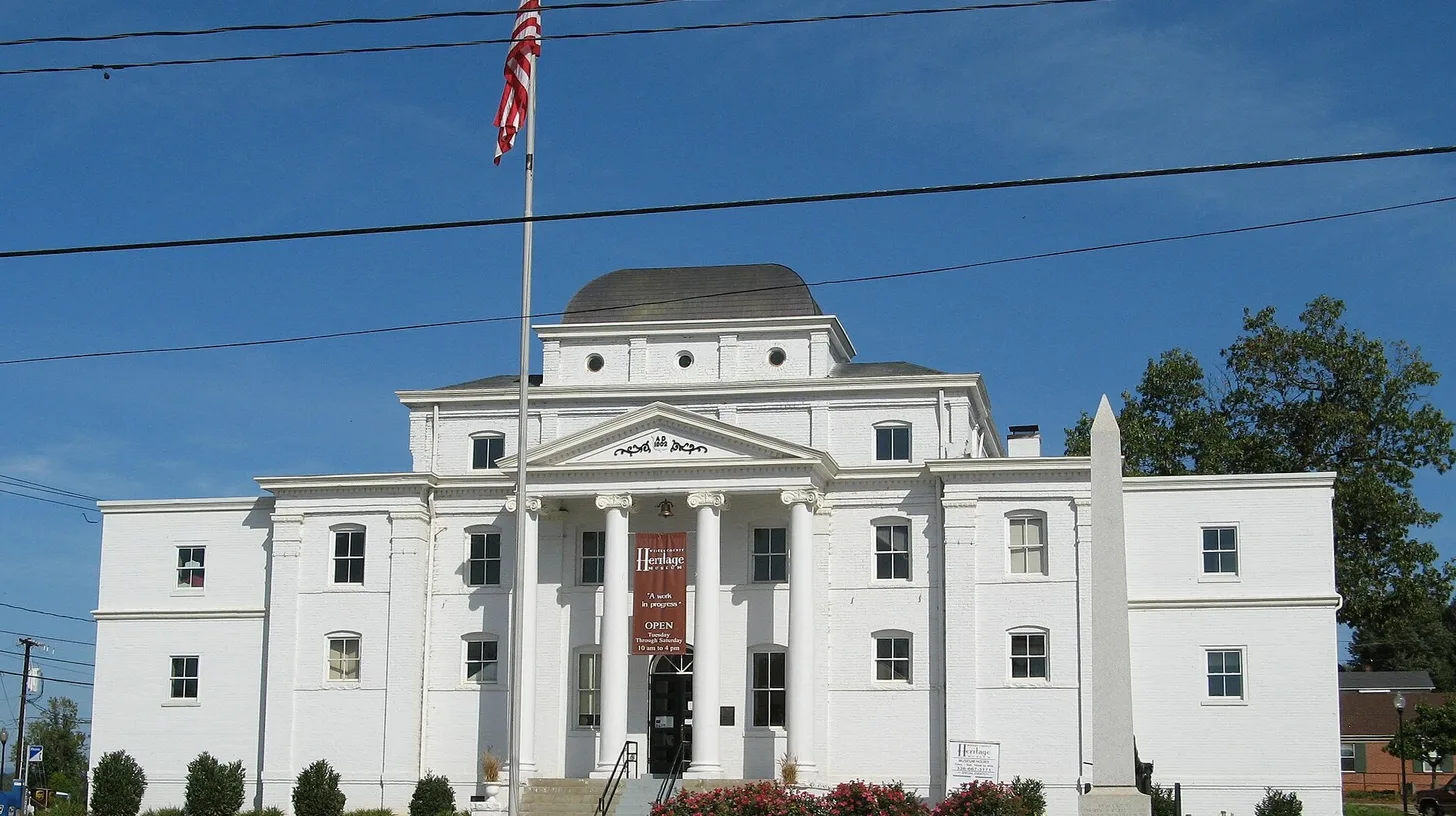
He left a forty-acre farm and a house to his wife and children, and they did not fare well. Irene took up tobacco in the first grade, she said long afterward, and her teachers beat her with an oak paddle, and her parents beat her at home. By a nephew’s account, the children at school taunted her about her father the “traitor.” She left after the sixth grade, unable to read or write well, and when she was old she said of her parents what she had wanted as a girl.
“I didn’t care for neither one of them, to tell you the truth about it. I wanted to get away from both of them. I wanted to get me a house and crawl in it all by myself.”
In 1943, when she was thirteen, she and her mother could no longer get along by themselves and went into the Wilkes County poorhouse, a two-story brick building on the edge of town where, as people in the town remembered it, mice and rats ran across the concrete floors. Her brother, ten years old, ran away rather than live there.
Irene and her mother stayed seventeen years. When the county home closed in 1960 they became the first residents of a new private rest home, where they did not get along and had to have separate rooms. Once a month the two women put their X marks on the government pension checks, which helped pay for their care.
She worked at the rest home. “I mowed the grass,” she said. “I washed dishes, made up beds, washed and ironed. They had hogs. They raised hogs up there. I raised eight hogs.” Elida died of cancer in 1967 and was buried beside Mose on the hill, and his pension passed to their daughter, who was eligible for it for life because she, too, had mental disabilities. She lived in the rest home for more than half a century.
$73.13 a month
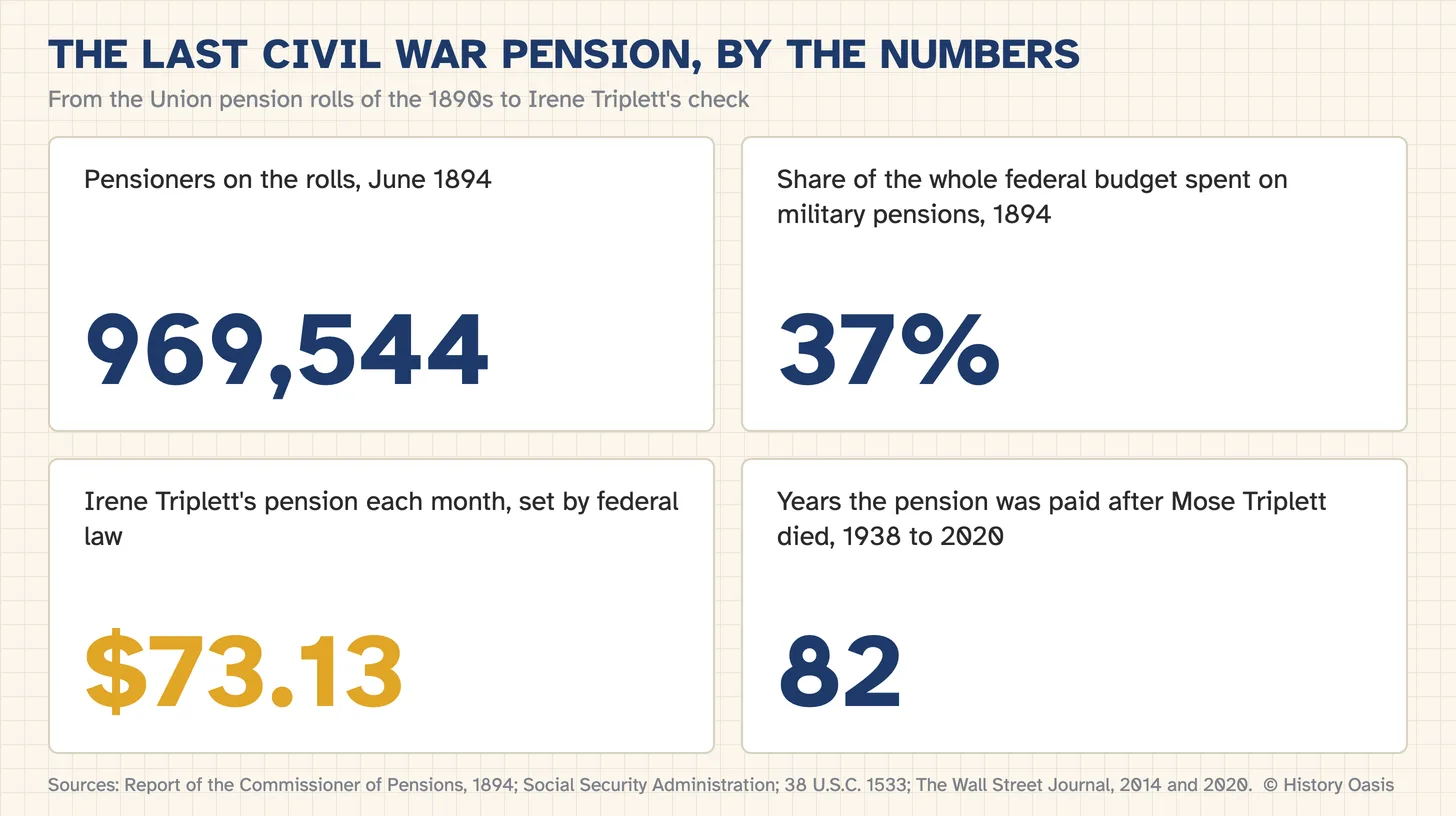
The amount is written into federal law, in a section first enacted in 1958: $73.13 a month for one child of a Civil War veteran. A genealogist researching the widows and children of Civil War soldiers found her on the rolls in the late 1980s, and in 2011 the county genealogical society put her picture on the cover of its quarterly. In 2013 the Associated Press reported that two children of Civil War veterans, one in Tennessee and one in North Carolina, were each still being paid $876 a year, and that year Irene broke her hip and moved to a nursing home in Wilkesboro.
A reporter from The Wall Street Journal found her there in 2014. She went about the halls in a wheelchair, he wrote, and spent her time in the lobby sipping a Coke and spitting tobacco through a toothless smile. “I dipped snuff in school,” she told him, “and I chewed tobacco in school.” She had few visitors, but she liked crafts and television and went to religious services. The Journal called her the last child of any Civil War veteran still on the rolls of the Department of Veterans Affairs.
The last check
In her last years a couple from the Sons of Union Veterans of the Civil War came twice a year with flowers and a card, and people who had read about her sent money for Dr Pepper and chewing tobacco. In the spring of 2020 the pandemic stopped the visits. She fell and broke her hip again, and on Sunday, May 31, 2020, she died after surgery at Accordius Health in Wilkesboro, at ninety. The Journal reported that she was the last person receiving a pension from the Civil War. Her father’s war had been over for 155 years.
The activities director at the home remembered that she laughed at everything, and that she was very active and made her own decisions. On the hill above Elk Creek her father’s granite stone carries no flag of either side, only his age, ninety-two years, five months and eighteen days, and one line.
“He was a Civil War soldier.”