10 min read
A list of the most famous ancient Egyptian pharaohs:
TUTANKHAMUN
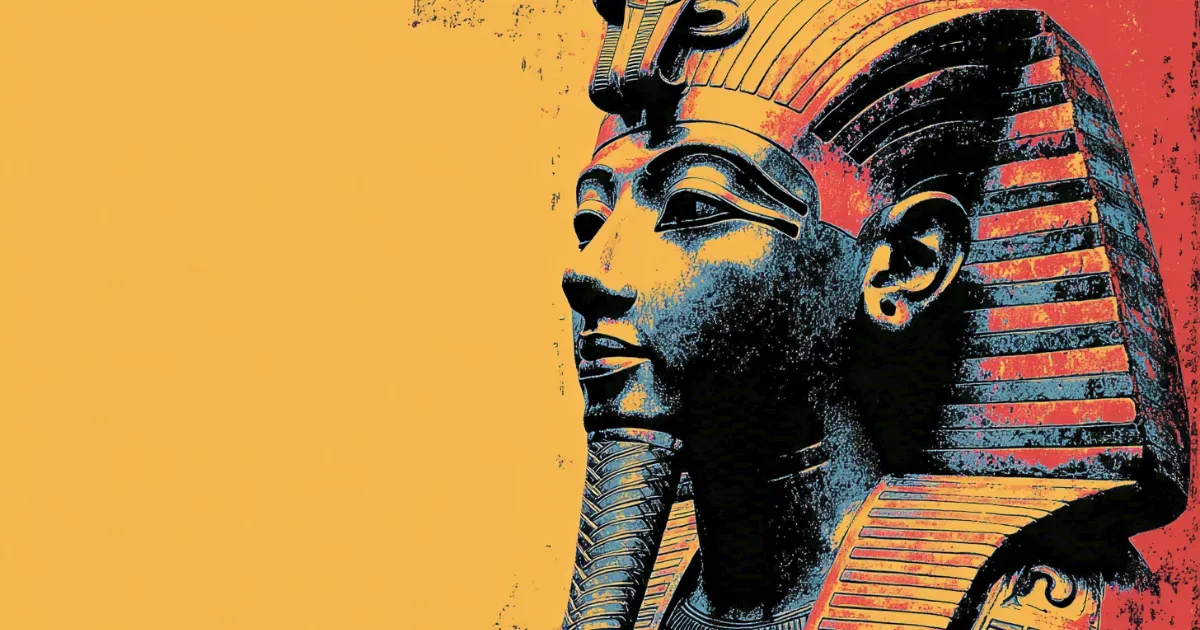
King Tutankhamun ruled Egypt at age nine and died mysteriously at 19, around 1325 BCE. He’s probably history’s most famous pharaoh after archaeologist Howard Carter discovered his nearly intact tomb in 1922, containing over 5,000 pristine artifacts, including his iconic solid gold death mask.
RAMSES II (RAMESSES THE GREAT)
Ramses II ran Egypt for 66 years (1279-1213 BCE) as its most powerful pharaoh. Known for building massive monuments like Abu Simbel, fathering over 100 children, and commanding the largest empire in Egyptian history. In 1974, his mummified remains required an official Egyptian passport listing his occupation as “King (deceased)” for transport to Paris, where he received a full military salute.
HATSHEPSUT
Hatshepsut was ancient Egypt’s most powerful female pharaoh who ruled from 1478-1458 BCE. She modernized the kingdom via ambitious building projects and trade expeditions. She also presented herself in male pharaonic regalia—including the ceremonial false beard—to solidify her unprecedented position as a woman.
AKHENATEN
Egyptian pharaoh Akhenaten (1353-1336 BCE) dismantled Egypt’s thousand-year religious system to establish the world’s first recorded monotheistic state religion. His portrayal in art—elongated skull, wide hips, spindly limbs—was long read as a symptom of Marfan or Klinefelter syndrome, until a 2010 JAMA study of the Amarna royal mummies reported no signs of Marfan syndrome or gynecomastia. The team concluded the look was a royally decreed style, most likely tied to Akhenaten’s religious reforms.
CLEOPATRA VII
The last Ptolemaic ruler of Egypt, Cleopatra VII (69-30 BCE) wielded power through strategic alliances with Julius Caesar and Mark Antony. She expanded Egyptian territory, and spoke seven languages fluently before dying by her own hand after Octavian’s conquest of Alexandria.
She also sits far closer to our own century than to the pyramid builders — one of the traps in our ancient history quiz.
KHUFU
Pharaoh Khufu was the ruler of Egypt around 2550 BCE. He’s most famous for building the Great Pyramid of Giza—the last surviving wonder of the ancient world—which stands 481 feet tall and required 2.3 million precisely cut limestone blocks. To this day, engineers are puzzled by its near-perfect 90-degree angles and the fact that its base corners deviate from a perfect square by less than an inch!
DJOSER
King Djoser was the dictator of Egypt around 2650 BCE during the Third Dynasty. He changed ancient architecture when he commissioned the world’s first stone monument—the Step Pyramid at Saqqara—a 197-foot structure that marked Egypt’s transition from mud-brick to stone construction. This brought in the tradition of using the pyramid as a royal tomb for all pharaohs going forward.
THUTMOSE III
Thutmose III was ancient Egypt’s most powerful military pharaoh who led seventeen successful campaigns into Syria-Palestine. He built the largest Egyptian empire in history. Because he disliked his stepmom, he ordered the chiseling away his stepmother Hatshepsut’s name and image from monuments across Egypt.
AMENHOTEP III
Amenhotep III (1388-1351 BCE) ruled Egypt during its peak of wealth and diplomatic influence. He’s best remembered for constructing massive temple complexes and maintaining peace through strategic marriages. He lived lavishly and loved to hunt lions. He reportedly killed 102 big cats himself.
PEPI II
Pepi II became Egypt’s pharaoh in 2284 BCE at age six and ruled for an extraordinary 94 years. His reign lasted until his death around 2184 BCE. He had a bizarre pest control technique where he would have slaves coated in honey to attract and catch flies.
SETI I
Seti I, the second pharaoh of Egypt’s 19th Dynasty (1290-1279 BCE), rebuilt Egypt’s empire via military campaigns. He constructed famous monuments, including his father’s temple at Abydos. Seti I left behind a remarkably preserved mummy that reveals his strong-boned face and aquiline nose in such detail that Egyptologists can still see his striking resemblance to his son, Ramesses the Great.
SNEFERU
Sneferu, Egypt’s first Fourth Dynasty pharaoh (2613-2589 BCE), encountered a critical challenge with his Bent Pyramid. When unstable soil threatened the structure 49 meters up, builders reduced the wall angle mid-construction, creating its distinctive bent shape.
DJEDEFRE
Djedefre was the pharaoh of Egypt around 2566 BCE. He ascended to power under a cloud of suspected fratricide against his brother Kawab. He built his pyramid at Egypt’s highest elevation in Abu Rawash, and added the title “Son of Ra” to royal nomenclature. Today the pyramid now stands as little more than foundations, as it was stripped of its limestone by Roman quarrymen.
SOBEKNEFERU
Sobekneferu was Egypt’s first confirmed female pharaoh. She ruled for just under four years, around 1760 BCE, until the end of the turbulent Middle Kingdom’s powerful 12th Dynasty. We only know about her because archaeologists discovered her legacy through fragmented statues showing her distinctively wearing both male and female royal regalia.
PSUSENNES I
Psusennes I, a Twenty-first Dynasty pharaoh who ruled Egypt from Tanis around 1047-1001 BCE, left behind an extraordinary silver coffin nested within his remarkably preserved tomb. He’s the only known Egyptian ruler buried in silver rather than the traditional gold.
UNAS
Unas was the last pharaoh of Egypt’s Fifth Dynasty (2375-2345 BCE). He’s known for his ancient Egyptian religious practices through his pyramid’s inscribed “Cannibal Hymn”. This was a ritualistic text describing how the king would consume other deities to absorb their divine powers.
AMENEMHAT III
Amenemhat III was the sixth pharaoh of Egypt’s Twelfth Dynasty. He ruled during the Middle Kingdom’s peak (1860-1814 BCE) and constructed an elaborate mortuary complex that Herodotus dubbed the “Labyrinth,” featuring 3,000 rooms designed to bewilder potential tomb raiders.
AHMOSE I
Ahmose I, founder of Egypt’s 18th Dynasty and New Kingdom era, drove out the foreign Hyksos rulers in 1550 BCE through military innovation. His army was the first to use horse-drawn chariots and composite bows.
MERNEPTAH
Merneptah was the fourth pharaoh of Egypt’s 19th Dynasty. He wrote his military victories into stone around 1208 BCE. These hieroglyphics contain the earliest non-biblical evidence of Israel, where he boasted of devastating their lands.
SHABAKA
Nubian pharaoh Shabaka ruled Egypt around 716-702 BCE. He’s known for reviving ancient Egypt’s culture by engraving ancient Memphis theology onto what became known as the Shabaka Stone.
NARMER (MENES)
Narmer was Egypt’s first pharaoh who united the Two Lands around 3100 BCE. Narmer died when a HIPPOPOTAMUS fatally attacked him.
KHAFRE
Fourth Dynasty Egyptian pharaoh Khafre (2520-2494 BCE) transformed the Giza plateau by constructing its second-largest pyramid. He likely oversaw the construction of the Great Sphinx. Some archaeologists believe the sphinx’s face may mirror his own.
TETI
Teti was the first pharaoh of Egypt’s Sixth Dynasty, ruling around 2345-2333 BCE. He maintained peace and construction projects across his realm until his violent death at the hands of his own palace guards. This was one of ancient Egypt’s first documented royal assassinations.
THUTMOSE II
Thutmose II’s brief reign (1482-1479 BCE) as Egypt’s fourth pharaoh of the 18th Dynasty ended with his early death at age 30. Afterward, his powerful wife Hatshepsut erased his monuments in what appears to be ancient Egypt’s most dramatic case of historical political revision.
SENUSRET III
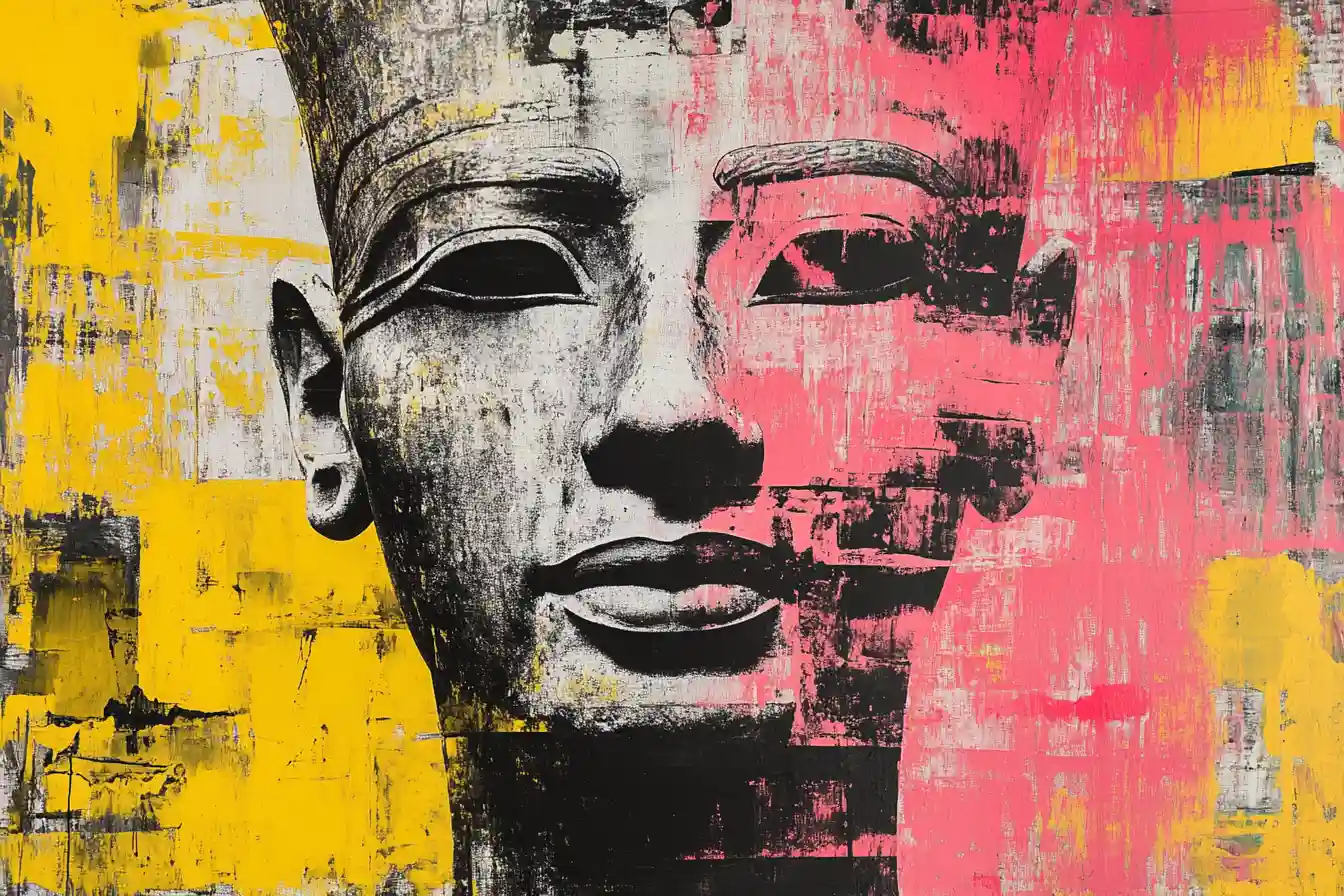
Senusret III, the militaristic pharaoh of Egypt’s 12th Dynasty (1878-1839 BCE), transformed his kingdom through aggressive Nubian conquests and internal reforms. His surviving statues capture his psychological state through haunting, aged features that broke from the idealized royal portraiture tradition.
Djoser and Akhenaten both turn up in our hardest history questions quiz — the first for the monument that moved Egypt from mud brick to stone, the second for what DNA testing eventually said about the way he had himself drawn.