
The Hardest History Questions
These are the hardest history questions we could write that still have clean, checkable answers. Ten of them, spanning Bronze Age Crete to the Second World War, and most are built to punish a confident wrong guess rather than reward memorisation. Every question is written out below the quiz with its answer and the evidence behind it.
Question 1 of 10
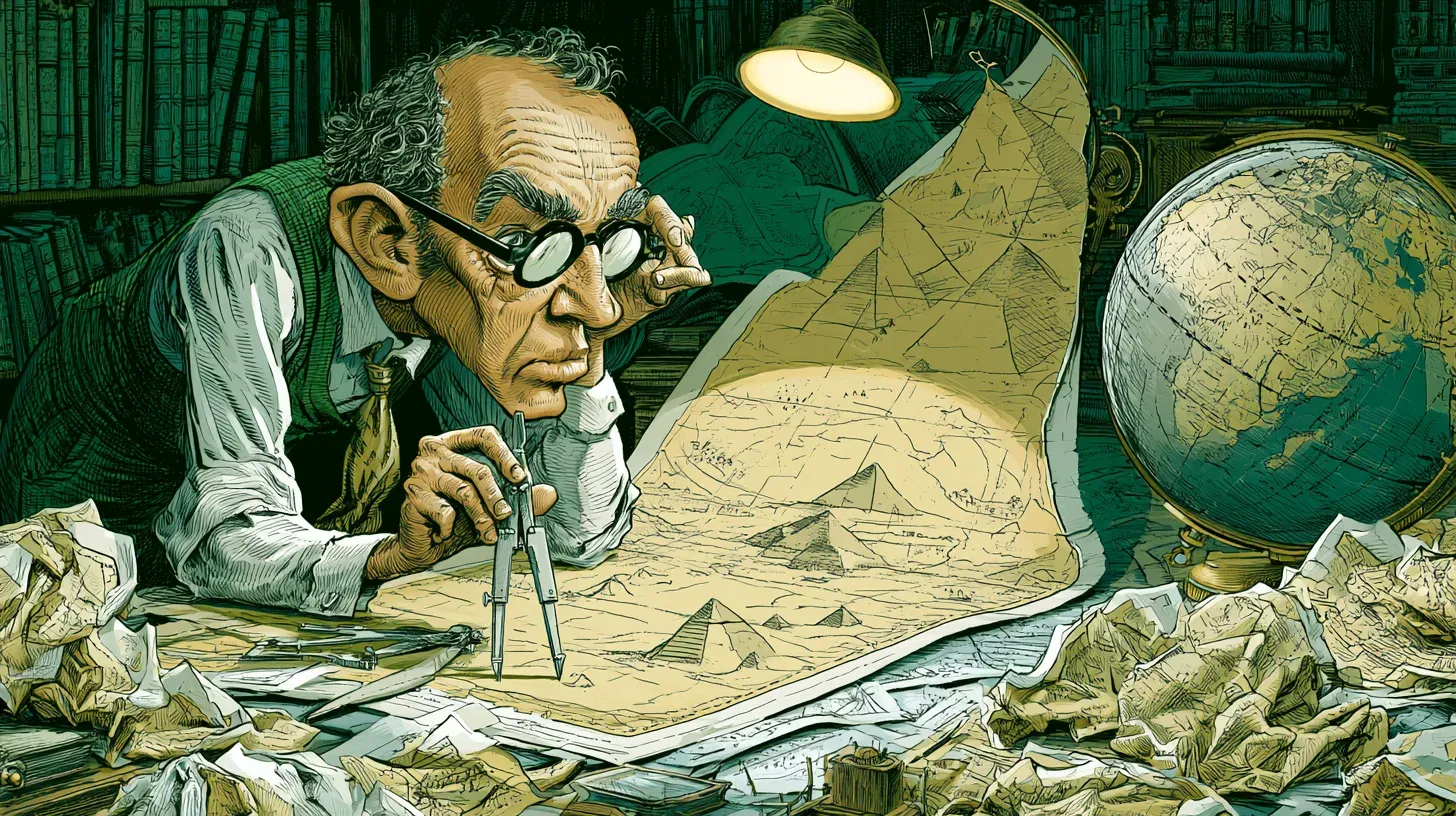
Which modern country has the most ancient pyramids?
See all answers & explanations
1. Which modern country has the most ancient pyramids?
Answer: Sudan. Sudan has roughly 255 pyramids to Egypt's 118 — more than double. They were built by the Kushite kingdoms of Kerma, Napata and Meroë from about the 9th century BCE into the 4th century CE, and they look wrong to an eye trained on Giza: far smaller, and pitched at about 70 degrees against Khufu's 52. Meroë alone holds around a hundred of them. Go deeper: 24 Ancient African Facts That You Didn’t Know About.
2. In 25 BCE the kingdom of Kush went to war with Rome. How did it end?
Answer: Rome withdrew and gave up its claim to tribute. Kush was ruled from Meroë by the kandake Amanirenas, whom the geographer Strabo described as "a masculine sort of woman, and blind in one eye." She sent an army into Roman Egypt, and four years of fighting ended with a treaty negotiated at Samos with Augustus himself: Rome pulled its frontier back and dropped its demand for tribute. Historians generally read it as a Kushite win, and the border held for three centuries. Go deeper: 24 Ancient African Facts That You Didn’t Know About.
3. Akhenaten is depicted in Egyptian art with an elongated skull, wide hips and spindly limbs. What did DNA testing of his family conclude?
Answer: He had no such condition. A century of medical speculation grew out of that artwork. The genetic study of the Amarna royal mummies led by Zahi Hawass, published in JAMA in 2010, reported no signs of Marfan syndrome or gynecomastia. The reading that has replaced it is that the elongated style was a royal decree tied to Akhenaten's religious revolution — an artistic programme, not a diagnosis. Go deeper: Power Along the Nile: 25 Famous Egyptian Pharaohs.
4. The Garamantes farmed the open Sahara for centuries. Where did they get the water?
Answer: They dug tunnels down to the water table. Between roughly 100 BCE and 100 CE this Libyan society hand-dug about 750 kilometres of foggaras — gently sloping tunnels driven below the water table to tap a vast sandstone aquifer. It made them the first urbanised desert civilisation to manage without a river. It also finished them: the tunnels could not follow the water down, and when the groundwater fell below them the whole system failed. Go deeper: 24 Ancient African Facts That You Didn’t Know About.
5. Shang dynasty China produced the earliest substantial body of Chinese writing. What was it written on?
Answer: Ox bones and turtle shells. Shang diviners cut questions into ox shoulder blades and turtle plastrons, heated them until the bone cracked, and read the fractures as the answer. Tens of thousands of these oracle bones survive from roughly 1600 to 1046 BCE. A religious habit turned out to be the accidental written record of a dynasty, and the direct ancestor of the characters in use today. Go deeper: Fun Facts form Ancient China that You Didn’t Know About.
6. Who first set out the rules for treating zero as a number in its own right?
Answer: Brahmagupta. Nearly everyone gets this one wrong, usually by naming Aryabhata. He worked with a decimal place-value system in the 5th and 6th centuries and is routinely handed the credit. But it was Brahmagupta, in the Brahmasphutasiddhanta of 628 CE, who wrote down what zero actually does — what happens when you add it, subtract it, multiply by it. A placeholder and a number are two separate inventions, roughly a century apart. Go deeper: 8 Famous Indian Polymaths.
7. Linear B, the script of Bronze Age Crete and Mycenae, was deciphered in 1952. What language did it record?
Answer: An early form of Greek. Michael Ventris was an architect by profession, not a classicist, and the answer he arrived at was the one specialists had ruled out. The tablets from Knossos and Pylos were written in what he called "a difficult and archaic Greek, but Greek nevertheless," pushing written Greek back some five centuries. Ventris died in a car crash in 1956, weeks after publishing the book with John Chadwick that established it.
8. What was the deadliest airship disaster in history?
Answer: The USS Akron. The Hindenburg is the one everybody pictures, and it killed 36. The USS Akron — a helium-filled rigid airship built to launch and recover aeroplanes in flight — went into the Atlantic off New Jersey in a thunderstorm on 4 April 1933, killing 73 of the 76 aboard, among them Rear Admiral William Moffett. She had put to sea with a single rubber raft and no life jackets, and most of the dead drowned or died of cold. Go deeper: Infernos Aloft: 7 Infamous Airship Crashes & Disasters.
9. Six civilians were killed by enemy action on the American mainland during the Second World War. What killed them?
Answer: A Japanese balloon bomb. From November 1944 Japan released some 9,300 paper balloons into the Pacific jet stream, each rigged to drop explosives once it reached North America. At least 300 arrived. In May 1945 a pregnant woman and five children came across one in the woods near Bly, Oregon, and it went off. They remain the only people killed by enemy action on the American mainland in the entire war. Go deeper: The Overlooked History of Balloons in War.
10. Who is credited as the architect of the world's first monumental stone building?
Answer: Imhotep. Imhotep raised the Step Pyramid at Saqqara for King Djoser around 2670 BCE, stacking six stone mastabas into a monument roughly 60 metres high and taking Egyptian construction from mud brick to dressed stone. He was later worshipped as a god, one of very few non-royal Egyptians ever to be. The other three are real architects — Hemiunu is associated with the Great Pyramid — which is what makes the guess dangerous. Go deeper: Power Along the Nile: 25 Famous Egyptian Pharaohs.
The Hardest History Questions FAQ
What is the hardest question in history?
There is no single hardest question, but historians tend to sort hard questions into two very different kinds. The first kind is hard because the answer is obscure — it exists, it is written down somewhere, and almost nobody has read it. Every question in the quiz above is that kind.
The second kind is hard because the evidence is simply gone. Why the Indus Valley script has never been read, what the Sea Peoples were, who the Etruscans were before they were Etruscan: these are not questions waiting on a cleverer researcher. They are questions where the record needed to answer them does not survive, and may never have existed in writing at all.
The most useful thing a hard history question can do is expose an assumption you did not know you were carrying. That is why the quiz above leans on reversals — the country with the most pyramids is not Egypt, the deadliest airship disaster was not the Hindenburg. Those questions are not hard because the facts are rare. They are hard because a confident answer arrives before the real one does.
What's the hardest trivia question ever?
No question holds an official title, but the hardest trivia questions share a structure: they offer an answer that feels obviously right and is obviously wrong. A question nobody can answer is not hard, it is just unfair. The genuinely hard ones let you commit first.
Compare two ways of asking about the same event. "How many people died on the USS Akron?" is merely obscure — most players will shrug. "What was the deadliest airship disaster in history?" is hard, because almost everyone has an answer ready, and it is the Hindenburg, and it is wrong by a factor of two.
The same trick runs through the whole set above. Zero was formalised by Brahmagupta rather than the more famous Aryabhata. Linear B turned out to be Greek, which is precisely what the experts of the day had ruled out. The Sahara was farmed by people who dug for water rather than finding it. Good hard trivia rewards the person who knows enough to be suspicious of the first answer that comes to mind.
What are 5 hard trivia questions?
Here are five from the quiz above, with the answers below each one, if you would rather read than play.
Which modern country has the most ancient pyramids? Sudan, with about 255 against Egypt's 118. Who first set out the rules for treating zero as a number? Brahmagupta, in 628 CE — not Aryabhata, who gets the credit. What language did Linear B turn out to record? Early Greek, deciphered in 1952 by an architect rather than a classicist.
What was the deadliest airship disaster? The USS Akron in 1933, which killed 73 people to the Hindenburg's 36. And what killed the only six civilians to die from enemy action on the American mainland in the Second World War? A Japanese balloon bomb that drifted across the Pacific and came down in Oregon.
If those felt manageable, the quiz above has five more, and the ancient ones are harder than the modern ones.