
US History Trivia — Free 10-Question Quiz Game
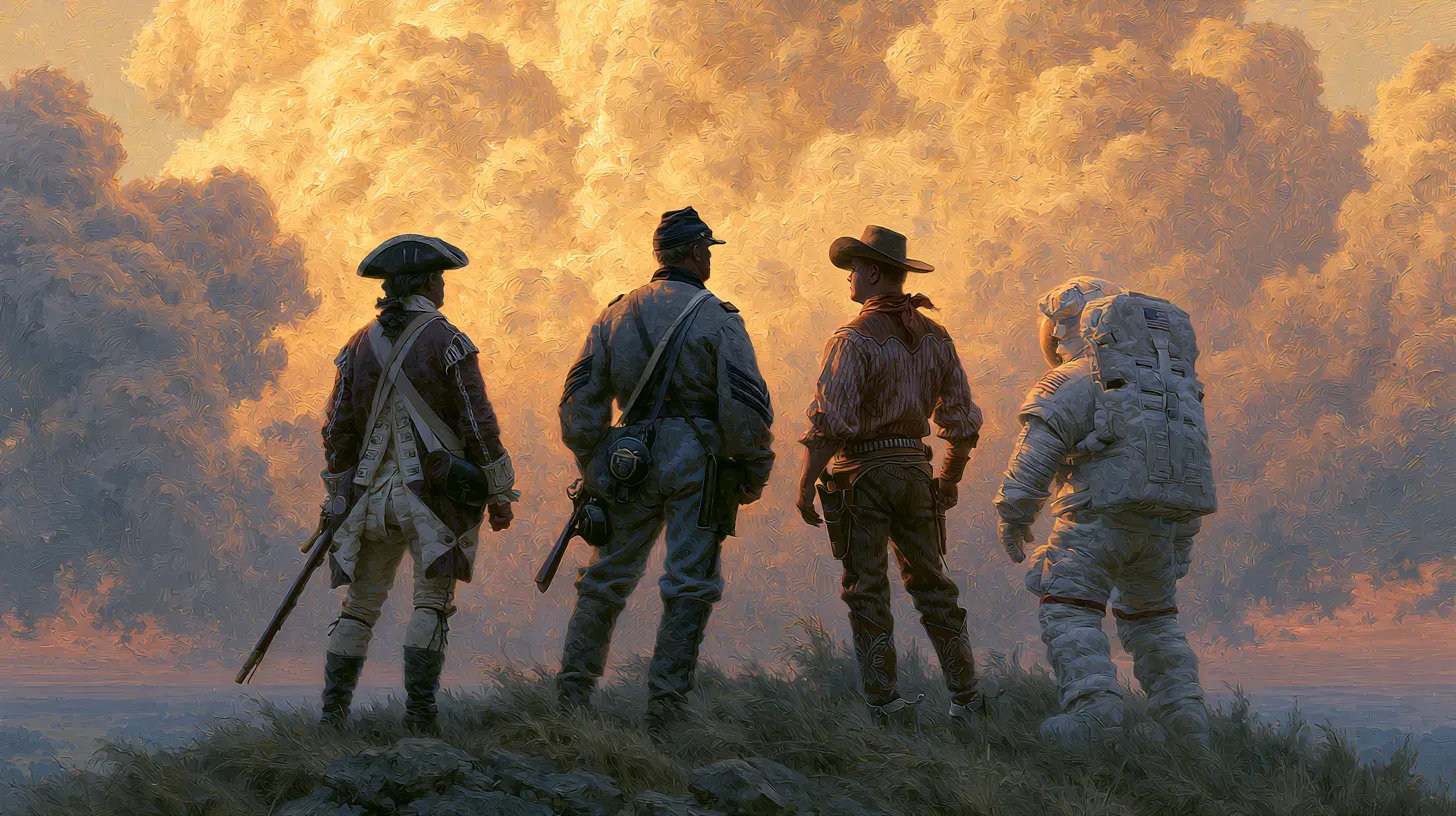
How well do you really know American history? This free US history trivia game deals you 10 multiple-choice questions — from Benjamin Franklin's inventions to the Apollo 11 Moon landing — with instant answers, a short explanation for every question, and a score to share at the end. No sign-up, no timer. Prefer to read? Every question is written out below as US history trivia questions and answers for your next quiz night.
Question 1 of 10
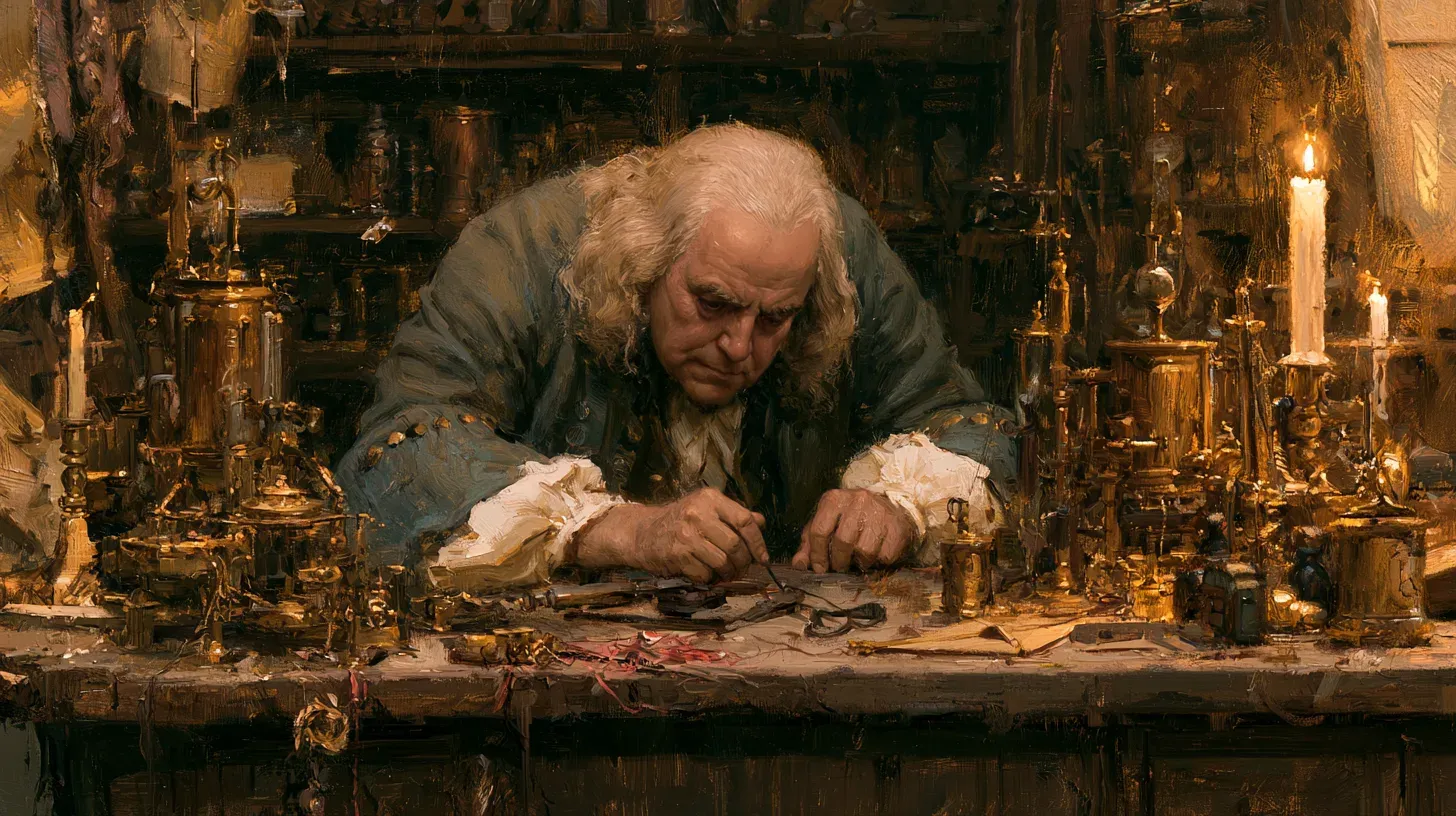
Which of these everyday items did Benjamin Franklin invent?
See all answers & explanations
1. Which of these everyday items did Benjamin Franklin invent?
Answer: Bifocal glasses. Franklin invented bifocals, the lightning rod, the Franklin stove, and even a glass harmonica — and famously refused to patent any of them. The telephone came from Alexander Graham Bell in 1876, a century after Franklin's heyday. Go deeper: A Complete List of Benjamin Franklin's Inventions.
2. In what year was the Declaration of Independence adopted?
Answer: 1776. The Continental Congress adopted the Declaration of Independence on July 4, 1776, with Thomas Jefferson as its principal author. 1781 brought the climactic victory at Yorktown, and 1787 was the year of the Constitutional Convention.
3. Which 1777 American victory convinced France to enter the Revolutionary War on the American side?
Answer: Battle of Saratoga. The surrender of General John Burgoyne's British army at Saratoga in October 1777 persuaded France that the American cause could actually win, and the Franco-American alliance followed in 1778. French troops and warships proved decisive at Yorktown four years later.
4. When British troops burned Washington, D.C. in August 1814, which president fled the White House — leaving his dinner still warm on the table?
Answer: James Madison. James Madison fled so quickly that British officers sat down, ate his abandoned meal, and drank his wine before torching the mansion. The entire occupation of the capital lasted just 26 hours. Go deeper: When the British Burned Washington — Facts That Sound Made Up (But Aren't).
5. What was strange about the Battle of New Orleans, Andrew Jackson's famous 1815 victory?
Answer: It was fought after the peace treaty ending the war had been signed. The Treaty of Ghent ended the War of 1812 on December 24, 1814 — but news traveled by sailing ship, so on January 8, 1815, thousands of men fought over a war that was technically already over. Jackson's ragtag line of frontiersmen, free Black militiamen, Choctaw warriors, and pirates shattered the British assault. Go deeper: The Battle Of New Orleans — When Pirates Saved America.
6. Which 1863 battle is widely considered the turning point of the Civil War?
Answer: Battle of Gettysburg. Union forces turned back Robert E. Lee's invasion of the North at Gettysburg in July 1863, the bloodiest battle of the war. Vicksburg surrendered to Ulysses S. Grant just one day after Gettysburg ended, splitting the Confederacy in two.
7. Which constitutional amendment abolished slavery in the United States?
Answer: The 13th Amendment. The 13th Amendment, ratified in December 1865, abolished slavery nationwide. The 15th protected voting rights regardless of race, and the 19th extended the vote to women in 1920.
8. Which outlaw of the Wild West was tracked down and killed by Sheriff Pat Garrett in 1881?
Answer: Billy the Kid. Billy the Kid was just 21 years old when Garrett caught up with him in New Mexico. Legend credits the Kid with 21 kills, but historians think the real number was closer to four. Go deeper: Saddles & Gunslingers: The Most Famous Cowboys & Cowgirls.
9. During World War II, Coca-Cola pledged to sell a bottle of Coke to any American serviceman, anywhere in the world, for how much?
Answer: 5 cents. Coca-Cola president Robert Woodruff promised every soldier a 5-cent Coke no matter where they were stationed, and with General Eisenhower's help the company built 64 bottling plants in combat zones. Military personnel drank over five billion bottles by the war's end. Go deeper: The History Of Coca-Cola In WW2.
10. In what year did Apollo 11 land the first humans on the Moon?
Answer: 1969. Neil Armstrong and Buzz Aldrin walked on the Moon on July 20, 1969, while Michael Collins orbited above in the command module. The final Apollo landing came just three years later, in 1972.
US History Trivia FAQ
What are some good US history trivia questions?
The best US history trivia questions mix famous turning points with surprising details — a date everyone should know, then a twist like "which battle was fought after the war ended?" The 10 questions in the quiz above span the colonial era, the Revolution, the War of 1812, the Civil War, the Wild West, World War II, and the space race, and every one comes with a full answer and explanation in the answer key, so you can lift them straight into your own trivia night.
Can you pass a basic US history test?
Most people are less prepared than they think — national surveys have repeatedly found that only about one in three Americans can pass the basic civics test given to immigrants applying for citizenship. Our 10-question quiz is a friendly benchmark: 7 or more correct is a solid pass, and 9 or 10 puts you in genuine history-buff territory.
What is the hardest US history question?
Questions that hinge on numbers and dates trip people up the most — a famous stumper from the citizenship exam is "How many amendments does the Constitution have?" (the answer is 27). In this quiz, the sneakiest question is the Battle of New Orleans — few people realize the battle was fought two weeks after the peace treaty ending the War of 1812 had been signed.
How many questions are on a US citizenship history test?
On the current USCIS civics test — used for applications filed on or after October 20, 2025 — the officer asks up to 20 questions drawn from an official pool of 128 covering American history and government, and applicants must answer 12 correctly to pass.
Applications filed before that date use the older version: 10 questions from a pool of 100, with 6 correct to pass. Either way, a 10-question quiz like this one is a fun way to see how you'd do.