
The Greek Mythology Quiz
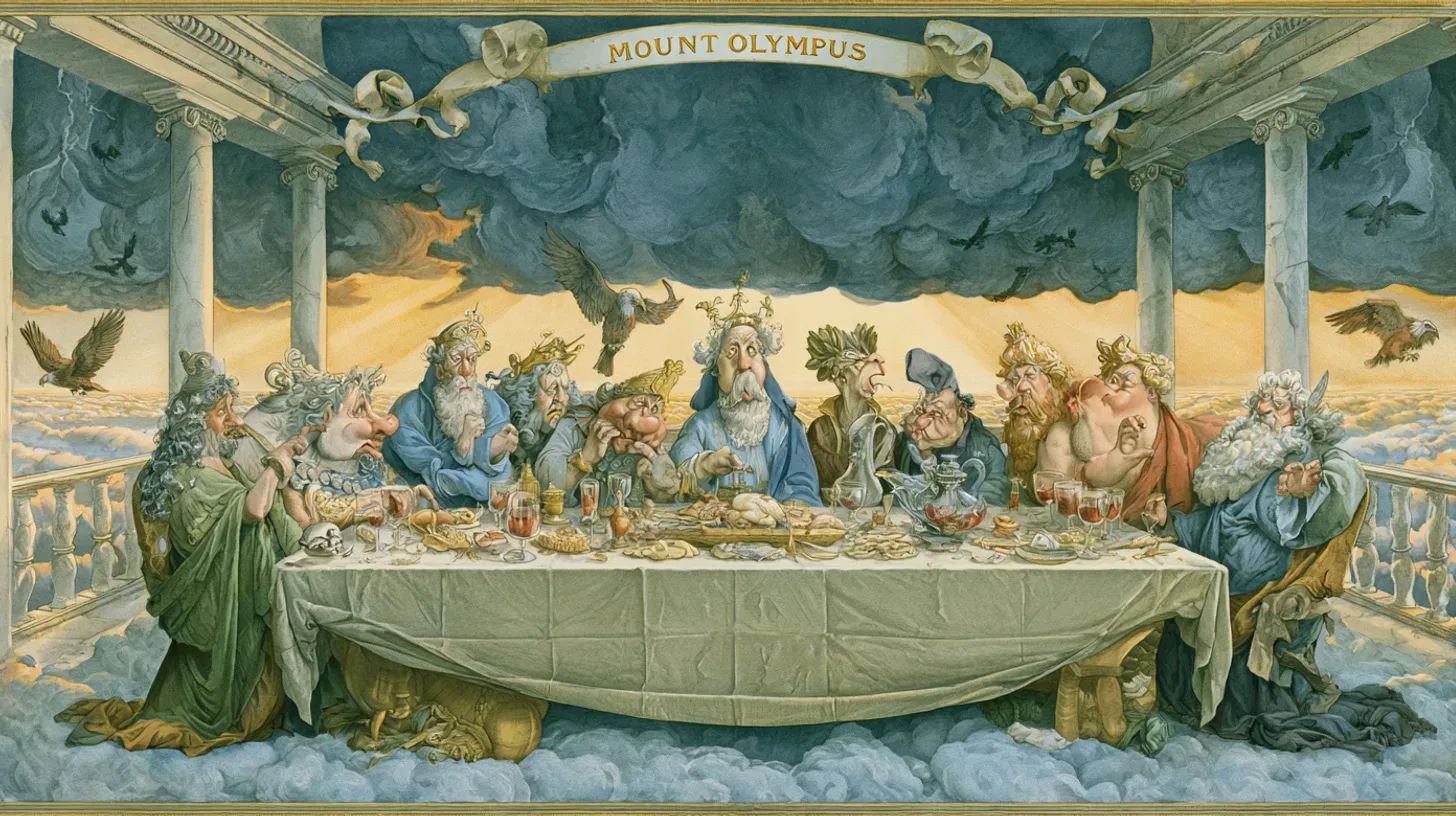
This free Greek mythology quiz serves up 10 multiple-choice questions on the gods, heroes, and monsters of ancient Greece — from the birth of the Olympians to the fall of Troy — with instant scoring and a short explanation after every answer. No sign-up, no timer. Prefer to read? Every question is written out below with its answer, easy openers through the genuinely hard ones.
Question 1 of 10
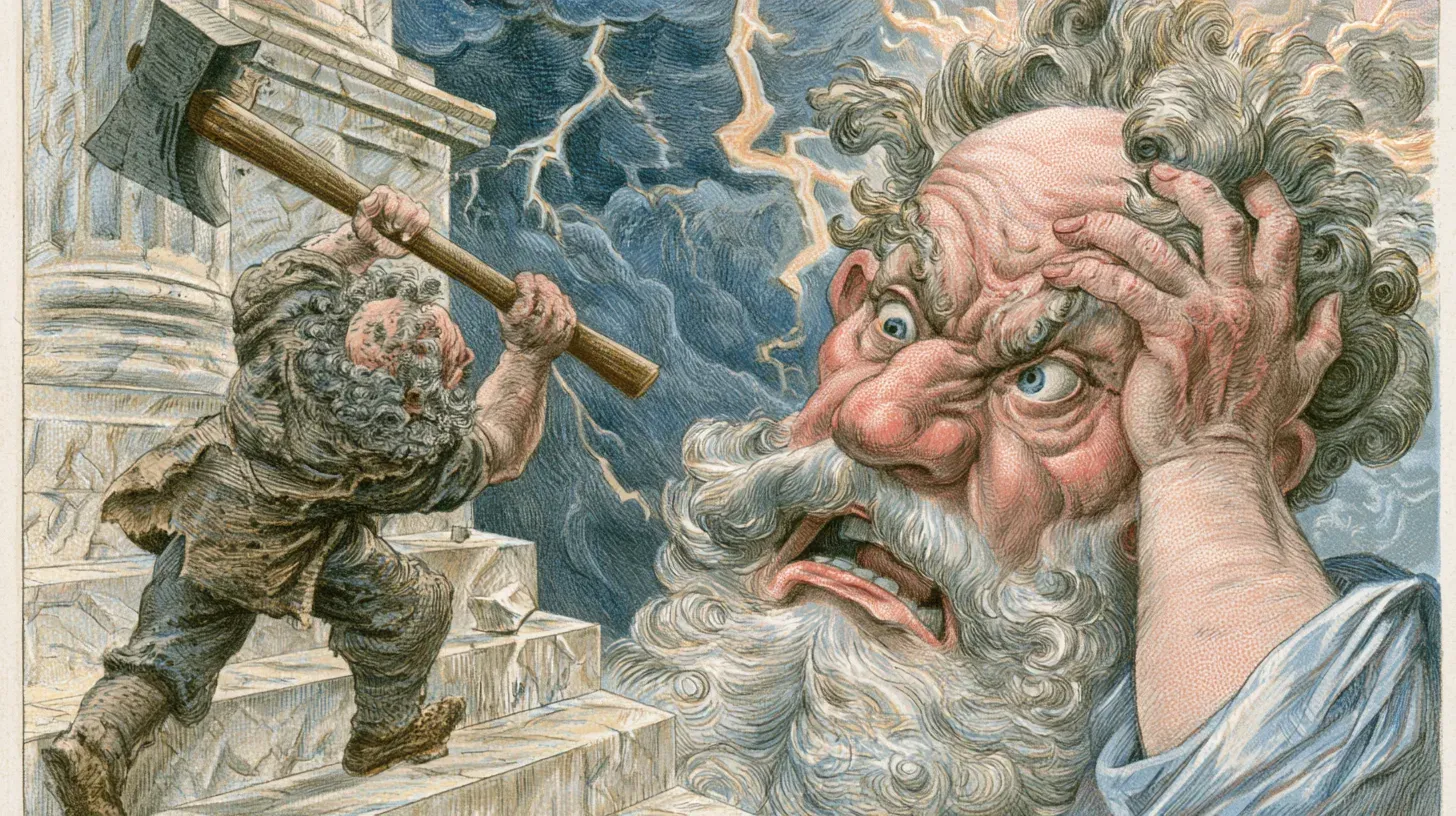
Which Olympian goddess sprang fully grown and armed from the forehead of her father, Zeus?
See all answers & explanations
1. Which Olympian goddess sprang fully grown and armed from the forehead of her father, Zeus?
Answer: Athena. Hesiod says Zeus swallowed her mother, Metis, after a prophecy warned that Metis's child might one day overthrow him — Athena later burst from his skull already dressed for war. She went on to become Athens' patron deity and a symbol of strategic wisdom over brute force. Go deeper: 25 Interesting Facts on the Greek Gods: From Titans to Olympians.
2. What event is traditionally said to have triggered the Trojan War?
Answer: Paris's abduction of Helen of Sparta. After the Trojan prince Paris judged Aphrodite the fairest goddess in exchange for the promise of the world's most beautiful woman, he took Helen from her husband, the Spartan king Menelaus. Menelaus's brother Agamemnon then rallied the Greek kings for the decade-long siege remembered as the Trojan War.
3. In Hesiod's account, how was Aphrodite born?
Answer: From sea foam that gathered around the severed remains of Uranus. Hesiod's Theogony describes Cronus castrating his father Uranus and casting the remains into the sea, where foam gathered and gave rise to Aphrodite near Cyprus. Homer preserves a rival, tamer tradition in the Iliad in which she is simply the daughter of Zeus and Dione — proof the Greeks themselves never fully agreed on her origin. Go deeper: 25 Interesting Facts on the Greek Gods: From Titans to Olympians.
4. How did the Titaness Rhea save the infant Zeus from being devoured by his father, Cronus?
Answer: She hid Zeus on Crete and gave Cronus a swaddled stone to swallow instead. Fearing a prophecy that one of his children would overthrow him, Cronus had swallowed each of his children at birth; Rhea smuggled the newborn Zeus to Crete and deceived Cronus with a stone wrapped in swaddling clothes. Once grown, Zeus forced Cronus to disgorge his swallowed siblings, who joined him in the Titanomachy — the war that overthrew the Titans.
5. How many labors did Heracles have to complete for King Eurystheus as penance for killing his own family?
Answer: 12. Driven mad by Hera, Heracles killed his own wife and children, and the Oracle at Delphi ordered him into Eurystheus's service. Eurystheus refused to count two of the labors — the Hydra, because Heracles's nephew helped, and the stables of Augeas, because Heracles sought payment — which is why ten assigned tasks became the famous twelve.
6. How did Perseus manage to behead the Gorgon Medusa without being turned to stone by her gaze?
Answer: He watched her only as a reflection in his polished shield. Athena lent Perseus a mirror-polished shield, and he approached the sleeping Gorgon by tracking her reflection instead of meeting her eyes directly. From Medusa's severed neck sprang the winged horse Pegasus, born of her earlier union with Poseidon.
7. The Minotaur, eventually slain by the hero Theseus, was imprisoned within what structure on Crete?
Answer: The Labyrinth, built by the inventor Daedalus. King Minos commissioned Daedalus to build a maze so intricate that nothing inside could find its way out — both to contain the bull-headed Minotaur, born of Minos's wife Pasiphaë and a bull sent by Poseidon, and to hide the family's disgrace. Theseus escaped the Labyrinth only by following a thread given to him by Ariadne.
8. How did Odysseus trick the cyclops Polyphemus so that his cries for help went ignored?
Answer: He told Polyphemus his name was "Nobody". After blinding the cyclops with a fire-hardened stake, Odysseus gave his name as "Nobody" — so when the wounded giant screamed that Nobody had hurt him, the neighboring cyclopes assumed no crime had occurred and stayed away. Odysseus and his surviving crew then escaped by clinging to the undersides of Polyphemus's sheep.
9. What punishment did Zeus impose on the Titan Prometheus for stealing fire and giving it to humanity?
Answer: He was chained to a rock while an eagle devoured his regenerating liver. Because Prometheus was immortal, his liver regrew each night only to be eaten again the next day — an unending cycle broken only when Heracles killed the eagle and freed him. Holding up the sky was a separate punishment belonging to the Titan Atlas, often confused with Prometheus's ordeal. Go deeper: 25 Interesting Facts on the Greek Gods: From Titans to Olympians.
10. The Winged Victory of Samothrace, one of the Louvre's most celebrated ancient sculptures, depicts which goddess alighting on a ship's prow?
Answer: Nike, goddess of victory. Discovered in fragments on the Greek island of Samothrace in 1863 and still missing her head and arms, the marble figure shows Nike landing with windswept drapery as if caught in motion. Her dynamism was famous enough that the Futurist F.T. Marinetti's 1909 manifesto declared a speeding automobile "more beautiful than the Victory of Samothrace." Go deeper: 23 Famous Sculptures That Shaped Our Cultural Identity.
The Greek Mythology Quiz FAQ
Who are the 12 Olympian gods?
The twelve Olympian gods are Zeus, Hera, Poseidon, Demeter, Athena, Apollo, Artemis, Ares, Aphrodite, Hephaestus, Hermes, and — depending on which ancient source you follow — either Hestia or Dionysus.
Zeus ruled the sky and presided over the others as king; Hera was his queen and the goddess of marriage; Poseidon governed the sea; Demeter oversaw agriculture and the harvest. Athena (wisdom and strategic warfare), Apollo (light, prophecy, and music), and Artemis (the hunt) were Zeus's children, alongside Ares (war), Hephaestus (the forge), Aphrodite (love), and Hermes (the messenger god).
The twelfth seat is genuinely contested rather than a trivia error. Some ancient lists and artworks, like the Parthenon frieze, seat Hestia, goddess of the hearth, while others swap her out for Dionysus, god of wine, once his cult grew prominent enough to join the pantheon. Hades is typically excluded from the Twelve because he dwells in the Underworld and rarely visits Olympus. Several of the Twelve turn up in the quiz above.
Who is the king of the Greek gods?
Zeus is the king of the Greek gods, ruling from Mount Olympus as lord of the sky, thunder, and law.
Zeus earned his throne by force. He led his siblings — Poseidon, Hades, Hera, Demeter, and Hestia, all previously swallowed by their father Cronus — in a ten-year war against Cronus and the Titans known as the Titanomachy. With help from the hundred-handed Hecatoncheires and the Cyclopes, who forged his thunderbolt, Zeus and his siblings won and imprisoned most of the Titans in Tartarus.
After the victory, Zeus, Poseidon, and Hades divided the cosmos by drawing lots. Zeus won the sky and supreme authority, Poseidon received the sea, and Hades drew the Underworld; the earth and Olympus remained common ground to all three. That is why Zeus is called king of the gods rather than an absolute sole ruler — his brothers govern their own realms. The quiz above asks about one key episode from his rise to power.
Who is the goddess of wisdom?
Athena is the Greek goddess of wisdom, as well as strategic warfare and crafts.
Her birth is one of Greek mythology's strangest stories. Zeus's first wife was Metis, the Titaness of cunning and deep thought — but a prophecy warned that a son of Metis would overthrow Zeus, just as Zeus had overthrown his own father. To prevent it, Zeus swallowed Metis whole while she was pregnant. When Zeus later suffered a splitting headache, Hephaestus — in most versions of the story — split his skull open, and Athena emerged fully grown and armored, letting out a war cry.
The owl became her sacred symbol, fitting a goddess prized for keen sight and clear thinking. Athena also won the patronage of Athens by gifting the city the olive tree, beating Poseidon's offer of a saltwater spring in a contest the ancients told several ways — decided by the gods in some versions, by a vote of the city's first citizens in others.
Which two Greek gods are twins?
Apollo and Artemis are the most famous twin gods in Greek mythology, born to Zeus and the Titaness Leto.
Their birth was difficult because Zeus's wife Hera, furious over the affair, forbade Leto from giving birth on any mainland or established island. Only the floating island of Delos defied the ban and sheltered Leto. In the most common telling, Artemis was born first — on nearby Ortygia, in some versions — and then helped deliver her brother on Delos. Apollo went on to preside over prophecy, music, and light, while Artemis became goddess of the hunt, the wilderness, and the moon.
Apollo and Artemis aren't the only divine twins in Greek myth — Castor and Polydeuces, the Dioscuri, are another famous pair, though they are demigod heroes rather than Olympians. When a trivia question asks for twin Greek gods, Apollo and Artemis are almost always the intended answer.
What is the hardest Greek mythology question?
The hardest Greek mythology questions usually aren't about the famous gods — they're about the obscure names and technicalities buried in the oldest texts, like Hesiod's Theogony.
One genuinely brutal example: naming all fifty of the Nereids, the sea-nymph daughters of Nereus and Doris, individually listed in the Theogony. Another is identifying the helper creature in Heracles's second labor — a giant crab called Karkinos, sent by Hera to pinch Heracles as he fought the Lernaean Hydra, crushed underfoot, and then placed among the stars as the constellation Cancer.
A third contender is Dionysus's parentage. His mortal mother Semele was incinerated after glimpsing Zeus's full divine form, and Zeus sewed the unborn Dionysus into his own thigh to carry him to term — making Dionysus the "twice-born" god and the only Olympian delivered from two different wombs. Questions like these separate casual fans from true mythology buffs; the quiz above includes a few of this caliber, so see how far your knowledge actually goes.