9 min read
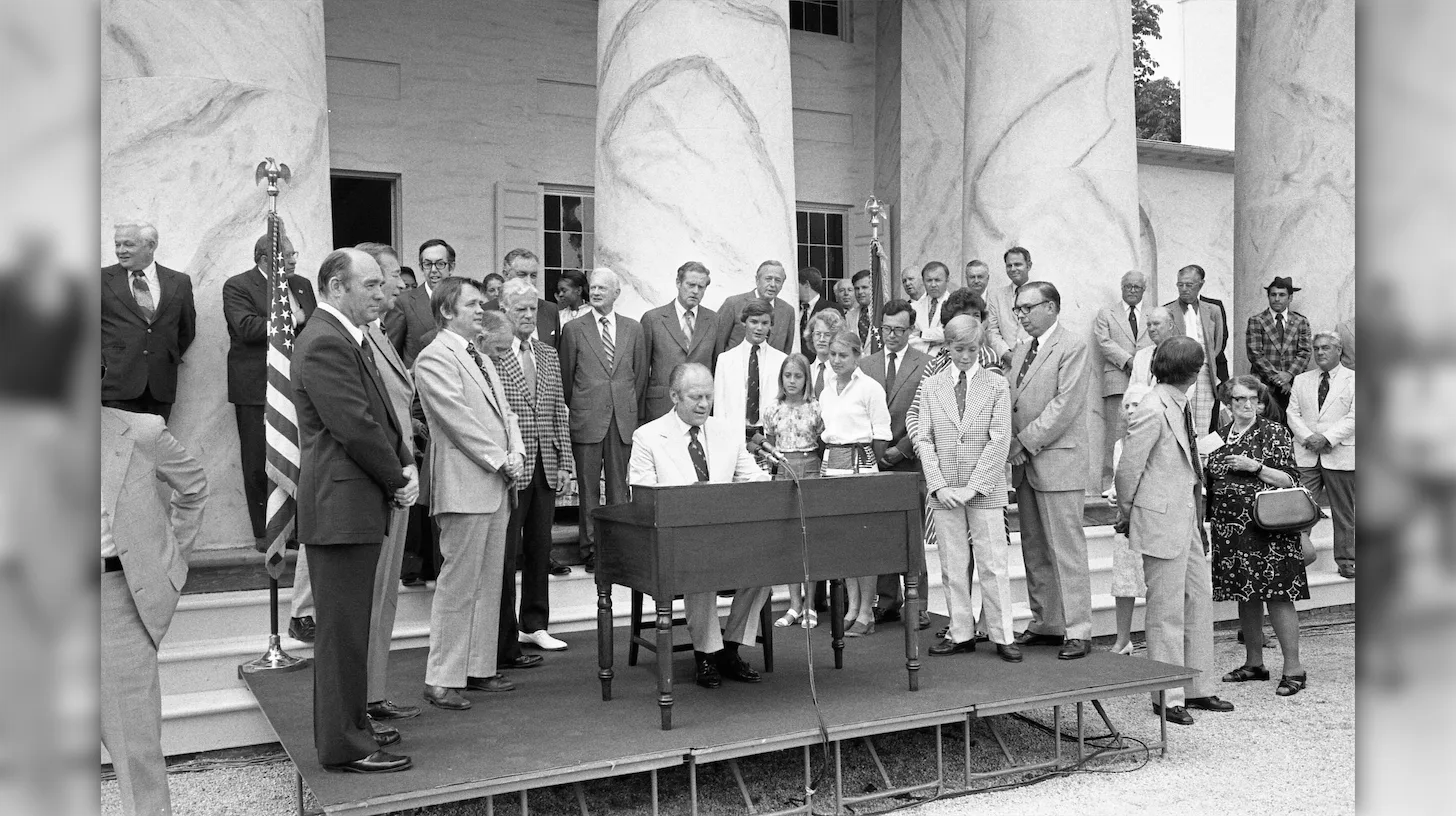
On the afternoon of Tuesday, August 5, 1975, President Gerald R. Ford sat down at an eighteenth-century writing desk that had been set out for him at the foot of the steps of Arlington House, the old Lee mansion on its hill above the Potomac, and signed a joint resolution of Congress. Six to eight hundred people stood behind light ropes on the lawn, and the reporter who wrote the pool report for the White House noted the heat. Ford read his remarks from index cards in about four minutes. “General Lee’s character has been an example to succeeding generations,” he said, “making the restoration of his citizenship an event in which every American can take pride.”
What he signed was not a pardon, and it was not the paper at the heart of the story. That paper was an oath of amnesty that Robert E. Lee had signed before a notary in Virginia in October 1865, and that the government had never acted on. It had come to light in the National Archives in 1970. Ford called the delay an oversight of 110 years. How the oath came to be signed, what became of it, and whether it was ever really lost are told in the documents of 1865 and in the record of Congress in 1975.
Silver-gray at fifty-eight
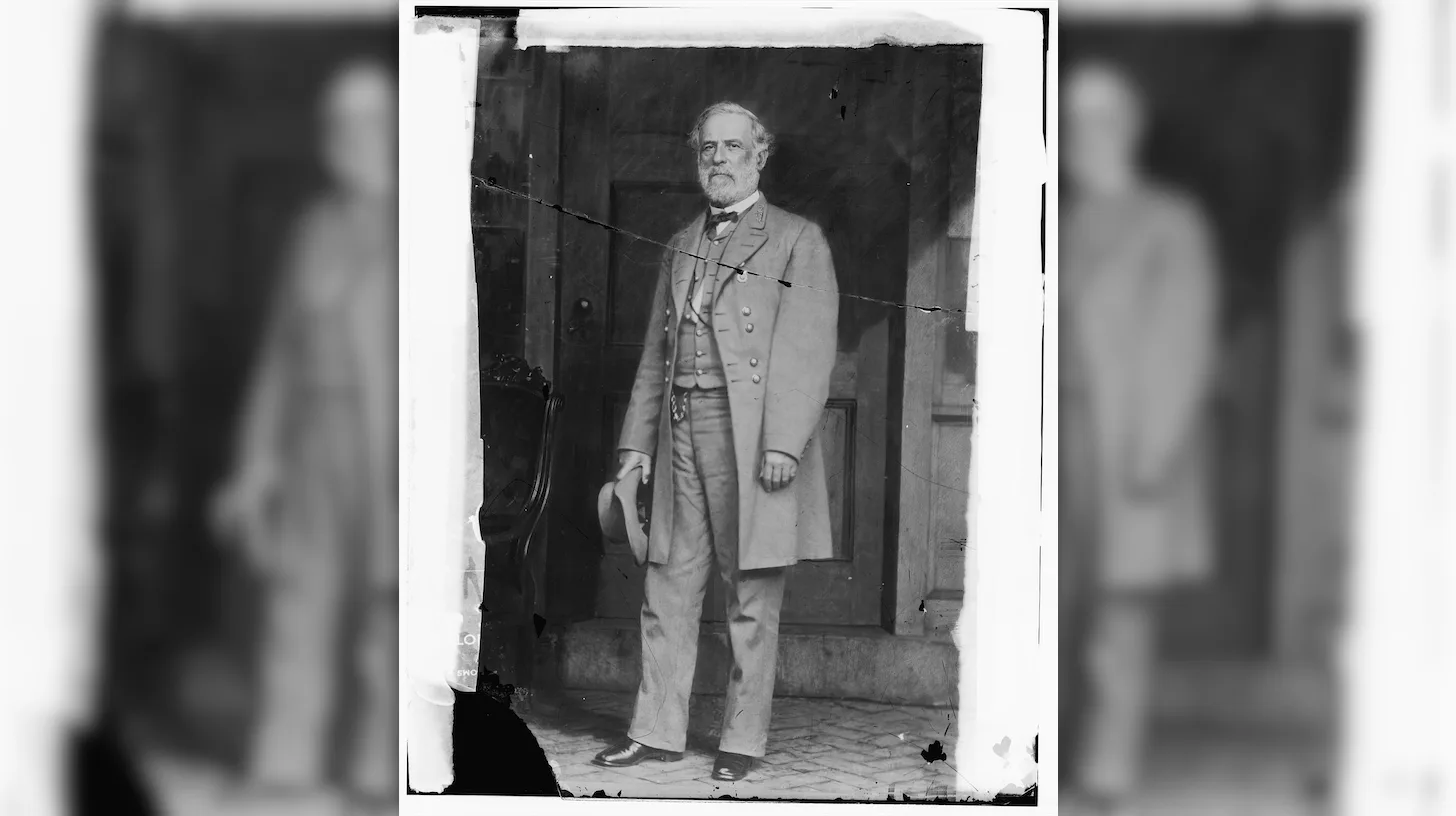
He surrendered the Army of Northern Virginia at Appomattox Court House on April 9, 1865. Horace Porter, an officer on Grant’s staff who was in the room, described him as “six feet and one inch in height, and erect for one of his age, for he was Grant’s senior by sixteen years.” His beard was silver-gray, and he had put on for the occasion “a new uniform of Confederate gray, buttoned to the throat, and a handsome sword and sash.” Under the terms Grant gave, Lee and his men were paroled and allowed to go home, and they were not to be disturbed by the United States so long as they kept their paroles.
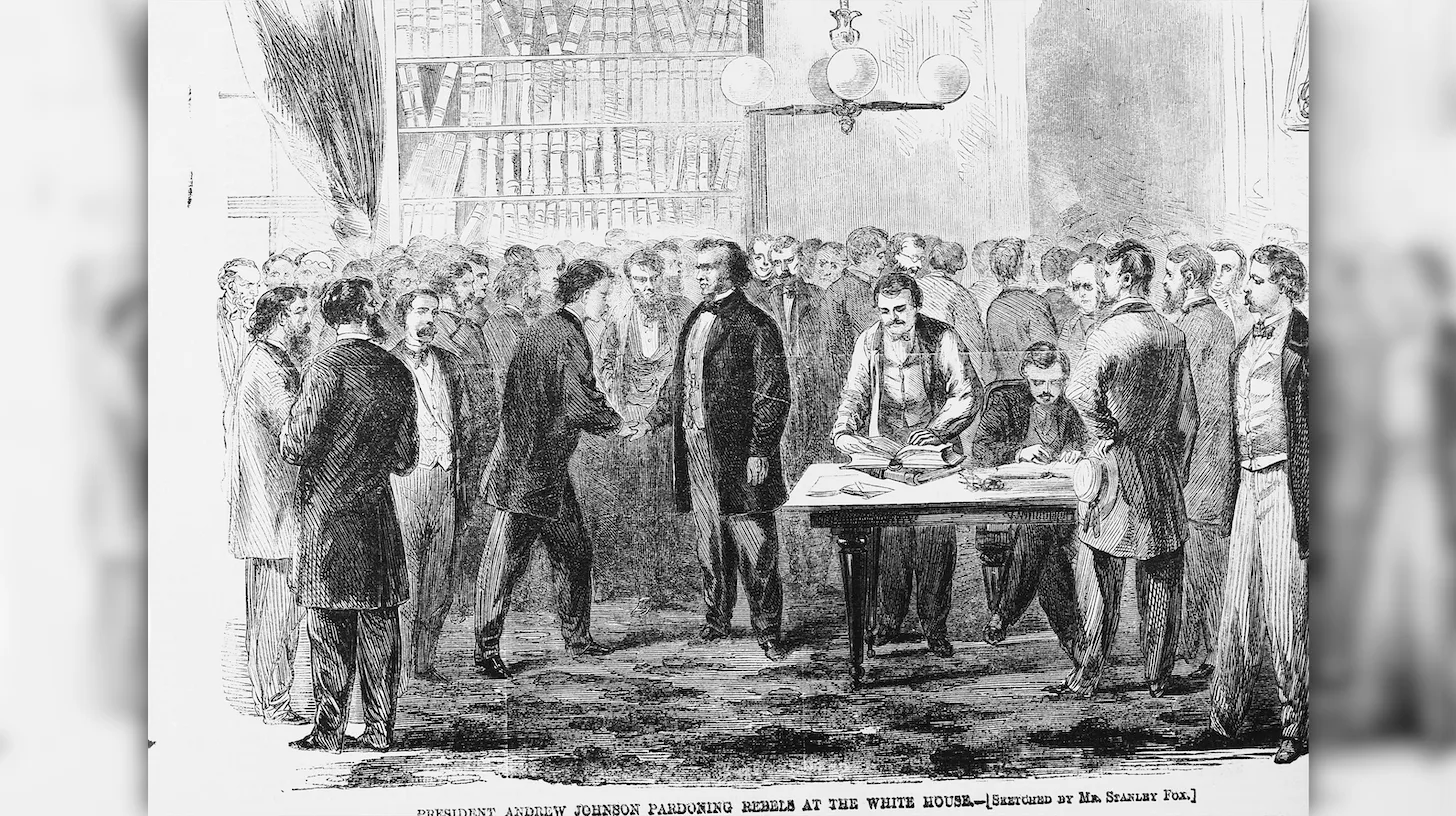
Lee was fifty-eight, and he went back to his family’s house in Richmond. In late May President Andrew Johnson offered amnesty to most former Confederates who would take an oath of loyalty, but he excepted fourteen classes of men, and officers of Lee’s rank were among them. They would have to apply to the President, one by one.
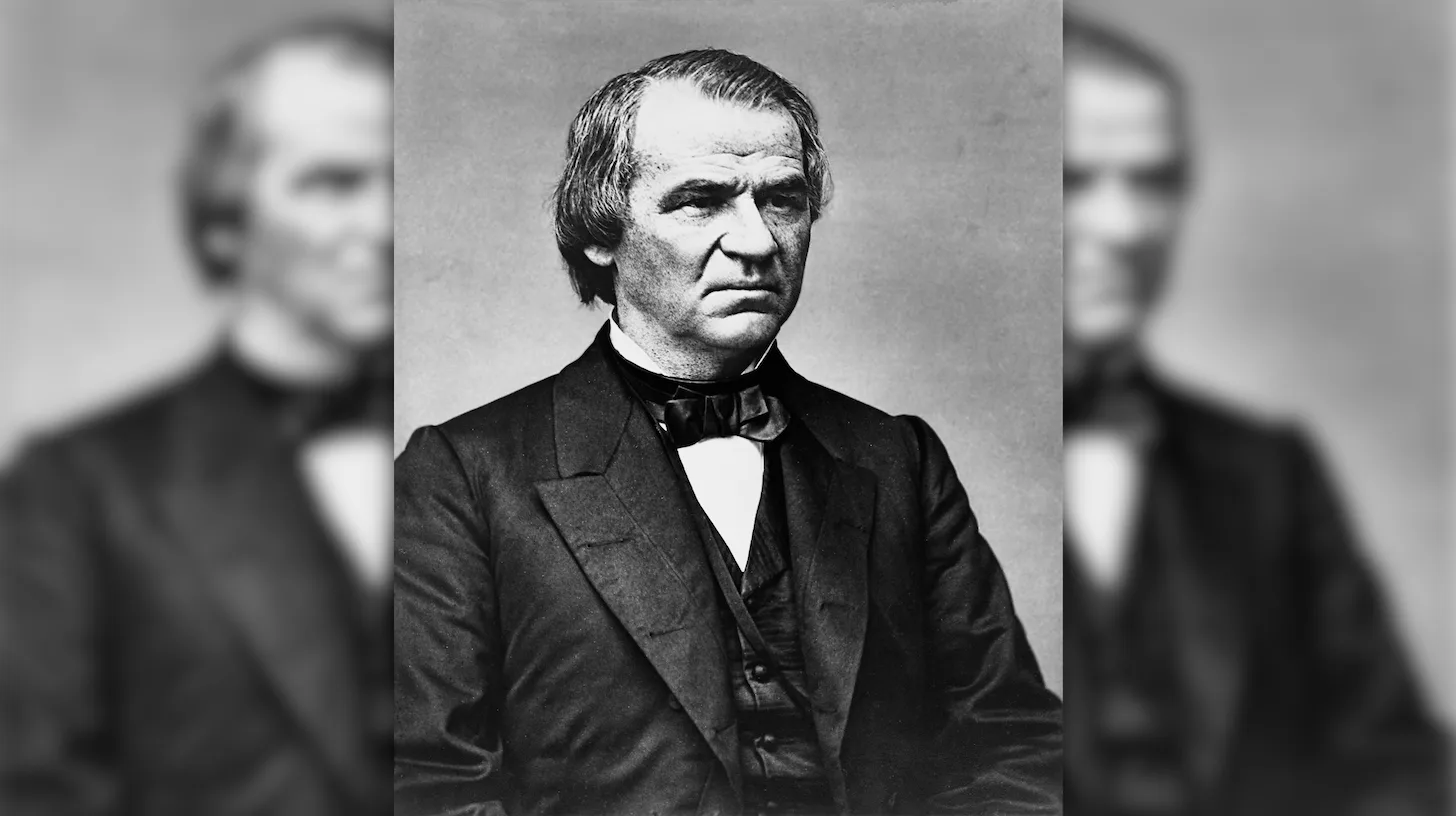
Early in June a federal grand jury at Norfolk, under Judge John C. Underwood, indicted Lee for treason. He told a visiting minister that summer, as J. William Jones recorded, “Well! it matters little what they may do to me; I am old, and have but a short time to live anyhow,” and he added that he had never cherished bitter or vindictive feelings toward the North. He also said, in a letter Douglas Southall Freeman printed, “I have no wish to avoid any trial the government may order, and I cannot flee.”
Two papers for Custis
He made up his mind without telling anyone. On June 13 he handed his son Custis two papers in his own hand and asked him to copy them. One was a letter to Grant, who was now general-in-chief of the armies. Lee wrote that he understood he was to be indicted, that he was ready to meet any charge, but that he had supposed the officers and men of his army were protected by the terms of their surrender. If that were so, he wished to apply for the benefits of the amnesty. The other paper was the application itself, to the President, and it was three sentences long. The National Archives keeps its text.
“Being excluded from the provisions of amnesty & pardon contained in the proclamation of the 29th Ulto; I hereby apply for the benefits, & full restoration of all rights & privileges extended to those included in its terms.”
Grant took up the matter at once. On June 16 he sent the President an endorsement on Lee’s letter, holding that men paroled at Appomattox could not be tried for treason while they kept their paroles.
“Good faith, as well as true policy, dictates that we should observe the conditions of that convention. Bad faith on the part of the Government or a construction of that convention subjecting officers to trial for treason, would produce a feeling of insecurity in the minds of all the paroled officers and men.”
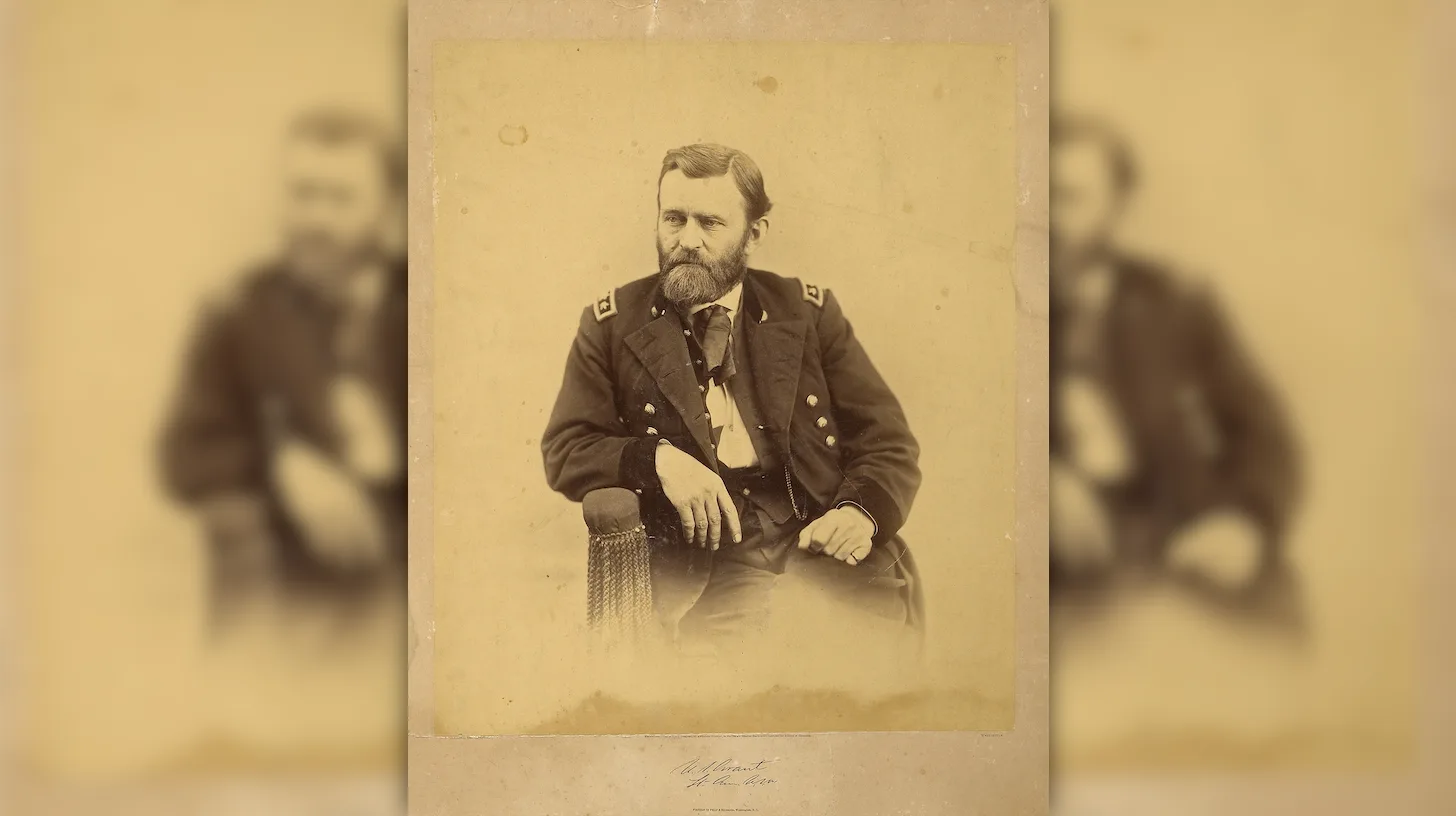
He asked that Underwood “be ordered to quash all indictments found against paroled prisoners of war.” Four days later he wrote to Lee that he had sent the application on “with the earnest recommendation” that it be granted, and he explained one thing missing from it. No oath of loyalty had gone with the letters, because, Grant wrote, “the order requiring it had not reached Richmond when this was forwarded.” A story that Grant threatened to resign if Lee were tried comes from a memoir by his former aide Adam Badeau, written twenty-two years later, and no paper of 1865 bears it out. The indictment was never pressed. Robert E. Lee’s pardon was never granted either.
Rockbridge County, October 2
That summer Lee was asked to become president of Washington College, in Lexington, in the Shenandoah Valley, and he accepted. He rode into Lexington in September, still in gray and suffering from rheumatism, and he was inaugurated on Monday morning, October 2, 1865, in the physics classroom on the second floor of the college building. By Freeman’s account he stood dressed in gray with his arms folded, signed the college’s oath of office in silence, took the keys of the college and said nothing at all during the short proceedings. As for his own wishes, he wrote not long afterward, “I should prefer, as far as my predilections are concerned to be on a small farm, where I could make my daily bread.”
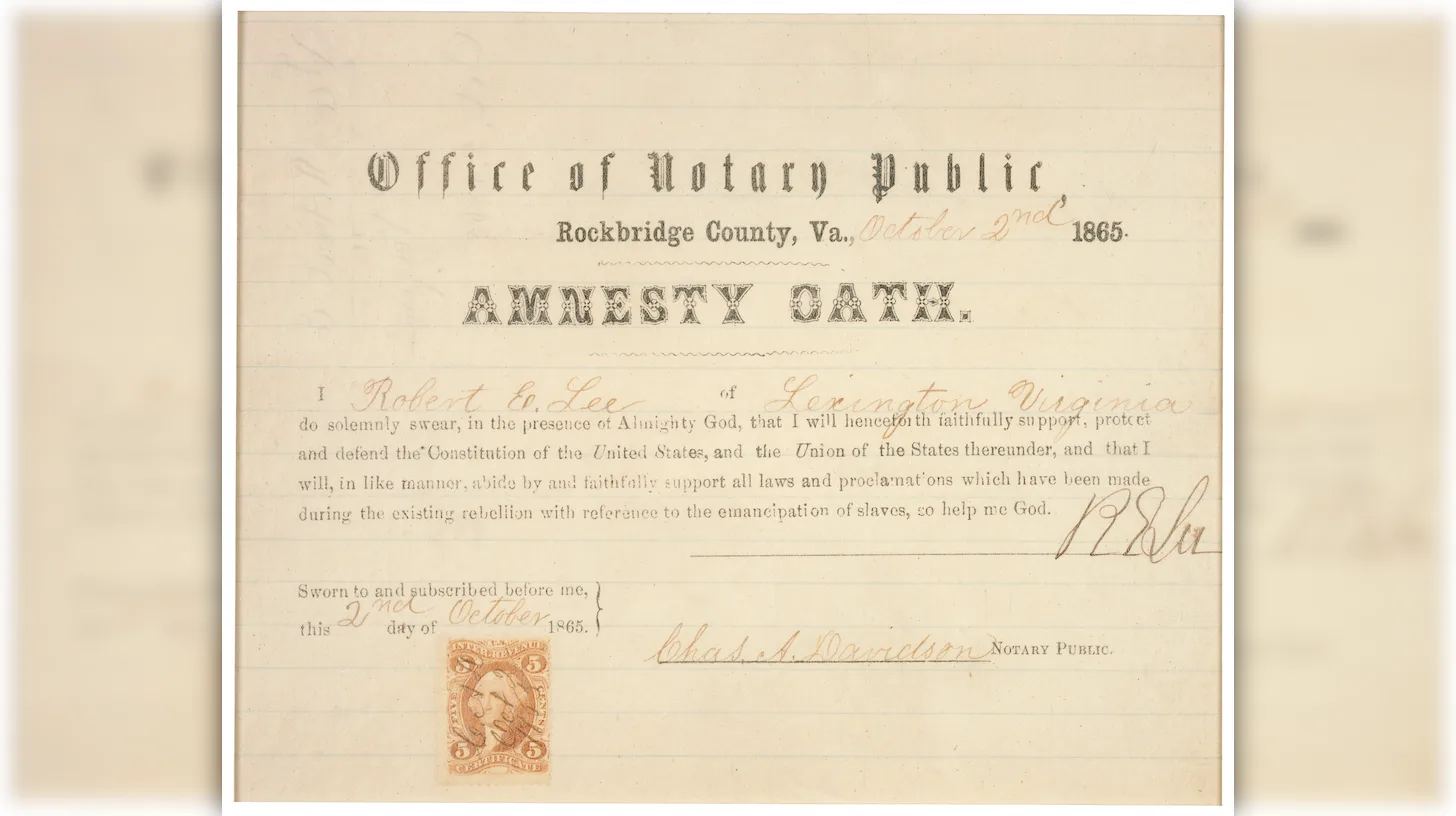
That same day he signed another oath. It was a printed form from the office of a notary public in Rockbridge County, and in its blanks Lee wrote his name and “Lexington Virginia” and signed it “R E Lee.” In it he swore before God to support, protect and defend the Constitution and the Union of the States. Below his name are a five-cent revenue stamp and the signature of the notary, Charles A. Davidson. No record says at what hour, or in what room, Lee signed it. The oath was sent to Washington to join his application.
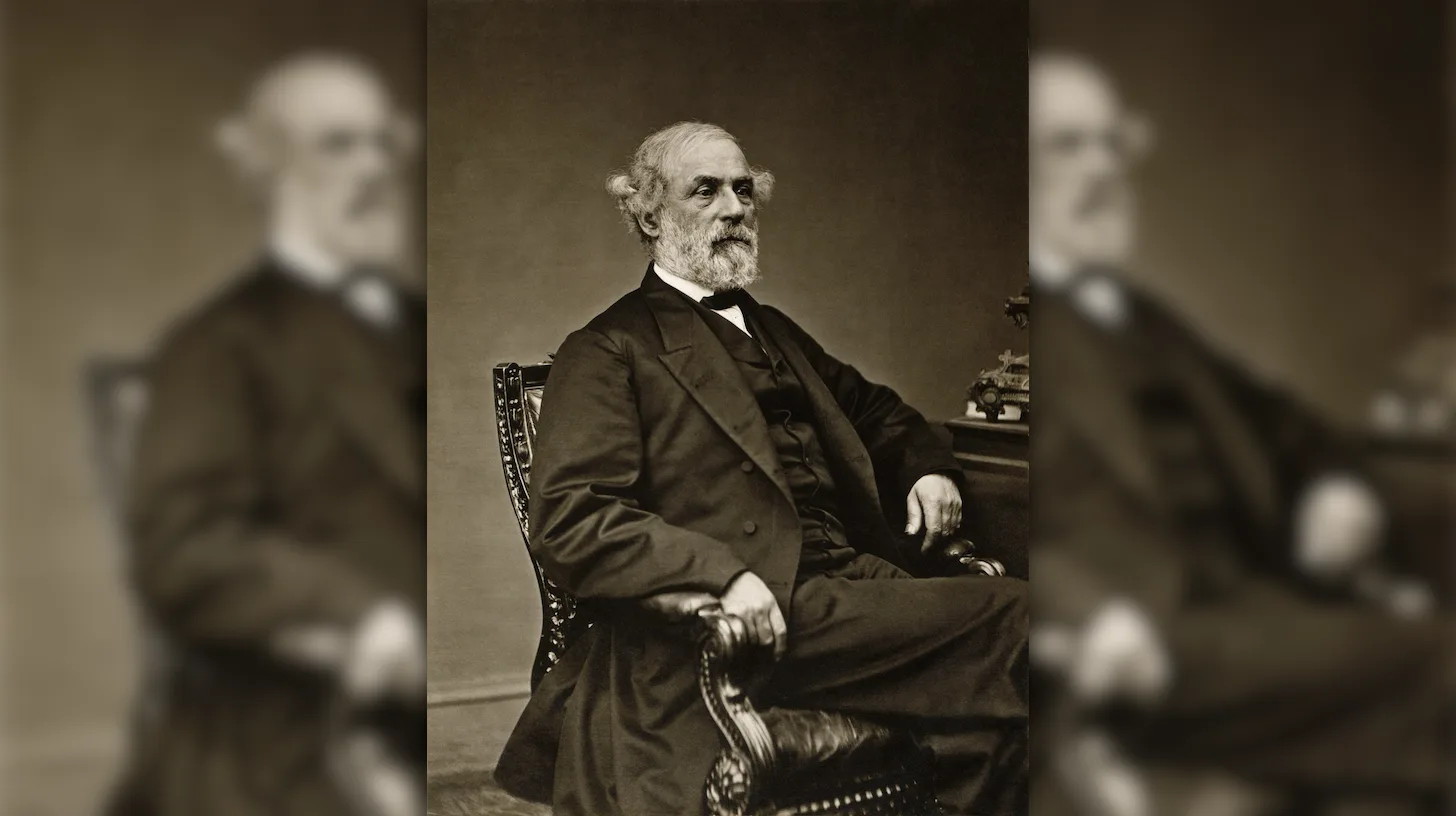
He wrote to old officers that autumn urging them to do the same. To Captain Josiah Tatnall, a former Confederate naval officer, he wrote in September what Ford would read out in 1975.
“The war being at an end, the Southern States having laid down their arms, and the questions at issue between them and the Northern States having been decided, I believe it to be the duty of every one to unite in the restoration of the country, and the reestablishment of peace and harmony.”
To a former governor of Virginia, John Letcher, he had written in August that “All should unite in honest efforts to obliterate the effects of war, and to restore the blessings of peace.”
That was the public Lee. Encyclopedia Virginia adds the other half: “Publicly he counseled Southerners to face the future with stoicism and hard work. Privately, he was far from content.” In 1868 he signed a petition recommending that African Americans be denied political power.
Pigeonholed
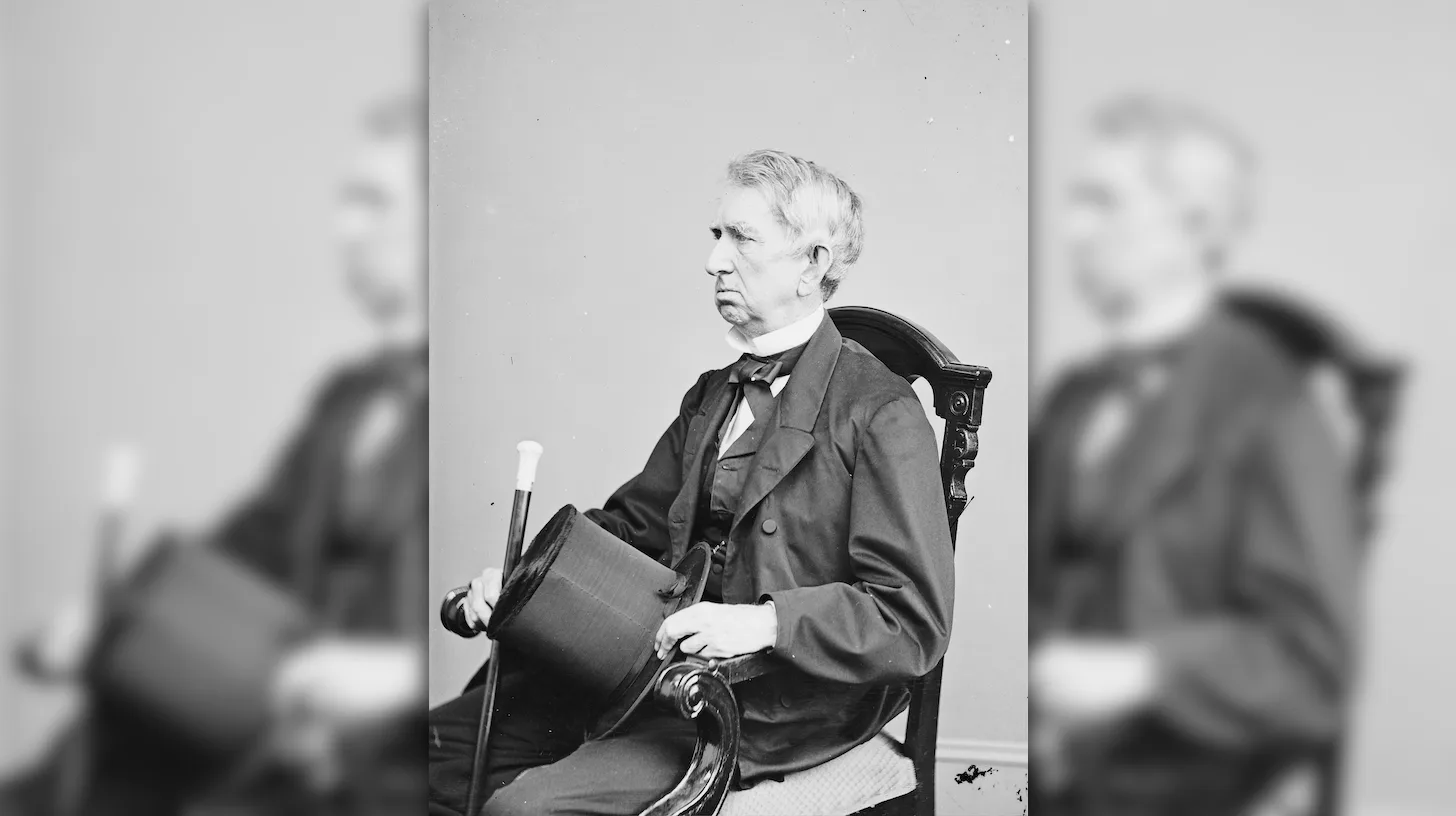
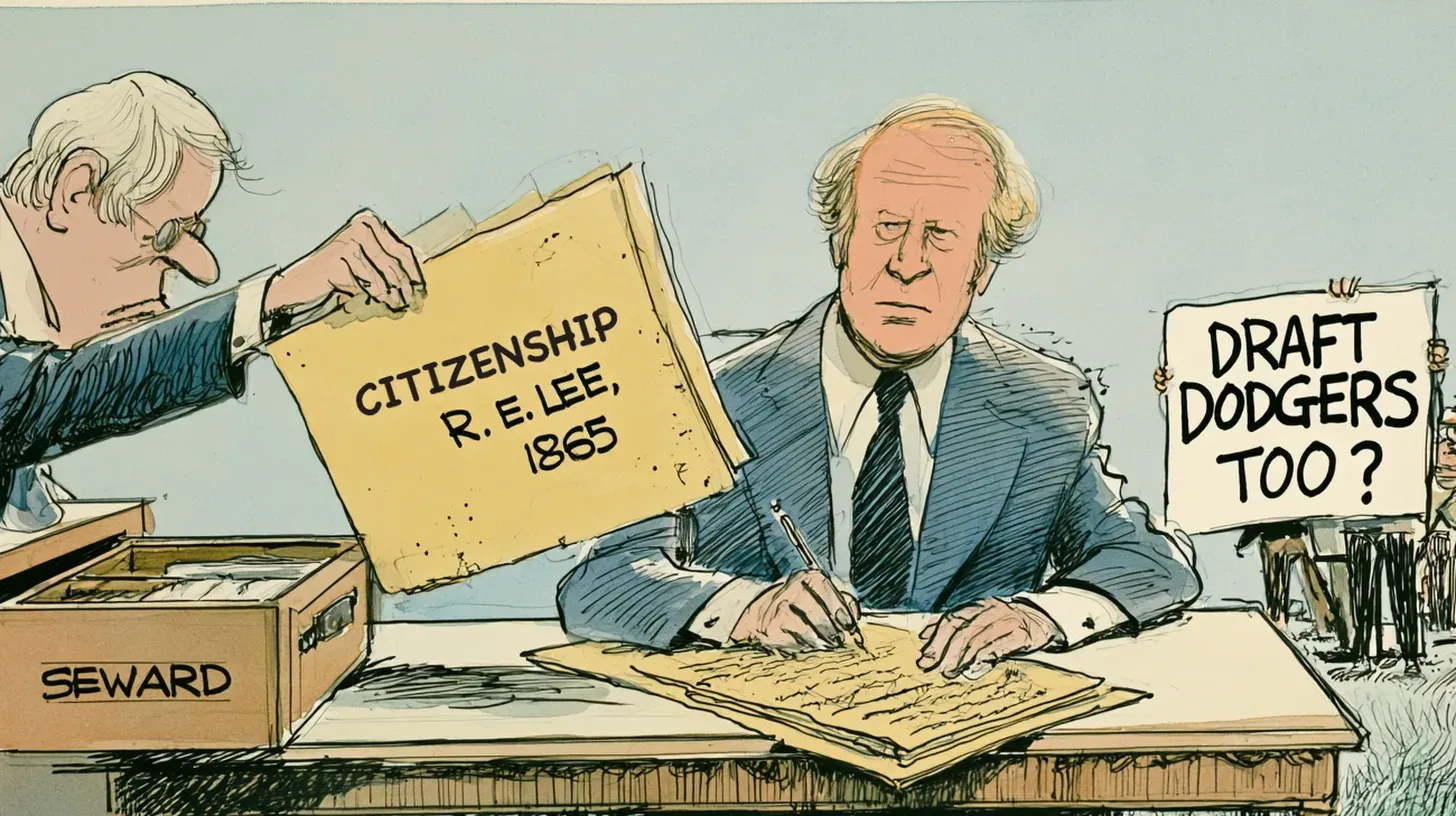
Nothing came back. The application and the oath went to the State Department, whose Secretary was William H. Seward, and there they stopped. The National Archives, writing in 2005, put it this way: “Apparently Secretary of State William H. Seward had given Lee’s application to a friend as a souvenir, and the State Department had pigeonholed the oath.” The friend has never been named, and no paper of 1865 tells the story. A White House memorandum of 1975 called it only “reported.” No source puts the oath in anyone’s desk drawer.
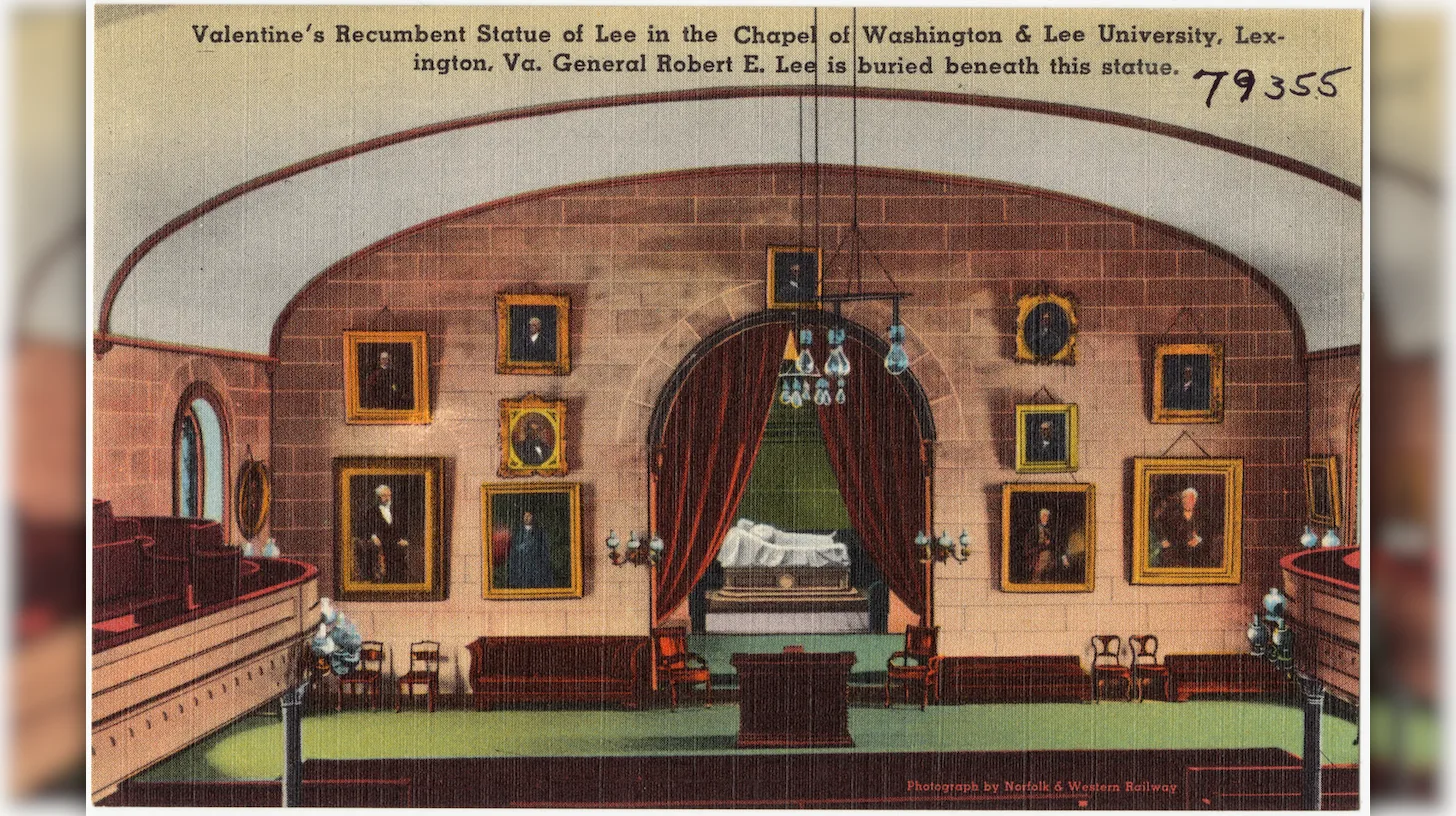
At Christmas 1868 Johnson proclaimed a full pardon for treason to everyone who had taken part in the rebellion, and in February 1869 the indictment against Lee was dismissed. But the Fourteenth Amendment, ratified that summer, barred former officers who had broken an earlier oath to the Constitution from holding office, and only Congress could lift that bar. For Lee it was never lifted. He died at Lexington on October 12, 1870, at sixty-three. When Congress removed the bar for everyone in 1898, members said in 1975, it reached only the living.
The oath went with the rest of the State Department’s amnesty papers to the National Archives. In 1970 an archivist there, Elmer O. Parker, brought it to wider notice, and the newspapers called it a discovery. Not everyone agreed it had ever been lost. In July 1975 Representative John Conyers of Michigan told the House that the Archives had informed his staff that a clerk named Donald King had noticed the oath in 1965 and shown it to Parker in 1970, that two archivists remembered it on public display in the 1930s, and that it was the Archives’ position the oath had never been lost at all. The Archives’ own catalog still puts the word “discovered” in quotation marks.
A hundred and ten years
Bills to restore Lee’s rights had been offered before, the first in 1963, and none had passed. In January 1975 Senator Harry F. Byrd Jr. of Virginia introduced Senate Joint Resolution 23, and on the floor that spring he said the Senate would only be doing what Lee had asked for in writing on June 13, 1865. The Senate passed it by voice vote on April 10. In the House, on July 22, it passed 407 to 10.
It did not pass without argument. Several members of both houses tied it to the young men who had refused to fight in Vietnam. Representative Elizabeth Holtzman of New York said Congress was willing to forgive a man who had led armies against the country, and asked why it could not show the same concern for the living as for the dead. Conyers called the measure a sentimental, symbolic gesture, and said it was constitutionally questionable. The resolution restored to Lee the full rights of citizenship, effective June 13, 1865, the day he had written his application.
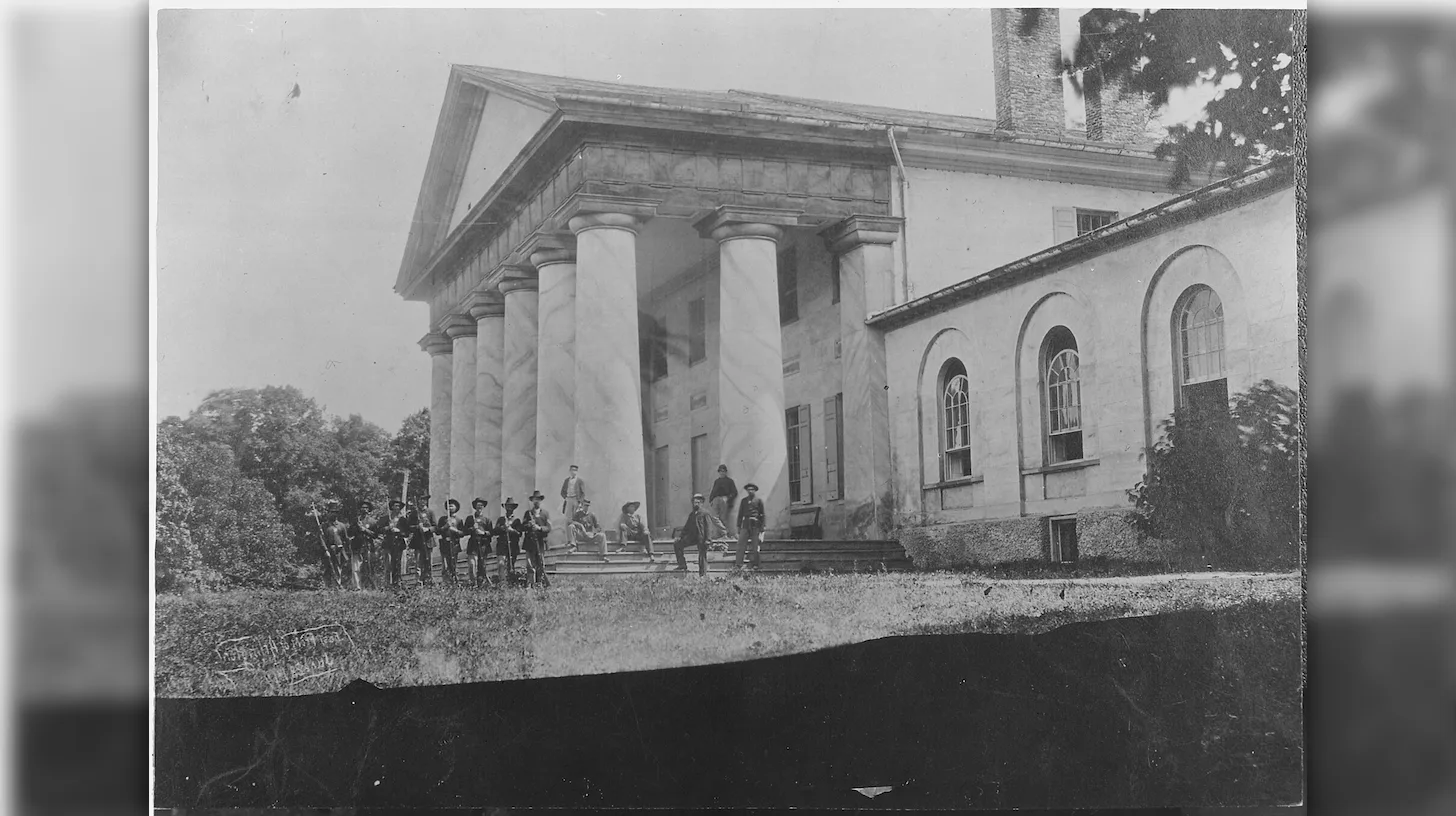
So on that August afternoon Ford drove across the river to the house Lee had left in 1861. He spoke of the 110-year oversight, signed the resolution at the old desk at the foot of the steps, and gave one pen to Byrd and another to a small boy of the Lee family. Then he spent more than twenty minutes shaking hands along the ropes, perspiring in the hot sun. He was back at the White House at 2:52.