13 min read
On Tuesday, November 20, 1934, shortly after eleven in the morning, a retired Marine general and a newspaper reporter went into the Bar Association Building in New York, where a committee of the House of Representatives was holding its hearings behind closed doors. The general was Smedley Darlington Butler, who had two Medals of Honor. He had come to tell the committee that a bond salesman had tried to recruit him to lead half a million veterans in a movement to take over the functions of the government of the United States.
Before the day was out the reporter’s paper, the New York Evening Post, had the story on the street. By the next morning the men whose names had come up were calling it a fantasy, moonshine and the best laugh of the year. Three months later the committee reported to Congress that much of what Butler said was true, and the argument over how much has gone on ever since.
Old Gimlet Eye
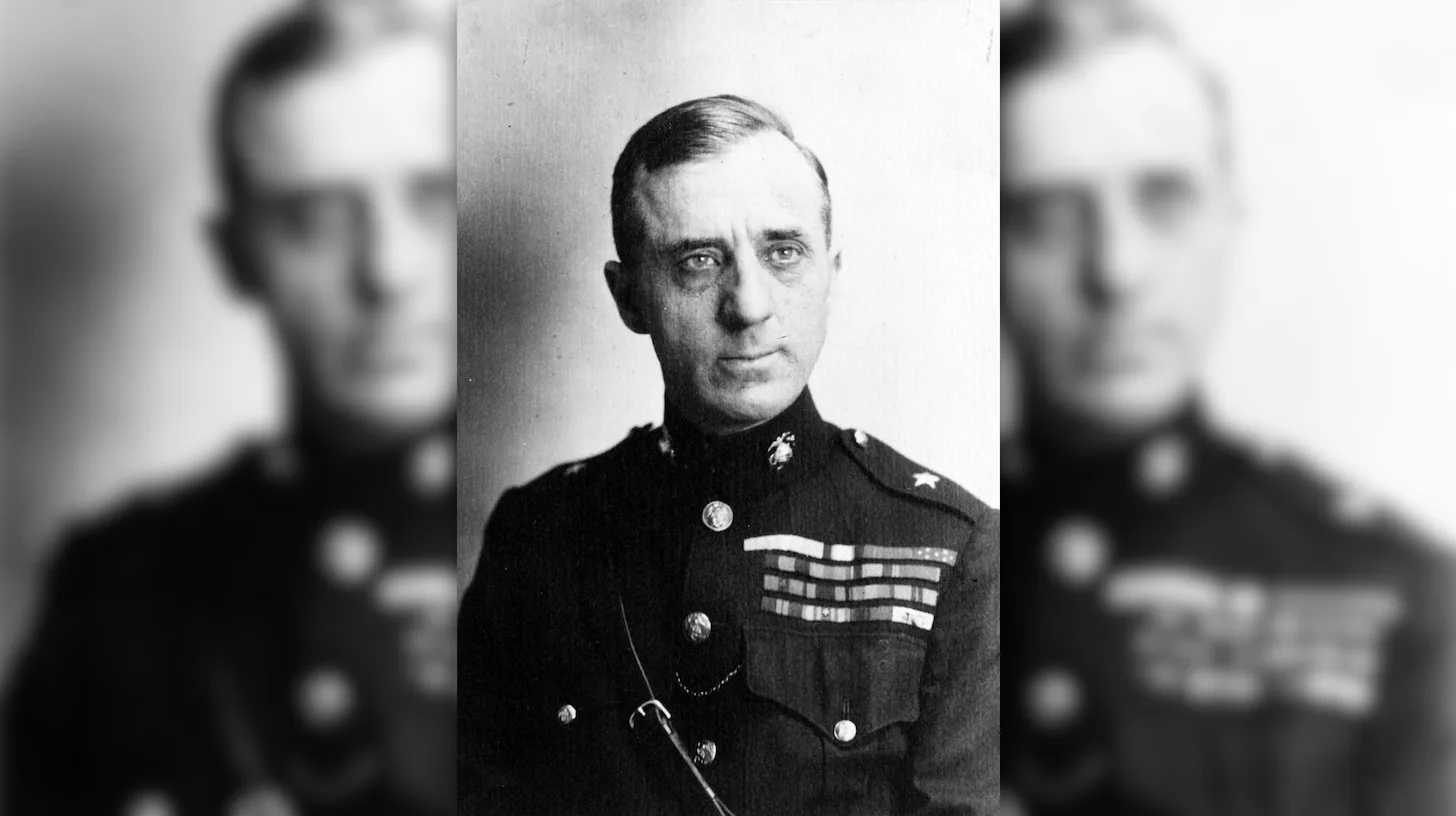
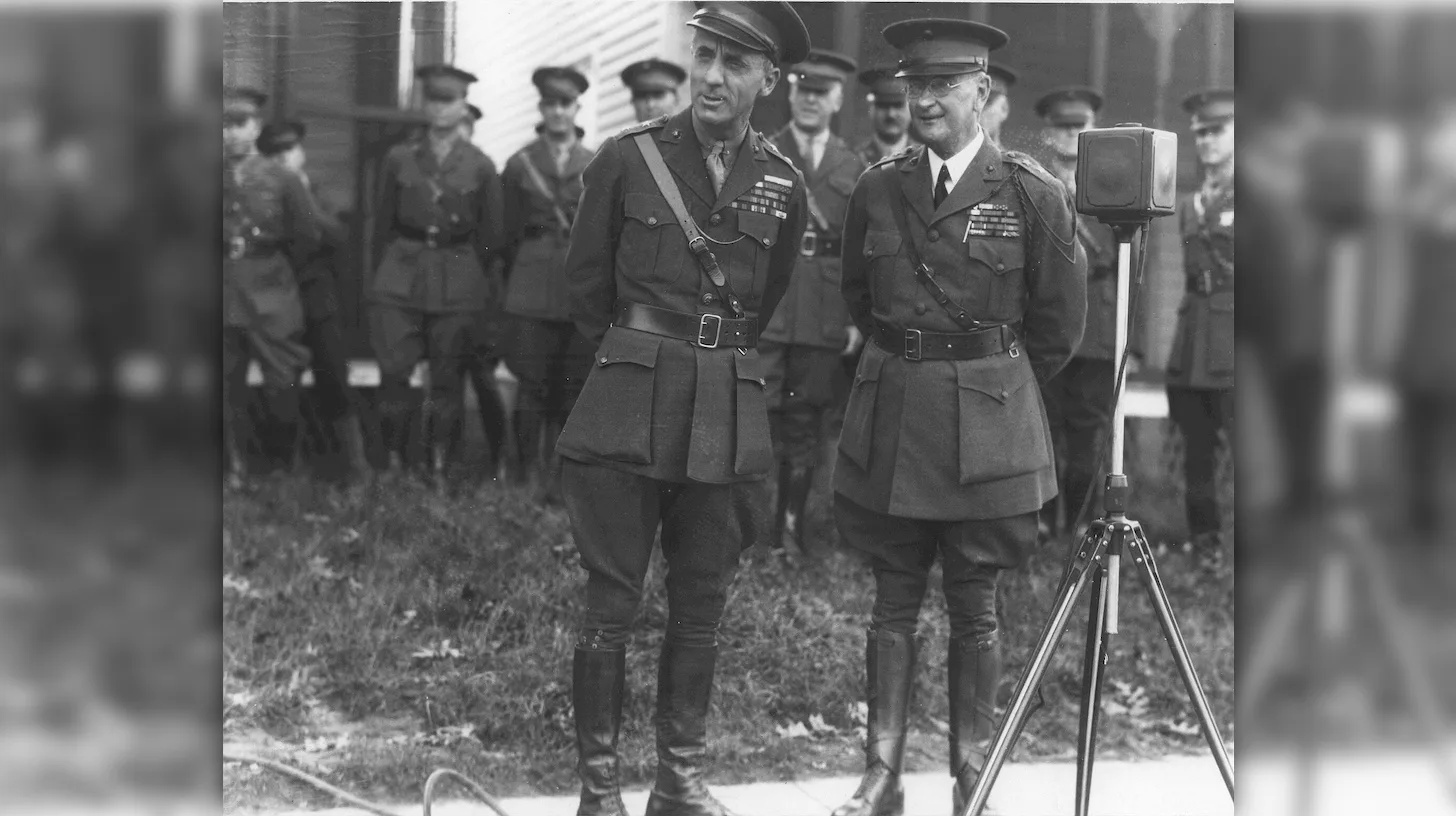
He was fifty-three years old that fall, five feet nine inches tall and about 140 pounds, a little stooped, as his biographer Hans Schmidt describes him, with a Marine Corps emblem tattooed on him from his throat to his waist. Time magazine called him “that slender, long-nosed spitfire” and gave his nickname, Old Gimlet-Eye. He came from a Quaker family in West Chester, Pennsylvania, where his father was a congressman on the House Naval Affairs Committee, and in May 1898, at sixteen, he had been commissioned a second lieutenant of Marines. He was two years under age, Schmidt writes, and family political connections eased the way.
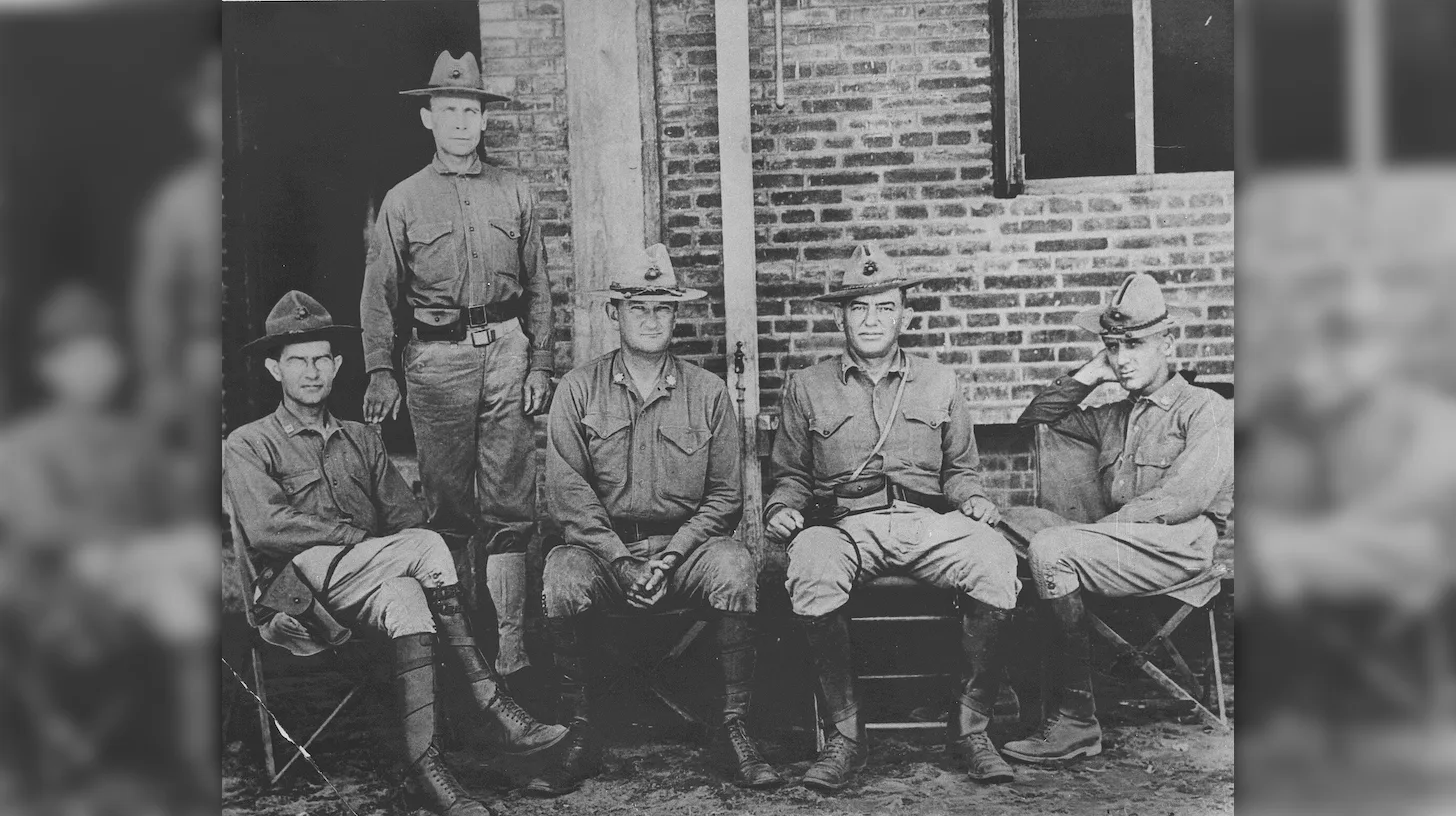
He served in the Philippines and in China, and in 1914 at Veracruz, Mexico, where the fighting produced fifty-five Medals of Honor.
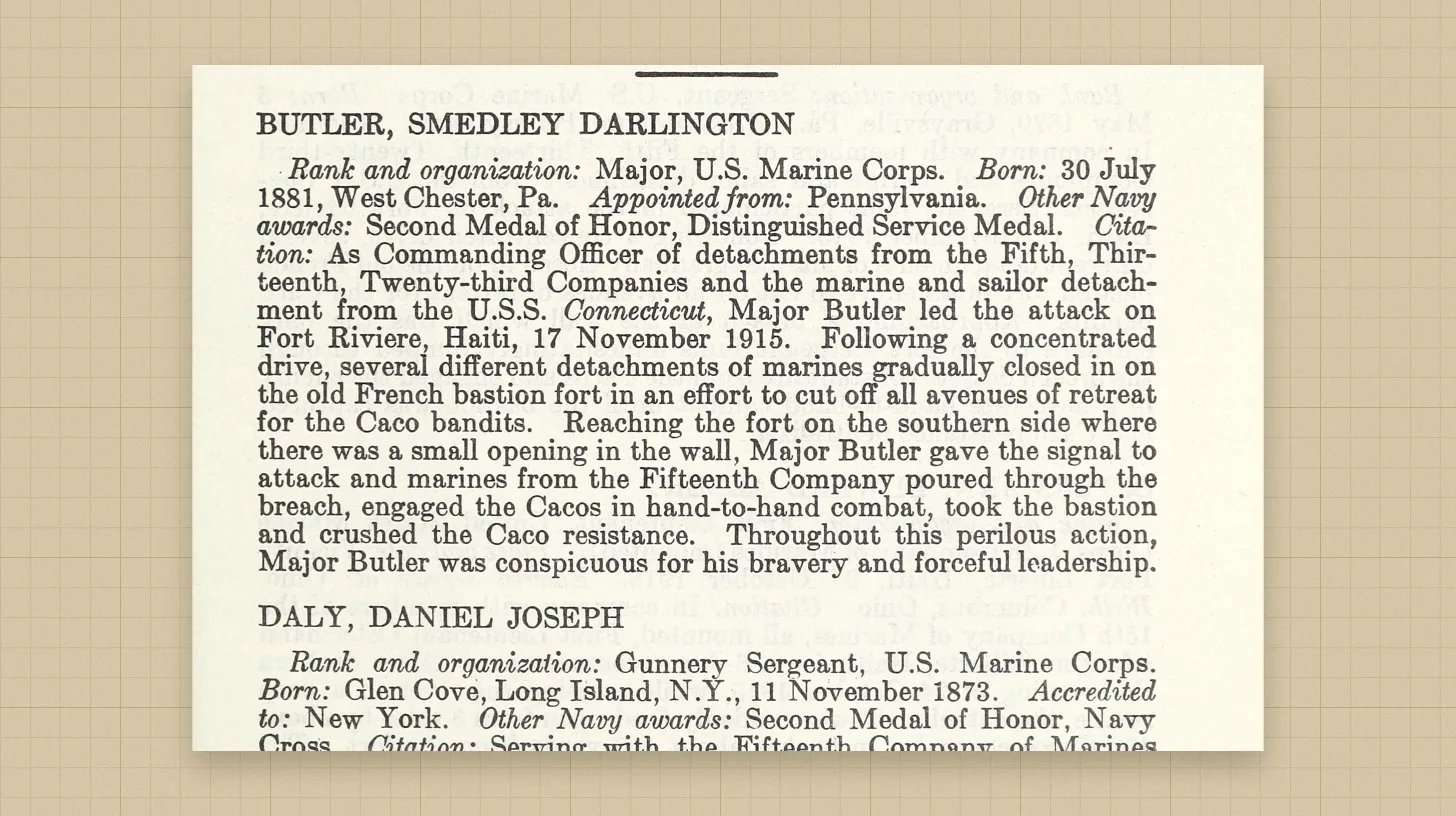
He was given one of them, for distinguished conduct in battle, and he did not want it. He wrote to the secretary of the Navy, Josephus Daniels, that he had done nothing to deserve it, and he said that to accept it would make him party to “a vile perversion of our Sacred Decoration.” After persistent appeals, Daniels ordered him to keep it. The next year, in Haiti, he led the attack on Fort Rivière, and he received a second Medal of Honor. Only one other Marine, Sgt. Dan Daly, ever won two.
What is one life?
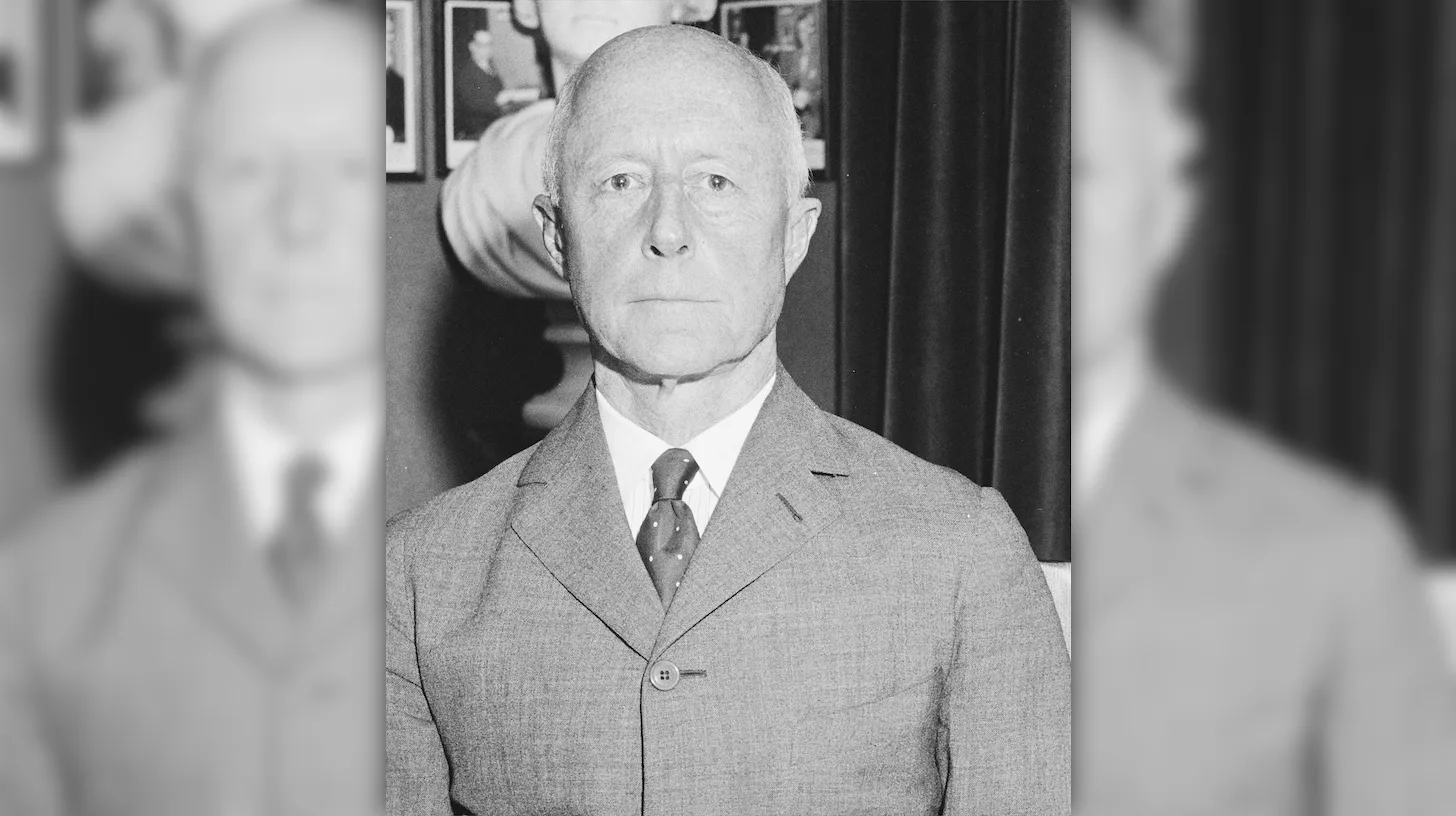
On Monday, January 19, 1931, Butler, by then a major general, spoke to the Contemporary Club in Philadelphia, believing, as he said later, that his remarks were to be kept within the four walls. He repeated a story a friend had told him: that the friend had been riding with Benito Mussolini when the dictator’s car ran over a child and did not stop, and that Mussolini had said, as Time later reported the story, “What is one life in the affairs of a State?”
The remarks got into the papers. Mussolini cabled his ambassador that he had never run over a child, man or woman, and Italy protested. On January 29 the secretary of state, Henry L. Stimson, sent the Italian government the nation’s apology.
“The sincere regrets of this Government are extended to Mr. Mussolini and to the Italian people for this discourteous and unwarranted utterance by a commissioned officer of this Government on active duty.”
That same day the secretary of the Navy, Charles Francis Adams, ordered a general court-martial, and Butler placed himself under arrest at the Marine base at Quantico, Virginia. Time noted that he would be the first officer of his rank so disciplined since 1862. The friend, the papers soon learned, was Cornelius Vanderbilt Jr., who would say nothing. Ten days later the Navy withdrew the charges and dissolved the court, and Adams reprimanded him in writing instead. In the fall Butler retired. At his farewell at Quantico, as his flag came down, he had tears in his eyes.
A bunch of thousand-dollar bills
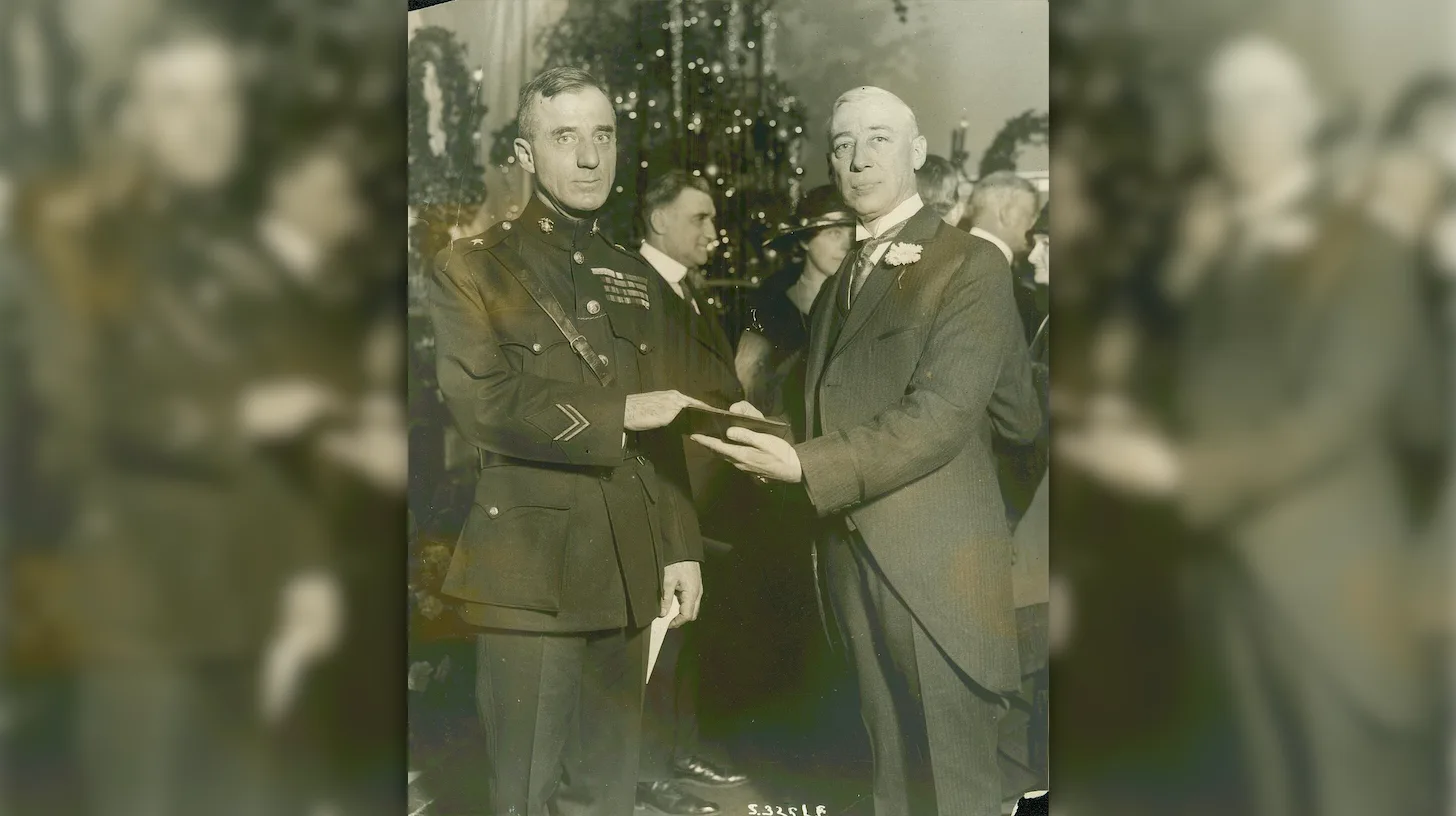
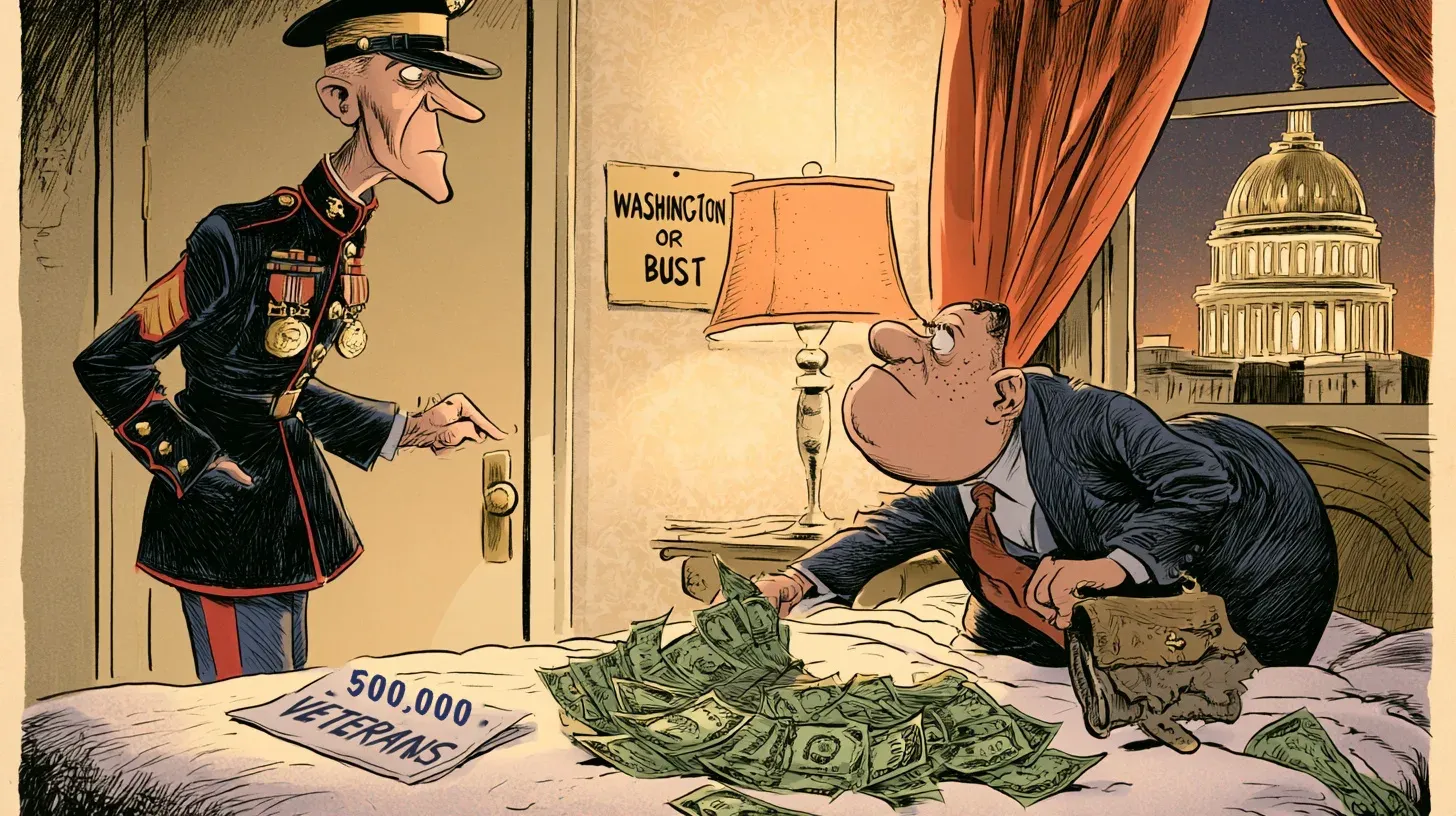
About the first of July 1933, according to the committee’s later summary of his testimony, a telephone call from Washington came to Butler’s home at Newtown Square, outside Philadelphia, and soon two men from the American Legion called on him there. One of them was Gerald C. MacGuire, a bond salesman in the New York firm of Grayson M.-P. Murphy & Co. They wanted Butler to go to the Legion’s convention in Chicago that fall, bring two or three hundred men with him at their expense, and push for a resolution keeping the dollar on gold. Butler told the committee that he did not know a damn thing about gold. In September he went to a reunion of his old division in Newark, New Jersey, and MacGuire came to his hotel. Butler described what happened next for the Post.
“At that time, MacGuire came into my hotel room, pulled out a worn wallet, and started to toss thousand-dollar bills on the bed; I asked him what the hell that was for, and he told me it was to pay my expenses to Chicago, to make a speech in favor of the gold standard.”
There were $18,000 of them, by Butler’s count. He had spent 1924 and 1925 on leave as Philadelphia’s director of public safety, and he reminded MacGuire, as the committee summarized it, that he had once been a cop. “You know damn well it doesn’t cost $18,000 to go to Chicago,” he told MacGuire, and he told him to pick up the money before he threw him out.
Butler asked to meet one of the men behind the money, and the next Sunday he and his wife met a wealthy heir, Robert Sterling Clark, at the train in Philadelphia and took him home to lunch. Butler showed him his flags and his medals. Clark, who had served near him in China in 1900, offered help, and Butler said that he told Clark “he ought to be ashamed to come into a man’s home and try to bribe him.” Clark telephoned MacGuire at his Chicago hotel and said the general was not coming. Butler did not go to the convention. The Legion passed a gold-standard resolution without him.
An unused dining room
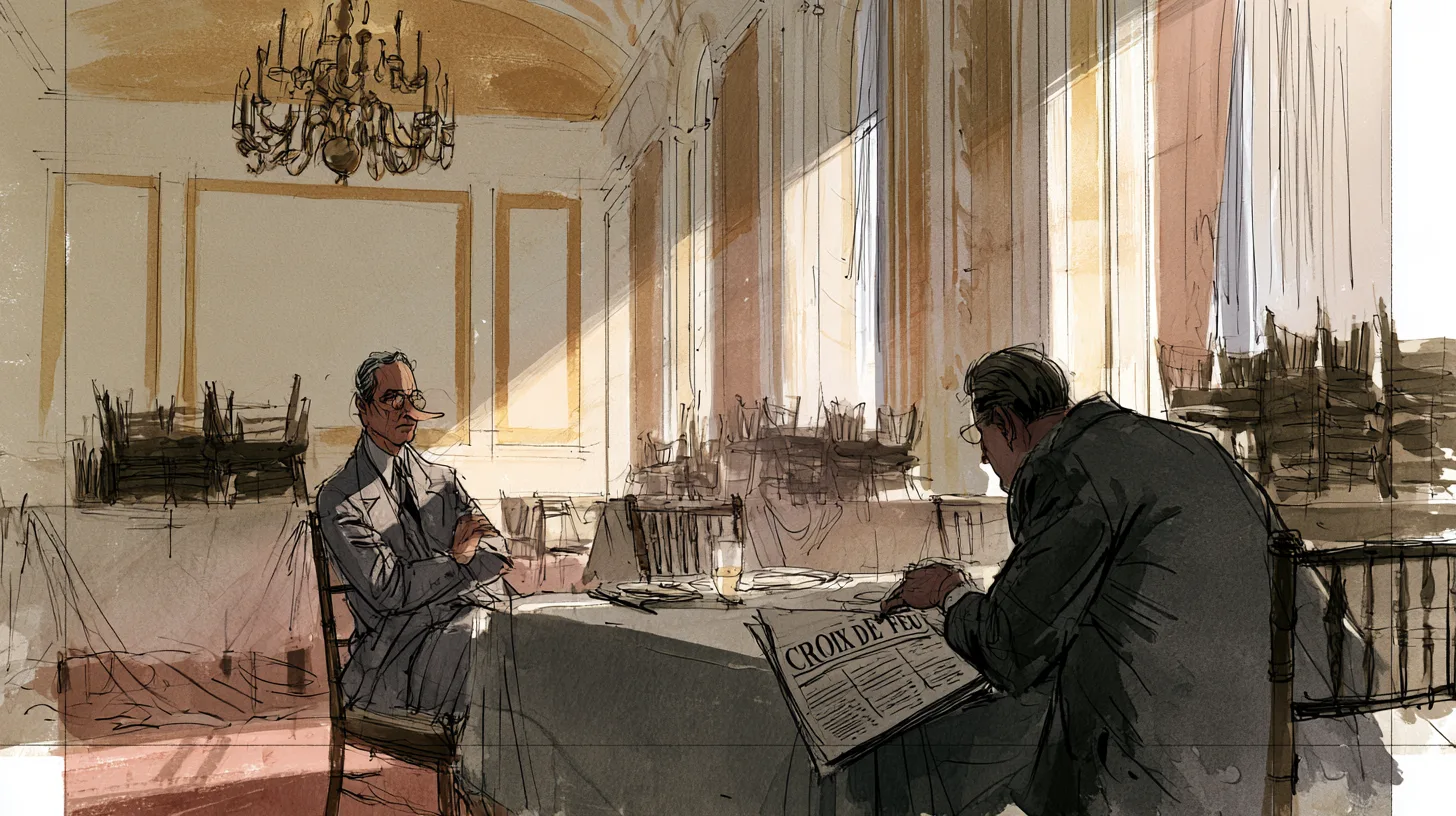
MacGuire spent part of 1934 in Europe, and from France he wrote to Clark of the veterans’ movement there, the Croix de Feu, whose meeting he had attended and which he said had impressed him. On Wednesday, August 22, 1934, he met Butler again, at the Bellevue-Stratford Hotel in Philadelphia, and the two men sat in an unused dining room and talked for a long time. Butler’s account of that talk, as the Post printed it, was the heart of his testimony. He was to head an organization of half a million veterans, which would assemble in Washington and within a few days take over the functions of government, and MacGuire said they might even go along with President Roosevelt and do with him what Mussolini had done with the King of Italy. To be fair to MacGuire, Butler added, he “didn’t seem bloodthirsty.”
Butler told the committee that he answered that his one hobby was maintaining a democracy, and that if such an army were raised, “we will have a real war right at home.” He also called in a reporter, Paul Comly French, who went on September 13 to Murphy’s offices on the twelfth floor of 52 Broadway and talked with MacGuire himself. French swore that MacGuire spoke of the need for a fascist government to save the country from the Communists, and of a man on a white horse. “The whole affair smacked of treason to me,” Butler said.
Behind closed doors
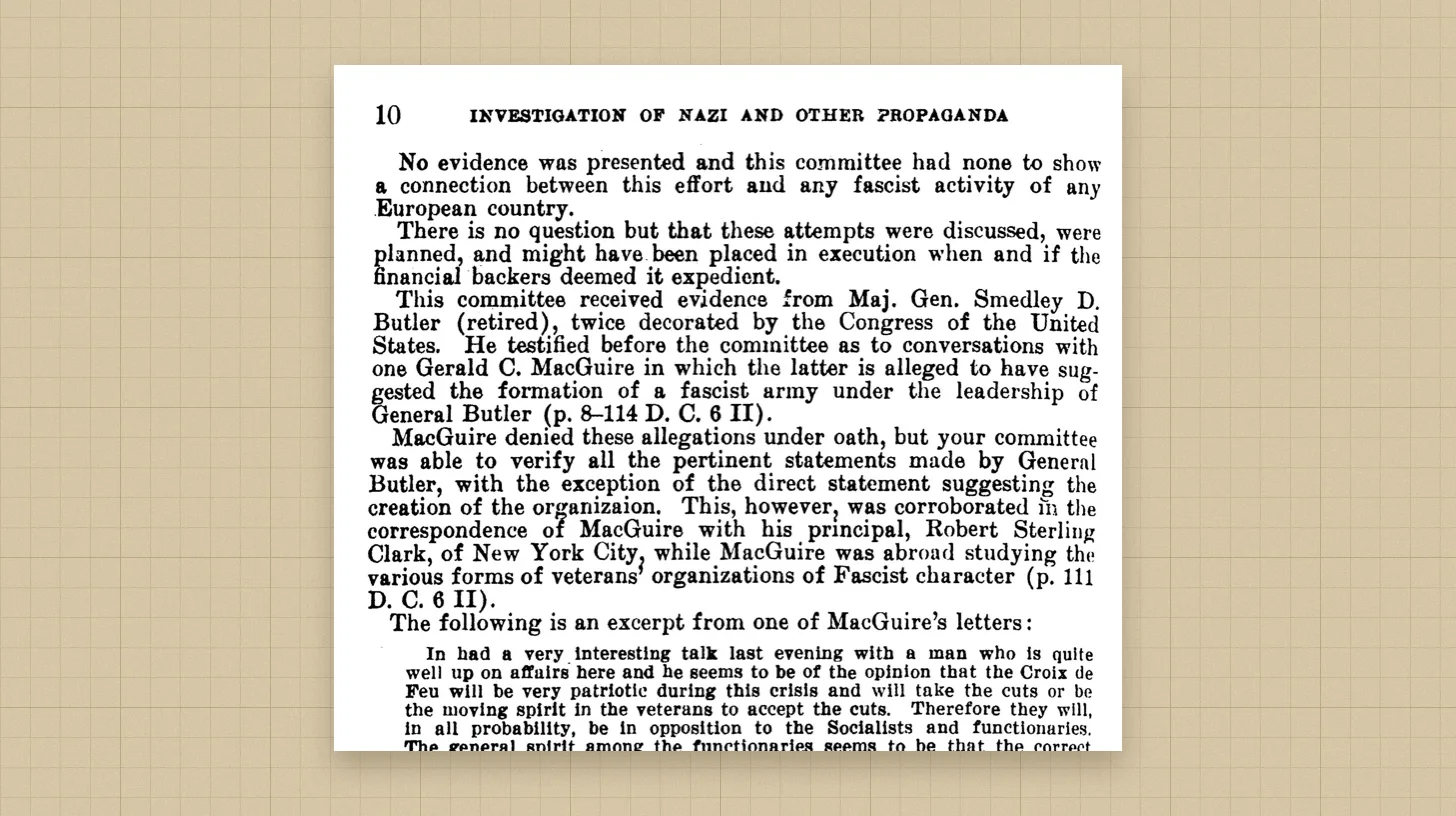
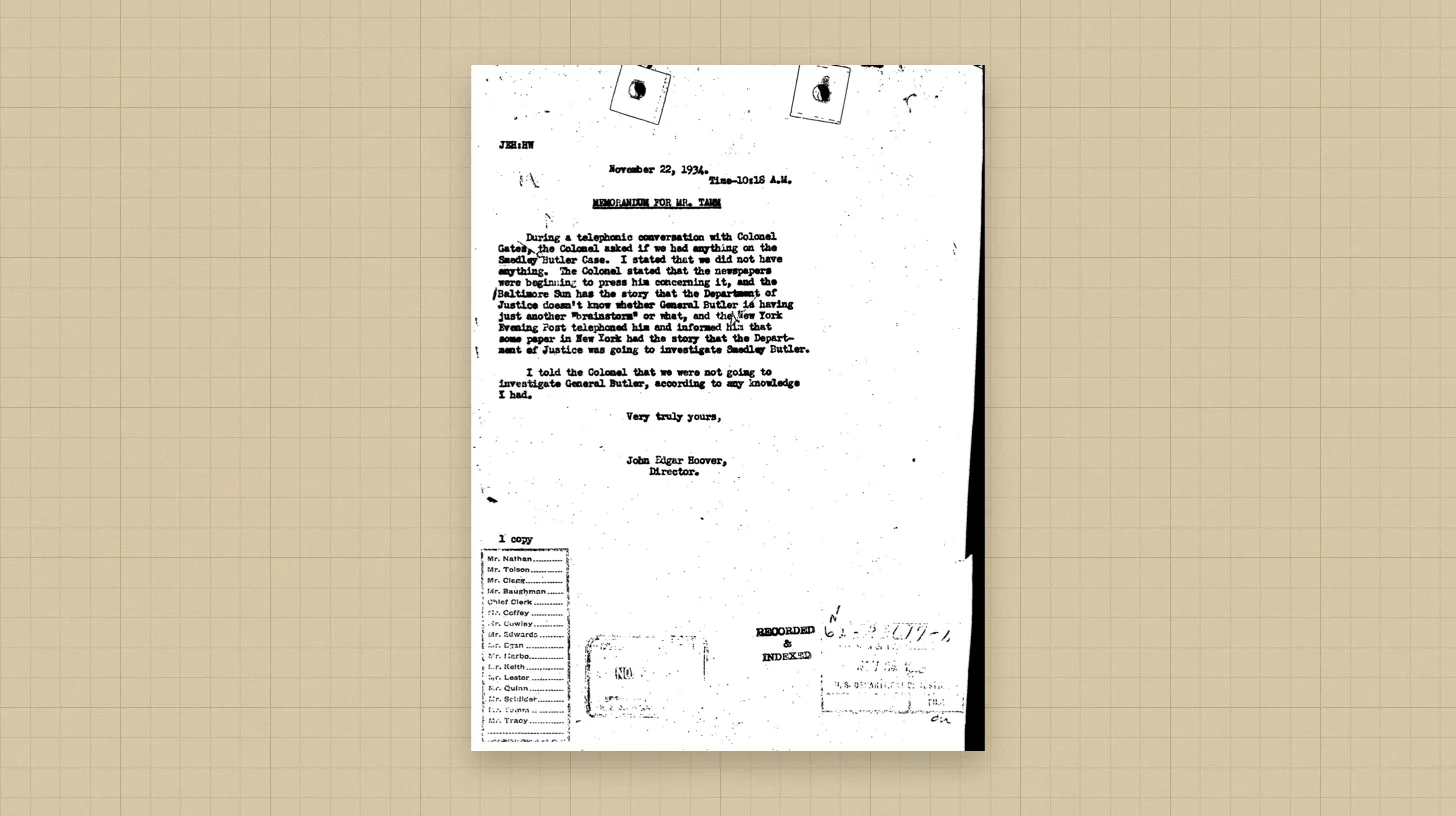
The committee was a special House committee investigating Nazi and other propaganda, and its two leading members, John W. McCormack of Massachusetts and Samuel Dickstein of New York, heard Butler and French in executive session on November 20. MacGuire was called to the stand late that afternoon. Under oath he said he had always been for Roosevelt and had never had any money, and the committee then showed that he had bought letters of credit with fifteen thousand-dollar bills and had said other cash came “from a safe place.” Dickstein said afterward that MacGuire was hanging himself by his testimony. In Washington, J. Edgar Hoover told an official who telephoned him that the Bureau of Investigation was not going to investigate General Butler.
The Post’s story ran that day under the headline “$3,000,000 BID FOR FASCIST ARMY BARED,” and the denials came in overnight. MacGuire called it a publicity stunt, “made out of whole cloth.” Murphy said it was a fantasy. Thomas W. Lamont of J. P. Morgan & Co. said, “Perfect moonshine! Too unutterably ridiculous to comment upon!” and Gen. Hugh S. Johnson said that if anyone had brought him such a scheme he would have thrown them out the window.
Gen. Douglas MacArthur, the Army’s chief of staff, whose name Butler said MacGuire had mentioned as a second choice, said it sounded like the best laugh story of the year. Time’s account of the week was headed “Plot Without Plotters,” and it observed that there did not seem to be any plotters. An editorial in the New York Times called the whole story a gigantic hoax.
What the committee found
On November 24 the committee said it had no evidence that would warrant calling Lamont, Johnson or the others whose names had appeared in the papers, and that it would not take notice of names that were mere hearsay. Its published summary left out passages of the testimony, among them French’s account that MacGuire had talked of getting arms from Remington on credit through the du Pont family. Those passages were printed early in 1935 by the left-wing journalist John L. Spivak. Nothing in the record shows that anyone at those companies knew of the talk.
The committee’s report went to the House on Friday, February 15, 1935. It said it had received evidence that certain persons had attempted to establish a fascist organization in the country, found no connection to any fascist movement in Europe and named no backers.
MacGuire had denied it all under oath, the report said, but the committee was able to verify “all the pertinent statements made by General Butler,” except his direct statement about the proposal to create the organization. McCormack said that no crime had been committed, and no one was charged. Schmidt, writing half a century later, concluded that MacGuire repeatedly perjured himself, and that the coup itself came down to the word of Butler and French. On March 25 MacGuire died of pneumonia, aged thirty-seven.
A racketeer for capitalism
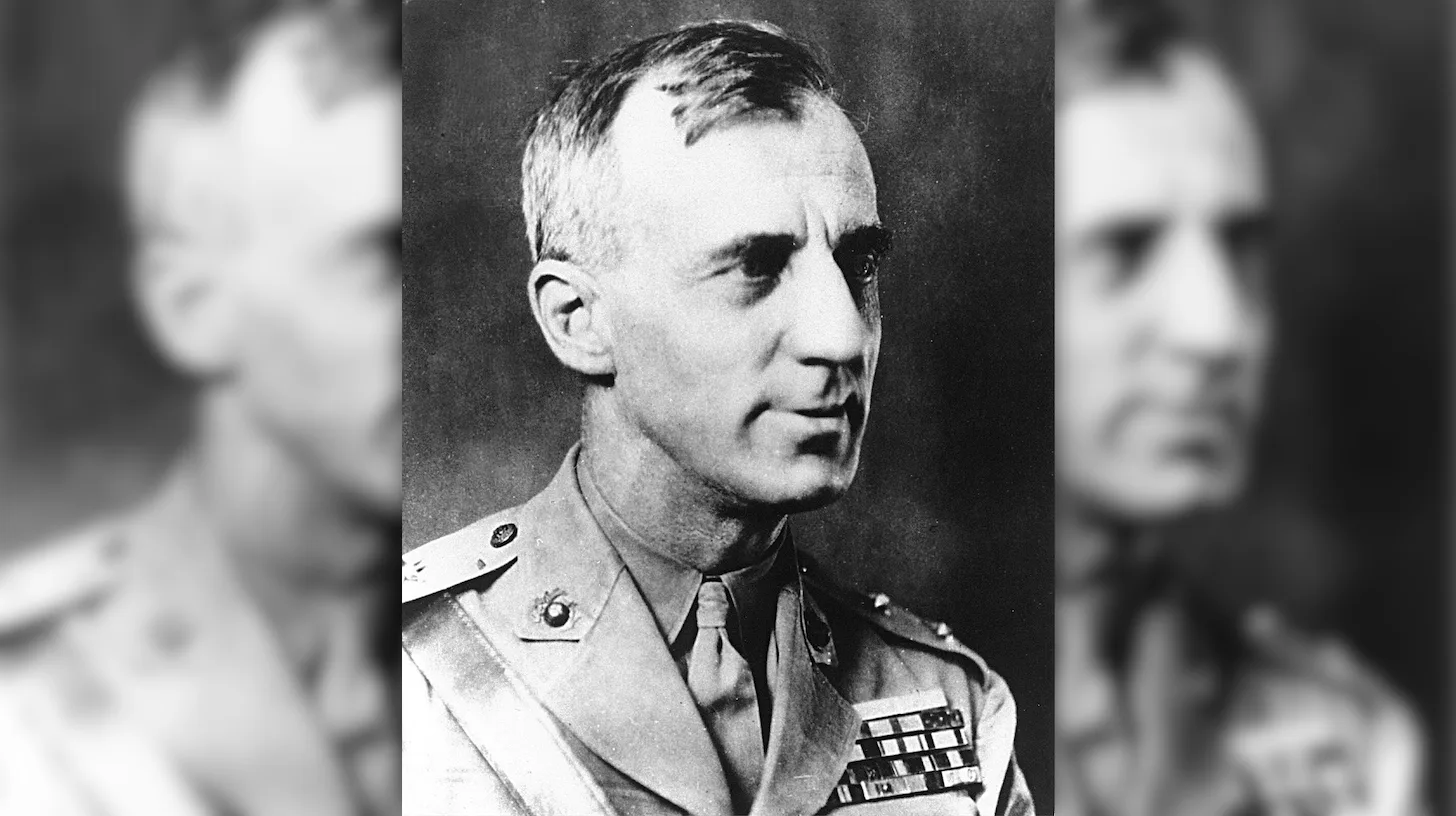
That year Butler published a short book, War Is a Racket, which began, “WAR is a racket. It always has been.” It argued that the profits were counted in dollars and the losses in lives, and that at least 21,000 new millionaires and billionaires had been made in the United States during the World War. In November, in the magazine Common Sense, he wrote about his own career.
“I spent most of my time being a high-class muscle man for Big Business, for Wall Street and for the bankers. In short, I was a racketeer for capitalism. I suspected I was just part of a racket at the time. Now I am sure of it.”
The line is often quoted with “gangster” in place of “racketeer.” He did not write that. He died at the Naval Hospital in Philadelphia on June 21, 1940, at fifty-eight.
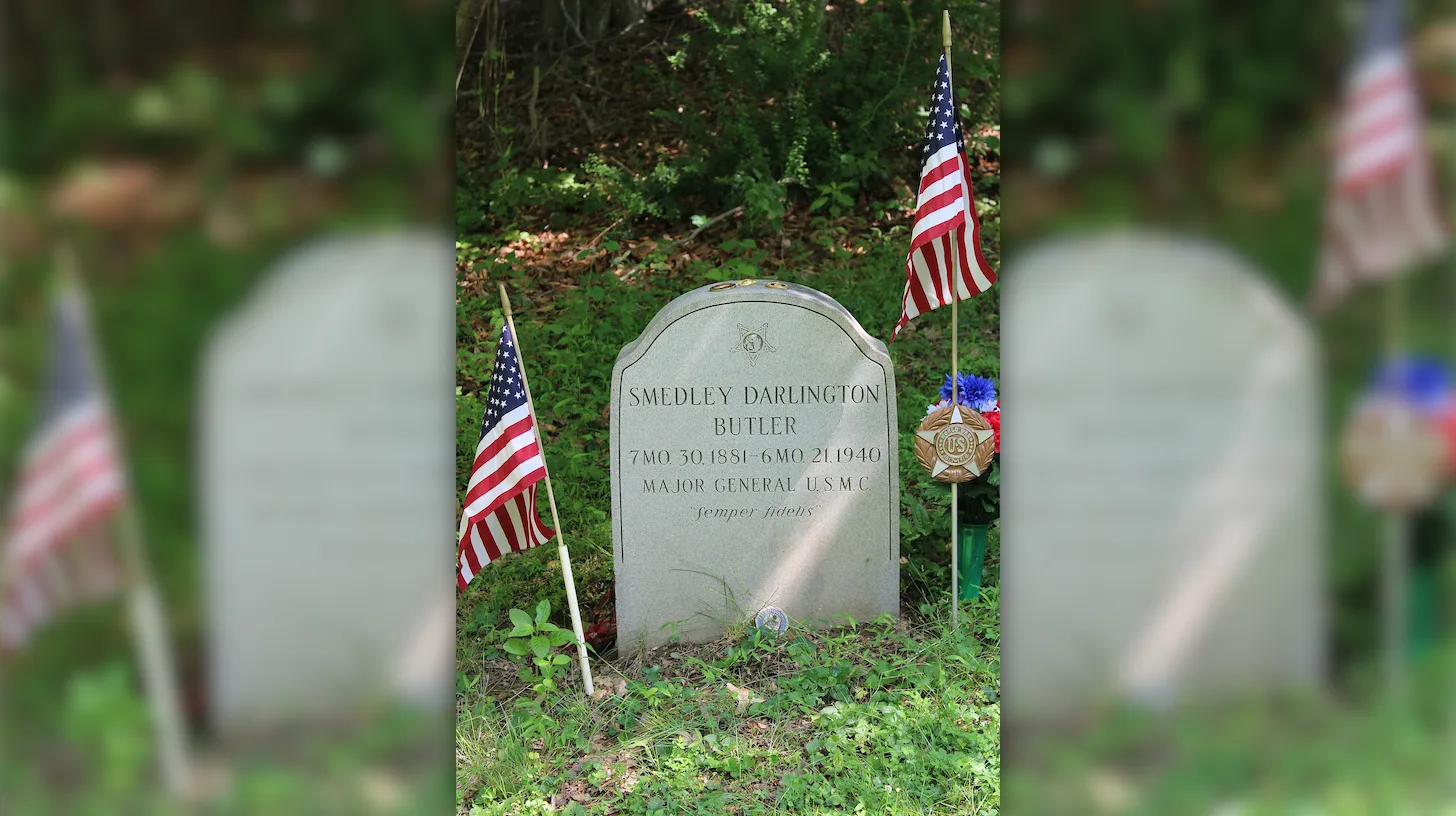
He had kept the medal he tried to give back.